

SlashGear's Hot List 2026

We may receive a commission on purchases made from links.
2026 has been an incredible year for the tech and auto worlds, with no shortage of launches promising – and sometimes delivering on those promises – to change the gadgets we carry and the cars we drive. Whether you're looking for the best tablets and smartphones you can buy or are seeking out a creative tool you never imagined you'd needed in the first place, SlashGear's Hot List 2026 has what you're looking for.
The hottest gadgets, tools, and automobiles we've experienced and tested this year include a mix of familiar faces and products that remix and improve on the best features of what came before. Each entry on SlashGear's Hot List 2026 isn't just about the latest hyped features and gimmicks you may not even end up using. Instead, it's a record of some of the most innovative and impactful products on the market today, hand-picked by experts in the industry. These are the products that matter.
Best Tool: XTool F2
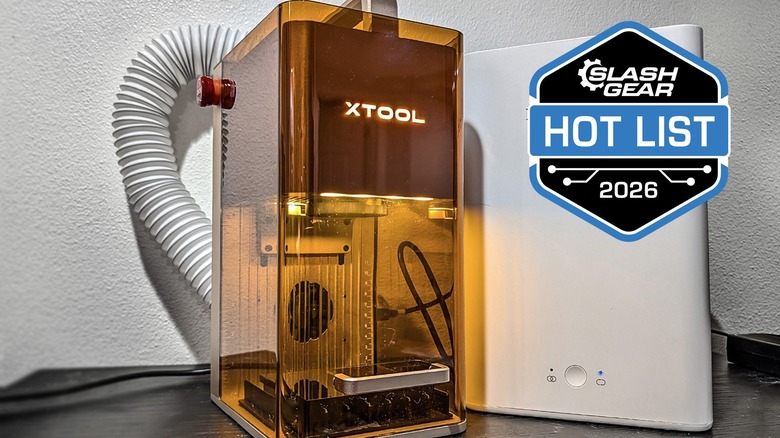
The XTool F2 is a tool we did not expect to find so interesting — or useful, or easy to use. At its base, it's a laser cutter. The XTool F2 has the ability to cut through and etch a variety of materials like paper, wood, and plexiglass, not unlike many other laser cutters released in previous years. The big difference with this laser cutter is in its relatively unique industrial design.
While the staging space for materials in this laser cutter may seem tiny in comparison to the most gigantic consumer-aimed cutters on the market (like the XTool P2, for example,) the XTool F2 was designed to be mobile. The handle up top and the door down below allow this machine to be picked up and placed against a wall — you could etch your name into the handle of your wheelbarrow if you wanted, just so long as your power cord is long enough.
Take a peek at our extended testing of the XTool F2 to see what this machine is capable of.
- Chris Burns
Best Printer: Eufymake E1
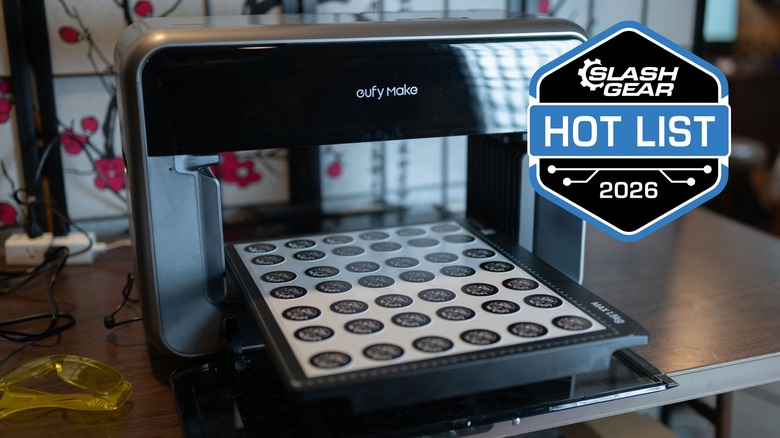
The Eufymake E1 is the most accessible and least expensive UV printer available, and it's an incredible tool for creating all manner of things at home with a professional level of print quality. You can print onto practically any surface (with some exceptions), and even onto curved objects using the rotary accessory.
It essentially allows you to make at home what you would otherwise need to send away for to a commercial printer to have made, which gives you a high level of creative freedom. From a small business perspective, it also enables you to manufacture items for sale or for clients without needing to invest in many tens of thousands of dollars worth of machinery. It can even create 3D textured prints, with incredibly striking results.
There are of course a few downsides to the Eufymake E1. Most notably, it consumes ink at an alarming rate, even if its just sitting idle, and that ink costs a pretty penny. You've got to go into this device expecting to invest continually in operating it, and that means you've either got to be able to afford such an expense, or be consistently selling objects made using it which compensate for that expense. With that said, the Eufymake E1 is a truly marvelous device that opens the door to some really cool creative possibilities.
- Andy Zahn
Best Do-It-All Maker Machine: XTool M2
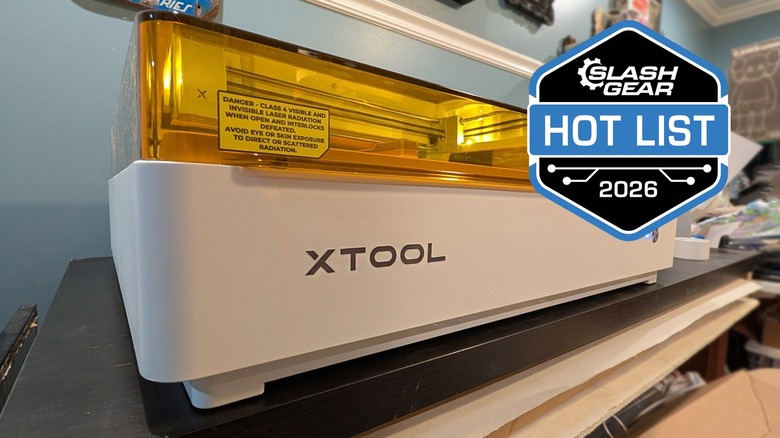
The XTool M2 is part of a new wave of smart creative crafting tools that allows its user to move beyond one-action-per-machine. The XTool M2 uses a system of magnetically-attaching plug-and-play heads including a CMYK ink printing module, 10W and 20W blue diode laser cutting modules, and a 3W IR laser module.
While XTool's previously-released "M1 Ultra" has additional plug-and-play modules in a machine effectively the same size as this M2 machine, the M2 is significantly less expensive than its predecessor (with a starting price at around $600.) The only thing that'd make this device better would be a promise for expansion with additional modules and support for the foreseeable future — but, for now, $600 isn't bad for how capable and simple-to-use this machine is right out the gate.
Learn more about this machine in our XTool M2 hands-on testing feature where we ask the question: can this tool actually fix the worst problem with desktop DIY gadgets?
- Chris Burns
Best Action Camera: GoPro Mission 1 Pro
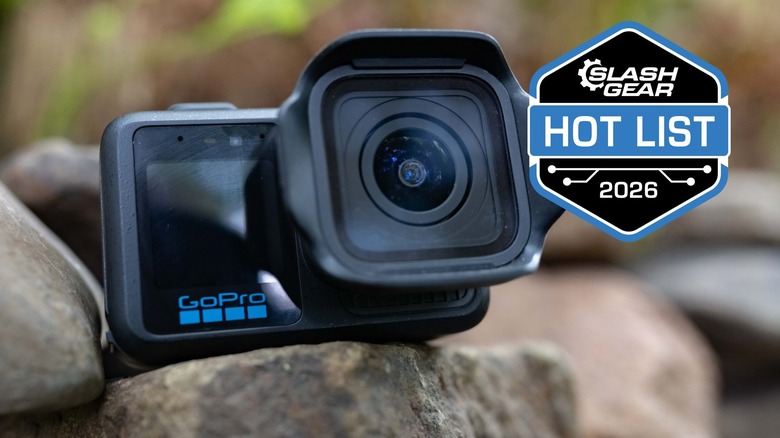
When GoPro put a 1-inch sensor in their new flagship action camera, it essentially elevated the entire genre. The GoPro Mission 1 Pro is even tougher and more water resistance than its famously rugged predecessors, yet also delivers a massive upgrade to image quality, particularly when it comes to shooting in low light scenarios. It's an absolutely enormous leap forward over any prior GoPro, and it delivers superior results to any other action camera currently on the market (most of which I've tested extensively myself).
Beyond the terrific performance and rugged design, the Mission 1 Pro possesses a major advantage that it shares with prior GoPro cameras, in that it has the most versatile mounting system of any action camera. Whereas DJI and Insta360 both continue to opt for fully magnetic connections, the Mission 1 Pro includes this, as well as integrated action camera "fingers", and a standardized 1/2-20 thread mount.
Thanks to this, the Mission 1 Pro is among the most versatile of cameras in terms of how it can be attached to tripods and other camera mounts. In a device that's designed for action sports, this is a major advantage, and it's something I value highly using it as a secondary video capture device on photography adventures and professional video shoots.
- Andy Zahn
Best Camera: GoPro Mission 1 Pro ILS
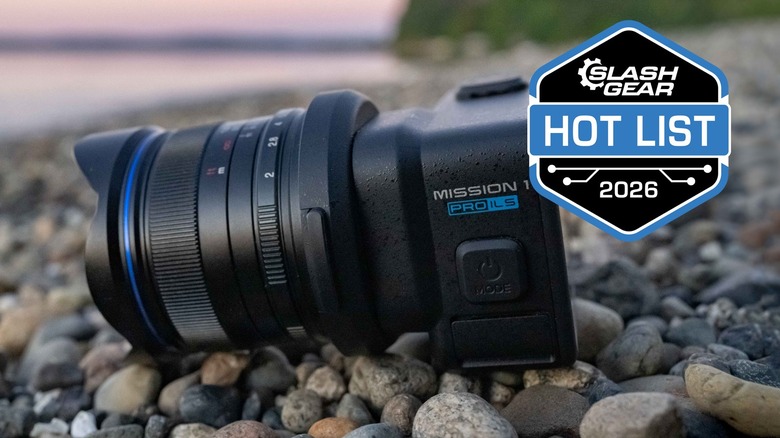
The GoPro Mission 1 Pro ILS is one of the most exciting cameras I've tested in a very long time. It's also one of the most challenging cameras to master, but that challenge offers exciting creative possibilities for those willing to put the time in to learn to use this highly unusual device.
The Mission 1 Pro ILS is GoPro's first camera to feature an interchangeable lens mount. Given that aside from this it's basically just the Mission 1 Pro, it's easy to see it as little more than a niche variant of that camera. However, the Mission 1 Pro ILS is so much more when you dig in and explore what it can do. Essentially, you're getting GoPro's color science and hyper-smooth digital video stabilization paired with the capability of using any lens you can adapt to the Micro 4/3 lens mount. The result is video footage that doesn't look like it was filmed with an action camera, but which benefits from the tech which has made GoPro's such a household name.
Keep in mind, this is not a waterproof camera, and you don't have autofocus or even electronic connection with the lens, so you've got to learn to shoot using manual focus, which can be tricky using the tiny screen. However, with practice the Mission 1 Pro ILS is an incredibly powerful cinematic tool.
- Andy Zahn
Best Gimbal Camera: DJI Osmo Pocket 4P
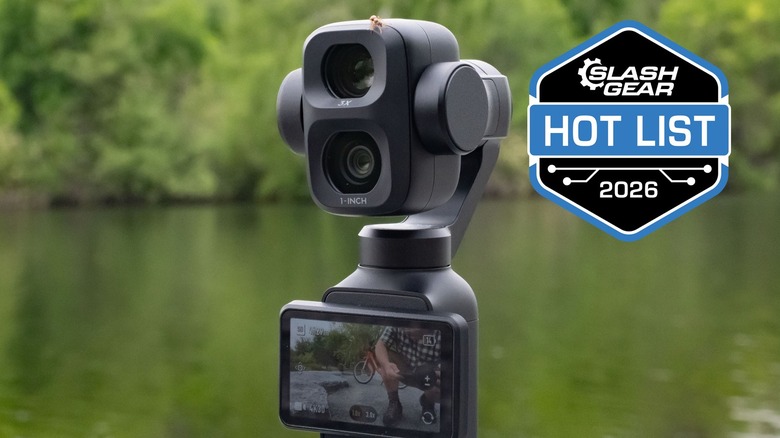
My only real critique of the DJI Osmo Pocket 4P is that you can't buy it in the U.S. It really is a shame that this camera is being kept out of the hands of American creators for no other reason than dirty political games, but for the rest of the world, it's an incredible tool for videographers.
The previous DJI Osmo Pocket 3 continues to be a key component of my own video creation toolkit, largely because the autofocus in these cameras is just that good. Like the Pocket 3, the Pocket 4P is remarkable for how I can set it up and have the camera focus on my face, and then immediately and automatically grab focus on any object I hold up closer to the lens. It is so fast and accurate when it comes to focusing that I feel underprepared when filming if I don't have a DJI Pocket camera on hand.
The Pocket 4 is noteworthy for not only having a new, much larger primary sensor, but also because it now includes a secondary telephoto camera. This greatly expands the creative possibilities of this camera, allowing it to be even more of an all-in-one videomaking system, with better low light performance, and the capability to film more distant subjects.
- Andy Zahn
Best 360 Degree Camera: Insta360 X6
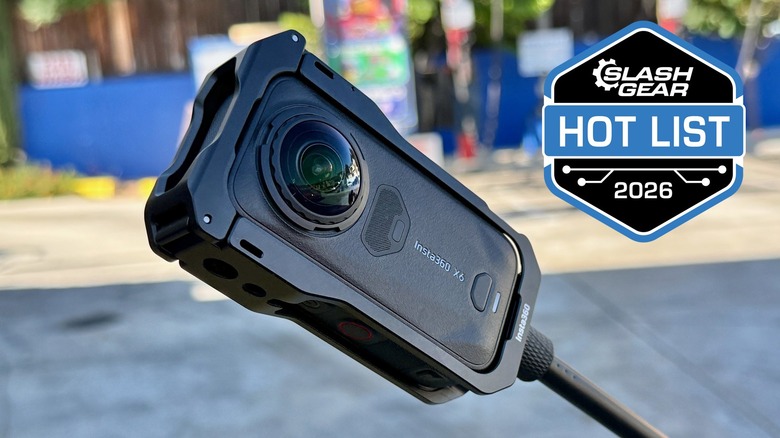
In addition to our hands-on comparison of the Insta360 X6 to an older predecessor, we've tested and reviewed practically every other 360 camera which Insta360 has ever launched. The main upgrade here from last year's Insta360 X5 is a new 1-inch size sensor, which is quickly becoming the standard both in 360 cameras and single-lens action cameras.
We were able to enthusiastically recommend the X5 primarily thanks to its excellent image quality and onscreen interface, as well as highly developed companion software suite. With the X6, you can expect an even greater bump in image quality, particularly in low light, and that larger sensor puts it on even footing with DJI's Osmo 360 camera, combined with Insta360's long experience making this type of camera.
The revamped design of the X6 is also of note for its shorter form factor; it's much more compact, which entails significant advantages when it comes to mounting and positioning the camera. Keep in mind that the X6 is $150 more expensive than the X5, so it is definitely a pricier option, and there's still good reason to choose the X5 if you need to save some cash.
- Andy Zahn
Best Drone (Consumer): Antigravity A1
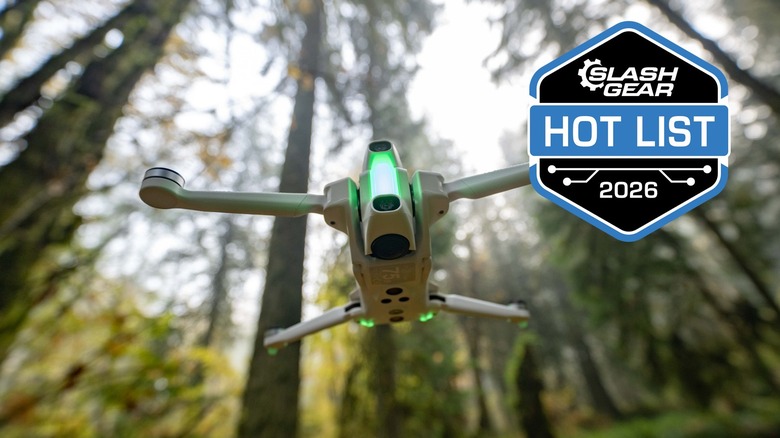
The Antigravity A1 originally launched back in 2025, but it's worth mentioning here because it's now one of the few drones you can still purchase in the United States. For U.S. citizens, the other drones we have access to now are getting increasingly long in the tooth, while the Antigravity A1 is much more recent, and it does some things that set it apart from most other drones on the market.
The Antigravity A1 isn't your typical drone; it's equipped with a 360 camera that essentially makes the drone invisible by excluding it from the imaging area, and which allows you to alter the field of view and camera movement after the fact. This means you can pull off shots that would otherwise require years of practice with an FPV drone.
The way you fly the Antigravity A1 is also really cool, as it operates much like an FPV drone such as the DJI Avata 2, except there your view as the pilot is fixed in the direction the drone's camera is pointing. With the Antigravity A1, you can look in any direction you like as you fly, without noticeable lag in the connection. It feels remarkably like you're actually flying, and unlike other camera drones, it's as much about the experience of piloting it as it is about the footage you capture using it. It's also very intuitive for novices to pilot, given the use of motion controls as opposed to a more traditional controller.
- Andy Zahn
Best Home Robot: Mova LiDAX Ultra 3000 AWD
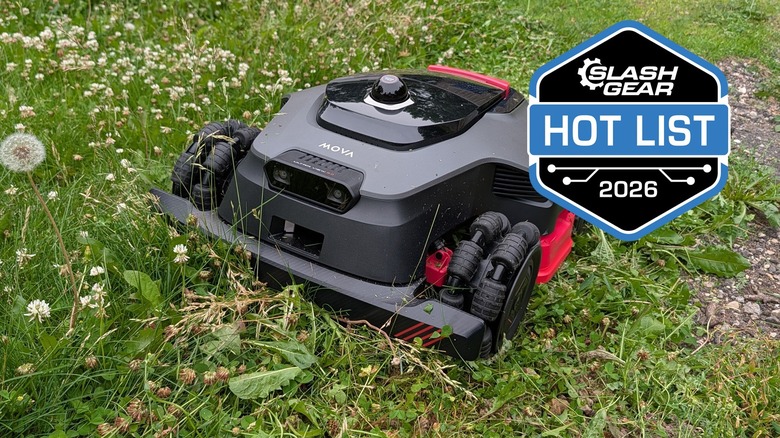
We've moved beyond the basics when it comes to robot lawn mowers. With the Mova LiDAX Ultra 3000 AWD, we have a robot that looks like a battle tank and acts like a sentry patrol that loves to keep your lawn in check. This robot has a 3D scanning system, wireless internet access, Bluetooth, cameras, and the ability to move its blades both up and down and side to side.
In our testing, this mower has never gotten stuck in a hole, it's never gotten itself lost, and it's never accidentally cut down any plants it wasn't sent out to cut. It will skip an area of your lawn entirely because it thinks your Halloween ornament is a real cat before it risks causing your beloved pet any harm, and it'll allow you to see through its cameras from your phone while you're out of town, if you so desire.
Have a look at our Mova LiDAX Ultra 3000 AWD Review to see why we've called this "Today's Best Robot Mower."
- Chris Burns
Best Phone (High-End): Samsung Galaxy S26 Ultra
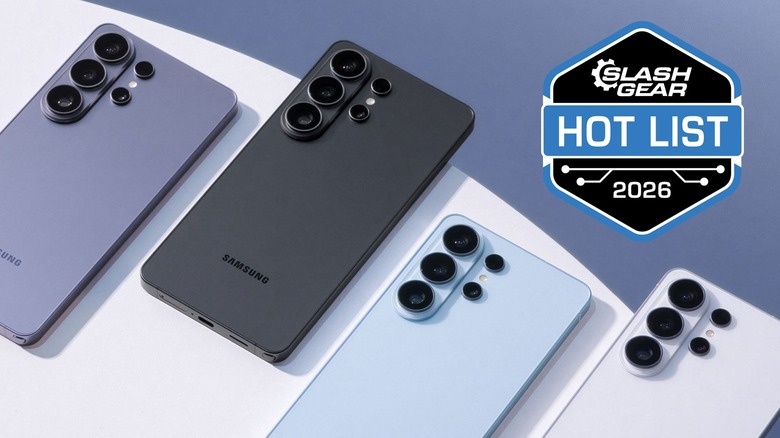
At first glance, Samsung's Galaxy S26 Ultra may not look much different from flagship Galaxy S family phones we've seen before. Actually, at first glance it might not seem to be powered on at all, thanks to its innovative Privacy Display feature that hides the contents of its screen from neighboring eyes. It's an example of Samsung still managing revolution in a segment often accused of mere evolution, though the Galaxy S26 Ultra doesn't abandon what already works along the way.
So, there's a faster processor, more capable cameras, and longer battery life than the Galaxy S26 Ultra's predecessor, along with the useful S Pen stylus. All things that add up to smoother daily use, not to mention more time away from the charger. While it may not have a folding screen or other gimmicks, it checks all the boxes for just about every user.
- Chris Davies
Best Midrange Phone: Google Pixel 11
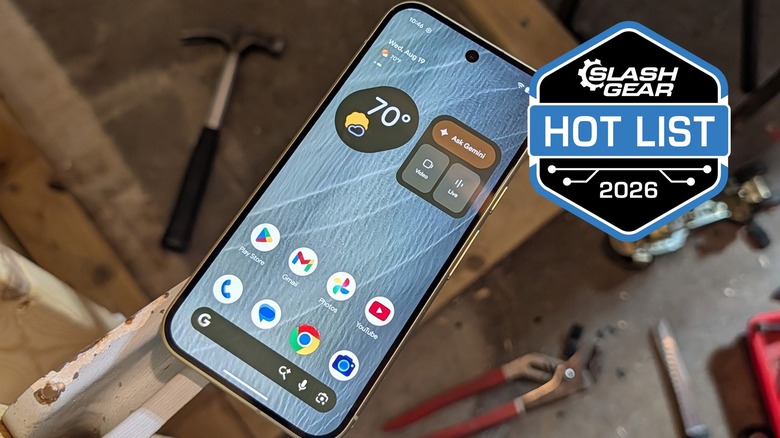
The Google Pixel 11 is our pick for the best midrange phone, and it's also the best Android phone for most users. However, with a $899 starting price, it may be more appropriate to call it upper-midrange; though it's still $200 less than the $1,099 base Google Pixel 11 Pro, which is a good upgrade pick if you've got the spare cash. The Google Pixel 11 shares many of the same features of its Pro counterparts, meaning non-power users will be just fine. Both phones use Google's newest Tensor G6 Soc and Titan M3 security coprocessor, a 6.3" OLED display, a triple-rear camera array, and a starting base storage of 256GB and 12GB of memory.
There's also a bigger battery this year for the Google Pixel 11, with Google touting a 30-hour battery life, and new AI features courtesy of Gemini Intelligence. While the Google Pixel 11 Pro features the more advanced camera system with more zoom options and camera modes, we noted in our Google Pixel 11 review that the camera was excellent, effectively rivaling the camera power of the Google Pixel 10 Pro. The Pixel 11 comes with Android 17 out of the box, and you'll get seven years of updates from Google.
If you're using a Google Pixel 10 or 10 Pro, the latest Pixel 11 may not be an enticing upgrade. If you're using an older Pixel phone, such as the Pixel 3 way back from 2018, then the Google Pixel 11 is worth your consideration.
- Eric Hamilton
Best Budget Phone: Google Pixel 10a

The Google Pixel 9a was one of the best Android phones you could buy in 2025, and it landed on many year-end lists as a top budget phone. It may be unsurprising then that its successor, the $499 Google Pixel 10a, is our top pick for a budget smartphone in 2026. The Google Pixel 10a and 9a share a lot in common – so much so that our reviewer Adam Doud called it deja vu on a budget in his review. That's not a bad thing, either.
The Google Pixel 10a brings the same G4 Tensor SoC, the same 8GB of memory, and the same 5,100 mAh battery – although the battery now supports a faster 30W charging mode. You're still getting the same great cameras that Google's Pixel line are known for, but Google has trimmed down the camera bump compared to the Pixel 9a, giving the phone a much flatter feel. This is arguably the best camera you can get for the price. You're also getting a 6.3" OLED display, but this time around, the display boasts 3,000 nits peak brightness, which is a minor upgrade compared to the 2,700 nits on the 9a.
On the software side, the Pixel 10a ships with Android 16, and Google provides seven years of OS and security updates, as well as Pixel Drops, Google's quarterly cadence of feature drops for its supported Pixel devices. The Pixel 10a is more of a refinement over its predecessor rather than a foundational upgrade, which means it's best suited for those still hanging onto older phones, or for those who want the best entry-level ticket to the Android show.
- Eric Hamilton
Best Foldable Phone: Samsung Galaxy Z Fold 8
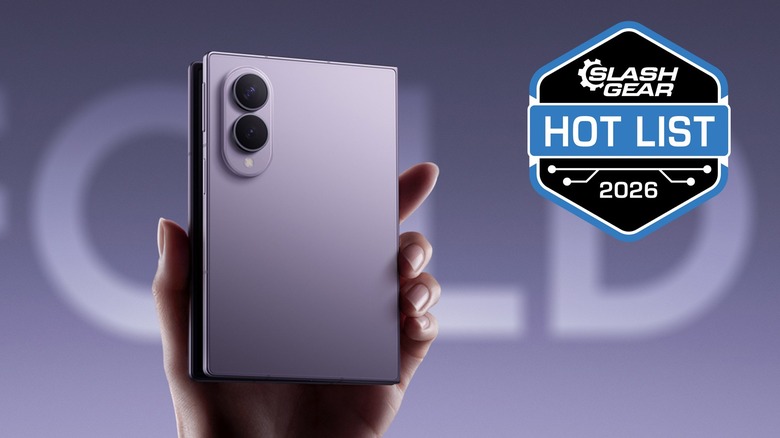
In July 2026, Samsung sprang bit of a surprise at its first major launch event after it launched the Samsung Galaxy Z Fold 8 alongside a long list of products. This Galaxy Z Fold 8 is wider, stockier, and considerably lighter than the Galaxy Z Fold 7, its immediate predecessor. This also meant that this new "Z Fold 8" looked nothing like the Z Fold 7 from 2025. As it turns out, the Z Fold — most likely — is the first among an entirely new category of compact vertically folding smartphones to come out of Samsung's stables.
Despite being positioned below the flagship Z Fold 8 Ultra, the (relatively) compact Z Fold 8 received widespread praise for simply being small in size. The compact size and form factor ensure that the displays (both internal and external) are better suited for content consumption as opposed to the Z Fold Ultra, which is more of a multitasking powerhouse. The dual display setup on the Samsung Z Fold 8 includes a 5.5-inch (10:16 aspect ratio) cover display, and a foldable 7.6-inch (4:3) display which, surprisingly, isn't that small compared to the Ultra's 8-inch inner panel.
What Samsung has done with the Galaxy Z Fold 8 is to straddle a vacant segment between the Galaxy Z Flip series and the Z Fold lineup, and provide fresh options to consumers not looking at either of these options. Given that most people have loved what Samsung has done with the new Fold 8, the newest kid on Samsung's foldable block makes the cut and is our pick for the best foldable phone for 2026. That being said, the arrival of Apple iPhone Duo in the foldable space does shake things up a bit.
- Rahul Srinivas
Best Tablet: iPad Air (M4, 2026)
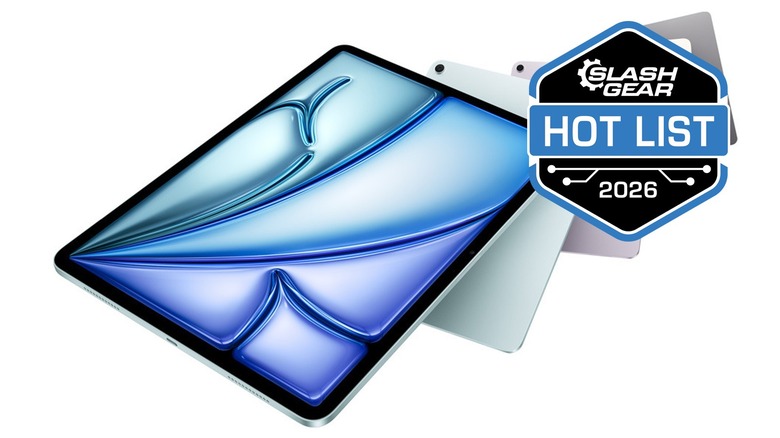
While it doesn't seem as though tablets truly ushered in a "post PC era," there is no denying that Apple's tablet continues to dominate the space 16 years since the original iPad debuted in 2010. Today, Apple's tablet lineup has evolved into multiple categories, starting with the standard no-nonsense iPad, the compact iPad Mini lineup, the thin but feature-loaded iPad Air, and the flagship-grade iPad Pro series.
While consumers are spoilt for choice, if someone's looking to buy a tablet in 2026, our choice is the iPad Air (M4, 2026). This machine is definitely not the most technologically extravagant tablet one can buy today. But this iPad Air model currently offers the best price-to-performance ratio among Apple's tablet offerings. It comes powered by Apple's (relatively) new M4 chip, and is offered in two sizes: 11-inch and 13 inch. Storage options start at 128GB, going up to 1TB on both models.
For consumers worried about the possibility of the 11-inch variants of the iPad Air (M4, 2026) skimping important features, the reality is that there aren't too many. Most differences wind down to physical attributes and are logical. These include the smaller display with lower resolution and the lower overall brightness levels (500 nits as opposed to 600 nits on the 13-inch model). The prices for Wi-Fi variants of the 11-inch iPad Air (M4, 2026) start at $749, while that of the 13-inch model begins at $949.
- Rahul Srinivas
Best E-Reader: Xteink X4 Pro
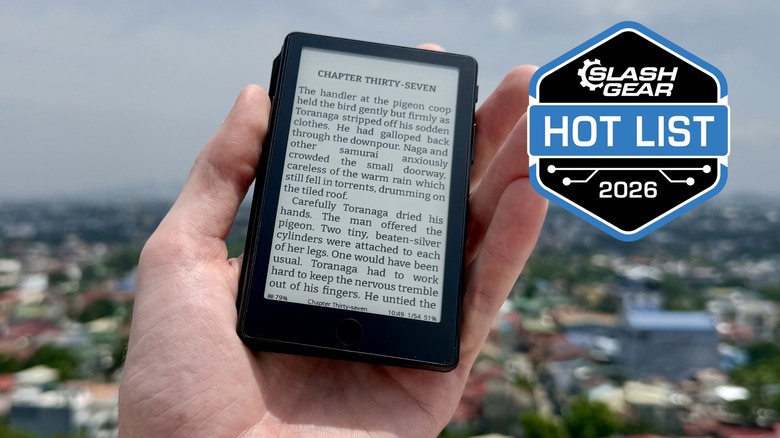
When the XTEINK X4 came out in 2025 – a literally handheld, pocketable e-reader – I fell in love. Reading during random five-minute spurts while on the go had me finishing books instead of doom-scrolling. Free, community firmware like CrossPoint was the cherry on top. I thought I had the end-game portable e-reader. Then the X4 Pro released. Now, I do.
The X4 Pro is the same form factor, but somehow squeezes in almost double the battery (while weighing less) and adds a touchscreen and front light. The touchscreen is much better for turning pages and navigating menus — though the page-turning buttons remain — and the front light finally allows for nighttime reading without going to the comical extremes some X4 users did. It's been a game changer for various low-light situations, too, and the battery life is better than my X4 even with the light kept on at all times. The build quality also feels notably better, and it finally actually attaches to the back of my phone like the X4 promised and failed to. Check, check, check.
It's certainly not perfect. The $99 price point is a bit steep; if you're coming from Amazon's Kindle, you'll have to figure out how to strip the DRM from your books or buy DRM-free copies elsewhere since there's no digital bookstore on the X4 Pro; XTEINK swapped the USB-C port for annoying pogo pins; the device has no water resistance; and it takes manual setup to add dictionaries and enable reading progress syncing. But trust me, those are minuscule little nitpicks. This is an e-reader you can take anywhere, with any software you please, and never fear your purchased books will arbitrarily disappear. It's freedom, the antithesis to the modern tech industry, and I can't recommend it enough.
- Jordan Wirth
Best Smartwatch: Pixel Watch 5
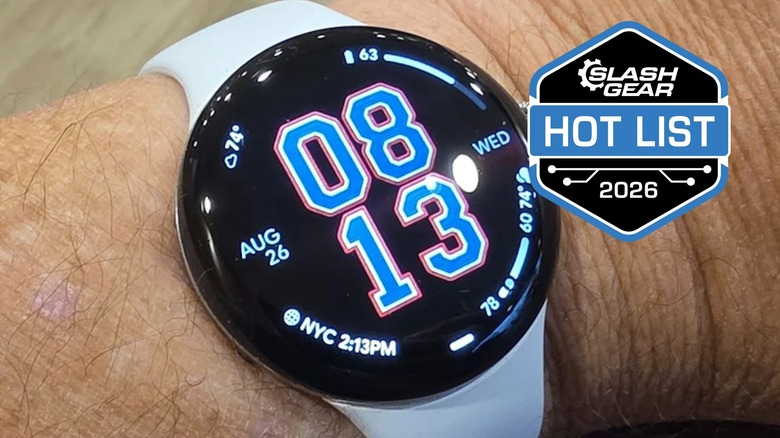
Despite being the priciest of Google's smartwatch offerings, the Pixel Watch 5 is worth the premium price. For one thing, it has the looks of a high-end wearable, with seamless domed glass and barely-there bezels that are paired with a clean design. As SlashGear's Adam Doud writes in his review, "everything on the watch face belongs there." You won't have any trouble seeing the display in broad daylight, as it gets up to 3,000 nits of brightness.
Google's flagship smartwatch also has a powerful Snapdragon W5 Gen 2 chip we found to be fast and responsive, while the battery lasted up to 36 hours with real-world use. When it did finally run out of juice, it only needed 45 minutes to fully recharge. In addition to 2 gb of RAM, the Pixel Watch 5 sports a whopping 64 gb of storage, making it easy to use it without bringing your smartphone along.
We found the health features of the Pixel Watch 5 to be mostly great and are excited about the upcoming "Trends" feature that's not available just yet. Trends tracks monthly changes in metrics like blood pressure and insulin resistance, though the watch can't measure your BP directly, even though the Samsung Galaxy Watch 9 and Watch Ultra 2 have the capability. Google Health also includes an AI coach that provides you with advice from time to time. This being 2026, there's AI elsewhere on the device as well, though we "found the Gemini features on board the Pixel Watch 5 to need a little more cooking." That said, it's "a very compelling package" overall and "the watch to buy."
- Jack Picone
Best VR Headset: Pimax Dream Air
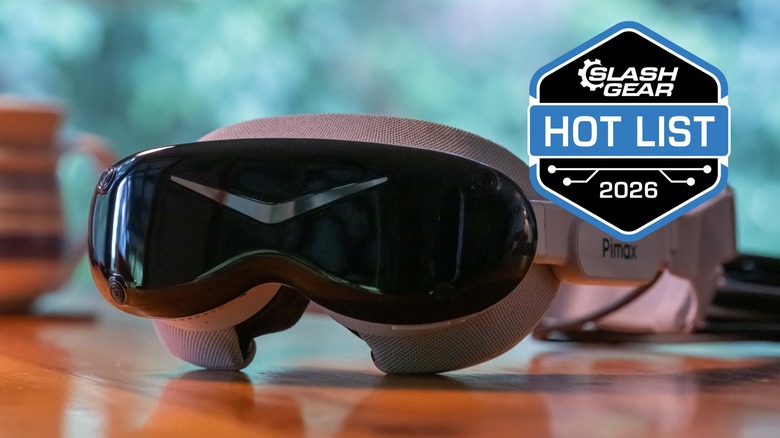
The Pimax Dream Air is about as close as we can get at the moment to a no-compromises VR experience. Described by Pimax as the "world's smallest full-feature 8K resolution VR headset," the Dream Air only weighs about 170 grams, yet boasts 7680 x 3552 resolution micro-OLED panels, alongside features such as foveated rendering, and the option of either having inside-out tracking or the lighthouse module compatibility. Rather than being a huge box engulfing your head, the Dream Air is closer to the form factor of actual goggles, but doesn't sacrifice in terms of capability compared to other common VR headsets.
Of course, the $2299 price point reflects the cutting edge nature of the Pimax Dream Air, but that doesn't diminish how impressive an accomplishment this device is. For true VR enthusiasts, it provides a really exciting upgrade over most other competing systems on the market, though for folks with extremely large head sizes, it can be a bit of a squeeze.
- Andy Zahn
Best Earbuds: Sony WF1000XM6
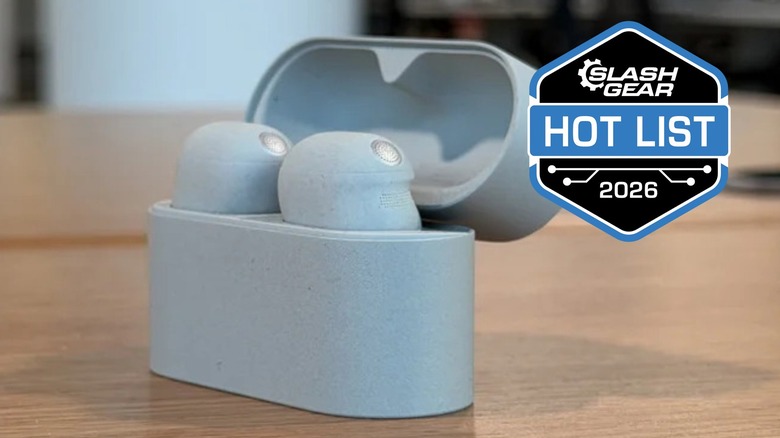
The Sony WF1000XM6 have active noise-cancellation (ANC) on par with industry leaders Bose and Apple, but it's the sound quality and comfort that put them over those rivals and make them the best earbuds you can buy in 2026. The redesigned drivers of the XM6 are so good that you don't need to play with the EQ to get the most out of them, though you still can if you want — it comes with 10-band EQ, five presets, and customization slots you can save.
Overall, the XM6 is a big leap in quality from the previous generation XM5. That's the conclusion we reached in out up-close review of the Sony WF1000XM6. We also found that these buds can be comfortably worn for hours on end. The foam tips create a solid seal that keeps each bud in place while the wearer is still or in motion — like they should.
The headphones aren't perfect — what earbuds are? The ANC has some sidetone and the touch controls through Sony's Sound Connect are subpar. The case that they come in is bigger than before and have sharp angles that make them uncomfortable to keep in your pocket. They also lack some modern features certain brands offer like the hearing aid functionality Apple provides with its latest AirPods Pro.
But when it comes to actual audio quality, the Sony WF1000XM6 can't be beat this year in the in-ear buds category. SlashGear's Adam Doud puts it simply: "You just enjoy a fuller sound than you get with any other mainstream set of earbuds."
- Jack Picone
Best Headphones: Nothing Headphone (a)

Finding the best headphones in this day and age is largely about striking the ideal balance between cost and performance, since prioritizing the former often sacrifices the latter and vice versa. To that end, our standout pair of headphones for 2026 is the Nothing Headphone (a), personal speakers for which "balance" is the name of the game.
The Nothing Headphone (a) has a retail price of $199, certainly more than you would expect from most mid-range headphones. However, as SlashGear's Adam Doud explained in his review, their actual performance is equal to or greater than headphones of a much higher price range, which means you're getting top-shelf quality at mid-range prices.
They boast crystal clear sound quality, easy and intuitive personal controls, active noise cancelling on par with the likes of Sony and Bose, and besides all that, they're both cheaper and higher quality than their predecessor, the Headphone (1). Combine all of that top-shelf performance with a battery life lasting nearly 135 hours with ANC off, 75 with it on, and it's no contest. It's the perfect package of form, function, and price, and an ideal selection for just about anyone who wants to listen to their tunes on the go.
- Daniel Trock
Best Projector: Anker Soundcore Nebula X1S
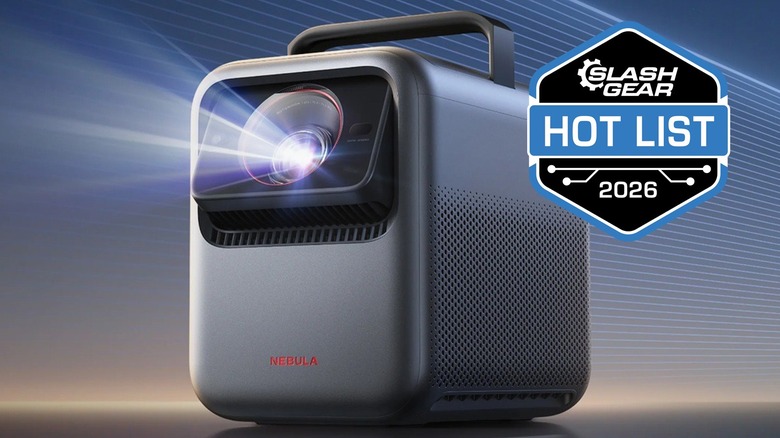
Anker's Soundcore Nebula X1S 4K Triple Laser Projector probably doesn't look like any projector you've seen used before. If you've only ever worked with a projector attached to the ceiling of a boardroom or attached to a cart rolled in to your classroom on movie day, this sort of projector probably isn't all that familiar to you. Anker's "Nebula" brand is one of a relatively new breed to projector that's meant to bring the theater experience to the everyday consumer.
While Anker is generally known for its smartphone chargers and accessories, they've come into their own with some truly capable projectors — and the Nubula X1S is no exception.
This projector isn't cheap — at $3,300, it certainly needs to have all the bells and whistles we'd expect from a high-end (yet still consumer-level) projector of this sort. That means an extraordinarily high peak brightness (6,000 ANSI lumens), a built-in gimbal and smart spatial adaptation for easy-as-possible adjustments for the room you're in. This projector also rolls with built-in speakers (with support for Dolby Audio) that are loud and hefty enough to satisfy an audience without need for additional add-on speakers.
This machine is equipped with Google TV — so all you really need is a power source and a wall to project on to. And it has physical controls (on its unit), a physical button remote control, and it can be controlled via your phone — or with "Hey Google" voice commands for good measure.
- Chris Burns
Best Laptop (Budget): MacBook Neo

This year saw Apple enter the budget laptop market, a market segment it has long been absent in, and frankly, probably didn't need to even compete in. Much to the surprise of everyone, Apple did just that with the MacBook Neo; a $599 laptop (at launch) that merges Apple's quality, premium design, and in-house Apple Silicon. Not only is the MacBook Neo a great machine, but it has completely disrupted the budget end of the market. And it's a hell of a lot more than just a Chromebook alternative, and you know it.
It of course needs to be said that the ongoing RAM shortage that has led to inflated prices for both memory and SSDs has meant that Apple has had to raise the prices on the MacBook Neo. This means every configuration got a $100 price bump, bringing the base model to a starting price of $699, with the Education base model starting at $599. That's a bit of a bitter pill to swallow, and it does take a bit of shine off of the MacBook Neo, which has been a smash hit for Apple.
That said, if you're a student or first time MacBook owner looking for deep integration with other Apple products, or even a casual user looking for a premium feel, the Neo is hard to beat. It offers arguably the best screen for the price, a premium aluminum chassis, and a solid – if somewhat pared down – keyboard. It runs on Apple's A18 Pro SoC, the same chip powering Apple's iPhone 16 line, and punches well above its weight in single core performance. The drawbacks of the MacBook Neo are primarily the fixed 8GB of RAM and a slower SSD compared to other MacBooks. The multi-core performance of the A18 Pro chip also leaves a bit to be desired, which means the Neo is best suited for basic computing tasks.
- Eric Hamilton
Best Laptop (Premium): ASUS ProArt PX13 GoPro Edition
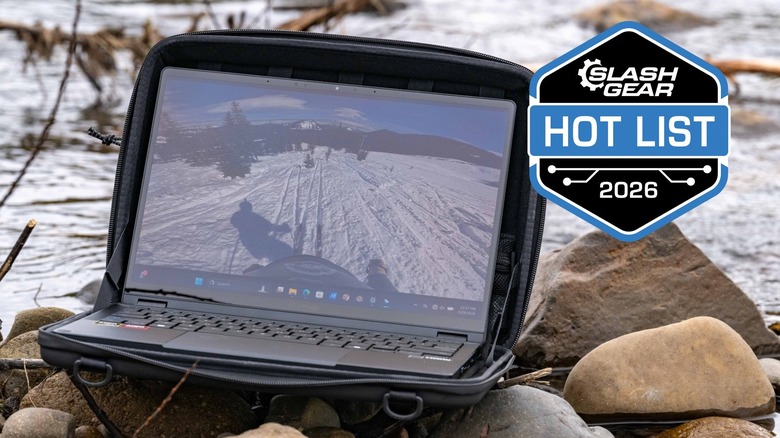
Going into reviewing this laptop, I was highly skeptical as to whether this brand collaboration between ASUS and GoPro would offer more than superficial benefits. I was pleasantly surprised to find that the ASUS ProArt PX13 GoPro Edition is what I'd consider to be the best all-in-one portable setup for creators such as myself.
From an aesthetic standpoint, it makes excellent use of GoPro's branding and styling, to which I've always been partial. The packaging itself is reusable as camera storage, and the included laptop case is the sort of protective hardshell which I consider to be an absolute necessity for travelling with a laptop. It's solidly built, includes a built-in laptop stand, and has plenty of storage space.
The hardware itself is incredibly potent for such a slim laptop. It features an incredible 128GB of unified RAM, and is able to play games and run productivity software at a level which far exceeds what would normally be expected for a 13-inch laptop. It managed to outperform my modern desktop PC in some regards, and on top of this performance it can flip around to turn into a tablet, and even includes a stylus that makes it ideal for creative tasks of many varieties. Ultimately, while the ASUS ProArt PX13 GoPro Edition retails for $2999, that price doesn't feel that bad considering what this laptop is capable of.
- Andy Zahn
Best Home Audio: Sonos Play (2026)
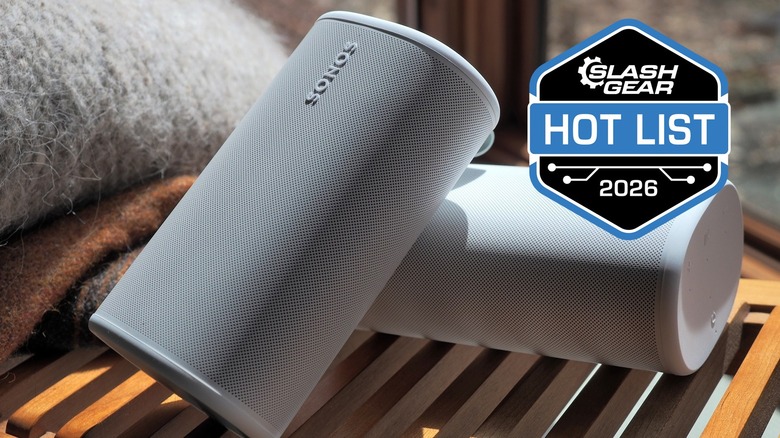
Sonos made its name with a whole-home music system, but the Sonos Play recognized that the great outdoors is the biggest room of all. The new portable speaker cherry-picks the best features from Sonos' previous models, not least volume, bass, and clarity that belie the compact size, but also the dual WiFi and Bluetooth connectivity, and the long-lasting battery. The result is a speaker that works just as well on a picnic or road trip, playing music from your phone, as it does indoors.
In either setting you can combine multiple Sonos Play for louder and more encompassing performance, while a post-launch update added the ability to use a pair of the speakers as rear surround channels with the company's soundbars. Sturdy, water-resistant hardware and owner-replaceable batteries lend confidence that this $299 smart speaker will last, too.
- Chris Davies
Best Portable Audio: FiiO DM15 R2R
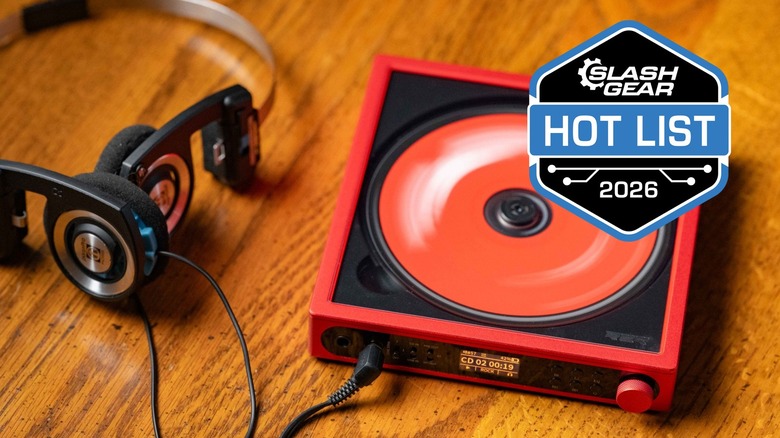
CDs are coming back in a big way, and the FiiO DM15 R2R offers a particularly excellent way of listening to your collection. Whether you never stopped listening to music on compact disc, or if you're a physical media neophyte just now learning the joys of cutting the streaming-service cord, the FiiO DM15 R2R offers a host of features that help to integrate spinning discs into the modern technological landscape.
The DM15 R2R includes a Digital to Audio Converter (DAC), which uses a resistor ladder to convert digital files into analog waveforms. Essentially, this helps make audio played through the DAC sound more organic, and helps to elevate the playback from your CDs over just listening via your phone. You have both wired and wireless options for listening to music on the DM15 R2R, so you can either plug in a high quality set of wired headphones, or utilize a more convenient Bluetooth connection.
This CD player also has a rechargeable battery built-in, so it works well on the go, though it is also great at home hooked into your speakers. The look of the thing is absolutely gorgeous, and its metal and glass construction really elevates it beyond the typical plastic portable CD players of the past.
- Andy Zahn
Best Car Refresh: 2028 Volvo XC60 T8 Long Range PHEV

EVs may be the future, but plug-in hybrids recognize not every driver is ready to embrace full electrification. Volvo isn't new to PHEVs, but the 2028 XC60 T8 Long Range Plug-In Hybrid addresses the most common complaint of the segment by significantly boosting the electric range. In fact, with up to 78 miles of EV driving on a single charge, it delivers more than double the range of its predecessor.
That bump in electric driving comes with a cleaner, crisper exterior design and a more upscale cabin, though keen drivers will be pleased to hear the XC60 T8 Long Range PHEV's gas-electric drivetrain and bigger battery aren't just focused on frugality. With 455 horsepower and a 4.5 second 0-60 mph time it's a seriously swift family SUV. And when it arrives in the U.S. in early 2027 it'll do that without sacrificing space for either people or cargo, despite the extra range.
- Chris Davies
Best Car Infotainment: Audi MMI (2026)
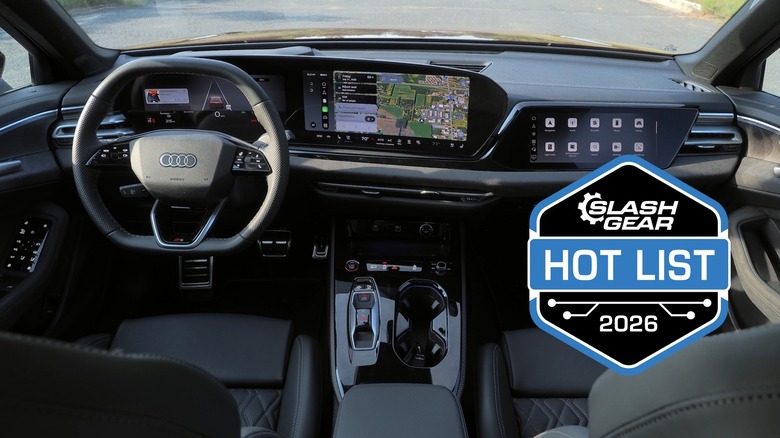
Designing the perfect digital dashboard is no easy task, with drivers demanding both the latest gadgets and a safe, distraction-free cabin so that they can focus on the road ahead. In 2026, Audi's MMI strikes that balance well. While it has the sizable screens — served up, here, in a swathe of gently curving glass — along with the connected app support and high-resolution graphics you'd expect from a modern luxury automaker, the interface is also straightforward to navigate with well-sized icons the layout of which can be easily customized.
Wireless Apple CarPlay and Android Auto are standard, but Audi MMI's core features are still readily available even when your smartphone is connected. And while more advanced features — like an extra display dedicated to the front passenger, and an augmented reality head-up display for the driver — may not be essential, they're cleanly integrated without feeling overwhelming. The result is an infotainment system that can keep up with modern life without forgetting that the most important task for a driver is paying attention to the road.
- Chris Davies