

Insta360 X6 VS My Old X2: Is It Worth The Upgrade?
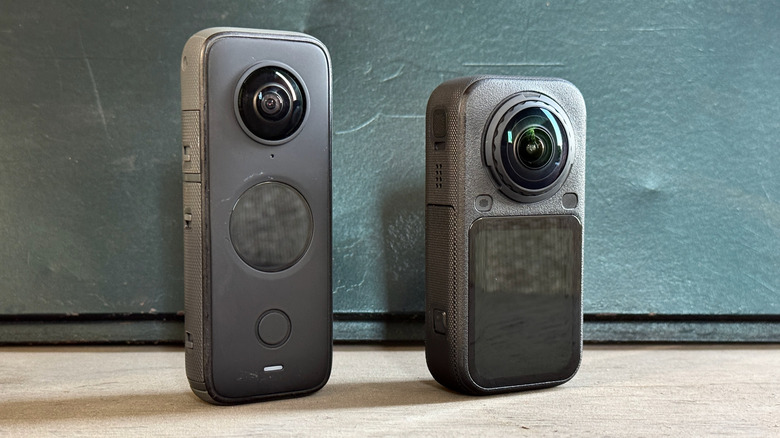
It's been a while since I filmed anything on my old Insta360. Years ago, when I first bought the X2, I had dreams of filming moto vlogs and motorcycle reviews, but using it in practice was a bit harder than I imagined. I could set up the camera easily enough, record the footage, and be pretty happy with what I shot. But after some time with the camera, I became a bit uninterested. I shelved it and didn't use it for a long time. Really, the toughest part of the process was transferring the footage to my computer and getting around to watching, fixing, clipping, cropping, and so forth. Now, with the latest Insta360 X6, the editing is done for you — that and a lot more has changed since I last bought the early generation of the 360-degree camera.
The folks at Insta360 reached out to me a few weeks ago, offering to send me their newest camera, the X6, to test out. Because one of this camera's features is the ability to automatically edit footage, I was instantly interested.
The idea of spending a day riding, pressing a few of the right buttons, and coming away with an edited video with some cool clips to post was enticing. Sure, you can still edit your own footage if something notable or cool happened, but for someone like me who's looking for an easy on-ramp to creating new videos, it's a great new feature. Add in all the extra features they've packed in over the last few years, and the upgrades to the new X6 in general, and you've got a camera that's worth investigating.
What's new with the latest Insta360 X6?
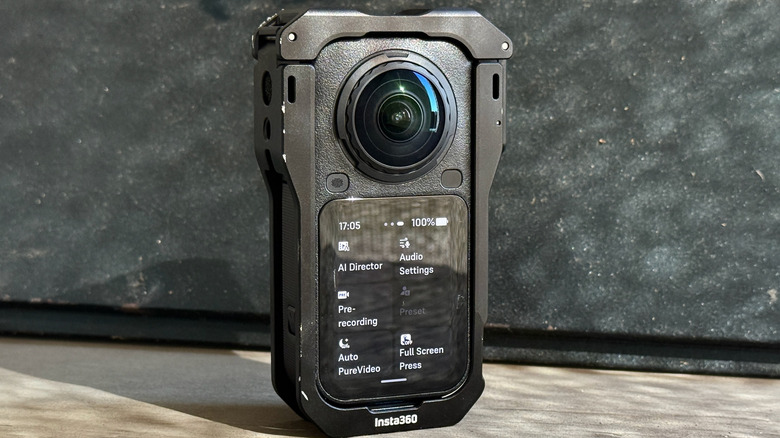
More than just an editing salve for the lazy rider like myself, the new X6 adds all sorts of capability. Really, it's a quantum leap from my old X2 to this new model, so for the sake of relevance, we can also talk about what the X6 has added that the X5 didn't have. The new X6 gets a smaller design, but still rocks a full OLED screen. It has dual custom Sony 1/1.1-inch sensors, which is an increase in sensor area of 33% over the old X5 (and way more than my old X2's 1/2.3-inch sensor). Then there's the upgraded 4nm triple AI chip system which also helps increase image quality. The image quality in both daytime and nighttime videos goes way up, and in my initial time with the new X6 I could tell immediately just how high-quality the new videos are because of this change.
The X6 gets Insta360's new Replaceable Lens 2.0 system, which is more resistant to scratches and easier to replace (a theory which I thoroughly tested, but more on that later). The X6's battery gets an upgrade, too. It now comes standard with a 2600mAh battery that adds more than 50% battery life compared to the old X5 when filming 8K30fps content.
With all that added capability, the Insta360's price has gone up pretty considerably, though. A Standard Bundle X5 (just the camera) currently costs $549.99, and an Essential Bundle that adds a selfie stick, charging case, lens guards, an extra battery, lens cap, and carrying case is priced at $659.99. The X6 Standard Bundle is now $699.99, and the Essential Bundle is now $799.99 – big leaps for the new generation. It's not cheap, but that's life for a segment leader.
Setting it up
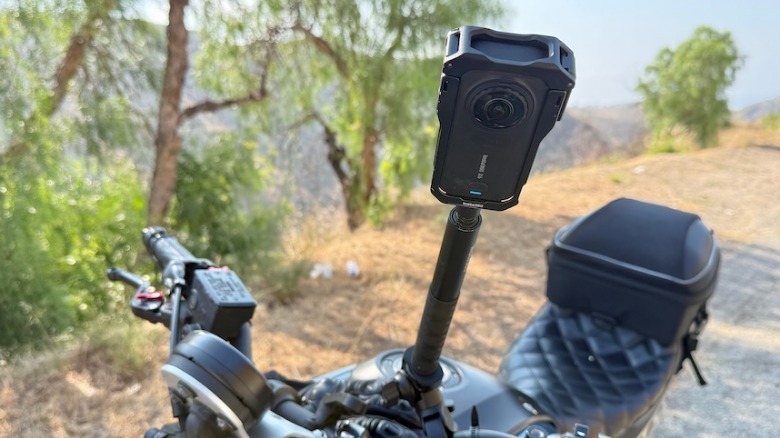
Once I had the special pre-release version of Insta360's updated app to work with, connecting the X6 to my iPhone was simple. The camera and microphones hooked up quickly, and assembling it was all a breeze. I also opted to purchase a Motorcycle Accessories bundle ($49.99) on my own, since my old one had a bit of wear and tear. It made the camera easy to mount and easy to adjust.
More than just the camera, the folks at Insta360 sent me a pretty comprehensive set of gear for the camera. On top of the Essential Bundle, they also sent a replacement lens kit and a protective utility frame since they knew I'd be using the camera on my motorcycle. Insta360 also sent me their Mic Pro package ($329.99). It included two transmitters, a receiver, a charging case, and the puffy little windscreens which help with the recording of clean sound.
I mounted the transmitters in a few different places on my body and on my motorcycle, looking for the best sound quality combination of capturing my XSR900's exhaust, as well as eliminating wind noise, and I found a few good spots for both. The X6 has an Engine Sound Enhancement mode that helps reduce wind noise, too. If you're capturing footage without the need for sound, the extra mics can stay at home, and the standard windproof mic will likely get the job done, but I think they're worth the upgrade – especially for someone looking to talk into the microphone while they're riding.
Breaking it (and fixing it)
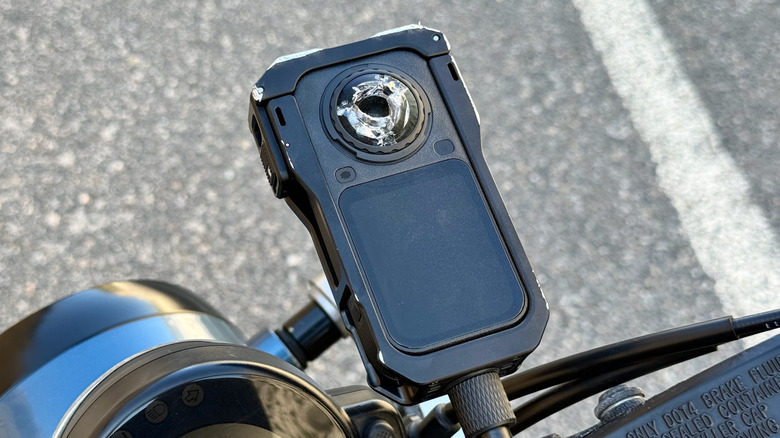
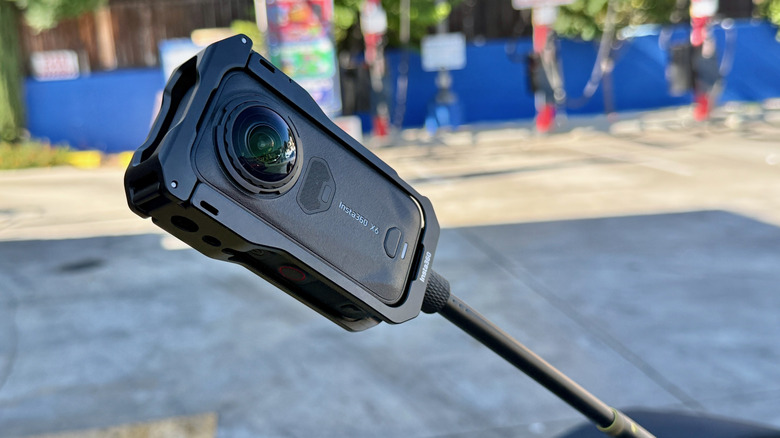
Early during my test of the newest Insta360, I broke the camera. It wasn't on purpose, mind you, but a combination of heavy equipment and some bouncy roads snapped the mount on the selfie-stick that Insta360 sent me – but I don't blame the equipment. That 114cm selfie stick is supposed to be for regular, handheld operation. I had another selfie stick that was designed for stuff like riding motorcycles; I just accidentally used the wrong one. I had the camera mounted to the frame of my bike via the motorcycle accessory clamp, with the selfie stick extended, and it snapped — sending the camera to the ground at around 50 mph.
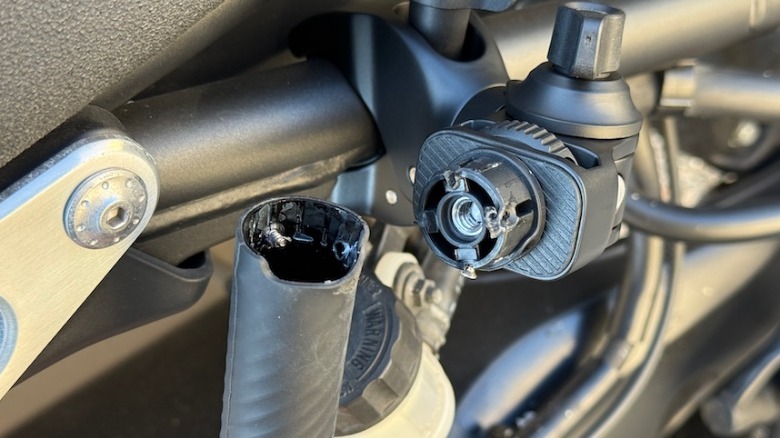 Travis Langness/SlashGear
Maybe a mile after the camera dropped off the bike, I looked back and noticed it was gone. Immediately, I turned around and headed back, hoping it hadn't been run over by another car yet. I found it in the road, and somewhat miraculously, it hadn't been the victim of heavy traffic.
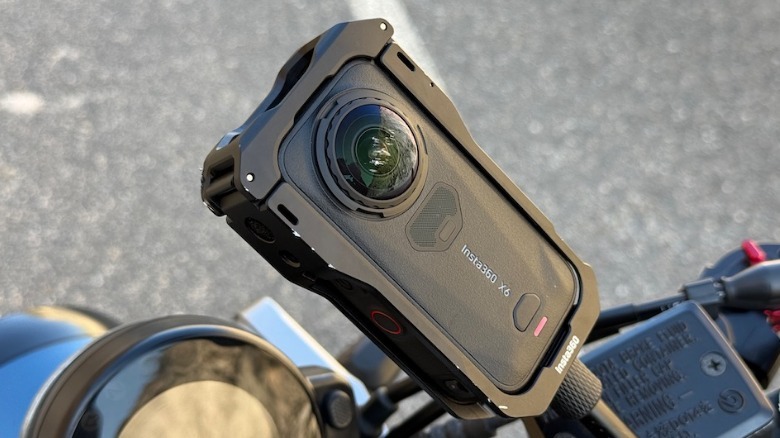 Travis Langness/SlashGear
I assessed the damage, called myself a few names for mistakenly using the wrong attachment, and eventually went home to swap out the lenses. What was a calamity in my mind actually turned out to be a hidden opportunity to test out the lens-swapping capabilities on both sides of the camera (one side was shattered, the other was significantly scratched).
Aside from the small bits of broken glass I had to carefully remove (the lens swap kit comes with gloves for such occasions), it was easy to unscrew the old, broken lens and replace it with a new one on both sides. Just a simple lefty-loosey twist with the provided lens-swap tools to take off the old lenses, some puffed-in air to remove the glass and dust, a quick clean with the provided microfiber cloth, and another righty-tight twist to install the new lenses. In less than 20 minutes, I was back in business.
Using it successfully (with zip ties)
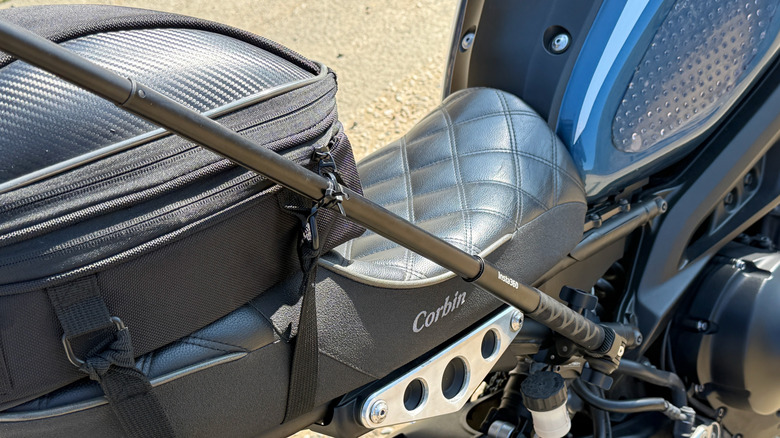
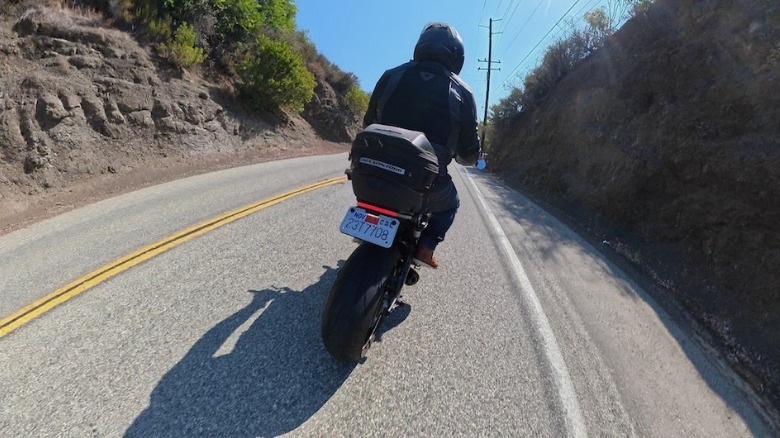
Eventually, I got lots of different sets of riding footage with the new Insta360. I made extra sure that the proper selfie stick wasn't going to fall off the motorcycle this time, and had a great weekend ride through the mountains, then along the beach. The camera connected quickly, was easy to turn on and off, and the small high-resolution screen gave me a great preview of the angles I'd be filming from.
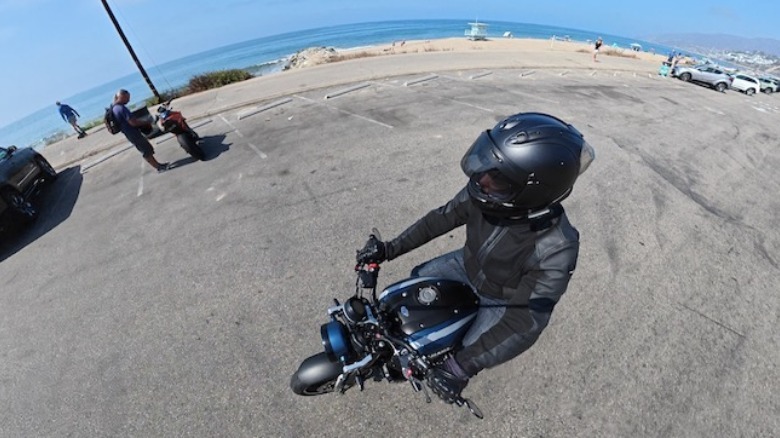 Travis Langness/SlashGear
The battery was never an issue on my ride – a nice way to stay at ease about the whole thing – the new battery will run 140 minutes while recording at 8K30fps (both of which were the settings I used). A few other nice-to-have features that the new battery comes with are IP68 waterproofing to 20 meters without a case for those times you get caught in the rain, and it'll charge back up in a hurry – only 24 minutes to reach 80%. Stopping for lunch at your local cafe? You can probably get a nearly-full battery going by the time you finish your latte.
 Travis Langness/SlashGear
To make a few "AI Director" videos, I simply booted up my phone, connected the app to the camera, and sorted through a few of the clips I'd recorded. I selected a few different templates from Insta360's various "moto" options, and let it rip. I didn't cut any footage on my own, make any transitions, or choose any angles – and it turned out pretty well. A bit more time with the app and I expect I'll be posting polished videos pretty soon.
The end result is pretty dang cool
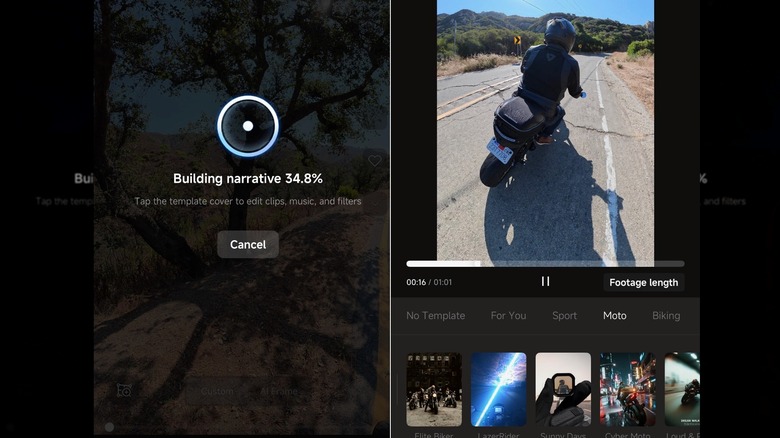
To answer the original question, as to whether the newest Insta360 camera is worth dusting off my desire to create motorcycle videos – it most definitely is. This thing is pretty rad. I think I will be using this new Insta360 on a pretty regular basis. After my initial failures with mounting it, I began to think of creative new angles and ways of capturing footage.
 Travis Langness/SlashGear
Just a few days of using the camera meant I wasn't able to fully explore its features, but I'm eager to continue testing out the rest of what it's got. And being able to swap out lenses so quickly and easily gave me the confidence that I could use this camera in pretty high-performance scenarios (so long as I carry extra lenses on me) without fear that I'd lose all the footage.
The end product using Insta360's in-camera editing footage is pretty good, too. The stock music that comes with the editing program doesn't light my soul on fire, but for a quick shot-and-post editing option, it's totally fine by me.
The Insta360 X6 (available from the Insta360 store online) is significantly pricier than the old X5, so current X5 owners may not see the need to upgrade, but for someone rocking an old camera like my X2, it's worth the leap. The X6 also has some competition worth considering, from cameras like the easy-to-use GoPro Max 2 and the DJI Osmo 360. With new features and a really easy-to-use interface, though, the Insta360 X6 is pricey, but it's at the top of its game.