

Pimax Dream Air Review: The New Svelte Prince Of Desktop VR Headsets
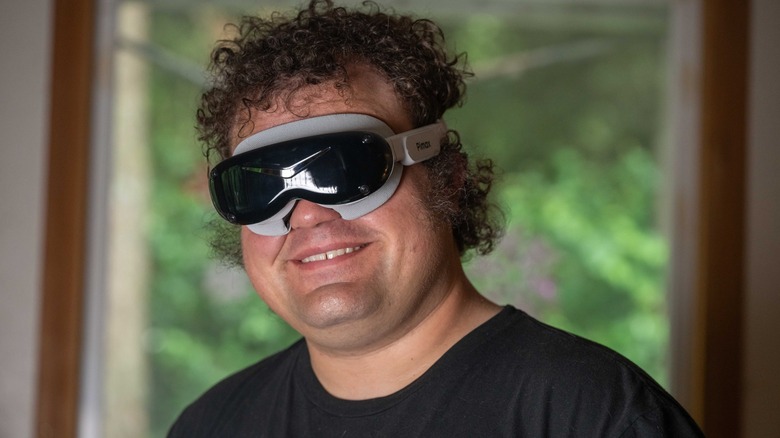
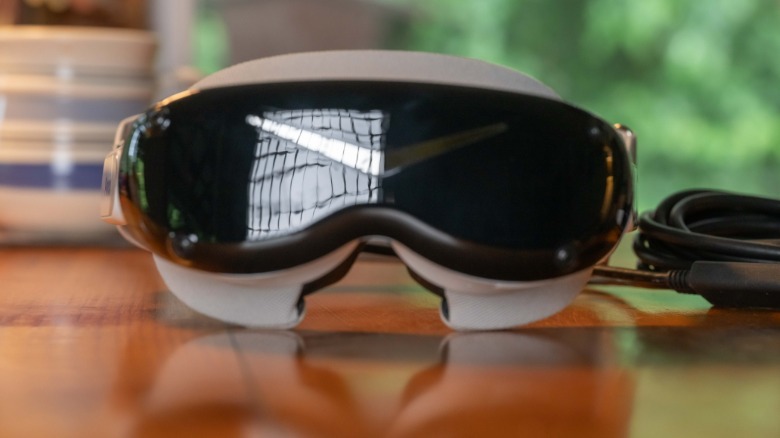
Billed as the "world's smallest full-feature 8K resolution VR headset", the Pimax Dream Air is a far cry from the beefy head-boxes that typify high performance virtual reality gear. It's much closer to the dream (no pun intended) of what a VR headset could be in science fiction. It's almost the sort of thing that doesn't look incredibly geeky and ungainly to wear.
On paper, the Pimax Dream Air offers a 110 degree field of view with micro-OLED displays featuring a whopping 3840 x 3552 pixel per-eye resolution, and a 90htz refresh rate. It also includes foveated rendering, built-in audio, and passthrough black-and-white video. In short, it looks to have practically everything you might want in a VR headset, so I was obviously eager to put it to the test and see if it lived up to the hype. I spent over a month with the Dream Air (provided by Pimax for this review) to make sure I had a firm grasp of whether or not this device is worth your money.
Streamlined and lightweight design
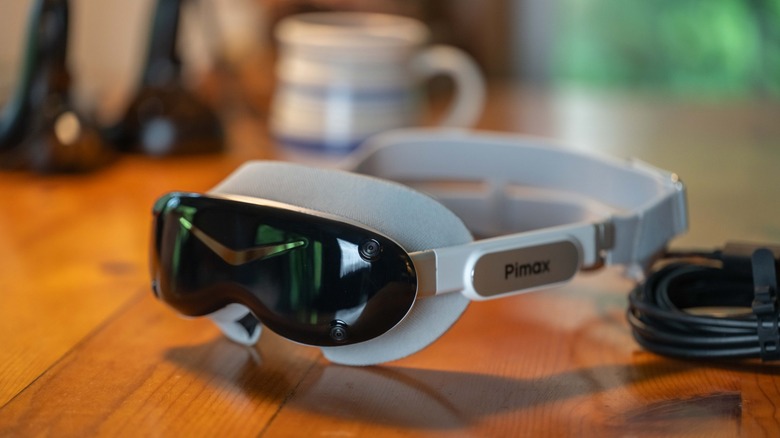
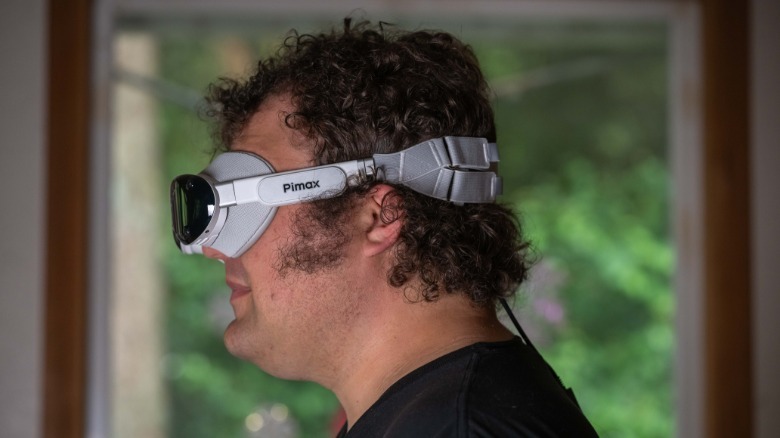
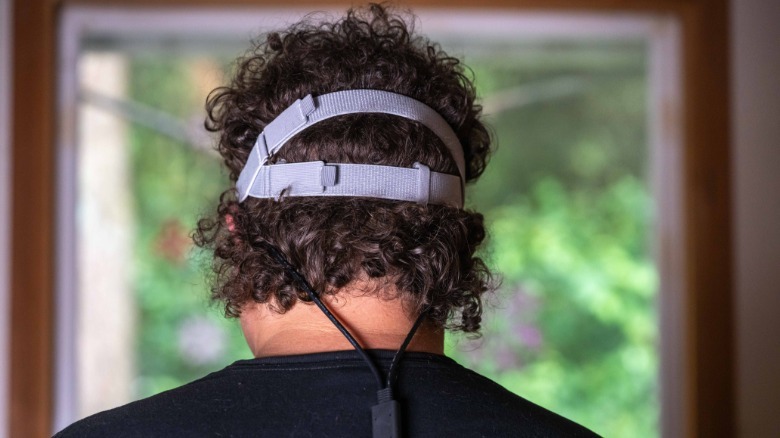
Unlike VR headsets I've used in the past, the Pimax Dream Air is a relatively svelte device, rather than an enormous and ungainly sharp-edged brick. My only gripe would be that while it does indeed fit my XXXL-size noggin, it's a bit of a squeeze to put it on. However, I'm not exaggerating the size of my head here, as most hats and even eyeglasses do not fit me, so I'm definitely at the extreme end of the spectrum in this regard.
That aside, the Dream Air is by far the most straightforward headset I've used when it comes to plugging it in, putting it on, and booting it up. I eventually grew more skilled at putting it on and taking it off, despite the tight fit.
 Andy Zahn/SlashGear
 Andy Zahn/SlashGear
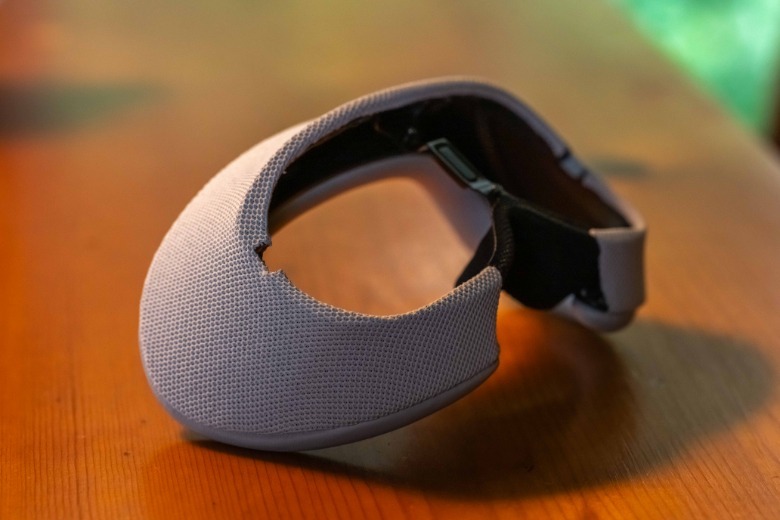
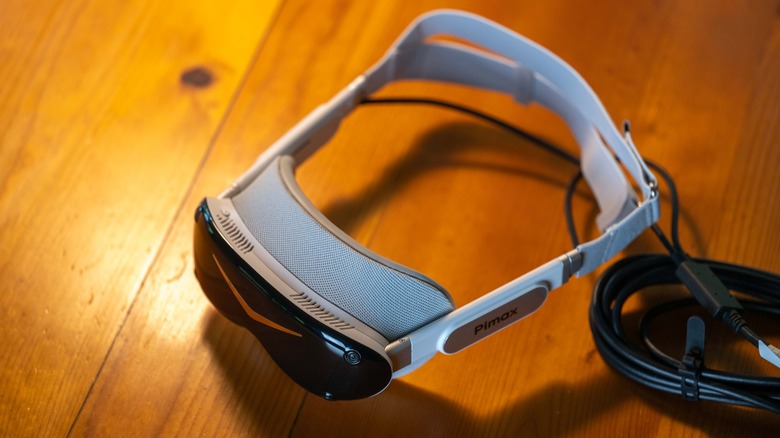
The liner around the face is comfortable and easily replaceable, thanks to a magnetic attachment system, and blocks out most intruding light. Power and volume controls are easy to remember and locate, but reaching for them will result in the inevitable smudging of the glossy front plate of the headset. It's definitely a finger print magnet, and I found it difficult to avoid touching the camera lenses embedded in this exterior surface, though this didn't seem to affect performance.
 Andy Zahn/SlashGear
 Andy Zahn/SlashGear
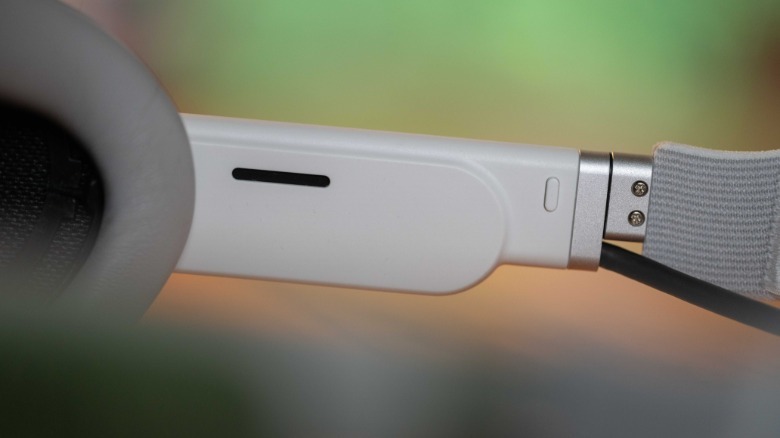
The headband features integrated speakers, which produce fairly decent audio that's reasonably isolated to the user. They are built into the frame of the headset, so they don't protrude and are much more durable in this regard than other headsets I've tested.
Expansive FOV and excellent picture quality
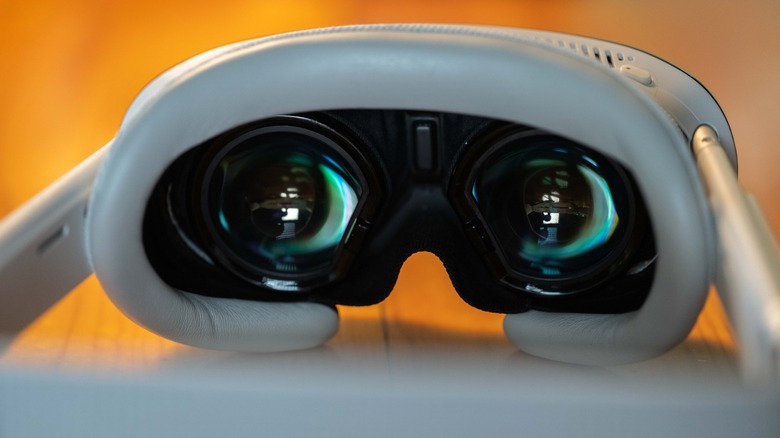
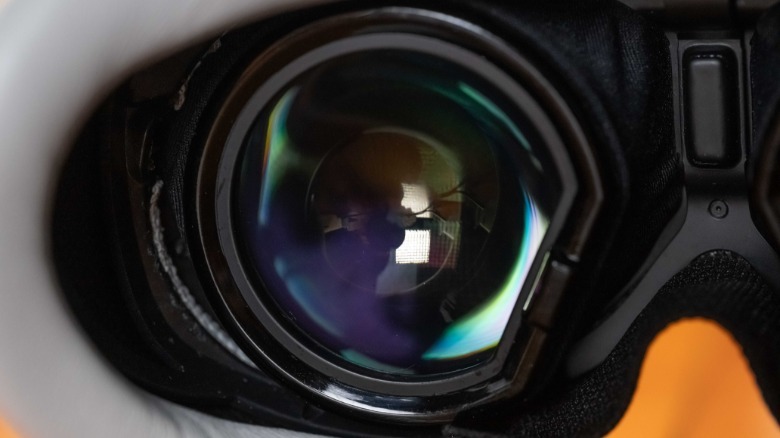
Featuring a 102 degree field of view (FOV), the Dream Air uses pancake lenses to achieve the widest FOV of any Micro OLED headset currently available. To a VR enthusiast such as myself, achieving the widest FOV possible while maintaining a high degree of resolution and image quality is the key to making a great headset, and it's safe to say that the Pimax Dream Air definitely pushes the boundaries of what can be achieved within current technological limits.
 Andy Zahn/SlashGear
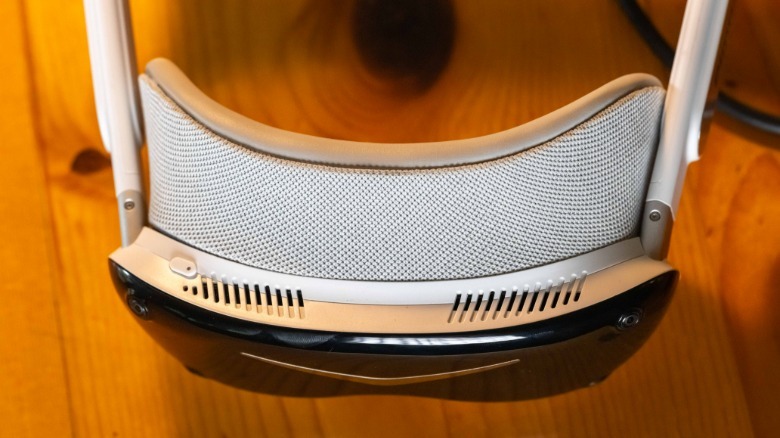
Hopping into one of my favorite VR games, "Star Wars: Squadrons," the Dream Air provided what might be the best possible way to experience that game. Here the detail a headset can render and the field of view it can provide are really noticeable due the detailed way the cockpit of your space ship is presented, combined with the high-octane gameplay.
 Andy Zahn/SlashGear
Similarly, another of my long-time favorite games, "Until You Fall," was by far the most crisp and vibrant I've ever seen it, and I got deeply immersed in the action of that game. This is such a good action-rogue-like game that, at least to me, is infinitely replayable, and is among my favorite titles for comparing VR headsets. "Half Life: Alyx" was also a fantastic experience using the Dream Air, and in general it is kind of glorious in how it merges a high level of performance with a lightweight, minimalist build.
Same-old controllers are functional, but at odds with the high-end headset
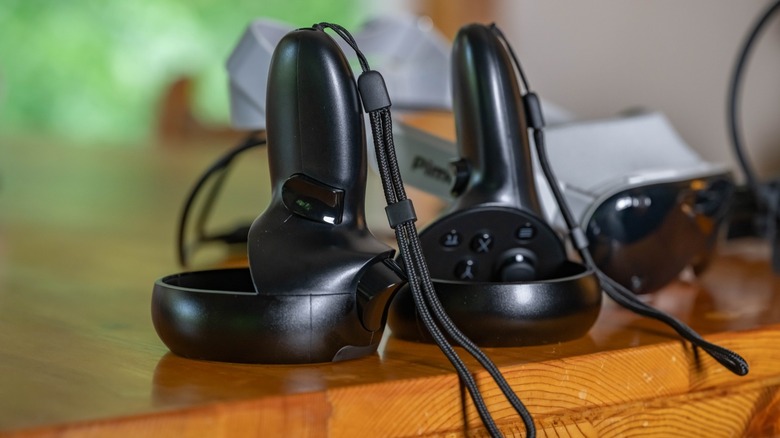
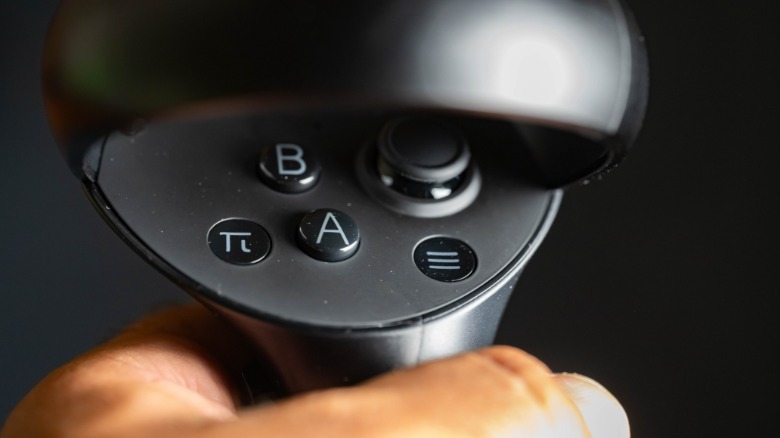
The two controllers that ship with the Dream Air are the same pair that Pimax has been included with their headsets for years. They're perfectly functional, with rechargeable batteries and a sensible control layout, but I would have expected something a little more impressive to ship with the Dream Air.
To be clear, you can use other controllers with the Dream Air. For a lot of games an Xbox or PlayStation controller, or a racing wheel or flight stick is going to be preferable. A separate version of the Dream Air is also available, which offers compatibility with Lighthouse tracking so that you can use something like Valve's knuckle controllers. For that you'll need to already own, or to purchase, the necessary base stations, and install them around your room.
 Andy Zahn/SlashGear
The SLAM version I tested doesn't require any of that, and for a lot of people such a relatively simple setup is preferable. However, I do wish that Pimax had chosen to give their default controller an upgrade. Regarding tracking performance, the headset seemed to be generally consistent and accurate, though when I ran it through a system with older hardware I did experience some latency issues in certain games.
After troubleshooting the issue, I narrowed it down to the fact that the motherboard in this rig only has PCIe X8 slots, while the more modern hardware I ran it on features a motherboard with PCIe X16 slots. I believe this essentially ended up throttling the performance of the headset in certain situations where it required the greater bandwidth of PCIe X16.
Premium price point
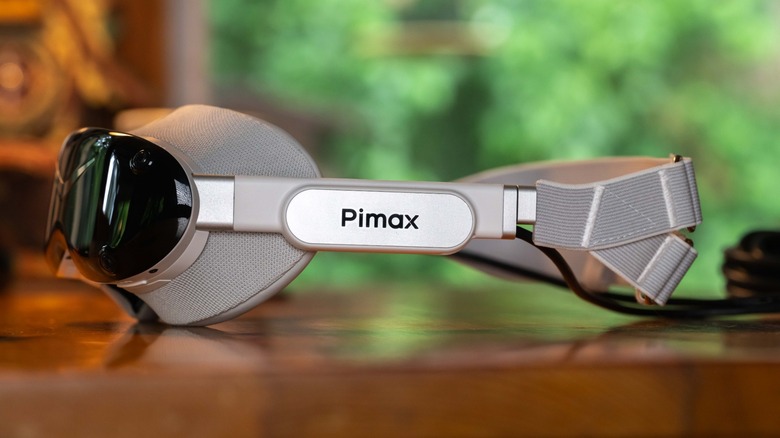
At $2299 for the SLAM version I tested, or $1999 for the Lighthouse compatible version, the Pimax Dream air is definitely at the pricier end of the scale when it comes to VR headsets. With that said, it offers a combination of features that aren't available anywhere else in the VR space, so your money is paying for cutting-edge tech, and Pimax has put in the work to make sure this headset is ready-to-go right out of the box.
 Andy Zahn/SlashGear
There are certainly less expensive gaming headsets available, such as the Valve Index, which costs $999 in a kit with base stations and controllers, and is much more of a traditional big-and-boxy headset. However, as of this writing the controllers are out of stock on Steam, so currently you can't actually buy one. The Bigscreen Beyond 2 is a comparable ultralight VR headset starting at $1019, but it is limited in a number of ways compared to the Dream Air, and requires base stations. The costs stack up fast, and it isn't far behind the Dream Air in terms of cost if you want eye tracking and a headband with audio.
 Andy Zahn/SlashGear
Pimax's Dream Air SE offers a compelling low cost alternative, which starts at just $899 ($1199 for the SLAM version). You'll miss out on features such as the ultra high resolution of the flagship Dream Air, but the price gap is significant enough to make up for such compromises.
Conclusion
The Pimax Dream Air stands out for just how polished it is at launch, and how easy it is to setup and use. Perhaps even more importantly, it's really well made, and that sort of durable design is something to be valued in a VR headset. The lightweight design paired with top-of-the-line specs cement it as a highly desirable upgrade for virtual reality enthusiasts.
The lack of adequate accommodation for extra-large head sizes is probably my most serious gripe with the headset. Latency issues on older hardware were the other significant problem I ran into, though as previously stated I think I managed to isolate the specific problem with the motherboard in the particular PC where I experienced the latency. In better, newer hardware, those problems didn't exist.
Ultimately, I find the Pimax Dream Air an easy headset to recommend, so long as you have the wad of cash to spare, and the modern high-end PC to push the limits of this cutting-edge tech. It's amazing to see how far virtual reality has come in just the last 5 years, and it's exciting to imagine where it might be in another 5 years down the road.
The Pimax Dream Air is available starting at $1999 on Pimax's online store.