

Every Honda Model Announced For 2026, And What They Cost
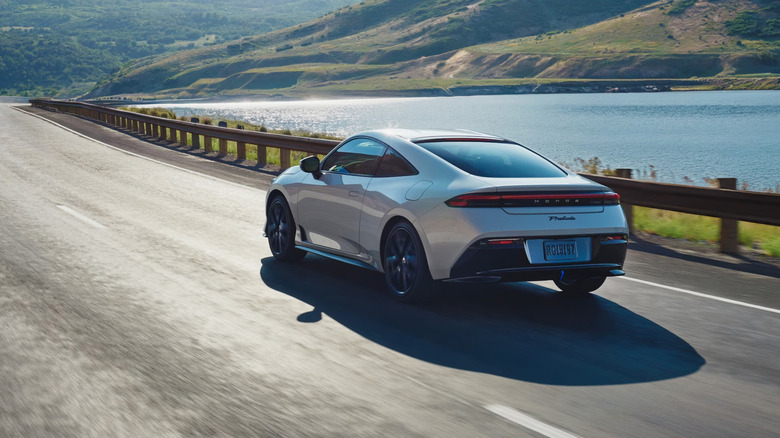
Honda's lineup has featured all sorts of iconic vehicles over the years, from the efficient and fun Honda Civic to the family-friendly Honda Odyssey. This lineup rarely changes, so you can probably guess what Honda's 2026 lineup mostly is without having to look. However, Honda is usually tinkering with its lineup to some extent, whether through mid-cycle refreshes or odd new cars like the plug-in hybrid, hydrogen-powered CR-V. Yes, that's a real thing, and don't worry, it's there if you scroll down.
If you're going to wind up in a new car in 2026 and you want a Honda, you're probably curious what Honda is doing this year. We won't bury the lede too deep. Honda's lineup remains largely unchanged from 2025, and thus, you can expect to find nearly two dozen total models if you walk into a well-stocked Honda dealership today. Many of those are hybrid and gas variants of the same vehicles, so there are about a dozen unique vehicles.
Below are those Honda vehicles and their various price tags. We'll toss an honorable mention to the Honda 0 Series here. It's an EV that Honda says will come out sometime in 2026, but it's not one you'll find on dealership lots as of this writing. If it does launch this year, it won't be until later in 2026.
Honda CR-V and CR-V Hybrid
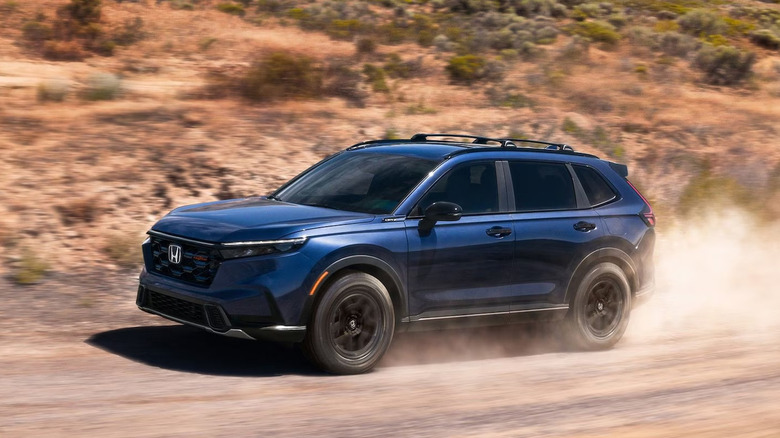
First up is the 2026 model year of the most successful SUV in Honda's history, and that's the Honda CR-V. This is part of the sixth-generation CR-V that launched in 2023, and it comes in both gas and hybrid variants. The most notable change for 2026 is the introduction of the CR-V TrailSport Hybrid trim, an off-road-focused model with all-terrain tires and orange badging. All told, there are seven trims of the Honda CR-V and CR-V Hybrid.
Prices start at $30,920 for the most spartan model, the Honda CR-V LX. At the top is the Honda CR-V Sport Touring Hybrid at $42,550. Add on dealership fees and a $1,395 destination charge to that. The gas models are powered by a 1.5-liter, 190-horsepower turbo-four with available AWD, while all CR-V Hybrid models sport a 204-horsepower 2.0-liter four-cylinder with an electric motor to give it some more juice.
For the most part, it doesn't much matter which one you get. Both powertrains perform well, and reviews unanimously praise the car for its balanced ride quality and handling characteristics. Moving up the trim levels adds predictable amenities such as leather seating, a sunroof, and a power liftgate. If you can swing it, the Hybrid model may be the better buy since it avoids Honda's 1.5-liter turbo-four, which has had reliability issues in the past.
Honda Passport
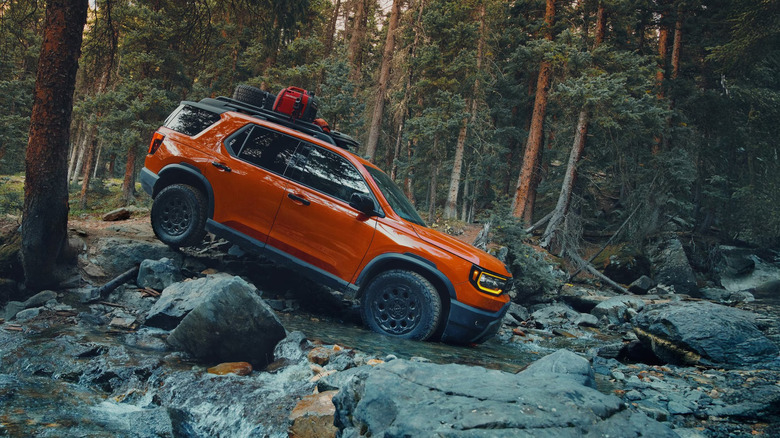
Honda undertook a complete redesign in 2026 that made the Passport larger and more off-road focused. It uses the same V6 engine found in the Pilot and Ridgeline, and with enough TrailSport trims to shake a stick at, Honda really leaned into the off-road worthiness of its redesigned midsize SUV. There are no hybrid variants of the Passport, so all buyers are stuck with the V6 that comes on every Passport.
Despite having seven trim levels, the Passport is actually pretty simple. The low-end RTL trim starts at $44,950, and the maxed-out TrailSport Elite Blackout trim ends up at $53,850. In reality, there are actually three trims: the RTL, TrailSport, and TrailSport Elite. The RTL gets a towing trim that includes a Class III Trailer Hitch, and the remaining three trims are essentially blackout appearance packages that add $1,200 to the price.
Honda seems to have scored an early victory with this one, as these things have already been flying off the proverbial store shelves. It's easy to see why. Reviewers note the soft ride while praising Honda's excellent i-VTM4 AWD system. The only downsides seem to be the mediocre fuel economy and higher starting prices.
Honda Pilot
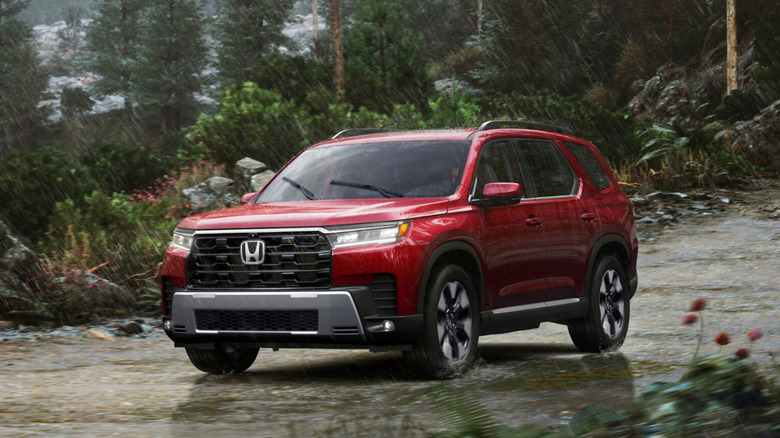
The Honda Passport has been a mainstay in Honda's lineup since it was introduced in 2003. The three-row crossover competes with the likes of the Kia Telluride and Toyota Highlander, and it does so pretty well. For the 2026 model year, the Pilot remains largely unchanged, with a larger standard infotainment display, improved soundproofing, and a few updated styling elements as highlights. Like the Passport, all Honda Pilots are powered by the most recent iteration of Honda's J35 V6, and there is no hybrid version available.
There are seven total trim levels for the Honda Pilot. Pricing starts at $42,195 for the Sport model and ranges up to $54,995 for the Black Edition. Unlike the Passport, which has three regular trims and three appearance trims, the Pilot has five regular trims and only two appearance trims, so as you range up the lineup, you'll add more amenities. The Elite and Black Edition are largely the same, with the Black Edition adding extra blacked-out styling elements.
There isn't much else to add. It's an agreeable three-row crossover that's easy to drive and offers excellent ride comfort, even in higher trims with larger wheels. Pilots have been known to be quite reliable, and people seem to like it.
Honda Ridgeline
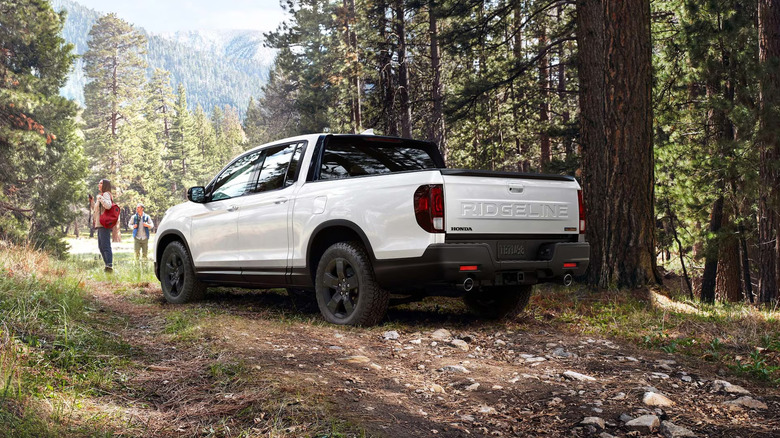
The Honda Ridgeline is arguably the automaker's most polarizing vehicle. It's essentially a crossover SUV with a truck bed, and while some may view it as the best of both worlds, others criticize it for not being as capable as a body-on-frame truck. I own one and quite like it, but I know it has limitations. Anyway, Honda brought it back for 2026, and other than some minor styling tweaks, the Ridgeline remains unchanged from the 2025 model year.
There are six total trims for the Ridgeline. At the bottom of the pack is the Sport trim, which starts at $40,795 and ranges up to the Black Edition Two-Tone (the new styling tweak for 2026) at $47,895. If you skip the two-tone styling, the Black Edition starts at $47,395 and includes all the features available on the Ridgeline. That means there is less than $7,000 difference between a base model and a top-end model, which makes it a fairly palatable upgrade compared to some trucks.
Despite being less capable than top-end models of other midsize trucks, the Ridgeline still has a lot going for it, including asmooth ride for any pickup truck, a well-equipped (if slightly outdated) cabin, a power sliding rear window, and the famous brunk, or in-bed trunk that can carry a surprisingly large amount of stuff.
Honda HR-V
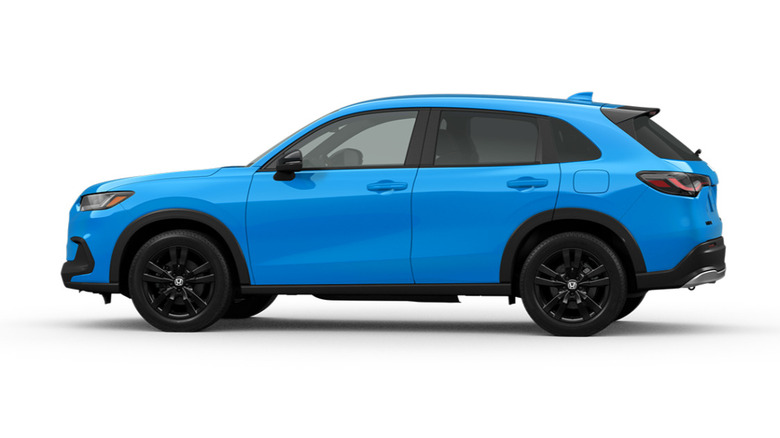
The 2026 Honda HR-V will be the smallest crossover in Honda's lineup once again. It was redesigned for the 2023 model year. The 2026 model is seeing a few small changes from last year. Those changes include a larger infotainment display, standard wireless Android Auto and Apple CarPlay, and some minor styling and interior changes. This little grocery getter is largely enjoyed for its errand-running capabilities, even if the 158-horsepower engine isn't as fun as some other Honda models.
Honda knows its audience for the HR-V, and as such, offers a mere three trim levels. The LX starts at $26,500, making the HR-V one of the most affordable Hondas you can buy. You can step up to the Sport for $28,300 and top out at the EX-L trim for $30,350. Upgrading trims is fairly predictable, with each successive trim adding features such as remote engine start on the Sport trim and dual-zone automatic climate control on the EX-L. All three trims have available AWD.
Of all the models in Honda's lineup, the HR-V is the only one that Honda is treating as an appliance. Its 2.0-liter four-cylinder engine is efficient but uninspiring, perfect for getting kids to school or pets to the vet. Honda's clever interior design gives it more storage space than many small crossovers, and it's easy to park.
Honda Civic (and Civic Hybrid)
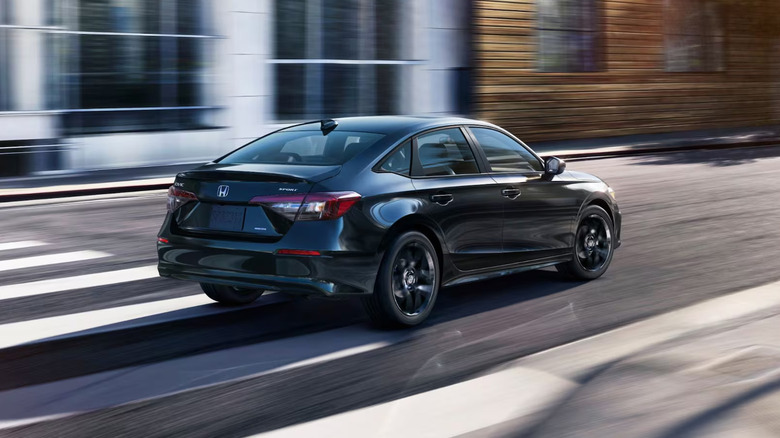
Ever since "The Fast and Furious," the Civic has been one of Honda's most iconic cars. They don't come that juiced up out of the factory, but the Civic is still one of the most fun cars in Honda's lineup to actually drive, with wicked good handling that lets you whip the car around at your leisure. Honda's approach to the Civic is that if it ain't broke, don't fix it. As such, there are no major changes for the 2026 model year.
The Honda Civic comes in sedan and hatchback variants as well as gas-only and hybrid drivetrains. All told, there are seven Honda Civics up for grabs. Bidding starts with the Honda Civic LX at $24,695 and ends with the Sport Touring Hybrid (hatchback version) at $33,595. The Sport, Sport Hybrid, and Sport Touring Hybrid are the same between the sedan and hatchback models, so all you're really choosing here is how your trunk works. The LX trim is only available on the Civic sedan.
The gas versions are powered by the same 150-horsepower 2.0-liter four-cylinder that powers the Honda HR-V. If you can swing it, we'd recommend springing for the 200-horsepower hybrid drivetrain, as it adds a level of zip that feels more appropriate for a car that handles as well as a Civic.
Honda Civic Type R and Si
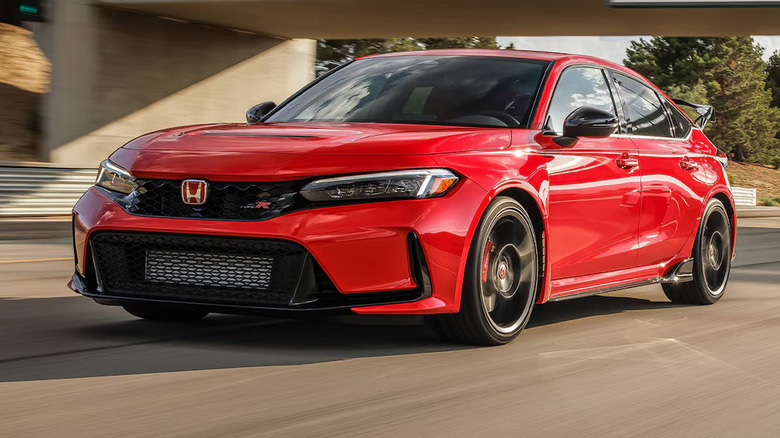
There are technically two additional trim levels for the Honda Civic: the Civic Si and the Civic Type R. They are very different from the standard Civic models and are made for a specific type of driver and buyer. While the Civic is economical, the Type R and Si are performance-oriented, and their higher price points reflect that. Both models are unchanged for 2026 compared to their 2025 models.
The Civic Si has an MSRP of $31,495, and the only choice you get to make with its configuration is whether you want all-season tires or summer tires. The Civic Type R is similar but much more expensive, with an MSRP of $46,895. The Type R does have a few extra add-ons you can toss in for a price.
Both models come with special engines. The Civic Si sports a 200-horsepower 1.5-liter turbocharged four-cylinder. The Type R amps things up dramatically with a turbocharged 2.0-liter that outputs 315 horsepower. Make no mistake, these are enthusiast models, but both can be daily drivers if you really want them to be.
Honda Accord (and Hybrid)
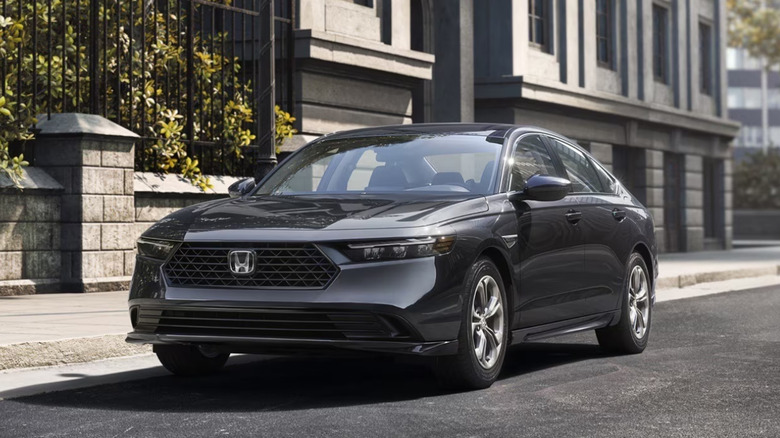
Honda Accord sales have slowed over the last couple of years, but it remains one of America's most popular sedans. I owned a 2019 model, and I can explain why. It's big, comfortable, well-equipped, and a good mix of fun and comfort. In any case, Honda redesigned the car for the 2023 model year, including the hybrid variant, and that's the generation we're in currently. The 2026 model year adds a larger touchscreen to lower trims, along with sportier styling changes, including blacked-out accents on some trims.
The Accord comes in six trim levels. The bottom two trims are gas-only, and the remaining four are all hybrids. Things start with the gas-only LX trim at $28,395 and range up to the Touring Hybrid at $39,495. Features are added logically as you climb the trim levels, with the top-spec Touring Hybrid including niceties like ventilated front seats and a Bose audio system. The gas-only models are powered by a 1.5-liter turbo-four, while the hybrids all feature a 204-horsepower 2.0-liter four-cylinder with an electric motor.
Much like the Civic and the CR-V, your best value is upgrading to one of the Accord Hybrid trims. Not only is the engine faster and the trims better equipped, but you also get to avoid the 1.5-liter turbo-four, which has been the subject of owner horror stories in the past.
Honda Odyssey
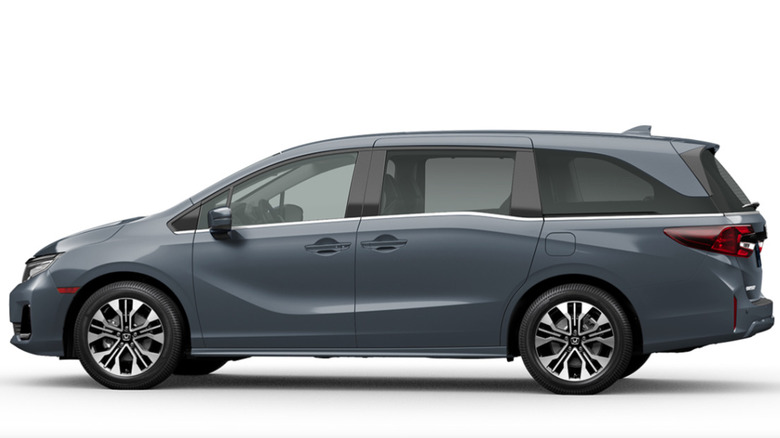
The Honda Odyssey sits as the automaker's lone minivan in the lineup, and it's also been brought back for 2026. While it does have a fairly high starting price, Honda makes up for it with a laundry list of standard features, even in the base trim, and the same strong V6 engine you find in the Ridgeline, Pilot, and Passport. The minivan gets a bad rap as an uncool vehicle, but honestly, minivans are exceptionally versatile and often fit three rows of people better than their three-row crossover counterparts.
The Odyssey has four trim options, starting with the EX-L at $42,795 and ending with the Elite trim at $51,695. Unlike many other Honda models, the Odyssey lacks a hybrid version and also any fancy appearance packages. However, the Touring and Elite trims both include a rear-seat screen with HDMI and USB-C support. Who cares about blacked-out styling elements when you can have wi-fi on road trips?
In any case, this is one of the oldest models in Honda's lineup, having been introduced in 2018. The Odyssey and the Ridgeline are both due for redesigns, though it's unclear whether they will receive them. However, Honda is going to give the Odyssey a hybrid V6 option, although it's probably not coming until next year at the earliest.
Honda Prologue
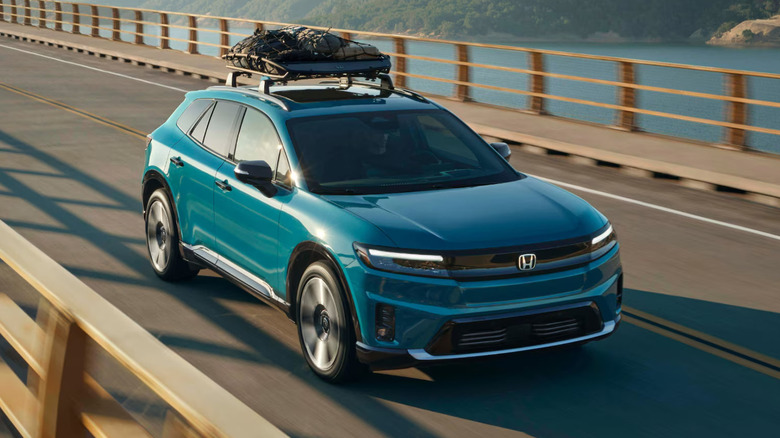
Honda introduced the Prologue in 2024 as the brand's main EV competitor. It's pretty decent as far as EVs are concerned, boasting roughly 300 miles of range per charge. The Prologue bucks many EV trends by having things like physical HVAC controls instead of putting everything in the infotainment display, which is an awful thing to do. Honda built the Prologue alongside GM, and while it does share some components with the Blazer EV, they are far from the same vehicle. In addition, Honda didn't add anything major for the 2026 model year.
As is pretty typical with EVs so far, there are only three trim levels to choose from with the Prologue. The base model EX starts at $47,400, and the top-level Elite caps things off at $57,900. In the middle is the Touring trim, which retails for $51,700. Stepping up to the top trim actually lowers the range. Folks opting for the Elite trim will lose an estimated 25 miles of range as a result. In return, they get ventilated seats, 21-inch wheels, all-wheel-drive dual motors, and some other niceties.
Reviews for the Prologue are largely positive, praising the EV for its comfort and interior space. However, those 21-inch rims have drawn some ire for making the ride a little bouncier than some folks would like. If you're shopping for a Prologue, the Touring may be the best option overall.
Honda Prelude
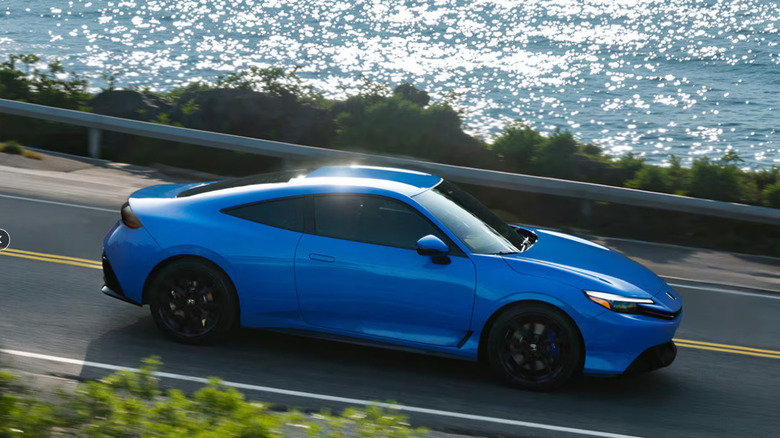
The Honda Prelude is an all-new vehicle for Honda, as there was no 2025 model to precede it. Technically, though, there were fleets of Preludes that were long regarded as driver's cars before they were discontinued in 2001. Honda brought it back in 2026 as a hybrid, and it has arguably taken the Ridgeline's place as Honda's most polarizing automobile. Reviews of the Prelude are largely positive, but its hybrid powertrain has left some enthusiasts second-guessing. Pair that with higher than MSRP values at dealerships, and the Prelude is off to a rough start.
The Prelude is similar to the Civic Si and Type R in that there aren't many trims to choose from. In fact, there is only one, the Prelude Hybrid at $42,000, with an optional Hybrid Two-Tone package that adds a two-tone paint job for an extra $500. The Prelude comes with plenty of features, including a Bose audio system, adaptive suspension, heated front seats, and special 19-inch wheels.
Where most of the controversy stems is the powertrain, which is the same as the Civic Hybrid. It's a 2.0-liter four-cylinder with a hybrid that makes 200 horsepower. However, reviewers note that the Prelude has exceptional handling and driving prowess, even if it's not the fastest in a straight line. You can, of course, just get a Honda Civic Hybrid, too.
Honda CR-V e:FCEV
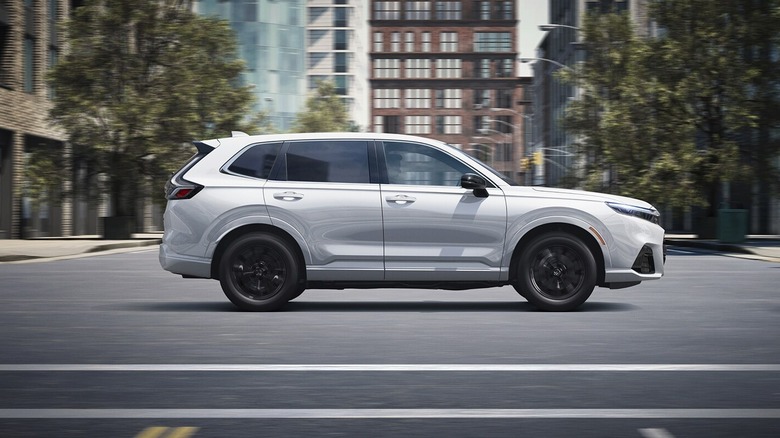
Arguably, the most interesting car in Honda's 2026 lineup is the Honda CR-V e:FCEV. Those last few letters are the key here. It's a plug-in hybrid crossover powered by hydrogen instead of petroleum gasoline. The system was built in partnership with GM, and that makes it the most unique car in the lineup. There doesn't appear to be any major changes made for the 2026 model year.
There is a single trim level for the CR-V e:FCEV, and it retails for $50,000. For that, you get a 174-horsepower hydrogen and electric hybrid engine and the inner trappings of a Honda CR-V. As such, it drives very much like a Honda CR-V, and if you like one, you'll probably like the other as well. The difficulty is finding hydrogen fuel stations, of which there are exceedingly few. As such, the CR-V e:FCEV is only available for lease in California, where quantities are limited.
It's definitely a cool technology, and one that may or may not get more popular over time. Honda is doing everything it can to get people into these vehicles to test them, including offering a $15,000 fuel card, 21 days of complimentary car rentals through Enterprise if they break down, and additional credits and incentives.