

15 Of The Greatest Cars To Come Out Of Automotive's Golden Age
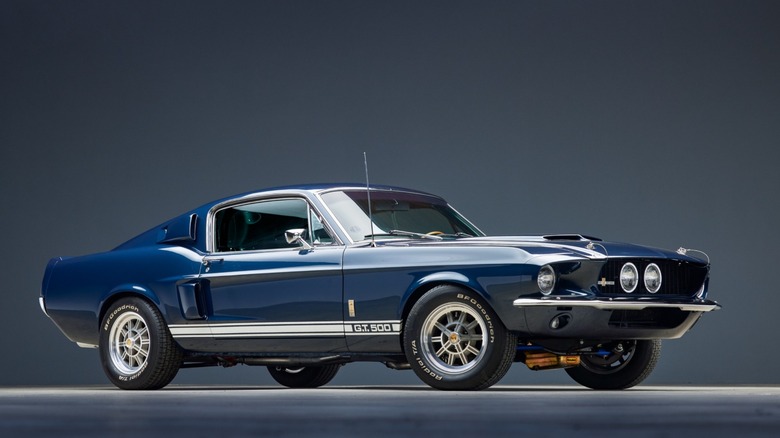
Various factors drove the golden age of cars during the '60s — the U.S. economy boomed after the Second World War, giving many Americans the ability to purchase vehicles. This increase in automotive sales allowed car companies to invest in design and technologies, allowing them to build models that caught the attention of the buying public. The 1956 National Interstate and Defense Highways Act also saw the establishment of the national interstate highway system, making it easier and more comfortable to drive across the nation.
The same thing happened in Western Europe when it came to cars. Even though the region was just coming out of the shambles of war by the mid-1940s, it was on the way to recovery by the 1950s, with car ownership rising again by 1959. The combinations of all these factors helped drive car adoption on both sides of the Atlantic, which is why many consider this period to be the golden age of cars.
We're listing some of the greatest vehicles to come out of these years. Many of these models launched during the '60s, but we're also including a couple of vehicles before and after this decade that still have an impact on motoring today.
1938 Volkswagen Beetle
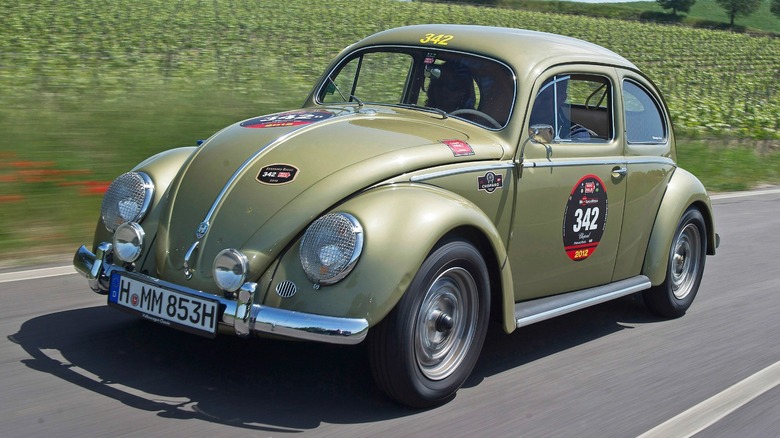
If we're talking about one of the most iconic vehicles of all time, we certainly cannot forget about the Volkswagen Beetle. It had a somewhat dark beginning, having been born from Nazi Germany's push to appear prosperous and build a "people's car" (Volkswagen in German) that would be easily affordable for the average citizen. The Second World War disrupted the Volkswagen's production, but it was soon restarted after the end of the war to provide transportation for the occupying forces.
It was first brought Stateside in 1949 but failed to garner interest because of the anti-German sentiment of the 1940s. Nevertheless, it slowly gained traction in 1950 when a vehicle importer expedited dealers' orders for sports cars like the Porsche 356 if they bought the little Beetle. It turned out that this cheap car was easy to sell, and, by the 1960s, became a cultural icon among many young Americans.
Another thing that made it legendary is that its look barely changed from when it was first publicly revealed in 1938 all the way until the last model rolled off the factory line in Puebla, Mexico, in 2003. This marked nearly 60 years of continuous production, with more than 21 million units built, and although its physical appearance didn't age a day since 1938, it did receive technological improvements over the years.
1955 Mercedes-Benz 300SL
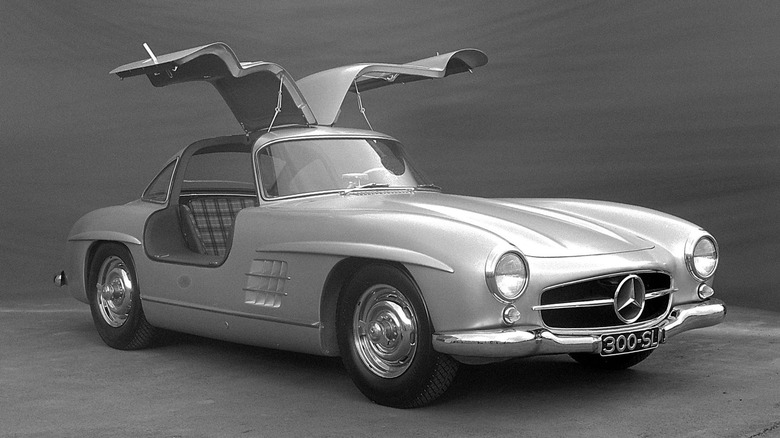
The W198 Mercedes-Benz 300SL is known for its iconic gullwing doors and lightweight construction, which itself was based on the company's W194 300SL race car. While many would expect a road-going version of a racing model would be heavier and slower, the W198 300SL was, in fact, still light, with its spaceframe weighing just 181 pounds and a more powerful 3.0-liter straight-six direct-injection gasoline engine that produced 219 horsepower. This might not seem much today, but these are excellent numbers for the 1950s.
But what really made the car so iconic is its gullwing doors, which is a rare feature even today. These doors weren't actually built as a design feature — instead, the engineers who created the W194 had to use doors that ended at the mid-level of the car and opened upward because cutting into the spaceframe meant compromising the vehicle's strength. Mercedes-Benz also only built a small number of these roadsters, producing 1,400 examples from 1954 to 1957. This meant that it's hard to come by a good example of a W198 300SL today, with one unit sold at auction for an astounding $1,375,000.
1961 Jaguar E-Type
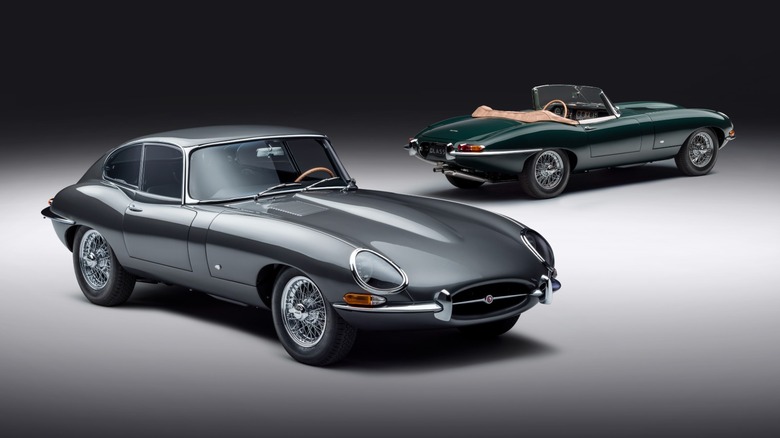
Long before Jaguar lost the plot and rebranded itself into something unrecognizable, it built a timeless sports car that still looks beautiful and graceful today, with the Jaguar E-Type. This vehicle was unveiled in March 1961 at Geneva and was available in both roadster and coupe forms. More than 60 years later, and the company offered it for sale as a Jaguar Classic, powered by a "restored and refined" 3.8-liter straight-six XK engine putting out 265 bhp. Again, this might not sound much today, with the latest Honda Civic Type-R producing more power, but it was pretty quick during its time.
While it started as a road car, it eventually entered racing when the FIA created the GT category for production sports cars. It had some success in British racing leagues, and the company even prepared it with a lighter all-aluminum body to compete internationally. Unfortunately, it never made the podium outside of the British Isles. Even then, it remained a popular sports car, and it still has a following to this day.
1961 International Harvester Scout
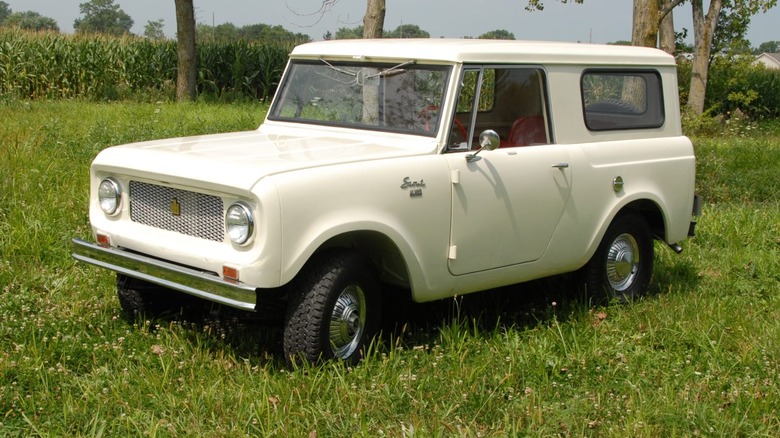
While many disagree on which car is the first modern SUV, we can say that the International Harvester Scout is one of the models being considered for the top spot. It was built to compete against the Jeep CJ but had a longer wheelbase for better practicality and is available in more configurations, making it quite the adaptive 4x4. Its old ads even claim that it's a "quick-change artist," telling buyers, "It's a station wagon, a convertible, a light-duty hauler, a runabout ... like having four vehicles for the price of one!"
This has got more adventurous car shoppers interested in its capabilities, especially those who want to occasionally explore the wilderness during the weekends but still want something practical for the weekdays. Other car brands soon followed suit, with the Ford Bronco and Chevy Blazer arriving on showroom floors just a few years later. Unfortunately, it was discontinued by 1980, with the brand disappearing altogether by 1984.
1962 Ferrari 250 GTO
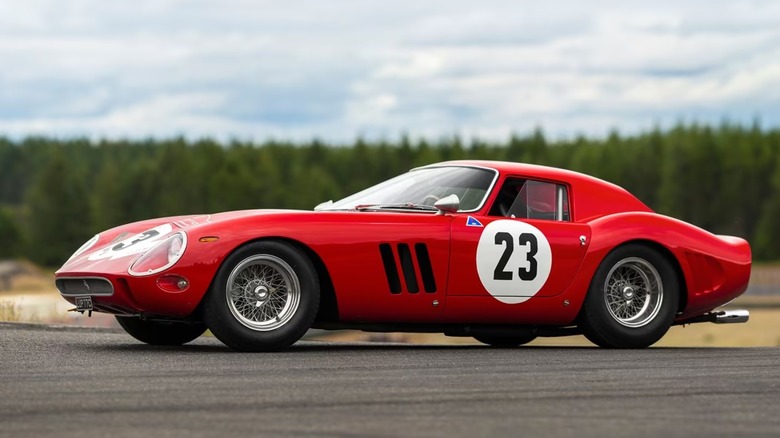
We have to have a Ferrari in our list if we're talking about some of the greatest cars to come out of the golden age of cars, and there is no better example of this than the Ferrari 250 GTO. IT has gotten to the point that an Italian court ruled that this car model is a work of art and that "the customization of the car's lines and its aesthetic elements have made the 250 GTO unique, a true automobile icon," thus only Ferrari can produce this vehicle, in the past, present, and future.
The 1962 Ferrari 250 GTO was produced in only 36 units, making it quite rare. Because of this, you rarely see a 1962 Ferrari 250 GTO go on sale anywhere, and it makes the news whenever it gets on the auction block. One example sold for $48.4 million at an auction through RM Sotheby's in 2018, making it one of the most expensive Ferraris ever sold. Even though it has been eight years since that sale, no other 250 GTO has been sold again, at least publicly.
1963 Aston Martin DB5
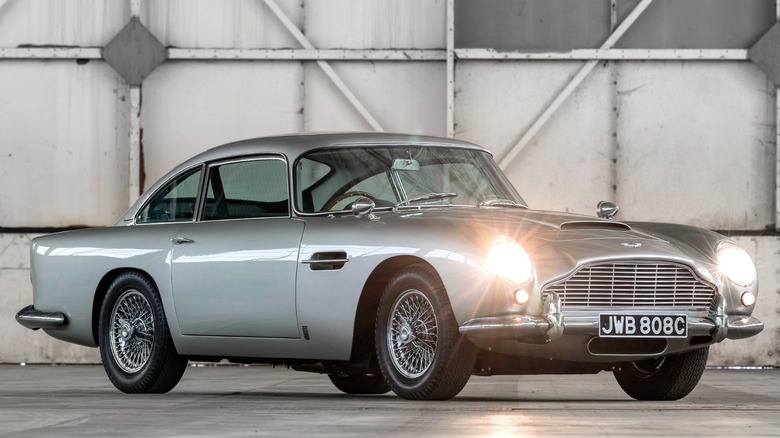
One of our considerations for the "greatest cars" is its impact on culture, and one must admit that James Bond has had a sizeable impact in the movies. While the British gentleman spy drove other vehicles before and after the Aston Martin DB5, it still remains one of the most iconic in 007's fleet. The 1964 Goldfinger was a true blockbuster that propelled Sean Connery to stardom, and as he drove the DB5 in this film, it also gained a reputation as the first true Bond car with its various gadgets like machine guns behind the headlights, tire slashers, and ejecting seats.
The DB5 is actually the first Aston Martin to feature in a Bond film — one of the interesting facts you might not know about the car — and that it also appeared in several other installments, including the latest one, No Time to Die, where it was driven by Daniel Craig. This cemented Bond's preference for Astons, even though he was contractually obligated to drive other brands like BMWs in several other films in the franchise.
1963 Chevrolet Corvette
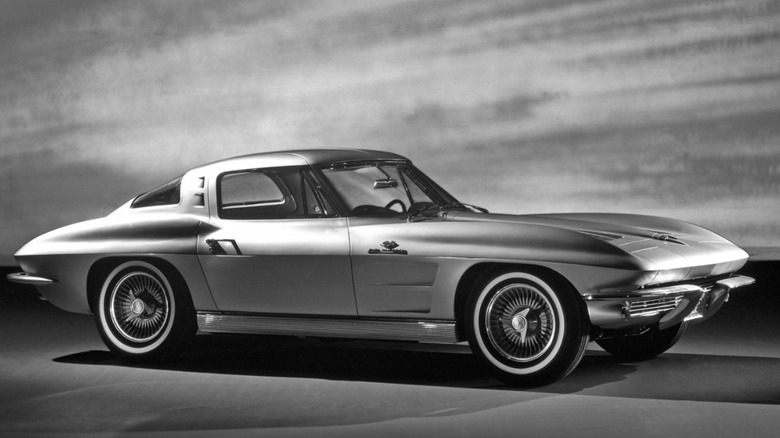
The first-generation Chevrolet Corvette arrived in 1953, and although it had a unique look, it was saddled with an underpowered engine and an anemic two-speed automatic transmission, making it one of the worst generations of the Corvette. However, Chevy rectified this when it released a second iteration of the quintessential American sports car in 1963 with the C2 Corvette Sting Ray.
This model featured a more aggressive stance than the C1's more rounded shape. More importantly, it also had a more potent 327 cubic-inch V8 that put out 340 horsepower, allowing it to go from zero to 60 in just 5.6 seconds and beat the quarter mile in 14.2.
This combination of iconic looks and good performance is what allowed the C2 Corvette, and every generation after it, to become one of the most legendary cars ever. While the first-generation was a dud, the 1963 Chevrolet Corvette (and every subsequent generation thereafter) more than made up for its shortcomings.
1964 Porsche 911
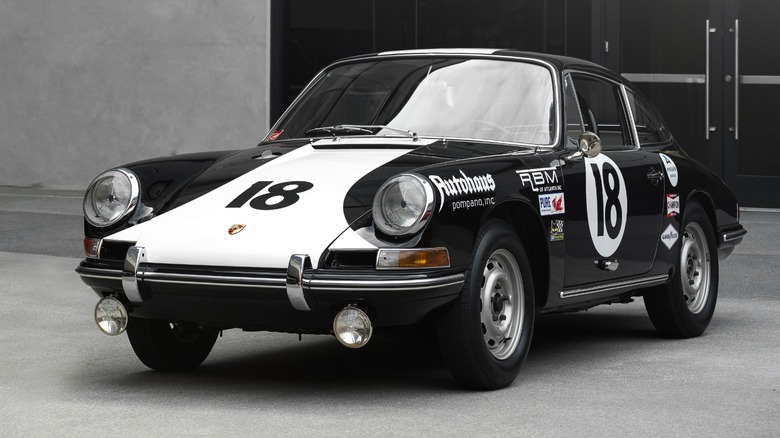
The Porsche 911 is arguably one of the most iconic cars you can buy today, and it traces its roots to the original 911 the company released in 1964. Even though it has continuously evolved over the past 60 years, you can't deny that it has remained true to its core, with the car's outline remaining the same (although it has certainly grown larger and heavier) throughout the decades.
The biggest change to the model line was the introduction of the type 996 in 1997, when Porsche replaced the air-cooled engine with a water-cooled one. The company received backlash from purists who considered this move sacrilege, but it was crucial for keeping the model alive as it faced the future. Today, the Porsche 911 (type 992) is available in 21 different trims and variants, from the base coupe and performance-oriented GT3 models, to Cabriolet and Targa top styles that let you enjoy the vehicle while the wind is blowing through your face.
1964 Ford GT40
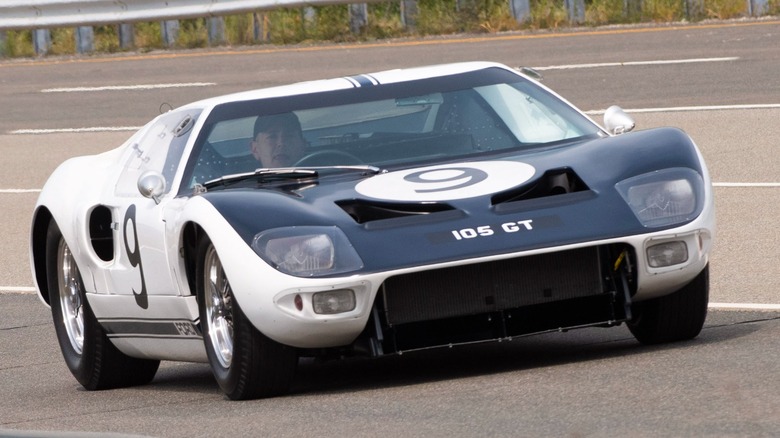
Ford wanted to beat Ferrari at its own game at Le Mans in the 1960s, and it achieved this with the Ford GT40. Given that homologation rules demanded that the participants create road-going versions of their race cars and sell them to the "general" public, Ford built more than 105 GT40s (although it's difficult to find the exact number). The limited production numbers and the fact that it took the top podium spot at Le Mans from 1966 to 1969 made this vehicle one of the most iconic American cars ever made.
We've now seen two more models based on this original Ford appear in the carmaker's lineup — the first-generation Ford GT, made from 2005 to 2006, and the second-generation model, made from 2017 to 2022. These vehicles are legendary in their own right, with the Ford GT finishing in the top three spots of the 2016 24 Hours of Le Mans. However, would not exist without the legacy that the original Ford GT40 built.
1965 Ford Mustang
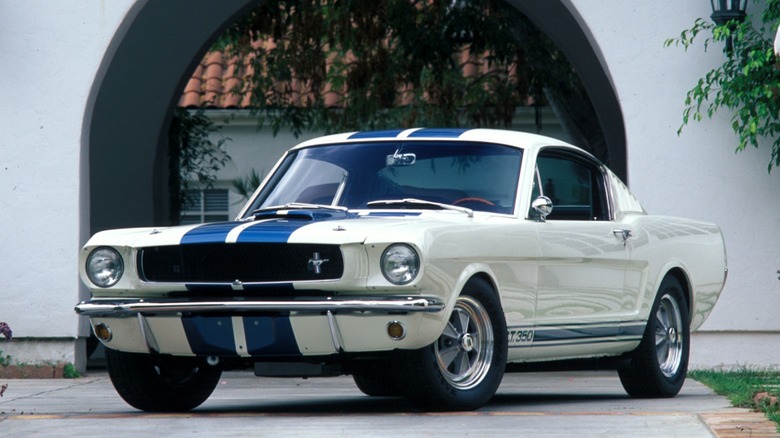
Of course, we cannot forget about the Ford Mustang when it comes to the greatest cars ever made. Although it might not have been the first pony car, it arguably popularized the concept single-handedly. The Mustang has been continuously on sale across seven generations, from its introduction in 1964 (as the 1965 model year) to today. During that time, it saw the many ups and downs of the automotive industry and even survived the challenges of the Malaise Era of the 1970s, the market crash of the mid-to-late 2000s, and the phase-out of sedans by American carmakers in the United States.
The Mustang might no longer be the affordable car that it once was, with the base EcoBoost Fastback model starting at $32,640. However, it's still a quintessential part of the American car culture, and has even spawned an electric SUV under its name with the Mach-E. It also inspired competition from other brands like Chevrolet and Dodge, which is why we have iconic nameplates like the Camaro and the Charger.
1966 Lamborghini Miura
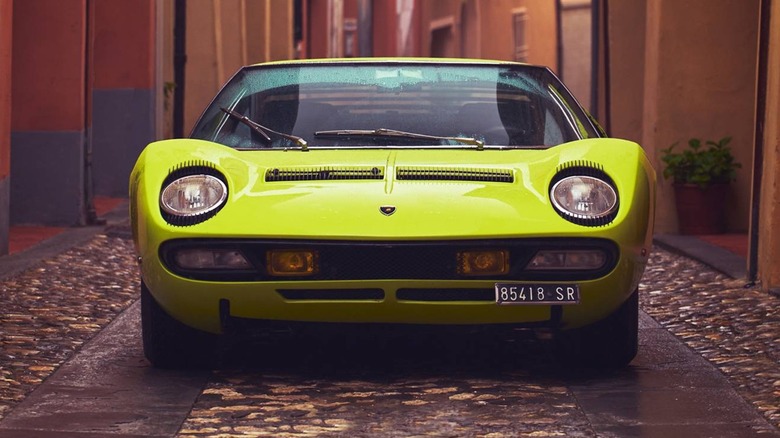
The Lamborghini Miura is often considered as the first supercar, with the vehicle offering a groundbreaking engine layout, where the 430-horsepower V12 motor is mounted transversely beneath and behind the cabin, while power is transmitted to the pavement via its rear wheels. It can hit a top speed of approximately 174 mph and a zero-to-60 time of about 6.7 seconds. This might not sound much today, with some pickup trucks capable of cutting that time nearly in half, but this was a marvel of engineering and a technical breakthrough during the '60s.
Legend has it that Ferruccio Lamborghini complained to Enzo Ferrari himself about the poor quality of the clutches found in his vehicles, and he said something along the lines of "You may be able to drive a tractor, but you will never be able to handle a Ferrari properly," which is why we have this iconic Ferrari rival today. While the truth of this exchange is debatable, the fact is that Lamborghini built one of the most iconic supercars with the Miura and continues to build legends today.
1966 Toyota Corolla
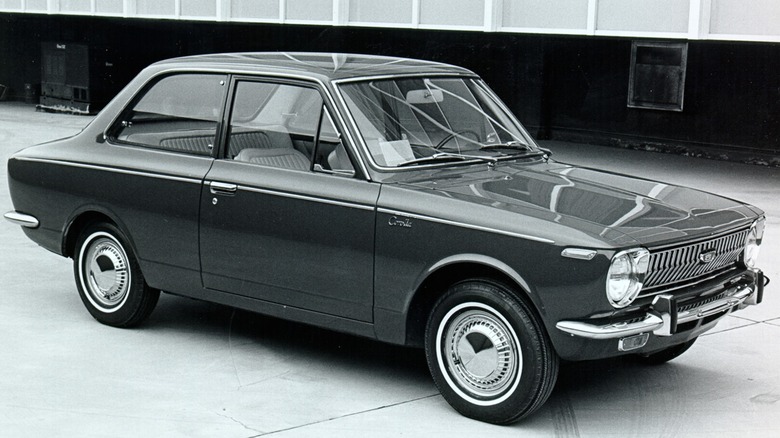
The Toyota Corolla isn't something that many people would consider the greatest, especially given how common and ordinary it is. However, that is actually what makes it quite an iconic vehicle — its affordability and reliability made it the world's most popular car, with over 50 million units sold. This is the only vehicle to achieve this feat, so far, and it has been produced continuously over 12 generations since it first arrived on the market in 1966.
Even after 60 years, Toyota has maintained the car's reputation as a cheap vehicle that its buyers can rely on, unlike other legendary models like the Nissan Z and the Mustang, whose latest models are considerably more expensive compared to their first iterations. Although Toyota has released more affordable models compared to the Corolla in other parts of the world, it's still the cheapest Toyota model that you can buy today in the United States, with a starting price of $23,125. This combination of price, features, and dependability makes it one of the go-to options for first-time buyers looking for a cheap, high-quality car.
1968 BMW 2002
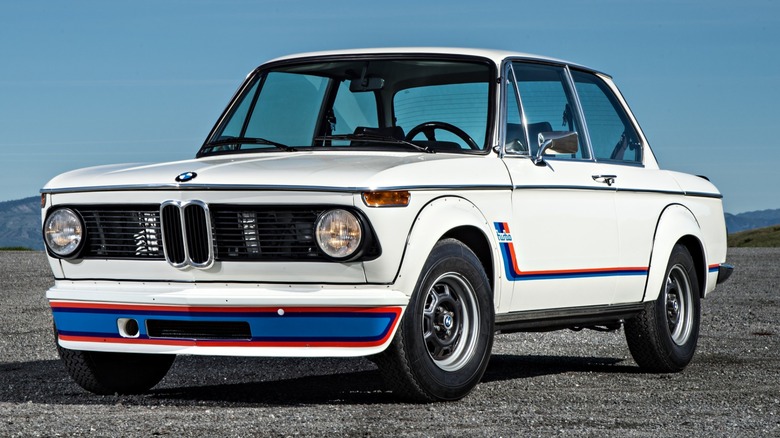
When it comes to sports sedans, the BMW M3 is the first model that comes to mind for most people. What many do not know, however, is that the precursor of this daily driver that you can unashamedly take to track came from the 1968 BMW 2002. It actually began life as the 1600-2 and was powered by 1573cc engine that put out a measly 85 horsepower.
However, it was said that some BMW workers hated the low output of this engine and replaced the motor with a two-liter engine on their own vehicles. They asked their company to make factory versions of their two-liter versions, and the company obliged, with the 2002 and more powerful 2002ti arriving in 1968.
The BMW 2002 was such a success that it changed the automotive landscape and created the compact sports sedan category. The German carmaker eventually released more powerful models, such as the 1972 2002tii and the 1973 2002 Turbo. This model had a few rivals in the Alfa Romeo GTV, Lancia Fulvia, and Datsun 510, but none of them had the impact that the Bavarian carmaker had on modern vehicles.
1970 Datsun 240Z
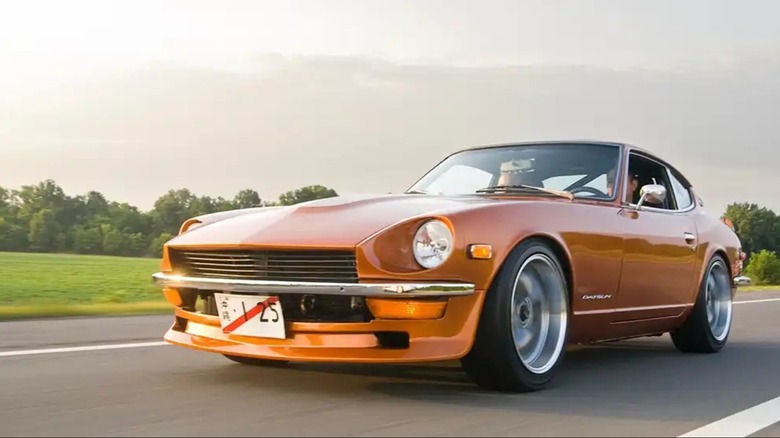
Nissan, then known as Datsun outside of Japan, introduced the Fairlady Z in its domestic market as a response to the Toyota 2000 GT sports car. It was renamed as the 240Z when it came to America and would eventually become one of Nissan's most successful models. This was driven by its affordable $3,526 MSRP and excellent driving dynamics, which also made it one of the car company's best sports cars ever.
It has a 2.4-liter straight-six with a dual carburetor as its beating heart, putting out 150 hp to the rear wheels via a four-speed manual transmission. There's also four-wheel independent suspension, and the total package weighed just 2,350 pounds — plus it looked sexy.
The Z has been continuously produced from then until today, except for a couple of breaks. The 300ZX ended production in 2000, and it wasn't until 2002 that the world saw the 350Z, while Nissan retired the 370Z in 2020 and did not reveal the latest Z until 2021 for the 2022 model year. Unfortunately, the Nissan Z is no longer in the realm of affordable, with the base Sport trim starting at $42,970. It carries on the heritage of the original 240Z and maintains an outline similar to the original model from nearly 60 years ago.
1975 Volkswagen Golf
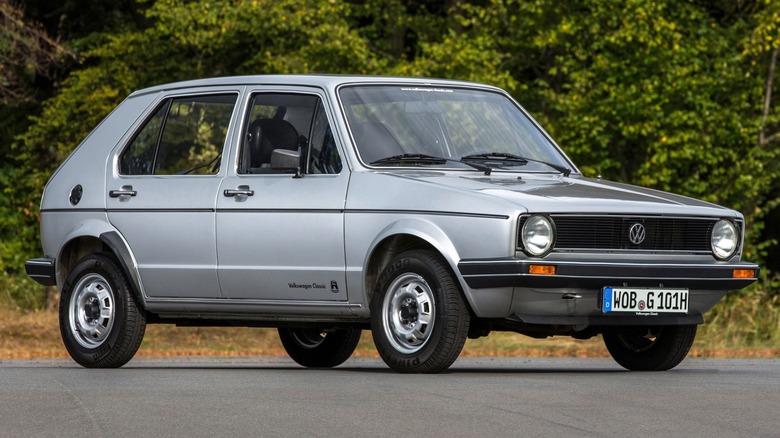
One of the things that makes a vehicle iconic is its ability to bring joy to enthusiasts without costing them an arm and a leg, and this is where the original Volkswagen Golf excelled. The GTI trim gave birth to the idea of the hot hatch, with its 100-horsepower 1.6-liter engine and improved suspension making for a dynamic driving experience. This was soon increased to 110 horsepower, allowing for a zero-to-60 time of 9.7 seconds and a top speed of 119 mph. This may not be supercar fast, but it's good enough for its original MSRP of just $6,500.
The Golf has gone through multiple iterations over the 50 years it has been on the market, with the eighth-generation GTI still available starting at $34,590. Despite arriving nearly a decade later than the Corolla, it still boasts a sales figure of over 37 million units, making it one of the best-selling models in automotive history.