

12 Auto Brands That Drivers Say Started Off Great, But Got Worse Over Time
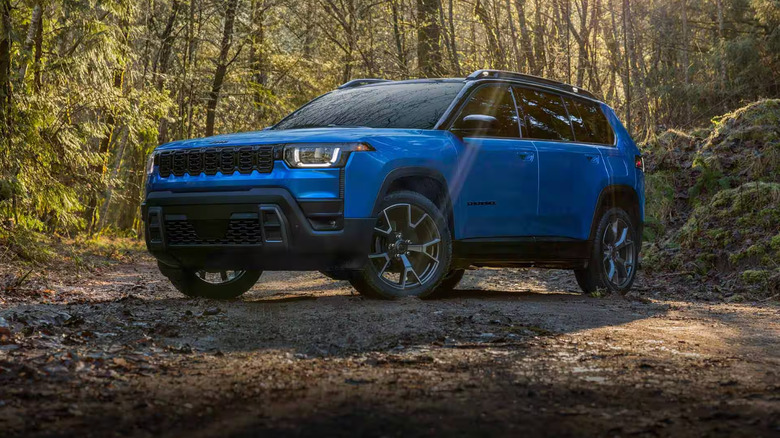
It's no secret that the auto industry is struggling right now. The market is facing slowing growth in the face of affordability issues, the end of EV incentives, and an increasing sentiment that many automakers these days are getting worse. In some cases, it's just personal opinion, as some vehicles are no worse and even a little better than those same vehicles were 10 or 20 years ago. However, there are some things that are actually getting worse, like the proliferation of subscription services in vehicles, the disappearance of categories like the family sedan, and the near-ubiquitous use of turbochargers and CVT transmissions, both of which have their own sets of problems.
So, it's no surprise that there is a hefty list of automakers that people believe have gotten worse over the years. To make things a little easier, we rounded up a bunch of consumer sentiment about various automakers to find out why people think these things. Sometimes it's vehicle selection, other times it's mechanical choices, and sometimes it's just the way the auto industry has gone. For example, JD Power says that modern infotainment displays are a common complaint among consumers, even when they're working properly. Since big screens are in nearly all modern vehicles, it's a good example of auto trends that often make people mad that isn't specific to a single automaker.
Nissan
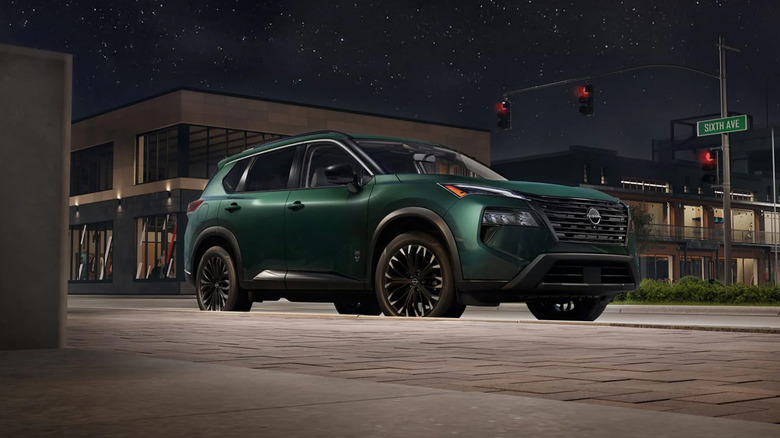
Nissan's backslide has been going on for years, and it doesn't take much to find out why. Nissan started putting its Xtronic CVTs (also known as JATCO) in the Nissan Murano in 2003 and has since stuffed it into many of the brand's most popular vehicles, like the Nissan Rogue. The transmission has been a major pain point for Nissan drivers for many years, with loads of stories online of the CVT failing suddenly and early. These stories have led to consumers constantly asking if Nissan's CVT hate is overblown or not, and whether their transmission is in danger.
The CVT in Nissan has improved quite a lot since its introduction over two decades ago, but there are some things that Nissan doesn't tell owners that can often lead to early failures. For example, Nissan's maintenance schedule appears to be a little on the optimistic side and Nissan faithful recommend changing the transmission fluid more often than the automaker recommends. This appears to work, but since most people struggle with car maintenance schedules, it's likely that the transmission complaints will continue.
That isn't all, though. Nissan began introducing three-cylinder engines with the Rogue in 2022. It was initially met with positivity but people have since figured out that three-cylinder engines have their own problems. People were also not pleased that Nissan discontinued the Titan truck instead of updating it.
Chrysler
Chryler's descent has gone on for generations at this point. It was a big player in the American muscle car era with its various engines and designs. It tried to revisit its muscle car past multiple times over the years but at that point, no one was really interested. Chrysler spent a lot of time in the minus column for decades, with the company getting tons of hate from owners once social media became a thing, with people complaining about electrical issues, odd design choices, reliability problems, and even the paint jobs were ridiculed as being weak.
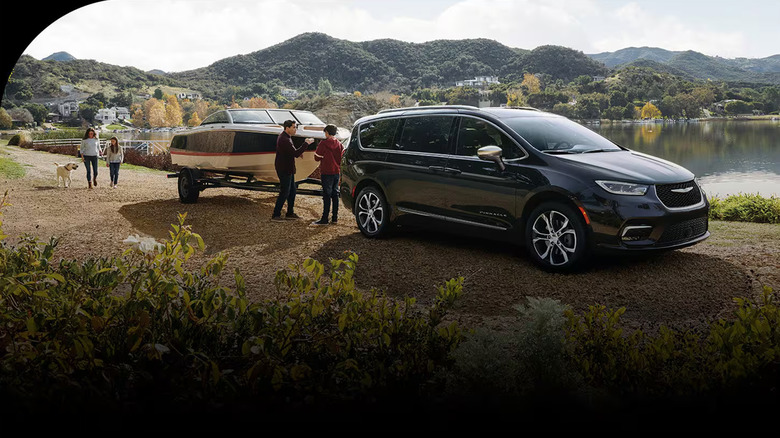
This distaste of the brand is bad enough that Chrysler is now down to only two vehicles in the entire auto market. They are the Pacifica and Voyager, and yes, both of them are minivans. The Pacifica was actually one of the best minivans at the turn of the last decade but has since fallen to mediocrity as other automakers caught up. As such, few people talk about Chrysler anymore because there isn't much to talk about. Their vehicles are okay but there's nothing new or exciting to talk about.
While it seems as though they are on the brink of shutting down forever, parent company Stellantis isn't quite done with them yet. The brand is set to get three new vehicle models in the next few years to start rebuilding.
BMW
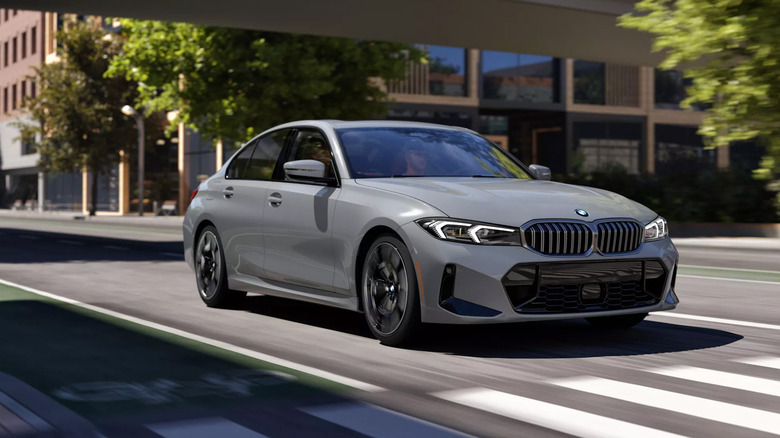
BMW used to be a de facto choice for a German-made car that has really cool designs, had a good mix of luxury and performance, and could be perceived as a status symbol. Despite all of that, BMW managed to find a way to irritate their entire fanbase, and it was a lot more recent than some other automakers. Around the turn of the decade, BMW jumped on the subscription bandwagon in the worst imaginable way, putting features like heated seats behind a paywall. This decision was widely hated by just about everyone and is often used as a primary example of enshittification.
The automaker walked it back a little bit in 2023, removing the subscription model from heated seats at least. It's still using a subscription model for other software-based upgrades and some safety features, though, so the harsh criticisms still exist to this day. It's bad enough that some long-time fans of the brand walked away from it entirely, while others continue to vehemently criticize executives for being greedy.
This is a pretty good example of how car companies can make good vehicles but still find a way to drive away loyal customers, or at least warrant negative discussion. Many of BMW's vehicles still get very positive reviews, and the brand is as tech-forward as they come, but with that subscription service, drivers largely agree that the brand is worse now.
Tesla
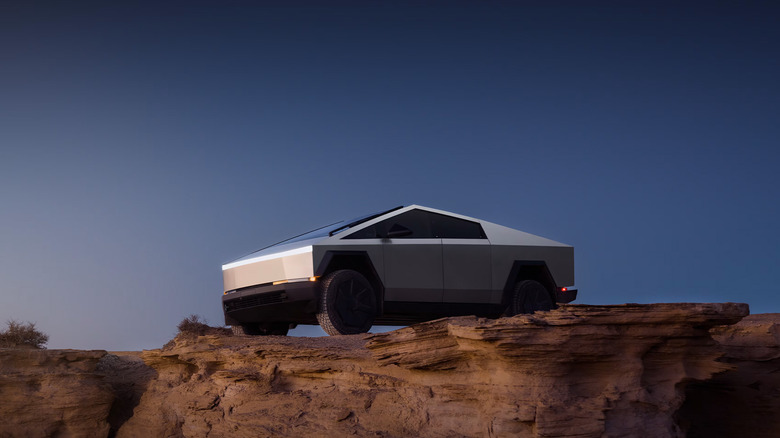
Tesla rolled its first cars off the line and into customer hands in 2008, making them the newest automaker on the list. Initial impressions were pretty good. Sure, there was a reputation for being poorly put together that Tesla actually improved over time, but the company never quite shook the reputation because things like panel gaps never really went away. So, technically speaking, Tesla is doing better but there are fluctuations in build quality that Tesla has held onto since its inception. That means it's not really unusual or worse to see a panel gap — they've always been there.
Where Tesla has fallen off appears to be software. Elon Musk promised fully automated driving in Telsa vehicles years ago and it took years before drivers saw any movement. Then, Telsa went ahead and put their Full Self-Driving mode behind a paywall, requiring a monthly subscription instead of a single payment. To make matters worse, Full Self-Driving mode is actually a semi-autonomous driving mode, so the name isn't even accurate.
Compounding issues for drivers was the release of the Cybertruck, which had mixed reviews when it first came out, and has been a huge flop for Tesla as of this writing. Various tests have been done that show that the tow rating is optimistic at best, and the frunk safety system didn't work at first, nearly breaking someone's finger during a demonstration.
Dodge
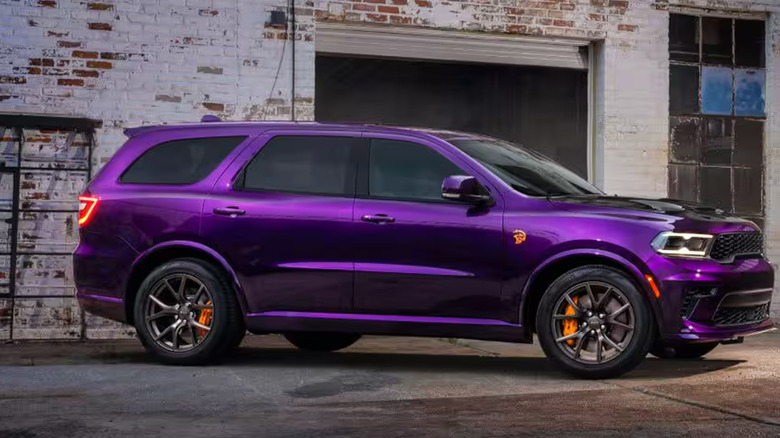
Dodge has a similar story to Chrysler. They were huge during the American muscle car era with the Hemi-powered Charger and Challenger leading the way. Dodge held onto this identity a lot longer than all the other automakers from that era, and it still sells the Charger to do this day, although the Challenger has since been discontinued. In fact, after Dodge rolled Ram out to its own sub brand, the parent has slowly lost its stock. As of this writing, the only two vehicles Dodge lists on its website are the Charger and the Dodge Durango SUV.
Believe it or not, this might have actually been an improvement for Dodge. Most of its now-discontinued vehicles were not good. The Dodge Journey, for example, has some of the lowest review ratings on any auto review website. It's spent most of the last two decades discontinuing all of its other models, including the Dakota, Ramcharger, Neon, Stratus, and many others. It happened for a reason; shoppers really didn't like them.
Stellantis is positioning Chrysler for a comeback overseas, but the U.S. revival is coming via Dodge. Jeep hasn't been doing so hot in terms of sales, but it seems Dodge has reached its rock bottom. The point is, Dodge is slated to get a bunch of new models in the next several years, so maybe consumer sentiment will finally turn itself around.
Jeep
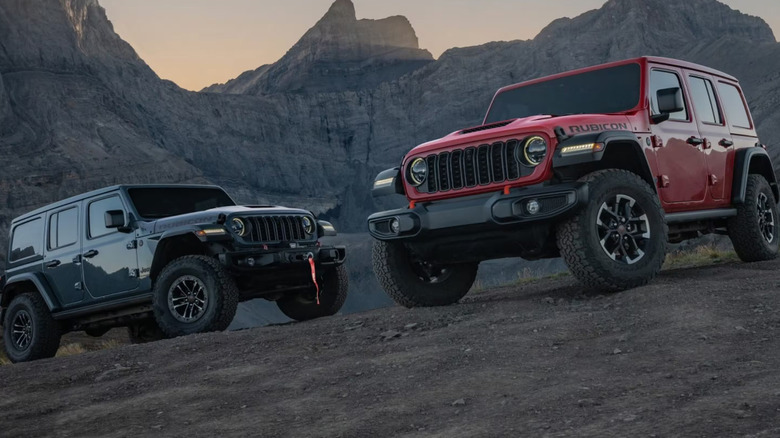
Jeep is the most popular automaker in the U.S. for Stellantis. It's easy to see why. It has more than twice as many models than Dodge and Chrysler combined. However, despite that, consumer sentiment on Jeep has gone down, and rather recently. The company has seen fewer sales across the market while Dodge sales have begun spiking, which is odd considering Dodge only sells two vehicle models as of this writing. Even the Jeep Wrangler, the undisputed champion of off-roading and rock crawling, has been struggling to sell recently. What gives?
Well, two things are happening at the same time. For starters, Jeep prices have skyrocketed over the last couple of years, making it difficult to justify buying something that consumers could get for much cheaper just a decade ago. Pair that with the increasing concerns and perceptions of Jeep's declining reliability, and it's a recipe for disaster. In short, Jeeps are getting too expensive to both buy and repair, and people don't like it.
Jeep has tried to right the ship in recent years, but it hasn't worked. The Jeep Compass was discontinued, only to be brought back a couple of years later, starting its new life behind the curve in almost every category, according to reviewers. That's just how things appear to be at Jeep these days, and it's definitely considered to be worse than they were before.
Ford
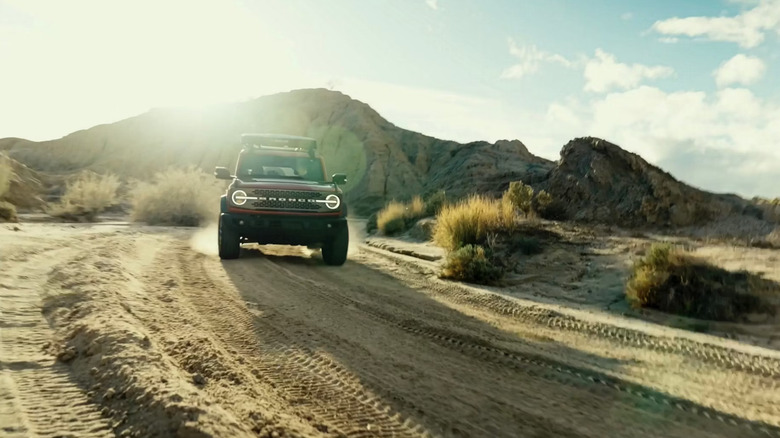
Ford has many ups and downs over its history. Like Dodge and Chrysler, it was a huge player in the American muscle car era but then found second life as the maker of the Ford F-150, which has been America's top selling pickup for nearly half a century. Ford still sells the F-150 and it's still one of the highest rated pickup trucks on the market, so in that aspect, Ford is cruising right along, pun squarely intended. When it comes to complaints, it's usually the other vehicles in Ford's lineup that get them.
For starters, Ford hasn't sold a passenger car since it discontinued the Fusion in 2020. Since then, the Blue Oval has also discontinued the Edge and the Escape. The final models of those two vehicles were average at best and rarely recommended in places where people ask what cars they should buy. A study of Google Searches to fix problems found Ford to be in the top five when it came to repair questions, and yes, there are some Ford engines you should avoid for reliability reasons.
Online, people are aware of these reliability concerns and largely chalk it up to quality checks and cheap parts, with others pointing out that post-COVID quality decline has hit many automakers, including Ford. This is backed up by actual facts as Ford had to sell vehicles with missing chips during the dreaded 2022 chip shortage.
Mitsubishi
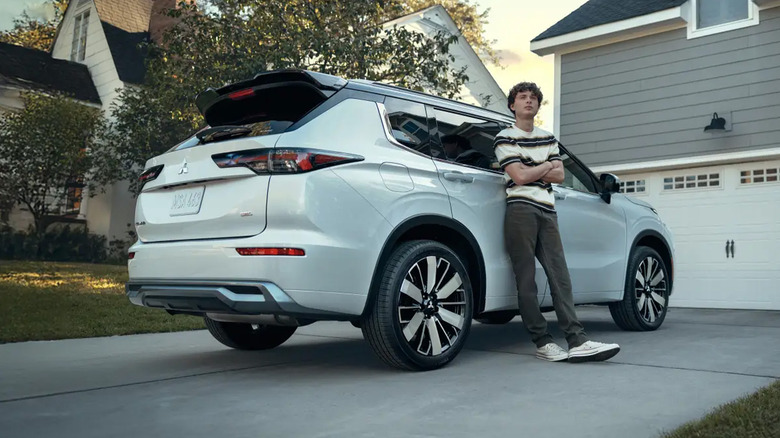
Mitsubishi is an oddball. In the 1990s and 2000s, the brand was best known for its cars, including the Lancer, Eclipse, and 3000GT. Then it kind of just fell off the face of the Earth. It's starting to make a comeback with sales improving year to year over the last few years, mostly on the back of its Outlander, Outlander Sport, and Eclipse Cross crossovers. Much like several other brands, Mitsubishi's biggest problem is that people rarely talk about the brand's vehicles at all, let along criticize them.
However, there are some things that people have noticed. One such example is that the Mitsubishi Outlander is basically a Nissan Rogue in that it shares a platform, transmission, and other pieces and parts. As we discussed earlier, Nissan's transmissions are a source of frustration for many owners, and that means those frustrations are inherited by Mitsubishi owners who routinely ask the Internet if Mitsubishi really uses Nissan transmissions and whether or not they're reliable. The answer is simple, yes, they do, and the transmissions in Mitsubishis are just as reliable as Nissan, because they are the same. That means sentiments about them are the same.
It hasn't impacted Mitsubishi much yet as sales are up from prior years. However, considering this used to be a brand with all sorts of cool cars, the fact that they sell what is basically an upscale Nissan Rogue is a little disappointing for many drivers.
Toyota
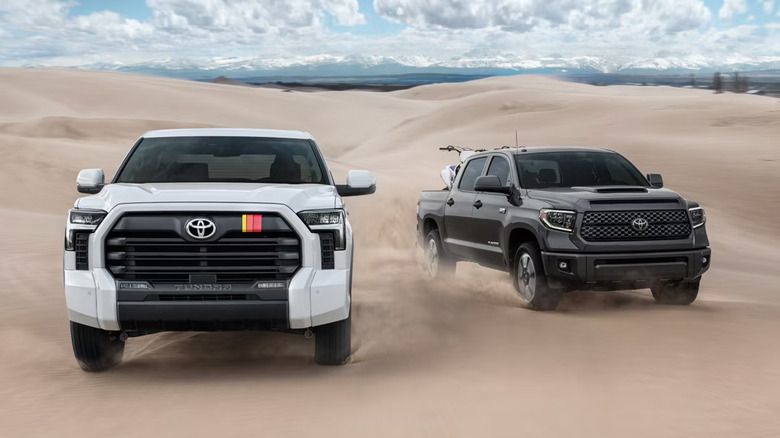
This one might ruffle some feathers, but Toyota has its dirty secrets, and one of them is not so secret at the moment. Toyota routinely tops the charts in almost every conversation when it comes to reliability and has for quite a long time. This turns out to be a bit of a double-edged sword. On the one hand, Toyota is very frequently recommended for its reliability; on the other, when Toyota does roll out the occasional clunker, it's extremely noticeable to just about everyone, and that makes it really easy to talk about.
That clunker for the Japanese automaker currently is the Toyota Tundra. These things have suffered from machining debris in the engines causing early engine failures, along with several other problems like a recall for a faulty neutral in the automatic transmission that impacted 242,114 trucks in total. The Tundra's troubles are all over social media, with drivers openly telling others to not buy the truck because of all the issues. This is markedly unusual for Toyota, and it's been the talk of the town since the problems started getting more public.
Unlike most of the other automakers where the dissatisfaction from drivers is more abstract, the Tundra controversy is ongoing and very specific. Even 2026 models are breaking down quickly after purchase, leading to widespread skepticism. The rest of Toyota's lineup is still highly regarded, though, so it's really just the Tundra that is worse now than it used to be.
Honda
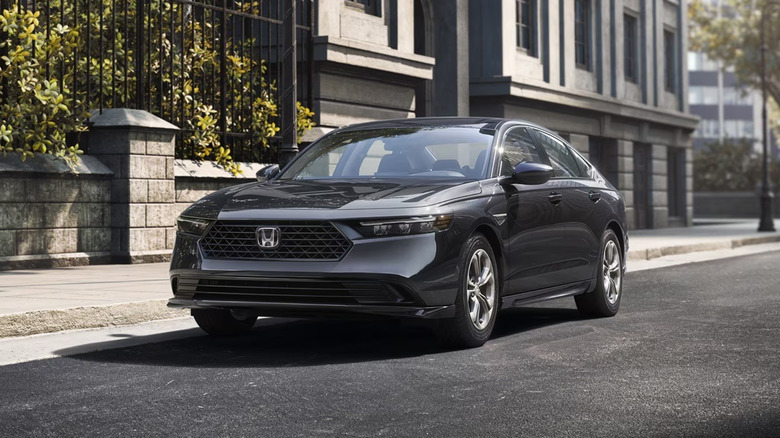
Honda is typically the other bastion of reliability, and often recommended to people who are shopping for vehicles. Even the Ridgeline is getting more recommendations from truck people since it covers most of what people use trucks for outside of work. Plus, the new Honda Passport has been a smash hit with reviewers. On the other end of the spectrum, CR-V and Accord owners have been dealing with some problems that Honda has largely fixed but has caused the Japanese automaker's reputation to backslide a little bit given the popularity of two models, especially the CR-V.
The problem revolves around Honda's 1.5-liter turbo-four. It's lived a rough life. Honda is in the middle of a class action lawsuit due to the engine's excessive oil dilution problem, where gasoline would get into the oil when the engine was running cold. There is a separate class action lawsuit ongoing because the engine also has a history of blowing head gaskets, leading to early engine failures. This has made drivers pine for the old J35 V6 engine in prior Accords, or for the hybrid variants of the CR-V and Accord, which don't have the 1.5-liter turbo.
This is all in the process of blowing over, as modern versions of the 1.5-liter turbo appear to be less likely to have oil dilution and head gasket problems. Time will ultimately tell.
Buick
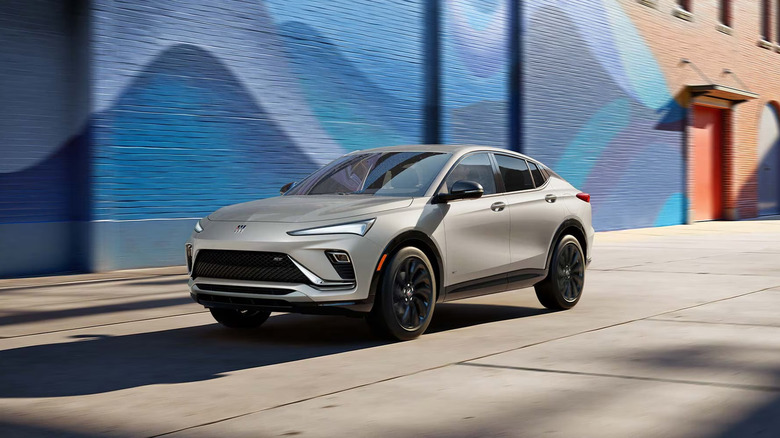
One of the best cars I ever had was a 1998 Buick Park Ave. It was comfortable and reliable, and I haven't owned anything that felt that bulletproof since. In any case, Buick doesn't sell anything like that anymore. The brand used to have many models and have since whittled them down to just four:the Envista, Encore, Enclave, and Envision. Two of those are crossover SUVs, one is a mid-size, and the other is a subcompact. Per reviews, they are just okay, as Buick prices these in low-luxury territory but curiously omits standard features like AWD on the Encore GX for some reason.
The big thing with Buick is that the company has never shaken its reputation as being a car for old people. It tried various times over the last decade and a half, and it still can't do it. The vehicles themselves are relatively reliable, and those drivers who do give Buick a chance tend to like them well enough, but it's generally considered too expensive for everyday drivers and not luxurious enough for luxury-oriented buyers. Buick is thus a solution to a problem no one is really having.
Not long ago, Buick did have some interesting vehicles, like Regal Tour X, but those are all gone as are the days of Buick classics like the Skylark and Riviera.
Chevy/GMC
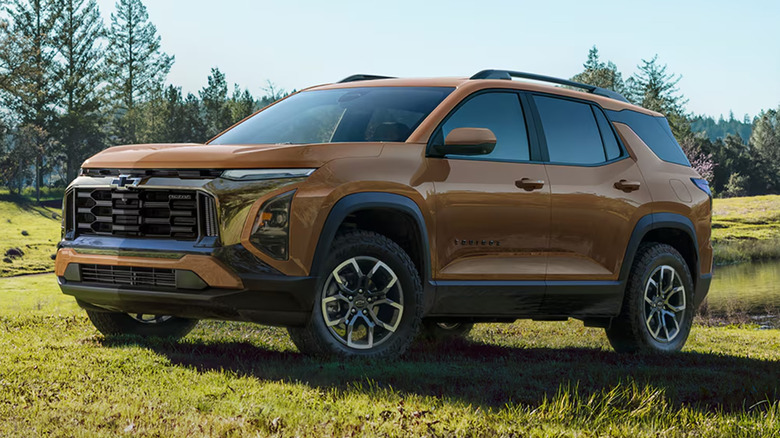
Chevy and GMC are having a similar problem to Ford. The brand did away with their affordable (and generally reliable) sedans like the Malibu, Impala, Cavalier, and Cruze. It also got rid of the Camaro, a decades-old badge that once was the main rival to Ford's Mustang. Today, Chevy and GMC are largely competing in the same space as Ford, with pickup trucks and SUVs being all that's left on the menu.
This has not gone well for either GM brand. 2026 sales are down and, like Ford, GM assumed buyers would be more interested EVs than they really were, leading to even more sales lost as consumers continue to choose hybrids. On the driver side of things, there are plenty of complaints about Chevy and GMC vehicles having reliability problems, uninteresting designs, and are generally failing to keep up with competitors. The one bright spot is that GMC as a whole is still trying in several segments that Ford has abandoned over the last few years.
GM is improving a little bit, at least in some areas. For example, the most recent generation of the Chevy Trax is apparently quite excellent and is also one of the more affordable subcompact crossovers in an increasingly expensive market right now.