

3 Common Problems With 3-Cylinder Engines
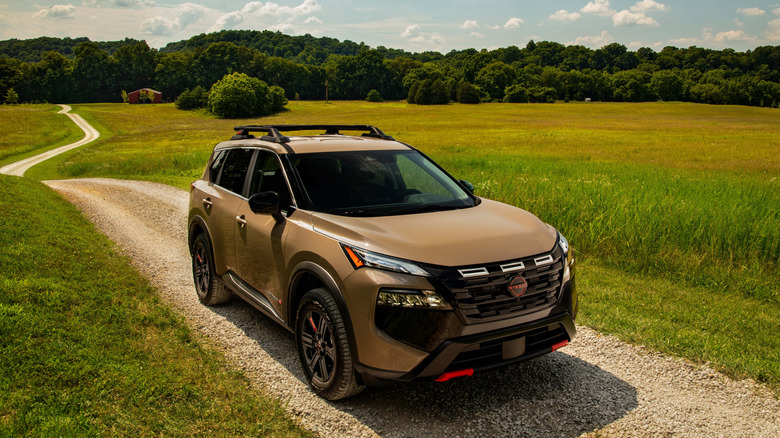
When gas skyrocketed past $4 per gallon in early 2026, trading the pump anxiety for a highly-efficient vehicle with a smaller engine was a great feeling. You may not have had the bragging rights of those driving electric vehicles, but there's no question that vehicles with smaller engines are more fuel-efficient than those with larger six- and eight-cylinder engines. You've likely been behind the wheel of a four-cylinder car at some point in your life — as many as two-thirds of vehicles have this type of engine. They've gained popularity for several reasons, including stricter emissions standards, changing trends, and emerging technology. Many are paired with a turbocharger for more power, meaning you can even find bigger cars, like midsize SUVs, sporting these smaller engines.
If you're not a gearhead, you may not realize that engine sizes are not limited to four, six, or eight cylinders. Some vehicles have three cylinders, and they're often used in smaller cars because they're more efficient and lightweight, leaving more room in the engine compartment and offering more flexibility in how the vehicle's interior is designed. Many popular vehicles on the road today have three-cylinder engines under the hood, including the Nissan Rogue and the Buick Envista. While you may be paying less at the pump, vehicles with these smaller engines do have some downsides as well. If you're thinking of buying a new car, here are three common problems with three-cylinder engines that you should consider before you sign on the dotted line.
Rattling

If ride comfort and refinement are at the top of your "must-have" list, you may want to skip any vehicle with a three-cylinder engine. They are notorious for engine vibration, shudders, or jitters, and the make and model may not matter. The problem isn't linked with any specific automaker. Instead, it's an inherent design flaw in all three-cylinder engines.
One less cylinder is a plus for the environment and your fuel-efficiency, but the odd number of pistons means three-cylinder engines lack the inherent balance found in larger engines. This imbalance can cause the engine to rock, and you may feel it when you drive. That being said, this is a known issue with three-cylinder engines, and many automakers have taken steps to reduce any noticeable shudder. Balance shafts can help negate vibration, and a dual-mass flywheel can help absorb the shudder before it reaches the transmission. In reality, every engine is different. You should always research a vehicle before you make a purchase, and take it out for a test drive so you can get a feel for how it rides. Some vibration should be expected when the engine is idling, though this can be a sign of another problem. If it's noticeable at speed, however, speak to the sales representative about your concerns.
Less power and torque
Efficiency typically requires compromise, and in this case you're usually trading off power. Because of the spacing of the crankshaft journals in a three-cylinder engine, there's a portion of the rotation when there's no power stroke. The power is being delivered unevenly, and you can often feel that in your acceleration. A four-cylinder engine fires more often and results in more even power distribution. Three-cylinder engines also work harder when you're driving slowly, so the vehicle may feel sluggish even at lower speeds. Ultimately, a three-cylinder engine may not be for you if you judge a car by its zero to 60 time.
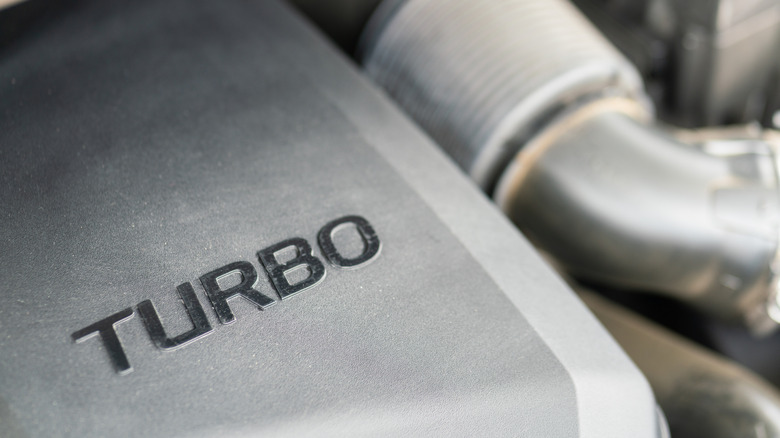
Many automakers combat these problems with the addition of a turbocharger, which is intended to add power without sacrificing fuel efficiency and sometimes makes cars more powerful than those with a six-cylinder engine. It's a fairly simple concept: as exhaust gases flow out, those gases spin a turbine that puts extra air into the engine. That additional air helps the engine burn fuel more efficiently for a boost of power. Several popular three-cylinder vehicles come standard with a turbocharged engine, including the Nissan Rogue and the Chevrolet Trax. The added complexity of the engine may be a dealbreaker for some buyers, however. Repairs can be more expensive, and your car may require additional maintenance.
Noise

Along with those shudders and judders we addressed earlier, three-cylinder engines also tend to be noisier than larger engines. Some of that noise is due to the design of the engine and its subsequent vibration. It's working harder than larger engines or relying on a turbocharger, which can be noisy. But larger four- and six-cylinder engines also have more oil and coolant added to them, which helps to absorb the noise.
To combat the extra noise, many automakers add sound insulation to help keep the cabin quiet. This can include acoustic shielding over the engine and soundproofing materials in the cabin, but drivers may still notice more noise than they're used to. The addition of a turbocharger can also add a whistling or whooshing noise which is caused by rapid air movement, and can be startling if you've never driven a vehicle with a turbocharged engine before. Some drivers enjoy this extra noise – automakers sometimes even add fake engine sounds to beef up your drive. If you prefer a quiet ride, you should take your test drive at varying speeds on both local roads and the highway to evaluate the cabin environment.
Methodology

Car preferences are like snowflakes — no two drivers are the same. While some focus on power and acceleration, others prioritize safety or reliability. We're aware that some drivers would not consider additional engine noise or less torque a "problem" when it comes to vehicles with three-cylinder engines. With that in mind, however, we focused on three issues that are commonly cited as problems by the automotive world. These traits may surprise drivers who don't have a solid understanding of engine mechanics or who have never driven a vehicle with a smaller engine. What some consider as trivial, others consider a problem. We encourage all buyers to thoroughly test drive any vehicle, be it new or used, before committing.