

5 Mopars Powered By Chrysler's 3.6L V6 Pentastar Engine
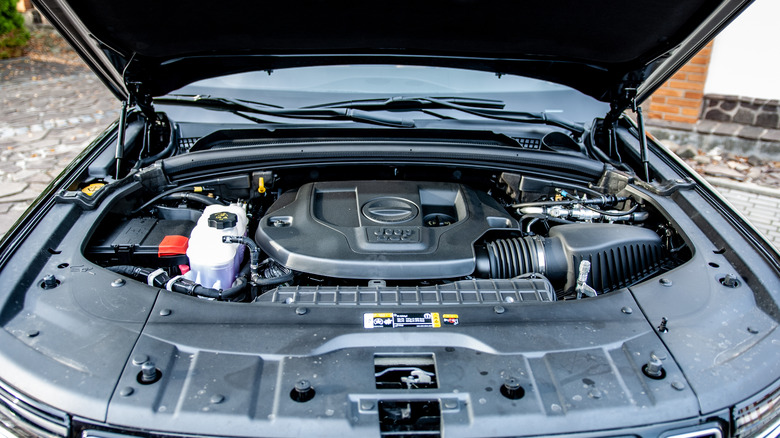
The Chrysler Pentastar V6 engine was first introduced at the 2009 New York Auto Show, and the first vehicles to use it were 2011 model year models. The idea behind the Pentastar was to replace a messy lineup of seven aging V6 engines with a single modern, efficient, and flexible powerplant that Chrysler could drop into almost anything it built.
Fast forward a few years, and the Pentastar can be found in tons of Dodge vehicles, including the Dodge Charger and the Dodge Challenger, but also other Chrysler products from the past 15 years or so. From a power perspective, the Pentastar 3.6-liter pushes out between 283 and 305 horsepower and between 251 and 269 lb-ft of torque, depending on the application and version.
Stellantis, then still called FCA, didn't let the Pentastar languish. In 2016, this powertrain was upgraded with variable valve lift, carbon-coated wrist pins, plastic manifold covers, and more. Overall, the Pentastar is one of the most consequential engines Chrysler ever made, because of how many of them were sold and how many vehicles rely on it.
Paired with the right vehicle and the right model year, the 3.6-liter V6 has built a solid reputation for being smooth, efficient, and dependable. With that in mind, let's take a look at five Mopars powered by the Pentastar, what makes each of them worth considering, and which model years deserve a closer look before you actually consider them.
Jeep Wrangler
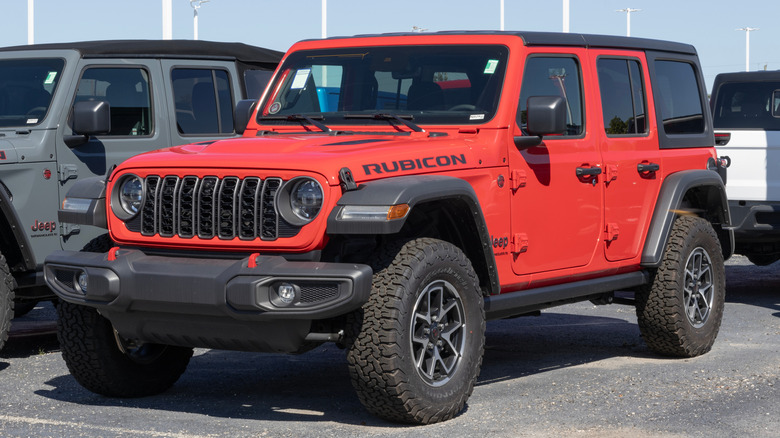
If you could pick out one Stellantis car that is the most associated with the Pentastar, it is likely the Jeep Wrangler. The best part is, when it came out, it changed the Wrangler for the better. For the 2012 model year, the JK-generation Wrangler dropped its older 3.8-liter V6, which made 202 hp and 237 lb-ft of torque.
In the JK Wrangler, the Pentastar makes 285 hp at 6,400 rpm and 260 lb-ft of torque at 4,800 rpm, an 83 hp gain over the 3.8-liter. Chrysler gave this version a Wrangler-only intake system and a raised alternator to cope with water fording. From a performance perspective, MotorWeek timed a two-door 2012 Wrangler at 7.8 seconds to 60 mph, with a quarter mile in 15.5 seconds at 88 mph.
Those figures won't impress anyone at a stoplight, but 90% of the peak torque is available from 1,800 rpm, which is what matters when you're crawling over rocks. The engine got a thorough refresh when the JL generation arrived for 2018, with output remaining at 285 hp and 260 lb-ft but standard engine stop-start added and an economy gain of nearly 11% according to Stellantis.
In the JL lineup, the Pentastar is the standard engine. Alongside it are the 2.0-liter turbo four, which makes 270 hp and 295 lb-ft, the 3.0-liter EcoDiesel with 260 hp and 442 lb-ft, and the Rubicon 392's 6.4-liter Hemi V8, with 470 hp and 470 lb-ft. If you're shopping used, note that 2012 and 2013 are Pentastar years to avoid, so the first years of the Wrangler Pentastar deserve extra scrutiny.
Dodge Challenger
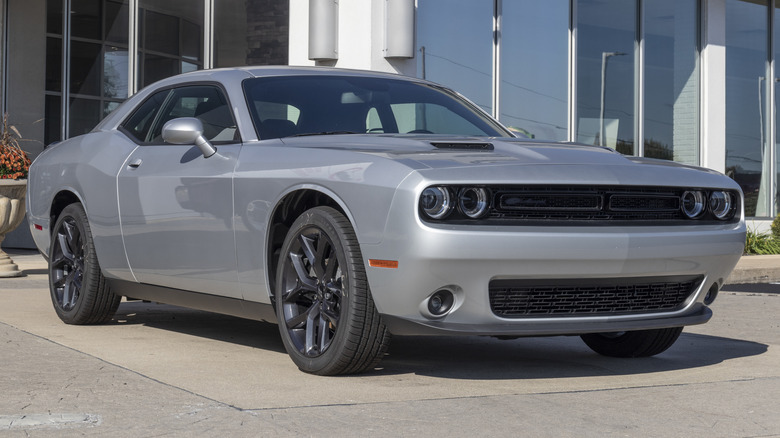
The Dodge Challenger was one of the first cars to get the Pentastar, and it's the one that shows what a V6 can do in a muscle car. For the 2011 model year, the Challenger SE dropped the older 3.5-liter V6 for the Pentastar, which makes 305 hp and 268 lb-ft.EPA ratings came in at a respectable 18 mpg city and 26 mpg highway.
The 2015 refresh got an eight-speed automatic transmission, replacing the old five-speed auto. Dodge's claimed 0-60 times were under 6.5 seconds for the SXT, and about 5.5 seconds for the 5.7-liter HEMI-powered R/T. That makes the V6 more of a relaxed cruiser than a drag car, but it's still a big step up from the old 3.5-liter, which did the sprint in about eight seconds.
The V6 sat at the bottom of the Challenger lineup, which makes sense for a car that most buyers associate with V8s. Through the 2023 model year, the SXT and GT were the V6 models, with the R/T Scat Pack's 485-hp V8 above them and increasingly powerful Hellcat variants like the Redeye and the Demon further up the range. The SXT, the entry-level trim on Dodge Chargers and Challengers, started at $32,800 in 2023.
The SXT and GT were also the only Challengers you could get with all-wheel drive. Production ended after 2023 for all Challenger variants, so used examples are your only option. The SXT Pentastar Dodge Challenger is basically a rival to the EcoBoost Mustang, meaning that if you want that muscle car looks without the fuel costs of the V8, these are the ones to get.
Jeep Grand Cherokee
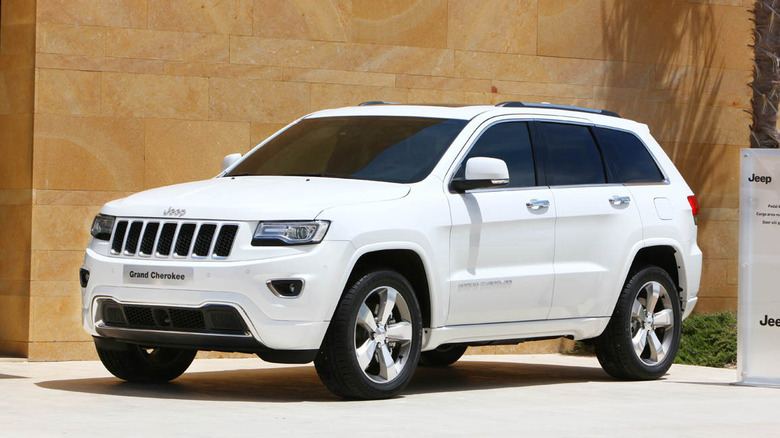
This is where the Pentastar story officially started, since the powertrain first appeared in the 2011 WK2 generation Grand Cherokee. Jeep rated it at 280 hp and 260 lb-ft of torque. That was an 80 hp gain over the 3.7-liter V6 it replaced, and power reached the wheels through a five-speed automatic. For 2016, the Pentastar in the Grand Cherokee was upgraded to 295 hp. Zero to 60 mph takes roughly 8.7 seconds, with EPA ratings of 16 mpg city and 22 mpg highway.
Once again, that's not that quick, but it's adequate for a luxury SUV. In 2011, the V6 towed up to 5,000 lbs, versus 7,700 lbs with the 5.7-liter Hemi. The 3.6-liter was the base engine, with the 5.7-liter HEMI's 360 hp and 390 lb-ft above it, then the 2012 SRT's 6.4-liter at 470 hp and the 2018 Trackhawk's supercharged V8 at 707 hp. The plug-in hybrid Grand Cherokee 4xe debuted with the current WL generation, but you can still get the Pentastar V6 on the latest model at time of writing, along with the new Hurricane 4 engine.
In 2023, the Pentastar was rated at 293 hp and towed 6,200 lbs. Since the Grand Cherokee was ground zero for this powertrain, you won't be surprised to hear there are many other Jeep models that use the Pentastar engine. In 2024, it was the standard engine on every Grand Cherokee trim except the 4xe, meaning that the 3.6-liter still is as important to the Grand Cherokee as it was back in 2011.
Ram 1500
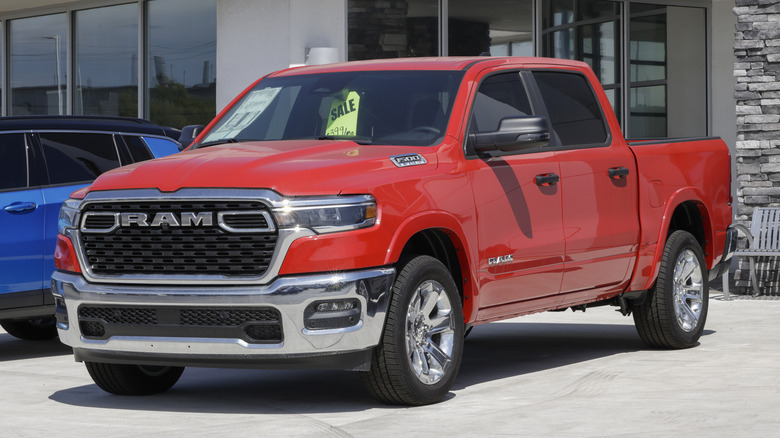
The Pentastar also went into the Ram 1500 for the 2013 model year, in place of the 3.7-liter V6. Ram rated it at 305 hp and 269 lb-ft, and the eight-speed automatic was standard on V6 trucks. Compared to the 3.7 it replaced, the 3.6 got 90 horsepower more while the torque output was raised to 269 lb-ft, up from 235 lb-ft. The 5.7-liter Hemi was rated at 395 hp and 407 lb-ft. As such, the 3.6-liter added about 42% of power on top of the 3.7-liter.
Plus, the 3.6 also introducedstart/stop to the Ram 1500, a system which is said to improve the efficiency of the V6 version of the truck by 3.3%. The upgraded 2019 truck's V6 has variable valve lift and a cooled EGR system, while the optional eTorque mild hybrid system adds up to 90 lb-ft of assist though the total output was still the same as the regular Pentastar. A 2019 Quad Cab V6 ran 0-60 in 7.2 seconds and the quarter-mile in 15.6, while a Big Horn Crew Cab 4x4 needed 8.74 seconds to 60.
Max towing is 7,730 lbs for the V6 and 12,750 lbs for the Hemi. In 2025, the Pentastar remained the base engine, below the two Hurricane inline-six versions rated at 420 hp and 469 lb-ft, and 540 hp and 521 lb-ft, and the HEMI was gone entirely. However, for 2026, RAM is bringing back the Hemi, starting at 395 hp and 410 lb-ft, with the Pentastar still being the standard engine on trims like the Express.
Chrysler Pacifica
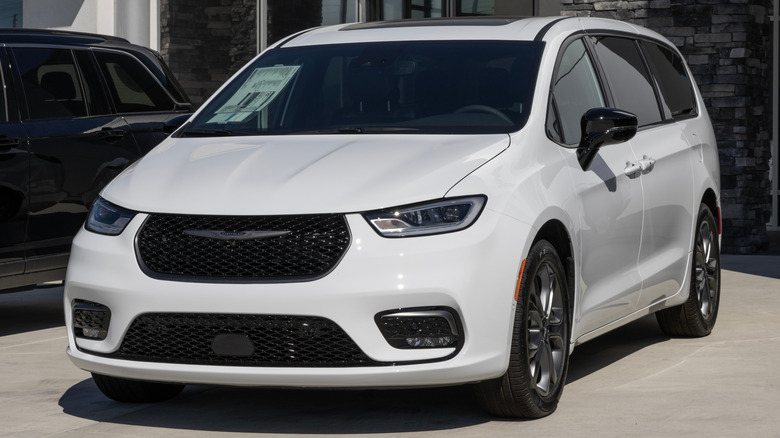
The Pacifica, what is still ostensibly Chrysler's only model at time of writing, also uses the Pentastar. The Town & Country, the Pacifica's predecessor, also used the 3.6-liter Pentastar, where it made 283 hp and 260 lb-ft, while the Pacifica's revised version is rated at 287 hp and 262 lb-ft, paired with a TorqueFlite nine-speed automatic. EPA ratings were 18 mpg city and 28 mpg highway, 1 mpg and 3 mpg better than the outgoing Town & Country.
The hybrid is where the tune really changes. The Pacifica Hybrid's Atkinson-cycle V6 has a 12.5:1 compression ratio and makes 220 hp and 235 lb-ft by itself, and two electric motors bring the system total to 260 hp, which is 27 hp less than the gas Pacifica. In 2017, it was rated at 33 miles of electric range and 84 MPGe, and Wards recorded 35 mpg over a 160-mile day of driving. The hybrid was so well regarded, it ended up among the 2017 Wards 10 Best Engines winners.
The gas V6 was the standard engine across the Pacifica line, with the option to upgrade to a Hybrid. Even with the efficiency benefit of the Hybrid, gasoline Pacificas dominate sales. Per Stellantis, in 2023, roughly 96,600 of the 120,554 Pacificas sold in the U.S. were non-hybrid models, compared with 23,943 Pacifica Hybrids. In 2024, the split was roughly 86,900 gasoline models versus 20,423 Pacifica Hybrids. The Voyager, basically a more affordable Pacifica, uses the same 287 hp and 262 lb-ft tune. The 2025 model year was the Pacifica Hybrid's last, but the gas Pentastar carries on unchanged.