

12 Of The Weirdest Things Auto Companies Made That Aren't Cars
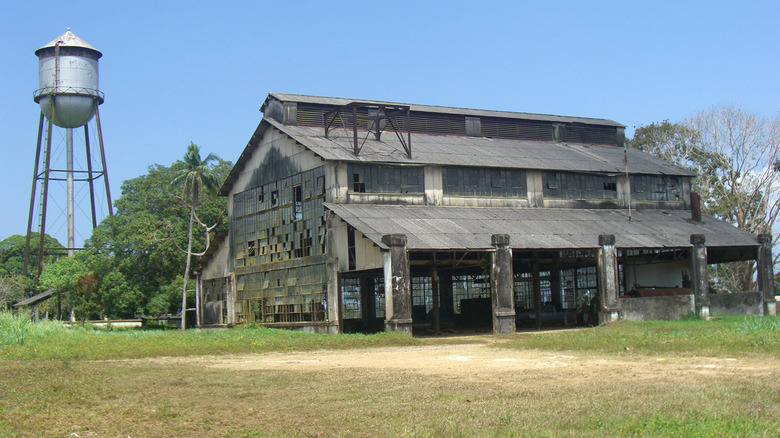
Back in the late 1920s, Ford wanted to secure its own supply of rubber from rubber trees, so the company decided to build a whole town Amazon Rainforest to harvest it. The experiment ultimately failed for a multitude of reasons, but it was one of the earliest examples of automotive companies making some truly weird stuff. Over the next century, the companies you know best would get up to some truly ridiculous things, either for the sake of being collectible or as honest-to-goodness attempts to branch out into other industries.
Honda's Asimo robot is a great example of this. Honda has put a lot of money into its robotics arm with the intent of making robots to help people and companies do various things, even though the famous Asimo got retired in 2018. This only scratches the surface into the strange and goofy things that automakers have gotten themselves into over the years. In fact, most automakers have engaged in this behavior, if not all of them to an extent. So, if you're looking for some fun facts for your next trivia night, scroll on to see some of the weirdest stuff automakers have made that aren't automobiles. If you want to see weird concept cars, we have you covered for that too.
Tesla Cybertruck for kids
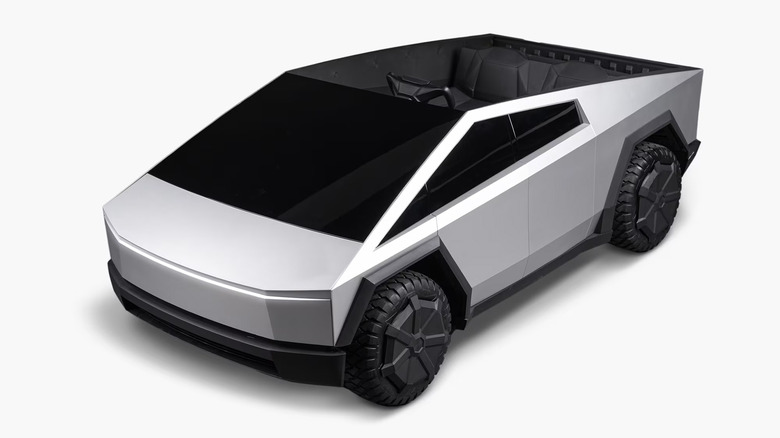
Tesla is known for making all sorts of weird stuff. The brand has sold Texas belt buckles, a branding iron, a beer stein, a whistle, its own tequila, and a few other notable and fun things. For this list, we're going to focus on two kids' toys, both of which you can buy today. The first is the Tesla Cyberquad, an ATV designed for kids in the style of the Tesla Cybertruck. It costs $1,650, can go up to 10 mph, and can be driven up to 15 miles between charges. That 10 mph is an interesting number since most humans jog at around half that speed, which means parents will have to sprint to keep up with their kids.
If that's not close enough to the Cybertruck for you, Tesla also sells one of those for kids. The specs are virtually identical to the Cyberquad, but the truck gets three fewer miles per charge. Tesla says that the small Cybertruck can comfortably sit two kids side by side and includes an actual LED light strip as its front lights. This one runs for $1,500. These are two very expensive kids toys, and definitely not something you'd expect from a company that sells tequila.
Hyundai builds infrastructure
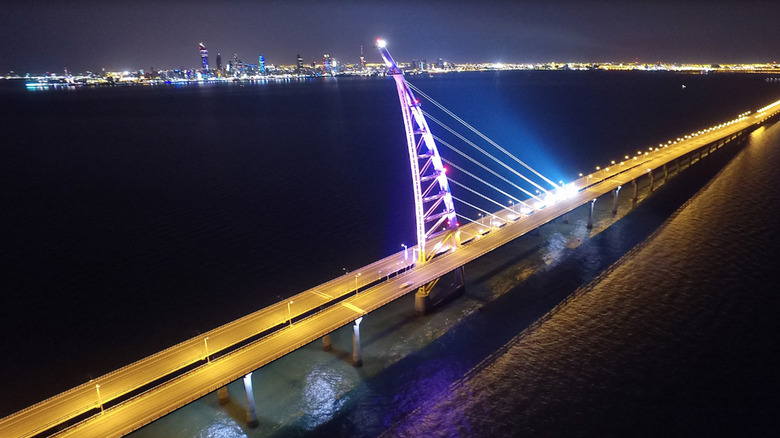
Hyundai is probably best known in the western world as being a maker of cars and a sister company to Kia. However, the company actually makes a lot of stuff besides cars. This is South Korea's oldest steel company, so a surprising amount of infrastructure has Hyundai's handprints on it, too. That includes roads, bridges, and even apartment complexes. It's entirely possible to go to South Korea, buy a Hyundai vehicle, drive it on a road Hyundai built back to your apartment, which was also built by Hyundai. Cool!
The automaker has its fingers in infrastructure outside of its home country as well. It built the Sheikh Jabar Al-Ahmad Al-Sabah Causeway bridge in Kuwait, the Third Bosphorus Bridge in Türkiye, and the Penang Bridge in Malaysia. The bridge in Kuwait measures just over 22 miles, putting just outside of the list of the longest bridges ever made. It's also one of the largest public works projects in Kuwait's history. That means Hyundai isn't doing small things with its steel, and millions of people have driven over its bridges.
Honda will build an engine for anything
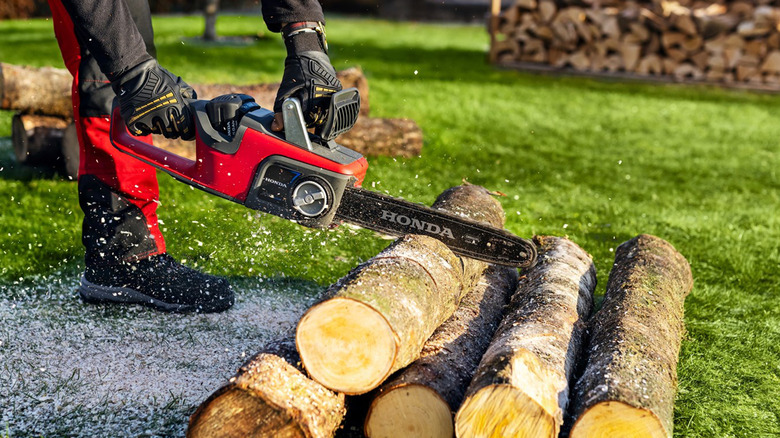
While researching this article, I concocted a fun little game. Go to Google Search, type in Honda, then add in any motorized contraption you can think of and hit search. There's a significant chance Honda has built an engine whatever you come up with. The brand is definitely best known for its cars and motorcyles. However, the company seems content to build engines for basically anything if given the opportunity.
There are a ton of Honda-made products you probably didn't know about. Some of the stuff we were able to dig up includes jets, marine motors, lawn mowers, scooters, ATVs, 4x4s, power generators, military aircraft engines, tractors, chainsaws, farm equipment, and power washers. In one historic example, Honda developed an engine you could mount to a bicycle to turn it into a moped, which it called the A-Type. Not all of these products happened at the same time. The military aircraft stuff happened during the 1980s, and the aforementioned A-Type engine came out in the 1940s. However, if you know where to look, you can buy almost everything else listed above today, powered by a Honda engine. That includes a corporate jet that'll set you back about $6 million before options.
Chrysler owned the boat market
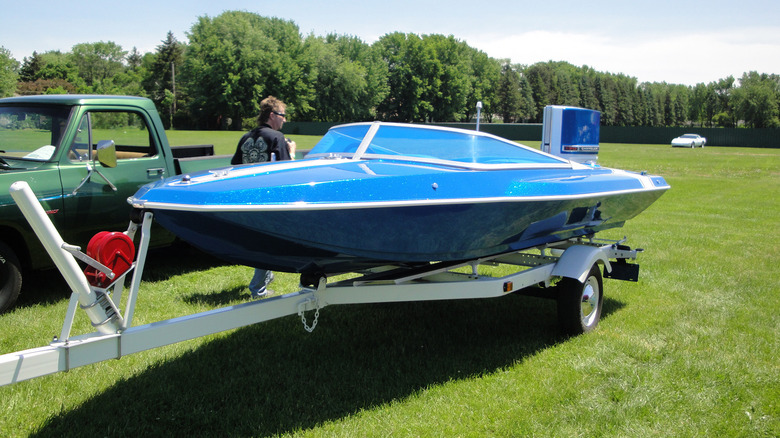
Chrysler is arguably best known today for its various cars, including a selection of hemi-powered autos that have had varying levels of success. However, while kids today won't remember, old timers might: Chrysler was once the king of the recreational boating segment. It sold tons and tons of boats between 1957 and 1979. The brand had been a leader in marine boating engines already and just went ahead and started making boats like the Conqueror, the Lone Star, and more. This was accomplished through acquisitions, like when Chrysler purchased West Bend Outboard in 1965, and through other strategic movements.
These boats were incredibly popular. At one point, Chrysler controlled almost half of America's boat market, maxing out at around 45% of the market share, which was more than everyone else. Back then, you could buy a Chrysler-made boat with a Chrysler-made engine and then tow it on a Chrysler-made trailer, so the company thought of everything. The good times didn't last forever, and Chrysler started selling off its boating arm in the 1980s to offset its struggling automotive business. The final factory closed in 1994, ending a dominant run in Chrysler's history. You can still buy them on the used market for under $10,000.
Volkswagen is a Sausage Company
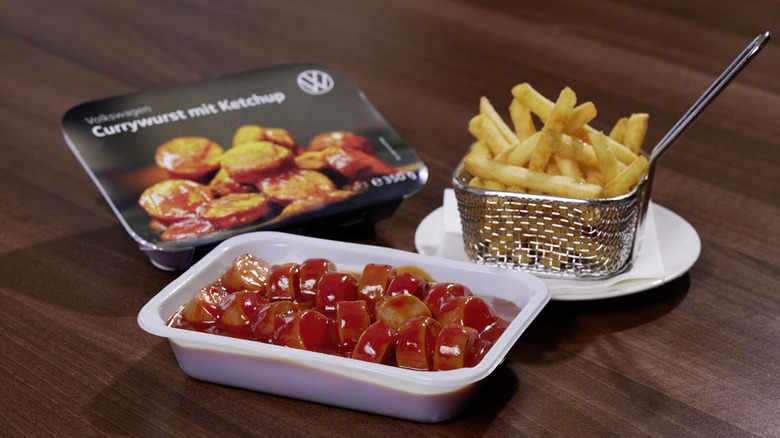
Volkswagen has been in the American lexicon for generations, most notably because of its iconic Volkswagen Beetle, quite possibly largest cause of bruised shoulders while playing slug bug on road trips. On the other side of things, the company made waves in the 2010s for Dieselgate, a controversy where Volkswagen vehicles were basically lying to pass emissions tests. Underneath all of that is an unlikely truth that a lot of people may not be ready to hear. Volkswagen's most popular product isn't a car. It's sausage.
Officially called the Volkswagen Currywurst, these have been on the market since 1973, and if you live anywhere other than America, you can still buy it today. It's banned in the States due to FDA regulations about uncooked pork products, but it's wildly popular elsewhere in the world. In 2024, Volkswagen sold 8.5 million sausages and it sold 5.2 million cars. In a lightly comical twist, Volkswagen has an auto part number for its Currywurst, and it's 199 398 500 A. This is likely due to the fact that Volkswagen makes the sausage in the same factory as its cars. The sausage is made in the same Wolfsburg plant alongside the Golf and the Tiguan.
GM made the first mechanical heart
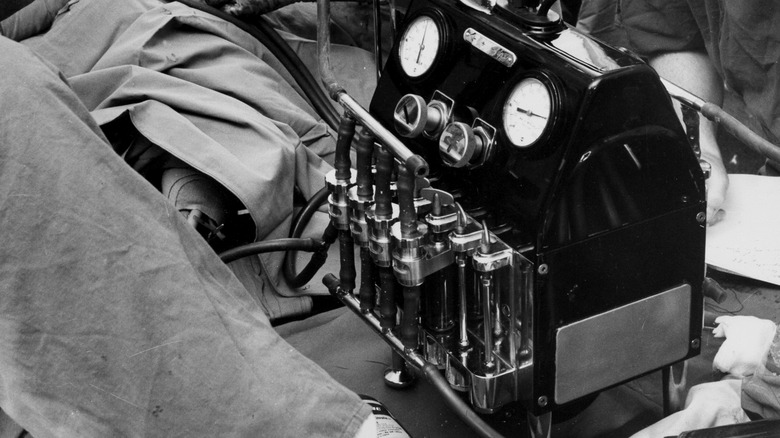
GM has done a lot of things over the years, including its massive stake in the American auto market thanks to its ownership of brands like GMC, Chevrolet, Buick, and Cadillac. And the company is certainly known for its ability to experiment, especially with its automobiles. However, it also has a stamp in history outside of the automobile world. In the 1950s, GM Research Laboratory and Dr. Forest Dewey Dodrill developed the world's first mechanical heart. It could bypass a patient's left and right heart chambers, allowing surgeons to operate on the heart without any blood pumping through it.
The Dodrill-GMR mechanical heart, also known as the Michigan Heart, was first used in open heart surgery in 1952 for a 41-year-old male patient who had a deformed mitral valve. The surgery was successful and the whole thing took about 80 minutes. GM designed the mechanical heart after a Cadillac V12 engine. It had 12 cylinders and six chambers that used air pressure pumps to circulate blood through a person's body. The original unit is enjoying a sweet retirement at the Smithsonian. GM still makes medical equipment, too — it produced 30,000 ventilators during the thick of the Covid-19 pandemic in 2020.
The Lamborghini coffee and cappuccino maker
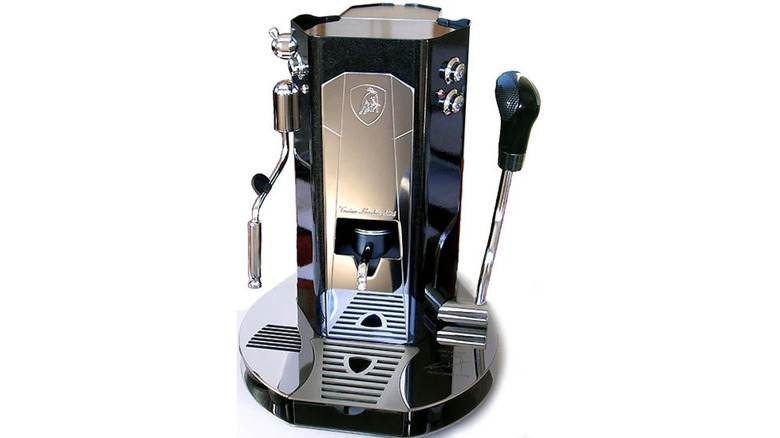
It's not terribly uncommon for automakers to come out with limited edition products that serve as an ode to their brand. An excellent example of this is the Tonino Lamborghini coffee and cappuccino machine, sold briefly in 2017. Lamborgini made a surprisingly decent machine here, which has several aspects evoking Lamborghini's design language. There's a replica gearshift, which starts the brewing process, and the Lamborghini logo is displayed prominently on the front. The settings are also customizable, and you can perform the brewing process manually if you want to. It's also surprisingly small, and can actually fit in most kitchens.
There aren't a ton of these in the world, which is to be expected. This particular machine had a $2,500 price tag, which is a lot, even for a coffee maker. Each one had a limited-edition number engraved in the plate on the front. It also featured a heating surface for cups, a brass boiler, a water reservoir, and a steam dispenser. You really can't find these online, but there are still other Lamborghini-inspired products, like a line of coffee beans from Lavazza and the Rosso Caffe, a high-end cafe in Italy.
Fiat's daily newspaper
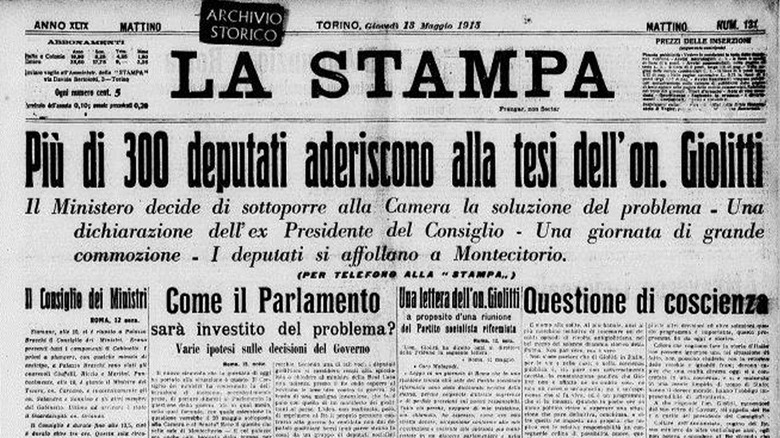
Most of the products on this list are either from the last 50 years or were limited edition runs. However, Fiat has arguably the oldest weird product that still exists today: a daily newspaper. The publication started life as the Gazzetta Piemontese in 1868, and its name changed to La Stampa in 1895. About 30 years later in 1926, it was purchased by Giovanni Agnelli, the man who founded Fiat Motors in 1899. This is the same car company that makes the Fiat 500, which we think is a pretty awesome cheap car.
La Stampa is one of Italy's most famous newspapers, and one of the country's oldest that is still in circulation. It has a website, as well as a physical edition that is published every day. The Agnelli family owned the newspaper for decades before it became partially owned by Fiat Chrysler Automobiles, which held its stake in the company until it sold its share in 2016. The Agnelli family sold off its share in March 2026 after 100 years of ownership.
BMW's legendary bobsleds
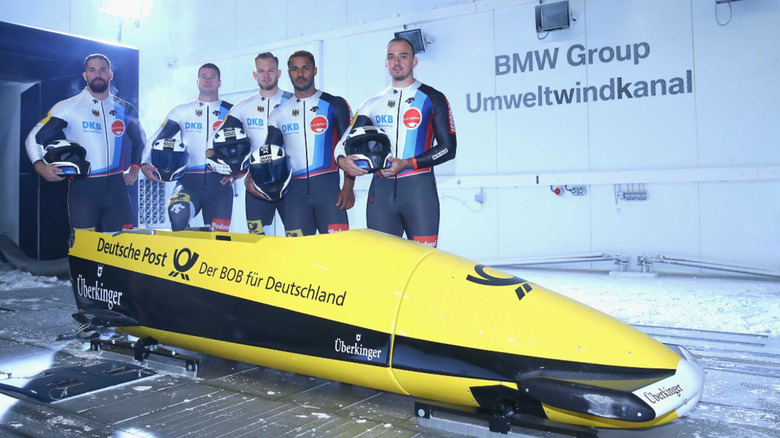
BMW has a history of winning, whether it's through the brand's very successful motorcycles or its wicked fast cars. And it turns out that winning pedigree even extends to the Olympics, specifically the Winter Olympics. This one is also relatively recent. BMW began making bobsleds for competitive German bobsled teams in the early 2010s, with its first round of them featured in the Sochi 2014 Olympic Games. The German teams didn't do so hot during those games, but BMW kept making them, and the German team kept improving. Now, the two are hand-in-hand champions together.
The doors broke open during the 2018 Winter Olympics, where the German bobsleigh teams won three gold medals and a silver medal, all on BMW bobsleds. The Germans and BMW have won plenty of competitions since then, including world championships. That means BMW built some pretty spectacular equipment for some supremely talented people. The Germans won three more bobsleigh golds in the 2026 Winter Olympics, once again on BMW bobsleds. BMW is still involved to this day and are already preparing for the 2030 Winter Olympics.
The $100,000 Bugatti hookah
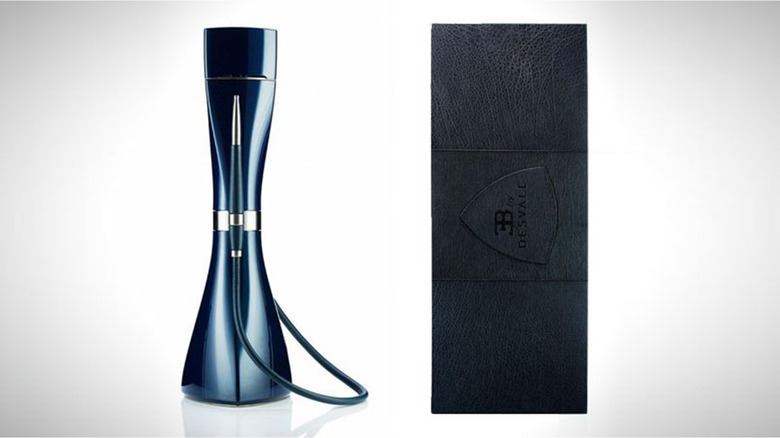
Bugatti has also created some weird stuff, usually in partnership with other companies. For the uninitiated, a hookah is a water pipe meant for the consumption of flavored tobacco known as shisha. Its traditionally found in the Middle East, but you can find them on sale worldwide. Bugatti partnered with Swedish hookah-maker Desvall to create the Bugatti hookah. The limited-edition hookah featured a blue metallic design, came in a pretty awesome looking black box, and sold for $100,000 each.
Unlike most limited-edition runs of products like these, the product listing still exists for the Bugatti Desvall Hookah. 150 of these things were handmade in 2013, modeled after the Bugatti Veyron, which the brand officially stopped making in 2022. It had a carbon fiber outer casing, and hand-sewn leather details. We looked around and couldn't find any of these available anywhere on the secondhand market, so they are as rare as they are valuable. Most luxury hookahs go for up to $5,000, and the most expensive was around $1 million, so Bugatti definitely reached the top 10% of expensive hookahs ever.
Porsche and Aston Martin's residential skyscrapers

The luxury apartment market is pretty small, but there are some well-known players in the game. That includes Porsche and Aston Martin. Both luxury automakers built skyscrapers that are full of luxury residences. Porsche did it first, opening a luxury residential skyscraper in 2017 in Miami, Florida. Aston Martin followed suit seven years later with its skyscraper, also in Miami. The two competing skyscrapers are visible in Miami's cityscape, albeit from different angles. Porsche isn't content with just that, though, and is currently building one in Bangkok as well.
These apartments are super expensive. We found listings ranging from just under $900,000 to $59 million, while Porsche's listings are between $3.7 million and $47.5 million as of this writing. This is also the latest trend among luxury automakers. Bentley and Mercedes-Benz are also actively developing property. Bentley's skyscraper is currently under construction in Miami and is expected to finish in either 2027 or 2028. Mercedes is building two residential skyscrapers. The first is in, you guessed it, Miami, and the other is going to be in Dubai. The Dubai one is set to house more people and will include 13,000 apartments in total.
Maserati's polo-ready horse saddle
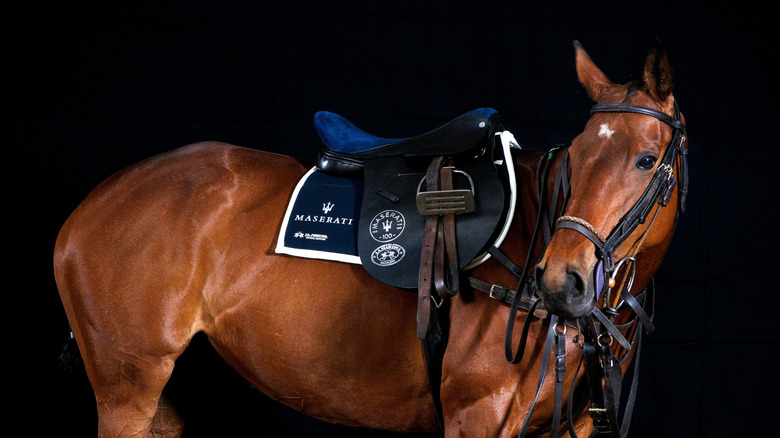
Maserati isn't bashful about its history with polo. It sponsored a whole pro tour that lasted for five years between 2013 and 2018. It's partnered with La Martina, a polo-inspired lifestyle brand, in the past to make a signature cologne that's surprisingly affordable (as far as colognes go), if you can find it. The two also collaborated on polo t-shirts featuring both brands' logos. The Italian automaker and its long-time lifestyle partner upped the ante for Maserati's 100th anniversary when the two came out with a limited-edition horse saddle.
The saddle is made out of full-grain leather and suede, and according to press releases, was crafted by La Martina's craftsmen in Argentina. The brand says its black, blue, and silver color scheme is an homage to the brand's sports cars. Unlike the Bugatti Hookah or the Lamborghini Coffee Maker, Maserati and La Martina made only one of these saddles. It was debuted during Maserati's Centennial Polo Tour, which also featured all of the polo merch described above. People were able to buy the shirts and cologne, but the saddle was one of a kind.