

These Popular Used Car Brands Earned Consumer Reports' Worst Reliability Rankings
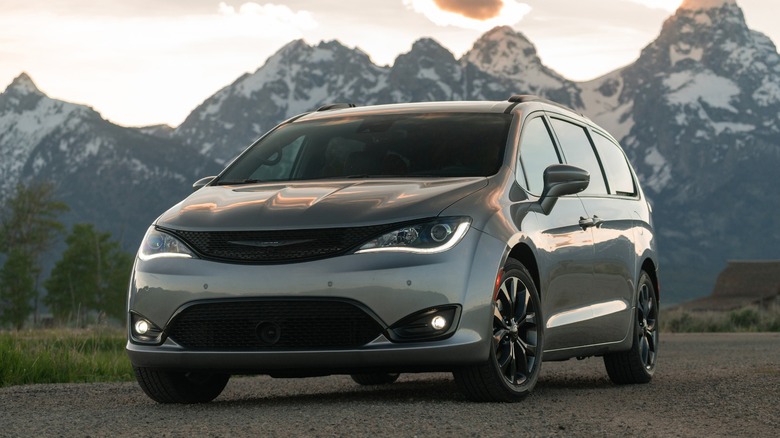
Buying a used car can be a great way to reduce one's outlay. In some instances, you could even potentially get a nicer, better-equipped, or more powerful car than you would otherwise when buying new. Sure, you'll lose out on some niceties, such as the great warranties that brands like Hyundai and Mitsubishi offer, but that may be a small price to pay if you can get a car you really like for the same price as something you would otherwise only tolerate.
While that may seem appealing, the used-car market can be a minefield. While there are plenty of brands that make solid, reliable used cars available for under $15,000, there are also plenty of automakers that one should try and avoid on the used market. This isn't necessarily because they make bad cars; however, their older offerings have a tendency to be unreliable and generally hard to live with.
The question, though, is how one knows which brands to consider and which to steer clear of. That's where Consumer Reports (CR) comes into the picture. The long-running nonprofit's used car reliability ranking names the most — and least — dependable automakers, with the brands ranked based on a survey of CR members with cars from the model years 2016 to 2021. This made for a reasonable sample size of over 140,000 vehicles, so we think the outlet's findings are at least well worth taking into account when going vehicle shopping. Here are the five least reliable used car brands based on the survey's results.
GMC
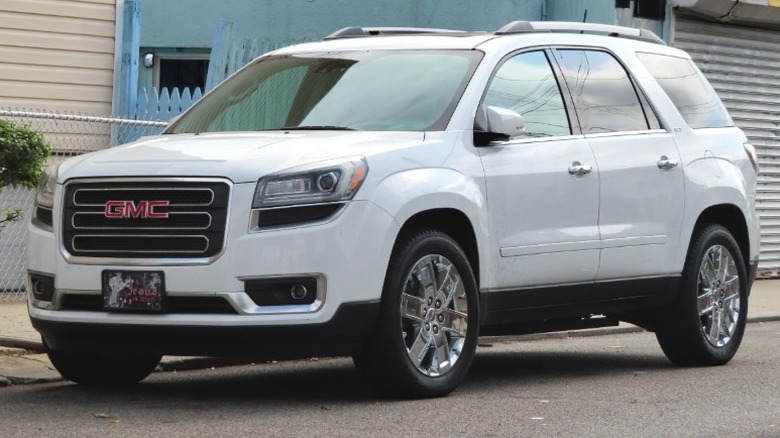
GM-owned GMC shares plenty with its stablemate Chevrolet. Its trucks, like the Sierra 1500, for example, are essentially fancier, more upscale versions of their Chevy counterparts. Despite that, GMC performs noticeably worse than Chevrolet when it comes to long-term reliability, with the brand doing badly enough to place it in Consumer Reports' bottom five.
It's not an entirely fair comparison, of course; Chevrolet makes a lot more vehicles than GMC, and it's entirely possible that those other offerings help keep Chevy in slightly better shape overall when viewed in the aggregate. That said, it's equally likely that some of GMC's less-reliable models have dragged the marque down. The GMC Acadia, for example, is infamous for its poor reliability, and the SUV's 2017 and 2018 iterations had enough serious transmission issues (mostly involving a parking error) that we consider them two of the many GMC Acadia years to avoid.
Other GMC vehicles of the time are also known to cause plenty of headaches for owners too. For example, the 2017 GMC Terrain has plenty of common faults, with issues plaguing the engine, transmission, and electrical systems. The trucks aren't great either, at least if JD Power's ratings are anything to go by. The 2017 GMC Sierra 1500, for example, only has a reliability score of 66 out of 100, which is disappointing at best. Strangely enough, the mechanically identical 2017 Chevy Silverado 1500 scored significantly better than the 2017 Sierra 1500 according to that same JD Power metric. What gives? Your guess is as good as ours.
Chrysler
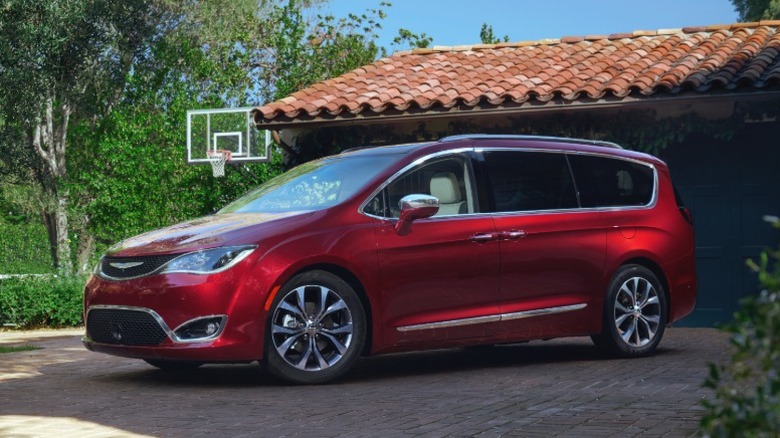
Automotive journalists usually don't get to spend long enough with a car to have it break down on them. Yet that's precisely what happened to our very own Alex Hevesy when he tested a 2024 Chrysler Pacifica plug-in hybrid, with the minivan popping up an error message and failing to start on its last day with him. Now, one example isn't definitive proof of a brand's poor reliability, but it's probably fair to say that this particular broken-down Pacifica was just the continuation of a long trend.
We recommend avoiding the 2017 to 2021 Pacifica model years (which encompass almost the entirety of CR's chosen range), as there are some significant problems with the 3.6-liter Pentastar V6 under the hood. The main issue was a timing error in the engine that would cause it to stall or fail outright. The 2016 Town & Country is another problematic Chrysler offering, with plenty of transmission-related complaints on the NHTSA database. The automaker did recall the minivan to fix a transmission pump failure that may have caused these issues, but some owners allege that their transmissions failed despite not being part of the recall — likely leading to plenty of headaches for owners who thought they were safe.
On the plus side, CR's 2016 to 2021 model year range means that the Chrysler 200 and 300 sedans are also part of the conversation, and these seem slightly less troublesome. Owners generally like their Chrysler 300s, for example, with plenty vouching for the car's dependability. JD Power, for its part, scored the 2016 Chrysler 200 a decent-enough 74 out of 100 on its reliability scale. So things might not be all bad, then, although the marque's poor placing means that most of it probably is.
Ram
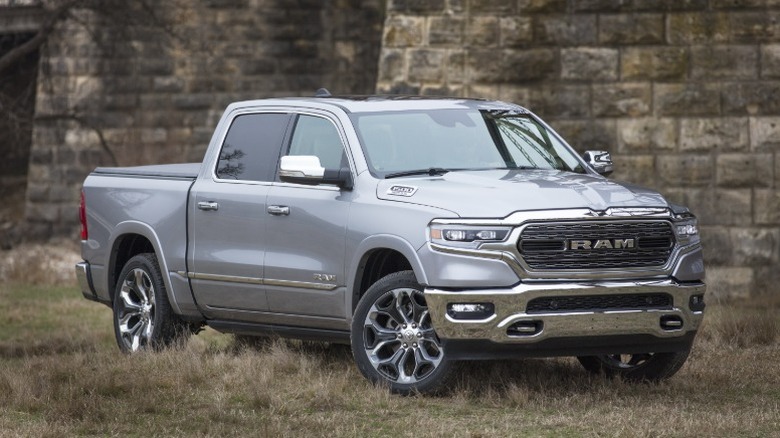
Consumer Reports was, generally speaking, not a big fan of Ram and its offerings. The brand behind trucks like the Ram 1500 — which Chrysler spun off into an independent marque in 2009 — scored remarkably poorly in CR's reliability evaluations through most of the 2010s and early 2020s, regardless of the model. It's not just Consumer Reports, either. The 2019 Ram 1500 is one of the Ram 1500 years that drivers suggest avoiding, primarily due to power steering issues; similarly, owner surveys by JD Power indicate that both the 2016 and 2019 Ram 1500 have mediocre reliability at best.
Now, one of the few things worse than an unreliable truck is an unreliable truck that's also expensive to maintain. Unfortunately for Ram, that's precisely the combo that it's managed. CR's repair and maintenance cost ranking places Ram at the top of the pile for non-luxury brands, with its average 10-year maintenance costs of $8,650 well above that of other poor used choices Jeep ($7,195) and GMC ($7,775) and only behind premium European brands like BMW, Audi, and Volvo.
On the plus side for Ram (and Stellantis), the brand looks to have turned a corner after 2022 or so. The 2023 Ram 1500, for example, proved itself reliable enough for JD Power to name it the most dependable light-duty pickup truck for 2026. Moreover, Car and Driver has also had a decent time during its long-term test of a 2025 Ram 1500, with the pickup getting past the 20,000-mile mark without any notable mechanical failures. As far as Ram trucks go, it would seem that newer is better.
Jeep
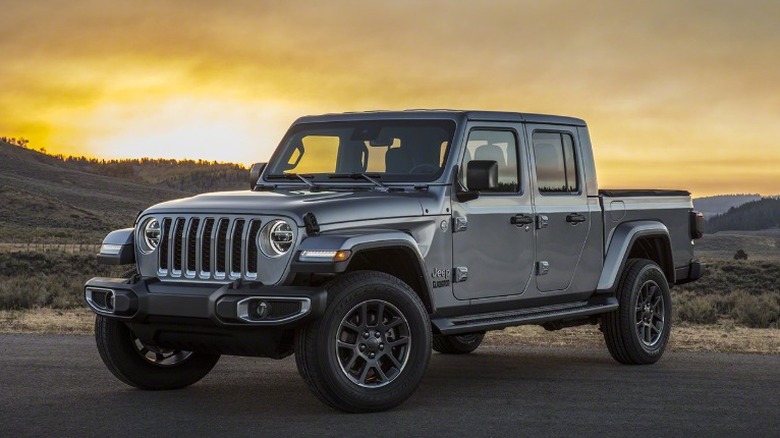
Jeep has not had a good time of it in the 2010s and 2020s. The Stellantis-owned brand has gone through a lot since the days of the Willys Jeep in the 1940s, and while offerings like the 2025 Jeep Gladiator Rubicon we reviewed offer compelling short-term impressions, the long-term ownership experience doesn't seem to be quite as rosy.
Owner surveys from the likes of Consumer Reports and the American Customer Satisfaction Index reflect this dichotomy. Not only do both essentially agree that the the Jeep brand is the biggest disappointment in terms of customer satisfaction, the former also found that it was the worst car brand out there, at least as of the end of 2025. Issues are plentiful, including poor reliability, expensive maintenance, and all the usual foibles that come with 4x4 vehicles designed primarily for rough-and-ready off-roading. JD Power's findings echo this, too, with Jeeps like the 2017 Renegade, 2019 Wrangler, and 2018 Compass all sporting sub-par reliability ratings of below below 70 points. For context, a truck like the ultra-reliable 2020 Toyota Tacoma manages well above 80 points here.
Not even motoring journalists could escape the wrath of iffy Jeep reliability, either. Car and Driver had a 2020 Jeep Gladiator Mojave on a long-term loan and, despite initially liking the off-road SUV, its mechanical issues (including a transmission failure before 10,000 miles) and other quirks meant that the outlet all too eager to part with the vehicle after 12 months. None of this will probably surprise dyed-in-the-wool fans of the brand, of course, but the uninitiated may want to steer clear of used Jeeps.
Tesla
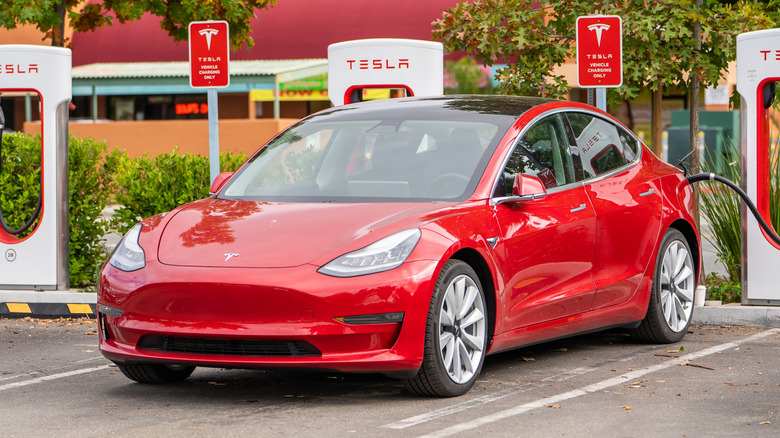
Used Teslas have something of a bad reputation, with even owners suggesting buyers steer clear of used models. With that in mind, it unlikely a surprise to see Tesla at the bottom of CR's list. However, it's crucial to remember the outlet's range of model years here. Tesla had some particularly bad years between 2016 and 2021, with the automaker struggling through a so-called "production hell" as it tried to ramp up large-scale delivery goals of the Model S and Model X.
The result were cars that didn't necessarily live up to the reliability standards one might have expected from a more established automaker. Issues that plague Tesla models built in the mid-2010s to early-2020s include significant suspension wear, worse-than-expected range loss, drive unit issues, and numerous claims of unintended acceleration that led to an NHTSA investigation in 2020 — alongside plenty of other issues that led to recalls for cars like the 2016 Model X. Elon Musk himself admitted that the Model X was "over-engineered" in an investor report (via Business Insider), and this likely didn't help its long-term dependability.
Tesla has turned a leaf, though — well, to some extent. While cars like the Model Y aren't especially reliable, more recent examples of the Model 3 and Model S seem to at least be solid enough in this regard. This is reflected in Consumer Reports' new car reliability rankings for 2025, where Tesla placed in the top 10 ahead of names like Kia and Ford. The conclusion, then? If you really want to own a Tesla, you're probably better off with a new one.