

9 Of The Best Gadgets & Tech To Help Meet Your Fitness Goals In 2026

We may receive a commission on purchases made from links.
Just a decade or so ago, the Fitbit dominated the conversation when discussing fitness tech. Now, fitness has gotten decidedly "smarter." All sorts of wearables will track every vital that can be tracked, and the things you didn't know could be made smart now are. We might not be at the point yet where AI coaches can completely replace flesh-and-blood trainers, but we're getting awfully close. So we'd like to look at the best gadgets on the market, right now, for gym rats, runners, and everyone in between.
We're trying to thread the needle here through general-purpose smart gadgets that will work for any sort of physical activity, and give you both affordable recommendations and options on the higher end, for those who want or need them. Unless you do some very specific and niche kind of exercise, at least one of these items will probably work for you. Here are nine that we like.
Apple Watch
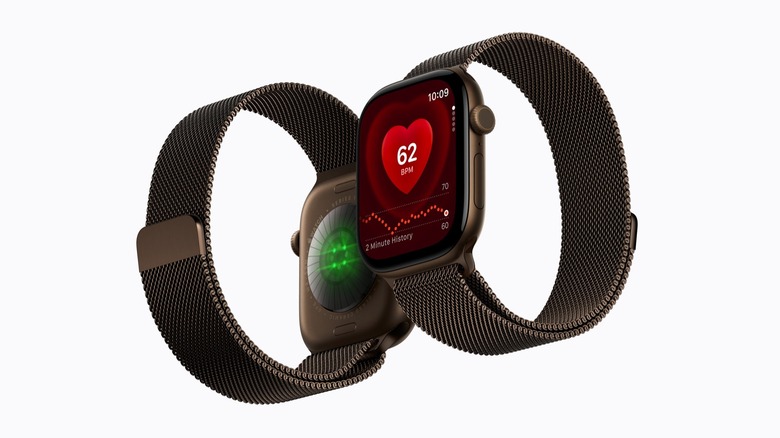
We know it'll make us sound like a broken record, but we'll say it anyway: The Apple Watch is one of the best all-around fitness trackers on the market, at least for iPhone users. Few other watches manage to be as comprehensive for living healthy and tracking one's physical activity. I can put my own stamp of approval on that.
Apple Watches track an insane number of workouts and let you create your own if yours isn't listed. During workouts, they give you a detailed overview of your heart rate, how far you've gone, and how many calories you've burned. After workouts, they analyze trends over weeks and months. Between workouts, you are encouraged to stay active — move around more, stand up more often — to "close your rings," Apple's famous gamification of your health. Best of all, all of this stuff works more or less out of the box, with minimal setup required. Both casual users and the hardcore will probably like an Apple Watch.
Outside of physical activity, the Apple Watch will track all the auxiliary things indirectly related to your fitness: averages of your vitals, extensive heart health monitoring, sleep schedules, and medication. And it keeps getting better, too, with the latest Apple Watches supporting more accurate and frequent heart rate monitoring. Aside from all the health stuff, the Apple Watch is just a good smartwatch generally, with a whole bunch of features you didn't know it had, like live translation and music recognition. And it's good for all budgets; the $250 SE gives you all the most important features, while the $400 Series provides a more premium experience, and the Ultra at $800 caters to people who want no compromises.
Pixel Watch 5
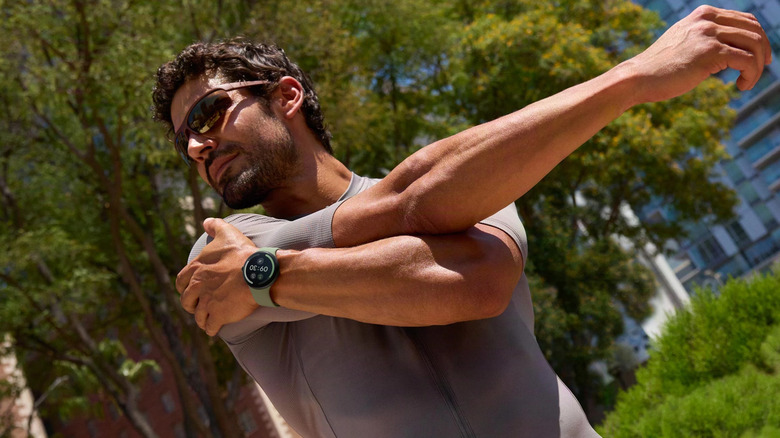
Make no mistake, the Apple Watch is far from the only great smartwatch on the market. Samsung, Garmin, Huawei, and others make excellent choices. A solid contender for Android users — particularly Google Pixel owners — is the Pixel Watch. We gave a slam-dunk review to the latest Google Pixel Watch 5 for being a smart all-rounder, especially when it comes to design. We'd say this is the watch for people who like the Pixel lineup's focus on being the "smartest" smart device, i.e., a device that dives headfirst into AI and uses it in ways that make its competitors feel years behind.
The newest Pixel Watch 5 is all about averages, giving you morning briefs to understand your health data in aggregate as well as customized scores for how much you've recovered, how hard you've worked out, and how much you've improved from workout to workout. This smartwatch will even track your reps and sets and all the different parts of your workout, from the warm-up to the cool-down.
Fitness aside, it also goes hard monitoring concerning health trends like insulin resistance and high blood pressure, and it includes emergency features like detecting a loss of pulse. Pixel Watches will do all sorts of cool things, like notice when you're stressed and remind you to relax. Aside from that, it's just a good-looking watch, evocative of traditional watches rather than the square-shaped Apple Watches and Fitbits out there. Price-wise, it's in line with other premium smartwatches at $400. Try the Google Fitbit Versa 4 or the Fitbit Edge if you want something a bit more affordable.
FitBit Air
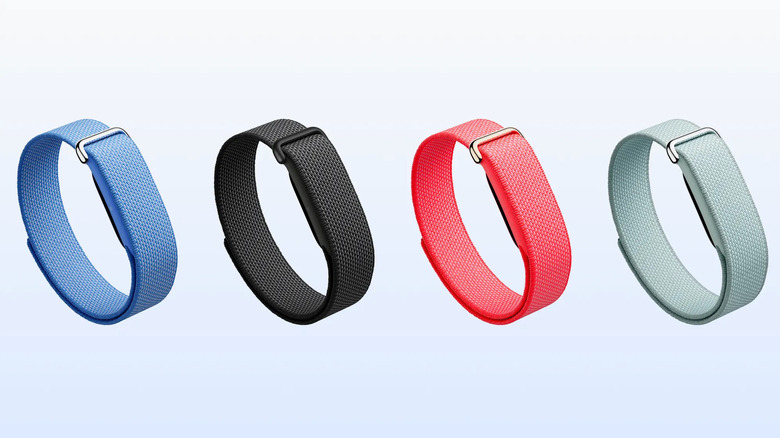
For some people, smartwatches like the Apple Watch and the Pixel Watches just feel like a second, expensive, and unnecessary smartphone on the wrist, but you might still want an intelligent way to track your fitness. If that describes you, then get the Google Fitbit Air. It's a screenless fitness tracker that could easily be mistaken for just a bracelet, supports a week of battery life, and automatically tracks all the most important metrics that a smartwatch usually does, so you can wear it and forget it.
The Google Fitbit Air will need to occasionally be activated from your phone for things like workouts, but otherwise it silently tracks your varied activities and then gathers it all into one place for you (the Google Health app, available on Android and iOS) to analyze at your leisure. The tracker costs $99.99, and that can be the end of the conversation, if you want it. Functionality won't be limited. For an additional subscription ($9.99 a month or $99.99 a year), you get a personalized AI health coach that gives you a bird's-eye view of your health and personalized plans for fitness and nutrition. How useful the AI coach will be to you will depend in large part on whether you think LLMs are useful to begin with. Some reviewers think the subscription is worse than just using what's freely available.
Before you buy, there are a few things to know about the Fitbit Air. Overall, though, this is an excellent and highly affordable smart tracker on Android and iPhone. It's also much cheaper than similar, subscription-based options like the Whoop band.
Smart ring
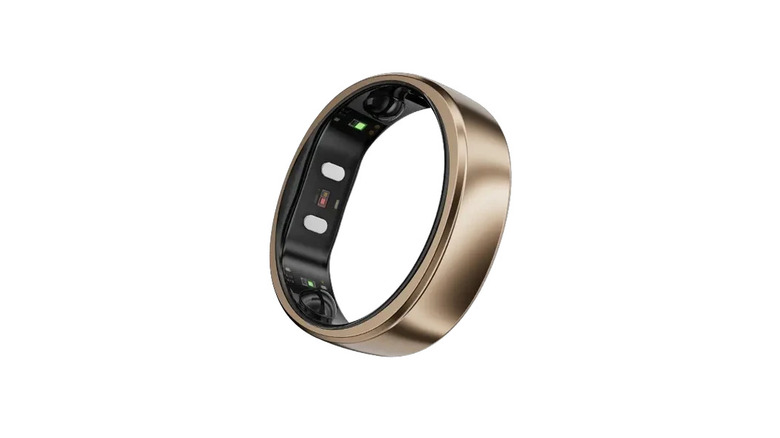
Smart rings seemed like something limited to the purview of sci-fi movies not too long ago, but now they are available — and affordable — for the average consumer. We'd say they're better suited to people who aren't interested in wearing smartwatches and only need basic health tracking in the smallest, least obtrusive package possible; smart rings let you wear your old-fashioned watches without giving up smart features. We recommend two rings in particular: the RingConn Gen 2 Air and the Oura Ring 5.
The RingConn Gen 2 Air is relatively affordable at $199, especially when you consider this thing is packing 10-day battery life and a suite of sensors to monitor steps, heart rate, blood oxygen levels, skin temperature, respiratory rate, sleep, and even menstrual cycles; as you can see, smart rings are on par with some smartwatches in how much they can track. And importantly, the RingConn does all of this subscription-free. Though it may seem pricey, $200 is the low end in the realm of smart rings.
The Oura Ring 5 is a solid alternative. It costs more at $399 and does unfortunately require a subscription. Reviewers like it for its compact size, meaning (hopefully) you won't even notice it's on your finger. Oura puts a lot of emphasis on accuracy and claims that its rings are backed up by all the latest science. Whichever smart ring you choose, it's going to do most of what a smartwatch can with impressively long battery life, all in an incredibly small package.
Chest strap monitor
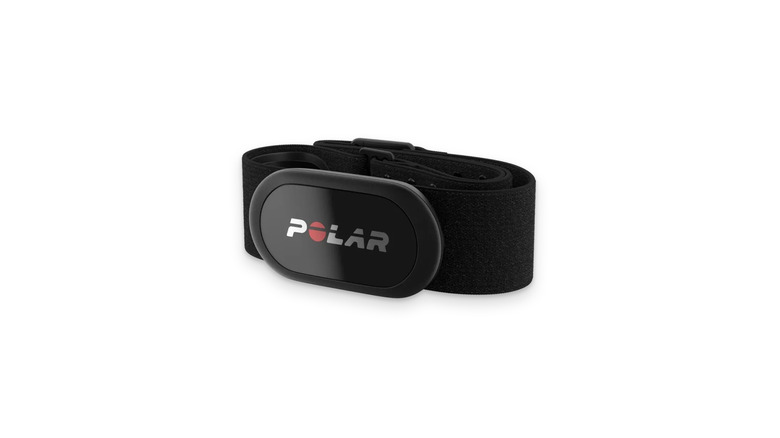
Even more niche than smart rings are chest strap monitors. Aside from being the most inconspicuous way to monitor your heart rate, their whole sales pitch is that they may be more accurate than other wearables at monitoring heart rate since they use ECG rather than optical monitoring — and perhaps also because they're only inches away from your heart. One of the best options on the market is the Polar H10, well regarded by reviewers. It can be used in tandem with your smartwatch and may even be able to pair with it to lend its more accurate heart rate sensing. It's more affordable than most might expect at $104.95.
Another big selling point of a chest strap monitor is its insane battery life. You'll get approximately 400 hours of use from the Polar H10, though it does use a non-rechargeable CR2025 battery. So if you work out for an hour a day, you won't have to replace the battery for over a year. That's on par with the battery life of an AirTag, for the record.
Admittedly, this is the choice for dedicated athletes who need the most accurate heart rate measurements and who are doing hardcore workouts. Wearing a chest strap could be uncomfortable for some. However, you may also prefer this if you do workouts where a smartwatch or smart ring might get in the way, such as contact sports.
Therabody Theragun Mini 3
There is nothing worse than doing, say, a heavy leg workout and then being in agonizing pain every time you stand up or sit down. Rather than put on a stoic face, you can likely get some relief with a massage gun. Some health professionals recommend them for pain relief and recovery, and studies suggest they can be useful tools for reducing pain, increasing flexibility and range of motion, and reducing stiffness. Based on personal experience, though, they do provide — at a bare minimum — temporary pain relief from sore muscles.
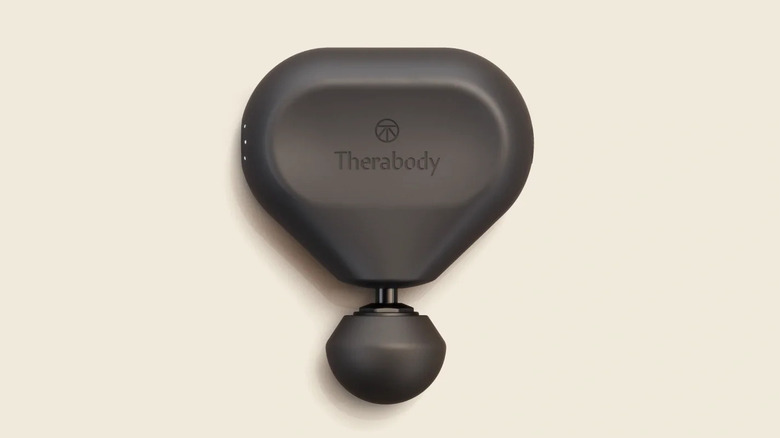
With all of that in mind, a massage gun we recommend is the Therabody Theragun Mini Gen 3. Reviewers love it, and so do users. It's small, easy to use, highly portable, and has a battery life of up to 150 minutes. The gun includes three attachment types and has three speeds. Therabody also says that it is TSA-compliant for travel. Connect the Theragun to the app, and you'll get recommended recovery plans if you're unsure where to start or how to use it. It's a bit pricey at $219.99, we admit, but it makes sense when you realize this is effectively a consumer version of a physical therapist's tool.
Before you fire up a massage gun for the first time, get some professional advice on how to use it. These things could hurt you if used incorrectly, and there are certain parts of the body (like your neck) where you should never use them. Therabody has its own list of precautions, including conditions that necessitate speaking to a doctor first, and some fairly obvious stuff like not using the massage gun over a skin rash. We don't say any of this to scare you, just to make sure you know what you're doing.
Open-ear headphones
It's probably safe to say that in most workouts, situational awareness is a huge deal, whether you're jogging outside or lifting weights in a crowded gym. Transparency mode on a pair of ANC earbuds like the AirPods Pro should do the trick, but if you want that situational awareness that doesn't require changing a setting, try open-ear headphones.
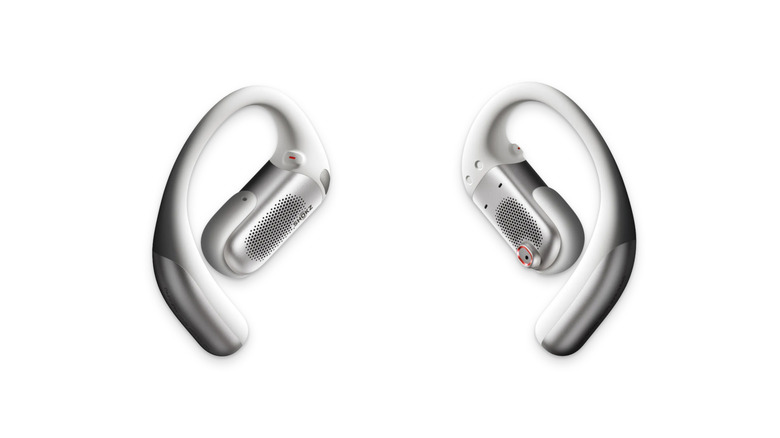
Open-ear headphones come in two different varieties. The Shokz OpenFit Pro is a well-reviewed example of the first, basically speakers positioned near your ears so they're not blocking off your ear canals. They're IP55 water and dust resistant and can play music for 12 hours on one charge, or 50 hours total with the charging case. What we like about this model in particular is the open-ear noise reduction, which is "ANC" of a sort; typically, ANC requires earbuds or headphones with a tight seal for best results. You can get a rough idea of how effective it is with a clever binaural test performed by This Is Tech Today.
The other variety is bone conduction headphones, which use your skull (rather than air) as the pathway to your inner ear. Since your ears are freed up, you can still hear your surroundings, although they don't rank high in the sound quality department. We'd recommend the Shokz OpenRun Pro 2. Bone conduction headphones are for those who want to give their ears a break, since wearing any kind of earbuds can get fatiguing. Be aware before you buy these that just because they're vibrating your skull doesn't mean people around you won't hear them. Cranking up the volume on that NSFW podcast will be audible in your vicinity.
Smart scale
Keeping track of your weight is important whether you are trying to lose it or just stay in shape generally. If you do, you probably wake up each morning, empty the "tank," weigh yourself ... and then manually write that weight down or log it in your preferred health app. A minor hassle, we know, but you can get a smart scale relatively affordably that will log your weight every time you step onto it, and a whole bunch more.
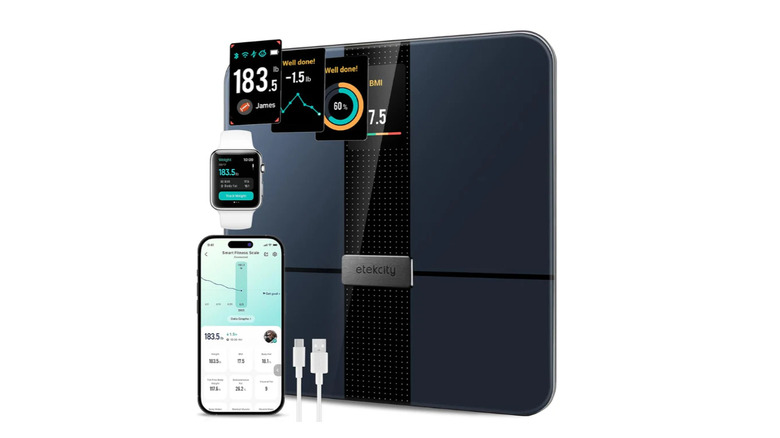
On the more affordable end, there's the Etekcity Smart Scale. For $80 (probably on the edge of what is considered affordable, we admit), you get a scale that can interface with Apple Health, Google Health, Samsung Health, and others. It syncs over Wi-Fi and displays nine separate body metrics (weight, body fat, BMI, etc.) on the screen or in the app with the help of comprehensive BIA sensors. The battery is rechargeable, so you don't have to hunt around for AA batteries every few months. Reviews rate it highly.
On the high end, there's the well-regarded Withings Body Comp at $229.95. This is a scale that Withings describes as an "advanced checkup for your body." We would hope so, for that price. Withings says it uses advanced sensors to gather information on your heart, your metabolism, and overall body composition. It's also a scale that has an optional subscription ($9.95 a month or $99.50 a year) for those who want further guidance.
Walking pad
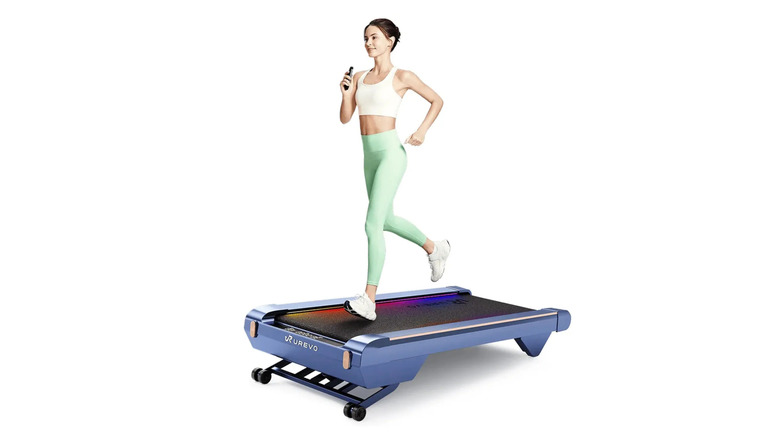
It is somewhat ironic how many of us will exercise so hard only to end up sitting for eight hours a day at a desk. When you look at the alarming statistics concerning sitting, you may wish to limit how much time you spend with butt in chair. Standing desks are one way to do this, and they pair really well with a walking pad. We recommend the UREVO CyberPad.
It is not cheap, we admit, retailing on Amazon for $479.99. However, treadmills don't usually fit into the category of what most consider to be "cheap" anyway, and this is a highly customizable one that should fit under all but the smallest standing desks. It starts to make sense when you see that most walking pads start at the $200 mark. Anecdotally speaking, standing at a standing desk can be painful for long periods, but walking, even at a slow pace, often feels much better.
The latest research around standing desks suggests a balance of standing, sitting, and walking around. It's a nice idea, but some people might be too busy to walk around for a couple of minutes every half hour. Walking pads could solve that. Also, they're perfect for someone with a busy schedule; if you have no time to go to the gym later on, then you can kill two birds with one stone and do a cardio "workout" when you're in a meeting.
Our criteria for these products

Fitness goals can differ wildly from one person to the next. Some people rigorously track every heartbeat down to the millisecond (not literally, but you know what we're getting at), while others are just trying to increase their physical activity in a general sense and only want to track "Did I go to the gym today?" With that in mind, we compiled this list for a very general audience. If you do some sort of dedicated physical activity on a regular basis, then at least a couple of these products would be helpful to you (we think).
First, we focused on general-purpose fitness gadgets that could lend themselves to a person who's doing just about any sort of physical activity. For example, we included smartwatches and fitness trackers that can be used regardless of whether you're at a gym or outside, and a massage gun that could aid recovery for most types of workouts.
We avoided more niche stuff, like at-home gym sets or smart gadgets for specific workouts, such as running pods. In each case, we looked at professional reviews from other outlets whose reviewers have actually used these items, or referenced our own personal experience; as for me, I've been a regular attendee at my local gym for years and have used most of the items on this list. All of this is to assure you these weren't just lifted off Amazon with random user reviews taken at face value. Also, we tried to give you a budget option where we could.