

These Once-Common Sedans Have Nearly Disappeared From The Streets

Size matters to most American car buyers, as crossover and SUV sales continue to rise steadily. In just nine years, SUVs' market share has grown 14%, accounting for a whopping 52% of all new vehicle transactions in 2025. Consumers are drawn to the elevated seating position, larger cargo capacity, and rugged appearance — even if there are some things sedans simply do better.
This has led to many automakers reshaping their domestic offerings. While some sedans, like the Honda Accord, are celebrating their 50th anniversary, many other nameplates have not been so lucky. Buick's entire North American lineup is now exclusively crossovers. Ford's only non-SUV/truck is the two-door Mustang sports car. Volvo is taking a similar path too, discontinuing its once-iconic sedans and wagons. The following 12 sedans were once key players in their OEM's lineup. And now, they're becoming nothing more than a memory.
Cadillac DeVille
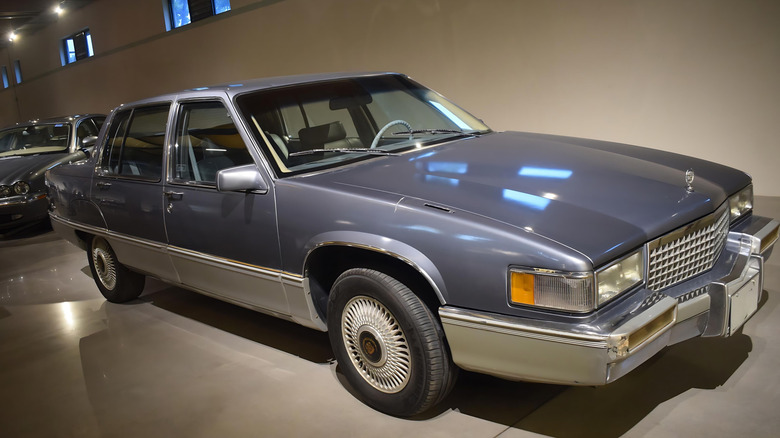
Derived from the French "de la ville" and translating to "Of The Town," Cadillac first introduced the DeVille as a concept car back in 1949. Designed to exude luxury and opulence, this prototype featured bright chrome trim, a one-piece wraparound windshield, and power windows. The Sedan de Ville was introduced in 1956 as the brand's first production four-door hardtop. Cadillac offered then unheard-of standard equipment, including power brakes and steering, multi-speed windshield wipers, and even power-adjustable seats.
The DeVille was a showroom staple for Cadillac, spanning 57 model years while becoming part of the American dream. Success became synonymous with having a Cadillac in your driveway. The DeVille established a reputation for premium features and amenities wrapped around an understated exterior.
The eighth and final generation, which ran from 2000 until 2005, marked the end of the DeVille. It also introduced yet another automotive first: night vision. Developed in partnership with Raytheon, the DeVille could be equipped with an infrared sensor camera in the grille that projected an image onto the windshield via a heads-up display. For 2006, the DeVille was replaced by the DTS, or DeVille Touring Sedan. Its discontinuation in 2011 marked the end of the full-size old-school sedan for General Motors.
Ford Crown Victoria
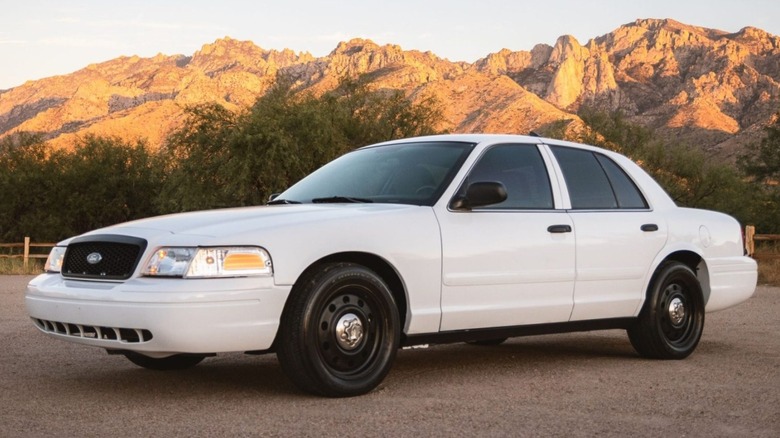
The Ford Crown Victoria is one of the most instantly recognized vehicles ever produced. Most people, even those with no automotive knowledge, can instantly recognize one just by its amber running lights. Whether used as a taxi cab, patrolling the streets with law enforcement, used in government fleets, or even purchased in civilian spec, you'd be hard-pressed to find someone unfamiliar with this full-size sedan.
Riding on the Panther platform, which Ford first introduced in 1979, the Crown Victoria name was used to denote the top trim of the then-new LTD. A few years later in 1983, Ford shuffled their lineup, introducing the smaller LTD sedan (replacing the Granada) and the full-size LTD Crown Victoria. Buyers would have to wait until 1991 for Ford to introduce the Crown Victoria we all know for better or worse.
Featuring styling inspired by the futuristic Ford Taurus, the Crown Victoria arrived to directly rival Chevrolet's Caprice. It introduced buyers to the 4.6L SOHC V8 engine, which would remain the sole engine choice for the Crown Vic, Mercury Grand Marquis, and Lincoln Town Car until the platform's discontinuation in 2011. Aside from a minor facelift in 1998, the Crown Victoria remained almost entirely unchanged. This made it incredibly popular for fleets, as it kept parts and maintenance costs low. Even over a decade later, some police agencies still use the Crown Victoria, preferring it over modern alternatives.
Ford Taurus
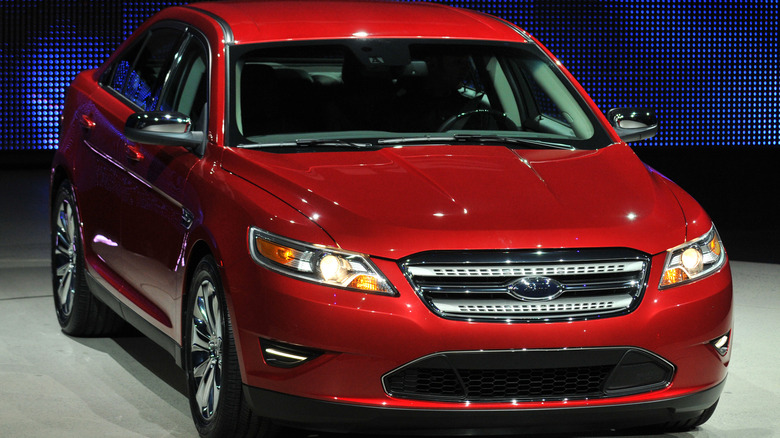
By the mid-'80s, American roads were quickly filling with imports from Honda, Toyota, and Nissan. These Japanese sedans offered aerodynamic styling, better efficiency, and attractive pricing that domestic offerings just couldn't match. The 1986 Taurus was radically different from the LTD sedan it replaced, featuring a unibody chassis, FWD, and a smaller V6 engine. This was a huge gamble for the then-struggling automaker.
Luckily, it paid off. Sales steadily rose, and from 1992 to 1996, it was the best-selling car in the United States. That success, however, was short-lived. Ford discontinued the Taurus nameplate in 2006 and replaced it with the Five Hundred, but quickly backtracked and brought back the Taurus badge for 2008 to improve name recognition.
The final generation, introduced in 2010, was designed to replace the Crown Victoria. Ford even created the Police Interceptor, which was purpose-built for fleets to replace aging police cruisers. A minor facelift in 2013 would essentially be the last change for the Taurus until its discontinuation in 2019. Ford built over 8 million in Chicago during its 34-year run. Ford decided not to invest in the next generation of sedans and discontinued the Taurus, Fusion, Fiesta, and Focus, instead pivoting to more profitable crossovers and trucks.
Chevrolet Impala
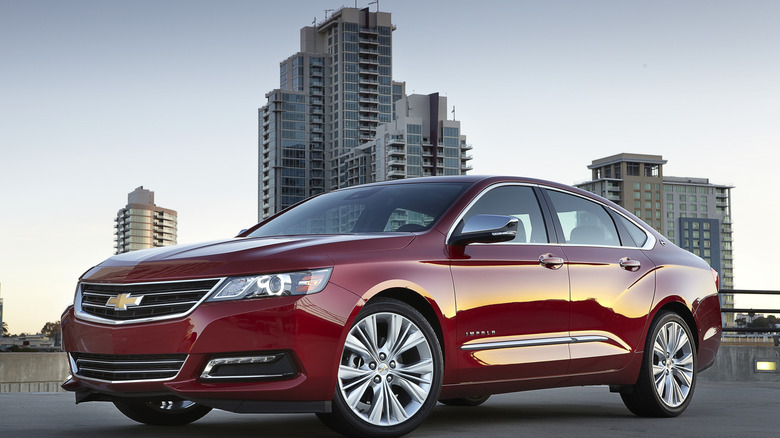
Another longstanding nameplate for General Motors, the Impala was first introduced in 1959 as the flagship of Chevrolet's full-size offerings. In 1965, the Impala was selling over a million units a year, a record for a single car line at the time. A direct response to the fuel crisis, 1977 saw GM physically downsizing its vehicle lineup. The Impala became the entry-level sedan, with the Caprice taking over as Chevrolet's premium offering. The Impala was then discontinued for the 1986 model year.
A concept car revealed at the 1992 Detroit Auto Show introduced the Impala SS, essentially a police-spec Caprice meant for the general public. It was available briefly from 1994 to 1996. The Impala returned in 2000 as a FWD sedan, replacing the Lumina. This more practical, efficient approach continued for the ninth generation, which ran from 2006 until 2013.
The tenth and final generation, revealed at the 2012 New York International Auto Show, went on sale as a 2014 model. Featuring new, larger, German-inspired underpinnings (from Opel), it offered improved comfort, technology, and efficiency, making it quite popular in an SUV-dominated market. Chevrolet sold over 140,000 units in its first year, but sales quickly declined, not even breaking 45,000 in 2019. GM re-tooled the Detroit-Hamtramck plant for EVs, with the all-new Hummer EV being the first to roll off the updated line.
Toyota Avalon
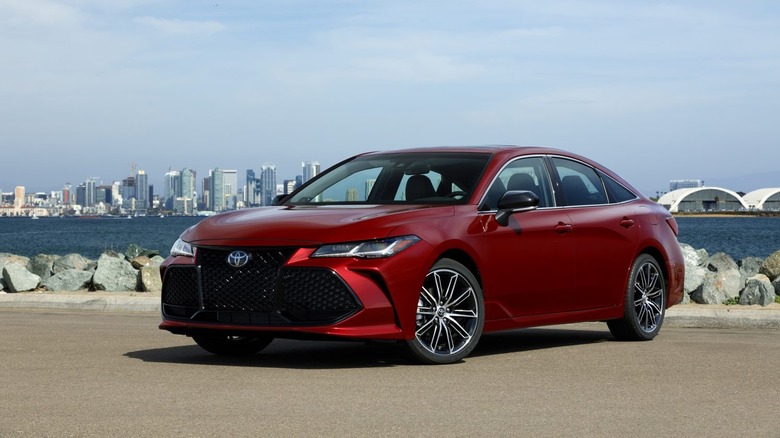
Following the discontinuation of the Cressida in 1992 and eager to continue competing in the full-size sedan space, Toyota introduced the Avalon for the 1995 model year. The goal was to offer a luxury experience without the premium price tag Lexus, Toyota's luxury counterpart, had become known for. Based on the Camry platform, the Avalon featured a wheelbase stretched by over 4 inches for a smoother ride and more passenger space. It shared a V6 engine with the Camry that was slightly tweaked to offer more performance (but still not as much as Lexus).
The following generations maintained the same successful formula. Second- and third-generation Avalons featured V6 power, premium build quality, and a bargain Lexus experience. The fourth generation, introduced in 2013, was the first to offer a hybrid-assisted four-cylinder motor. Its platform and powertrains were shared with the more expensive Lexus ES.
The fifth and final generation made its debut in 2019. A new-to-Avalon naturally aspirated four-cylinder and optional AWD were offered in 2021 in an attempt to increase sales. Toyota's sporty division, TRD, also got its hands on the fifth-gen Avalon, equipping it with an aggressive body kit, red seatbelts, stiffer suspension, larger brakes, and a more rowdy exhaust. By 2022, Toyota only sold 12,215 Avalons, leading to its discontinuation before the 2023 model year.
Volkswagen Passat
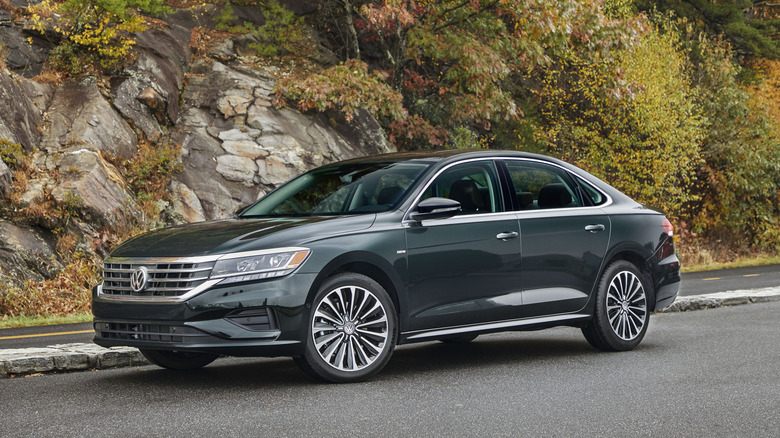
The Passat played a huge role in Volkswagen's success in North America. Although the first car to wear a Passat badge was introduced in 1990, its origins actually go back to the 1974 Dasher. Featuring similar styling to the Golf and Scirocco, the Dasher was VW's attempt to break into the luxury space. The second generation, named Quantum, was introduced in 1982 and shared most underpinnings with the more expensive Audi 4000.
Things got interesting in 2011 when VW introduced the seventh-generation, or B7. For the first time in the model's history, this Passat wasn't European. VW worried the Passat was becoming too expensive, so it developed a completely new, larger Passat exclusive to North America, codenamed New Midsize Sedan, or NMS. Volkswagen built an all-new plant in Chattanooga, Tennessee, to exclusively produce this American special. These savings allowed it to be priced closer to the Honda Accord and Toyota Camry.
Volkswagen introduced the final generation, B8, in 2014. A glorified refresh, the Passat received all-new sheet metal and a brand-new infotainment system. The engine and platform carried over unchanged. Volkswagen announced the end of the Passat in 2022, sending it off with a Limited Edition meant to honor its heritage. The Chattanooga plant would continue to build the Atlas and Atlas Sport Cross, with the Passat line transitioning to build the ID.4 EV.
Chrysler 300
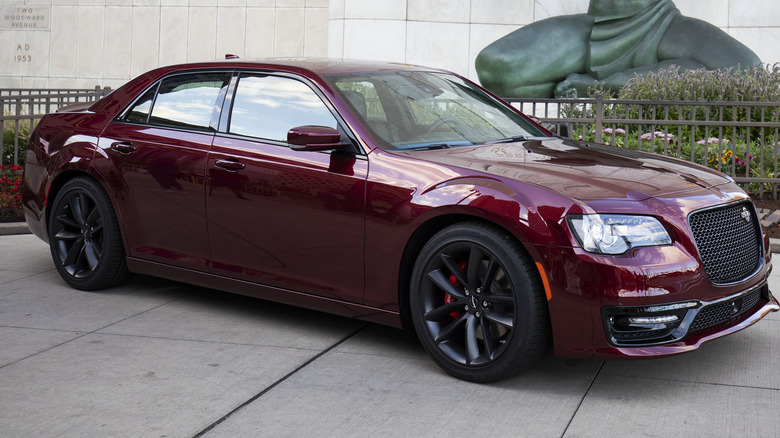
Chrysler first introduced the 300 in 1955, positioning the all-new 300C as sporty and luxurious. Offering 300 horsepower from its Hemi V8, it was good for a then unheard-of 0-60 time of 9.8 seconds. The model went on to have great success in NASCAR as well, truly solidifying the 300's status as one of the first muscle cars.
In 1999, 20 years after the last 300, Chrysler introduced the 300M. Unlike its ancestors, the 300M was a full-sized front wheel drive sedan powered by a V6 engine. Reception was strong, with Motor Trend naming it "Car of the Year" in 1999 and Car and Driver naming it to their "10Best" list in 1999 and 2000. The starting price of $28,950 undercut German competition by thousands.
The LX generation, first introduced in 2005, was crucial for the success of the new DaimlerChrysler merger. The 300 was RWD again, now featuring underpinnings first found in the W211 Mercedes-Benz E-Class. The five-speed automatic transmission was also from Mercedes' parts bin. This platform also underpinned the Dodge Charger (and Magnum wagon) and remained largely unchanged over the years. A 2011 update offered a fresh look and some mechanical updates. A 2015 facelift also added a new eight-speed automatic. 2023 would mark the end of the 300, complete with a 6.4L Hemi-powered V8 send-off.
Nissan Maxima
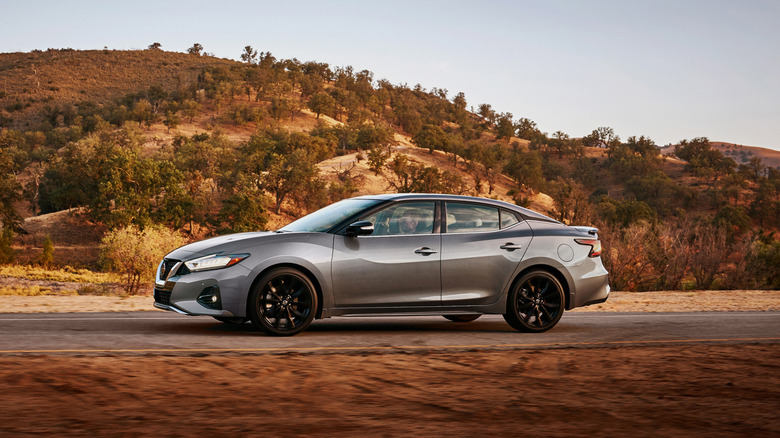
Since its introduction in 1984, Nissan marketed the Maxima as the "4-Door Sports Car". Originally powered by the same inline-six as the 240Z and sending power to the rear wheels, it could even be equipped with a five-speed manual transmission. Although the second (and all subsequent) generations switched to a FWD architecture, Nissan continued to prioritize performance and handling over pure luxury. A six-cylinder engine remained standard, along with a more sports-tuned suspension and specially bolstered front seats that would secure the driver during aggressive cornering.
The eighth and final generation Maxima launched at the 2015 New York International Auto Show. Aluminum body panels saved weight while the updated suspension sat over an inch lower for improved aerodynamics. Power came from Nissan's VQ V6 engine, a detuned version of the motor found in the 370Z. The manual transmission was gone; in its place was an Xtronic CVT. A 2019 refresh would offer more aggressive styling and a new SR trim, which included a spoiler, paddle shifters, and sports-tuned dampers.
Unfortunately for Nissan (and four-door sports car enthusiasts), sales of the Altima, Nissan's smaller sedan, greatly outpaced the Maxima. Halfway through 2022, Nissan moved 78,610 Altimas and only 3,753 Maximas. It was officially discontinued in 2023, although Nissan rumored the name may return for an upcoming EV sedan.
Audi A4
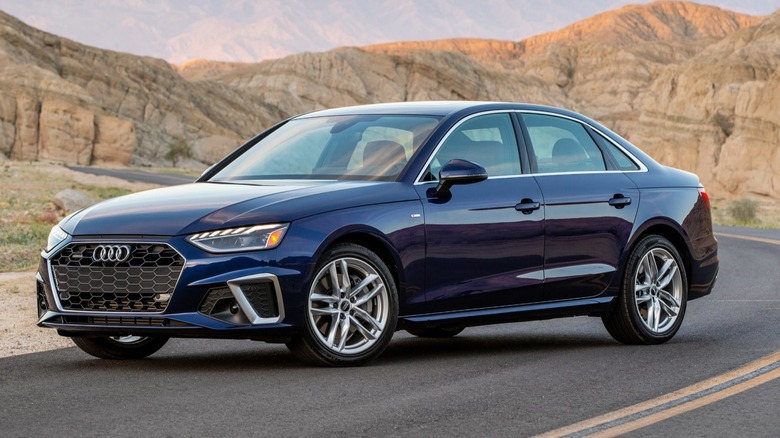
The A4, first launched for the U.S. in the 1996 model year, marked an important turning point for the brand. Audi's reputation stateside was shaky due to the unintended acceleration recall, and the outdated lineup was struggling to find buyers. This new platform, shared with the B5 VW Passat, allowed the brand to move upmarket and better compete with BMW and Mercedes-Benz. Audi's legendary Quattro all-wheel drive system was an available option, too. Reviews were overwhelmingly positive, with the A4 receiving regular praise for exceptional build quality and premium fit-and-finish. Audi wound up selling 500,000 examples in the first 20 months.
In 2017, Audi introduced the fifth and final generation of the A4, known as the B9 series. Audi claimed this generation was a staggering 90% brand-new. Lightweight aluminum construction and components allowed the A4 to grow in size while weighing less than its predecessor. A final facelift in 2020 added a touchscreen infotainment system and new LED daytime running lights that closely matched the rest of Audi's lineup.
Audi's push for electrification had left their lineup a little confusing. The plan was to streamline offerings and adopt a simpler structure: even numbers would be reserved for EVs while odd numbers would indicate internal combustion. The newly redesigned A5 had already ditched the coupe option, and instead was sold exclusively as a four-door liftback stateside. Discontinuing the A4 allowed Audi to direct buyers to the new A5 and avoid a costly A4 refresh and confusing model overlap.
Lexus LS
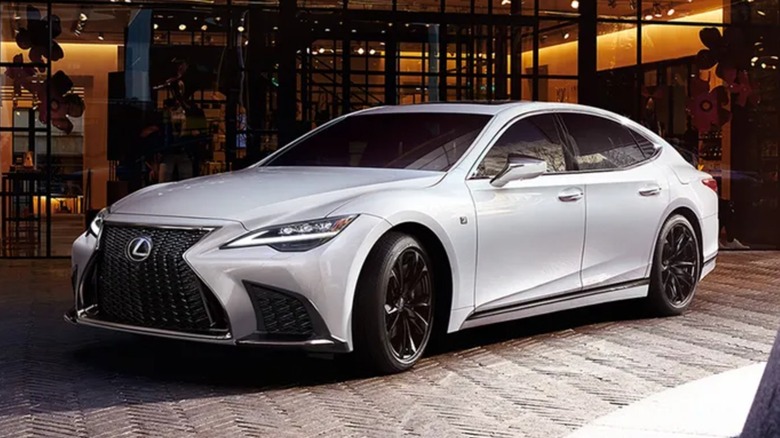
The original LS, which first premiered at the 1989 Detroit Auto Show, single-handedly turned Lexus into an American success. It also set a new standard for what a luxury sedan could be. Lexus spent over $1 billion dollars developing the LS. Over 4,000 engineers, technicians, and designers were involved in crafting what would internally be referenced as "F1", for Flagship Number 1.
It featured an all-new 4.0L V8 that offered competitive performance while avoiding the gas guzzler tax. This motor was also incredibly reliable, with automotive celebrity Matt Farah reaching one million miles on his 1996 model. Inside, electrochromatic dimming mirrors, a power-adjustable steering column, and miniature fluid-filled dampers on moving components (such as the glovebox, grab-handles, and ashtrays) offered never-before-seen luxuries. Most shocking, though, was the price. Starting at $35,000, it was over $28,000 cheaper than a Mercedes-Benz 420SEL.
With every new generation, the LS remained the pinnacle of Lexus. The fifth and final generation was revealed for 2017, with a sportier, concept-car-like design that was anything but subtle. A large spindle grille sat in front of a new twin-turbo V6, making this the first LS not powered by a V8. A slight refresh in 2021 offered improved sound deadening and added a touchscreen for the infotainment system. Sales, however, were diminishing. In 2024, Lexus sold fewer than 2,200 LS, leading to its discontinuation. For 2026, a final Heritage Edition, limited to just 250 units, will mark the end of the LS.
Subaru Legacy
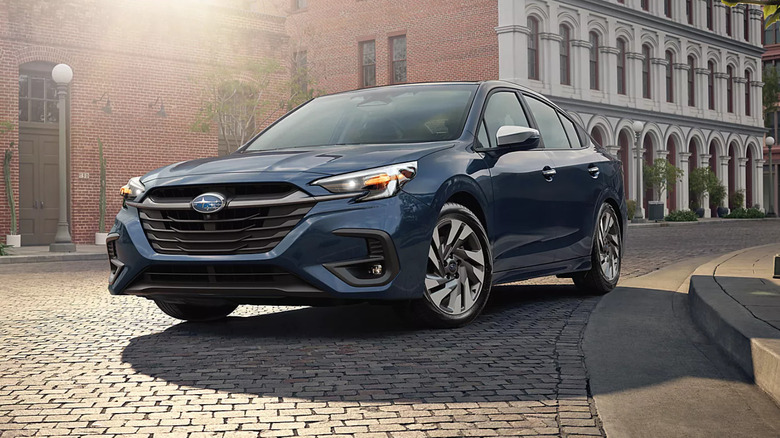
Subaru has been selling cars in the U.S. market since 1968, but it wasn't until 1989, with the debut of the Legacy, that the brand truly showed its commitment to North America. This marked its first entry into the highly competitive mid-size sedan market. It was also the first Subaru to be built in the US, with production exclusively occurring at a jointly owned Subaru-Isuzu plant in Lafayette, Indiana. Unlike the competition, the Legacy was equipped with Symmetrical All-Wheel Drive and a horizontally opposed Boxer engine, which offered a lower center of gravity and smoother operation than a traditional motor.
Over the next 36 years, the Legacy continued to be built in Indiana and became the brand's longest-running model. In 2000, the Legacy wagon was spun off to create the Outback, which cemented Subaru as a brand built for an outdoorsy, adventurous lifestyle. Across a total of seven generations, the Legacy continued to offer standard AWD and would be the only mid-size sedan to feature a flat-four engine.
The final generation launched for the 2020 model year. A new XT trim offered an optional turbocharged 2.4L Boxer engine. A slight facelift in 2023 would be the last update before its discontinuation after the 2025 model year. Subaru cited an increased demand for crossovers and EVs as the main factor in its demise. In Indiana, the Legacy's production line would be retooled to build the newly redesigned 2025 Forester.
Volvo S60
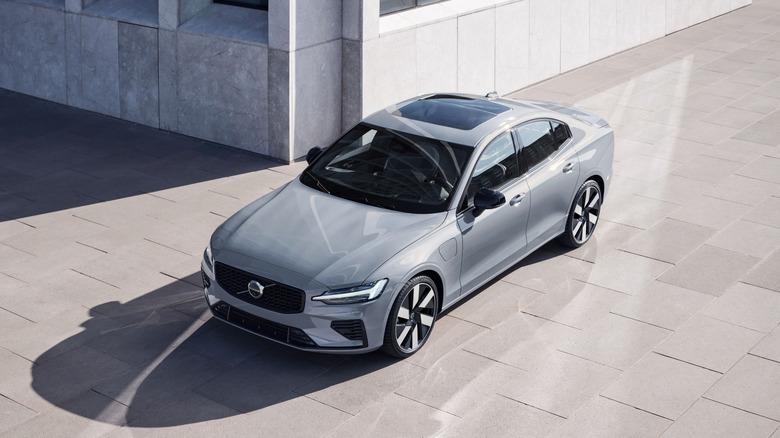
Thanks to the legendary success of the 240, 850, and S70, Volvo developed a reputation for building boxy, safe vehicles. The S60, first released for the 2001 model year, redefined the brand. Volvo highlighted its coupe-like profile, exaggerated by smooth, flowing lines, a long wheelbase, and a wide stance. This look continued for nine years, with a subtle 2005 refresh that added new lights and body-colored side moldings.
Revealed in 2018, the third and final generation S60 made its debut in South Carolina at Volvo's all-new factory in Ridgeville. Volvo spent over $1.1 billion developing its first U.S. factory. At the time, it would become the sole producer of the S60, with nearly half of its production getting exported overseas. This new S60 rode on Volvo's Scalable Product Architecture platform, which already underpinned the XC90, S90/V90, and XC60. The T5 powertrain consisted of a turbocharged four-cylinder engine, with the T6 adding a supercharger, and the T8 adding both a supercharger and an electric motor to the rear axle.
The S60 would receive a slight refresh for the 2023 model year, which included a new 48-volt mild-hybridized powertrain known as "B5", along with reshaped bumpers and a new Android-based infotainment system. Unfortunately, these changes didn't move the sales needle, with Volvo selling only 1,406 S60s stateside in all of 2023. In June of 2024, Volvo announced that the S60 would be discontinued in the U.S. The factory would instead begin producing the new 2025 EX90 electric SUV.