

15 Garage Supplies Worth Always Having On Hand (And Why)
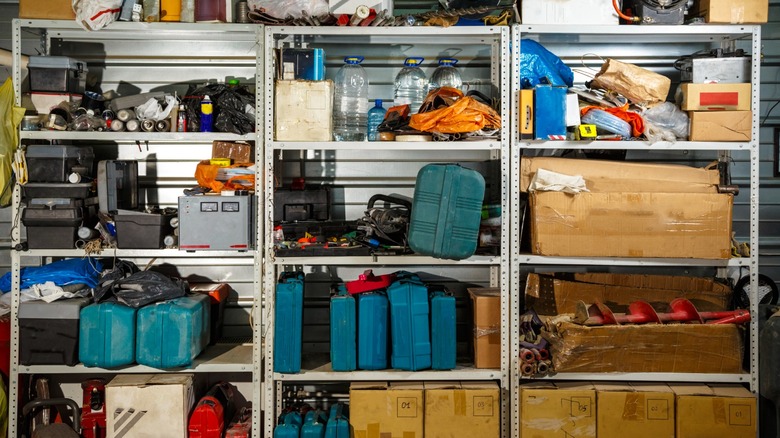
A garage often isn't just for parking your car; many people actually use it as a space for storing miscellaneous supplies that can't be kept in the pantry, living area, or other rooms in their home. Although these items are often not suitable for storage inside your house, that does not mean that they aren't useful to have ready and available at all times.
These won't be cool gadgets like the ones you can get from Home Depot, so you'd probably never think about these things in your daily life and day-to-day tasks. In fact, you might not even need to use some of them during your entire life, but it's still a good idea to have them around in case of an emergency. As the popular Franz Kafka quote says, these items are "better to have, and not need, than to need, and not have." So, we're picking out items that are worth always having on hand or in stock in your garage.
Fire extinguisher
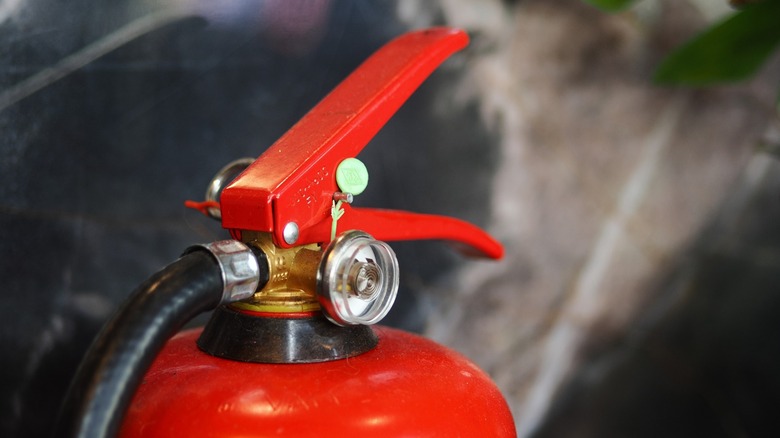
Most people will probably never have to use a fire extinguisher to fight a fire in their home, but it's still a good thing to have in your garage in case of an emergency. These small canisters are crucial for dousing small flames before they burn out of control and could mean the difference between a minor inconvenience and a complete disaster.
You need to ensure that you have the right type of fire extinguisher, though, as they come with different symbols that denote what kind of ignition and fuel source they're designed to work on. Class A extinguishers are designed for ordinary combustible materials such as wood, paper, cloth, rubber, and most plastics, while Class B will douse flammable and combustible liquids, like gasoline, grease, tar, oil-based paint, solvents, lacquer, alcohol, and flammable gases. For electrical fires, a Class C extinguisher is needed to reduce the chance of electrocution.
Most home fire extinguishers are labeled BC or ABC, meaning they can be used on different types of fires to help protect your house. It makes sense to keep one in your garage so that it doesn't get in the way of your activities around the house — just ensure that it's stored somewhere within easy reach of everyone in your home.
Matches or a lighter
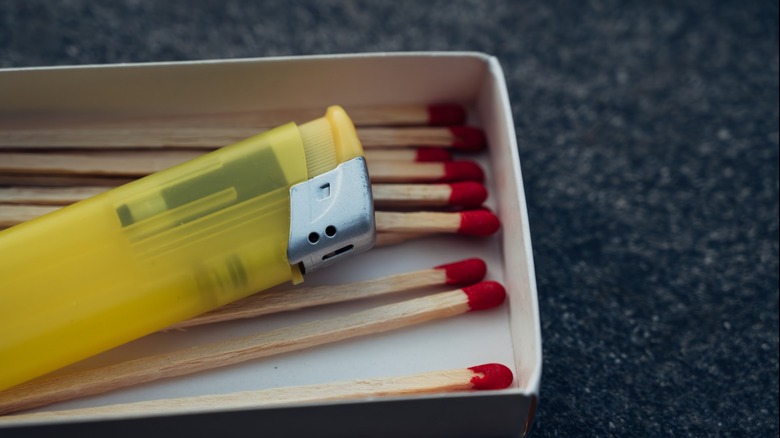
Most American homes no longer need a match or a lighter for daily use, and you probably don't think of keeping one ready unless you're into charcoal grilling. However, it's still a good idea to have a fire starter available at home for various purposes.
The most common use for a match or lighter is lighting candles — whether for a birthday cake, a romantic dinner, or aromatherapy for relaxation at the end of the day. But aside from these applications, a box of matches or a lighter is useful in case of emergencies, where it can be used for lighting emergency candles or gas lanterns. It's also great for lighting a gas stovetop or oven in case its built-in electric igniter fails or stops working.
You should also keep matches or a lighter in stock in your garage, especially during winter. That way, in case both power and gas supplies fail, you can still keep warm by starting a fire in your fireplace.
Extension cords
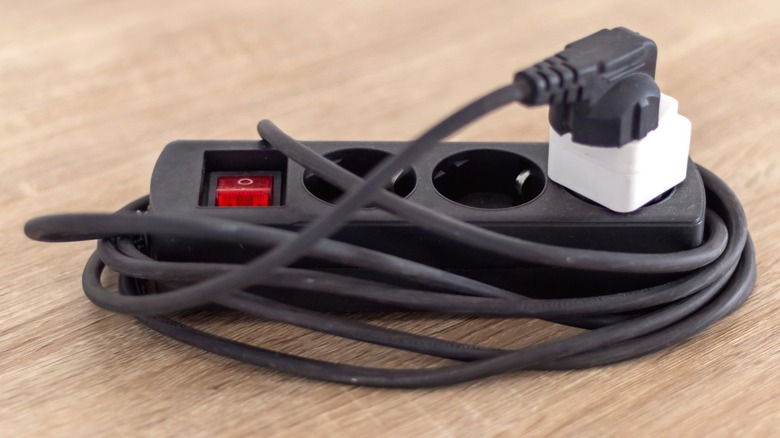
Even though you may feel that you have enough outlets in your home to power all your devices, it's still a good idea to have an extension cord or two handy in your garage. They're particularly useful when you're working on a project and need to set up an additional tool or appliance away from an available outlet, or if you buy a new gadget and don't have room to plug it in at your nearest outlet.
You shouldn't use an extension cord as a permanent power solution, though, which is one of the electrical mistakes you don't want to make in your home. You also have to be mindful not to overload it, especially when you're plugging in powerful tools like table saws or angle grinders, as they could exceed its capacity.
It's also a good idea to keep an extension cord available in your garage so you can easily grab one when you're traveling. It also comes in handy for remote work setups or when you're using a mini projector for backyard camping at home.
Batteries
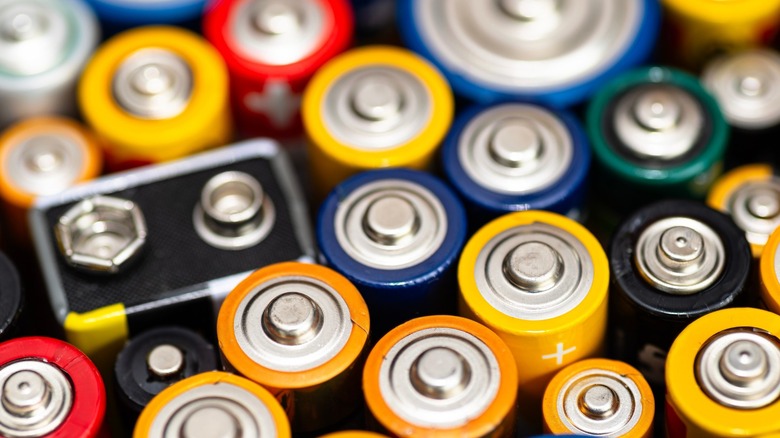
Old batteries are some of the things in your garage you probably need to toss out — instead, you should keep a fresh set of batteries in your garage at all times. This is more for convenience, as many remote controls, key fobs, and other smaller gadgets are still powered by AAA, AA, and button batteries. So, if the battery in your car key fob is eventually exhausted, you don't have to run to a convenience store in the dead of night. Just ensure that you store them properly so you don't end up with problems like leaking batteries or a short circuit.
Aside from these consumer batteries, it's also a good idea to have spare rechargeable tool batteries. While the included battery with your cordless tool should be good enough for casual use, having a spare available in your garage means that you don't have to pause your DIY project if you do run out of power, especially if you forget to recharge it after every use. It will also save you if your main battery finally fails after years of use. That way, you can finish what you're working on before heading out to your neighborhood hardware store to buy a replacement.
Flashlights
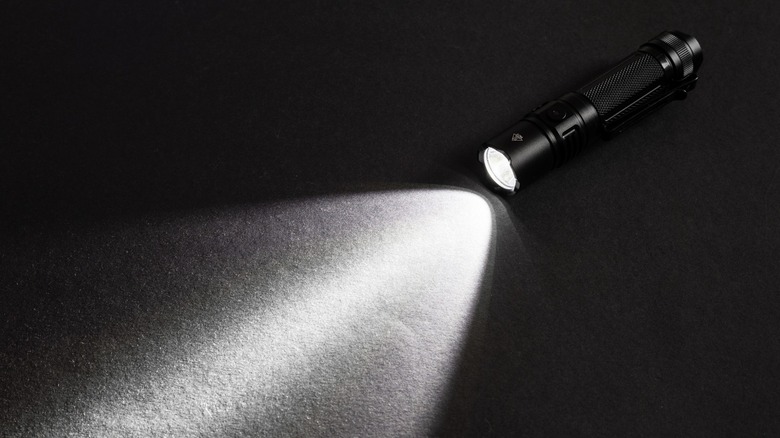
Even though almost every smartphone produced today has a flashlight function, it's still wise to keep a couple of dedicated flashlights in stock in your garage. These are useful during power outages or if you're searching for something outdoors at night (for example, if a pet escapes). You can also use them if you need to find something in the dark nooks and crannies of your house, especially as using a phone as a flashlight isn't as convenient as using an actual flashlight.
One good idea is to have two sets of flashlights — one AA/AAA-powered unit for each family member in your home and several smaller USB-powered flashlights you can place around the house, like this magnetic USB-C Harbor Freight light. That way, each person in your house has their own easy-to-hold personal light source for use both inside and outside the home, while also ensuring that your house has interior USB-C lights to help prevent bumps and bruises.
We recommend AA/AAA-powered handheld flashlights so that in case the power outage is longer than expected, you can easily replace its power source with the batteries you have in stock in your garage. As for the USB-C-powered lights, you can easily top them up with a power bank if they run low — just ensure that you keep your phones charged, too.
Various kinds of tape

Even if you're not into crafts or DIY projects, it's still a good idea to keep a roll or two of various kinds of adhesive tape for quick repairs. Some of the types of tape that are useful to keep in your garage include transparent tape (more popularly known as Scotch tape) for light-duty household and office work like repairing paper tears, wrapping gifts, and sealing envelopes; double-sided tape for mounting lightweight items on walls and other surfaces; masking tape for temporary holds, labeling, and paint masking; and packaging tape for more heavy-duty applications.
It's also useful for homeowners to keep a roll of electrical tape, plumber's tape, and duct tape handy in their garage. These budget-friendly garage staples are useful for temporary repairs, like when you replace a faucet or seal a leaky window or door. But if you're unsure about what you're doing, especially when it comes to electrical work, it's still best to leave repairs to licensed professionals.
Rope
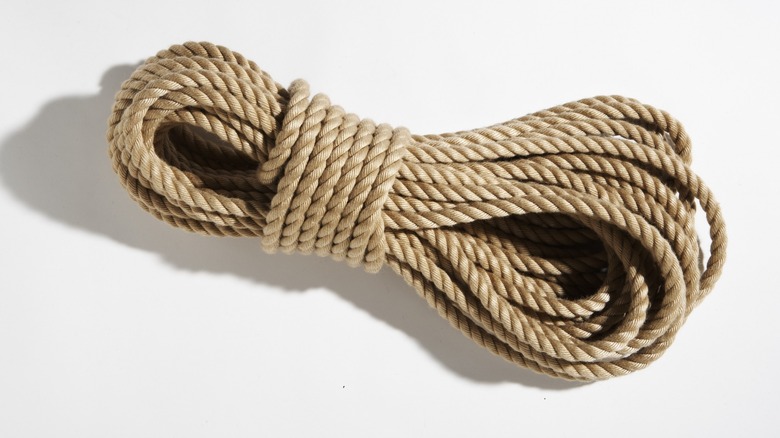
It's useful to keep some length of rope available in your garage as it's particularly useful for securing items in your home and on your car. For example, if you've recently unboxed and built some Ikea shelves and other IKEA finds for your garage, you'd probably want to bundle the empty boxes together for easier disposal. While you can use packaging tape to do that, it's far easier to do so with rope.
Ropes are also great for securing several items — for example, you can use rope to add additional strength to boxes, ensuring that they don't collapse or give way even if you put heavy items inside. It can also be used on a swing gate to ensure that it doesn't slam shut against your car door as you back out of your garage when the wind blows.
If you have a pickup truck or plan to carry items on your roof rack, you also need to have some rope to secure your cargo and ensure that it doesn't go flying off your vehicle while on the road. Aside from ensuring your safety and that of other road users, the U.S. Government Accountability Office (GAO) also says that all 50 states have penalties for vehicles caught carrying an unsecured load.
Super glue
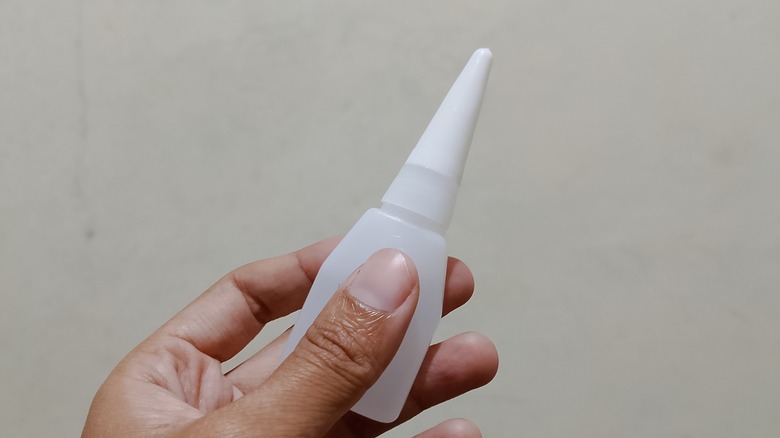
While adhesive tapes are useful for repairing flat or thin objects, you'd need something far stronger if you want to stick two objects together. This is where super glue comes in, and it's a good idea to keep a bottle in your garage in case you need to make a repair.
Super glue is useful for general household repairs and is particularly effective on materials such as ceramics, glassware, some types of plastics, and metals. This versatility means you can use it for a lot of everyday repairs, although you can also get different types of super glue depending on your intended application. While general-purpose super glue is good enough for most uses, you can also find specially formulated super glue for applications that can withstand higher stress and vibration, as well as formulas designed to work with porous surfaces and certain types of plastics.
While you often have to wait at least 10 minutes for the glue to reach its full bond strength and 24 hours for it to be fully cured, it sticks to different surfaces nearly instantly. This means you can complete a repair in five minutes or less, and you also won't need special tools and equipment like clamps to ensure that the pieces remain together while the glue sets.
Zip and cable ties
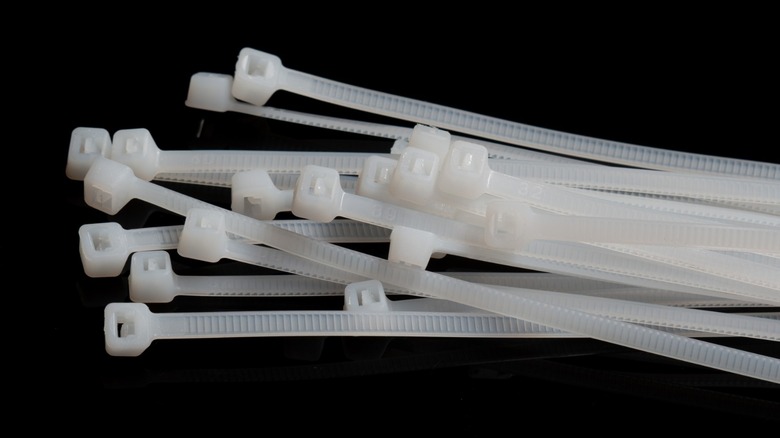
Even though ropes and zip ties or cable ties have technically similar purposes — bundling loose things together — the latter are far more convenient to use, especially in confined spaces. As the name suggests, cable ties are primarily used for securing cables together, and you can use them to manage the cables on your PC gaming setup or office workstation. They're also much easier to use than rope because you can just twist them together to secure the cable tie instead of tying a tiny knot.
If you want a more permanent solution, consider using a zip tie instead. Unlike cable ties that you still have to twist to secure, you can easily secure your cables and other items with a zip tie in one smooth motion. The only downside is that you usually have to cut it if you want to release the item you've tied together, making it difficult to reposition your cables once you've set them in place.
Aside from keeping stuff together, zip ties also have several other genius uses. This includes tying them around your bike's wheels for additional traction, using them as a replacement slider for a zipper, as a decoration hanger, and for anchoring outdoor items to prevent them from flying off in a strong gust of wind. Because of these various uses, it's best to keep zip and cable ties in your garage so you can easily get to them whether you're working indoors or outdoors.
Garbage bags and spare boxes
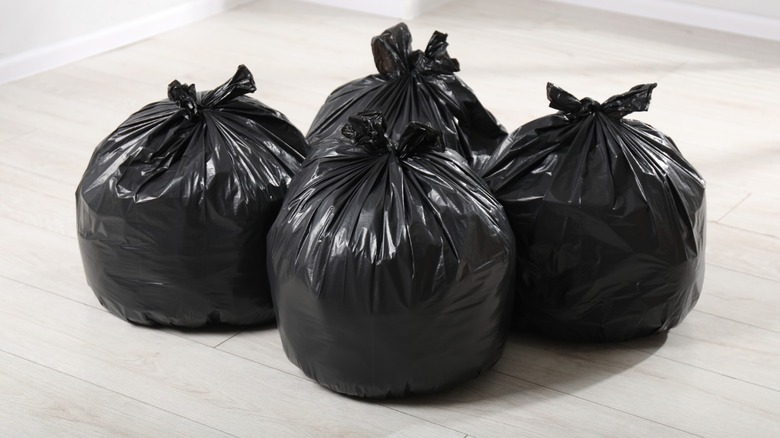
Many people often keep garbage bags in stock for putting waste in, making disposal much easier. But despite their name, these plastic bags are also useful for several other purposes. For example, if you don't have a washing machine at home, you can use these bags to put your dirty clothes in to make them easier to bring to the laundromat. They're also great for storing non-fragile items that you can just drop in a plastic bag, like Christmas decorations or kids' toys.
This is also why it makes sense to buy heavy-duty garbage bags instead of just using ordinary plastic bags. Aside from ensuring that they won't get ripped when you're moving trash, they can also help ensure that any sharp or pointy items that you intend to put in the bag for moving or storage won't puncture and damage it.
If you have more space, it's also worth keeping a couple of small- or medium-sized collapsed boxes, which are a more suitable storage solution for delicate or breakable items. Although they might not be enough if you plan to move houses (and you'll probably buy more boxes for that event), keeping some extra garbage bags and boxes stored in your garage will help you keep your things organized if you have to make changes around your home.
WD-40
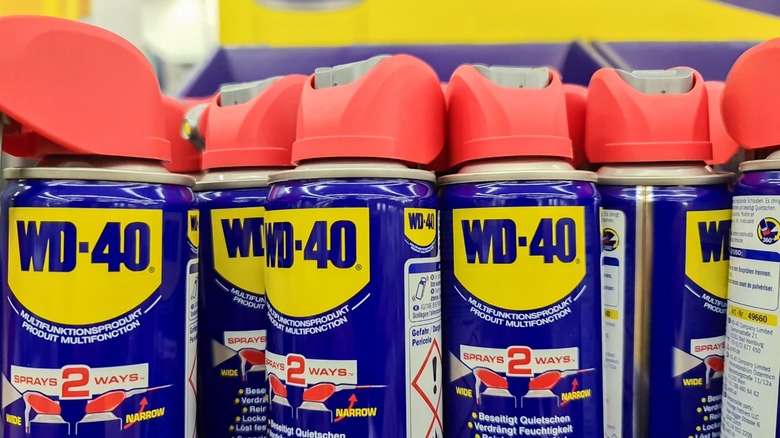
WD-40 is one of the household chemicals that many people swear by, and it's a good idea to keep a can in your garage if you don't have one yet. While it's no miracle product and you should not use it for some items, it's still quite a nifty product for protecting metals and other materials from water (hence the name WD, which stands for Water Displacement).
Now, there are a million and one moving parts in nearly every home, and one of these things will eventually start squeaking. You can quickly solve issues like this with a quick spray of WD-40 to get that annoying sound out of the way. It's also great for protecting metal objects, especially those that are exposed to the elements.
For example, a padlock that's been sitting in the sun and rain for years would eventually get stuck and become hard to open — but a single squirt of WD-40 would loosen its stuck components, and you just need to maintain it once a year to ensure that the lock operates smoothly through the years. You can even use WD-40 on several parts of your car to help keep it in excellent shape.
Basic tools
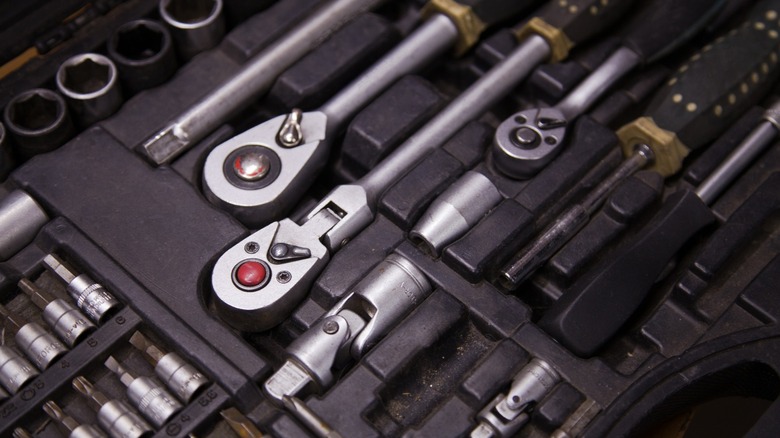
If you're a first-time homeowner or renter, you probably still don't have a set of tools in your garage. If that's the case, it's a good idea to get started on a basic tool kit with the most essential tools to make repairs and maintenance around your home much easier.
These include screwdrivers (both flathead and Phillips) for assembling things, a tape measure for planning, a box cutter for opening packages, a pair of pliers for working with wires, and a hammer for building stuff. It's also a good idea to get a cordless drill, as it can make DIY projects much faster and easier, and a set of wrenches for working with nuts and bolts.
You don't have to buy the most expensive, professional-grade tools if you don't have much of a budget — after all, you'd probably only use these items occasionally. But if buying new is still not an option, you can purchase some of these used; just ensure that you know what to look for before paying so you know what you're getting.
Screws and nails
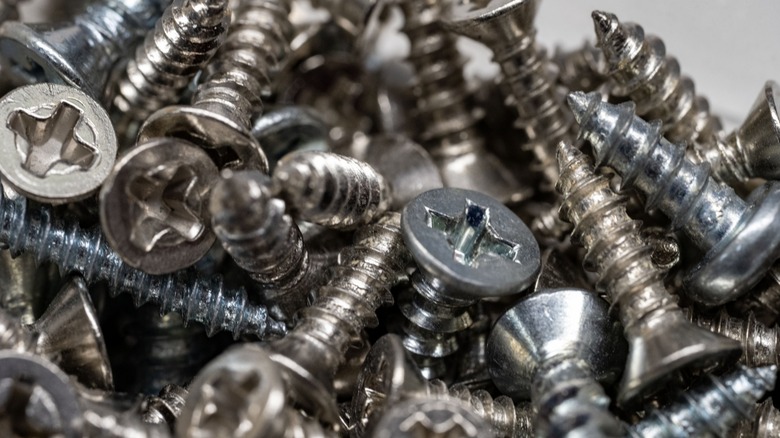
It's good to keep screws and nails alongside your basic tools, as they're quite useful for securing wooden items and repairing furniture around your home. For example, if one of the hinges on your cabinet doors comes loose, you can simply go to your garage and pick out an appropriate screw to fix it. You can also do the same with a wobbly chair — instead of waiting for an accident, you can simply pick out a screw of the appropriate length and drive it in to secure the loose joint.
Aside from repairs, you can also use screws and nails to create permanent hanging points on drywall for picture frames and other light objects. You can also use them on concrete walls, but you need to either use a concrete nail or a wall plug or plastic anchor for securing a screw.
Most importantly, these items are cheap. You can get a box of hundreds of nails or screws of different sizes for less than $10 on Amazon, meaning you don't have to spend much just to keep these in stock in your garage.
Engine oil and other automotive fluids
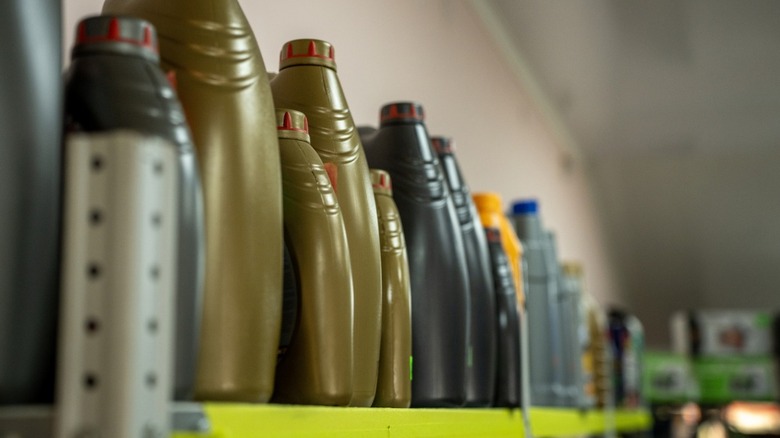
If you drive a car, especially one that's an older model, then it's a good idea to have an unopened can of engine oil readily available in case of emergencies. That way, if your engine springs an oil leak, you can easily top it off before heading to your favorite mechanic to fix the issue.
You shouldn't just let these containers sit for years on your garage shelf, though. Always check the label to see the expiration or production date of the oil, which usually has a shelf life of five years. They should also be stored in optimal conditions — kept between 40 and 85 degrees F in a cool, dark place. It's also not a good idea to keep an open container of motor oil in your garage, as it can go bad due to oxidation.
Aside from engine oil, consider stocking other fluids like brake fluid, coolant, and windshield washer fluid, too. However, the exact fluids you should keep depend on the age of your car and the issues you encounter while owning it.