

Phone Running Out Of Storage? Any Of These 12 Types Of Apps May Be Why

It never seems like smartphones have enough storage. Even as we see Apple finally admit that 128GB isn't enough — the iPhone 17 and iPhone 17 Pro now start at 256GB — that space still somehow magically gets eaten up by high-resolution photos and mobile games. We've previously covered all sorts of ways to get more storage on an iPhone or to use your Android's microSD card to pick up the slack, but the best way to reclaim space is to do a bit of spring cleaning. Apps on your phone tend to get gummed up as time goes by, hoarding data and often failing to declutter automatically.
You can see which apps are the culprits easily on both Android and iOS. On Android, head to Settings > Storage > Apps; on iOS, go to Settings > General > iPhone Storage. Both list apps by size, so you know right away which ones are the worst offenders. Android lets you go to town clearing out storage and cache, and the iPhone lets you offload apps, but hold your horses. Here's a list of apps that tend to hog storage and how to trim them down without doing anything too drastic. We'll look at apps on both Android and iPhone.
Messaging apps
Your preferred messaging app (or apps) is where you exchange gigabytes of messages, photos, videos, and files with family and friends over the years. Anecdotally, I've sometimes seen these apps cling onto several dozen gigabytes of data alone. Google Messages, iMessage, WhatsApp, Telegram, Messenger, it doesn't matter which one you use, head into its in-app settings and start clearing house.
We'll use WhatsApp as our primary example. In the app settings, go to Storage and data > Manage storage. Here, you'll see how much each chat is taking. Open the biggest chats on the list one by one and delete the largest videos, photos, and files within — at least the ones you don't mind parting with. You might want to back up your chat history in Settings > Chats > Chat Backup beforehand to ensure anything important isn't lost. Unfortunately, the only way to have WhatsApp automatically clear up storage is by enabling disappearing messages, which permanently deletes old chats after a certain period.
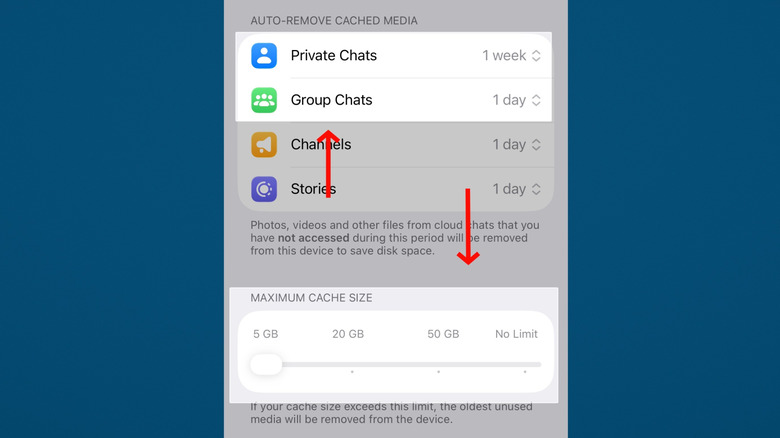
Some apps will make this process easier than others. Telegram, for example, lets you set a hard local storage ceiling and automatically removes any local storage of chats after a certain date. The app will never go beyond that storage ceiling, and you won't lose your messages either. Go to Settings > Data and Storage > Storage Usage, and then choose how long before each chat type (especially private and group chats) is automatically removed. We'd recommend setting the maximum cache size to a lower threshold, like 5GB. Note that some apps — like iMessage — have their storage-clearing options in your phone's settings, not in-app. If your preferred messaging app hasn't been mentioned here, check its in-app settings and you'll likely find some means of clearing out storage.
Streaming service apps
You've probably got one or two of the best streaming service platforms on your phone. Depending on the one you use — Netflix, HBO Max, Apple TV — a good chunk of your storage could be quietly taken up there. Any time you save movies or TV shows for offline viewing, unwatched downloads generally remain unless manually removed.
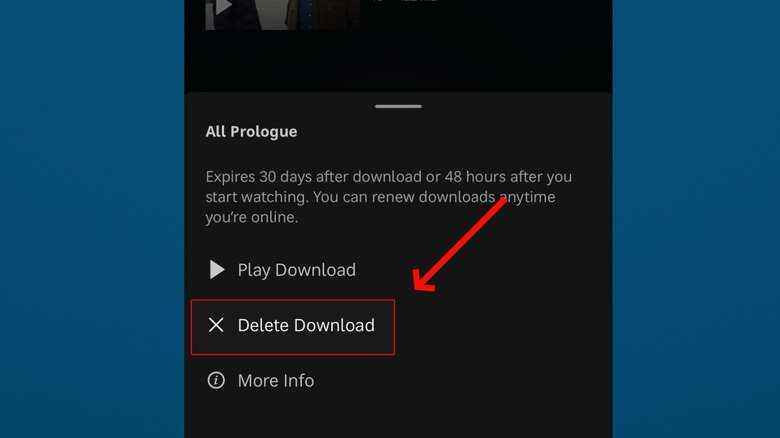
Let's look at Netflix. The app's offline downloads expire, though they remain on your phone rather than being automatically deleted. You have to manually go in and delete them one by one. It's the same situation with other streaming services, like HBO Max and Hulu. Anecdotally, these downloads pile up fast if you don't keep an eye on them; if you're the sort of person who frequently downloads something with the intention of watching it later, then you might have gigabytes of unwatched media. Note: On iPhone, you can delete these directly from Settings with the "Review Downloaded Videos" option in iPhone Storage.
If you're really tight on storage, we'd recommend disabling any automatic downloads. For example, Netflix has its "Smart Downloads" feature, which downloads content it thinks you might like for offline watching. Also take advantage of apps that let you choose the download quality going forward. HBO Max allows for selecting a trim "Good" video option that — while it looks like DVD quality — can be a fraction of "Better" or "Best," which might consume 2GB for a single movie or episode.
Map apps
Map apps do a lot more than just provide directions these days. Apple Maps, for example, can be invaluable for daily commuters who need to make sure they're taking the right train, especially when paired with offline maps. These are a boon on vacations, when you might be in a foreign city with limited or no internet access and need to navigate a confusing transit system. But you guessed it, offline maps eat up storage like no one's business; the city I live in takes up half a gigabyte on its own.
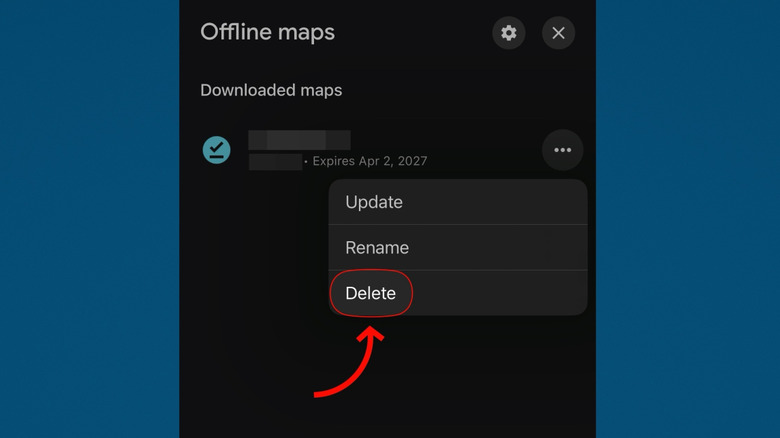
Similar to streaming apps, offline maps don't usually automatically delete themselves. In Google Maps, for example, an offline map that you download will last a year before expiring, and Google does not have an option to automatically delete unused offline maps. So if you took a vacation six months ago and downloaded the offline map for that area, the download is still sitting there, wasting your space. If the map app you use does have the option to automatically delete them, enable it; Apple Maps has an "Optimize Storage" option in iPhone Storage.
Photos apps
The default photos app where you keep your pics and videos will likely be the biggest offender on this list. Luckily, cloud storage options these days are cheap. Provided you have a reliable internet connection, offloading your entire photo library to the cloud comes with minimal downsides.
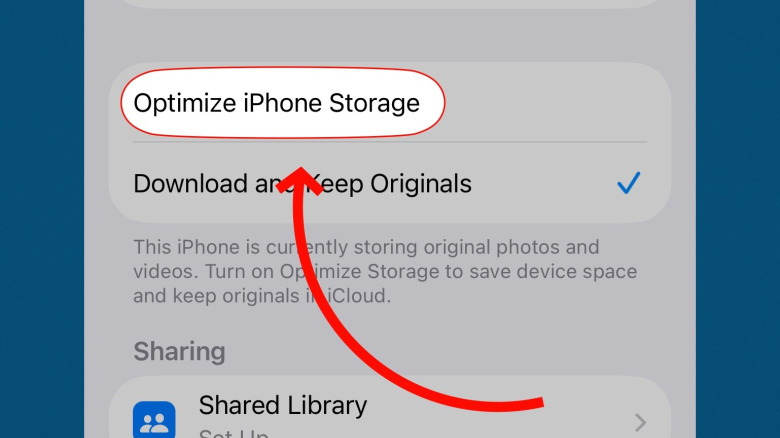
On iPhone, simply go to Settings > iCloud > Photos, and make sure the "Optimize iPhone Storage" option is enabled. From that moment on, your iPhone only keeps small, storage-efficient copies and downloads the full-resolution ones on demand. In Google Photos, find the "Free up space on this device" option under your account profile photo. Deleted photos and videos will remain in the cloud. You can downgrade your media to "Storage saver" quality, which is helpful if you still want to keep those photos on-device, or you're limited to Google's free 15GB of storage.
Besides the obvious stuff like deleting large video files, another option available to you is to merge duplicates. On iPhone, simply go to Utilities > Duplicates in the Photos app and merge them one by one, or select all to merge them all; you won't see this option if you don't have any. If you have duplicates in Google Photos, you will need to manually review them with Google Photos' stacking feature.
Cloud storage
You know the drill by now. Your cloud storage app of preference — Google Drive, iCloud, OneDrive, etc. — may be storing files offline that you forgot about. If you've been working with large files (or a lot of files) on your smartphone, double-check that they are not still lingering in storage.
In Google Drive, you can hit "Make available offline" next to any file, and it will appear in Menu > Offline. This includes Google Workspace documents, like Google Docs, making this a one-stop shop to delete offline files from multiple apps. OneDrive does things similarly. Files can be stored on your device with the "Keep Offline" option and found later in the "Files Available Offline" section of your profile.
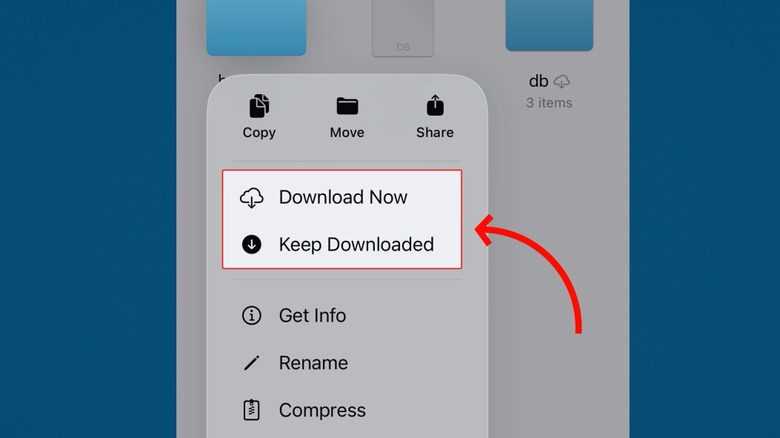
The iPhone has a similar feature with iCloud, where choosing "Keep Downloaded" in the context menu for a file leaves it stored on your device. Unfortunately, there doesn't appear to be a single, easy place to find these offline files; in iPhone Storage settings, you'll only see how much data is being kept offline, but not file names or folders. Also, it appears that, in order to remove a file you've selected "Keep Downloaded" for, you need to go back to that specific file itself and uncheck "Keep Downloaded" to remove it locally. Luckily, nested files and folders show a "Show Downloaded File" option to find them. Still, you'll have to go through manually and remove files you've previously kept downloaded. Look for the cloud with a down arrow symbol, which means it's stored in the cloud, compared to a checkmark, which means it's on your device.
Music apps
The debate will likely rage on for years over whether Spotify is better than Apple Music, but we're not here to weigh in on that today. If you download your music offline to listen to later, then your favorite playlist could easily take up dozens of gigabytes. Let's look at deleting unwanted songs from your device in Spotify, Apple Music, and YouTube Music.
In Spotify, you can manually remove any downloads by hitting the green arrow and selecting "Remove." Otherwise, you can delete everything in Settings and Privacy > Data-saving and offline > Storage > Remove all downloads. For YouTube Music, go to Settings > Downloads & storage and hit "Clear downloads" to remove any you don't want.
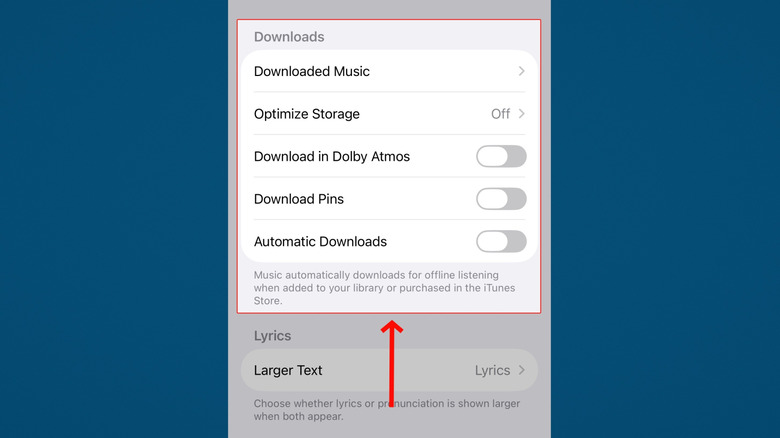
The easiest way to delete all music downloads in Apple Music is to go to Settings > Apps > Music and then individually delete songs, or delete them all. If you want to be more aggressive, make sure the "Optimize Storage" setting is turned on and "Automatic Downloads" is off. We'd also recommend toggling off "Dolby Atmos," since this uses more storage. In Apple Music, you can tap and hold individual items — or entire playlists — and choose "Remove download." Make sure not to choose "Delete from Library" by accident.
Podcast apps
Who doesn't love a good podcast? Here are five tech podcasts we recommend adding to your rotation. Problem is, a podcast that's an hour long (or longer) is going to take up space on your storage if you save it for offline listening. I've noticed anecdotally that podcasts can pile up really fast since you download new ones as they release with the intent of listening to them later, then forget. If you use Spotify to listen to your podcasts, then you can manage downloaded podcasts in the same place as music downloads. Third-party podcast apps also make this pretty easy. In Overcast, for example, just go to Settings > Manage Storage.
Apple Podcasts arguably makes this even easier since you can delete podcasts directly from Settings > General > iPhone Storage. You may also wish to go to Settings > Apps > Podcasts and turn off the "Automatically Download" setting, especially the new "Download Video" setting. Make sure "Remove Played Downloads" is also on.
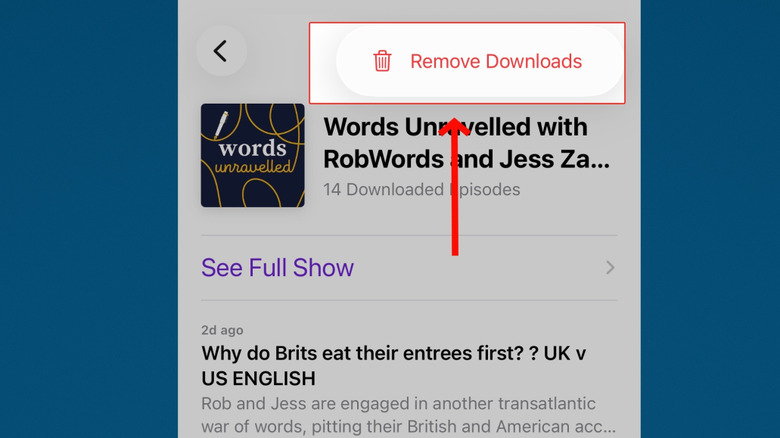
Inside the Podcasts app, you can individually delete downloaded episodes. Or tap the three-dot icon in the downloaded section and choose "Remove All Downloads." If there's a show you still want to get automatic downloads for, then we'd recommend going to that show (or shows) specifically and turning on the "Automatically Download" option for it alone.
YouTube
YouTube Premium might be expensive, but at least it beats Netflix in customer satisfaction. And one of the best parts of YouTube Premium is being able to download videos for offline watching, similar to the offline downloads for other streaming services. But if you're like me, you have the same issue with YouTube Premium as you do with podcasts: you download a whole bunch of them that you think you'll watch later, then forget about them and wonder why your storage space is running out.
To find your downloaded videos, press your profile picture and scroll down to the Downloads section. To delete them, press the three-dot button and choose the "Delete from downloads" option that appears at the bottom. Note, you can also delete the download of a video you're currently watching by tapping the "Downloaded" button beneath it.
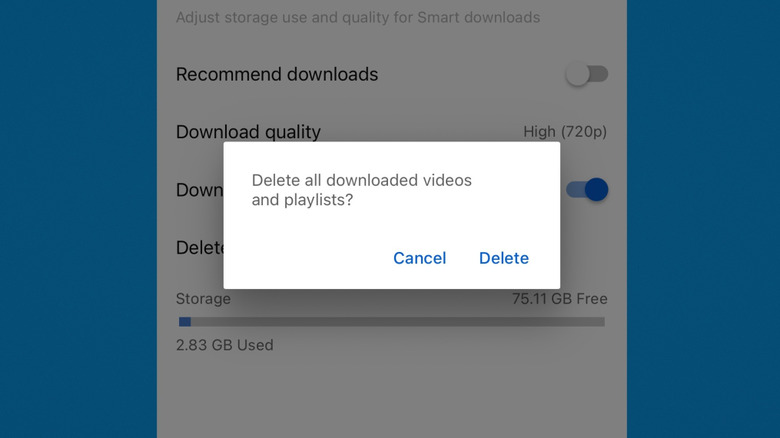
If you're low on space, we recommend getting rid of those longer videos, like explainers and video essays, particularly the ones that get up to an hour or longer; deleting them is going to be like deleting a movie. Or you can delete all the downloads by going to Settings > Background & downloads > Delete downloads and then confirm with the pop-up. If you want to keep your storage trim going forward, change the "Download quality" in the same section to 720p — or lower, if you can stomach it.
Browsers
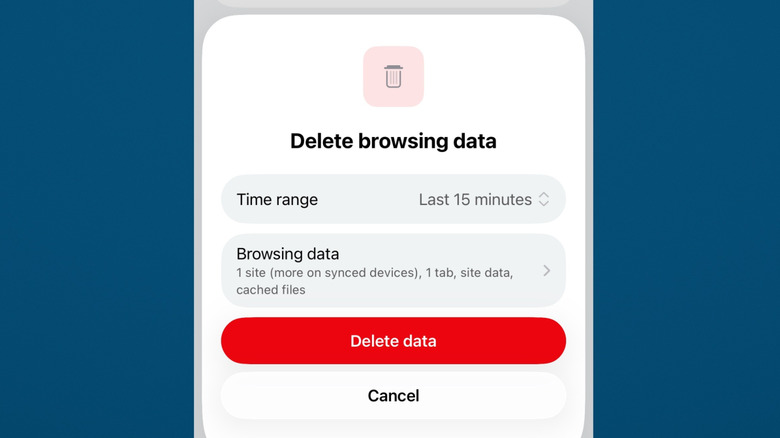
Browsers can silently take up gigabytes of space when you account for their bookmarks, browsing history, and extensions. That's something you don't normally think about on desktop, but it makes a bigger impact on smartphones where storage tends to be more limited. Chrome users on mobile, if you haven't done so in a while, open the app and delete old browsing history and the cache — but avoid deleting cookies, as that's what stores your logins. We'd recommend the same for basically any other browser, like Microsoft Edge, Firefox, and Brave. Some browsers, like Vivaldi — an excellent browser you should ditch Chrome for — include the option to "Clear browsing data on exit" to keep it clean.
For Safari on iOS, the process is a bit different. Go to Settings > General > iPhone Storage, find Safari on the list, tap the Website Data option, and clear it out. Anecdotally speaking, it's good to do this about once every six months since the data steadily piles up with regular usage.
Social media apps
Social media apps — TikTok, Instagram, X — are also prime targets for a storage cleanup. They use a cache similar to a web browser, which over time can balloon in size without you realizing it's so large; I've personally seen some of my social media apps reach almost ten gigabytes in size, despite sparing usage and no offline media.
Some apps, like TikTok, make it easy to clear the cache. In your profile, go to Settings and privacy > Free up space and use the "Clear" buttons to quickly get rid of both the cache and any downloaded TikToks, if you have them. Some apps make it a bit harder. X (formerly Twitter) buries it deep in the settings. You'll have to go to Settings and privacy > Accessibility, display, and languages > Data usage > Media storage > Clear media storage. While you're in that section of settings, you might also hit "Clear web storage."
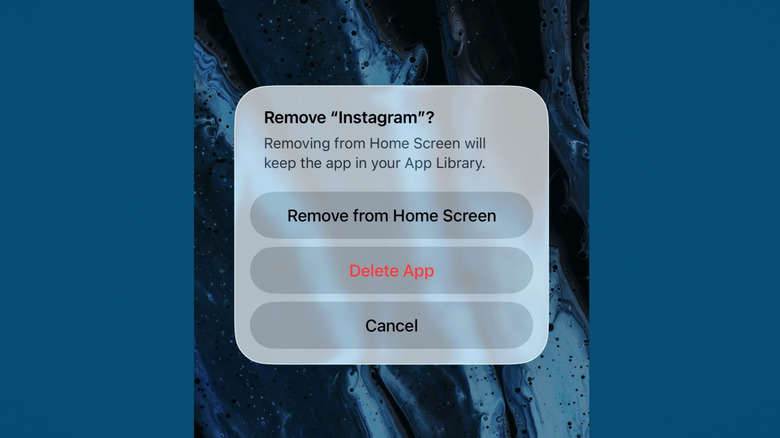
Some, like Instagram, make clearing their cache basically impossible within the app. You're in luck if you have Android, because you can just go to the app in Settings and delete its cache. On iPhone, you have no such option. You'll have to delete the app entirely, then redownload it. It's annoying, but fortunately, Instagram saves your login details so you can log in immediately once you redownload. If any other app you use is unnecessarily bloated on iPhone, then deleting and reinstalling is a surefire way to clear it.
Translate apps
Major translation apps like Google Translate and Apple Translate allow you to download language packs for offline use, which is a lifesaver when traveling abroad without the assurance of a solid internet connection. But over the years, it's entirely possible that you've downloaded a dozen different language packs here or there for foreign travels or when taking a stab at a new Duolingo course. It doesn't hurt to check. As far as I can tell, the languages will just sit there downloaded forever until you remove them manually.
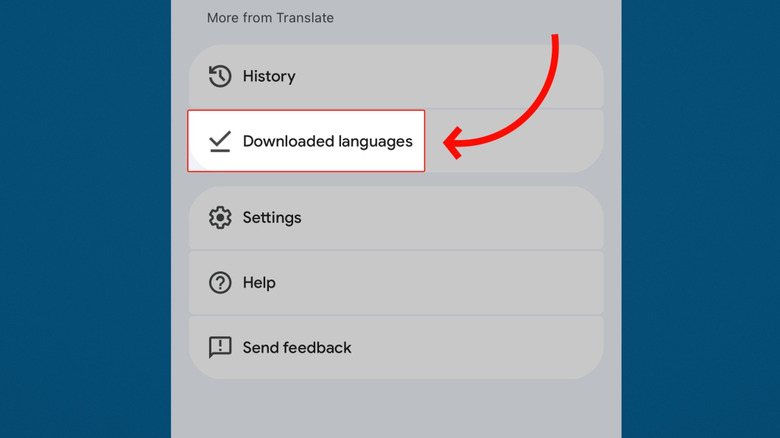
If you're using Google Translate, go to Menu > Downloaded languages and then hit the trash can icon for any you don't want. For Apple Translate, tap the three-dot icon, Languages, and then swipe left to delete any offline ones — or hit the Edit button to delete all. Admittedly, the packs don't take up much space — usually less than 100 MB, if that — but deleting half a dozen of them to secure about half a gigabyte of space is not bad.
E-reader apps
For a while now, it hasn't been necessary to buy a Kindle or a non-Kindle e-reader to enjoy digital copies of your books. Kindle, Apple Books, and other apps have every advantage over e-readers other than e-ink screens, and we're spoiled with excellent reader apps for converting ebooks and managing libraries. However, if you're an avid reader, that offline downloaded media could stack up as years go by — particularly for unread content that you haven't gotten around to.
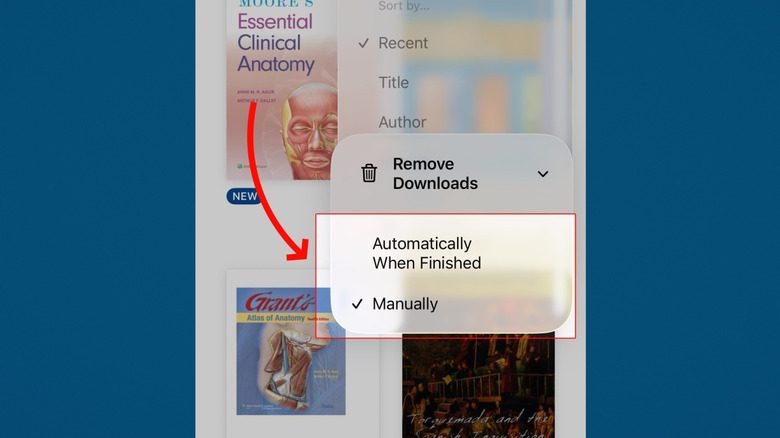
On the Kindle app, simply navigate to your Library and switch over to the "Downloaded" tab. Books with checkmarks are downloaded. Open the context menu and make sure you choose "Remove Download" so the book stays in your library. And you're done. For Apple Books, you cannot delete books conveniently from the iPhone storage section like in other apps. Instead, simply open Apple Books, go to Library, select any downloaded books with the context menu, and choose "Remove Download." Note, you can have Apple Books automatically remove books as you finish them.
Of course, ebooks only amount to a few megabytes. The real space hogs will be any audiobooks. In Audible, for example, go to your library, find an unwanted audiobook, and choose "Remove download." In Apple Books, audiobooks are stored in the same library as other books, so the same deletion process as above will work.