

5 Car Names That Have Been Used By Multiple Manufacturers
Car manufacturers often strive to give their models unique names so that they can stand out in a crowded market. These could be as simple as a string of letters and numbers to indicate a model's position in a brand's lineup, like Audi, BMW, and Mercedes-Benz, or they could follow a company's traditional naming structure, like how many Lamborghini models often reference bullfighting. There are also quite a few model names that have a special meaning attached to them.
But despite their efforts to create unique names, there are a few model names that have been used by multiple manufacturers. Note that these aren't cars that have simply been rebadged to have a different logo on their grille but have kept their model name, like the Buick/Opel Cascada. Instead, we're looking at car names that have been used by multiple car makers that aren't related to each other at all.
There are multiple reasons for this — one infamous example is the Pontiac GTO, which was specifically named to evoke the performance of the legendary Ferrari GTO. Another explanation for the same model names is that they're inspired by a place or a body style, or it could be that it's been years, if not decades, since a particular name was last used, so current buyers are unlikely to mistake it for another vehicle. But whatever the case, these are a few car names that have been used by multiple brands.
California
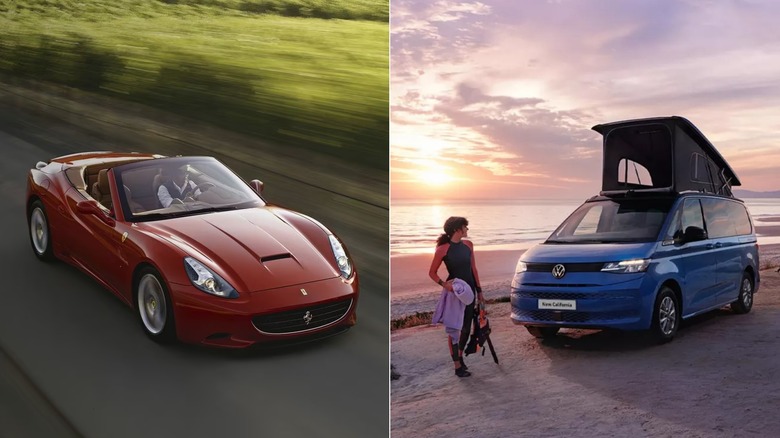
If you're a fan of sports cars and you hear the "California" model name, Ferrari would likely be the first brand that would come to mind. This name was first used on a car with the prancing horse logo in 1957 when it released the 250 California and was in production until 1963. Ferrari released the 365 California in 1966, but it only produced 14 examples and was only made for a year. The Italian carmaker named this convertible after the Golden State because it wanted buyers to imagine California and its open roads, hoping to sell more examples to the American market.
Ferrari revived the California model name in 2008, this time dropping the numbers and simply calling it "California." This model still followed the 2+2 convertible formula used by the cars that inspired it but featured a hard-top roof. The carmaker also said that this was its first V8 road car to feature a mid-front layout that delivered excellent handling and performance.
On the other side of the spectrum, Volkswagen also released its own California model in 2005. But instead of a top-down sports car, this one is a campervan based on the VW Transporter. Ironically, despite being named after a U.S. state, you can't buy this vehicle in the United States. The closest that you can get is the VW ID. Buzz — and even though it's a rather nice passenger van, it still doesn't give you everything you need for camping, including a kitchen sink.
Century
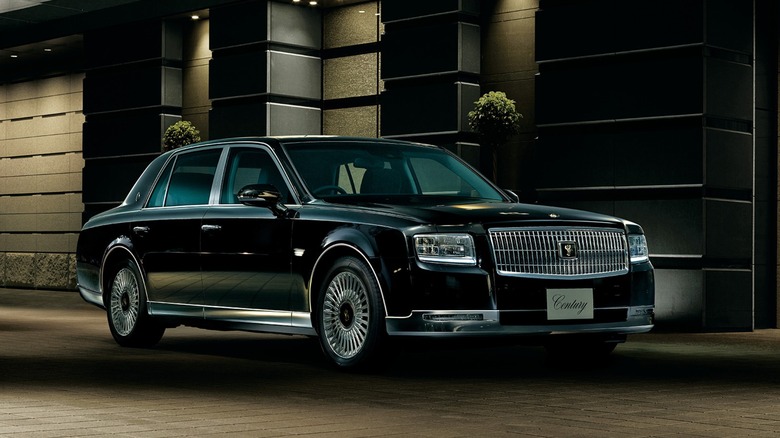
The Century model name is often attributed to Toyota, which is the car company's most premier offering, introduced in 1967. Despite being continuously sold since then, this model has only had three generations and one SUV model — a nod to its timeless elegance, with the latest model still resembling the first one produced nearly 60 years ago. Unfortunately, you cannot get the Toyota Century in the U.S. There is another Century that you can buy, though, but it's not as luxurious as the one from Japan.
The American model that bears the Century name comes from Buick, and it's even older than the one from Toyota. The Buick Century arrived in 1936, mating the small body of the Buick Special with a 120-horsepower straight-eight engine from the larger Roadmaster. This gave it an excellent power-to-weight ratio, with some people calling it "the banker's hot rod." The American car company released the second-generation Century from 1954 to 1958, and it used the same formula as the original model. In 1973, the third-generation Century arrived, with the car company continuously producing the model until 2005 through the sixth generation.
The Buick and Toyota Century catered to completely different markets. The Toyota Century focuses on comfort and craftsmanship, with the Japanese emperor using one as his official state car. On the other hand, the Buick Century is a bit more focused on performance, with the car brand stuffing the biggest engine it could find in the smallest chassis it has in its lineup. Unfortunately, the styling of the last-generation Century was rather bland, and it also had some engine problems, landing it in our list of Buick models you should steer clear of.
GT
GT stands for Gran Turismo in Italian, or Grand Touring in English, and, in theory, GT cars are designed to travel long distances at high speeds and offer all the luxuries and creature comforts that any driver would want while behind the wheel. Because of this, many carmakers add the GT moniker to their cars to indicate a sportier or performance-focused trim of an existing model. However, a few carmakers have decided to use "GT" as an actual model name instead of using it to denote a premium variant.
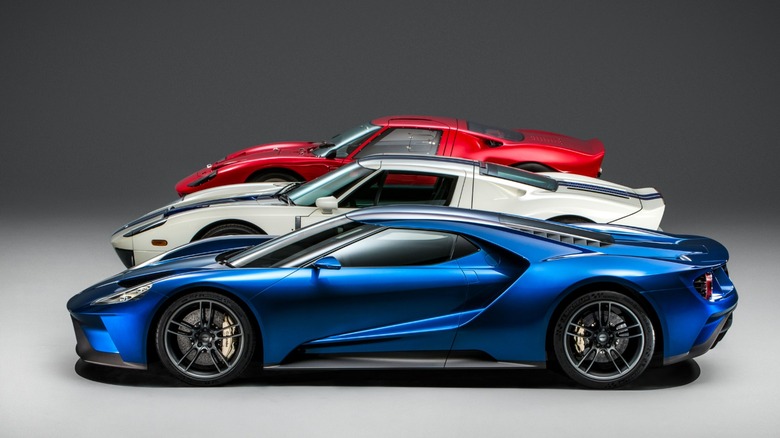
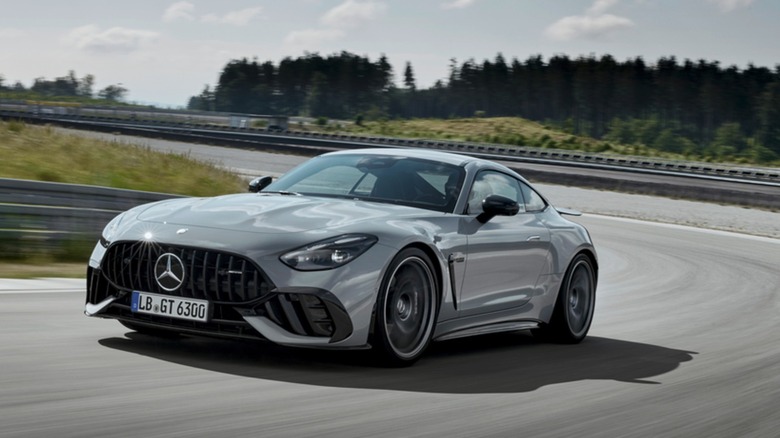
One of the most popular GT models is the Ford GT, which the company first introduced in 2004 to celebrate its 100th anniversary and pay homage to the Le Mans-winning GT40. The American carmaker eventually introduced a second generation in 2017, before ending production in 2022. But even though the Ford GT technically fits the description of a grand tourer, it's more of a supercar than a GT. A better example would be the Mercedes-AMG GT — although the 2025 model is one of the fastest AMG models ever made, it's still quite comfortable and luxurious.
We've also seen other European manufacturers use the GT badge, with the Opel GT being one of the most underrated German cars that deserves more attention. This two-door coupe, made from 1968 to 1973, somewhat resembles a Chevrolet Corvette, and it also received a second-generation model from 2007 to 2010 as a rebadged Saturn Sky/Pontiac Solstice. Italian manufacturer Alfa Romeo also had a GT model from 2003 to 2010, but because it was based on a compact hatchback, it lacked the space buyers wanted from a true GT.
Monza
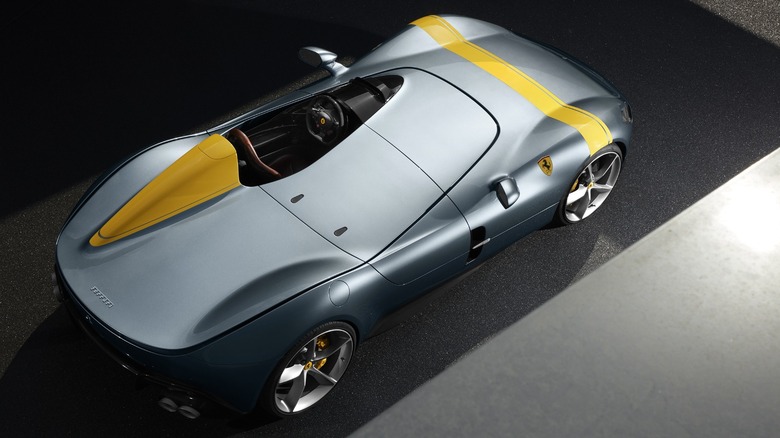
The Ferrari Monza is one of the most interesting models to come out of the prancing horse's stable. This vehicle comes with several cool features that any car enthusiast and collector would love, like its "virtual windscreen" and its single carbon-fiber seat for the SP1 model. The Ferrari Monza is inspired by the brand's racing cars from the 1950s, with its retro styling and an 809 hp 6.5-liter V12 engine designed to make the car go from 0 to 62 mph in under 3 seconds.
On the flip side, Chevrolet produced a subcompact two-door muscle car from 1975 to 1980 bearing the same name. Although this isn't some exotic sports car that cost millions of dollars, it's still one of the most underappreciated Chevy muscle cars you can find. Even though it shared the same platform as the Vega, the American carmaker used the profile of the Ferrari 365 GTC/4 as an inspiration for this vehicle and even named it after an Italian racetrack.
The Chevrolet Monza had quite a good run in motorsport, with the vehicle being favored by drag racers for its small size and good aerodynamics, and also winning a couple of IMSA Camel GT titles — presumably with custom or tuned engines. But because it arrived in the mid-1970s, that meant it was caught at the height of the Malaise Era. Factory models came with anemic engine options, with tests showing that it took more than 13 seconds for the Monza to hit 60 mph from a standstill and required nearly 20 seconds to finish the quarter mile.
Sebring
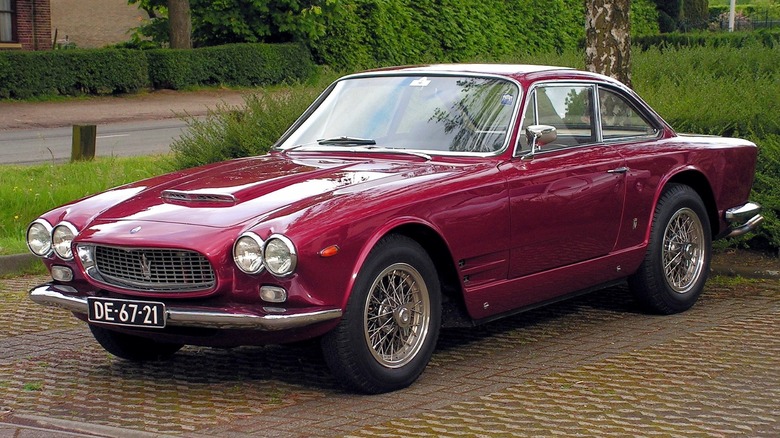
Although it's not as popular as the 24 Hours of Le Mans, the 12 Hours of Sebring is still one of America's most iconic endurance races, beginning in 1952. It's for this reason that we see two models from different carmakers sport this name — Chrysler and Maserati. The Maserati Sebring is one of the classic cars from the 1960s that no one talks about today, although it still fetches six-digit bids at auctions. The Italian carmaker released this model in 1962 to commemorate its success at the Sebring endurance race, and it was in production until 1968. Despite that relatively long period, Maserati only made fewer than 600 Sebrings, making it quite a rare vehicle.
Chrysler also made its own Sebring from 1995 until 2010. But unlike the Italian Sebring, which had a limited production run, this midsize model is a mass-market car designed to compete against the likes of the Honda Accord and Toyota Camry. The Chrysler vehicle is available either as a sedan or a coupe, and you can also get the latter as a convertible if you like feeling the wind in your hair. In 2011, the American carmaker discontinued the Sebring name and replaced it with the 200, although the 200 is a heavily revised Sebring and not an all-new model.