

23 Major Car Brands Ranked By Depreciation
There has never been, and never will be, a car brand that makes models that do not depreciate. As an asset, a car will inevitably lose its value the more time passes, and the more that it is used. However, some brands hold up better than others, and that's what we're looking at today. For this list, we're not going off MSRPs, because these can vary widely depending on trim, so instead we're using percentages wherever possible, for a more accurate idea. Wherever we've had to use depreciation calculators, we've set the model to brand new, assumed an ownership period of five years, and considered 21,000 miles per year on the odo.
Before we begin, remember that we cannot possibly come up with a single figure per brand; some models (even within a lineup) will depreciate more than others. For instance, while a Porsche 911 can sometimes hold over 80% of its value, the brand's most popular offering, the Cayenne, can easily lose 50% on its end. We also cannot judge all cars by the same yardstick; it's reasonable for a Land Rover to do 21,000 miles per year, but not for a Maserati. That's why the Maserati ranks higher than Land Rover, though it has more depreciation, and why Porsche comes after Cadillac. With all that said, here are 23 of America's biggest car brands, (roughly) ranked by depreciation, from most to least.
Jaguar, Land Rover, and Range Rover
The Jaguar-Land Rover brand has, for the past few years, been owned by the Tata Group from India. It's no secret that models from these marques fall off a cliff in just the first few years of ownership; but buyers may not realize how bad the situation really is. Sure, there's the thrill of driving a brand-new (or slightly used) Jaguar, or going off-roading for the first time in a Land Rover; or cruising about town in a Range Rover. But then the repair bills start to creep in; and just keep on coming. When you finally go to sell the vehicle, it's barely worth anything.
To illustrate our point, Jaguar's average depreciation is estimated to be 69%. Furthermore, the Jaguar I-Pace has a depreciation rate of almost 70%, and that's just a five-year-old model. According to a Jaguar dealer, the E-Pace is the "best" Jag for value retention; but even that loses more than 50% or so of its value.
Things are not much better for the SUV-only brands of Land Rover, and its luxury division of Range Rover. The flagship product from LR, the Defender, has a five-year depreciation of about 55%, while the entry-level Discovery drops a whopping 75% after five years. Range Rovers are even worse, with the entry-level Evoque losing 60%, and the regular Range Rover losing a massive 86.5% of its as-new value after five years.
Maserati
These days, Maserati is one of the many brands currently owned by Stellantis. Unfortunately, the company has become the butt of all auto-depreciation jokes on the internet, and there's a reason for that. For starters, the brand faced an almost-60% drop in sales in 2024 compared to 2023, and matters were certainly not helped along by the poor residual value all its models come with. Its cheapest model, the Grecale, loses no less than 91% of its value in five years, while the Granturismo loses 65%.
Even models we ranked among the best Maseratis of all time (driving-wise), fare poorly. The recently revived Ghibli loses 82% of its value in the first five years, while the Quattroporte loses an eye-watering 83% on its end. Another model that's worth mentioning in this regard is the Grancabrio that tanks 65%; while the Levante SUV that sits in the middle of the lineup loses 77% in depreciation for its part.
Readers should note that the depreciation figures for the MC20 supercar would be a very rough guide, because depending on the options and bespoke nature of every vehicle, the percentages could vary greatly. Since Maserati vehicles are classified as "exotic," we've reduced some of the figures in our simulation. For the Grancabrio, Granturismo, and MC20, we've assumed 3,000 miles per year; 12,000 for the Levante, and 9,000 for the Ghibli and Grecale. A quick reminder that Maserati is being ranked after Land Rover because our calculations assume much lower mileage on the Maserati models.
Tesla, Rivian, Lucid, and Polestar
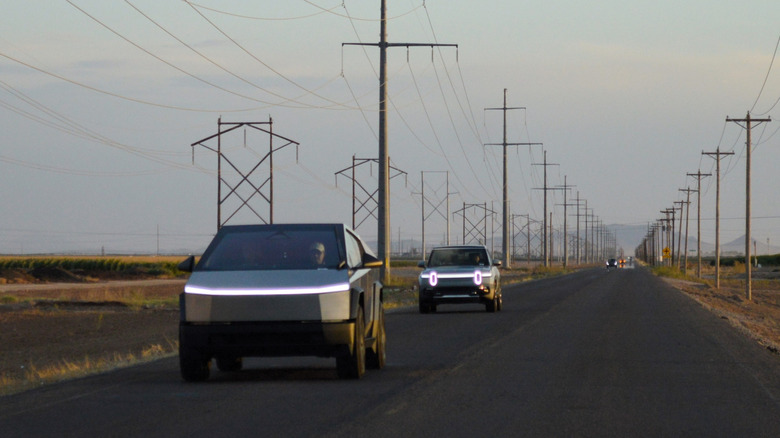
Pretty much none of the major EV players in the U.S. do well. Lucid's only offering for which we have data is the Lucid Air; and it tanks 66% in five years of ownership. Polestar, the luxury electric division of Volvo, fared slightly better, with the Polestar 2, 3, and 4 losing 60%, 65%, and 65%, respectively. Rivian is seen as the main competitor to Tesla, and currently only makes SUVs and a pickup truck; but even the strong SUV demand in the U.S. is not enough to offset the depreciation. The R1S SUV loses 71% of its value in five years, and the pickup R1T loses 58%. And then, of course, there's Tesla.
Tesla's Model Y (which is a best-seller) loses 71% of its value, while the Cybertruck depreciates 53% after half a decade. Other Tesla models don't fare much differently, with the Model X losing 81% of its value and the Model S 80% in the same period. All of this should clearly point out the same thing that we've been seeing for years now; that EVs tend to lose the owners money over years. Along those lines; it's actually best for people to get the cheapest version of an EV, because as people move up in trim, efficiency and range take a hit, which defeats the entire purpose of buying an EV in the first place.
Chrysler
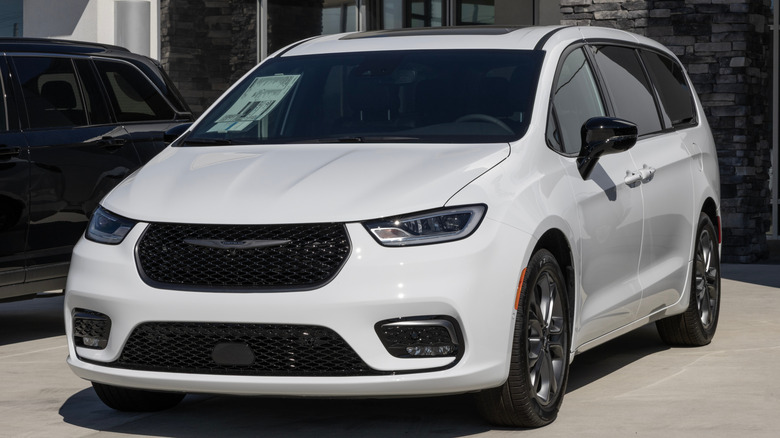
Sticking with Stellantis brands, we come to the much more consumer-oriented Chrysler, which has really fallen off in the last few decades. Chrysler now only makes two distinct models in 2025 and 2026. These are the Chrysler Pacifica minivan, which has been the go-to hauler for large families for a while; and the Chrysler Voyager. There's a third available model, but it's simply a plug-in hybrid version of the Pacifica, and the brand actually does relatively okay in terms of depreciation compared to Maserati, though that's not setting a very high bar. Running depreciation calculations for the Pacifica shows it loses a whopping 68% of its as-new value after five years.
The Voyager, which is very similar to the Pacifica, loses 74% of its initial value in the same time period. However, we do want to mention that for the Pacifica, the depreciation stabilizes after the first three years, as it has a 59% depreciation rate after three years of ownership. The majority of the depreciation happens in year one (which is the norm), losing 36% in the first 12 months. It seems that the entire Stellantis group might be headed for a split in the near future; which is a shame considering that it owns some of the most iconic car brands of all time.
Audi, BMW, and Mercedes
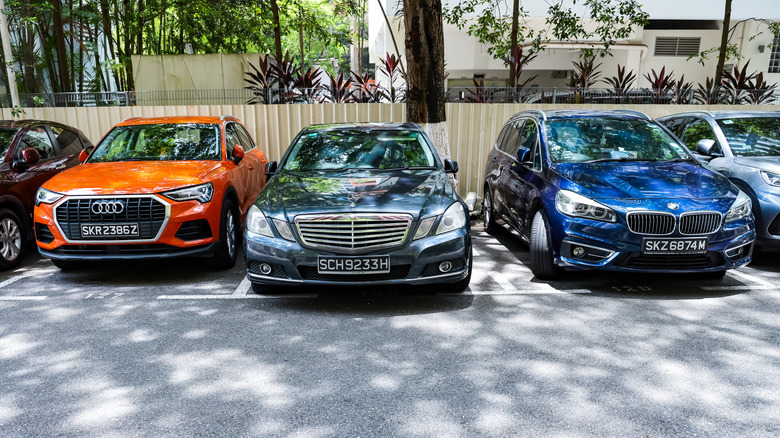
Now, it's a given that the big imported German luxury and sports cars will lose a lot of value to depreciation. Not only are prices inflated by high import costs, but even models made here in the U.S. are priced much higher than regular consumer cars. But we don't think people realize exactly how bad things are. Before jumping into the depreciation percentages, readers should note that the most popular cars (by sales volume) from each maker in 2024 were the Q5, Q3, and A4 for Audi; X5, X3, and 4-series for BMW; and the GLC, GLE, and C-class for Mercedes.
All of these have been ordered with the highest-selling models coming first. Starting with Audi, the Q5 SUV will give buyers a depreciation rate of 63%, while the smaller Q3 comes in at 44%; with the A5 losing 58% of its as-new value after five years. On BMW's part, the midsize X5 will depreciate 69%, the X3 will decrease 63%; while the 4-series cars do slightly better, at 55%. Mercedes has the best sales numbers of the lot, but that's no shelter from depreciation. The GLC crossover will fall 56%, identical to the slightly larger GLE; with the C-class losing 42% of its purchase price. Given that the 4-series and C-class are ranges of cars rather than individual models, we went for a medium spec, taking the 4-Series Coupe for BMW, and the CLA250 for Mercedes.
Nissan and Infiniti
Moving onto the Japanese brands of Nissan and Infiniti. Now, Nissan has had it's fair share of reliability problems, owing mostly to its CVTs, or Continuously Variable Transmissions, but we don't think that's why its cars depreciate so much. It's more to do with there being an oversupply of Nissans, so values don't really stay high — this will be true for all mass-market brands. Among all the Nissan models that are made in the U.S., the most popular ones last year were the Rogue, Sentra, and Altima; in that order, with 245,724, 152,659, and 113,898 units sold, respectively.
Unfortunately for buyers, these models all depreciate quite heavily, with the Sentra losing 40% value, the Rogue losing 58% of its value, and the Altima 57%; after just five years. Nissan's luxury division Infiniti fares significantly worse in this regard, which isn't surprising, since luxury brands tend to fall off more. Its best-sellers for last year were the QX60, QX50, and QX80; with 27,808, 10,722, and 10,339 units sold, respectively.
The QX50 is slated to lose 65% of its value, the QX60 70%, and the big flagship Infiniti QX80 SUV will lose a poetic 80% of its MSRP value in five years post-ownership. Another notable model is the all-electric Nissan Leaf, which loses a massive 76%— which, in some cases, might not even be long enough to make enough fuel savings to justify the cost.
Mitsubishi and Mazda
These next two Japanese brands fall in value with the enthusiasm of a lead balloon. According to some online reports, the average depreciation for either brand hovers around the high 60s, but let's look at specific models. In 2024, the most-sold models from Mazda were the CX-5, CX-30, CX-50, CX90, and Mazda 3 sedan. These fared okay on the depreciation front; with 44% for the Mazda 3, 41% for the CX-30, 43% for the CX-50, 62%for the CX-90. The best-selling CX-5, (which sold 134,088 units in 2024) came in at a decent-ish 45% in depreciation in a five-year simulation.
On Mitsubishi's end, its entire lineup consisted of the Mirage, Eclipse Cross, Outlander, and Outlander Sport. These models fared about the same in terms of depreciation, with the Outlander Sport dropping 77%, the Eclipse Cross losing 65%, the regular Outlander 64%, and the Mirage being victim to a 51% depreciation rate. It's also worth mentioning that for the past few years now, Mitsubishi has been a cross-over only brand in the U.S., having discontinued its last sedan offering in the U.S. in 2018. These figures for Mitsubishi and Mazda follow the greater overall trend; that SUVs and crossovers outsell cars, and as such, depreciate more. That's logical, since crossovers and SUVs tend to cost more than cars to begin with, and with the supply glut that we're in, more value is lost.
Hyundai and Kia
During the course of our extensive research, we were surprised to find how much Korean automaker Kia and its sibling brand Hyundai depreciate. These models tend to lose about 50% of sticker to depreciation in the first few years of ownership. This is understandable for luxury brands that are overpriced from the get-go and high-maintenance, but there shouldn't be this much wiggle room for "affordable" car brands.
Kia's five most-sold models in the U.S. in 2024 were the Sportage, K4, Telluride, Sorento, and Seltos; with 161,917, 139,778, 59,958, 95,154, and 59,958 units sold, respectively. Hyundai's best-selling models for 2024 in the U.S. market were the Tucson, which sold 206,126 units, the Elantra, with 136,698, the Santa Fe (119,010), the Palisade (110,055) and the Kona, with 82,172 units sold. That high volume of sales is probably what's contributing a lot to the depreciation; plus the fact that nobody really expects these cars to hold up well after, say, a decade.
For Kia, the Sportage loses 57% of its value, the K4 falls 45%, the Telluride 60%, the Sorento 66%, and the Seltos drops 60% in value after five years of ownership. On Hyundai's end things are about the same, with the Tucson, Elantra, Santa Fe, Palisade, and Kona tanking 54%, 46%, 61%, 57%, and 49% respectively. Reminder: we're now back to using a five-year time period, with 21,000 annual assumed miles per model.
The GM Group Brands
Over the course of its 117 year run, GM has discontinued or sold more than 37 car brands, and now only owns GMC, Buick, Chevrolet, and Cadillac. The top sellers from each brand in 2024 were the Sierra LD, Yukon, and Terrain from GMC; the Escalade, Lyriq, and XT5 from Cadillac, the Encore from Buick, and the Silverado, Equinox, Trax, and Malibu from Chevrolet. Surprisingly, these models keep pace with the industry averages for depreciation we've seen — we'd initially assumed that the GM vehicles (especially the premium ones from Cadillac) would take a nosedive.
Starting with Buick, which now has a lamentable portfolio of just four models on offer in 2026. The Encore was its best-seller in 2024 (having sold 58,239 units that year), and has a depreciation rate of 47%, which is actually pretty decent. For the big GM trucks, the Sierra LD, Yukon, and Terrain tank a solid 50%, 63%, and 56% depreciation, respectively.
Next up, Chevrolet does slightly worse in the depreciation department, with the Silverado LD falling 50%, 60%for the Equinox, same as the Trax, and 58% for the Malibu. Moving onto luxury brand Cadillac, the Lyriq falls 88%, while the XT5 drops 66%. The Cadillac Escalade also falls off hard (but not as hard as some of the other land-yachts we've covered so far), coming in with a depreciation figure of 67%.
Porsche
Back to the Germans, we have Porsche. In recent years, particular Porsche models held value very well, especially the 911. However, literally every other single model from the brand (and even all but the most special 911s) do actually depreciate. A new Panamera doing reasonable miles per year will depreciate 47% — we're not really sure what class of car this is, but let's run with sedan.
The Macan crossover will lose 44% of its value over five years, while the larger Cayenne SUV fares worse, at 50% in depreciation. Porsche's baby sports car, the 718 (which can be either a Cayman or a Boxster) will only depreciate a stellar 20%; while the all-electric Porsche Taycan comes in at roughly 60%. Even the flagship Porsche 911 has a good depreciation figure, only losing 17% after five years of use, but both the 718 and 911 are high-demand models with a lot of interest in them. This is one of the many reasons why there are entire guides on the internet about which Porsche cars can work as investments.
Methodology
Some unicorns may hold value (e.g. the Nissan Armada), but when it comes to car brands as a whole, depreciation is inevitable. To avoid getting tripped up by outliers, we looked at the best sellers from a brand (e.g. the CX-5 from Mazda). Where a brand had an "iconic" model, like Tesla's Model Y, or Cadillac's Escalade, we considered those too. Where possible, we looked at the latest model refresh, like the 2022 Escalade — since it's remained largely unchanged since that iteration. If a brand had large depreciation fall-offs within the first few years; it made this list.
Data (when not available directly from the manufacturer or from its authorized dealers) was sourced from various trusted industry sites. Kelley Blue Book for the current market value, Edmunds for the trim-by-trim MSRP when new, and iSeeCars for depreciation %s. Where iSeeCars depreciation data was not available for a model, we did the calculations manually. In some cases, CarEdge would also make recommendations of "sweet spot" years to buy a particular model; indicating that a car's depreciation curve would flatten out near the sweet spot; so we tried to factor that in as well.
No one formula worked for every single car, so there was no "templating" of the calculations, as such. For certain models (like Porsche and Maserati), we did the calculations with significantly less assumed annual mileage than the rest of the pack, for example. Considering the fact that there would naturally be a smaller buyer pool for these exotic cars, we ranked them a little higher than otherwise equivalent depreciation.