

5 Android Phones That Outperform The OnePlus 15
We may receive a commission on purchases made from links.
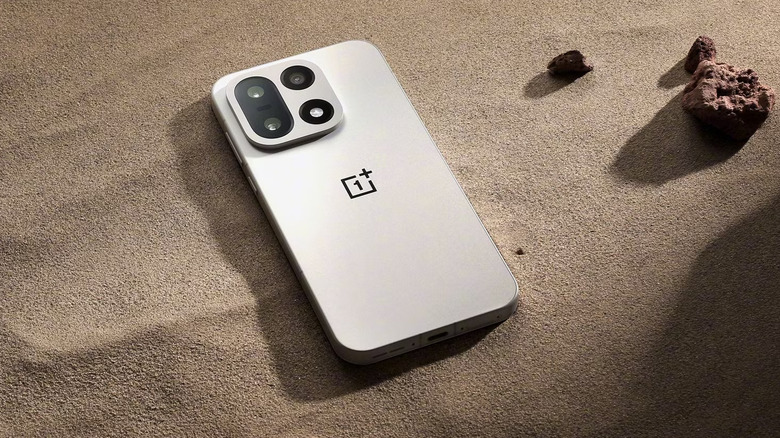
By now, you may have heard the news already: the OnePlus brand is leaving the US, seemingly for good. It comes as a shock to many. OnePlus exploded onto the market in 2014 as a budget "flagship killer," then gradually morphed into just another flagship, though a good one. It managed to hold its own among the titanic Apple, Samsung, and Google brands it had to compete with. So now the question is what happens to people who bought a OnePlus phone, and for our purposes, any better alternatives if you had your eyes on OnePlus's final release in the US, the OnePlus 15?
Here's the trouble with that question: the OnePlus 15 is running what is currently the fastest Android chipset on the market, the Qualcomm Snapdragon 8 Elite Gen 5. We're waiting on the imminent release of the Snapdragon 8 Elite Gen 6, but until then, what is often the case is that phones that "outperform" the OnePlus 15 are running the exact same chip — meaning performance differences likely come down to other difficult-to-measure factors, like what clock speed the chip is run at, how the software is optimized, how efficient the cooling is, and so on. Our baseline metric for "outperform" is primarily synthetic benchmarks, though since those don't accurately reflect real everyday usage, we want to look at other advantages. Better hardware, better software, you name it. The following five phones would make potent alternatives to the OnePlus 15.
Samsung Galaxy S26 Ultra
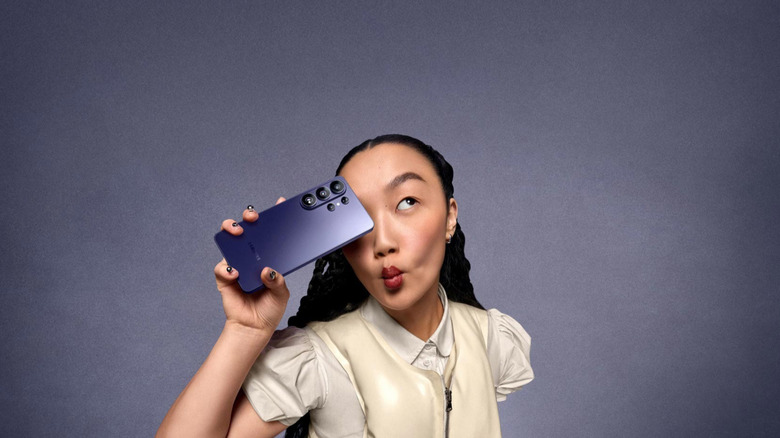
The Samsung Galaxy S26 Ultra is Samsung's current top-end smartphone at time of writing, released in March 2026. It also — as you will see is the case for the other options on this list — is running the Snapdragon Elite Gen 5. Benchmarks put it slightly ahead of the OnePlus 15 in single-core, multi-core, and GPU performance, though that will depend on which benchmarks you look at. That aside, the S26 Ultra does have other hardware and software advantages.
First, it has a unique 6.9-inch Privacy Display screen; this allows users to make certain areas of the screen non-visible to shoulder surfers without having to apply one of those tacky privacy screen protectors. It also features Samsung's 200 MP main camera, compared to the 50 MP one on the OnePlus 15, which enables you to zoom to crazy levels and still retain a usable image. And speaking of the camera, this is also the Samsung phone that can do that really cool horizontal lock thing where the phone captures a video in one orientation regardless of what angle you're holding it at; with this feature, it doesn't matter if you don't keep the camera straight, it will stick to the right orientation.
On the software front, Samsung has Samsung DeX, which transforms your phone into a desktop computer by connecting it to an external display. OnePlus may support this in the future as the more general Android Desktop Mode, but so far it only appears to work through developer settings. You may also be enticed by Samsung's more robust ecosystem and support for its proprietary S Pen. Finally — and perhaps most importantly when comparing to a phone with an uncertain future — the S26 Ultra promises you seven years of updates.
Samsung Galaxy S26+
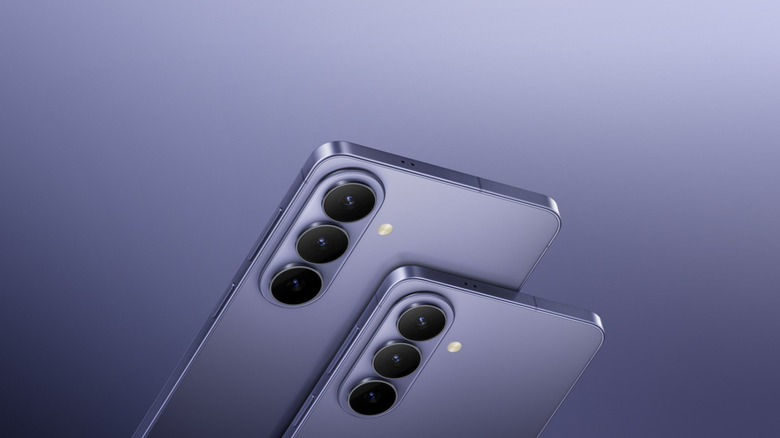
The Galaxy S26 Ultra is not cheap with its $1,299 starting price, so the Galaxy S26+ (starting at $1,099) goes a bit easier on the wallet while still having the same Snapdragon 8 Elite Gen 5 as the Ultra and 15. Performance is also solid; it performs better than the OnePlus 15 in some benchmarks, pulling ahead in single-core, multi-core, and GPU performance. Other benchmarks show it falling behind.
Though the S26+ does not have the Ultra's Privacy Display, 200 MP camera, or horizontal lock, it still has Samsung DeX support, that seven-year update promise, and Samsung's ecosystem integration. Another compelling feature may be the Galaxy AI suite of AI tools exclusive to Samsung phones. This includes things like AI-powered photo editing tools, writing assistance, and a digital secretary to filter calls. To be fair, the OnePlus 15 does have OnePlus's in-house AI Plus Mind that covers similar bases, so this may come down to personal preference.
If nothing else, it doesn't fall behind where it matters. It has the same durable Gorilla Glass Victus 2, the same 12 GB RAM, and the same main camera resolution as the OnePlus 15. It features Samsung's class-leading Dynamic LTPO AMOLED screen with higher peak brightness. We could have the two phones trade blows all day by nitpicking little hardware advantages here or there, but suffice it to say, the Samsung 26+ is a solid phone that wouldn't leave you wanting if faced against the OnePlus 15.
Xiaomi 17 Ultra
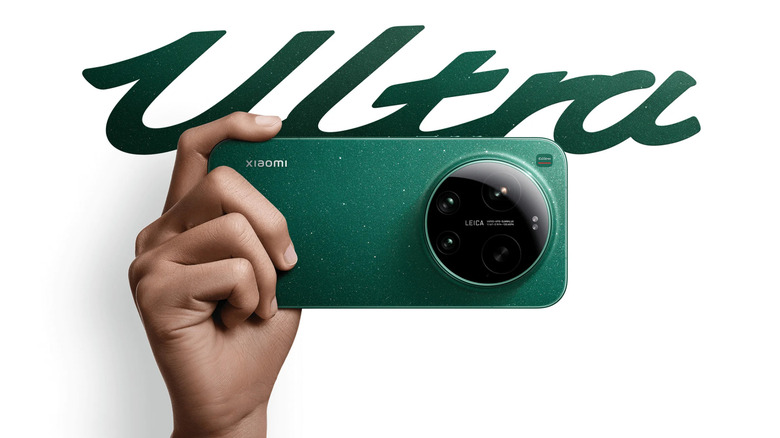
Xiaomi is a Chinese brand that can make phones in seconds with its robots, so you better believe it has a solid contender to face off against the OnePlus 15. The Xiaomi 17 Ultra is slightly newer than the OnePlus 15, releasing in early 2026, although it again has that same Snapdragon 8 Elite Gen 5 chip. You can see where this is going; one benchmark gives a slight edge to the Xiaomi 17 Ultra in single-core, multi-core, and GPU performance, though again, not all benchmarks agree. Needless to say, these phones are effectively neck and neck when you average out the scores.
Now for actual, tangible benefits beyond the two phones flexing their hardware muscles. The Xiaomi 17 Ultra boasts a partnership with Leica for its cameras and has a 200 MP telephoto camera; it has a significantly brighter screen at 3,500 nits peak brightness, with a higher pixel density; the phone starts at 512 GB of storage with 16 GB of RAM; Xiaomi also features its own personalized AI suite known as Xiaomi HyperAI to compete with OnePlus 15's AI Plus Mind. All in all, an exceptionally well-specced flagship that could easily replace the OnePlus 15.
There is one unfortunate fly in the ointment here: Xiaomi phones aren't sold in the US. So you couldn't finance one with your carrier of choice. However, where there's a will, there's a way. You can buy a globally unlocked variant on Amazon if you don't mind the shipping taking a while and aren't using Verizon or AT&T as your carrier. Xiaomi phones also support the Google Play Store (if they're a Global variant) and two years of security updates.
Redmagic 11 Pro
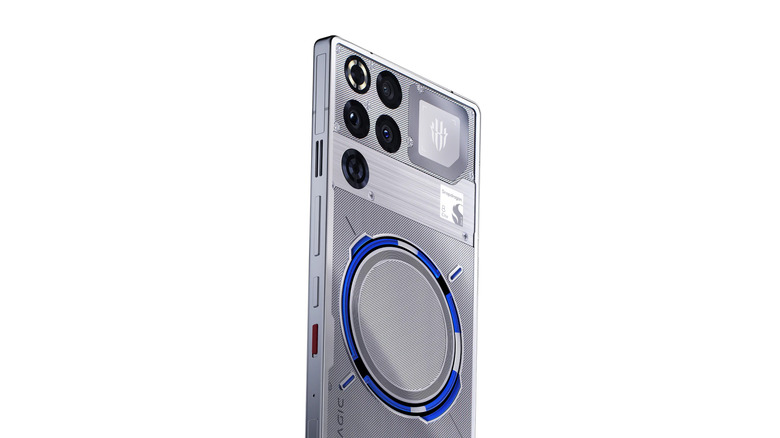
The Redmagic 11 Pro made waves by being the first liquid-cooled smartphone ever when it released in late 2025. Seems pretty extreme, until you consider that modern smartphones are powerful enough to play AAA PC games on them. Don't believe us? Here's the Redmagic 11 Pro playing "Cyberpunk 2077" at over 60FPS — and it's in the very early days of Android PC gaming, so it's entirely possible performance will improve. Fittingly, the benchmarks aren't split here; Antutu ranks the Redmagic 11 Pro at number one, and other benchmarks concur that it pulls ahead of the OnePlus 15 significantly, particularly when it comes to GPU. Perhaps that water cooling really is making a difference.
The hardware advantages don't stop there. The Redmagic 11 Pro is the only phone on this list with a larger 7,500 mAh silicon-carbon battery, compared to the OnePlus 15's 7,300 mAh battery. It's one of very few modern phones out there that has a 3.5mm headphone jack, too, and boasts a bunch of gamer-centric features like "4D" vibration, shoulder trigger buttons, and Hi-Fi speakers at a higher bitrate than the 15 supports.
Better than all of that, though, is the price. The Redmagic 11 Pro retails for a starting price of $699. However, it may be difficult to get this phone at the time of writing. The official site does not have a page to purchase it, but does for the 11S Pro — which costs $100 more and is currently out of stock. Some eBay sellers from China sell it internationally as brand new, for a lower price. As you can see, finding phones that are available in the US and which beat the OnePlus 15 is challenging, making it all the more sad that it's leaving the market.
Honor Magic8 Pro
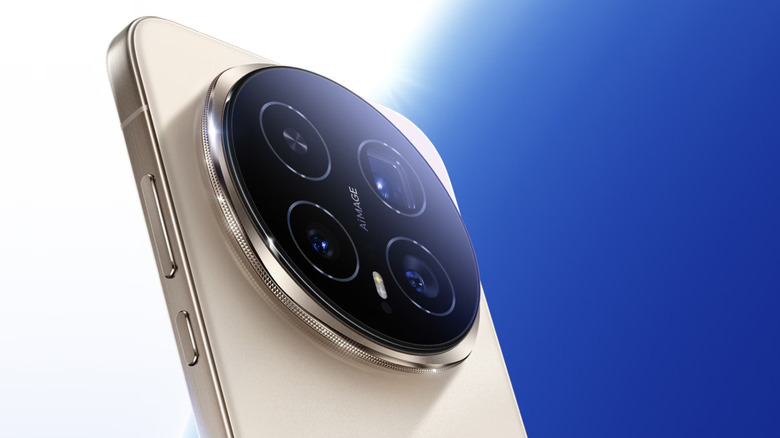
Honor is a brand that proves that China is living in the future. Not because it's the best, but because it's one of many available there and yet has specs that best homegrown US phones. Just as every other phone on this list, the Magic8 Pro has the gold-standard Snapdragon 8 Elite Gen 5, which in some benchmarks defeats the OnePlus 15 and in others does not. It has hardware advantages that make it very compelling, too.
The Magic8 Pro includes Honor's 4320Hz PWM dimming, which could be a huge deal if smartphone displays are giving you a headache just by looking at them; the display also boasts higher peak brightness. The Honor is another phone with a 200 MP telephoto camera and an absolutely huge 50 MP selfie cam, the only one on this list to trump the OnePlus 15's 32 MP selfie cam. Finally, Honor has joined Samsung and Google in guaranteeing seven years of updates. As you may have noticed by now, the OnePlus 15 holds up very well against competition, often being bested only in a few select categories.
The Honor Magic8 Pro is a Chinese phone technically not sold in the US, but which you can still get your hands on. It's not available for US customers on Honor's Global website, so you can buy it instead from Honor's official store on Amazon. Unlike Xiaomi, this phone will ship to you in just a couple of days with free delivery. Verizon and Sprint are not supported.