

How Xiaomi's Dark Factory Robots Can Pump Out A Phone In Mere Seconds
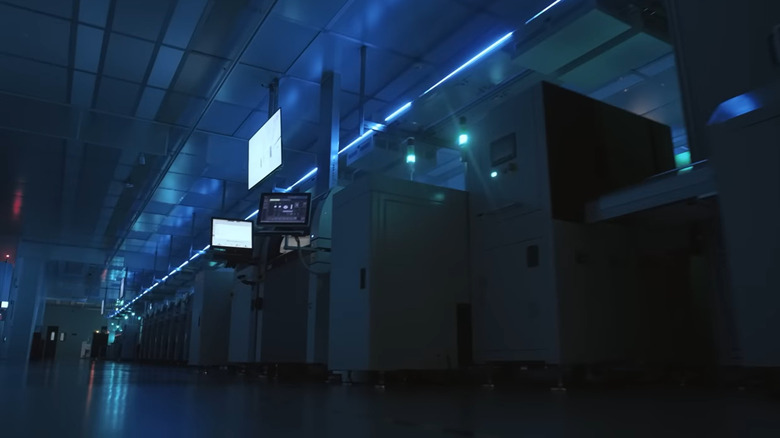
Sci-fi promised us a world where robots would do the work of humans. That world, for good or bad, is already becoming reality. In Xiaomi's fully-automated smart factory in Changping, China — which officially launched in July 2024 — robots are building smartphones. The facility is designed to run around the clock with minimal human intervention and churns out 10 million flagship phones a year.
There are still a few humans on the payroll because some tasks, like supervision and maintenance, can't be done by robots yet, but Xiaomi boasts 81% automation across the whole production line. While Xiaomi's marketing hype claimed that the factory would make "one phone per second", this was a bit of an exaggeration. The real production rate is roughly one phone every 3.15 seconds over a full year, which is admittedly still pretty impressive.
This sort of operation is known as a "dark factory", a manufacturing term that describes facilities designed to operate with little or no human presence on the production floor. Dark factories are also known as "lights-out manufacturing" because you literally don't need to keep the lights on for robot workers. Xiaomi's factory is unusual because it's applying that concept to phones, which are notoriously fiddly to manufacture. After all, assembling small products with super-tight tolerances and consumer-ready looks is a much more difficult challenge than automating a more uniform process like moving boxes through a warehouse or stamping out large metal parts. Phones produced at the Changping plant include Xiaomi's MIX Fold 4 and MIX Flip. Although the MIX Flip has been launched in international markets, neither model is officially available in the United States.
What makes Xiaomi's site different from other dark factories?
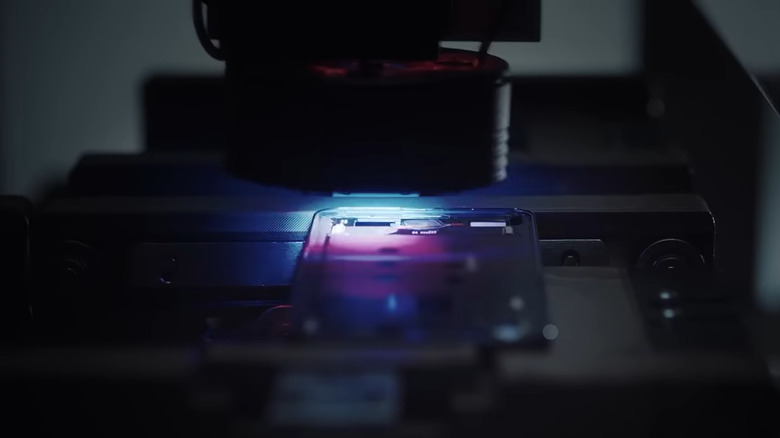
The Changping site cost about 2.4 billion yuan ($330 million) to build, has 11 production lines, and spans 81,000 square meters. However, Xiaomi is not the first company to automate industrial work. FANUC, the Japanese robotics giant, has highly automated factories producing electronics and machine parts. Samsung and TSMC also operate heavily automated systems producing semiconductors, while battery maker CATL has begun using humanoid robots in its production lines.
Dark factories are built for machines first, humans second. In a traditional plant, the layout is shaped around people with walkways, lighting, and break schedules. In a dark factory, the priority shifts to robotic motion, machine vision, and software control. Systems shuttle parts around and keep production running. A useful comparison is Amazon's fulfillment centers, which use AI and robotics to move, store, and sort goods, as well as scanning items for defects before shipping.
Many of the most automated industrial sites today are found in more standardized processes, such as semiconductors, batteries, and China's versatile EV manufacturing industry. Xiaomi is instead utilizing the tech to assemble flagship smartphones, with an automated assembly system that can handle premium electronics, frequent model refreshes, and live up to the expectations of high-end gadget buyers.
Xiaomi built the tech from the ground up
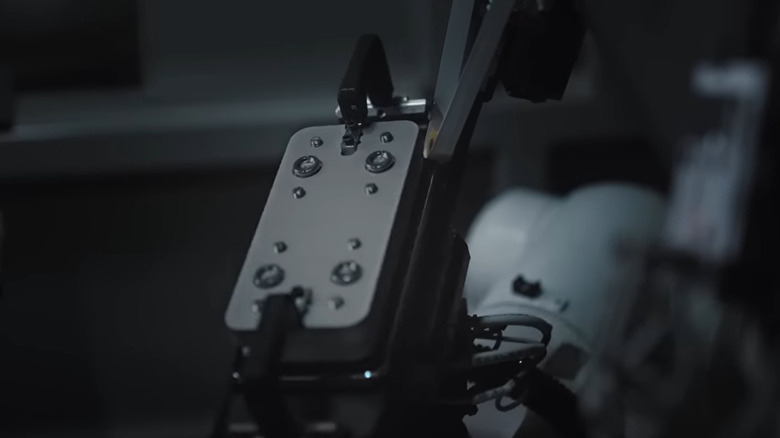
Xiaomi isn't just buying a bunch of industrial robots and calling it innovation. By its own account, it built a large share of the underlying factory stack itself, including 100% of the software and 96.8% of the packaging equipment. It also holds more than 500 patents resulting from the factory's development. Xiaomi uses an internal operating system called the Xiaomi Hyper Intelligent Manufacturing Platform to manage its production process. It handles scheduling, machine vision, defect detection, automated logistics, and maintenance alerts so that the whole plant can keep going when something changes.
Because Xiaomi sells products itself and isn't a contract manufacturer serving other brands, this creates a tighter loop between product design, manufacturing, and software. If engineers want to tweak a process or component design, they don't need to go through a third party in the same way that many consumer electronics brands do.
Xiaomi's factory hints at where manufacturing is heading. The focus is now on the complicated software that makes automated production possible. And this is exactly the sort of thing that tech companies like Xiaomi are good at. Digital brands can develop the software that powers their factories, just as they do for the products they sell.