

12 Affordable Alternatives To The Toyota Camry
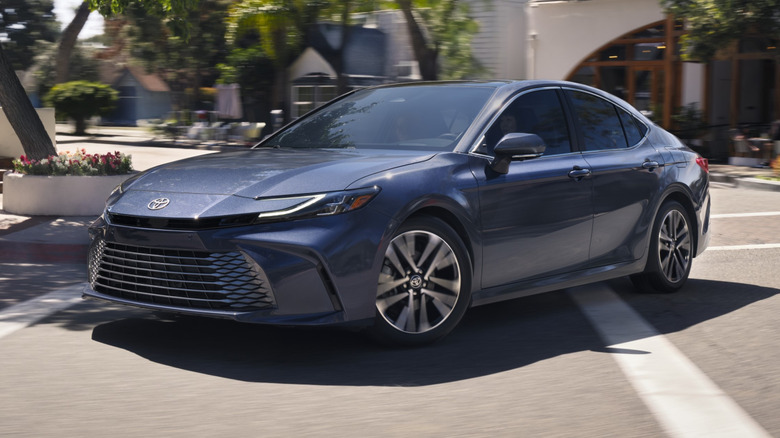
When Toyota posted its Q1 sales results in April 2026, there were a few surprises in its data. Among them was the fact that the Camry was Toyota's bestselling model at the start of the year, reversing a years-long trend that had seen SUVs become the body style of choice for American buyers. At the end of 2025, the Toyota RAV4 was crowned the world's best-selling car, but through the first quarter of 2026, Toyota has sold roughly 30% more examples of the Camry than it has of the RAV4.
This isn't because the Camry is an all-new design either. The current generation Camry was introduced in 2025, but it has nonetheless grown in popularity over the past year. It's not difficult to see why it's a popular choice: it's affordably priced, impressively spacious, and almost as efficient as a Prius. However, it still has plenty of appealing competitors, so before you head to your nearest Toyota dealer to get your hands on one, it's worth making sure you haven't overlooked these affordable alternatives first.
Hyundai Sonata Hybrid
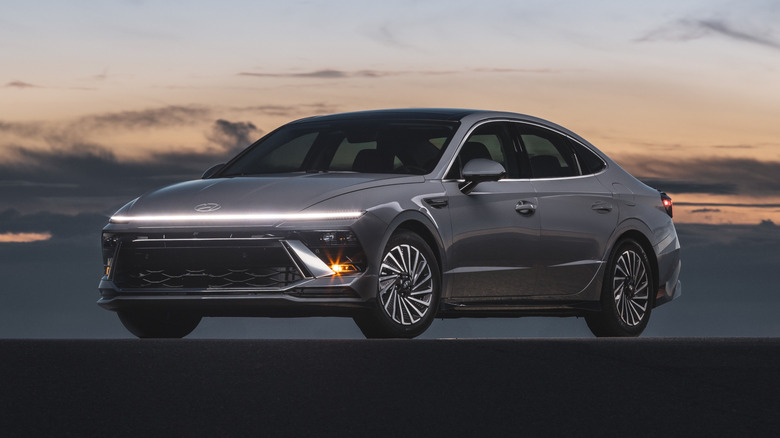
The base-spec 2026 Camry starts from $30,595 (including a $1,295 destination fee), while a range-topping Camry XSE will cost just shy of $37,000. Closely matching the Camry in both price and efficiency is the Hyundai Sonata Hybrid, which starts from $30,445 (including a $1,245 destination fee). The cheapest electrified Sonata trim is the Sonata Hybrid Blue, which is also the most efficient. It achieves an EPA-estimated 51 mpg combined, which is identical to the base-spec Camry.
It's a very close competitor numerically, but there are a few differences in other aspects. When we drove the Hyundai in 2025, we found its lack of all-wheel drive to be a significant sticking point compared to the Toyota, especially because of the wintry conditions of our test route. We also found the car's ride quality to be below the best-in-class, although we deemed the Hyundai's interior better than rivals like the Camry.
Much like the Camry, the Sonata Hybrid doesn't offer anything in the way of driving thrills, but it is well equipped as standard, with a long list of safety tech and intuitive infotainment. It's one of the Camry's closest competitors overall, and it's covered by a five year/60,000 mile limited warranty, which is two years/24,000 miles longer than Toyota's standard warranty.
Honda Accord Hybrid
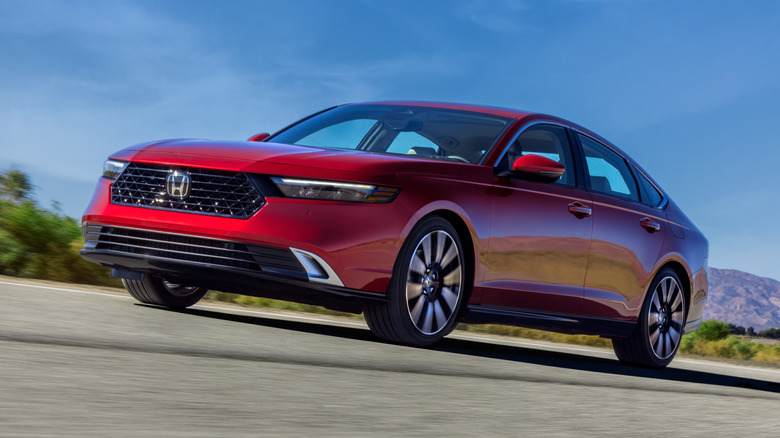
One of the Camry's longest-running rivals is the Honda Accord, which is available as a fuel-sipping hybrid. In its most frugal form, the Accord Hybrid manages 48 mpg combined, only a few mpg less than the Toyota. When we drove the current-generation car at its launch, we thought the hybrid drivetrain was impressively smooth too, with its CVT being mostly indistinguishable from a regular automatic transmission.
Honda has a long-standing reputation for solid build quality, and the latest Accord is no different. Its cabin remains a pleasant place to be, even if base trims don't feature as much standard equipment as some rivals. The Accord is also slightly more expensive than some of those rivals, although not by much. For 2026, the base trim starts from $34,990 (including a $1,195 destination fee), while the top-spec Touring Hybrid trim starts from $40,690.
While the Camry is available either with or without all-wheel drive, the Accord Hybrid is front-wheel drive only. It's not particularly fun to drive either, but then most fuel-efficient cars aren't. The Camry certainly won't provide any more fun if you put your foot to the floor, as the driver-focused Camry TRD trim is no longer offered on the latest generation.
Kia K5
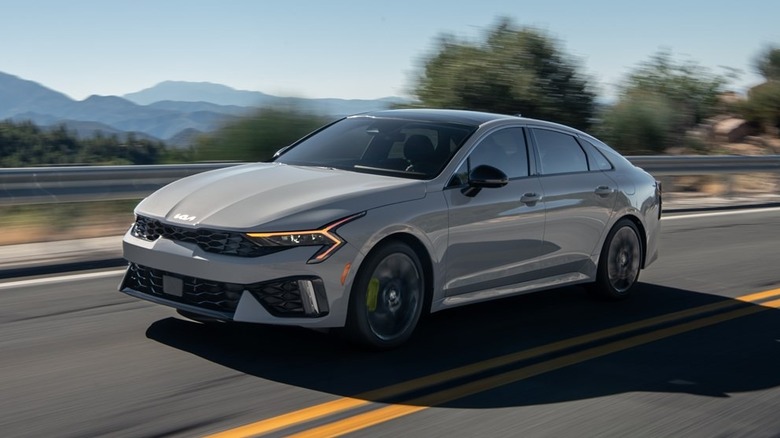
It might not have the hybrid powertrain of the Camry, but the Kia K5 sedan makes its case as a worthy alternative to the Camry in other ways. For starters, it's available in driver-focused GT trim, which equips the car with a turbocharged 2.5-liter engine making 290 horsepower. Lower K5 trims do without the turbo and produce 190 horsepower, putting them roughly in line with the Camry's output.
Buyers on a budget will find both the Camry's and the base K5's outputs more than adequate for everyday driving. Just like the Toyota, the Kia offers plenty of safety and convenience tech too, although the cheapest K5 trim misses out on nice-to-have features like heated front seats and built-in navigation. Stepping up to the second-tier GT-Line trim gives buyers access to those features and more for only a minimal increase in price, so unless your budget is particularly tight, the base trim is arguably worth skipping.
In base form, the K5 starts from $28,735 (including a $1,245 destination fee), while the GT-Line costs $29,735 without optional extras, which is marginally less than a base Camry. The GT trim with its boosted power output starts from $34,835. All-wheel drive is also available with certain trims. While its upfront pricing is very competitive, K5 drivers can expect to pay more at the gas pump than Camry drivers. In its most efficient form, the K5 achieves 30 mpg combined.
Toyota Prius
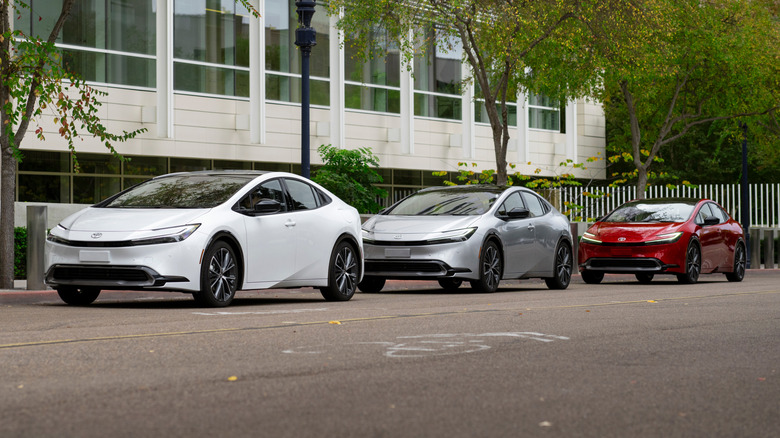
The Prius and the Camry have shared dealership floor space for decades now, but until recently, they were targeted towards distinctly different types of buyers. The latest generations of both cars have brought the two models closer together, both in their appeal and in their pricing. The 2025 Toyota Prius is a much better-looking car than its predecessors, but it still keeps its practical hatchback styling.
There's only a few hundred dollars difference in pricing between the base Prius and Camry too, with the Prius starting from $29,845 (including a $1,295 destination fee). At the top end of the range, the Prius Limited trim with all-wheel drive costs $38,260. In efficiency terms, the Prius still comes out ahead as you'd expect, although the difference between the two isn't night and day.
The most efficient front-wheel drive Prius hits an EPA-reported 57 mpg combined, representing a 6-mpg advantage over the most frugal Camry. Adding all-wheel drive to higher spec trims will see that combined figure dip to 49 mpg. While the Prius nameplate still carries more of a stereotype than the Camry, on paper, it's an appealing alternative that should be just as affordable to buy and even more frugal on gas.
Volkswagen Jetta GLI
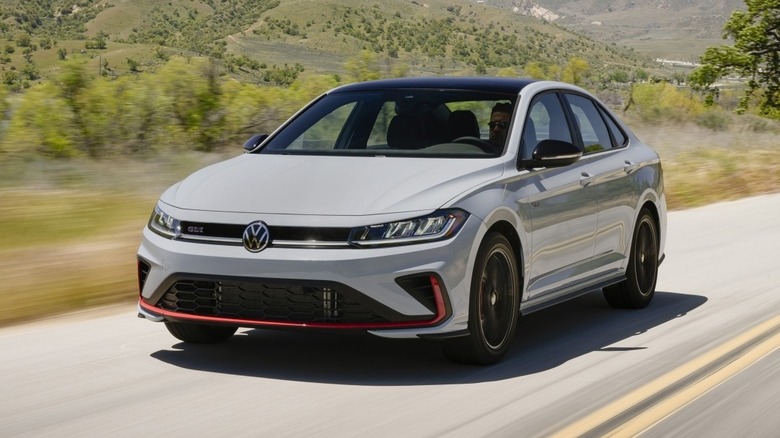
It's becoming increasingly difficult to find manual transmissions in affordable cars, and the Camry hasn't offered one since 2011. The TRD trim has also been discontinued for the latest generation, so keen drivers are mostly out of luck if they want a Camry. However, buyers looking for affordable, slightly sporty manual sedans aren't out of options. The Volkswagen Jetta is still available in GLI guise, and it's the same price as a mid-spec Camry. For the 2026 model year car, Volkswagen asks $35,020 (including a $1,275 destination fee).
Its turbocharged 2.0-liter four-cylinder engine isn't the most powerful on paper — in fact, its 228 horsepower output is only a little more than a Camry. However, putting that power down feels much more enjoyable thanks to the six-speed stick shift and adaptive suspension, which is stiffened when Sport mode is engaged.
Despite the added fun, the Jetta GLI isn't especially inefficient, at least not compared to other non-hybrid Camry rivals like the Kia K5. Buyers can expect to see 29 mpg combined according to official figures, which is roughly the same as the non-hybrid version of the previous generation Camry.
Nissan Altima
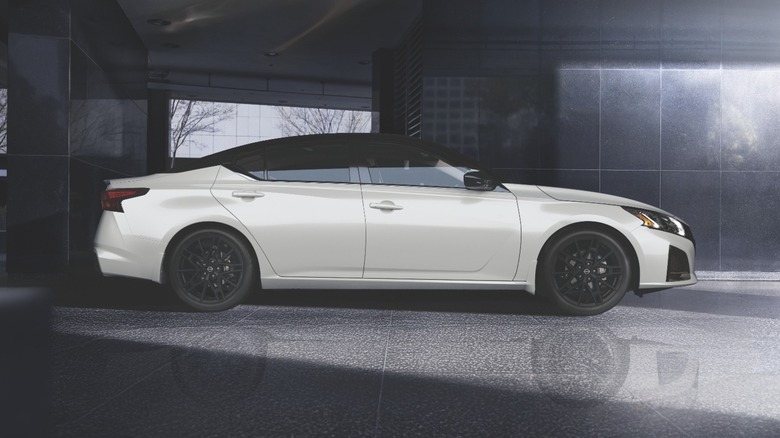
The affordable mid-size sedan segment isn't huge, and most of the remaining competitors do something to stand out. Both the Camry and the Hyundai Sonata Hybrid offer class-leading efficiency figures, while the Honda Accord isn't far behind on efficiency and is impressively comfortable. Then there's the Kia K5 GT, which is a solid option for driving fun. Meanwhile, the Nissan Altima is mostly notable for not doing much to stand out.
That's not necessarily a bad thing, but it makes it trickier to recommend the Altima over its rivals. That's without accounting for the assumptions that are frequently made about Altima drivers, none of which are positive. An investigation by The Autopian found that Altima drivers really were more likely to get into crashes than other drivers, leading to the Altima being more expensive to insure than other similarly sized cars.
At least the Altima's upfront costs are competitive compared to rivals like the Camry. A base-spec Altima starts from $28,825 (including a $1,245 destination fee), and adding all-wheel drive brings the total up to $30,325. That said, the Camry's significant efficiency advantage will offset the additional upfront cost over time. A new Altima hits 30 mpg combined, which is similar to the Kia K5, but without the sportier edge that the K5 GT brings.
Hyundai Elantra
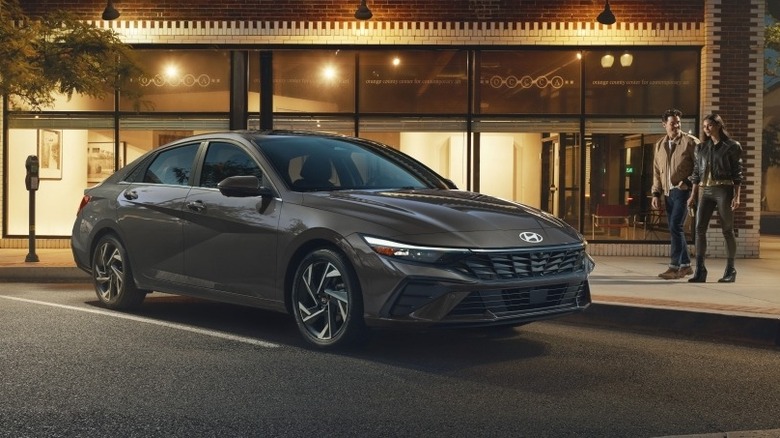
Drivers looking for something even more rewarding to drive than the Kia K5 GT could consider the Hyundai Elantra N, which is a great little sports sedan with a price tag that's equivalent to a well-specced Camry. However, if the Camry appeals mostly for its efficiency, the Elantra Hybrid shouldn't be overlooked. In base form, the Elantra Hybrid achieves 54 mpg combined according to the EPA, making it more efficient than the Toyota. All other Elantra Hybrid trims achieve 50 mpg.
The Elantra is the smaller sibling to the Sonata in Hyundai's sedan lineup, and it's also cheaper, with a starting price of $26,695 (including a $1,245 destination fee). The range-topping variant of the Sonata Hybrid Limited trim costs $31,045, which is only around $500 more than a bare-bones base Camry.
When we tested the Sonata Hybrid Limited in 2025, our reviewer found its value for money a particularly big selling point, with the level of equipment on offer being particularly noteworthy compared to its rivals. If you don't need the additional space the Camry offers, the Elantra Hybrid is a great budget-friendly alternative, both in upfront costs and at the gas pump.
Acura Integra
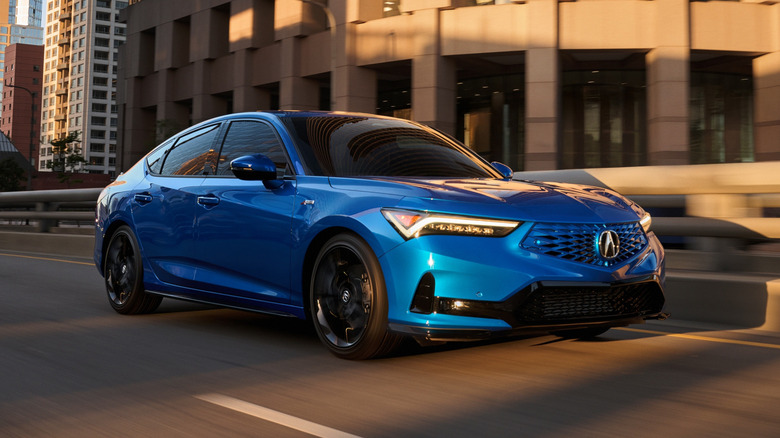
The top-spec Camry XSE comes equipped with plenty of niceties, but at around $37,000, it enters the same territory as entry-level cars from more prestigious Japanese brands. Lexus doesn't offer a sedan that's affordable enough to rival a Camry, Acura sells the Integra, which is much closer in price to the Toyota. It mixes sedan-like styling with hatchback practicality, has better badge appeal, and it will be more fun to drive too. Acura hasn't made any major changes for 2026, mostly because the Integra is already a strong seller in its segment.
That's partly down to its aforementioned pricing, which starts from $34,695 (including a $1,295 destination fee). For their money, buyers of the base variant get a 200-horsepower four-cylinder engine and front-wheel drive. No all-wheel drive option is available, although buyers are offered a six-speed manual transmission further up the trim range.
The Camry is a slightly roomier car both in the front and second rows, but thanks to its sloping liftback design, the Integra has more cargo space in the rear. The Integra isn't available as a hybrid, but its 32 mpg combined rating means that drivers looking to upgrade from older non-hybrid Camrys shouldn't find themselves spending more at the gas pump.
Toyota Corolla
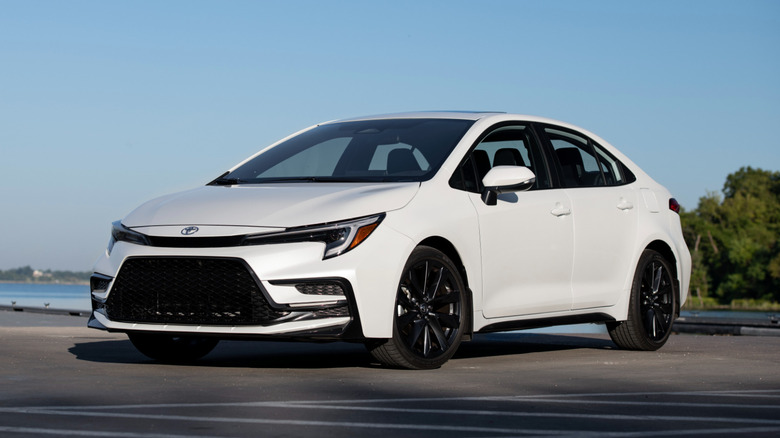
The Toyota Corolla doesn't promise to be anything it's not. It's cheap, it's reliable, and in hybrid form it's also wallet-pleasingly efficient. According to EPA figures, Corolla drivers can expect to see 50 mpg combined if they pick a front-wheel drive hybrid variant of the car, or 48 mpg if they opt for an all-wheel drive hybrid. Efficiency figures for the non-hybrid Corolla hover between 34 and 35 mpg.
Its upfront costs are eye-catchingly low too, with the base non-hybrid Corolla starting from $24,440 and the hybrid costing at least $26,270. The downsides compared to the Camry are fairly clear-cut: the Corolla is smaller and less powerful, and it isn't particularly pleasant to drive at highway speeds. The Base trim is also short on convenience features, as you'd expect for a car at its price point. The Camry still offers a better overall driving experience, but the Corolla makes better sense as an ultra-cheap runabout.
Kia K4
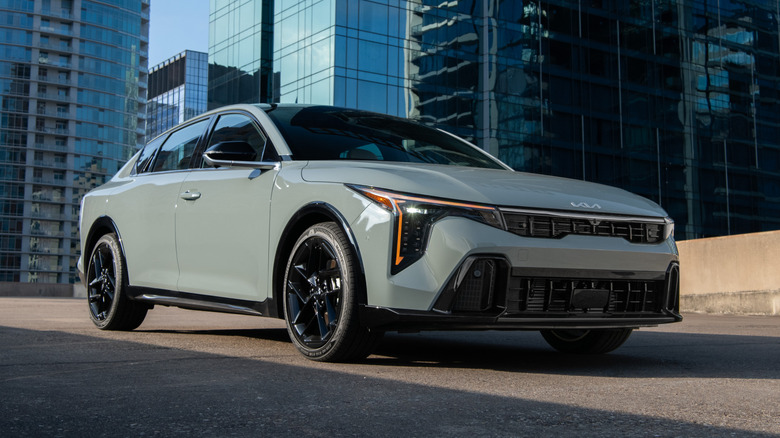
Slotting in below the K5 in Kia's sedan lineup is the K4, which starts from $23,535 (including a $1,245 destination fee). Viewed from the front, the K4 looks like a conventional sedan, but the rear has a distinctive raised roof line that slopes down to its trunk. As well as making the Kia look more visually interesting than other cheap cars, it also increases the space in the second row.
In our review of the 2025 Kia K4, we noted that its rear legroom was three inches more generous than the larger, pricier K5. Rear seat passengers in the K4 get 38 inches of legroom and 37.3 inches of headroom. That's the exact same amount of legroom that they'd get in the second row of a Camry, and only 0.3 inches less than the Camry's rear headroom.
An unusually roomy rear row and a low price might make the K4 sound like a bargain, but there are some compromises compared to the Camry. The Kia's base engine is significantly down on power, but the 190-horsepower engine in the K4 GT-Line comes close to matching the Camry's grunt. The K4 also can't match the Camry on efficiency, since it doesn't offer a hybrid powertrain, and there's no all-wheel drive option either. Drivers of the K4 should see combined fuel efficiency of up to 33 mpg, according to the EPA.
Subaru WRX
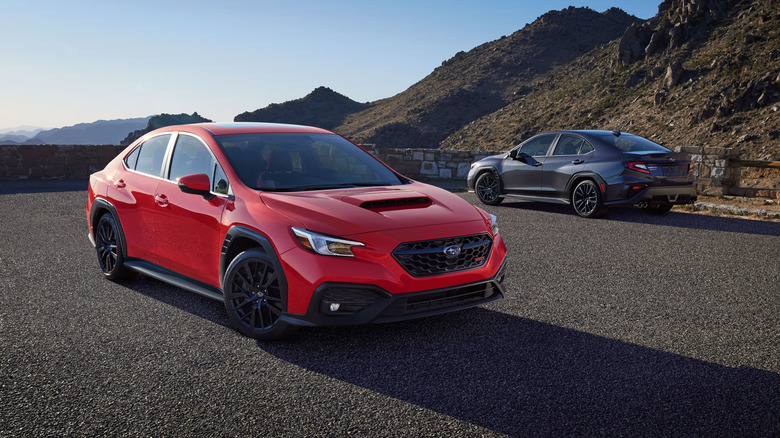
The Camry TRD was an anomaly in the nameplate's history, being a genuine sports sedan with a long list of trim-specific performance parts and a 301 horsepower V6 engine. It was a short-lived anomaly at that, being introduced for the 2020 model year and then being discontinued when the latest generation of the Camry arrived for the 2025 model year. It's not known whether a sportier version of the current Camry might arrive one day with GR badging, but for now, Camry TRD owners will have to look elsewhere when it's time to upgrade.
A good place to start looking is the Subaru dealership, since the brand still makes the WRX according to the same core formula as it has for decades. The 2026 WRX receives a 271 horsepower 2.4-liter engine as standard, and although going further up the trim range gradually increases the additional features on offer, it doesn't increase power. At the top of the range sits the WRX tS, which we thoroughly enjoyed testing in 2025.
However, the tS costs north of $45,000, making it far pricier than any Camry on offer in 2026. A more affordable alternative is the base-spec WRX Premium trim, which starts from $35,190 (including a $1,195 destination fee). It's safe to assume that nobody was buying either the Camry TRD or the WRX for its efficiency figures, but for comparison, the manual WRX returns 22 mpg combined, while the Toyota managed 25 mpg combined.
Toyota bZ
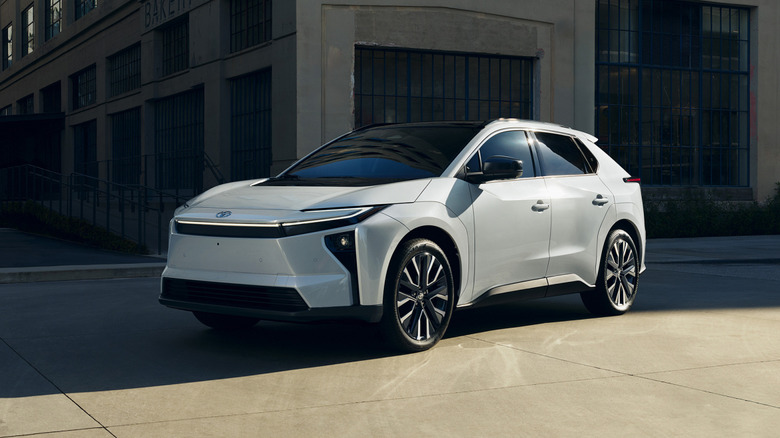
Although the Camry is one of the most efficient cars of its size, plenty of uncertainty remains about the direction of gas prices for the foreseeable future. An increasing number of American buyers are choosing hybrids like the Camry in response to that uncertainty, but a more radical step is to ditch gas altogether.
There are still plenty of drawbacks to owning an EV, particularly in areas of the country where fast charging networks are limited, but if you mostly drive short distances in urban areas, it's worth considering whether it's time to go electric. The 2026 Toyota bZ is the Japanese manufacturer's cheapest EV, and in its base form, it's no more expensive than a higher-spec Camry.
The entry-level bZ XLE starts from $36,495 (including a $1,595 destination fee), and comes with an estimated range of 236 miles. That's a relatively small figure for an EV in 2026, but it still should be sufficient for many drivers. For context, according to a 2023 AAA survey, the average American driver covers 29.1 miles in a day. Drivers who need to cover longer distances but still want more electrification could opt for a plug-in hybrid. Although Toyota doesn't currently offer a Camry plug-in hybrid, it does sell a PHEV version of the Prius.