

10 Phones From The 2010s That Define Smartphone History (But Aren't iPhone Or Android)
The smartphone market is essentially a duopoly these days, with Android and iPhone as the only two major camps available. Sure, there's a lot of variety in the Android space, but these phones all use the same basic operating system, for better or worse, and inherit many of the decisions that Google's engineers bake into the Android Open Source Project that underpins Android. But this wasn't always the case.
Smartphone buyers of the late 2000s and 2010s had a few more operating systems to choose from, including a range of Windows Phone devices and even the odd BlackBerry, Palm, or Symbian smartphone. Of course, the fact that you can't buy phones running on these operating systems anymore — the Windows-capable NexPhone doesn't count — says a lot about how well they did (or didn't do), but that doesn't change the fact that they still left a mark on smartphone history as we know it.
Whether it was massive, ahead-of-its-time camera sensors or the debut of a now-ubiquitous display technology, the 2010s were a truly exciting time for smartphones. And while Android and iPhones justifiably get the lion's share of retrospective attention, these alternatives show that there's a lot more to the history of smartphones than the big names we're likely all familiar with.
Nokia 808 PureView
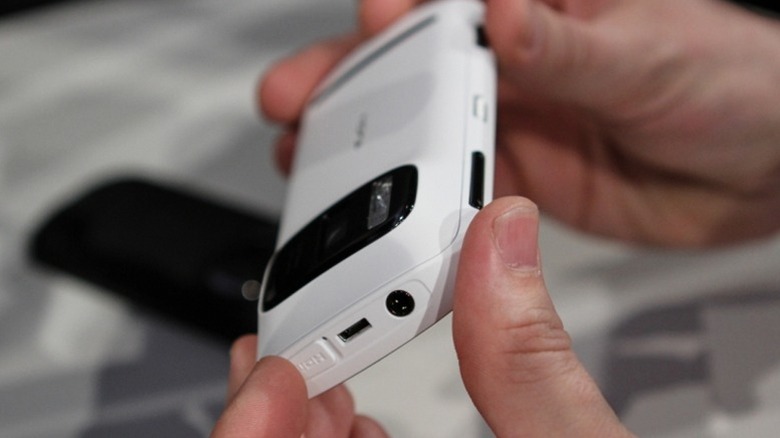
The notion that a higher-megapixel sensor automatically makes for better photos is definitely one of the many phone camera myths we would do well to stop believing, but that doesn't mean that megapixels are entirely meaningless, either. More pixels allow for more detail, and the undisputed megapixel king of the early 2010s smartphone era was the Nokia 808 PureView.
Let's set the scene first. It was February 2012; the iPhone 4S had an 8 MP sensor, as did Samsung's top-tier offering of the time, the Samsung Galaxy S II. Their successors, the iPhone 5 and Galaxy S III, would stick to that number as well. Eight megapixels was nothing to sneeze at, either: the year's best compact cameras mostly had 12 MP sensors, so these phones were competitive spec-wise. But Nokia wasn't content with competing: It wanted to demolish its rivals, and it did so by equipping the 808 PureView with a massive 41 MP sensor.
It would be easy to view that sensor as a gimmick, but that was far from the case. The phone took genuinely great photos, as evidenced by our review of the 808 PureView. Sure, Symbian wasn't a great OS, but it was all about the camera here. The Nokia even impressed dedicated camera reviewers such as DPReview's Barney Britton, who somewhat presciently noted that it "significantly narrows the gap between dedicated cameras and portable communications devices to the point where ultimate convergence seems all but inevitable." For most casual consumers, that convergence between cameras and phones has become a fact of life, and the Nokia 808 PureView blazed that path long before the usual suspects.
Samsung Wave S8500
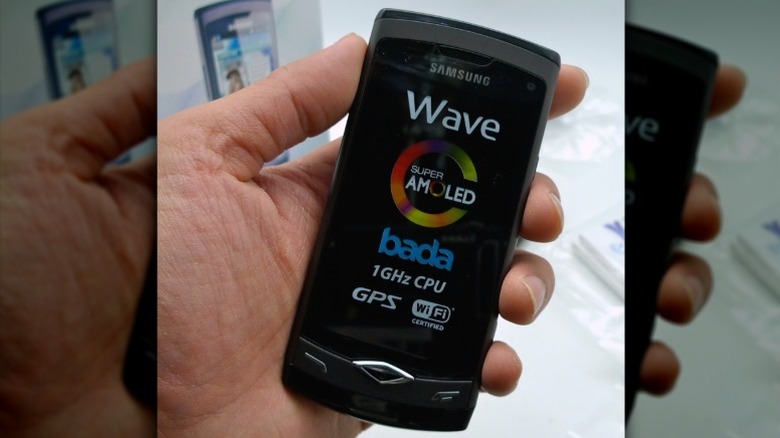
Super AMOLED displays are quite common now, with some variation of the display tech having featured on every iteration of Samsung's high-end Galaxy S smartphones since the original Galaxy S debuted in 2010. There was, however, a time when Super AMOLED was the new kid on the block. Despite the tech's association with the Galaxy S phones, though, the first Super AMOLED phone wasn't one of Samsung's Android flagships. Instead, it was the Wave S8500, which came to market a couple of months before the Galaxy S.
The S8500 was, as our 2012 review pointed out, something of a halfway point between a smartphone and a simpler feature phone. It ran Samsung's in-house Bada OS and combined Android-style features — including widgets and a notification bar — with a TouchWiz-themed UI and an attempt at feature phone-style simplicity. Using an in-house OS came with downsides, of course, such as limited app availability, and it was at such a disadvantage compared to the then-nascent Android that Samsung quickly dropped it in favor of Tizen in 2012.
But while the OS was a dead end, the display tech was undoubtedly a sign of things to come. We thought the Wave's Super AMOLED display was a significant improvement over standard AMOLED screens, and that strength carried over when the Galaxy S launched later in 2010 — crucially, with an OS to back the screen's strengths up. And if you weren't old enough to be paying attention in 2010, take it from us: Super AMOLED was a genuine step up for (Android) smartphones, and the humble Wave S8500 was the first to show it off.
Amazon Fire Phone
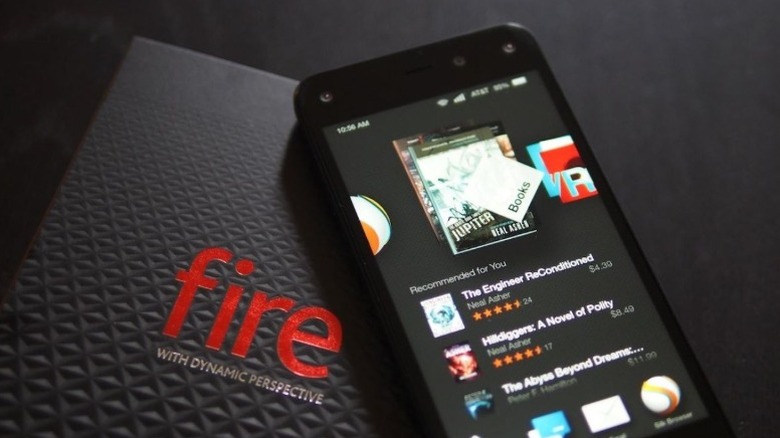
Yes, technically the Fire Phone was an Android phone, as Amazon's Fire OS was a fork of Android. However, the Fire Phone also wasn't an Android phone in the sense that most casual users would recognize. It didn't have access to the Google Play Store and other Google services, for example, and those are arguably the defining aspects of the Android experience for many.
But let's not get bogged down and turn to the Fire Phone itself, which was a complete flop and one of the most infamous smartphone failures of the 2010s. The Fire Phone launched in 2014 at $199 or $299 on a two-year AT&T contract — or $649 and $749 without — for the 32 and 64GB versions, respectively. It had a list of attractive features, including free unlimited Amazon Cloud photo storage and a faux-3D effect built on eye-tracking tech that it called Dynamic Perspective. Of course, the main point of the Fire Phone was to keep users in the Amazon ecosystem, which it did partly through a product-recognizing assistant called Firefly.
Was it a bad phone? No, not entirely; our 2014 review of the Fire Phone thought it was a decent, if unspectacular device, but it clearly was not something that customers were interested in. Just over a month after launching, Amazon slashed the Fire Phone's price down to 99 cents, and it later discontinued the phone in 2015. The retail giant's first (and, as of mid-2026, only) foray into smartphones was a complete flop, and one that demonstrated how muscling into a market increasingly dominated by iOS and mainstream Android was no small task.
Nokia Lumia 520
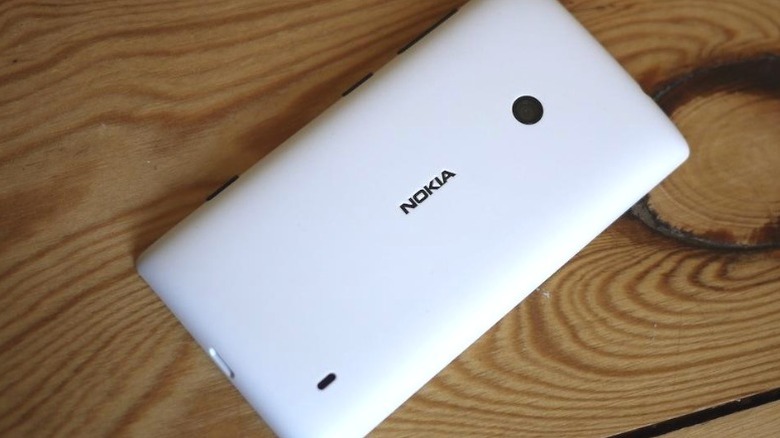
Flagship smartphones usually get all the attention, but it's often the more affordable ones that end up selling well. The 2010s was a great time for these cheap smartphones, with Android offerings like the excellent Moto G impressing reviewers with solid hardware and great pricing. But cheap Android phones didn't have the entry-level market all to their own.
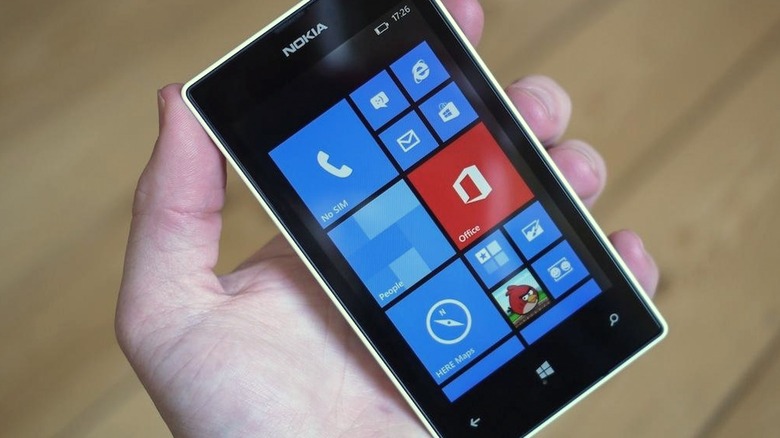
Microsoft's Windows Phone effort also had a budget-oriented phone in the Nokia Lumia 520, and it probably ranks as one of the most iconic Windows phones to ever make its way to market. The Lumia 520 debuted in 2013 with a 480 x 800 display, a 1GHz dual-core processor, 8GB of storage, and 512MB of RAM, with Windows Phone 8 out of the box. These specs weren't impressive — high-end Android phones were starting to run 1080p displays, for example — but the 520 had an ace up its sleeve: its price.
The Lumia 520 cost just $180 in the U.S., and that keen pricing propelled this cheap, cheerful, and very colorful phone to major success — helped, of course, by the fact that it was a decent phone, too, as our 2013 review points out. By 2014, there were reportedly over 12 million Lumia 520s (and T-Mobile-exclusive Lumia 521s) in use globally, and it retained its crown as the world's most popular Windows Phone device into 2016. Beyond the fact that it helped prove that budget phones were commercially viable, the Lumia 520's sales success means that it was likely the defining Windows Phone 8 experience for many users, and that earns it a place on this list.
Nokia Lumia 1520
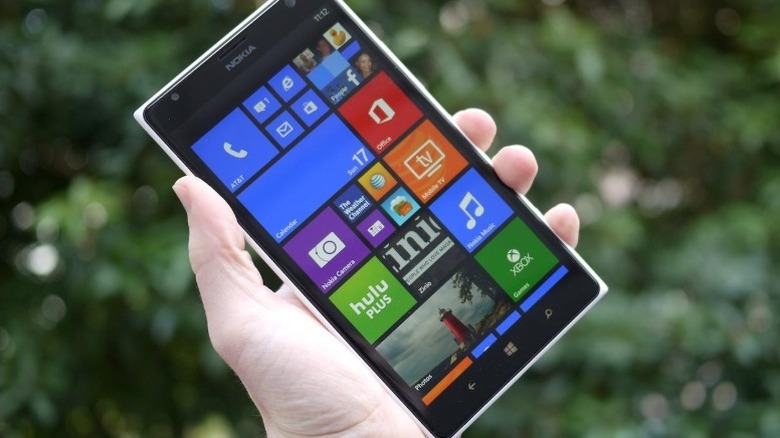
Ah, the phablet. Those of you who were old enough to have been paying attention to smartphones in the mid-2010s will likely recall the term with some fondness. For the uninitiated, though, "phablet" used to refer to phones that were considered halfway between phones and tablets, usually sporting 5.5- to 6-inch displays. Yes, you read that right: 5.5 inches was large back then, quaint as that may seem.
There were quite a few devices leading the charge for larger and larger displays, including the Samsung Galaxy Note 4 and iPhone 6 Plus, but Windows Phone also had a phablet-sized competitor that tried to go toe-to-toe with these behemoths: the Nokia Lumia 1520. The 1520 even bested both of those, with a 6-inch display that was larger than the 5.7 and 5.5 inches of the Samsung and Apple, respectively. While the Lumia 1520 outclassed these big-name rivals in terms of raw screen size, our review from 2013 did feel that Nokia hadn't quite taken advantage of the extra real estate.
Unlike the Samsung, the Lumia 1520 didn't have any stylus input, nor did it offer a drastically different user experience compared to smaller Windows phones. It did, however, retain the strengths of Nokia's contemporary Windows phones, including great cameras, a solid user interface, and the company's signature industrial design. It also did a good job for what it was, offering a compelling mix of phone and tablet that impressed the converted but, somewhat predictably, missed the mark for those who weren't.
BlackBerry Torch 9850
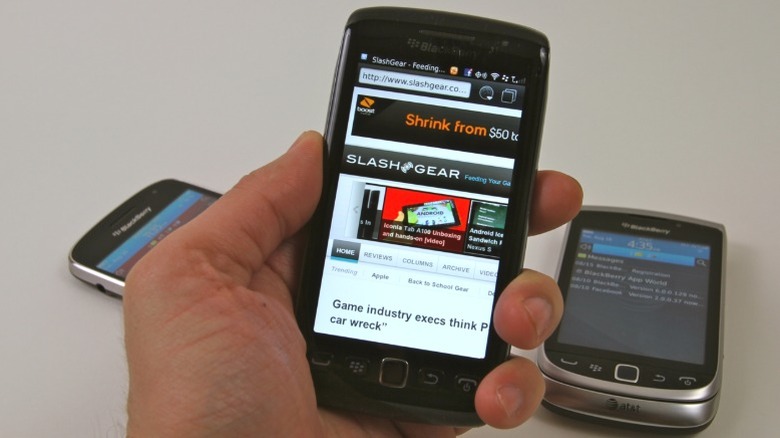
If there's one thing that cellphone users of the 2000s and 2010s associated with BlackBerry, it was physical keyboards. Many of the most iconic BlackBerry phones of all time were defined by their QWERTY keyboards in an age where many users were using phones with predictive T9 input. But the launch of the iPhone in 2007 heralded a touchscreen future, quickly rendering the BlackBerry phones' physical keyboards somewhat old-fashioned, and even BlackBerry had to adapt.
BlackBerry first tried with the Storm and its SurePress screen, which was a hard-to-use clicky touchscreen that played a major role in the phone flopping badly. It quickly abandoned the tech with the Torch 9800 from 2010, which used a conventional capacitive touchscreen. But it also combined that 360 x 480, 3.2-inch touch-capable display with a slide-out QWERTY keyboard, retaining a link with the past. A year later, though, Research in Motion, the Canadian company behind BlackBerry phones, made a decisive break with that heritage by unveiling the BlackBerry Torch 9850.
It was a proper all-touch device, with a 3.7-inch, 480 x 800 display that took the Storm's keyboardless design but paired it with a proper touchscreen of the type we'd recognize today. The move to a more contemporary design was helped by the then-new BlackBerry 7, which our 2012 review thought was particularly suited to the Torch 9850's touch-only ethos. While BlackBerry would never fully abandon physical QWERTY keyboards, we think the Torch 9850 stands as the moment when BlackBerry essentially admitted that touchscreens were the future, for better or worse.
Palm Pre 2
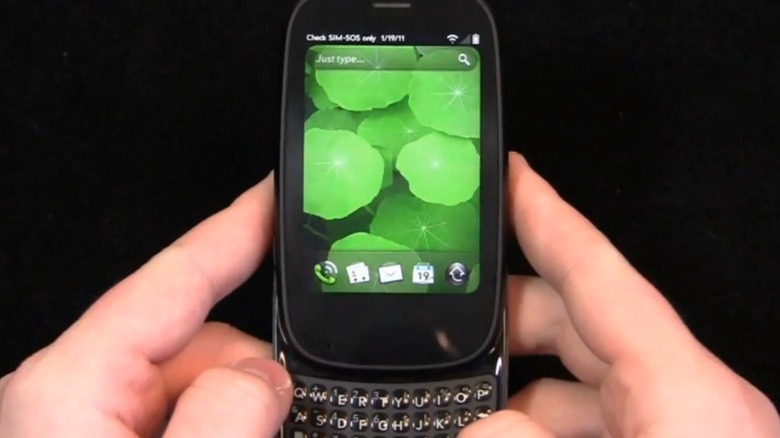
If you think of webOS now, you probably think of the highly regarded smart TV OS powering LG's smart TVs. But webOS' roots lie not with LG, but with Palm, a company likely best remembered for manufacturing those oh-so-millennial gadgets known as PDAs. And, as unlikely as it seems, webOS started as a smartphone operating system on Palm devices like the Pre and its successor, the Pre 2.
The Pre did relatively well for what it was (as in, not an iPhone) when it launched as a Sprint exclusive in 2009, with reports indicating that between 50,000 and 100,000 Pres sold in its first two days of availability. Much of the hype was built on what webOS promised to buyers, including advanced (for the time) multitasking and a sleek notification system, married to hardware decisions like a physical keyboard — all strengths that carried over to 2010's Pre 2.
Unfortunately, while the Pre 2 brought software improvements like a new universal search, it also inherited some of its predecessor's weaknesses. While the OS was great, some of the Pre 2's hardware was dated. For one, it had a 320 x 480 screen when phones like the HTC Evo 4G and the iPhone 4 were rocking 480 x 800 and 640 x 960 displays, respectively. It also lacked the then-essential microSD card slot and didn't support the latest wireless standards. It was still a decent phone, as our O2 Palm Pre Review and our Sprint Palm Pre Reviews suggested, but it (and its OS) just couldn't compete. But while Palm's webOS phones are long gone, that brief flash of excitement they offered is still worth remembering all the same.
Nokia Lumia 920
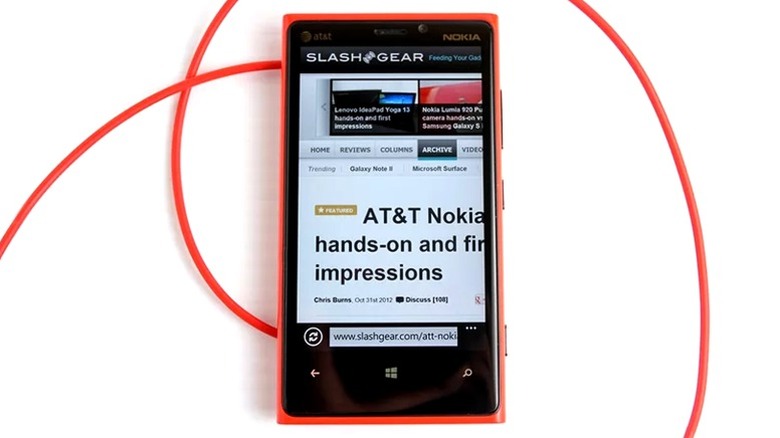
Windows Phone is never going to be seen in the same light as Android or iOS, and, to some extent, that's entirely justifiable. Issues such as a poor app ecosystem and a misguided focus on fighting Apple — instead of Android — meant that it never quite gained enough traction to survive, forcing Microsoft to pull the plug on the mobile OS in 2017.
But while Microsoft made many missteps with its OS, Nokia played its part with a series of great Windows Phone devices in the 2010s. The Lumia 520 was the budget icon and best-seller, but the Lumia 920 was likely the definitive Windows Phone 8 device in enthusiasts' eyes. The 920 was undeniably chunky at 6.5 ounces, but it had a lot going for it.
As our AT&T Nokia Lumia 920 Review suggested, it was well-built, fun, and had great hardware, including a top-notch 4.5-inch display. Running at 768 x 1,280, the Lumia 920's screen was impressive, and sharper than those of the iPhone 5 and the Nexus 4.
We also really liked Windows Phone 8, and we weren't the only ones. Tweaks to core features like the Start screen, new apps such as an NFC-capable wallet, better performance, and support for HD screens, amongst others, all made it the best version of Windows Phone to date. That didn't help much in the long run, admittedly, but we can at least say that the OS' failure wasn't down to the Lumia 920.
HTC One M8 for Windows
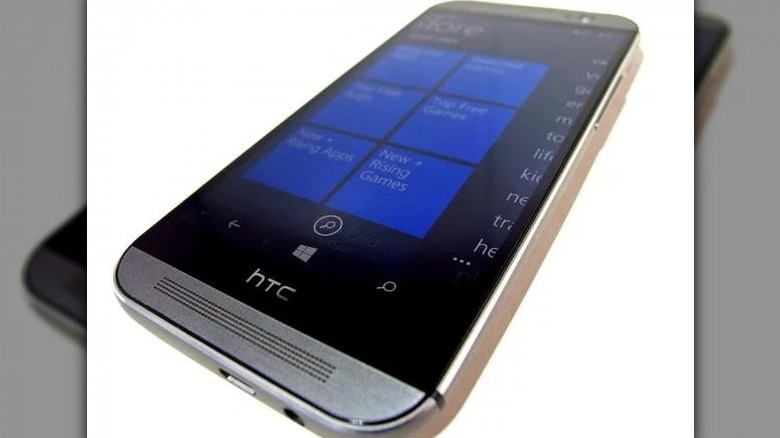
HTC may be best known these days for making VR headsets like the Vive XR Elite, but the company spent most of the 2000s and early 2010s making Android smartphones, including the Nexus One that kickstarted Google's now-discontinued Nexus series of smartphones. HTC released more than just Android phones, though; the Taiwanese company also made a handful of Windows Phone devices, and the One M8 for Windows was one of the best.
Okay, we're cheating a bit here, as HTC also offered buyers an Android version of the One M8. But that doesn't take away from the fact that the One M8 was probably one of the best phones to ever run Windows Phone 8.1. It retained all of the things that made the Android One M8 special, including a well-built aluminum unibody design and great hardware (including a solid camera and a 1080p screen), just running Windows instead of Android. A unibody may seem old hat now, but it's worth remembering that Samsung's Galaxy S phones still had plastic bodies back then. The One M8 was sleek, no matter the OS.
The One M8 for Windows combined Microsoft's underdog OS with HTC's already-excellent One M8, creating what we called "one of the best Windows Phones to date" in our HTC One M8 for Windows 2014 review. It wasn't necessarily quite as good as its Android counterpart, but that wasn't for lack of trying on HTC's part.
The phone was good enough to hint at the possibility of Windows Phone 8.1 becoming a genuinely competitive OS. Time, of course, has proven those hopes false.
Nokia Lumia 1020
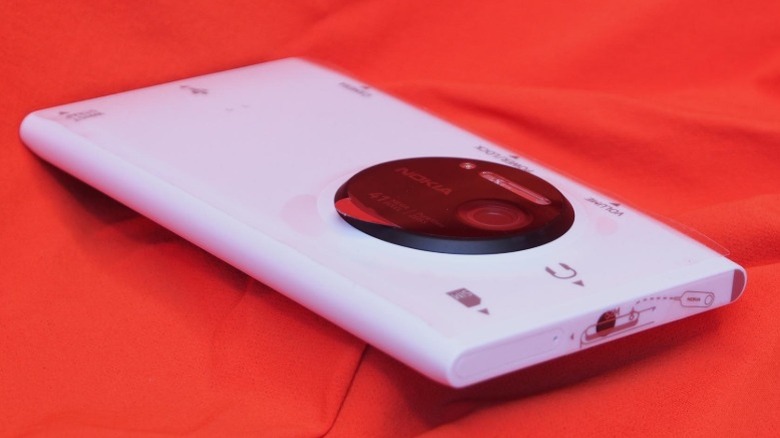
The Nokia PureView 808 was as good as it got, (as good as it had gotten at the time,) as far as smartphone cameras were concerned, but it was saddled with a dead-in-the-water OS that trailed far behind iOS and Android. And thus, it was not a big surprise that Nokia put a Windows Phone 8 spin on the PureView 808 concept with the Lumia 1020, which it unveiled in 2013.
The Lumia 1020 essentially married what was great about the PureView 808 with hardware and software that were at least competitive with what Android and iPhone had to offer. Thus, you got a 768 x 1,280 display with 2GB of RAM, a 1.5 GHz dual-core processor, 32GB of storage, and all the improvements Microsoft brought to Windows Phone 8 — all backing up an even better take on the 808's camera.
While the on-paper megapixel spec was the same (41 MP), the Lumia 1020 had a redesigned sensor that used backside illumination, a tech that improved light sensitivity and lowered noise. It also had optical image stabilization, punchier image processing, and a feature that allowed users to use the entire sensor even when shooting at a social-media-friendly (and oversampled) 5 megapixels, letting them recompose the image as necessary.
The Lumia 1020 impressed us a lot back in 2013, combining a much better overall user experience with photography chops that outdid even its impressive predecessor. The 1020's camera was so good, really, that it took until the early 2020s for phone cameras to definitively outdo it — and even then, not by as significant a margin as one might expect.