

12 Of The Best Unlimited Phone Plans Available In 2026

We may receive a commission on purchases made from links.
Choosing a cell phone carrier is tougher than it sounds. Each one has myriad sales and promotions, various plans at multiple price points, and other factoids you should probably know before you switch from your current one. It's enough that you could spend hours looking around to find one that you want, with all of the features and limitations that make you comfortable. As such, determining the best phone carrier can be quite difficult, especially when there are so many metrics to consider, like price, speed, customer satisfaction, coverage, and more.
For many, a good place to start is with an unlimited phone plan. It gives people the freedom to use their cell phones however they want without incurring any overage charges. The big three carriers are T-Mobile, Verizon, and AT&T, but there are also dozens of mobile virtual network operators (MVNOs), which lease network capacity from the big three and sell it in the form of phone plans, without owning any infrastructure of their own. These are often among the cheapest phone plans available.
If you've been wondering what's out there in terms of unlimited phone plans, we have you covered.
Verizon - myPlan Unlimited Plus
Verizon is one of the biggest carriers in the U.S. and has been since the company was formed in 2000. Once upon a time, Verizon was known as one of the stingiest carriers when it came to unlimited data plans, but has since come around. In fact, Verizon not only came around, but now kind of leads the pack, as it doesn't actively throttle data connections, unless you seriously misuse it. We even carefully read the small print, and while Verizon throttles mobile hotspot speeds and international data usage, regular data usage remains unthrottled and unlimited, which is impressive.
For unlimited data, Verizon's myPlan Unlimited Plus is arguably the best way to go. The plan includes unthrottled, unlimited data along with unlimited talk and text. In addition, users get 30 gigabytes of mobile hotspot data (and then unlimited at reduced speeds) and a three-year price lock guarantee. The plan costs $70 for a single person, $130 for two people, and $160 for four people, which are all fairly reasonable even if they're on the pricier side. There is a slightly more expensive plan, the Unlimited Ultimate, but the extra features aren't really worth the extra price unless you routinely travel internationally.
T-Mobile - Experience More
T-Mobile plays with its plans quite a bit, and they've undergone several renames and plan feature shakeups in the last half a decade. Currently, the carrier has four major plans, including the Essentials Plan, a slightly cheaper Essentials Saver plan that has fewer new phone promotions. On the top half is the Experience More and Experience Beyond plans, which include a lot more bells and whistles than their cheaper counterparts. The Essentials plans have 50 gigabytes of "premium" data, and then speeds throttle after that. The Experience plans have unlimited premium data.
For this list, the Experience More plan is probably the best mix of value of features. You get the completely unlimited data, 60 gigabytes of hotspot data (unlimited, but throttled after that), a five-year price guarantee, Netflix Standard with Ads, a discount on Apple TV, and some other stuff. It starts at $90 per month for one line and ranges up to $170 per month for four lines. That's pretty pricy overall, but there's such a big gap in benefits from Essentials to Experience More that bumping up is mostly worth it. You also get access to the T-Satellite network, powered by Starlink, and Experience More is the cheapest plan with that feature.
AT&T - Extra 2.0
AT&T has also jumped on the unlimited train, offering three plans that grant you some level of unlimited data. They include the AT&T Value 2.0, Extra 2.0, and Premium 2.0. If you're looking for truly unlimited data, the Premium plan is the way to go. It offers completely unlimited talk, text, and data, and AT&T literally says on its website that the speeds "can't slow down based on how much you use." However, that is also the carrier's most expensive plan at $90 for a single line and $220 for four lines.
We believe the AT&T Extra 2.0 plan is a lot more reasonable at $70 for a single line and $160 per month for four lines. On that plan, you get 100 gigabytes of high-speed data (per line) and then unlimited data at a throttled rate, and AT&T says it only throttles when the network is congested. You also get 50 gigabytes of hotspot data (unlimited but throttled 50 gigabytes) and AT&T's ActiveArmor security system that blocks spam calls. For a single line, the $20 jump to Premium 2.0 may not be so bad, but for family plans, you can save $720 per year by stepping down one tier, and 100GB is hard to hit anyway.
Google Fi - Unlimited Standard

Google Fi is an MVNO that uses T-Mobile's network in the U.S. and then has other partners when traveling out of the country. It's one of the best carriers for travelers who frequently leave the U.S. and its affordability. It has four total plans, including the Flexible, Unlimited Essentials, Unlimited Standard, and Unlimited Premium plans. The biggest difference between them is how much data is available, with the Flexible plan letting people pay $10 per gigabyte of data usage, and then each plan steps up to 30GB, 50GB, and 100GB, respectively. All the plans with high-speed data included give you unlimited data, but it does throttle after you hit your allotment.
The most reasonable plan here is the Unlimited Standard. You get 50GB of data per line, which should be plenty for most folks with room to spare for especially heavy months. It costs $50 for one line and $100 for four lines, making it an exceptional value for family plans especially. Each line also gets 25GB of mobile hotspot tethering, and unlimited data afterward at a reduced rate. There isn't much in the way of plan perks unless you step up to the Unlimited Premium, which includes all of those fancy international features we mentioned earlier.
Metro by T-Mobile - The $60 Plan

Metro by T-Mobile (formerly MetroPCS) is an interesting MVNO because it's owned and operated by T-Mobile, which means T-Mobile owns and operates one of its own competitors. Predictably, Metro by T-Mobile runs on T-Mobile's network and focuses on budget-friendly plans. There are three plans to choose from, none of which have any fancy names. For a single line, $40 per month gets you unlimited everything with a 35GB data cap for high-speed data. If you step up to $50, you get 8GB of hotspot data and 50GB of data before being throttled. The top plan is $60 per month and includes 70GB of unthrottled data and 25GB of hotspot data.
In this case, we recommend the top plan. That 70GB data allotment is hard to hit, and you still get unlimited data afterward. Plus, you get a 100GB Google One membership that boosts Google Drive storage a lot, and the account holder gets free Amazon Prime, which costs $14.99 per month as of this writing. It offers a lot of perks and plenty of data. All of Metro by T-Mobile's plans get T-Mobile Tuesday promotions, so it's basically like being on T-Mobile anyway. The plan is $60 for a single line and $140 for four lines, which is less than T-Mobile's offerings.
Mint Mobile - Unlimited Plan

Mint Mobile is best known in the public lexicon as the mobile carrier fronted by Ryan Reynolds, who actually owned the carrier before selling it to T-Mobile for $1.35 billion in 2024. In any case, Mint Mobile is known for its exceptionally cheap plans and interesting billing methods. Customers can pay in three-month intervals with discounted rates available for those who pay for a whole year up front. Each plan is identical, with the only difference being how much data you get. It ranges from 5GB per month to unlimited, and prices range from $15 per line to $30 per line per month.
Since this list is about unlimited data plans, Mint Mobile's Unlimited plan is the only option if you want unlimited data. It costs $30 per month, and since you have to pay in bulk, you can get that rate if you buy three months ($90) or a whole year ($360) up front. The data appears to be entirely unlimited, but the carrier runs on T-Mobile's network and does say in the fine print that data will be deprioritized over actual T-Mobile customers when the network is congested. That's the drawback of the plan being so cheap.
Visible by Verizon - Visible+

Visible by Verizon is a lot like MetroPCS by T-Mobile. Verizon owns and operates this MVNO, and this is where the carrier houses its least expensive plans. The thing is, the plans are actually pretty solid, so if you want Verizon's coverage, it might be worth checking out Visible first. There are three unlimited data plans to choose from, including the Visible Plan ($20 per month), Visible+ ($30 per month), and Visible+ Pro ($40 per month). All three of these come with unlimited talk, text, and data with no caps on throttling. However, Visible customers are deprioritized over Verizon customers when the network is congested, so they can expect to see slower speeds in those instances.
For this list, we think the Visible+ plan is the best mix of value and features. You get unlimited mobile hotspot at twice the data rate as the regular Visible plan, along with better international support and $15 off home Internet per month if you bundle with Visible's home Internet. The only difference between the Visible+ and Pro plans is the inclusion of a data line for smartwatches, which you can add to the Visible+ plan for the same price.
Xfinity Mobile - Premium Unlimited
Xfinity Mobile is an MVNO that is tied to Xfinity, the Internet service provider. The idea is pretty simple. You can get your Internet and smartphone service in one place, and doing so gives you a small discount compared to what you'd find in the wild. To get Xfinity Mobile, you have to be an Xfinity customer already. Once there, you have two plan options to choose from, the Unlimited and Premium Unlimited for $40 per month and $50 per month, respectively. Four lines on Premium Limited run $100 per month, which is a good value compared to many competitors.
That's the plan we recommend. You get unlimited talk, text, and data, with throttling after 100GB. That should be plenty of high-speed data and you still get unlimited afterward for no charge. The plan also includes two yearly upgrades, a spam call guard, support for international travel, and 30GB of mobile hotspot. It uses Verizon's network, so speeds are usually pretty decent. In terms of raw usage, it's about even with AT&T's Extra 2.0 plan, but costs $60 less per month when you get four lines. The individual plan is also reasonably priced, so it's worth checking out for existing Xfinity Customers.
Boost Mobile - Unlimited Plan
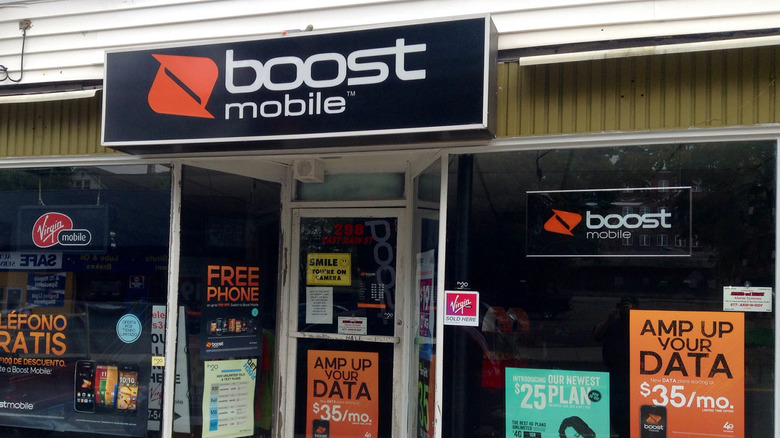
Boost Mobile is an MNVO that has been around for quite some time and is currently owned by Dish Network (which is also its own mobile carrier). It's also one of the few MVNOs that has physical locations, which gives it a leg up for customers who want to be able to walk into a store to get new phones or ask questions. Boost Mobile has three plans to work with, including Unlimited, Unlimited+, and Unlimited Premium, all of which work on AT&T's network. They are largely the same except for a few extra features here and there, but the Unlimited plan is easily one of the best single-line budget plans on the list, so we're going with that one.
The Unlimited plan includes unlimited talk, text, and up to 30 GB of data. It's unlimited after that, but at a throttled rate during times of high network congestion. That plan costs $25 per month for a single line, making it an excellent value. The next-cheapest plan is Unlimited+, at twice the price: $50 per month. It comes with some extra features, like Hotspot and phone discounts, but only adds another 10GB of mobile data per month. For value, the $25 Unlimited plan is the best value.
Spectrum Mobile - Unlimited Plus
Spectrum is doing something very similar to Infinity Mobile where you can bundle your Internet and mobile phone services under one roof. It runs on Verizon's network, which is good enough, and also like Infinity, you need to be a Spectrum Internet customer to get the mobile plans. Once you're in the door, there are two plans to choose from. They are the Unlimited and Unlimited Plus plans, which are largely the same. They both include unlimited talk, text, and data (throttled after 30GB), and both of them allow you to connect to Spectrum Wi-Fi access points to bypass needing a cell signal.
The only real difference between the two is that the Unlimited Plus plan lets you upgrade your phone up to four times a year and includes international roaming for an extra $10 per month per line. That's the plan to go with if you're a frequent traveler or want frequent device upgrades. Those who don't do that can get along fine with the $30 Unlimited plan, which saves you $10 per line per month. The big win is that you can also get discounts on home Internet service if you bundle the two, so check into that as well.
Tello - Unlimited Plan

Tello is a smaller MVNO that's only been around for about a decade. It was founded in 2016 and is yet another MVNO that uses T-Mobile's network. It specializes in budget phone plans and is one of the few carriers that offers a data-only phone plans. The customization is the real draw here, giving you the ability to have a data-only plan or even a plan with no data and unlimited talk minutes for only $8 per month. As such, Tello has loads of plans to choose from since you can kind of pick the amount of data and minutes you want.
For this list, we recommend the unlimited minutes and data option. It costs $25 per month per line. The only other feature it comes with is 10GB of mobile hotspot data, so it's nice and simple. Tello's unlimited data throttles after 50GB of use and, of course, there's unlimited texting as well. This is an excellent budget plan if your usage is simple, though, like most T-Mobile MVNOs, you may experience slower data speeds in congested areas as T-Mobile reserves that capacity for its main customers. All plans also come with free international calls to 60 countries.
Noble Mobile - No Bull Plan
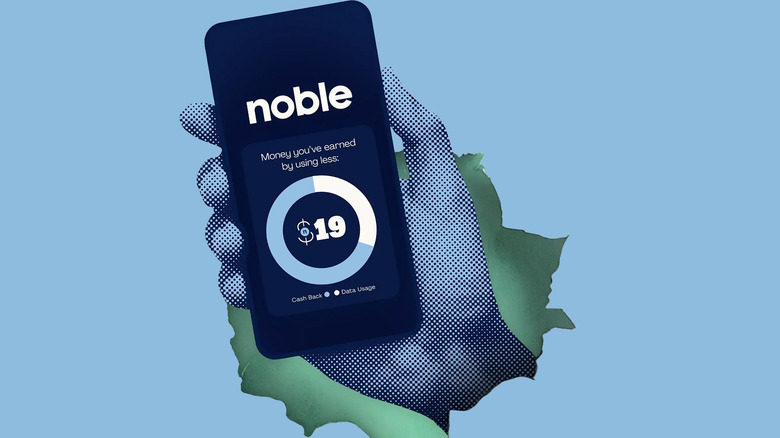
Noble Mobile is arguably the most interesting MVNO on the list. Their whole shtick is that they have one plan that starts at $50 per month for unlimited everything with no throttling on T-Mobile's network. That plan is called the No Bull plan, a clever pun on the carrier's name. Here's how it works. It starts at $50 per month that assumes that you use 20GB or more per month. In the event that you use less than 20GB per month, Noble Mobile will reduce the price of your monthly bill.
There's a calculator on the brand's website, but essentially, if you only use, say, 12GB of data, your bill would be $42 instead of $50. You can save up to $19 per month on a plan by using less than 4GB of data, resulting in a bill that's just $31 per month. This method actively rewards people who stay on Wi-Fi more often or use less data, while still granting unlimited, unthrottled data at a flat rate for those who need more. The only downside is that Noble Mobile seems to offer only single-line subscriptions, so family plans will need to look elsewhere, as you won't get any discounts for having more lines.
How we chose these plans
Wireless plans have changed a lot over the last decade, but most have hit the same spot. Nearly all wireless plans we looked at have a "premium data" allotment with unlimited, albeit throttled, data after hitting that allotment. Knowing that, it's actually pretty tough to run into a plan without unlimited data to some extent. There are only a few carriers that do truly unlimited data, like Verizon, Noble Mobile, and T-Mobile. If we stuck to only those carriers, the list would've been only three or four carriers long.
For this list, every plan has unlimited data to some extent. Some are truly unlimited, like Verizon and T-Mobile, while others give you premium data allotments and then unlimited data at reduced speeds later. The actual plan choices were subjectively selected based on value and features, with higher-priced plans often excluded because the extra features are too niche or not worth the price increase. The plans above are not ranked, as the "best" in this case is highly subjective and depends on individual needs, but most people should be able to find something they like among the plans listed.