

These 16 Awesome Cars Are Turning 20 Years Old In 2026
The 2000s were a period of change for the automotive industry, to put things lightly. Most manufacturers were making big changes to their lineups, whether that was by discontinuing the cars that led them through the 1990s or starting new generations that better aligned with shifting goalposts and market demands. A lot of these changes came in the middle of the decade, which is somehow already 20 years ago.
While tightening emissions regulations had a massive impact on the cars that manufacturers could build, the 2006 model year still gave us plenty of cars that put the driving experience at the very forefront, many of which laid the foundations for cars that are still in the industry's various lineups today. Here's a closer look at 16 of the coolest 20-year-old cars from the 2006 model year that remind us of how special the industry still was amidst plenty of rules and restrictions that were beginning to creep in.
Pagani Zonda Roadster F
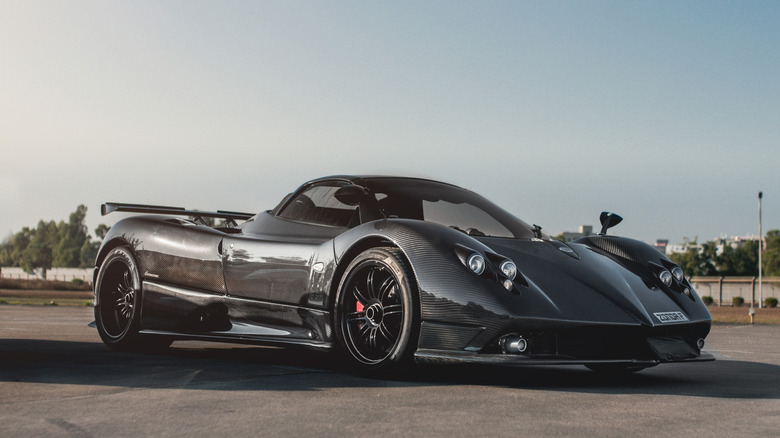
Italy has its fair share of exclusive automotive brands, but none are on the same level as Pagani. Nameplates such as the Utopia and the final editions of the Huayra are currently keeping the brand at the forefront of the hypercar segment, offering ridiculous levels of performance along with luxury that very few can compete with. However, while these cars are special, the car that put the brand on the map is one of the most legendary Italian cars of all time: the Zonda.
Introduced in 1999, Pagani's production method is different from other brands, as it keeps nameplates alive for long periods and offers unique variants over the years. In 2006, it was the Zonda Roadster F that became the pinnacle Italian hypercar, once again using an AMG-sourced 7.3L V12 producing 650 horsepower. Only 25 examples of the Zonda Roadster F were produced, making it one of the rarest models in the Zonda lineup.
Mazda MX-5 NC
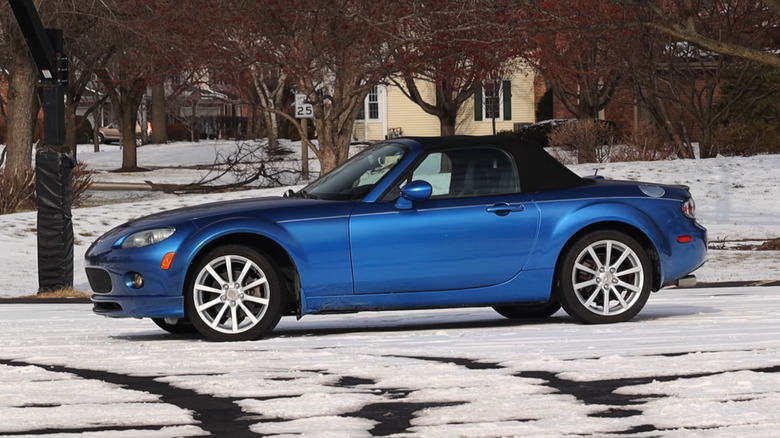
When it comes to JDMs that have stood the test of time best, the Mazda MX-5 may well be at the top of the pile. The Japanese legend was first made available in the U.S. for the 1990 model year, with its small, lightweight philosophy still at the core of the latest models. With 36 years on the market, the MX-5 has seen its fair share of updates, with the introduction of the NC generation being one of the most significant.
The core elements were retained from the previous generations, but the MX-5 NC aimed to refine the overall driving dynamics in as many areas as possible. It offers more power from a 2.0L four-cylinder engine, producing 170 horsepower as standard. Mazda also aimed for a 50:50 weight distribution to maintain stability through higher-speed corners. Higher trims got a limited-slip differential and stability control to further enhance the agility of the sports car. According to KBB, you can pick up a 2006 MX-5 for as low as $5,950 on average, which is not bad at all if you're looking for an analog driving experience on a budget.
Ferrari 599
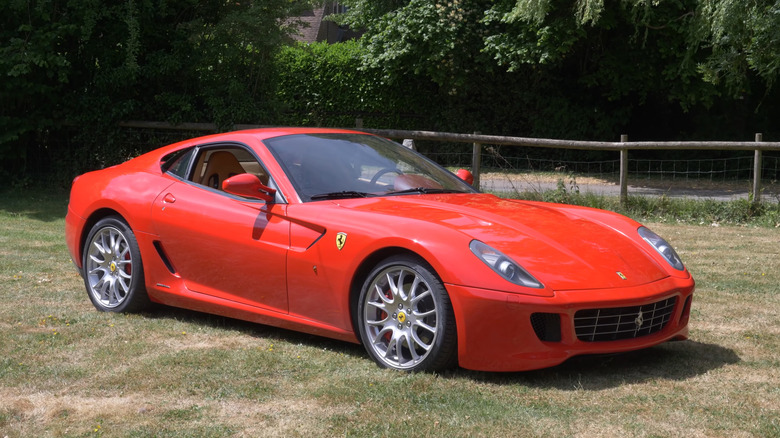
Back to the Italian giants, the Ferrari badge has almost become as recognizable as the nation's flag itself. Producing road cars since the late 1940s, Ferrari has long been a champion of raw performance and luxury, albeit more accessible than the likes of Pagani. With much of the brand's roots deep in the grand touring scene, Ferrari's GT cars have always been some of the best you can buy. In 2006, the 599 GTB was released as the 575M's replacement, which subsequently laid the foundations for modern cars like the 812 Superfast and the 12Cilindri.
One of the last predominantly Pininfarina-designed Ferraris, the 599 blends aggression with elegance better than most GT cars from the brand. Having the 6.0L V12 engine up front helps significantly in achieving the look, with the smooth curves across the rest of the body creating a sense of balance. The engine produces 612 horsepower and 448 pound-feet of torque, with Ferrari once again taking inspiration from Formula 1 for its transmission, traction control system, and suspension setup to maximize responsiveness without sacrificing comfort.
Dodge Charger
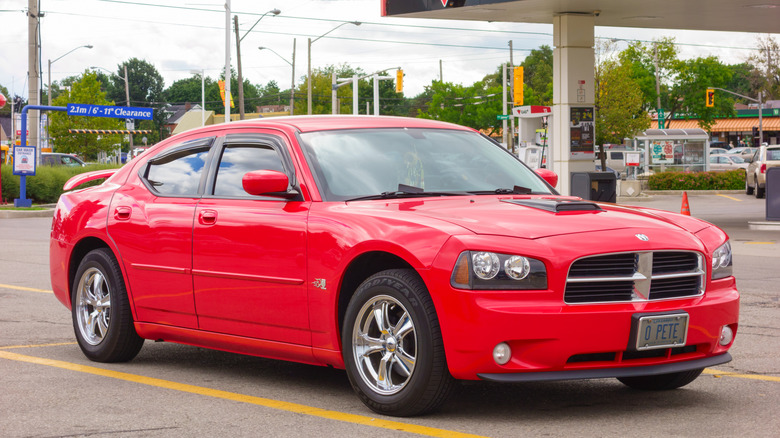
The Dodge Charger has taken many forms over the decades, and for 2026 it finally revives the classic two-door muscle-car style last seen on the original models of the 1960s. Toward the end of its first run, the Charger turned into a hatchback after regulations effectively ended the muscle segment. But in 2006, with the new two-door Challenger also in the pipeline, Dodge revived the Charger as a four-door muscle sedan that helped reignite the segment altogether.
While the addition of two extra doors brought much more practicality compared to what previous Charger owners were used to, Dodge didn't forget about the main selling point for these cars. At the top of the lineup sat the 6.1L HEMI V8 in the SRT8 trim, producing 425 horsepower and 420 pound-feet of torque. A step down from this was the 5.7L HEMI, still offering a maximum of 350 horsepower and 390 pound-feet of torque. V6 engines were also available if you prioritized efficiency over performance.
Cadillac STS-V
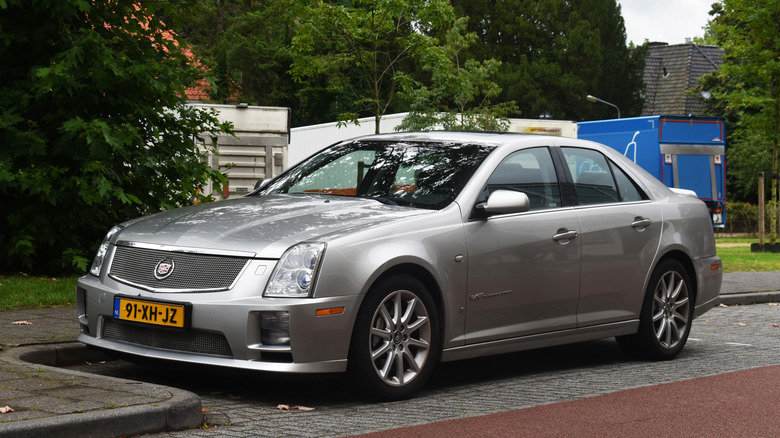
In 2026, there's only one other U.S. brand producing gas-powered sedans alongside Dodge's new Charger Sixpack. This is Cadillac, with the CT4 and CT5 keeping the segment alive as far as homegrown nameplates go. Before these cars were released, the likes of the CTS were the key sedans in Cadillac's lineup, alongside the more premium STS. The general design philosophy from the STS still remains in the brand's latest models, and with the top-spec STS-V, this is another 2006 car that offers outstanding performance on a budget.
The V-Series trim was added to the STS for the 2006 model year, following the type of upgrades that the CTS-V received a few years before. Of course, the main area where Cadillac bolstered the STS-V was under the hood, with its supercharged 4.4L V8 producing 440 horsepower and 430 pound-feet of torque, which would still be competitive in today's market. The handling was also fine-tuned to unlock all the available performance, making its average used price of just $8,800 very attractive.
Honda S2000
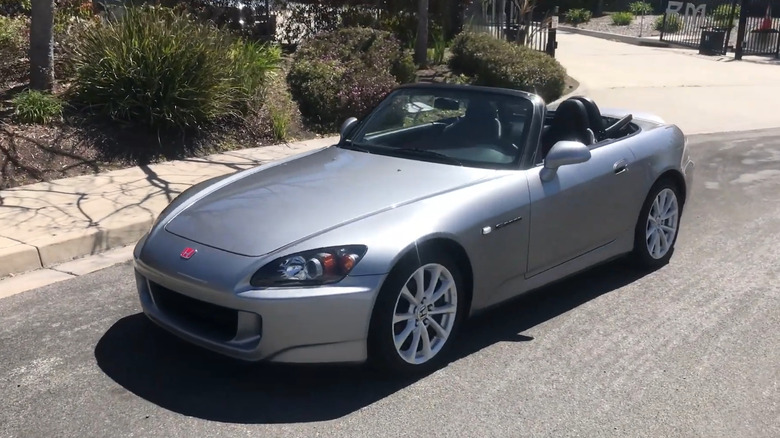
Another cornerstone of the JDM scene in the 21st century, the Honda S2000 unfortunately didn't make it quite as far as the likes of the MX-5, but it's no less important in keeping the Japanese sports car market alive after the golden age. A little larger than its Mazda rival, the Honda S2000 very quickly became one of the most intriguing JDMs on the market for very similar reasons: offering standout performance at an affordable price point.
The S2000 was first released for the 2000 model year, running until 2009. The exterior stayed pretty similar throughout the decade, but the 2006 model was crucial in keeping the car competitive, with some major improvements. The driving dynamics benefited from electronic drive-by-wire throttle control and stability assist. The 2.2L VTEC four-cylinder stayed the same as in the previous couple of years, but its 237 horsepower was plenty for the 2,855-pound roadster. Honda also achieved a 50:50 weight distribution for its compact sports car, which you can buy for around $22,300 on the used market, according to KBB.
Porsche Cayman S
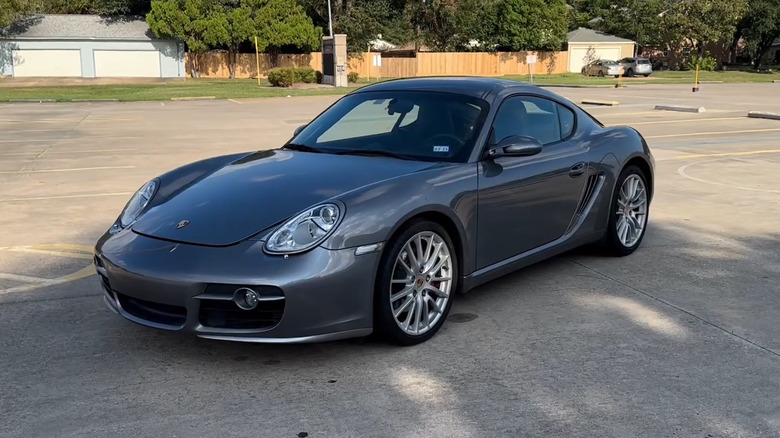
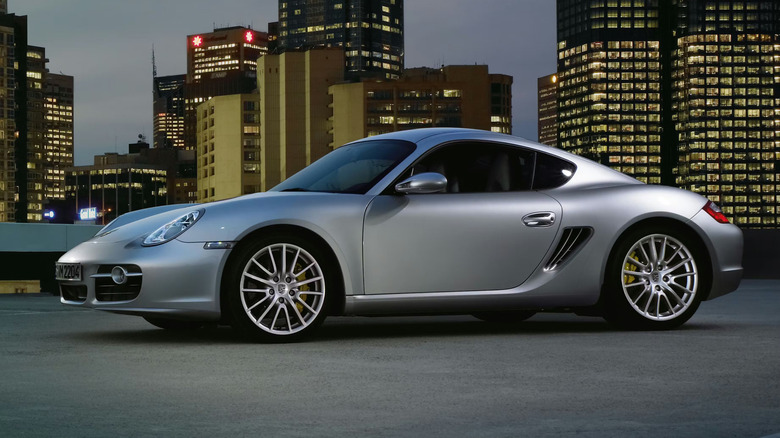
Japan isn't the only country with outstanding compact sports cars, even if others can't quite match the quantity. A car that's now become a focal point of Porsche's modern lineup, the compact Cayman rolled out of the brand's factory in 2006, finally offering a hardtop equivalent of the Boxster for those who didn't want to pay 911 money. While it was technically a new model, some underpinnings of the Cayman were transferred from the Boxster, removing the need for it to prove itself against the competition.
The similarities include the same 987-generation platform, but Porsche introduced a revised engine for the compact coupe for its initial 2006 model year release. Named the Cayman S, its 3.4L flat-six produced 295 horsepower and 251 pound-feet of torque; a notable increase over the base trim's 245-horsepower output, which was introduced for the 2007 model year. That makes the S trim the only Cayman that is technically 20 years old, by a very narrow margin.
Audi R8
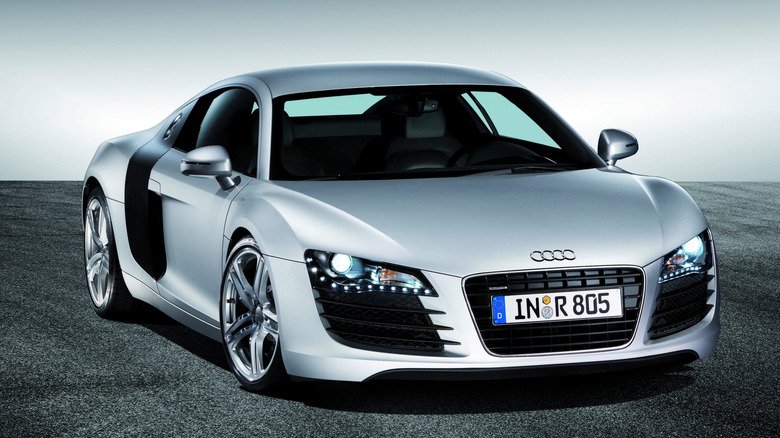
While Audi tends to focus on high-performance luxury sedans, wagons, and SUVs, the brand has still expanded into the sports and supercar segments from time to time. For the latter segment, there has only been one true Audi supercar, which now also happens to be one of the most beloved and successful Audis ever made. The R8 was unveiled at the 2006 Paris Auto Show, and there's a great sense of nostalgia that comes with the original model, with its prominent side blades making it one of the most distinctive cars on this list.
The performance numbers are also still impressive for a 20-year-old car. With the engine mounted in the middle for optimal balance, the 2006 R8 was powered by a 4.2L V8, producing 414 horsepower and 317 pound-feet of torque. The quattro all-wheel drive system also came as standard, further strengthening handling and stability in all conditions. While other markets got the R8 straight away, America had to wait until the 2008 model year. Still, it was essentially the same car as the original.
Koenigsegg CCX
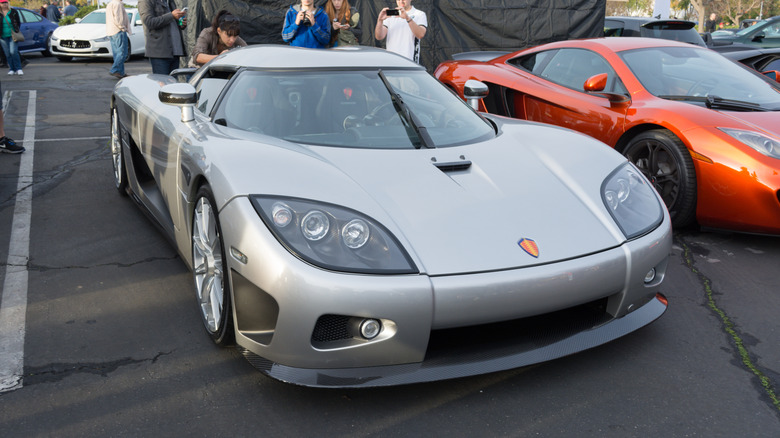
Moving back to the ultra-exclusive hypercar brands, Koenigsegg has broken the mold on many occasions despite its first car, the CC8S, only coming out in 2002. In the brand's current era, you have the Jesko, Regera, and Gemera breaking all kinds of records, which has essentially been a marketing tool for many of the cars Koenigsegg has made thus far. In 2006, the CCX was released to replace the CCR, and while it didn't break the Veyron's top speed record, it helped cement the Swedish company's authority alongside brands with far more experience.
Koenigsegg has always been fond of V8 engines, finding ways to extract incredible amounts of power from them with each new iteration. In the CCX's case, the 4.7L twin-supercharged engine produced 806 horsepower and 693 pound-feet of torque, achieving top speeds of over 245 mph. The engine wasn't the only factor in reaching these speeds, though, with the extensive use of carbon fiber and aluminum making up the chassis and drivetrain components to keep overall weight to a minimum.
Mitsubishi Eclipse
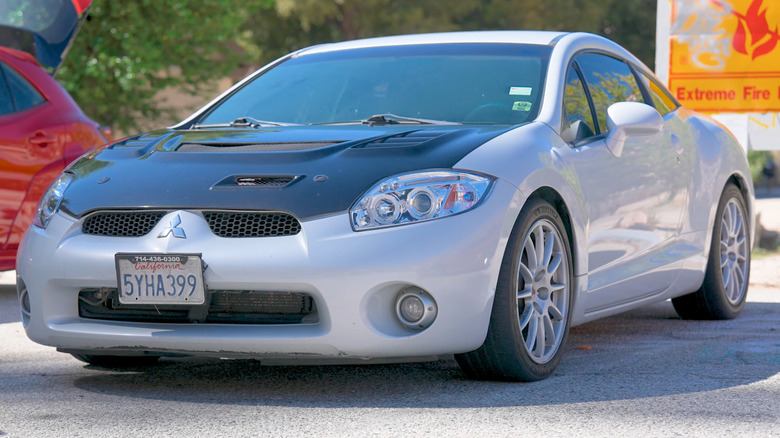
The Mitsubishi Eclipse was first released in 1989, competing alongside the very best JDMs we've arguably ever seen. While the first generation is iconic in its own right, the second-gen models produced between 1995 and 1999 made it into a legend. From a driver's standpoint, the third-gen's focus on comfort took away a large part of what made the earlier models so special, but in 2006, Mitsubishi refocused on the driving experience without sacrificing too much comfort.
On the outside, the curvy design style made the fourth-generation Eclipse look and feel like an all-new car. As well as looking like a true sports car once more, the power was also bumped up significantly, particularly in the GT trim. It produced 263 horsepower from the 3.8L V6; a notable difference compared to the standard 2.4L four-cylinder's 162-horsepower output. Going for the GT also unlocked the manual transmission, as well as features like traction control and ventilated brake discs.
Mercedes-Benz CLK 63 AMG
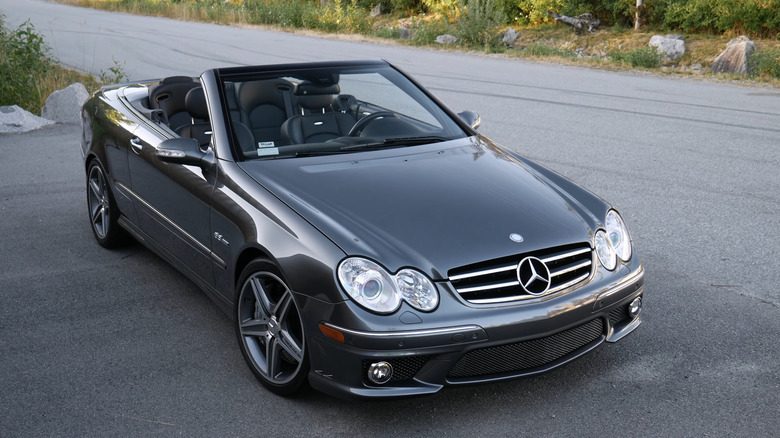
Mercedes-Benz has a long history of offering multiple variants of the same car, and it also likes to keep nameplates on the market for a while before discontinuing them. The CLK is a great example of this, introduced in 1998 and lasting until 2009. Within that period, the CLK got a few special editions, but none are on the level of the CLK 63 AMG. The Black Series may be the ultimate model, but it still has another year to go before reaching 20 years old.
Even with the base CLK 63 AMG, though, the spec sheet was pretty outstanding. This was the first car to feature the iconic M156 naturally aspirated 6.2L V8 engine, which was unsurprisingly the main element of the car. It produced 474 horsepower and 465 pound-feet of torque, making for one of the most brutal muscle-esque cars on the road at the time. The engine often outshined the actual feel of the car, with reviewers finding it less responsive than the likes of the Porsche 911. But that wasn't necessarily the point of the CLK 63 AMG; Mercedes-Benz wanted to retain the traditional comfort and luxury with supercar-inspired power.
Lamborghini Murcielago LP640
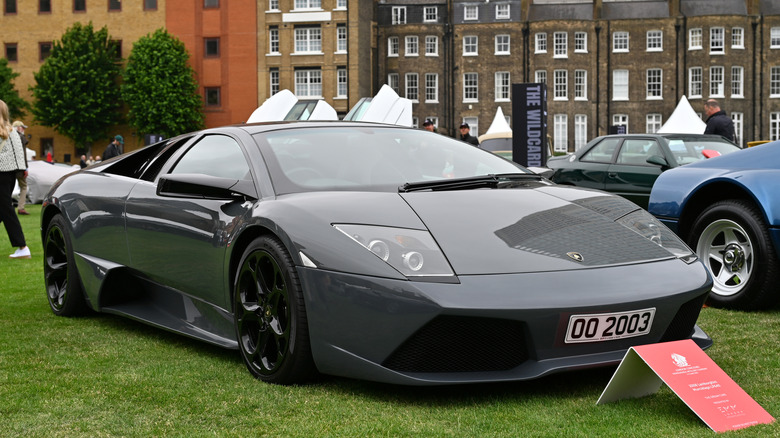
Keeping on the topic of raw power, it was always quite tricky to beat Lamborghini in the supercar segment during the 2000s. At the start of the century, the Italian powerhouse released the Murcielago as a replacement for the Diablo, carrying the V12 torch into the future. While the standard model had plenty of power, to say the least, at 572 horsepower, the mid-cycle refresh, named the LP640, kept the supercar toward the top end of the pecking order with extensive updates.
The most notable upgrade was, of course, the engine. It didn't get a brand-new one, nor did the original Murcielago for that matter. Instead, it built on the existing power plant and increased the V12's displacement from 6.2L to 6.5L, subsequently unlocking more performance at 631 horsepower (the LP640 name comes from the 640 CV power rating instead). Alongside the engine, Lamborghini tweaked just about every aspect of the car to create a more cohesive package, including the suspension, brakes, and transmission.
Chevrolet Corvette C6 Z06
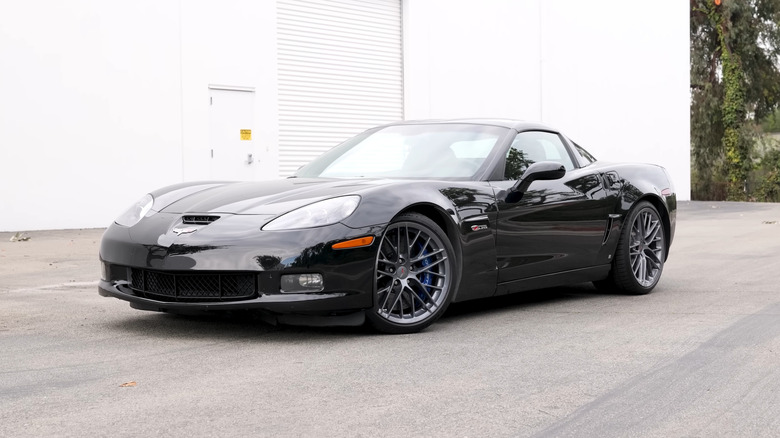
The Z06 trim has been included in the Corvette lineup for decades, first appearing with the C2 Stingray in 1963. Not every generation got the Z06 treatment, though, with its recurrence only starting with the C5 model. In 2005, Chevrolet released the C6 Corvette, which didn't reinvent the sports car but introduced a far more aggressive philosophy, prioritizing aerodynamics alongside the raw power Corvettes are known for.
A year later, the Z06 version of the C6 was made available, becoming the most powerful Corvette ever made at the time of its release. Instead of enhancing the base V8 from the C6, an all-new engine was made for the Z06, named the LS7. This V8 put down 505 horsepower and 500 pound-feet of torque, reaching a top speed just shy of the 200 mph barrier at 198 mph. Like many Corvettes since this one, the 2006 C6 Z06 offered levels of performance usually reserved for far more expensive European sports cars. At the time of writing, KBB reports an average price tag of $38,500 on the used market, down from its $65,800 MSRP.
Subaru Impreza WRX
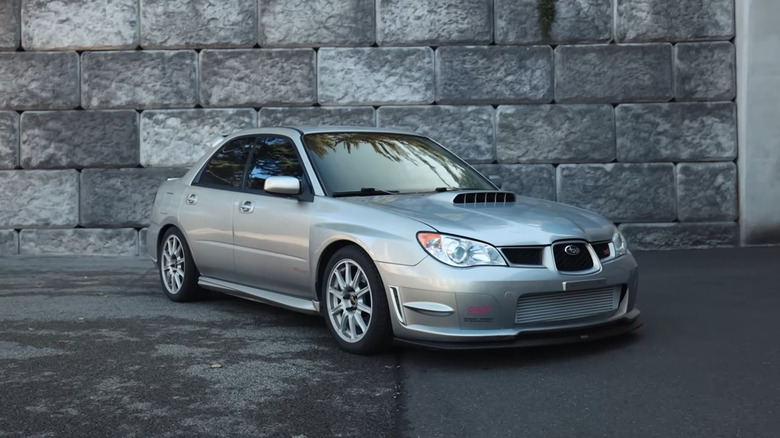
When it comes to the most iconic rally cars of the 1990s, the Subaru Impreza WRX surely has to top the list. We've all seen the blue-and-gold liveried cars flying through the stages with Colin McRae behind the wheel, turning the WRX into one of the best JDMs of the decade. Moving into the 2000s, the second generation of the car was introduced, which was in production from 2000 to 2007. Toward the end of its life in 2006, Subaru made some changes to the sedan that have made it one of the most desirable Imprezas to date.
Starting on the outside, the front end was where the most noticeable changes were made, splitting the grille into three segments rather than the single-piece one from the 2005 model. This gave it the iconic 'hawkeye' appearance, a major reason why this specific model fetches around $17,600 on average, as per Hagerty. Behind the grille, the 2006 Impreza WRX upgraded to a 2.5L turbocharged Boxer engine, producing close to 230 horsepower.
Nissan 350Z
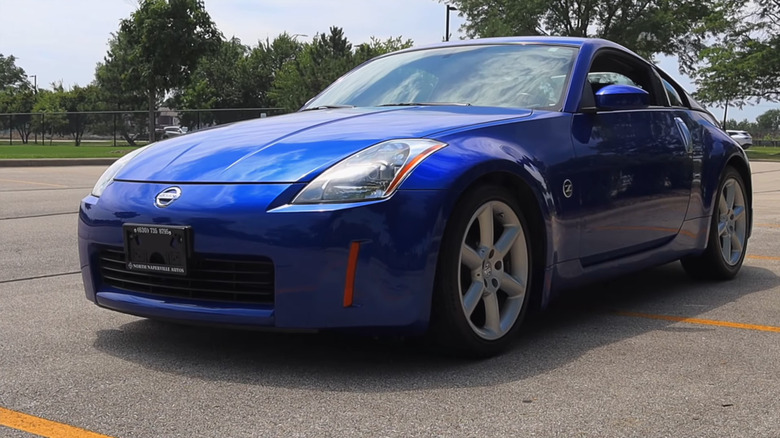
Nissan still keeps its two-door compact sports car alive and well with the simply named Z, which follows suit with its predecessors dating back more than 20 years. Bringing the Z badge back to the U.S., Nissan released the 350Z in 2002, which saw massive changes compared to the outgoing 300ZX, which was very much stuck in '90s design terms. The 350Z's curved body style proved timeless enough to inspire the later 370Z's design, with the mid-cycle update for the car in 2006 helping reinforce that appeal.
While the overall appearance didn't change too much, the front end of the 350Z was tightened up with subtle tweaks to the bumper. However, the 2006 model year saw some substantial changes under the hood, with manual transmission-equipped models now producing 300 horsepower from their 3.5L V6 engine. Further updates included a new power steering system for more precision and comfort. To buy one of these today, expect to pay anywhere between $3,725 and $11,000 depending on the trim level, according to KBB.
Dodge Viper SRT10
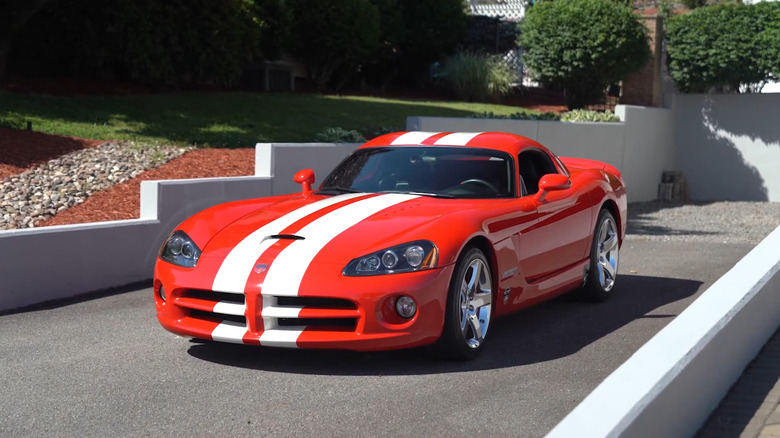
In 2026, the Corvette is the main American sports car going head to head with Europe's best. This wasn't always the case, though, with its long-standing rival in the form of the Dodge Viper being discontinued in 2017. Closer to a traditional American muscle car, the Viper first hit the roads in 1992 with its bold, aggressive yet streamlined body design. For the third generation in 2003, the base style remained, but the aggression was turned up another notch with a stronger focus on aerodynamics.
Initially, the top-spec SRT-10 trim was only offered as a convertible, but for the final year of the third-gen run, Dodge made it into a coupe once more. The 2006 Viper is another on this list to offer exceptional performance for how relatively old it is, with the massive 8.3L V10 producing 510 horsepower. Offering only five more horsepower than its main Corvette rival, the latter was more refined, but if you wanted unrestrained power, the Viper SRT10 was the way to go. This specific Viper still fetches a lot of money, with plenty of listings sitting between $50,000 and $80,000 for pristine examples.