

6 Trucks That Should Get Discontinued (And 6 That Should Come Back)

People love their pickup trucks. Invented by Henry Ford in 1925, pickup trucks may be quintessentially American, but it's fair to say they've changed the world. Auto producers have developed many varied takes on the vehicle-with-a-bed model, including crossovers like the famed El Camino.
Today, there's no shortage of gargantuan haulers that can fit a family of six and a couple tons of cargo. However, there also seems to be a dearth of character. Don't get us wrong — the pickup truck market is red-hot, and competition benefits buyers, but where's the fun?
Pickups used to come in all shapes, sizes, colors, and functions. That spectrum has dramatically narrowed in recent years, with full-sized luxury behemoths serving as everything from commuter limousines to mobile offices. The mid-sized market seems to be shrinking, and the next generation of car nuts will never have seen a compact pickup like the S10 in their lives. Here are our proposals to bring back some variety to the modern pickup truck market.
Discontinue: Hyundai Santa Cruz
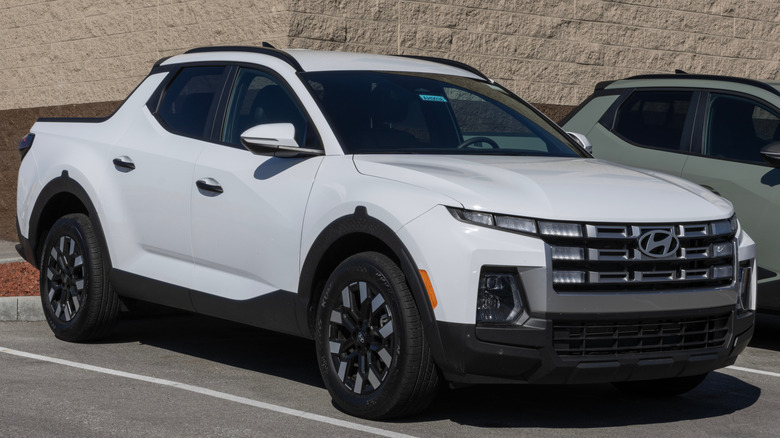
Gen Z will scarcely remember the days when Hyundai was exclusively the economy choice. The Korean supergiant has grown in stature and status since the days of the Pony Coupe, and now it's a major player expanding even into high luxury. Investments in its burgeoning luxury arm, Genesis, trickle down in dollops of improved performance and modern tech in the N-line and bread-and-butter Sonata. What you may have noticed missing from that equation is a slot for pickup trucks.
Hyundai's Santa Cruz is a sleek, if somewhat bland crossover, car-truck grocery getter that looks like it wants to hit the Baja 500 but suffers from chronic gutlessness. Its base engine, a 191-hp 2.5-liter inline-four, will buzz up to highway speeds on jaunts to the dentist, but the 281-hp turbo is locked behind a premium. Its compactness may make swinging into a parking space at Home Depot a cinch, but the smallest bed in North America won't hold much on the way out. Hyundai does things well, but competing in the pickup space may require resources we'd prefer to see poured into its N-line and battery tech.
Discontinue: Toyota Tundra
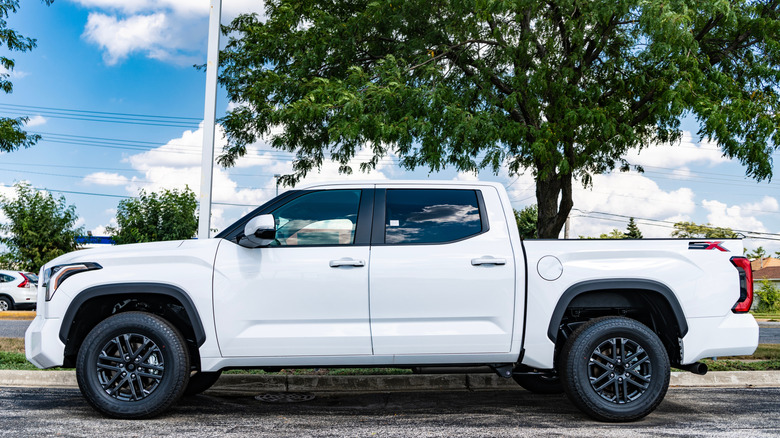
Reliability and longevity are hallmarks of the Toyota brand. Its flagship Tundra pickup is in its third generation, which launched in 2021 after the second generation's 14-year odyssey.
Based on the JDM Toyota T100, which sported a V6, the Tundra began as Japan's answer to the V8-powered full-sized pickups coming from the likes of Chevrolet and Ford. Since then it has been a mainstay on the American market, offering reliability and resale value to pickup-hungry consumers. We even have it marked as one of the best used Toyota models to pick up on the aftermarket. So why can it?
The fondly remembered Toyota Pickup was an affordable, bare-bones, well, pickup truck that was produced between 1975 and 1995. What if Toyota retooled the Tundra line and revived the Pickup? Flood the market with reliable pickups that get the job done in the face of the six-figure F-150 Raptor and Silverado King Ranch. Business-wise, it's almost certainly a terrible idea, but we're not auto executives, and we think it would be cool.
Discontinue: Tesla Cybertruck
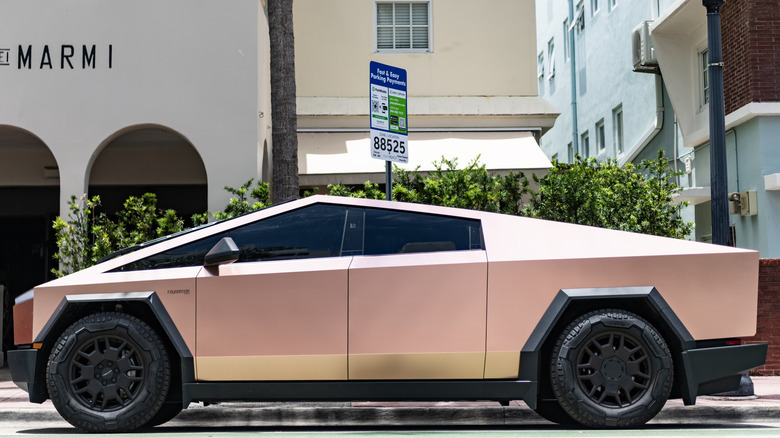
We have to admit, when we first heard about a Tesla pickup truck, we envisioned a sleek, smooth design reminiscent of what Tesla was doing with its sedans. A futuristic electric truck that could go toe-to-toe with the F-150 could only be good for competition and the advancement of EVs.
Politics aside, it's hardly a secret that the Cybertruck was a miss. Wildly out-of-pocket design-wise, it didn't make up for its polarizing looks with outrageous performance or quality. Even its unveiling event was marred by the lack of features promised by Tesla leadership in the run-up to its debut.
A few years later, major publications like Forbes are willing to declare it an official flop. A number of recalls have plagued its short life on the market, and build quality is only the beginning of the story. Tesla also whiffed on several promises, hitting the market with reduced payload and towing capacities, as well as a lower range than promised, at a far more expensive price than the pie-in-the-sky $39,900 MSRP once promised by Elon Musk.
It's easy to hate on the Cybertruck, but the truth is, we'd love to see a competent pickup from Tesla. The company has been hard at work on its semi-truck of the future, and we admire the courage it took to pitch something as outside-the-box as the Cybertruck from a design perspective. It's a shame it didn't pan out.
Discontinue: Jeep Gladiator
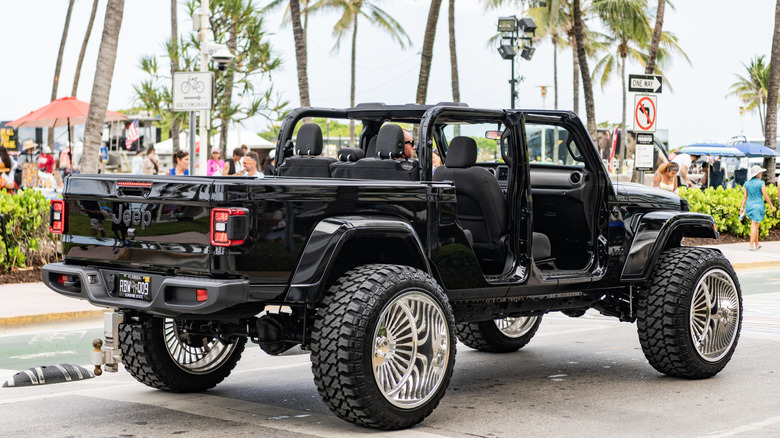
Jeep is best known for the Wrangler, but it has a surprisingly long history of building pickup trucks, from the 1947 Willys-Overland Jeep 4x4 to the 1992 Jeep Comanche. Jeep first introduced a Gladiator pickup truck in 1963. Based on the Cherokee, it came with multiple bed and cab configurations and was in production in some form until 1987.
Around the same time, Ford was drumming up interest in a revived Bronco concept, and enthusiasts took note of the 2005 Jeep Gladiator concept. As with the Bronco, the company decided a couple of decades later to put the concept into production. This time, the Gladiator would be based on the beloved Wrangler. What could go wrong?
The Gladiator was highly anticipated, and the first couple years of sales were promising, with Jeep moving 90,000 units in 2022. Unfortunately, by 2024, that number had fallen to 41,000 – less than half the high-water mark of a couple of years previously. There are a number of reasons the Gladiator fell off, including the usual culprits of high pricing and low reliability. It doesn't seem like the new models are turning things around, either, with Consumer Reports issuing the 2026 Gladiator an abysmal score. Maybe it's time for Jeep to cut its losses.
Discontinue: Nissan Frontier
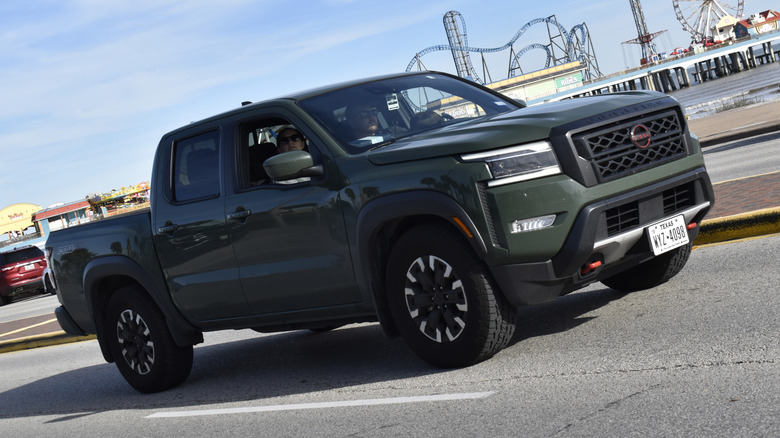
Nissan tried to nab a piece of America's pie with the Frontier and Titan. However, in the full- and mid-sized segments, the trucks just couldn't compete. Nissan is not even one of the larger Japanese firms, and going toe-to-toe in one of the automotive world's most competitive markets was always a gamble. The Titan bowed out after the 2024 model year, and the future is uncertain for the Frontier. It forges into 2026 as Nissan's sole North American pickup.
With tech moving toward turbocharged and battery-powered models, the Frontier is a holdover from the days of mechanical cars. It gets along on a naturally aspirated 310-hp 3.8-liter V6 — what's next — a crank to start it? The Frontier may be on the cusp of an extension, but we're happy to see it go down fighting, even if it has to. Sometimes, the last of the old tech is still better than the first of the new tech. If you're in the market for a solid pickup truck that won't break the bank, you could do worse than the Frontier. We're just afraid it's going to slip under the surface soon.
Bring back: Subaru BRAT
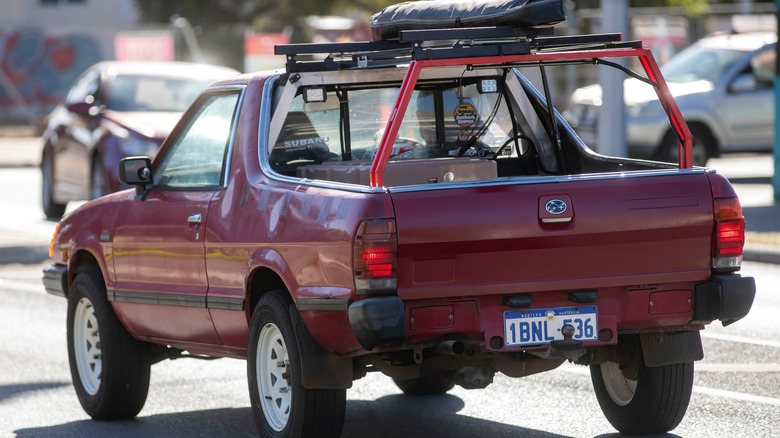
Funky, punky, and weird, we need the BRAT back way more than we need another full-size. Subaru has made a career of fun all-wheel-drive quirk machines with seats and stowage, whether you're headed to work, the beach, or the trail. Back in the dark ages of the Malaise Era, Subaru introduced the world to its take on the car-truck combo: the Bi-Drive Recreational All-terrain Transporter.
The inaugural 1978 BRAT featured a 1.6-liter H-4 engine with 67 hp and 81 lb-ft of torque routed via a four-speed four-wheel-drive powertrain. By the end of its run in 1987, a turbo unit boosted those numbers to 95 hp and 123 lb-ft. Since then, Subaru has won six World Rally Championships. Who wouldn't love an all-wheel-drive Baja Blaster with a ripsaw engine and modern interior?
We know that Subaru's iconic history has produced the more recent Baja, but that was almost 20 years ago. We'd like to see the next-gen BRAT perform against the likes of the Ford Raptor. Did anyone else grow up playing "Super Off Road"?
Bring back: GMC Syclone
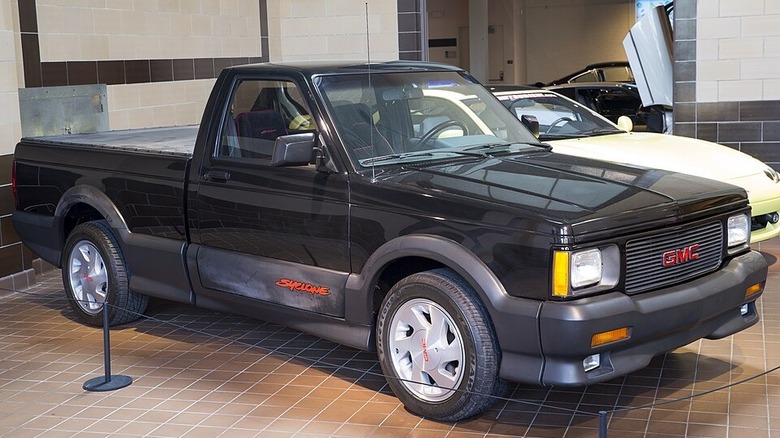
There was a brief period in the '90s when American pickup truck manufacturers threw everything at the performance wall to see what stuck. The results were memorable, pitifully short-lived street trucks more at home on the drag strip than on the construction site.
Ford built the first iterations of its F-150 Lightning, a nameplate that lives on today, and GMC also threw its hat into the ring with the lesser-known Syclone. If the spelling doesn't clue you in, we'll let you know that the Syclone was one unconventional pickup.
The initial idea was to put the 3.8-liter V6 from the Buick Grand National into a Chevrolet S-10. By the time the vagaries of logistics were worked out, the Syclone hit the street packing a turbocharged 4.3-liter linked up to a mish-mash of bin parts, including the drivetrain from a Chevy Astro van and the first four-wheel anti-lock brakes on a pickup. GMC produced fewer than 3,000 Syclones between 1991 and 1993, and in our opinion, that is far too few, which is why we want a new Syclone on the market.
Bring back: Chevrolet Canopy Express
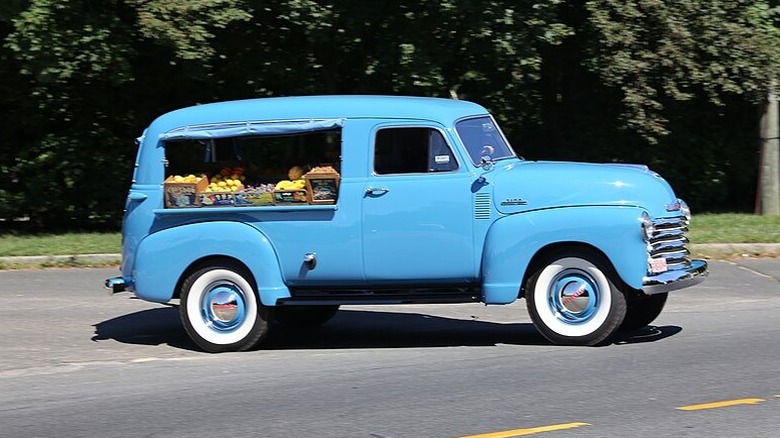
The idea behind Chevrolet's inaugural Canopy Express model in 1931 was to adjust to a mobilizing nation. One-car, one-income families were not uncommon, with the breadwinner puttering off to the factory for the day, leaving the homemaker stranded at home. Chevrolet purchased the Indianapolis-based Martin-Parry Body Company in 1931, renamed it the Chevrolet Body Division of General Motors, and set about designing a delivery truck that could haul and display goods to buyers rather than the other way around. It was convenient, innovative, and effective enough for the Canopy Express to enjoy a career for the next two decades.
Today, the gig economy is everything, and van life is a documented phenomenon. Why not bring back the Chevrolet Canopy Express as the panacea for the DIY nomad or mobile entrepreneur? Imagine a pickup truck with specialty modular components that let buyers customize the bed for their needs. Food trucks with culinary equipment, rear cabs with bunk beds for campers, racks for a juice or coffee kiosk, tool chests, and construction workstations. Order up what you want from Chevrolet's expansive (and imaginary, so far) collection of Canopy Express accessories. Relive the simpler days with your trusty Chevy by your side. Bonus points if Chevrolet uses design cues from the Canopy Express's classic lines.
Bring Back: 2014 VW Tristar TDI Concept
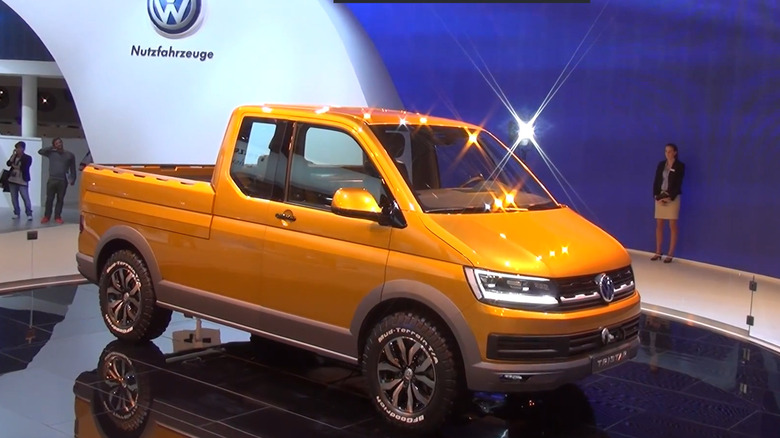
Buried in the bad news of 2015's Dieselgate scandal, the Volkswagen BW Tristar TDI concept fell by the wayside like so many others. Yet it went on to inspire VW's T6 Transporter van, a Europe-exclusive model for years. It's a shame, too, given Volkswagen vans' storied history in the United States.
We propose reviewing the Tristar TDI concept. Its pickup truck form is natural to Americans, and there are few models beneath the luxury behemoth level in the U.S. market. A practical, extended cab full-time 4x4 with 17-inch wheels, hidden storage, 200 hp, and 332 lb-ft of torque? It appeals to everyone from small farmers to handymen to commuters. Its plastic-clad body won't wow at Pebble Beach, but it's utilitarian in an Elemental way we appreciate.
The 2.1-liter gas engine from 2014 will likely need replacing, but with Dieselgate in the rearview, Volkswagen Group has North American van experience under its belt and control of a slate of impressive and torquey diesels powering Audis. Why not retool for a refreshed TDI Concept, get it to the States, and bring the T7 Camper Van on its heels to re-revolutionize van life? Now we're really dreaming.
Bring Back: Dodge Power Wagon
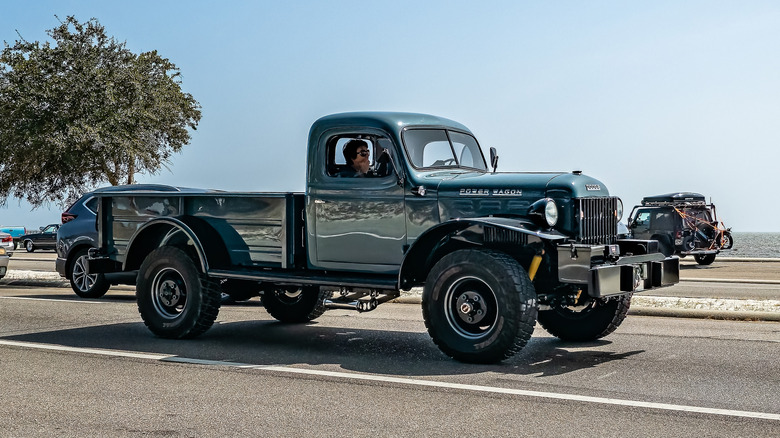
There are many clever ways to achieve impressive performance efficiently, but sometimes that just isn't fun. The mid-aughts resurrection of the muscle car reintroduced us to the joy of high-horsepower Hemis in Hellcats and Hellephants. Now do trucks!
It doesn't need to be absurd. Ford's new Bronco has found its footing, and Dodge has its own off-roading lineage to lean on. The Power Wagon has a long history, and it includes a pickup model. Ford is more than getting by on the Bronco and Bronco Sport. Dodge could do the same. It builds the full-sized Ram, and its powerplants in the 2026 Dodge Charger include six-cylinders making 420 and 550 hp in all-wheel-drive powertrains. There's even a Hemi on the horizon. Fold that over into a revived Power Wagon line, and start chasing Broncos and Wranglers around the dunes. Sounds like a weekend to us.
Bring Back: Chevrolet SS 454
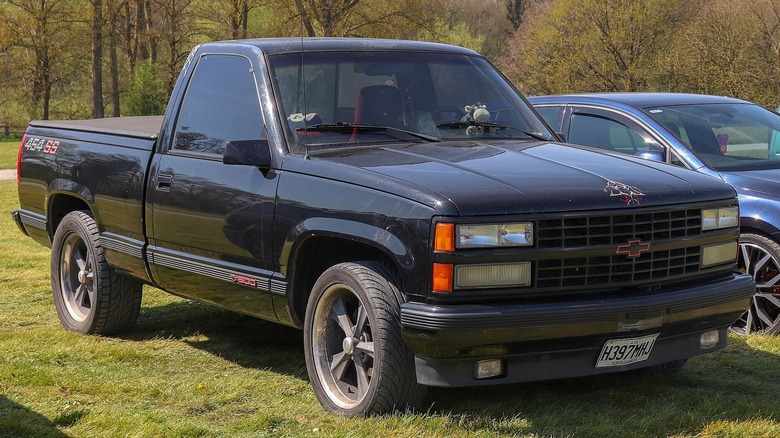
Chevrolet arrived late to the muscle car renaissance fair and left early with its sixth- and seventh-generation Camaros. The Bow Tie looks to step back into the ring in 2028 with the return of the V8 Camaro, and its mid-engine C8 Corvette is a certified success, with the ZR1X pairing a twin-turbo 5.5-liter V8 to an electric motor to the tune of 1,250 hp. We see a revived Chevrolet SS 454 budding on a branch of the Chevrolet family tree.
The branch sees Chevy diving deep into the SCORE Trophy Truck scene. Trophy trucks are more than a powerplant — especially one from a supercar, but Chevrolet is hardly a novice truck builder. Success on the circuit turns the family tree into a tech tree, with lessons learned applied at scale to the Silverado ZR2 and Colorado ZR2, which challenges the F-150 Raptor for supremacy, thusly birthing a new era of supertruck evolution that leaves us all smiling from ear to ear.
If Trophy Truck factory Chevrolets seem a tad unreasonable in this day and age, perhaps whatever's getting cooked up for the new Camaro — the base Corvette Stingray 6.2-liter V8 still makes 490 hp — could slide into our reborn SS 454. You'd need another reason to call it the 454, but we are non-negotiable on the name change, Chevrolet.