

13 USB-C Stocking Stuffers That Any Tech Lover Will Appreciate

We may receive a commission on purchases made from links.
The holidays are upon us, and aside from overeating to an obscene degree and finding every excuse to waterboard people with Mariah Carey, it's time to figure out what gifts you're going to give to the people in your life. Especially the picky ones, like the tech geeks. These are the sorts of people you couldn't, for example, just gift any random pair of headphones; oh no, you'd want to give them a pair audiophiles approve of. That could get expensive fast, so here's a list of (relatively) cheap stocking stuffers that are guaranteed to please the sorts of people who care about hardware specs.
Every item on this list uses USB-C in some capacity. They're small, small enough at least to fit into a stocking, though that'll depend on how big Santa's feet are. Rather than trawl Amazon for examples, we carefully scoured the internet for items the professionals recommend so your recipient geek is pleasantly surprised that you got their gift right. We recommend these 13.
USB-C to 3.5mm Audio Adapter
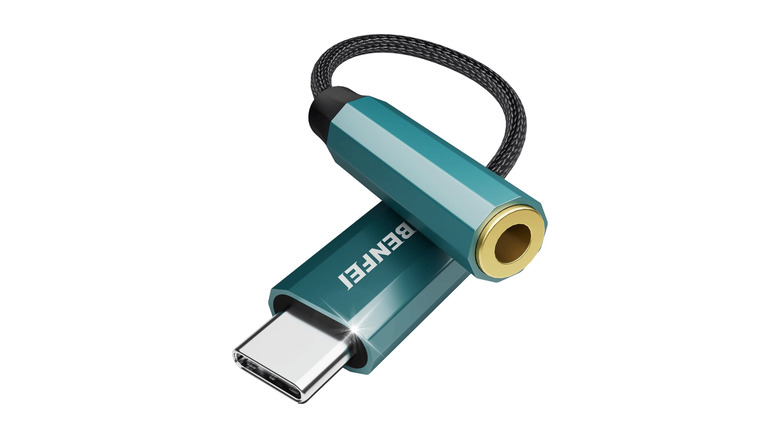
We'll never forgive Apple for killing the headphone jack (among other things) and giving the rest of the industry the green light to do the same. But there's no reason to trash those perfectly good, perfectly capable wired earbuds. Let your geek fight back (they will probably have strong opinions about this) with a USB-C to 3.5-millimeter audio adapter. There are quite a few good options to choose from.
The best all-rounder is this USB-C to audio jack adapter that includes a DAC, a little chip that may improve audio quality. UGREEN makes a right-angle adapter that may be preferable over a dongle. They both support 24-bit/96 kHz audio, or in English, some of the highest quality audio available. If your geek is an Apple user, then they can't go wrong with the Apple USB-C to 3.5mm jack adapter — Apple's tacit admission that people still like and want to use wired headphones.
The most annoying part of using one of these adapters (aside from the burning rage at having your headphone jack stolen) is that you can't charge your phone at the same time. In that case, consider this USB-C to 3.5-millimeter headphone and charger adapter. The extra USB-C dongle supports PD 3.0 and up to 60-watt fast charging. It also supports hi-fi 24 bits/96 kHz audio. All of these adapters cost $20 or less.
FiiO/Snowsky Portable USB-C DAC
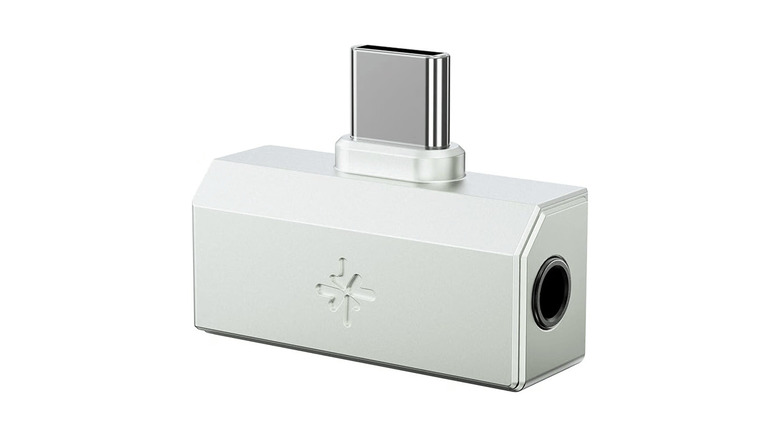
A USB-C to 3.5 mm dongle can emit great wired audio, but the next level up is a dedicated DAC and amp combo that can drive a pair of high-impedance headphones. The FiiO/Snowsky Tiny is a perfect example. It claims to support PCM 384 kHz/32 bit and DSD256 on Android phones and PC — no iPhones supported, unfortunately. Headphones that have their own mic and controls will still work. For geeks that want to go deeper, the adapter supports PEQ EQ tuning. It's a lot of technobabble, we admit, but the point is this is a high-performance adapter for discerning listeners.
Note there are two versions of this product, the Tiny A and the Tiny B. The former includes a USB-C port for simultaneous charging; the latter has a second headphone jack for less-common 4.4-millimeter headphones and allows two people to listen at the same time. Both variants cost the same, though, and come in identical CNC aluminum cases that should be durable and stylish in equal measure. We'd recommend the Tiny A, however, unless you know for a fact your recipient has headphones with a 4.4-millimeter plug. People who know headphones recommend the FiiO. Most importantly, this "professional-grade" hardware only sets you back $20.
USB-C Data Blocker
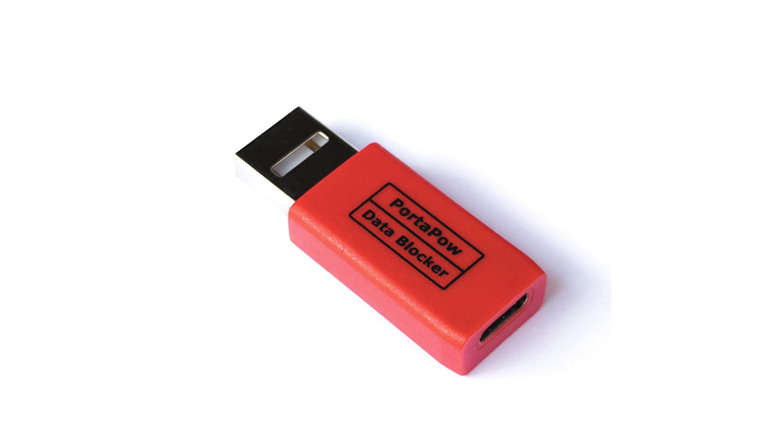
Have you ever plugged a device into one of those free charging stations at airports? That may have been one of the riskiest things you've ever done, digitally speaking. Hackers use these as honeypots to get a direct, physical connection to your device so they can hit you with a malware payload. It's not something the average person usually knows, but it's certainly something the geek in your life does. They'll appreciate a PortaPow Data Blocker.
PortaPow makes two varieties of data blocker. One, a USB-A to USB-C adapter for a charging cable; helpful if the only available plug at a charging station is USB-A. Or if USB-C is available, a USB-C-only data blocker adapter. Both types have gotten strong reviews over the years and confirm it is impossible to transmit data when using one of these. They work through a very simple principle: they do not have data-transmission hardware whatsoever, entirely eliminating the possibility that a bad actor could gain access. Each set of two costs $9.99.
Anker Nano Smart Display Charger
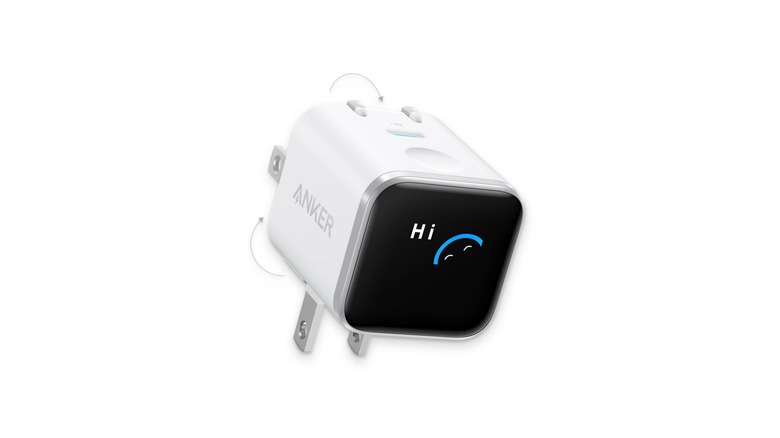
Geeks are not like the common man. The common man is satisfied with the same charging brick they've been using for the past decade, while a geek can comfortably own two or ten. So you can't go wrong by gifting them something like the Anker Nano Smart Display Charger, which you can buy here on Amazon. This tiny, compact charger has foldable plugs and supports up to 45-watt GaN charging. It includes a little screen to tell you how fast it's charging and how long it will take (supported devices, like the iPhone 15 up) to juice up; the screen can be woken with a tap, too.
What we like about this charger is that it is the perfect middle road between size, feature set, and power. Normally, you'd have to buy a bigger, more expensive charger to get a screen and such high charging rates. Reviewers who have had their hands on this thing can all agree it's an excellent choice for a small, single-port charger. It fits right into a stocking, too.
It is a bit on the pricey side at $39.99, but at the time of writing, it's on sale for $25.99 for Prime Members and it has dipped down to $25.99 for everyone else on multiple occasions already.
Anker Nano Power Bank 10,000mAh 30W Portable Charger
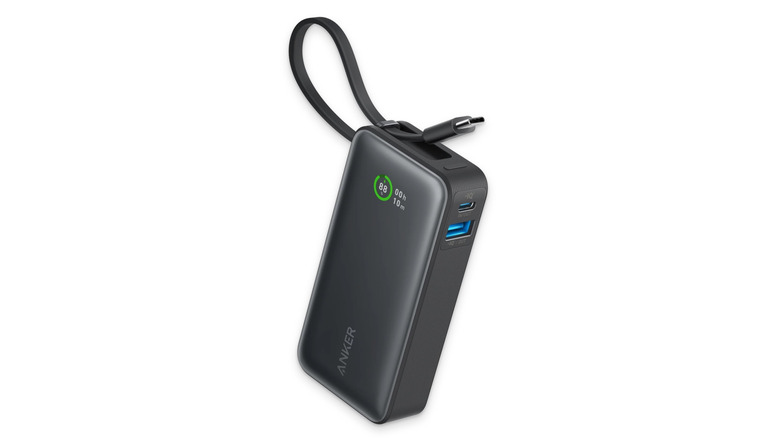
Believe it or not, geeks like to go outside. No, really. It's not necessarily social anxiety stopping them (though that could be a factor), but rather that their devices might run out of battery. If that's the case, grab them this 10,000 mAh Anker Nano Power Bank that supports 30-watt charging. This is possibly the best power bank on the market right now at this mAh size for a number of reasons. One, it supports 30W charging, a high charging rate among smaller power banks; two, it has a built-in USB-C cable that doubles as a carrying strap, so the recipient doesn't have to bring one more thing when they go out; and three, it has a helpful screen that tells you the battery level and charging time.
Similar to the Anker Nano Smart Display Charger, the Anker Nano Power Bank is squeezing features that would normally be found in bigger, more expensive battery packs into a pocketable — and stocking-able — size. Reviewers love it. Anker is a beloved brand that constantly innovates, making it a safe gift choice. Just make sure it's a geek you love more than the others, because it's priced at $54.99.
SANDISK 128GB Ultra Dual Drive
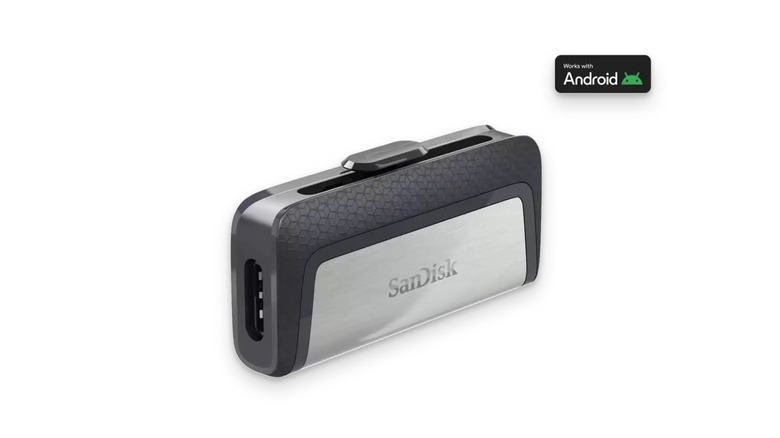
The USB-C standard is in a weird place right now. It's more common than ever, having become the default port on phones, some laptops, and even now starting to creep into 2.4Ghz dongles that were once exclusively USB-A. Yet, we still have a ton of USB-A devices that are not going away anytime soon. This can get really annoying for geeks, who want a USB thumb drive that they can use on their modern laptop and that old one they probably put Linux on. A great USB thumb drive for this frustrating transitional period is the SanDisk 128 GB Ultra Dual Drive.
Spec-wise, this is just a typical USB 3.1 Gen 1 flash drive, but with a twist: it has a USB-A and USB-C plug on each side, so you can add files to it from an older USB-A-only device and transfer them seamlessly to a USB-C device, without any intermediaries. Then hopefully one day when devices are using USB-C, it'll still be usable. The 128-gigabyte storage should be plenty for everyday files, and the 150Mbps read speeds ensure it won't take forever to transfer the big ones, like photo libraries. We'd also say it's pretty fairly priced in the midst of this memory crisis at $29.99, and reviews for it are strong.
Treedix USB Cable Tester
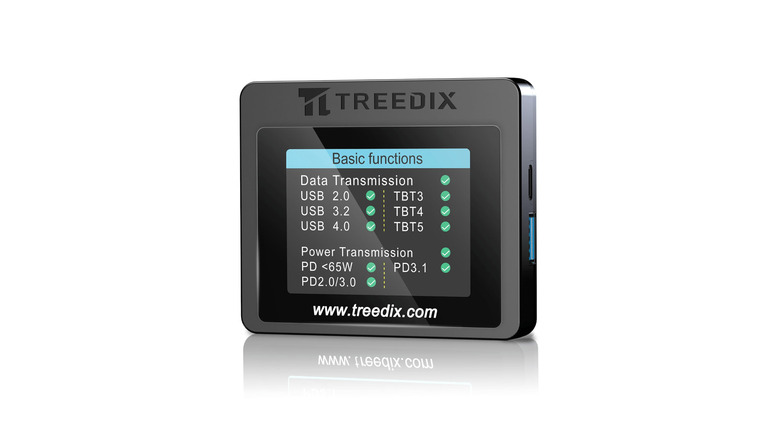
A major issue with USB-C is that cables may look identical on the outside, but they can support wildly different charging and transfer speeds and protocols. Unless you know where you bought it, it's effectively a mystery cable that you'll have to hope does what you want it to. Enter: the Treedix USB cable tester.
Like other cable testers, you insert both ends of a cable into the provided slots, and the readout will tell you everything about it. It tells you which USB generation it is (USB 2.0, 3.2, 4.0, etc.), its power transmission capabilities (like Power Delivery), what sort of transfer speeds it supports (including if it's a Thunderbolt cable, and what generation), and a lot of other geeky stuff only people who test cables in the first place would know.
It's an indispensable tool for finding the right cable for the job, including testing cables that you've just purchased against advertised specs, and going through older cables to see if they're worth keeping. Reviewers love it, and geeks will too.
Sony MDR-3R USB-C Wired Headphones
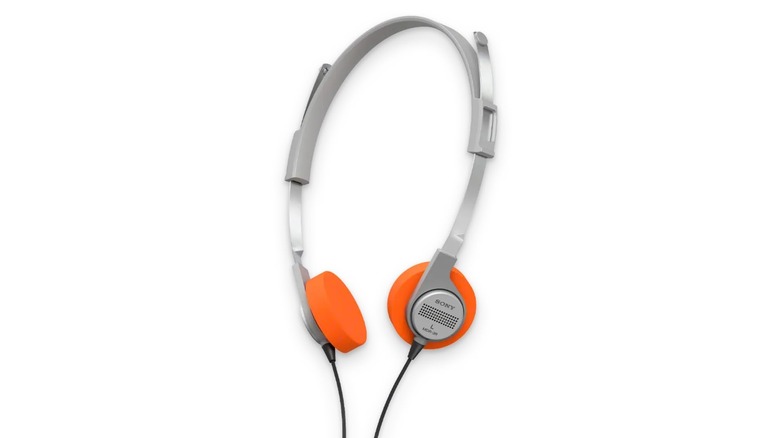
As devices become less and less repairable and things you used to own (like music) shift to subscription models, collecting vintage devices from an era when none of this nonsense existed has become increasingly popular. To get ahead of the curve, some companies remake a vintage product for a new era with basically everything it used to have, but upgraded to work on modern devices. That's where the Sony MBR-3R USB-C Wired Retro headphones fit in.
The original came out in 1979 with, obviously, a 3.5-millimeter jack. This version uses USB-C with the assumption that you'll probably be listening to music on a post-jack phone. They're not exactly the same as their predecessors; Sony has altered the sound. However, reviewers quite like the new profile, and the inclusion of modern conveniences (aside from the USB-C connector) like a microphone for calls. With headphone jacks firmly in the rearview mirror and almost nonexistent on modern phones, and retro devices growing in popularity, this is a pretty good mix of old and new—though it may be a tight fit in a stocking.
UGREEN USB-C Bluetooth Adapter for PS5
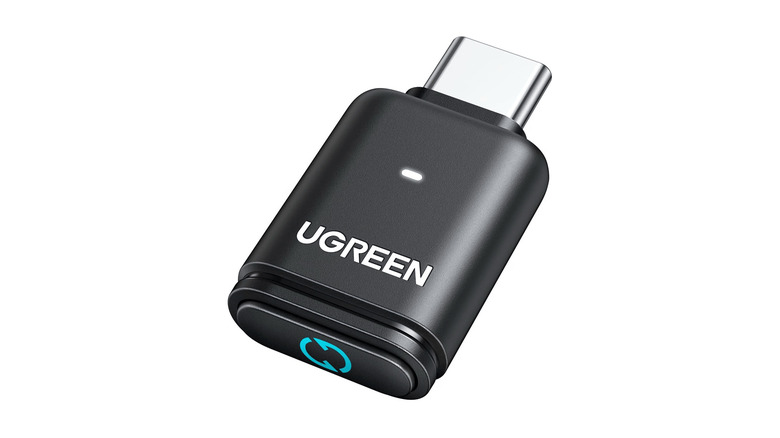
One of the downsides to buying a PS5 is that you're heavily limited in what Bluetooth accessories you can connect to it. In particular, Bluetooth audio. A PS5 will just flat-out refuse to connect to headphones and speakers not strictly endorsed by Sony — so not even Sony's noise-canceling headphones will connect. Trust me, I've tried. Unless, of course, you use a USB adapter. If the person you're gifting to has a PS5, they might like this Ugreen USB-C Bluetooth adapter that supports Bluetooth audio for the PS5 as well as computers that might not have functioning Bluetooth — though not TVs.
It actually works, too, with modern hi-fi codecs like aptX (read: really high-quality wireless audio). It claims to have sub-100ms latency, which is pretty good when it comes to Bluetooth audio. Any Bluetooth audio device should work, whether it's headphones, earbuds, or a speaker. Just make sure to double-check that the gift recipient isn't using a PS4 or PS Portal, as it doesn't work on that hardware. In my experience, the USB-C port matters because it lets you connect to the front of the PS5, rather than the back, where the signal might be interrupted.
USB-C Tester Power Meter
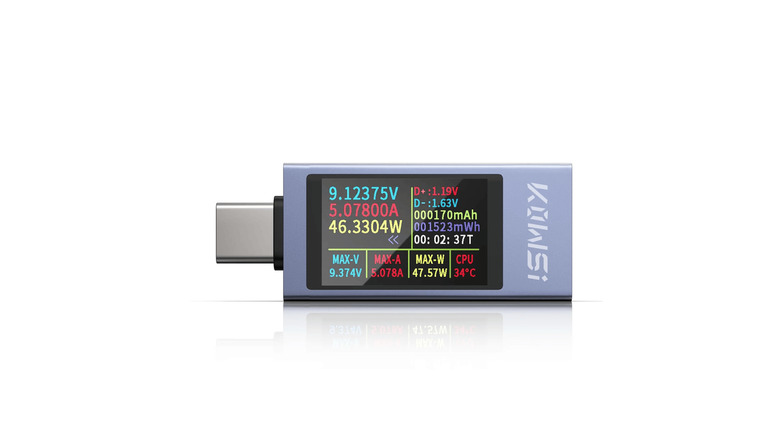
We've already discussed the USB cable tester, but another useful tool in a geek's arsenal is a USB-C power meter. Plug it into a device — like a phone, laptop, or gaming handheld — then plug in your charging cable to the back end, and the meter tells you exactly how much current is flowing through. This can be helpful for identifying charging issues, when the device isn't taking as much as it can support, or the brick it's connected to isn't putting out as much as it supports, and so on.
In addition to this, it can identify protocols like Power Delivery. Everything is displayed in real time on an ISP display. Experts who have tested it find it to be reliable and useful. Also, it earns the vaunted "customers usually keep this item" status, the highest praise Amazon can bestow — and it's only $13.97.
LED Flashlight
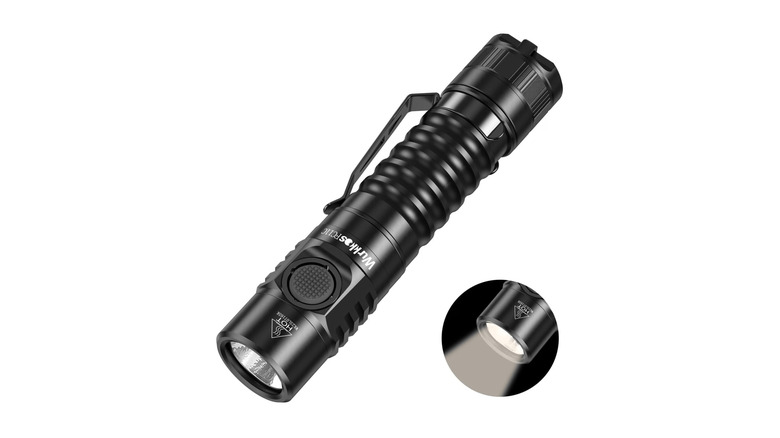
Most people these days just use the flashlight on their phone when they need one. Not geeks, though. They buy rechargeable flashlights such as this one that produce a disproportionately large and powerful beam. It's a 1200-lumen LED flashlight, which in practical terms means it can reach 155 meters and runs for 500 hours on its lower settings. Digging into the specs, it boasts a whole bunch of geeky features like an eye-strain-free non-PWM beam and 4000K and 5000K color temperatures. The flashlight sells for a pretty reasonable $35.99, too.
It's durable, waterproof (IPX8, which means 30 meters underwater for 30 minutes), pocketable, and has a magnetic bottom to attach to things. And importantly for our purposes, it supports USB-C charging, not replaceable batteries. People who review flashlights love it. I don't know about you, but when a geek in a highly niche category gives something the thumbs up, that's all I need.
Anker USB-C Adapter with Data Transfer
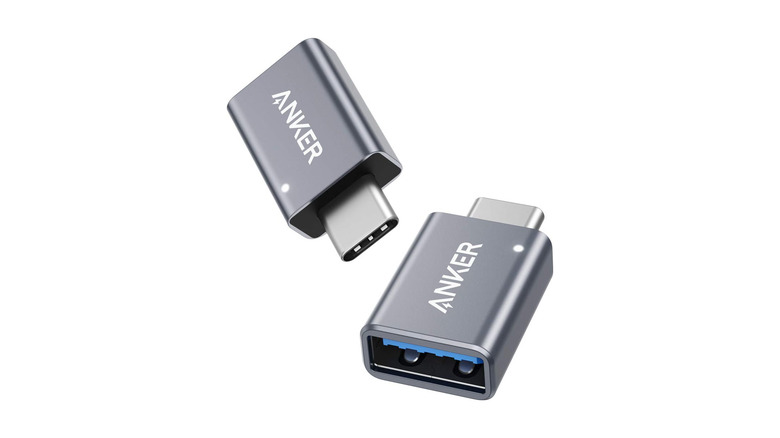
One too many USB-A devices still exist for the transition to USB-C to be complete, but luckily some of them can be "retrofitted," particularly USB storage devices like sticks and external drives. Take this Anker USB-C adapter. Unlike a lot of USB-C adapters I've used that only support glacial USB 2.0 transfer speeds, this one has USB 3.0, which means 5 Gbps (or 5,120 Mbps), so drives with USB-A plugs are able to move files at not-snail speeds.
Plus, these plugs are high quality, so I've been able to leave them on the devices that they retrofit basically permanently, only taking them off if I needed them somewhere else. Anker says that aside from USB storage, it can support other things like peripherals, printers, cameras, and data transfer from mobile devices. It's only $12.99 for a two-pack, and it's one of those things you can buy blindly for basically any geek in your life, knowing they will, in all likelihood, have a use for it.
heat it - Smartphone-Powered Insect Bite Healer

Some people use ointments to treat bug bites, but geeks? They want technical solutions. So if they're prone to bug bites, grab them the heat it USB-C Bug Bite Healer. Heat it found a highly unconventional solution to alleviating bug-bite itch that's backed by science: heating the site rapidly to 124 degrees Fahrenheit without burning you. No, really. It's a USB-C dongle you connect to your phone and activate with an app before applying to the site. Done. No more itching, no more pain.
It sounds like one of those sketchy products you'd see in a Walgreens aisle on a shelf labeled "as seen on TV," a shelf you probably avoid. Except this time, the product actually works. People who have used heat it on real bug bites can attest to relief lasting hours, with only really bad bites needing repeat treatments. Since it plugs into your phone, you can bring it with you anywhere, and it uses only an infinitesimally small fraction of your battery per bite. Geeks who go out into Mother Nature — yes, they do exist, raising my hand here — will love it. And for $29.95, it's the cheapest lifelong treatment option money can buy.
How we chose the products on this list

As geeks ourselves who know what geeks want, we carefully selected items on this list so they aren't stocking stuffers that will eventually end up in an e-waste bin. Most importantly, we focused on small, relatively cheap gadgets that fit into a stocking and a tight-ish budget; after all, stocking stuffers usually aren't expensive presents. With one exception, we kept the items on this list under a $50 price point. Most fell well below that.
Second, these needed to be items people have actually used and vouched for, so we sought at least one professional review, or recommended items that we have actually used and owned. In the event we were unable to find one, we looked for items with at least a four-star average across a minimum of 100 user reviews. Voile, a rock-solid list of recommendations we're confident includes at least one perfect gift for any tech geek this holiday season.