

9 Handy Ways To Use WD-40 In The Fall
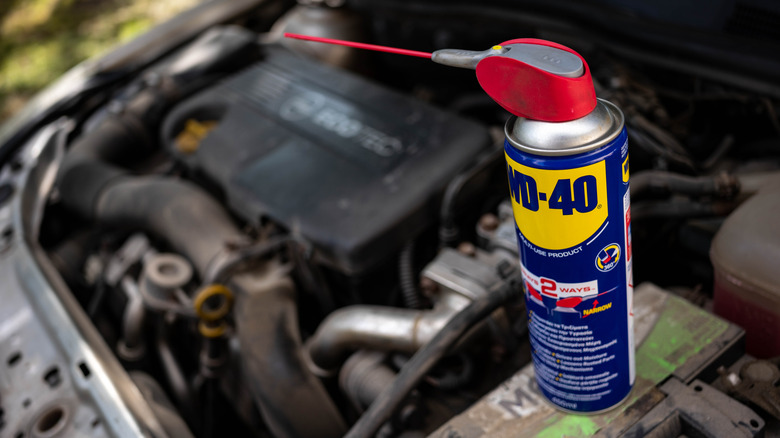
Most of us use WD-40 for one thing: loosening up squeaky, rusted hinges. Then the can goes back on the shelf. However, it can do more than that. In fact, WD-40 is quite a versatile spray for your car, and it can easily help you with everything from freeing stuck parts to keeping rubber seals soft. And that versatility can really come in handy as fall moves toward winter.
Cold weather is hard on cars. They have to survive rain, road salt, and frost, and you as the owner need to prevent grime from getting into latches, hinges, and locks. A hood that will not pop or a lock that will not turn is not much of a headache on a warm day. But on a freezing morning, it can wreck your plans, and you may have to spend extended time outside in the elements. Proper upkeep can prevent costly repairs and make for safer driving in the months ahead.
We have compiled a list of ways WD-40 can help you with these tasks in the fall. From the battery to the license plate, some areas just take a minute, and a few come with a catch. This spray is not a fix for everything, but the common mistakes are easy to avoid once you know them.
Clean up battery terminals
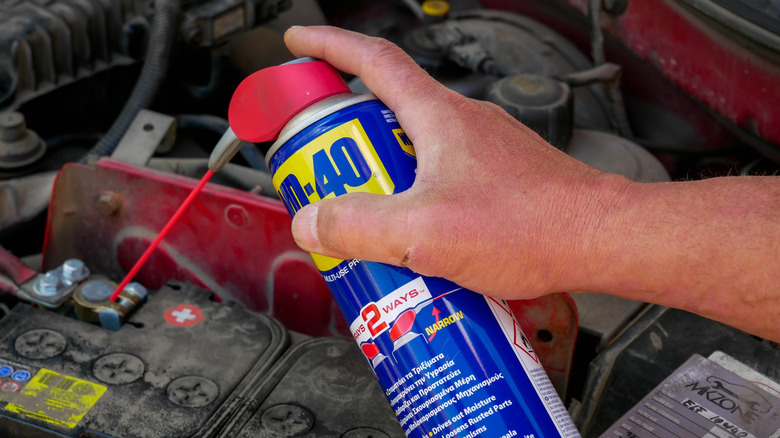
The first cold morning is when a weak battery just prevents your car from turning on. That can be really annoying, so before it happens, you should check the battery terminals. They should be clean, free of corrosion, and sitting tight, so there are no loose ends. If you see any sign of corrosion on the terminals, you can clean it with a brush and WD-40. A few sprays should help displace moisture and protect the terminals against rust.
However, the regular spray isn't guaranteed to get this job done. You need WD-40 Specialist Contact Cleaner for battery work. The regular WD-40 can still be a way to manage the effects of corrosion for a temporary period, but the specialist cleaner does that and removes most common contaminants, plus it is safe on rubber, metal, and certain plastic surfaces. You need to remove the buildup with a wire brush and wipe it off with a cloth.
WD-40's own safety sheet warns that inhaling or swallowing it can cause drowsiness and dizziness, and worse. Therefore, you should ensure that you are working outdoors or with the garage door open. Corrosion is easy enough to spot, but you should first test the battery with a tester or get it checked at a local shop. If it is near the end of its life, it would be better to replace it before winter.
Lubricate hood latches and hinges
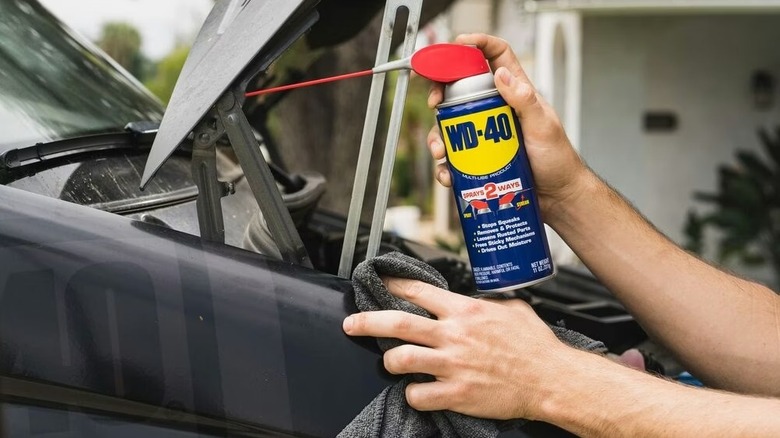
If you have sensitive hearing, you probably know that your car tends to start making weird sounds when it needs help. Open the hood and listen closely. If you hear a creak, the latch is the usual suspect, and in that case WD-40 will likely be the right spray to help. The straw will let you reach stuck latches in tight spaces, and make sure the fluid lands where it counts and not all over the engine bay. After all, it's important to keep the spray off the engine belts, as it can damage the rubber.
The steps are simple. You need to wipe the hinge first to avoid grinding old grit into it. Then spray WD-40 onto the hinge, wipe off the extra with a rag, and swing the hood a few times so the oil penetrates. You may have repeat the process a couple times if you still hear squeaking.
There is a bigger reason to bother with this in fall. Salty roads and wet leaves are about to hit that latch, and prep like this is one of many ways that WD-40 can save you money by avoiding bigger repairs down the road. A stuck hood can take your entire afternoon. So, before that happens, spray WD-40, open and close the latch a few times when you finish, and make sure it clicks shut firmly.
Spray rust protection on exposed frame areas
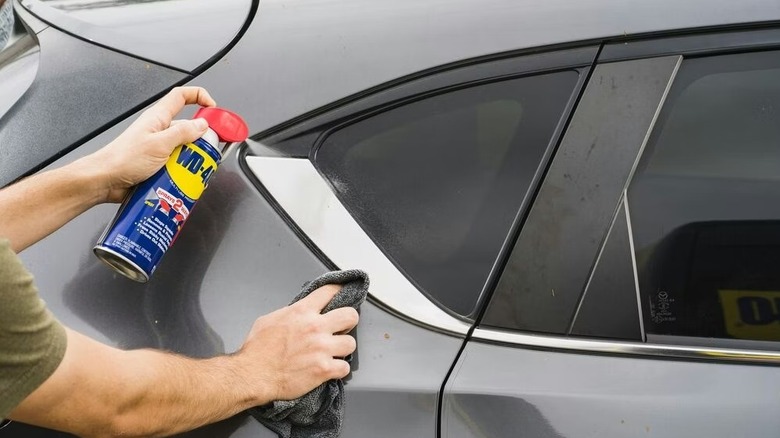
When it begins to snow, road crews throw salt to melt ice. When salt comes into contact with bare metal, it can make it rust. A thin coat of WD-40 can act as a shield against that salt for your car's undercarriage for a while. Think of a bare steel bolt left out in the rain. Salt just speeds that process up, and it is one of the best-known causes of rust. So even a small amount does real damage over a long winter. Just bear in mind that this is a temporary solution — it won't last all winter.
You should use the regular WD-40 on the exposed parts of the frame, keeping the layer light. While regular WD-40 is good for the outer exposed frame, you should really get the WD-40 Rust Inhibitor for undercarriage rust prevention work. A light layer is good enough — the goal is to guard your car against rust and not to coat it in oil.
If you see orange spots, then you should grab your WD-40 can, shake it, use the wide nozzle to soak the spot, then scrub with a wire brush. Always start with the roughest patch and move toward the lighter ones. You shouldn't put too much pressure to avoid gouging the metal. After wiping off the loose flakes, spray a fresh layer.
Prep the snow shovel
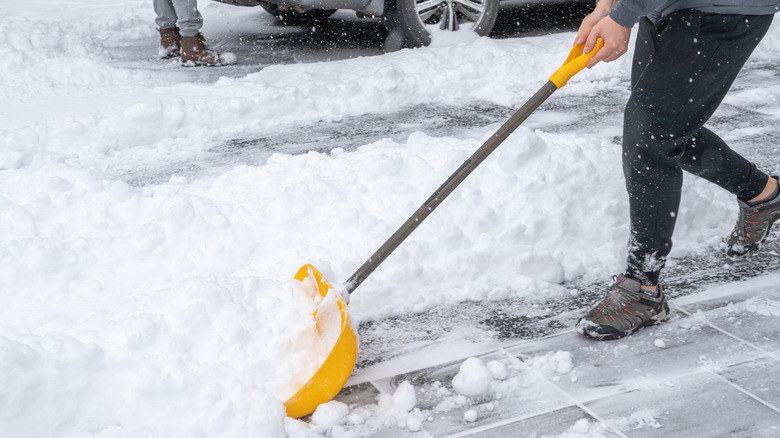
A shovel can be a vital tool for clearing snow from your driveway, but if the snow is wet, every scoop can feel twice as heavy. A coat of WD-40 can help the snow slide right off, make the job less demanding. You should first spray the blade before you start, and start scooping the snow. Additionally, you can use the same spray to protect the metal from rust caused by salt, making it probably the cheapest upgrade a shovel will ever get. It is a 10-second job that you can easily do now, long before the first big storm arrives.
While you can also use cooking oil, wax, and some other regular silicone sprays to achieve the same goal, WD-40 takes guesswork out of the equation. It will definitely help reduce the effort it takes to remove snow, but you have to be cautious using it near your car. The spray can smear windows and hurt the rubber around them, and that's saying nothing about the risks of using a full size snow shovel for clearing snow off your car.
Another important tip would be that you should start shoveling early and often, every few inches, instead of waiting for a deep pile. You should focus on getting a lightweight shovel with a nonstick finish and one with a small blade, so that you won't strain your back every time you shovel.
Spray the ignition parts
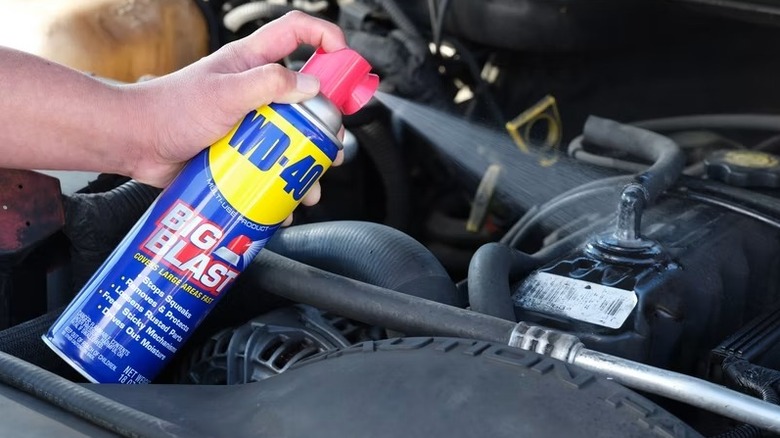
Many people believe WD-40 can help a stubborn engine start, but its real job is pushing water out. It's what the name stands for, after all: water displacement. This makes it useful when damp air causes trouble for spark plugs or plug wires. You can spray a cloth with WD-40 and rub it over the plugs or spray the wires and the distributor cap. You can also spray WD-40 to ease out plugs that are rusty or corroded.
Some engines use a carburetor, and WD-40 advises that if yours gets flooded, it can help clear the water before a restart. It is important to note that not every car has the same parts. So, you should check the owner's manual first to see what sits under your hood, because guessing is how people end up spraying the wrong thing.
You should also know the limits of WD-40. WD-40 can dry wet ignition parts, but it is not engine oil and should never be used as starter fluid. It is a quick, temporary fix for stuck parts and should never be used as a long-term solution for wheel bearings or suspension joints. For those purposes, a proper automotive lubricant should be the only choice. Think of WD-40 as something to help you get things working smoothly for long enough to figure out what the real problems are.
Keep car locks from seizing
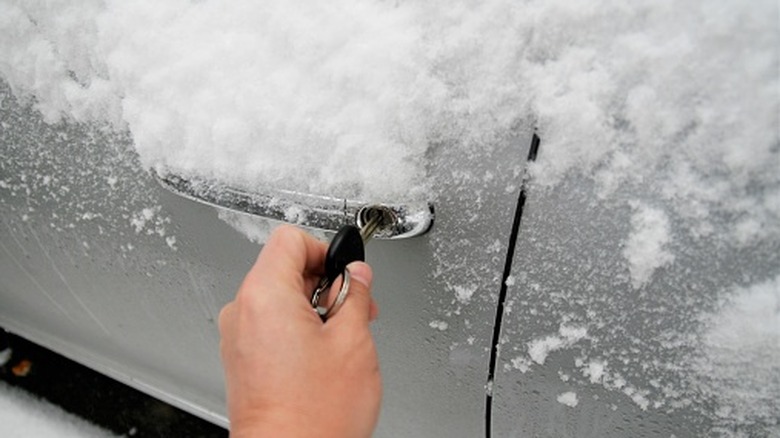
A frozen or stuck car lock is one of the most frustrating situations in the cold. A quick spray of WD-40 into the lock can help coat the metal, keep water out, and flush away dust. You can also use this on padlocks. The company's reasoning is that dirt and water inside a lock can damage it and make the key harder to turn. That is why many people reach for the can when the weather turns.
However, it is important to think twice about how you use WD-40 on components like this. When it dries up, it can leave a thin layer behind. That layer may get in the way of the moving parts inside the lock. So, you should go over and continue spraying WD-40 until the lock spits out the solution. After spraying the keyhole, put the keys inside the lock and move it, inside out, a few times to loosen it up.
The safest approach would be to use WD-40 on the key, while a small amount directed right inside the cylinders. Make sure to wipe away the leftovers to avoid unwanted grime formation that would prevent smooth functioning of the key. Moreover, you should get this done a few times in fall before winter, because nobody enjoys fighting a frozen lock.
Lubricate door hinge pins and side-door latches
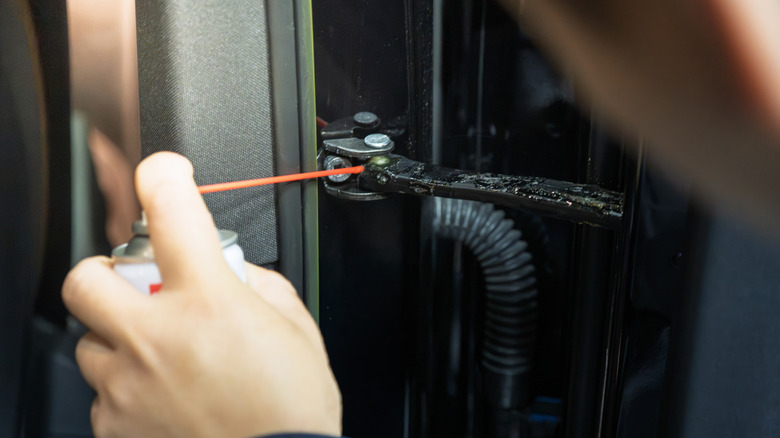
Every time you swing a car door open, its whole weight pivots on a pair of small metal pins, and those will be the first things to wear out if you're not taking care of them. To protect your door hinges and make them last, you should give the pins a regular spray. New cans of WD-40 come with an EZ-Reach straw attachment, and it lets you reach the pin without touching the paint around it.
During winter, to avoid freeze-ups and other issues, a quick walk around the car on a mild and dry day is the best solution. Open the doors, hood, and trunk, and give each latch a short spray rather than a soaking. For the rubber seals, it would be better if you use a silicone spray. When spraying on doors with a double seal, make sure to cover both layers.
If you spray a hinge and walk away, grime can slowly collect on the oil, and the hinge will end up looking dark and dirty. That darkening effect is why you should be careful putting WD-40 on your door hinges. WD-40 also reacts with moisture, which adds to the buildup. To avoid this issue, you should only use a small amount, cover the area around the hinge with paper, and wipe off the excess with a cloth.
Clean road-salt off the license plate
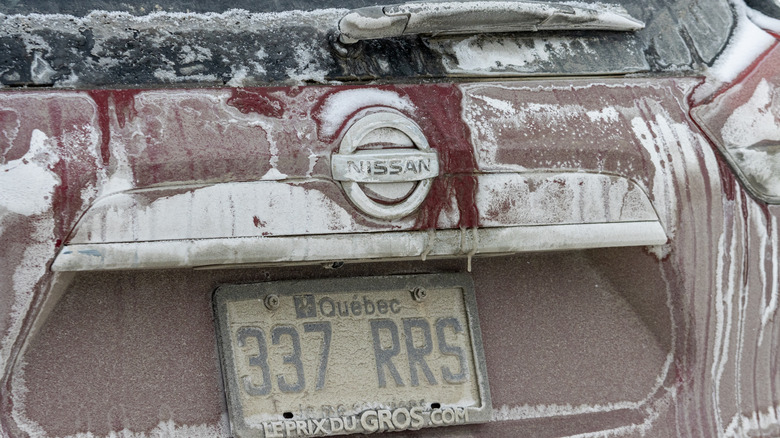
By the end of summer, many license plates are coated in squashed bugs and sticky tree sap, and the first salty roads will only add a layer of grit on top. If you spray WD-40 on your license plate during this time, it will soften all of the dirt and grime and make removing it easier. All you need to do is mist the plate, wait a minute while the spray works, wipe it off with a rag, and finally, make it sparkling clean with soapy water.
The plate will look shinier afterward, in addition to resisting rust and dirt for longer. The same WD-40 spray will also loosen rusty nuts and bolts that fasten the plate to your car, which can come in handy if you ever need to swap it. If you worry about the paint around the plate, you'll be glad to know that WD-40 Multi Use product is safe on car paint.
So, before you decide to take out your car, make sure to spray some WD-40 on your license plate. It won't take long to get it looking much cleaner.
Spray tools after every fall auto job
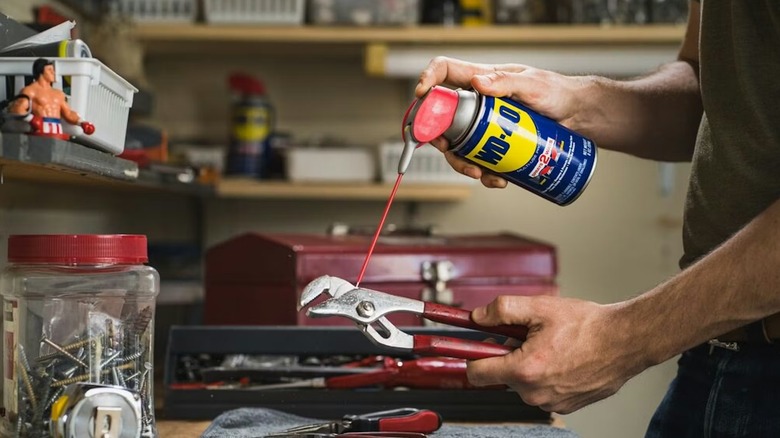
The last step of any car job is to put your tools back in their storage places. However, spraying them with WD-40 before they go back in the toolbox is step most people skip. A light coat will mean the wrench you reach for in spring comes out clean instead of freckled with orange spots. It's like brushing your teeth at night.
Tools rust because many of them are made from iron-based steel, which reacts with moisture in the air, and eventually rusts. The original WD-40 formula can lift rust from everyday tools such as hammers and screwdrivers when you spray the spot and scrub it with sandpaper or a wire brush. After wiping the metal dry, a thin protective coat of WD-40 before storage lowers the chance of the rust coming back.
However, using the spray on rubber or plastic grips can slowly wear those materials down. So, it is important that you wipe any splashes off the handles. Where you keep the tools matters too. You should keep them in a cool, dry spot and throw in a few silica packs inside the toolbox to soak up humidity.