

11 WD-40 Uses Every DIYer Should Know
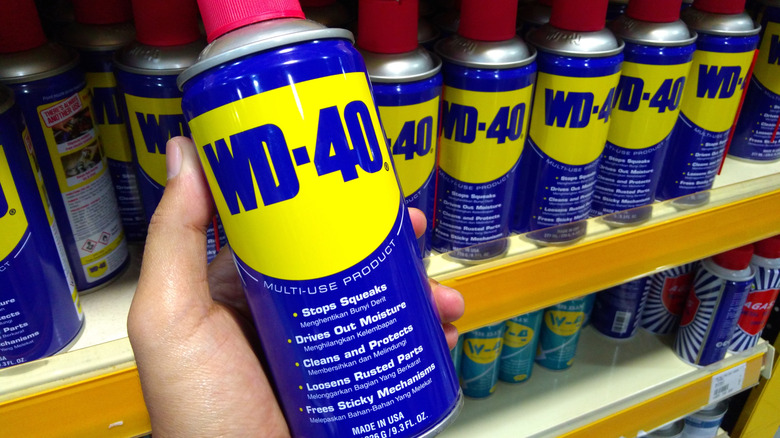
Most of us grab the blue-and-yellow WD-40 can when something squeaks or sticks, and then forget about it until the next time. WD-40 can help you fix a lot of things. It is that versatile. The name has a plain story behind it. The "WD" stands for water displacement, and the "40" is the number of tries it took to get the mix right. WD-40 was originally made to stop rust on missiles, and after workers saw its effectiveness, they started carrying cans home. A long-running belief is that NASA invented it, but that's not true.
But keep one thing in mind. Yes, WD-40 does a lot, but it does not do everything. If you use it in the wrong place, WD-40 can leave residue or wear down soft parts. In fact, some common spray-can mistakes can turn a quick fix into a bigger repair. It is cheap, fast, and, if used in the right place, it can make the problem disappear.
WD-40 lists more than 2,000 uses, but nobody needs to learn them all. We have compiled a list of 11 uses that save real time and money for a normal DIYer in their home garage. Some are well known, while a few might surprise you. Each one includes small details such as how it works, how long to wait, what to wipe off and when, and when to switch to a different product.
Fix squeaky hinges
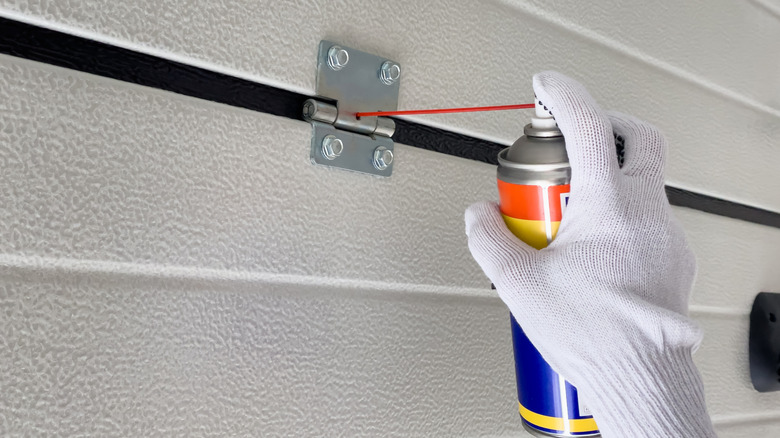
A squeaky hinge is one of the most common issues in and around a house, and one of the easiest to fix. But it's also the one people get wrong most often. WD-40 ranks hinges as its number-one use and says a quick spray can quiet noisy doors, gates, and even folding chairs. With the thin straw, you can aim at the pin and swing the door back and forth a few times so the spray works its way in. Notably, you'd have to do this on both sides of the hinge.
Here is where most of us slip up. If extra WD-40 liquid stays on the metal, dust sticks to it. The hinge can slowly turn dark and grimy. According to a window and door company expert, this is what happens when you spray and forget. That is why you should think twice about hinges when using WD-40. Tape a piece of paper under the hinge first, then wipe everything clean with a rag and a little soapy water when you're done.
Gate hinges, shed doors, and car door hinges all get noisy over time. If the squeak returns within a week or two, it probably needs a thicker lubricant, like grease. Think of WD-40 as a quick fix, not a permanent one.
Loosen rusted bolts and tight screws
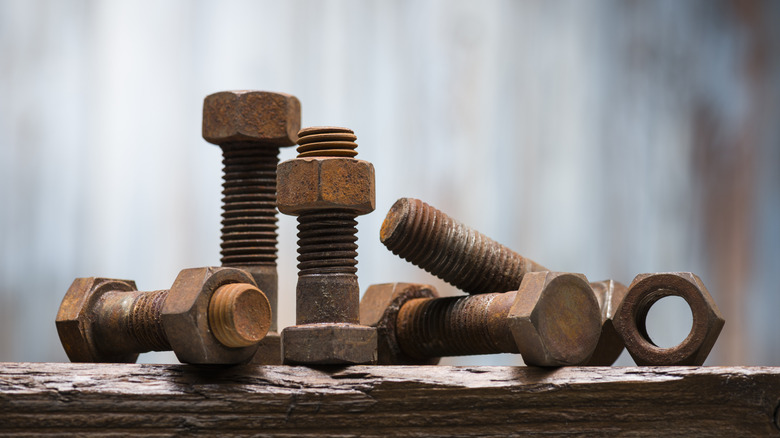
Rusted bolts are one of the most common issues any DIYer encounters. Spray WD-40 on the stuck part and let it sit for a few minutes to break up the rust before you try to turn it. Most people spray and pull right away, then wonder why the bolt snapped. It is important to give it a little time. For a really rusty bolt, spray a couple of times more and wait longer. The longer it sits, the easier the rust lets go.
But before you spray, a few things can help loosen the bolt faster. Brush off the loose rust with a stiff brush, and soak the bolt from every side. Then tap the head lightly with a hammer so the liquid creeps into the threads. If you skip these small steps, a short job can turn into an all-day chore. You can clean a freed bolt, dip it in WD-40, and reuse it instead of replacing it.
If a bolt still refuses to move, switch to something stronger. WD-40 sells specialist formulas made for jobs like this, including a penetrating spray. As mentioned, pre-soaking new nuts and bolts before use helps too. It helps prevent rust and makes removal easier later.
Prevent rust on hand tools
Rust on tools rarely comes from hard work; it comes from sitting around, exposed to the elements. A wrench left in a damp shed or a toolbox in a humid garage slowly picks up moisture. Although steel tools are strong, they rust easily. Over time, the factory coating wears off. So the real fight is keeping your tools' storage dry. Even a closed toolbox isn't safe, since humid air can get trapped inside when you open the lid.
The fix is simple. Spray WD-40 on tools exposed to rain or humidity, then wipe them clean. Make it a habit to do this after a job, while the tool is dry. You don't need multiple coats. A thin coat is enough. If tools sit idle for a long time, check them each season. You can also drop a small silica pack into the box to absorb moisture. Also, wipe the box occasionally with a suitable cleaner.
Be cautious around rubber grips and some plastics, since they can break down if you spray them often. So the simple trick is to treat the metal and skip the soft parts. Wipe off the excess before putting anything away, so dust doesn't stick and turn into grime.
Maintain power tools
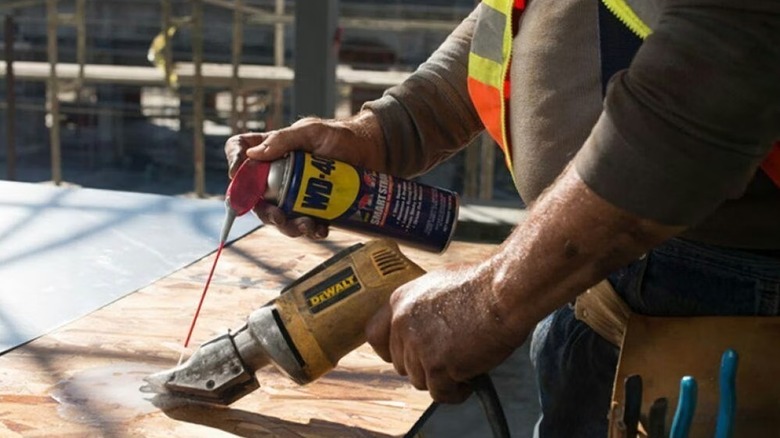
Power tools are costly, and you spend months or years collecting them (unless you are rich). But most of them spend the year asleep, sitting on a shelf. A drill in a garage cabinet goes through hot days, cold nights, and damp air, which can leave moisture and rust on metal parts. Rust on a drill bit or saw table is easy to miss until it ruins a cut. To avoid this, check them regularly. A short check twice a year is better than a big repair later.
Unplug corded tools or take out the battery so nothing starts by accident. Brush and wipe away dust and grime, then put a little WD-40 on a rag and wipe the bare metal. A short burst of WD-40 on power tools helps push out moisture, which WD-40 advises for power and precision tools. A brush and a vacuum are good enough, and WD-40 also fits the bill for cleaning tight gaps.
Divide the cleaning into two parts. Do a quick wipe before any project and a proper check before winter storage. Or, at a minimum, take your tools out once a year and check for rust or damage. Just keep the spray away from rubber and plastic parts.
Keep grass from sticking to lawn mower blades
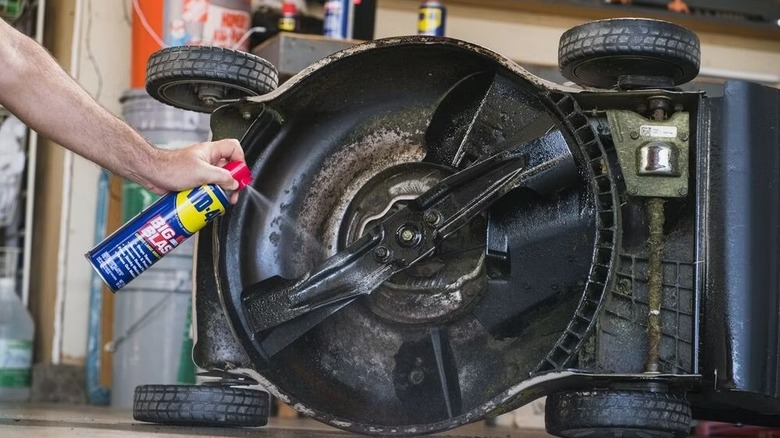
Anyone who uses a mower deck knows this pain. The lawn is damp, and the blade gets clogged after one pass. Wet grass packs the blade and makes it unmovable. Spray WD-40 on the blades before you mow, then wipe them down afterward. This keeps them cleaner and speeds cleanup. It is a tiny step that saves a long scrubbing session. Wipe each part with a dry cloth so the spray sticks to clean metal.
The best part is that the same WD-40 spray fights rust, which helps the lawn mower blades last longer between cleanings or replacements. A quick spray around the oil cap, air filter area, and spark plug area helps keep rust away. A few seconds of spraying can save you from a stuck cap when you're about to mow.
Because the blade is the most dangerous part of a mower, the U.S. Consumer Product Safety Commission advises unplugging electric tools and disconnecting the spark plug wire on gas ones before working near moving parts. So spray only when the mower is off and cool. Wipe off anything extra, so nothing drips onto your lawn. Ensure the blade is dry before you start the mower.
Protect outdoor equipment from rust and corrosion
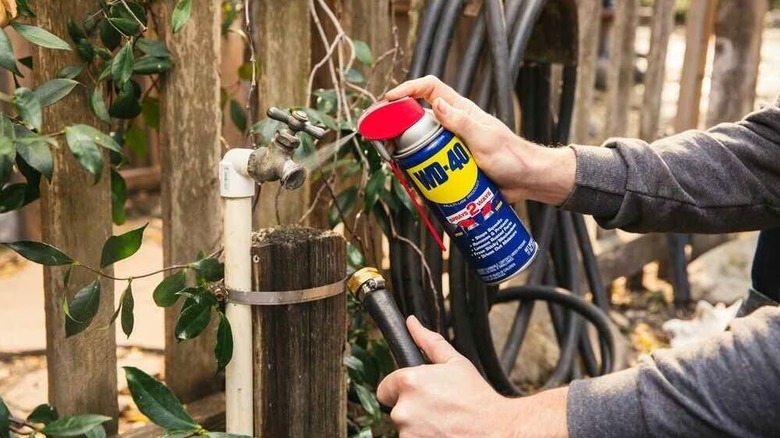
Garden hose ends, fishing reels, camping gear, and mowers stay outside for extended periods. Water never leaves them alone. A light spray of WD-40 between trips helps stop corrosion and clears away salt or algae. The same idea applies to anything metal that comes in contact with rain.
Before you spray WD-40, keep a few things in mind. Spray only after the surface is clean and completely dry, and repeat the job seasonally because the protection doesn't last forever. Spraying over wet mud just traps moisture, and everything gets messy. Wipe the part, let it dry in the sun, then spray lightly and wipe off the extra. This prevents grime build-up on outdoor gear and actually cleans the equipment better.
Garden hose ends, camping gear, and even the metal windmill in a garden pond are small parts you can spray with WD-40 to protect against rust. Simply spray WD-40 on anything metal, anything that gets wet, and anything going into storage. Make sure the parts are clean for the best WD-40 results. Perfect for those who like DIY.
Keep paint from sticking to doorknobs and handles
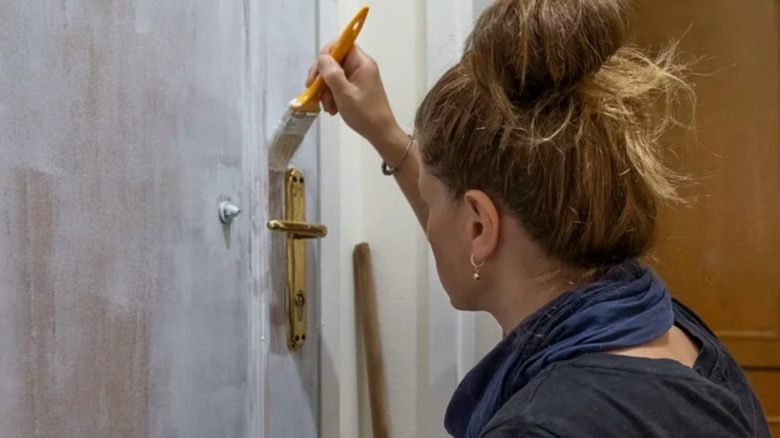
Painting around a doorknob looks simple until paint lands where it should not. As a DIYer, it's frustrating because it's one more job. Taping works, and removing the hardware does too. But if you cannot or don't want to, WD-40 is a smart shortcut. Spray a little on the knob or handle before you begin, and the paint will wipe off easily.
The spray leaves a thin film on metal. This makes it harder for wet paint to grip the surface, thanks to the water solution, WD-40's main ingredient. Spray the cloth first, then wipe the hardware to avoid misting the door. The same film can keep paint from sticking to the door or trim. But before you go ahead, test on a hidden spot.
As soon as the paint is dry, wipe the knob with soapy water to remove leftover spray before anyone grabs it. If you live in an older home built before 1978, it may fall under EPA renovation and painting rules, mainly for lead paint. So don't sand or scrape old paint off a windowsill. Go through the rules first, then enjoy the clean, sharp edge around your newly painted door.
Make dirt slide off shovels
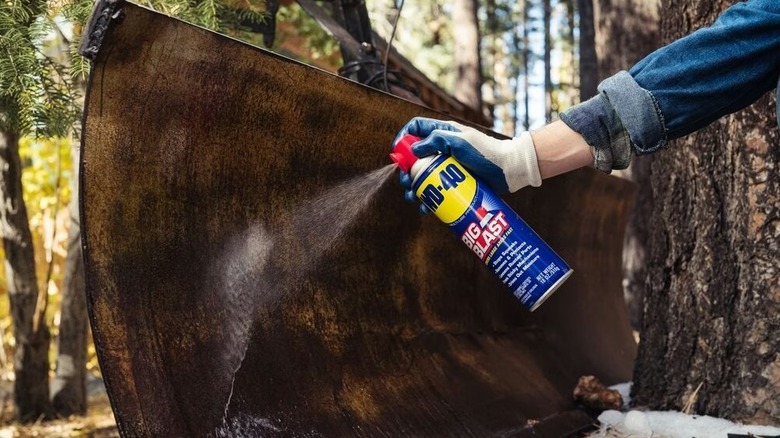
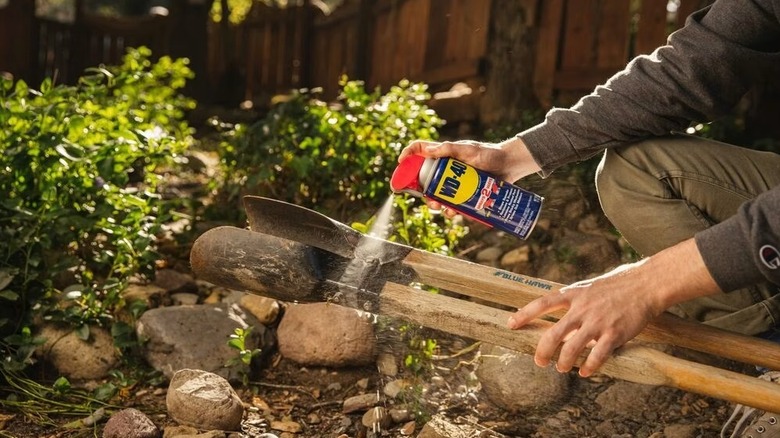
Any DIYer who's dug in clay knows it means a second job: scraping soil off the blade after every few shovelfuls. WD-40 has a fix: spray both sides of the shovel before you start. This will make the soil and mud slide off instead of sticking. WD-40 explains the same trick works on post-hole diggers, which handle some of the stickiest work in the yard. It takes ten seconds and costs almost nothing.
A spray of WD-40 on the shovel in your shed can help prevent corrosion and wear, which may help your tools last longer. That is a good deal for a quick spray, but don't treat it as a permanent solution. You'll need to do this quite often. A clean tool is easier to put away, and a dry tool has less rust waiting for you next season.
Just a couple of things you should remember. First, spray only the metal blade, not the handle, because a slick grip is the last thing you want while lifting a heavy load. Second, spray again when soil starts clinging, since the film wears off as you dig.
Keep paint from sticking to paint brushes
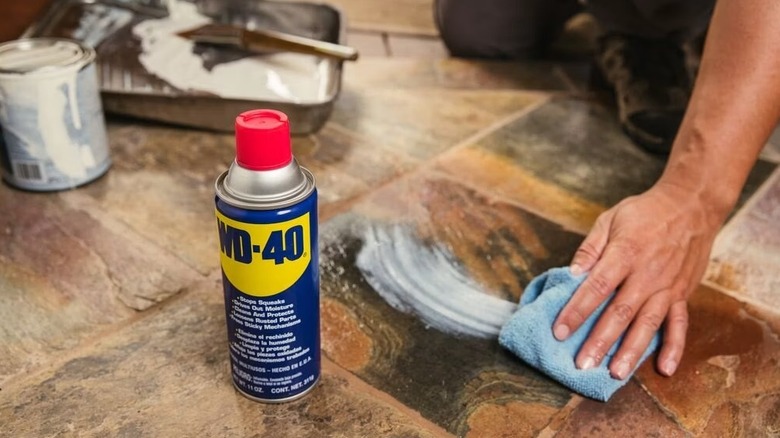
WD-40 can be a great friend for those who hate scrubbing brushes. Simply spray the bristles to keep them soft and ready for next time. These brushes are also easier to clean after storage. Keep in mind this trick applies to brushes you are about to put away, not ones you are using mid-job.
Before you use that stored brush again, wash it out with soap and water to remove any oily film. You don't want WD-40 residue on your paint. WD-40 helps in many places, but it isn't right for everything. Test it on an old brush first. That small step takes a minute. If the results are favorable, you can add it to your painting routine.
WD-40 publishes safety data sheets for its products, and a quick read is worth it before using it indoors, especially near heat or open flames. Paint jobs often mean open windows and a fan, which helps airflow. Spray in a well-ventilated space, keep the can away from sparks, and wipe your hands afterward.
Lubricate moving parts
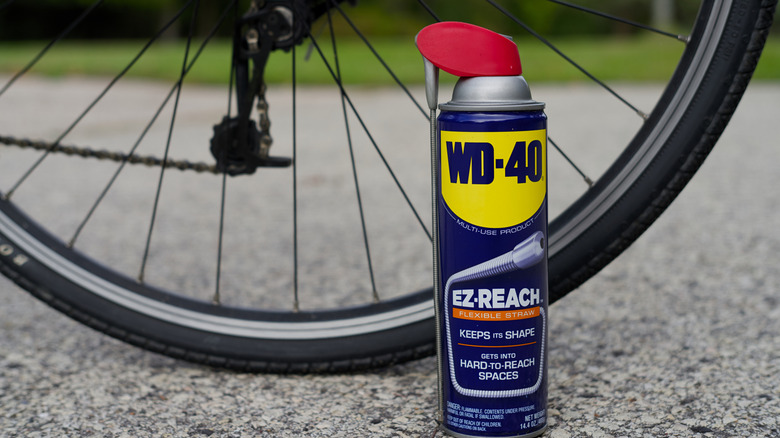
If a part needs to turn, slide, lift, zip, or open, WD-40 can help. Beyond mower and saw blades, this spray can also fix dolly wheels, garage door rollers, pulleys, and chains. WD-40 is great for freeing, cleaning, and quieting parts, but it isn't the best long-term solution. Don't use it as a long-term lubricant on certain parts, and never inside an engine, because it isn't engine oil. For a part that carries a heavy load, think grease.
Use WD-40 to free a part up, wipe it, then decide if it needs something thick. A wheelbarrow wheel, a gate latch, or a sliding drawer might be fine with a light spray every few months. A bike chain or a heavy hinge may need proper lube, since WD-40 can work for a one-off. If it goes quiet and moves smoothly, WD-40 is probably enough. If the noise returns in a few days, switch products.
Unstick stubborn parts
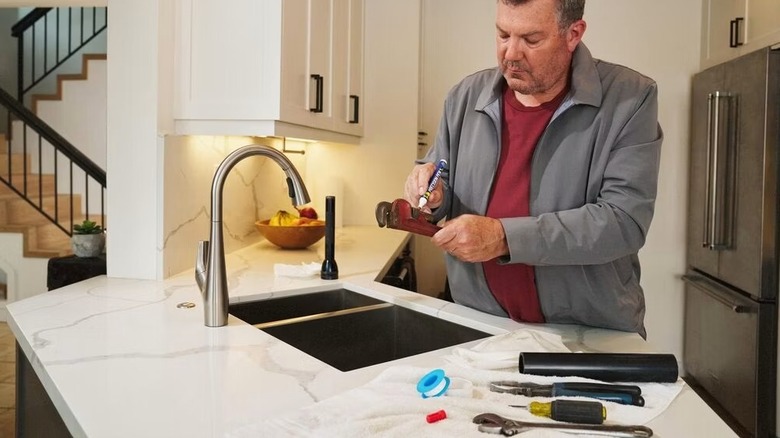
DIY doesn't mean doing a specific job. It means that you are probably handling a lot more. A pipe fitting under the sink, a rusty clamp on a ladder, or a latch on a garden gate can all become stuck. All these can seize up because rust or corrosion binds the metal pieces together. WD-40 can break up that oxidation and corrosion. So after you spray the bonded parts, wait a few minutes before you try to loosen them.
Getting the spray to the right place matters the most here. For that level of precision, the brand also sells a bendable straw. Avoid the broad mist if you have a problem at a particular point.
If a part still will not budge after a couple of rounds, forcing it can snap it or round off the head. Stop using WD-40 and switch to a better solution. After spraying WD-40, don't skip light taps or using the right wrench size. Free the part, wipe off the excess, and keep one can where you use it.