

5 Ways WD-40 Can Help Maintain Your Lawn Mower

As winter gives way to spring or summer winds down toward fall, the lawn mower might not be the top maintenance task on your mind. But when seasons change, and it comes time to either get the lawn mower out for the year or put it away until next spring, you should be giving maintenance a thought if you want that lawn mower to last another twelve months. As it turns out, WD-40 can help with several of those routine maintenance jobs.
From keeping grass from clinging to mower blades to protecting exposed metal from moisture and rust, WD-40 is kind of miraculous in all the ways it can help maintain your lawn mower. Used the right way, the product can practically extend the life of your mower by keeping its components in usable shape for longer. Best of all, WD-40 is inexpensive and, when used in one (or all) of these ways, it could save you from a bigger repair bill down the line.
Keep grass from clinging to blades
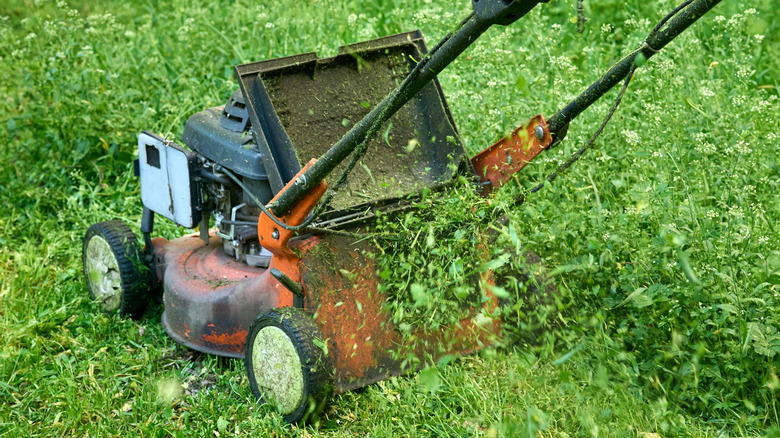
One of the simplest ways to use WD-40 on a mower is to treat the blades with it after they've been cleaned. Freshly cut grass (especially wet grass) is notorious for sticking to the metal surfaces underneath the mower deck. That creates a layer of grass clumps that only continues to grow larger as you mow. Before you know it, you've got grass clumps coming out of every side of the mower, your efficiency is dropping like crazy, and your lines look a mess.
To save yourself the trouble of having to stop, tip the lawn mower over, and clean off all that grass in the middle of a mow, just use a light coating of WD-40 instead. It can make the blade surfaces more slippery, which, in turn, gives the grass clippings less to cling to. With luck, that means less scraping and brushing and faster mows for you and greater efficiency for your mower. And, as an added tip, remember to keep the cutting surfaces clean between mowing sessions to save time later and make reapplication smoother.
Keep metal parts from rusting
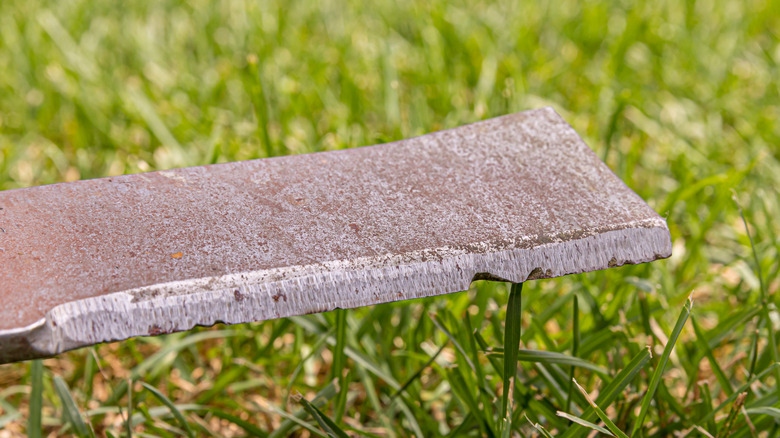
Speaking of wet, clumpy grass: Moisture is understandably a huge concern for a machine that spends its working life outside. You know water can cause metal components to rust and corrode, and that's just as true of your lawn mower as it is a rusty metal yard tool. Fortunately, you can use WD-40 to protect those metal parts. After all, it's right there in the product's name: "WD" stands for water displacement.
By doing the job it was created to do, WD-40 can displace that moisture and make it harder for rust and corrosion to take place. Your mower might not be the same as a missile, which is what the product was originally invented to treat, but the purpose remains the same: displace that moisture to keep rust at bay. As with the blades, just make sure your mower is clean and completely dry before you spray the WD-40 on. Also, this treatment isn't permanent, so you should expect to repeat it periodically throughout the mowing season.
Loosen parts that have gotten stuck
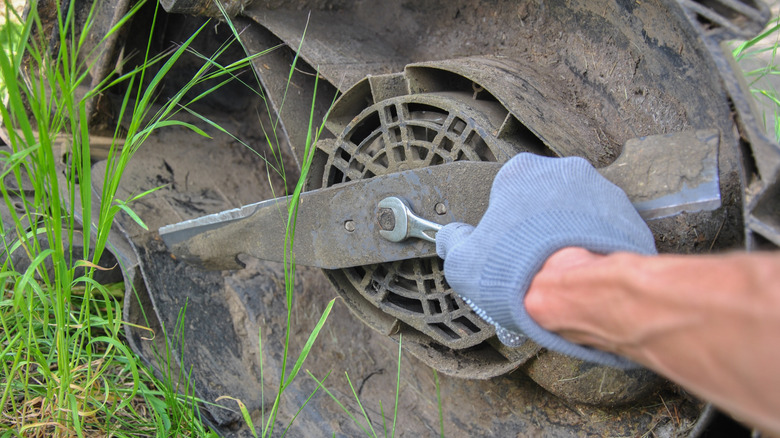
Is there anything more aggravating than when a nut, bolt, or other component refuses to budge? How are you supposed to properly maintain your mower or change out a part if you can't even take the thing apart? Rust and built-up grime are likely what's making those parts so difficult to remove, and that means WD-40 can come to the rescue here, as well. Like a penetrating oil for seized bolts, the product can seep into those joints and crevices and give you the lubrication you need to loosen them up.
A word of warning: Safety should be your top priority before you go trying to free anything on the mower. Shut the machine all the way down and disconnect the spark plug wire before working on stuck components. Apply WD-40 directly (and exclusively) to the area that needs to be freed, then give the product time to penetrate rather than immediately attempting to force the part. More stubborn parts may need another application or two before you successfully loosen them.
Remove grit, grime, and gunk
A mower can really take a beating over the years. Pushed to every corner of your yard, forced through puddles and goodness knows what else, exposed to mud and bugs and the elements week after week and month after month... it's going to get your outdoor power tools dirty. Over time, all that accumulation can interfere with blade movement and make mower less efficient. WD-40 can help you get cleaned up, though.
As always, the mower is going to need to be switched off and the spark plug wire disconnected before you go spraying WD-40 and cleaning around the blades. But, when done right, it can help you remove loose debris with a brush or scraper or old rag. And don't forget: you can also treat the blades afterward to help prevent that nastiness from getting built up like that again during the rest of the mowing session (and maybe even into the next).
Keep dust and debris out of the filter
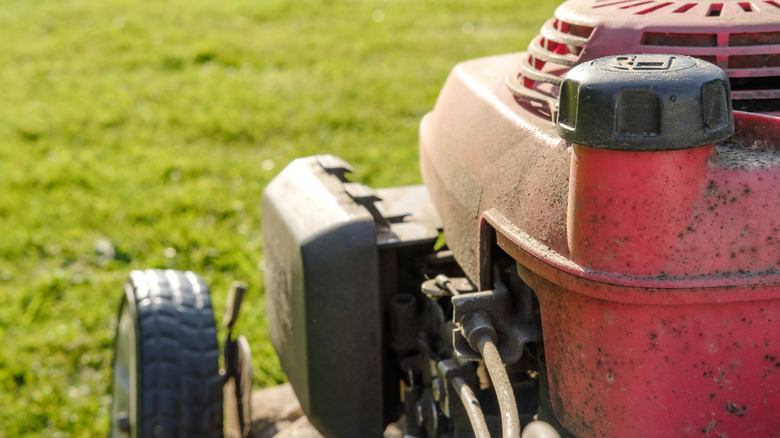
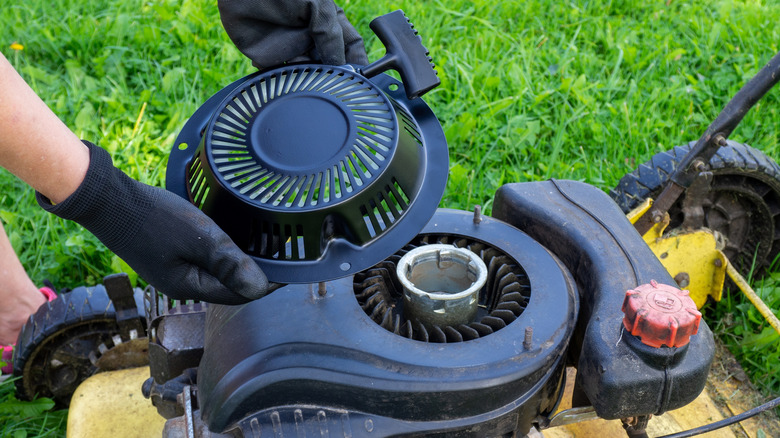
Like any engine-powered machine, your lawn mower air filter is kind of the unsung hero. It keeps dust and debris out of the engine to keep things running smoothly, but too much dust and debris accumulated in the filter can inadvertently keep air from flowing. A clogged filter can even affect engine power and cause the mower to burn through fuel faster. To keep it from getting clogged like that, you can actually spray some WD-40 around the filter area to keep dust from settling there in the first place.
Doing so doesn't mean you won't ever have to replace the filter again, of course, but it can still be incorporated into your seasonal maintenance to keep you from having to do it as often. Start by removing the old filter and tossing it properly. Then, clean away whatever dust and other debris is around the filter housing. Once the surface is clean and dry, apply the WD-40 and give it several minutes before installing a clean new filter. With that, dust and debris should have a harder time clogging the filter.