

10 WD-40 Products Every RV Owner Can Use

RVs are put to the test in almost every weather condition. They shake, bake, and sit out in the rain, snow, and heat, so small parts wear out fast. A door latch can start to squeak, a lock can freeze in cold temperatures, a bolt can refuse to turn when you're already running late. All these can ruin a whole weekend trip. The good thing is that most of these jobs need just one small can -– WD-40. But WD-40 isn't a single can anymore. The brand now sells a full lineup, and each can has its own job.
The right can makes the work easy, and the wrong one can cause damage. The classic blue-and-yellow spray has plenty of uses and is so versatile that you'll wish you knew sooner how far it can go. Still, that WD-40 can isn't the answer to everything. When you talk about rubber seals, electronics, and heavy metal joints, all want something different. You cannot use a single bottle or mix things up, as it can lead to a hefty repair bill. A little know-how up front saves money, time, and grumbling at the campsite.
In this guide, we have listed 10 WD-40 products that make sense for RV life. It includes the mighty all-purpose can to the more specialized ones that you would need for specific tasks. For each one, you'll see what it does, where it fits in a camper or motorhome, and where you should hold back.
WD-40 multi-use product with Smart Straw
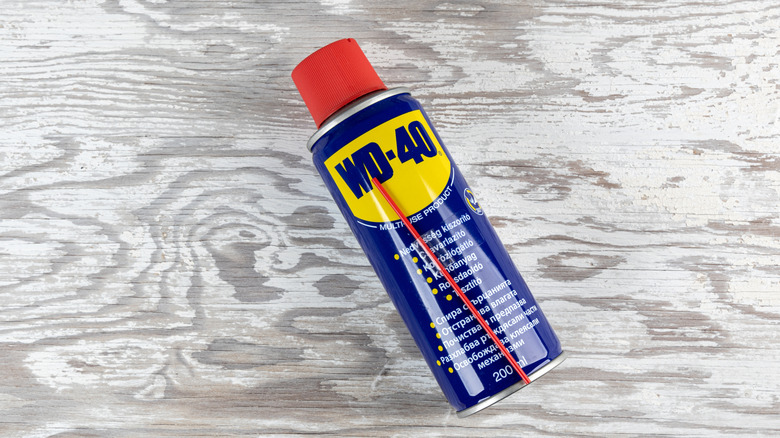
If you were wondering why everyone's favorite can is called "WD-40," well, it got its name from a lab notebook. The name stands for "Water Displacement," and the formula finally worked on the 40th try, in 1953, hence the name WD-40. That story explains what a WD-40 can do best. It helps push water off metal, frees stuck parts, and leaves a thin coat that helps slow down rust. The Smart Straw version comes with a straw attached to the can that you can flip up for a thin stream or down for a wide spray. This way you can reach the most challenging places.
In an RV, think of it as your first-aid can. You can use it in most places and get things done in a few quick sprays. Use it on a frozen door lock, a squeaky metal hinge, or a stiff tool in the storage bay that just won't open. One thing to keep in mind is that you cannot spray it on everything. Its petroleum base can dry out rubber seals and slide-out parts, and it is highly flammable near stoves, batteries, and engine heat.
Moisture creeps in while a rig sits, and metal pieces like hinges and latches rust quietly over time. So, before you store the camper away, wipe down the bare metal parts with a rag and a little spray, then follow a full winterizing routine for the water lines and seals.
WD-40 Specialist Silicone
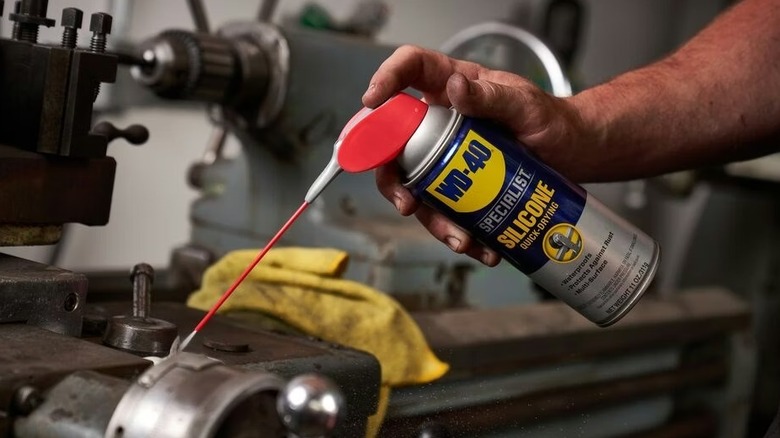
Open an RV door after a cold night, and the seal might feel as if it's glued shut. A dry or dirty rubber seal sticks, and sticky seals can tear over time. That's where WD-40 Specialist Silicone comes in. You can spray it on wet, and it will leave a clear, water-resistant film that prevents the stickiness of the rubber. You can use the WD-40 Specialist Silicone on most metals, plastics, rubber, and vinyl, and it is built to work from -100 degrees to 500 degrees Fahrenheit, so winter trips and hot summer pavement both fit. It also helps keep dust and dirt from building up on parts of your RV where you have sprayed.
The difference between WD-40 and WD-40 Silicone is simple. Notably, the regular can is mainly a cleaner and prevents rust with mild lubrication. On the other hand, the silicone specialist WD-40 lasts longer on moving parts and is gentler on plastic and rubber. This is why it is a smart pick for door seals, window tracks, cabinet hinges, and storage-bay latches. You simply need to spray onto a rag first, then wipe it on carefully, avoiding coating window glass or the floor.
Speaking of rails and rollers and dry, non-sticky lubes, RVtravel notes that dry silicone-based ones are often a better choice because they don't gum up. You can take a look at your owner's manual, as some makers name a specific product. And if you didn't know the brand made this one, it's among the WD-40 products you might not know about.
WD-40 Specialist Contact Cleaner
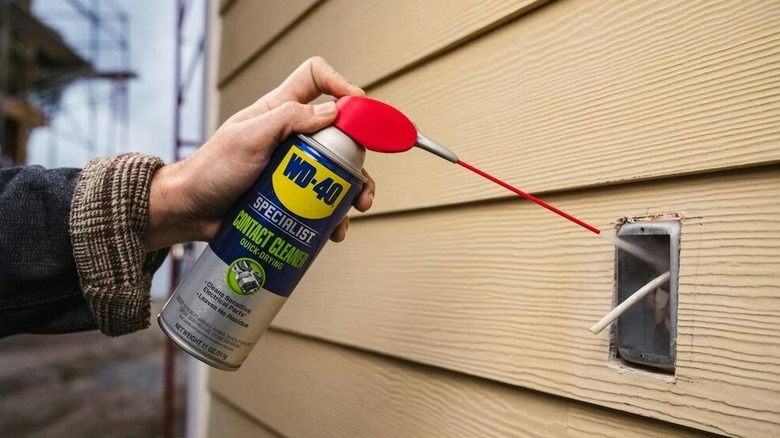
It is quite annoying when you have to flip a switch three times to make it work. In an RV, this is quite common, and the cause is often plain dirt or moisture on the contacts, not a broken part. Rigs get damp and dusty, and that can leave a film on the metal. This happens especially after a rainy trip or when the RV was in storage during winter. WD-40 Specialist Contact Cleaner is made for this specific task. This specialist spray removes oil, dirt, and moisture from electrical parts; on top of that, it dries quickly and leaves no residue behind.
You can safely use it on control panel switches, relay boxes, battery terminals, and the dials on a stereo. However, just like other sprays in this list, don't use it everywhere. As per the label, it says to keep it off device screens, keyboards, and adhesives. When using on plastic, you should do a small surface test. Additionally, don't swap in the multi-use can here. This is purely because the regular WD-40 spray isn't meant for electronics.
Compressed air blows away loose dust, but it can't lift grime that is baked onto a surface. The WD-40 Specialist Contact Cleaner can do this job. Spray through the straw, let it dry, and brush off if needed. You should keep the can away from hot surfaces because it's flammable. Additionally, make sure to turn off the power first.
WD-40 Specialist White Lithium Grease
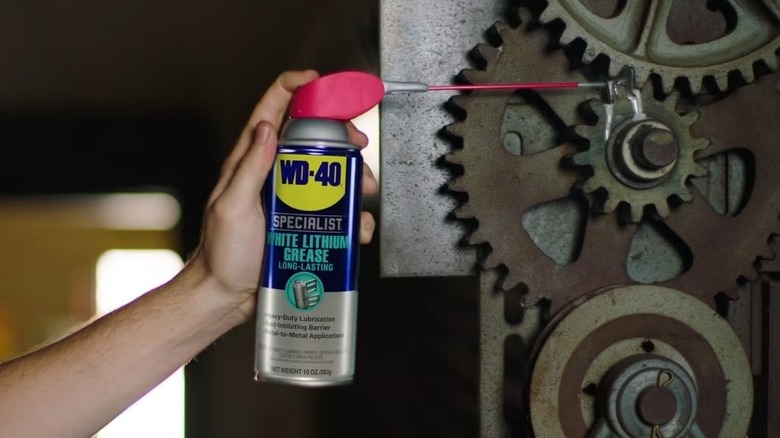
Some parts don't work with thin spray. They need something that stays where you put it, even when the rig bounces down a rough road all day. This idea gave birth to the WD-40 Specialist White Lithium Grease. It comes out as a liquid, then turns into a thick coating when dry, which keeps metal parts moving and protects against rust. It can handle extreme pressure and works between 0 degrees and 300 degrees Fahrenheit, so heavy hinges and latches keep working whether it's a cold morning or a hot afternoon.
Think of metal parts that rub together and carry weight like heavy storage-bay hinges, latch plates, gears, pulleys, and guide rails. The product page lists all of these parts where you can use this specialist spray. It is one of the good substitutes for WD-40 and a strong pick when two metal surfaces stay in constant contact — you can even use it for garage doors. The best part is that a thin coat is good enough. You should wipe off the extra so it doesn't drip or smear on your clothes.
There's a catch, though. Since this grease is thick and petroleum-based, it can harm plastic and rubber, so you should keep it away from door seals and plastic parts. To make things simpler, you should use grease for metal-on-metal and silicone for rubber and plastic. Spray this Specialist White Lithium Grease on hinges and latches at the start of each camping season, and spray more when they start to feel dry or loud.
WD-40 Specialist Penetrant with EZ-Reach
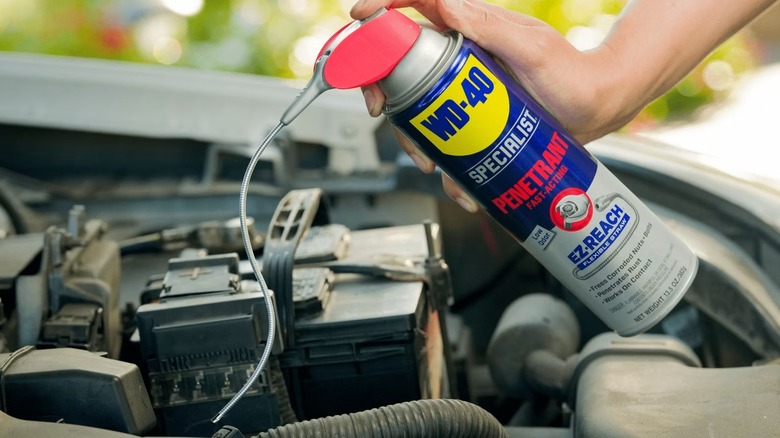
There are so many times when you are in a situation where a rusty bolt is tucked behind a frame rail, where your hand can't fit, or you can barely see it. That's exactly the moment WD-40 Specialist Penetrant with EZ-Reach was made for. There is an 8-inch straw that bends and holds its shape, letting you aim the spray at a nut or bolt that is hard to reach. The formula is thin on purpose. WD-40 says the thinness lets it creep into tight gaps to loosen the rust holding parts together.
You might think, why not just use the regular blue-and-yellow can? Upon comparing WD-40 and penetrating oil, it was found that the regular spray often works on lightly stuck parts but can struggle with heavy, deep rust. The reason -– it's thicker. On the other hand, penetrating oil is thinner, so it can get deeper. The easy way is to start with the multi-use can on mild cases, then reach for the penetrant when a part still won't budge.
This one leaves a lubricating layer behind and helps stop rust from forming again. The WD-40 Specialist Penetrant penetrates at least 50 percent faster than the competition, as per the manufacturer's own lab tests. Spray, wait for a few seconds, then try the wrench again with steady pressure instead of a hard jerk.
WD-40 Specialist Gel Lube
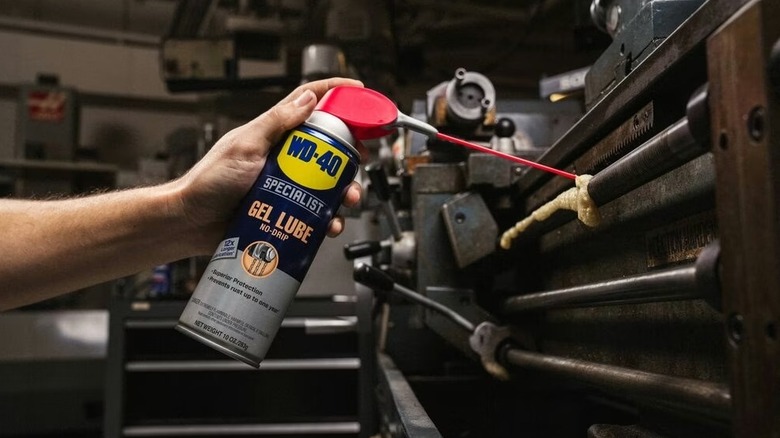
There are many lubes on the market that, when sprayed, run down and drip on the ground. That's the exact problem the WD-40 Specialist Gel Lube tries to fix. It sprays out as a gel that clings to vertical surfaces and resists dripping. This gel lube protects against wear, rust, and water, and it can work in extreme temperatures ranging from -50 degrees to 500 degrees Fahrenheit. Thanks to the Smart Straw, you can have a thin stream or a wide spray.
When the regular WD-40 went up against the Gel Lube, it was concluded that the gel is thicker, allowing it to stay longer on parts that face weather and dirt, like cables, chains, rollers, and gears. The multi-use spray is better for quick, everyday jobs. You need to loosen and clean with the regular can, wipe the part, then top it off with a coat of gel lube. You can try it on a roller or a pulley, and you'll see the difference clearly.
For an RV, you can use the Gel Lube on parts that stand, hang, or face the sky and rain, like tall hinges, door undersides, and cables. WD-40 lists vehicle hinges and door undersides for rust protection. The company claims one year of rust protection, though results may vary. If you're unsure about a surface, test a small spot first, and see if it suits it or not.
WD-40 Specialist Dry Lube
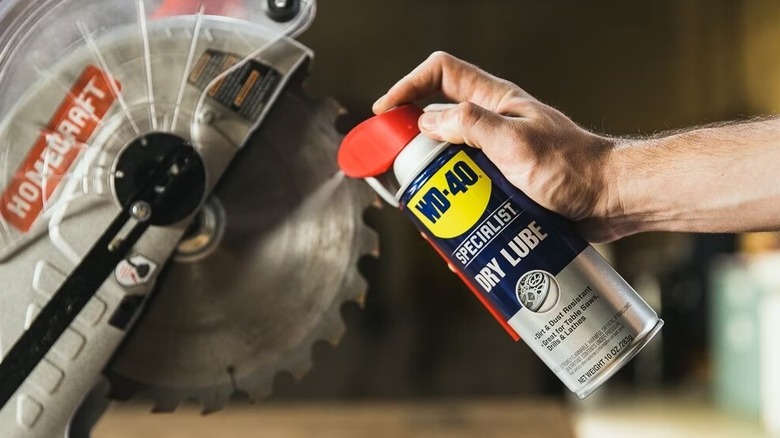
RVs spend most of their time either on the road or at campsites. And we all know that campsites are dusty. Sand, grit, and pollen get into everything, and an oily lube can turn that dirt into a sticky paste. That's why WD-40 Specialist Dry Lube is worth a spot in every RV owner's kit. It dries fast and leaves a thin lubricating film, and resists dirt and dust buildup. You can use it on most metals, plastics, and rubbers, and WD-40 suggests testing a small area first if you're unsure.
You can use it on window tracks, sliding screen doors, hinges, and rollers, which all collect grit. A dry lube for hinges and window tracks is much better compared to the standard WD-40 spray.
One tip for RV owners is to go light. A few reviews highlight that the film felt oily after heavy spraying. This means a short burst is enough — less really is more here. Additionally, you should have a rag under the part, wipe off the extra, and run the track back and forth a few times. If you camp near beaches or deserts, this can keep your tracks from turning gritty every season. The dry lube can also be used with power tools, blades, and bits, so it's handy in the tool bin too.
WD-40 Specialist Corrosion Inhibitor
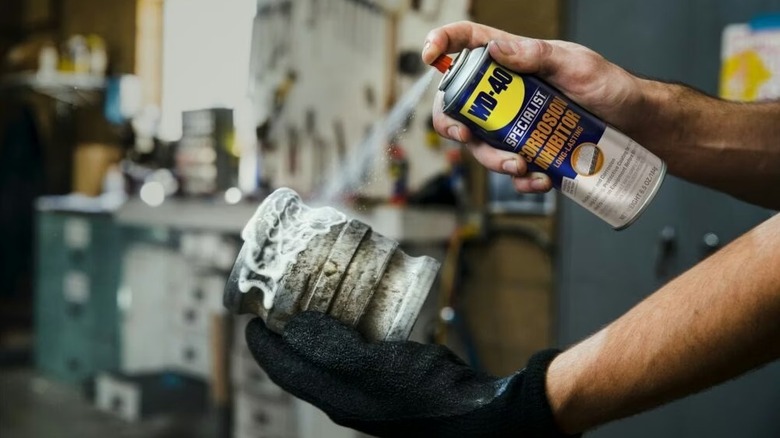
Rust can form anywhere in your RV and doesn't care if it is parked or in use. It forms whenever bare metal meets damp air, and long storage gives it plenty of time. WD-40 Specialist Corrosion Inhibitor is built for that long wait. When you spray in on the surface, it coats metal with vapor corrosion inhibitors that seal out air and moisture. They keep working even if part of the coating gets rubbed off. A quick spray before storage means less rust formation when you open the garage again.
If you want to protect hand tools from rusting, you should prevent moisture. Humidity, salt, and heat make it worse. The best thing to do is to wipe tools after each use, dry the joints, store them off damp concrete, and check them once a month. A WD-40 corrosion inhibitor is meant for bare metal such as tools, locks, chains, cables, and hinges, so your storage-bay toolkit is a good place to start.
WD-40 claims up to one year of protection outdoors and up to two years indoors, based on independent salt spray and humidity chamber tests. One more thing to keep in mind; avoid long contact with rubber. Meaning, you should keep the spray off seals and tires. The process is simple –- wipe, dry, and then spray –- and you've done in minutes what could save you hours of scrubbing rust later on.
WD-40 Specialist Degreaser and Cleaner EZ-Pods
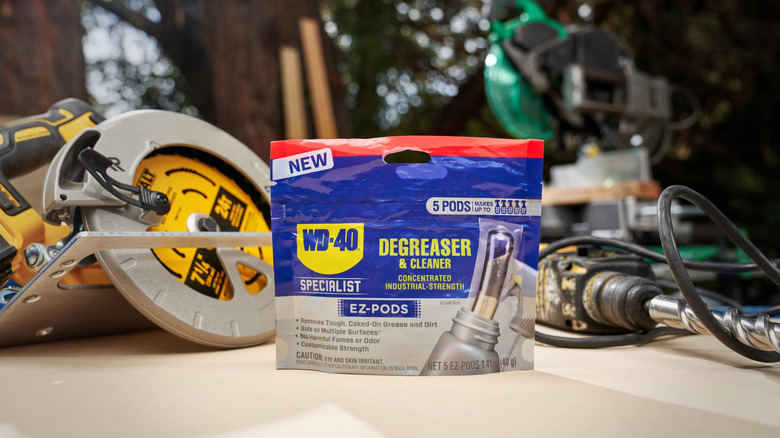
WD-40 Specialist Degreaser and Cleaner EZ-Pods are small pods you can drop into about 32 ounces of water, and they turn into a ready-to-use cleaner. You don't need to measure anything, and one small box replaces a heavy bottle you'd otherwise have to store and take with you in an RV. If you need something stronger, you can add a second pod. As per WD-40, warm water works slightly better, though any temperature works.
Think of your RVs' kitchen first. You can use these specialist pods on stovetops, microwaves, and backsplashes. Since the cleaner is non-abrasive, it leaves no residue and has no harmful fumes, which matters in a small space. You can also use it on most metals, plastics, rubbers, and stainless steel. Outside, it can handle greasy tools and oil spots on concrete. It is also one of the WD-40 products you can also use for cleaning an engine bay, but you should keep it away from electronics.
To use it, mix a pod in a spray bottle, spray the dirty spot, wait a few minutes, then wipe or rinse. You can repeat this for baked-on grease, and if a spot is still greasy, spray again and let it sit a bit longer. The pods come in two, five, and 20 counts, so start with a small one first and see if they earn their cupboard space.
WD-40 Specialist Electric Parts Cleaner
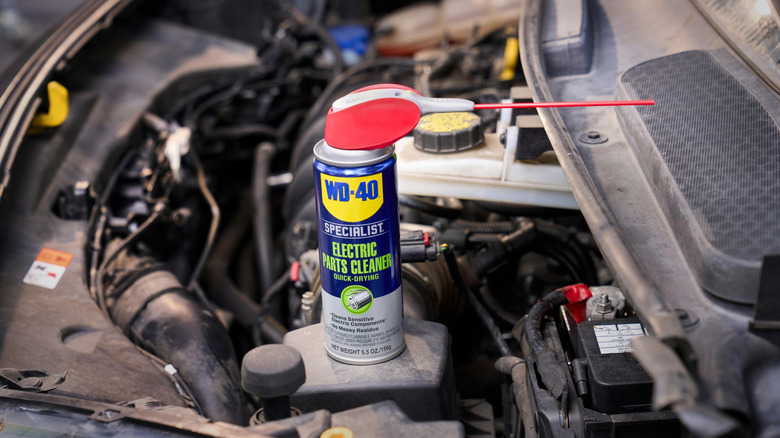
RVs carry a lot of gadgets like phones, tablets, cameras, even e-bikes. You plug them in frequently to charge them up, and all those plugs and charging ports collect lint, grease, and grime. If you've ever come across a loose, dirty connection at a campsite, you know the pain. WD-40 Specialist Electric Parts Cleaner is made exactly for them. It can remove oil, dirt, and grease, remove moisture, dry fast, and leave no residue. The Smart Straw lets you spray into hard-to-reach spots.
You can use it on circuit boards, charge cords, HDMI connectors, e-bike battery contacts, and phone charging ports. That almost covers everything you would come across when on an RV. You should, however, test plastic first, and stay away from adhesives, device screens, and keyboards. Don't mix it up with the regular can either.
You can first clean battery terminals and wiring connectors, and then add a thin layer of dielectric grease to keep moisture out. Cleaning first matters, because grease over dirt just helps seal the dirt in. You should also use it outdoors or in a well-ventilated spot and keep it away from sparks, since it's flammable. Always unplug the device you're cleaning first.