

10 Android Phones That Have More Power Than The Google Pixel 11
The latest Google Pixel 11 is here, and it's an overall great phone. Most people will like it, except for nerds who put stock in synthetic benchmarks and would be bothered by the performance of its chipset. For them, the Pixel 11 will be a disappointment. For years, one of the biggest issues with buying a Pixel has been the comparatively poor performance of its custom Tensor chips. Again, for most people, this will not matter. The Pixel 11 will be able to do all of the phone things that people need, including occasional heavy stuff like gaming. But if you're after the heavy stuff, there are Android phones significantly more powerful than the Pixel 11 — with additional hardware advantages.
We're basing this list first and foremost on synthetic benchmarks, which we openly admit are not the full story of a phone's capabilities. Just because a phone can dunk on the Google Pixel 11 doesn't necessarily mean it's for you; the reason Pixels have a Tensor chip is to facilitate all their cool AI features. But if you're going to be doing something niche like using your Android phone as a complete desktop replacement — or maybe you just want your money's worth — then these phones may be better choices.
Samsung Galaxy S26 Ultra

The Samsung Galaxy S26 Ultra is the latest top-of-the-line, flagship from everyone's favorite South Korean manufacturer. Its specs are still almost bleeding-edge since the phone launched in early 2026 with the current Android heavyweight, the Qualcomm Snapdragon 8 Elite Gen 5 with a 3nm process; we're still waiting on the Gen 6. As such, the Galaxy S26 Ultra has enough performance to eat the Pixel 11's lunch, then do it again.
The S26 Ultra is 41% better in single-core performance, 83% better in multi-core performance, and 369% better in GPU performance, according to side-by-side comparisons provided by NanoReview. The results speak for themselves. This is a theme you will see with almost every phone on this list, proof of just how far behind the Pixels are when judged against competitors.
Aside from raw performance, there are other reasons one might prefer the Galaxy S26 Ultra over the Pixel 11. It has a unique privacy display that allows you to conceal certain contents of your screen from shoulder surfers; the main camera is a huge 200MP compared to the Pixel's 48MP, and the S26 Ultra lets you film holding the camera any way you like while preserving a single orientation; it supports double the charging speed: 60W compared to the Pixel's 30W. Point for point, the Galaxy S26 Ultra either matches or beats the Pixel 11, though the latter has the advantage in price. The S26 Ultra retails for $1,299, while the Pixel 11 retails for $899.
Samsung Galaxy S26
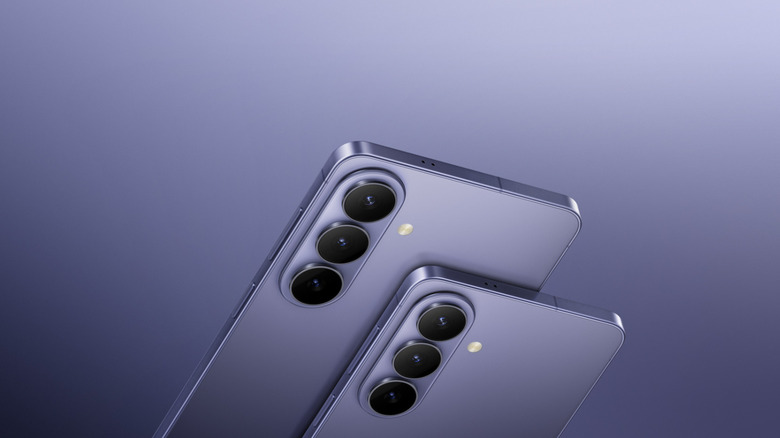
One step down from the Galaxy S26 Ultra is the Galaxy S26, sans Ultra. It retails for $899.99 and effectively has 90% of what the more expensive Ultra does. That includes a Snapdragon 8 Elite Gen 5 processor, so you can see where this is going; NanoReview's benchmarks give the S26 38% better single-core performance, 70% better multi-core performance, and 365% better GPU performance. For a phone in the same price bracket — and not the only one, as you'll see — this is not an insignificant difference.
Aside from that, these phones are close in specs. The S26 has a slight edge with a 50MP main camera (vs. 48MP) and a higher-resolution 12MP selfie camera, compared to the Pixel 11's 10.5MP one; the Pixel 11 has Bluetooth 6.0 while the S26 has Bluetooth 5.4; the Pixel 11 also has faster 30W wired charging and 25W wireless charging compared to 25W and 15W, respectively, on the S26. Both phones have the same amount of RAM (12GB) and base storage (256GB).
Phones that are technically more powerful than the Pixel 11 will become a common theme, but we'd like to stress that this doesn't mean the Pixel 11 is a "bad" phone. The hardware advantages shift back and forth between the phones on this list and the Pixel 11. And when you consider the AI advantages unique to Pixel phones, choosing becomes a bit harder.
Samsung Galaxy Z Fold8
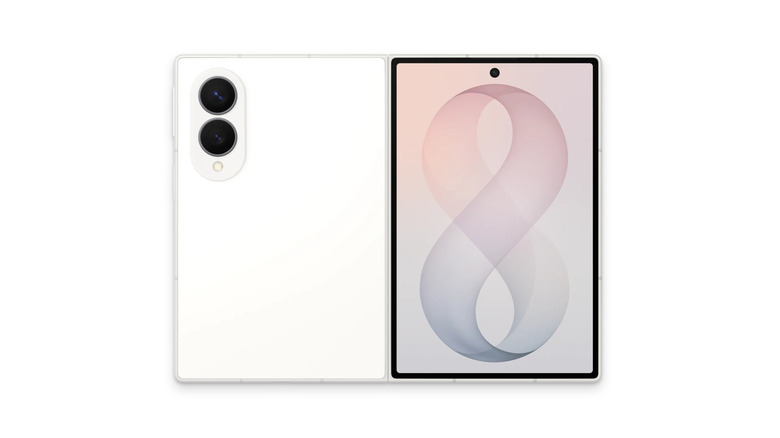
Thanks to leaks, we already knew how the iPhone Duo would look months before it was revealed. Samsung then did the cheekiest thing ever: release its own "iPhone Duo" before the iPhone Duo. It's called the Galaxy Z Fold8, Samsung's first Fold to skip the candy-bar format in favor of one resembling a passport. It caught everyone by surprise, even professional reviewers. The cute, squat form factor made it a lot easier to hold and use, even if the aspect ratio did cause some issues. And as you would hope for a phone that costs $1,899.99 (more than double the Pixel 11), performance is better; again, it has a Snapdragon 8 Elite Gen 5 chip.
NanoReview says the Fold8 is 42% better in single-core, 84% better in multi-core, and 361% better in GPU performance. Nothing surprising there. Since the Fold8 is a folding phone costing so much more, it's hard to fairly compare these two phones by other metrics. For what it's worth, though, the Fold8 has a higher-resolution 50MP main camera, faster 45W wired charging, and Ultra Wideband support. Although it's not surprising that a folding phone is more powerful (it's meant for multitasking, after all), the point is that even the non-Ultra Fold8, with its new form factor, will outperform a flagship Google Pixel 11.
Samsung Galaxy Z Flip8
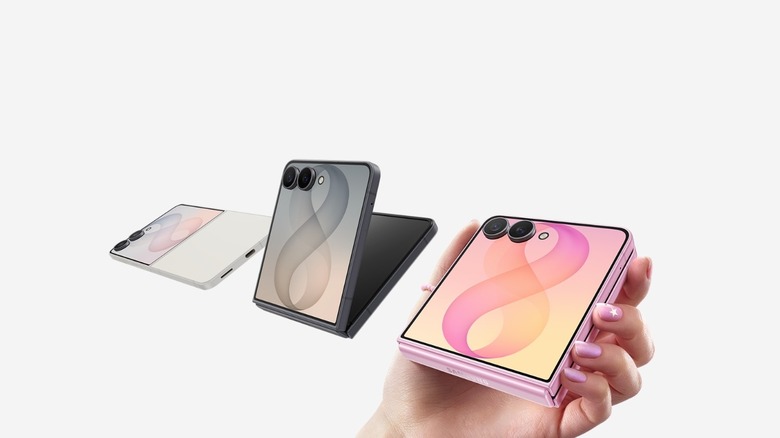
Samsung's Flip phones (don't confuse them with the "Folds") are for people who want the folding experience, but with a normal candy-bar form factor that they can compress into a little square. This year's Flip8 came out alongside the Fold8 and Fold8 Ultra. Reviews for this one were favorable, although tepid. Once more, it has the Snapdragon 8 Elite Gen 5 (in the U.S.; other regions get Samsung's Exynos 2600). Benchmarks are a repeat of what we've seen so far.
Using NanoReview as our measuring stick (which tested the Exynos version), we see a 26% advantage in single-core performance, an 81% advantage in multi-core performance, and a 350% advantage in GPU performance. However, this time around, the Galaxy Z Flip8 — which starts at $1,199 — has to do a bit more to justify its price when it's not offering double the screen real estate like its bigger folding brothers.
It does have a 50MP camera compared to the Pixel's 48MP camera, but falls behind in many other categories like an older Bluetooth 5.4 standard, slower 25W charging speed, and a smaller battery. In summary, this phone costs you a lot more in exchange for its folding ability. But spec-wise, it's really only beating the Pixel 11 in raw benchmarks. It's a phone we recommend if and only if you're sold on the form factor and are okay with how much that form factor costs you.
Motorola Razr Ultra
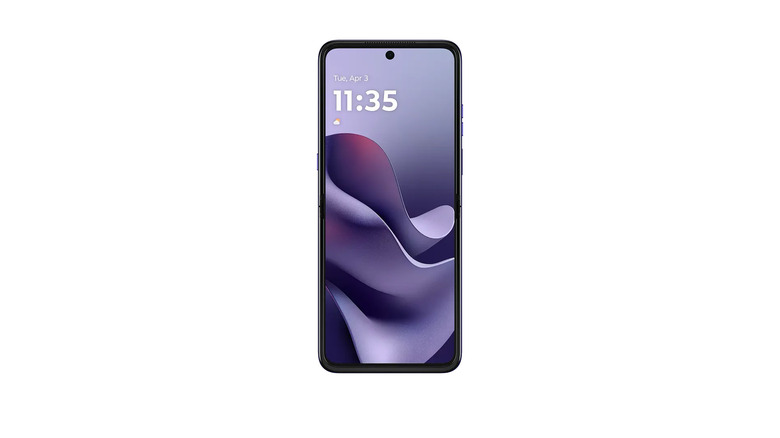
Motorola's 2026 Razr Ultra is a direct competitor to the Samsung Flip family, a candy-bar smartphone that folds in half for mega portability. Reviewers like it, some giving it better marks than its competitors. At $1,499, it's considerably more expensive than the Flip8. This is also one of the few phones on this list that doesn't have the absolute best Snapdragon 8 Elite Gen 5, but rather the older 3nm Snapdragon 8 Elite.
The Razr Ultra still has a considerable advantage. It's better by 12% in single-core performance, 47% in multi-core performance, and 326% in GPU performance; it's proof that the Pixel phones truly do have catching up to do if previous-generation chips can beat them. Further, it's a reminder that you don't need the latest chip on the market; instead, you can opt for one from the previous year and still get better performance than a current-gen Pixel.
Specs-wise, the Razr Ultra starts with more storage and RAM: 512GB and 16GB, respectively. It has a smoother 165Hz screen, a higher-resolution 50MP main camera, a slightly bigger 5,000mAh battery, and 68W charging. It's worth noting here that Motorola makes a vast lineup of phones for all budgets, so if the Razr Ultra isn't quite your speed, you'll likely find something better that is.
OnePlus 15
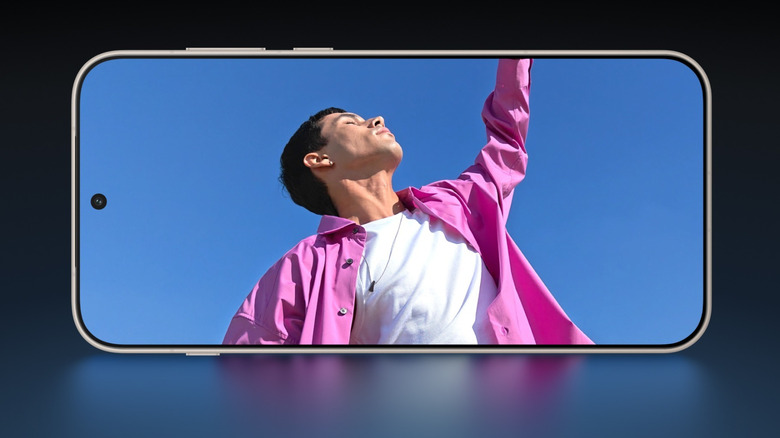
By now, it's old news in the tech sphere that OnePlus phones won't be sold in the U.S. market for the foreseeable future. That said, they're still good phones, and the current OnePlus 15 from 2025 is still up for purchase in some places, such as Amazon. It will continue to receive security updates into 2031, or about five more years at the time of writing. Reviewers raved about it. It's another Snapdragon 8 Elite Gen 5 phone, so you know the drill by now.
The OnePlus 15 is 40% better in single-core and 78% in multi-core performance, as well as 304% better in GPU performance, according to NanoReview. As it should be. It's an exceptional phone on the hardware front, too, compared to the Pixel 11. It has a 165Hz screen, IP69K water and dust resistance, a 50MP camera, support for 8K video, a ginormous 7,300mAh silicon-carbon battery, and 120W wired and 50W wireless charging — plus 10W reverse wireless. These are excellent specs even today. Reviewers consistently note that few phones on the U.S. market come close in battery life (as in literal days of it); notably, Google has yet to adopt silicon-carbon batteries.
We are a bit hesitant to recommend this one since it's unclear how well OnePlus will handle its obligations to U.S. customers for repairs and warranties. However, OnePlus is still making phones in the rest of the world. We'd wager you're safe on the software side, if nothing else.
Honor Magic8 Pro
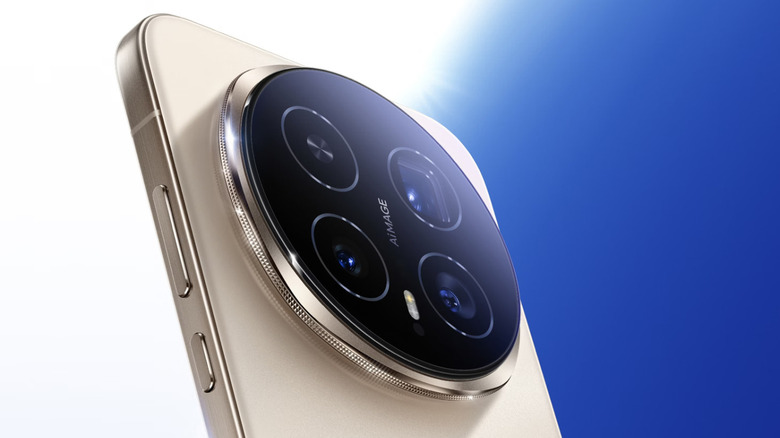
Honor is one of the Chinese brands that you can buy in the U.S. — such as through the official Amazon storefront — even if the brand itself doesn't really have a presence in the U.S. It's a shame, because it makes really great phones. If nothing else, its phones are more accessible in the U.S. compared to brands like Vivo or Oppo. The Honor Magic8 Pro is a solid option, too, for a non-folding phone. Reviewers like it. And say it with us: it has a Snapdragon 8 Elite Gen 5 chip, so you know roughly how well performance will stack up against the Pixel 11.
According to NanoReview, there's a 39% uplift in single-core performance, 76% in multi-core, and 357% in GPU. Hardware-wise, there is a lot to love here compared to the Pixel 11: a 200MP periscope camera, 50MP selfie cam, 7,100mAh battery, 100W wired charging, and 80W wireless charging. This is a phone that will have battery for days, take detailed pictures, and charge faster than most phones you're used to.
Having said that, this is not in the same price bracket as the Pixel 11. In the U.K., for example, it starts at £1,099 (that's about $1,470 at today's rates) for the 12GB RAM and 512GB storage configuration. Though as a counterpoint to that, nothing is certain about pricing in the midst of the RAM crisis.
Honor Magic V6
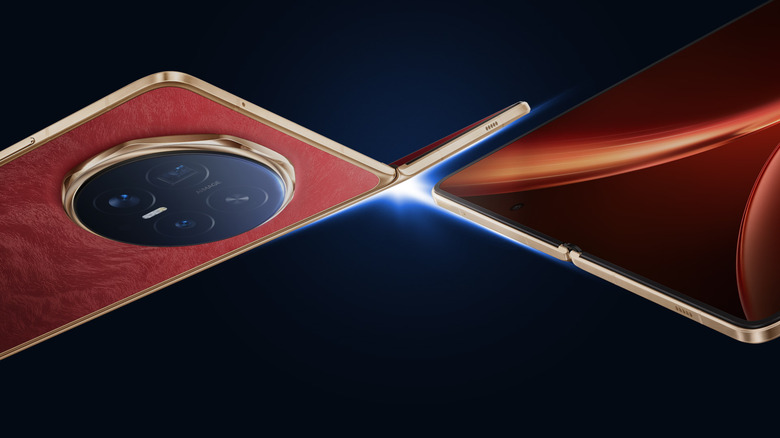
Honor also makes excellent folding phones. One that we particularly enjoyed was the Honor Magic V6, which can easily contend with other industry-leading folding phones like the Galaxy Z Fold8 Ultra. Purchasing it will be the same as trying to buy the Honor Magic8 Pro: look for it on the official Amazon storefront for Honor. With the U.K. again as a baseline for pricing on the global market, the Honor Magic V6 retails for £1,999 (that's about $2,675) for a 16GB RAM and 512GB storage model. Again, a Snapdragon 8 Elite Gen 5 chip powers it. Performance gains are in the same ballpark as others on this list.
Via NanoReview, the Magic V6 has a 44% advantage in single-core performance, 76% in multi-core performance, and a 360% increase on the GPU side. Once more, that's a huge processing advantage when stacked up against the Pixel 11. It also has a superior camera array with a 50MP main camera and a 64MP telephoto camera, as well as a 20MP selfie cam; it supports 80W wired charging and 66W wireless. Though again, we admit these phones are not ideal comparisons when one is a folding phone that costs so much more.
Xiaomi 17T Pro
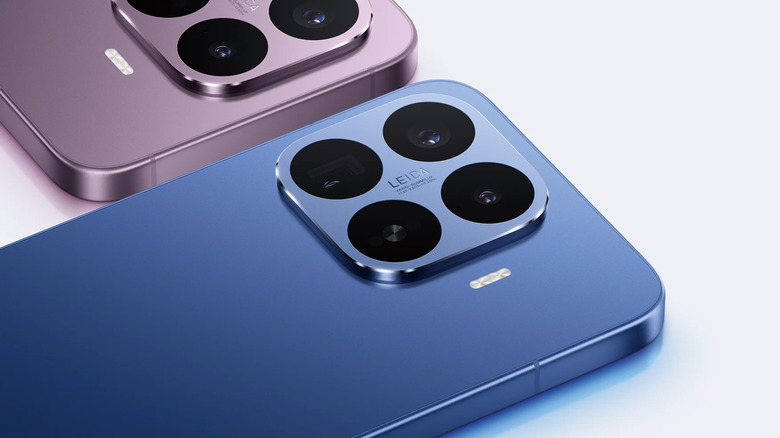
Xiaomi is another brand in this strange no-man's land of smartphones not technically available in the US, but also totally buyable straight from Amazon and AliExpress. The Xiaomi 17T Pro is a similar story to the Honor Magic8 Pro, a generously specced phone that you won't hear about if you walk into your local carrier's store to buy a new phone, even though, based on reviews, you should; this is a great device. And it's the only phone on this list that doesn't use a Snapdragon chipset, instead using the MediaTek Dimensity 9500, a 3nm process chip with a Mali G1-Ultra GPU. MediaTek processors have been budget alternatives to Snapdragon for over a decade now, and as we will see, they are plenty capable.
When comparing benchmarks on NanoReview, the Xiaomi 17T Pro with its MediaTek Dimensity chipset is 29% better in single-core performance, 72% better in multi-core performance, and 276% better in GPU performance. Not quite Snapdragon 8 Elite Gen 5 levels, but sufficient for power users and overkill for the needs of the average Joe. Looking at hardware specs, we find a capable phone with a 144Hz screen supporting PWM, a 50MP main camera supporting 8K 30fps video, a 32MP selfie cam, Hi-Fi wireless audio support, and a large 7,000mAh battery coupled with 100W wired charging and 50W wireless charging.
RedMagic 11S Pro
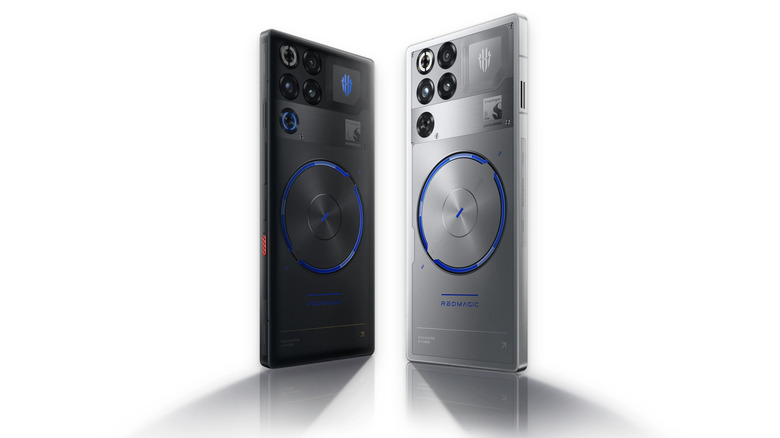
The RedMagic phones style themselves as "gaming" smartphones thanks to their liquid cooling systems, fancy lighting, and a whole bunch of hardware and software touches tailored to gamers — aside from the best chipset. And they're close to the Pixel in price. The RedMagic 11S Pro starts at $849. Its predecessor, the 11 Pro, made waves for how well it could play PC games, proving that the "gaming" lingo is not just fluff. The 11S Pro is a strong continuation, again featuring the Snapdragon 8 Elite Gen 5 chipset.
That special liquid cooling must be working, because the RedMagic 11S Pro is one of the best-performing phones on this list. Compared to the Pixel 11, it is 47% better in single-core performance, 91% better in multi-core performance, and 392% better in GPU performance, thanks one final time to NanoReview's detailed side-by-sides.
For that price, you get a whole lot of hardware too. There's a PWM screen, 50MP main camera, 8K 30fps video support, 16MP selfie cam, high-res audio support for Snapdragon Sound, and a 7,500mAh battery that supports up to 80W wired and wireless charging. Even for non-gamers, we'd wager this is an excellent phone for the money you pay — and yet another option to beat the Pixel 11 in performance. Fair warning: The RedMagic 11S Pro was intermittently in stock while we were researching and writing this article; if it's out of stock when you try to buy it, keep refreshing daily.
How we chose these phones

What you get here is exactly what's written on the tin, or rather, the title: Android phones that have more power than the Google Pixel 11 — not the 11 Pro, just the base model. We approached this with the interpretation that we're talking about raw processing power, even if that means ignoring the many factors that impact phone performance in actual everyday use. But consistency demands anchoring ourselves to one benchmark source, and that's what we did. However, we want to stress again that phones have had more than enough power for the everyman's needs for years now. Many people still have phones that are half a decade old — or older — because recent smartphone improvements have only been marginal.
By that logic, if you buy the Google Pixel 11 now, you will more than likely be content with your purchase. And further, we felt comfortable including phones that were released before 2026 or that (as with the Motorola Razr Ultra) feature a last-gen chip. We also tried our best to include some of the amazing Chinese phones available to U.S. buyers. Take this list not as gospel, but as a rough comparison for reference's sake if you or someone you know wants a phone more powerful than the Pixel 11.