

5 Gas Station Mistakes You Need To Stop Making
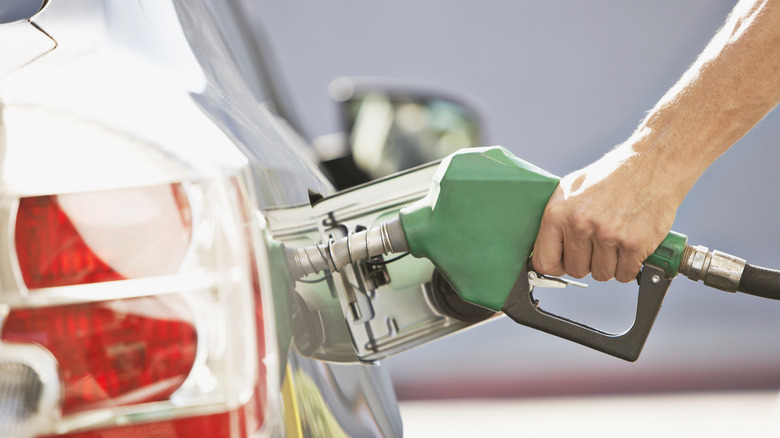
If you've been a car driver for quite some time, you probably do a lot of vehicle-related things automatically. Common road safety rules like putting on your seatbelt before you start the car or using your turn signal and checking all your mirrors before you switch lanes should already be ingrained in your muscle memory, much like knowing what each button does on your vehicle and when to utilize them. You should also already know when to make your next visit to a gas station and what you need to do with your car when you get there.
Unless you live in the state of New Jersey where it's still against the law to fuel your own vehicle at a gas station, you ought to be well-acquainted with pumping your own gas. The problem with high-frequency tasks like this though is you tend to do it on autopilot, and may even be tempted to rush through the process, making you susceptible to the occasional slip-up, which could lead to serious consequences.
Below is a list of potential gas station mistakes you should avoid on your future visits, whether you're a driving expert or a newbie. Doing so should ensure that you go through the activity safely and efficiently, and without having to spend too much money.
Using your phone while pumping
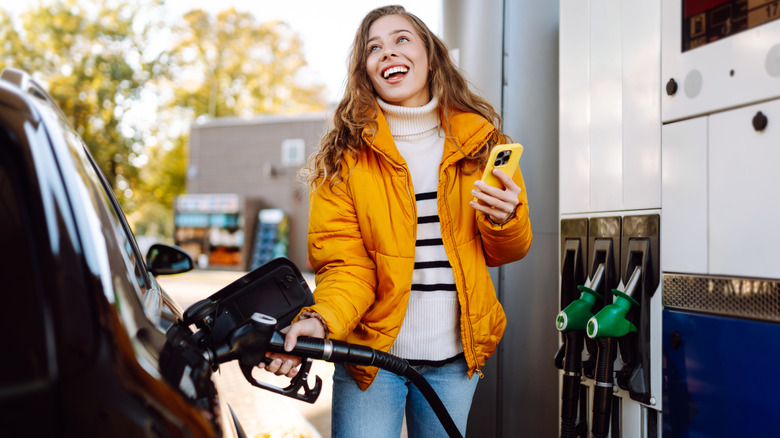
You may see "no cell phone" signs at the gas station and still wonder if it's because receiving a cellphone signal while at the pump with your car running can start a fire. This age-old myth has already been debunked by numerous tests, studies, and even a Mythbusters episode. Apart from that, there has really been no documented incident of a mobile phone causing a fire at a gas station.
Of course, considering how volatile gasoline can be, there's still that miniscule chance of it occurring, so extreme focus is still an absolute must while at the gas pump. What's more likely to happen is some static discharge — sometimes caused by re-entering your car while fueling, sliding across your car seat to exit again, and touching the metal nozzle without grounding yourself first, otherwise known as touching a metal part of your car away from the fuel filler neck, can cause a spark to jump from your finger to the nozzle, which could potentially ignite gasoline vapors. This can be avoided by focusing on the task at hand and leaving distractions like your smartphone inside the car while you fill up your gas tank.
You'll be surprised at the amount of potential mistakes that can be prevented by taking a cellphone break while at the gas station — you're less likely to put in the wrong fuel type into your car, spill gas or overfill your gas tank, or even drive off with the nozzle still inserted in your vehicle.
Waiting to fill up the gas tank until you're almost on empty
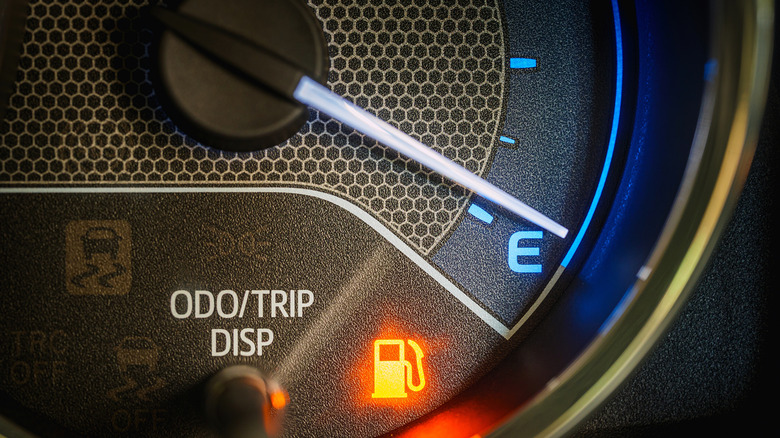
While it's true that you can probably drive for a bit longer even after the gas light flashes, habitually holding off on filling your gas tank until you've consumed almost every drop is generally not a good idea. For starters, in most modern cars, the primary fuel pump is located inside the gas tank. The fuel pump is in charge of pulling gasoline from the tank and delivering it to the engine at a constant pressure, ensuring optimal function.
During operation, the fuel pump generates heat, but is kept cool by the gasoline it is submerged in. When you run your car on almost empty, the fuel pump is no longer submerged and is exposed to air, which is not as good as conducting heat as liquid. As a result, the pump may begin to suck in air or run hot, both of which potentially leading to significant damage to your car.
There is also sediment sitting at the bottom of your gas tank, commonly caused by debris accumulated through the fuel's journey from the refinery, tanker truck, station, and finally, to your vehicle. While modern cars now have a mesh filter that deters bigger chunks of sediment from entering the fuel pump, it can still get choked with gunk, which pushes the pump to work harder in pulling fuel through the blockage. This, too, causes more generated heat, and without enough gasoline to act as a coolant, can lead to mechanical issues.
As a rule of thumb, whenever possible, it's recommended that you keep at least a quarter of a tank's worth of gas at all times. It guarantees that the fuel pump stays submerged and cool during operation, protects your engine from sediment, and prevents you from stalling in the middle of a drive.
Not accounting for tire pressure adjustments
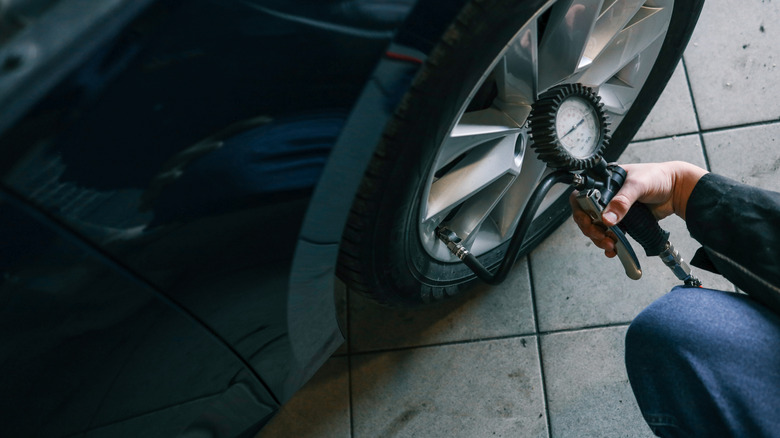
While you're at the gas station, you might as well check your car's tire pressure – do this at least once a month, and for all four tires. If you look at the doorjamb of the driver-side car door, you should see a sticker on it that indicates the correct tire pressure (measured in pounds per square inch or PSI) you need to maintain for the front and rear tires. It's important to note that the number refers to the tires' PSI before they are warmed up by travel, also known as cold pressure.
When you drive, the car tires grip the road, producing friction. Friction causes the tires to heat up, which leads to air expansion and added pressure within the tires. This increase in PSI will depend on a number of factors, such as the temperature of the road, how heavy your car is, and how fast you're driving.
For the most accurate reading, most tire manufacturers recommend checking your tire pressure when your vehicle is cold, meaning it has not been used in the last three hours or so. If you're already on the road and have been driving around 10-15 minutes, visit a gas station close to home for an air pressure check, or when you've only driven around a mile at a moderate speed. If you do air up after driving past the 20 minute mark, shoot for a pressure between 3-7 PSI above your car door sticker's cold recommendation. Add a bit more if it's extremely hot outside or if your car is carrying a heavy load.
Picking the wrong type of gas
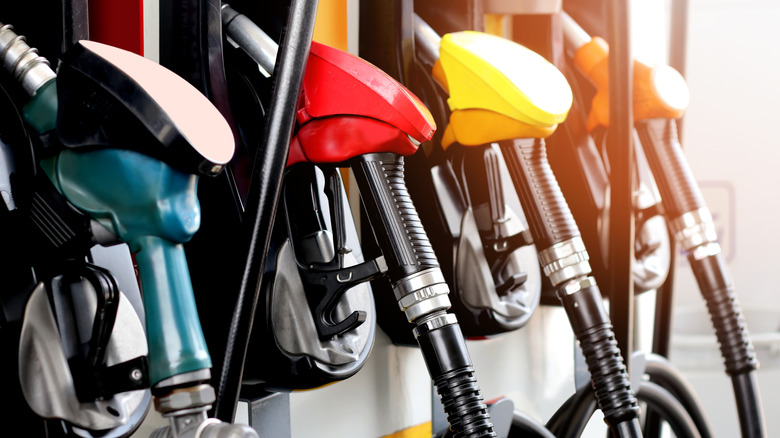
If you have a gasoline car and put in diesel by mistake, you may run for a bit before you conk out — diesel is thicker and oilier than gasoline, and it will clog your fuel system. Filling up a diesel car with gasoline is an even graver mistake. Diesel engines need lubrication from the fuel to run properly. Gasoline is a solvent, which dissolves the oily film required by the diesel engine to function. As mentioned, avoid multitasking while pumping gas to prevent having to drain your tank, replacing parts of your fuel system due to damage, or having to put in a new engine all together.
Owners of gasoline cars also have to take note of the different octane ratings at the gas pump. The number tells you how stable the fuel is. Typically, the higher the number, the more the fuel can withstand pressure and heat before it spontaneously ignites. However, just because a certain fuel type has a higher octane or is marked as "premium," it doesn't mean it's automatically the best option for your car.
Every vehicle has a recommended octane rating listed in its manual. Picking gasoline that aligns with that number prevents uncontrolled explosions that sound like a metallic knocking or pinging sound from occurring, which can affect car performance. This usually happens when you choose gasoline that has a lower octane than what's recommended for your car.
Higher octane gasoline is meant for cars that have high-performance or turbocharged engines. They produce higher pressure and require a more stable fuel. Using high octane gasoline on a car designed with lower compression is considered a waste, especially since it is often the most expensive option available. It won't take advantage of the extra stability the higher octane signifies, and it won't make your car run faster.
Not taking note of prices or applicable rewards programs
Considering that there's been a recent uptick in gas prices across the United States, ignoring opportunities to lower the cost of gassing up your vehicle seems like an unsound decision. Fuel pricing research shows that prices tend to surge on the weekends and even in the middle of the week in some areas, so if you can, plan to gas up on a Monday or Tuesday.
You should also make a habit of checking the GasBuddy app before filling up your tank. It maps out the gas stations within your vicinity and shows you which ones offer the lowest prices. Of course, much like searching for flights using several aggregators at once, there's merit in trying out GasBuddy alternatives as well. The added time it takes to compare and contrast gas price search results will ultimately lighten your financial load in the long run as a car owner.
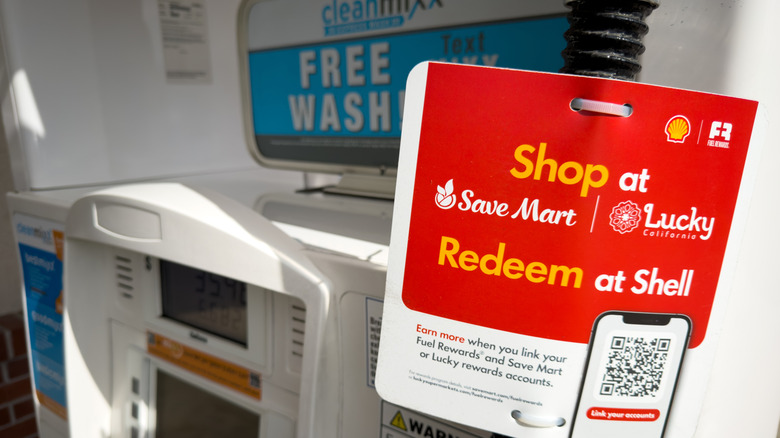
Finally, ask your go-to gas station if they have a rewards program you can take advantage of. They should be easy to join and can give you access to a small discount that could make a huge difference when you regularly gas up at the same place. Look out for signs that indicate a cashback perk for using a certain credit card to pay for gas. If you happen to have a Costco near you, it may be worth considering getting a membership to purchase affordable gas at its pumps, among other lesser-known perks.