

16 New Car Models That Still Use Physical Buttons And Knobs Instead Of Screens
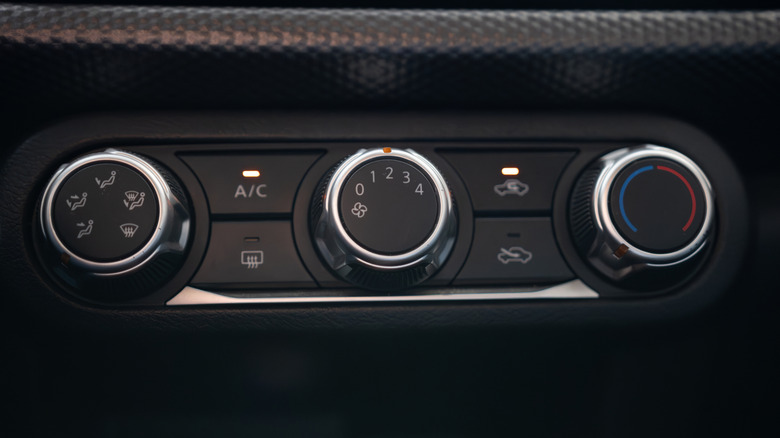
Initially, touchscreens were a way to make navigation and media easier for the driver, but over time; manufacturers have begun to use screens to control other functions. The justification from the manufacturers has always been something along the lines of better aesthetics, easier manufacturing, and smoother software updates. In real life, though, it's something that can cause you to take your eyes off the road, scrolling through menus, and then pressing the wrong part of the screen because the car is moving at highway speeds.
Luckily, though, there are still several marques that still use physical push buttons and knobs for the majority of their controls. As a bonus, none of these compromise on the screen aspect of a car — eliminating a screen would be commercial suicide — because all cars on this list have both a touchscreen infotainment as well as buttons. Readers are requested to bear in mind that the number of buttons varies by trim, so we've used the base trims where possible. Additionally, we exclude expected functions like the windows, hazard lights, and indicator stalks.
2025 Toyota RAV4
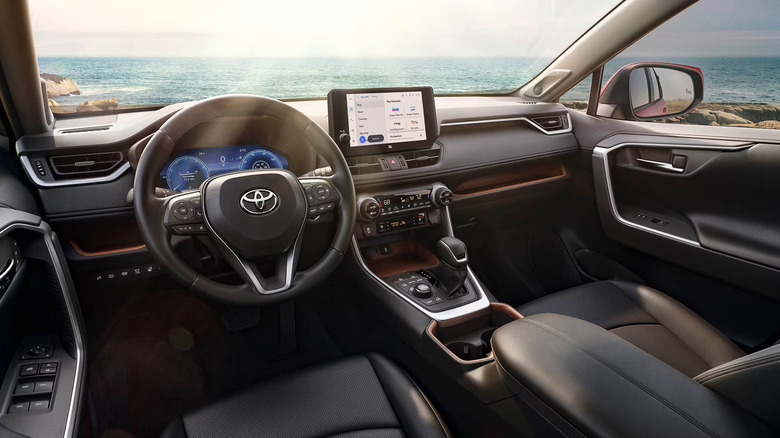
First up, we have the Toyota RAV4; one of the most popular passenger vehicles in America. It's a fantastic option, with at least 40 different buttons and three knobs. Of these buttons, 19 are on the steering wheel, including a volume rocker button on the left side of the wheel. The buttons below the infotainment display control functions for the HVAC system and the window defrosters. There's a knob each for volume, blower speed, and temperature; and four cabin light controls overhead, with an SOS button.
On the steering wheel, the left cluster lets drivers navigate the smaller multi-info display between the gauge cluster, control media playback, and adjust the volume. The right-side cluster on the steering wheel handles the activation and deactivation of driver assist functions like cruise control and lane-departure assist. The reason we specifically mentioned the 2025 model was because the $29,800 ($1,450 destination) 2026 RAV4 also falls victim to screen-gate, as we've looked at in our in-depth, hands-on review of the vehicle.
2026 Mazda 3

The 2025 Mazda 3 was a no-nonsense, no-frills car that gives buyers everything they need and nothing more. For 2026, the base trim is the 2.5S, which starts at $24,550, though there is also a $1,235 ($1,280 for shipping to Alaska) destination fee. This trim has buttons for every major function the driver could want.
First, to the bottom left behind the steering column are memory seating controls, a button to silence the vehicle proximity sensors, and traction controls. On the left side of the steering wheel, there are controls for media tuning, volume, call answering, and voice assistance. On the left side of the steering wheel, there are buttons for setting and activating cruise control.
For once, the navigation display actually has no buttons on the screen itself, which allowed Mazda to put it further set back into the dash than is normal. Below that screen there are buttons that control the air conditioning, blower speed, heating elements in the car, and recirculated air. There are also two knobs on either side of the below-infotainment row of buttons; with each knob controlling one side of the climate control zones.
2026 Honda CR-V
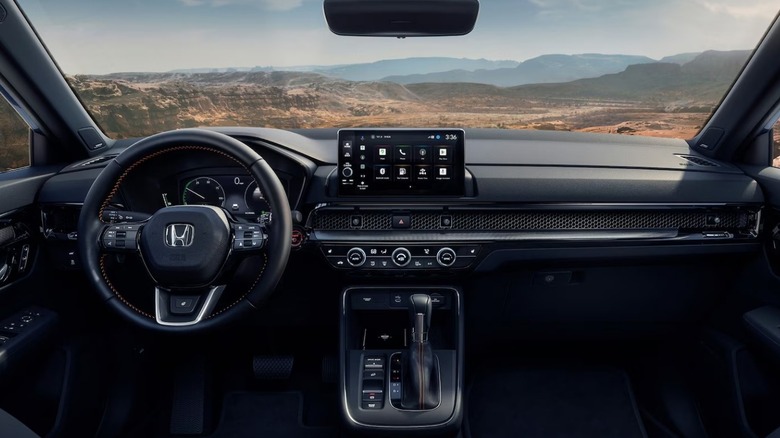
Many of the buttons from the 2025 Honda CR-V carry over into 2026, where the base trim is called the LX, and starts at $30,920. Destination fees for 2026 aren't live yet, but the 2025 CR-V had a destination charge of $1,395. On the left wing of the steering wheel on the LX trim, there are buttons to control the media playback, the volume, and the car's voice assistant. On the left side of the steering are the buttons for driver assist features; though the drive mode rocker and hill descent control button are located near the gear lever.
The three knobs in the middle of the center console (below the AC vents) control the temperature, blower speed, and blowing modes, from left to right respectively; while the volume control knob is located in the bottom-left corner of the infotainment display. Below those three HVAC knobs are the controls to have the air conditioning on and off, for the heating, as well as controls for both the front and back glass defrosters.
2026 Toyota Land Cruiser
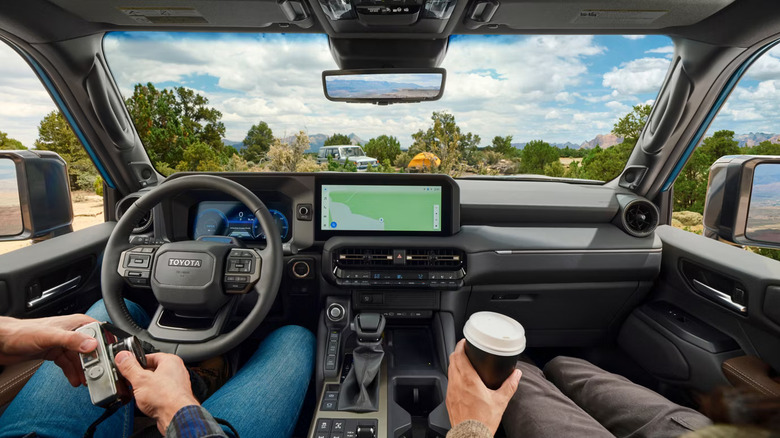
Known to the rest of the world as the LC250 Land Cruiser Prado, this model for 2026 is simply called the "Land Cruiser" here in America, as we don't get the larger LC300 variant. Now, the 250 does get a pretty hard knocking from the media for being positively spartan inside, with which shouldn't happen for a car that has a base MSRP of $57,200, with a $1,495 destination fee.
However, that does add to the ruggedness of the vehicle; a fact that I can attest to, having driven a 2025 edition 1958 Land Cruiser for a week last month. On the left side of the steering wheel, there are buttons to control the driver information display, while the right side has buttons for the driver assists. Between the driver door and the steering wheel are buttons for the parking sensors, auto-LED headlamps, trailer adjustment levers, and a wheel for controlling the brightness controls of the driver screen.
Towards the center of the dash, there is a volume knob on the bottom-left bezel of the standard 8-inch infotainment screen. Moving down to the gear lever reveals buttons for the differentials, traction control, an electronic parking brake, and the drive modes. The HVAC systems and defrosters are controlled by buttons in the center console.
2026 Ford F-150
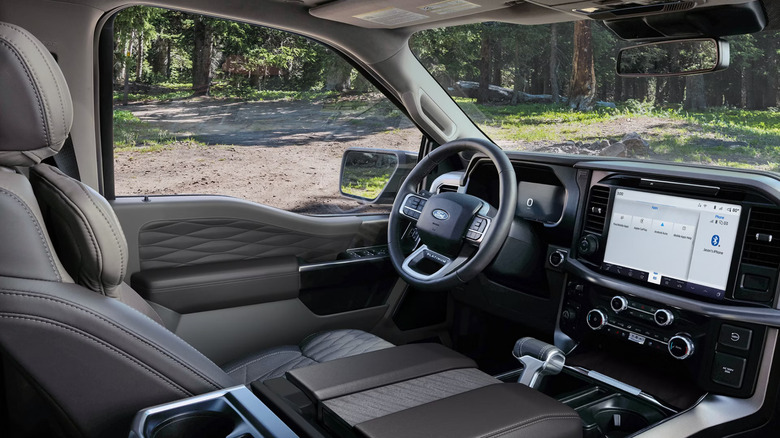
Next up is our first pickup on the list, in the form of the Ford F-150; which for 2026 starts at $39,330, with a $2,595 destination fee. Near the driver's left knee, there is a complement of buttons that controls the engine auto-off feature, the headlights, and the emergency brake. On the right wing of the steering wheel are buttons for controlling the drive information screen and multimedia, while the ones on the left are for controlling the driver assist features like BlueCruise and lane-keep assist.
Toward the center of the dashboard, underneath the touchscreen infotainment display are several rows of buttons and knobs that control the HVAC system, the camera systems (if equipped), the truck's multimedia that's playing, and the traction control, among other things. The buttons for controlling the heated seats and glass defrosters are also located here, right next to the knobs for the climate control systems. If the package is equipped, the pro-trailer backup assist steering knob will be found to the bottom-left of the infotainment display.
2025 Kia Telluride
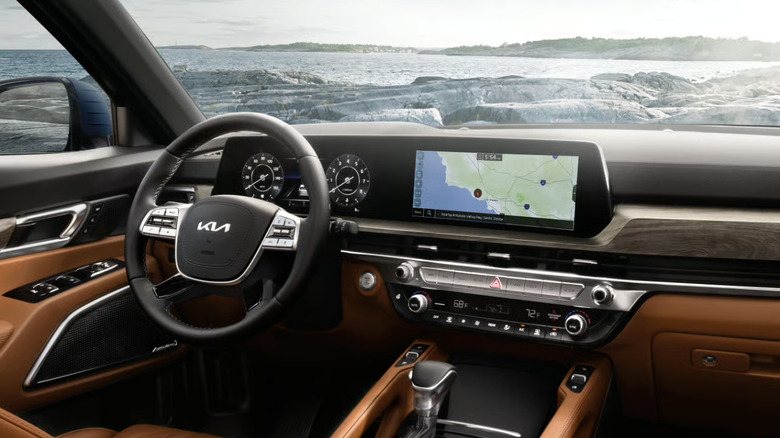
While the 2025 Kia Telluride still relies on a 20-year-old engine to power itself, the interior is pretty modern, with the current generation still being pretty button-focused for most features. Beginning at the driver's left knee, there are buttons to control the driver information display's brightness, traction control, hill descent control, and the power liftgate. On the steering wheel itself, there are infomedia and voice assistant controls on the left-hand side, and controls for the adaptive cruise control on the right.
Certain trims (not all) of the Telluride also have a neat feature where the drive information displays for speed and RPMs can be used to temporarily show a feed from the blind spot monitoring cameras; this is controlled via a toggle on the indicator stalks. Below the infotainment system are seek and source controls for media, and even lower are the HVAC switches and temperature knobs. For 2025, prices start from $36,980, with a $1,495 destination fee.
2026 Jeep Wrangler

For the uninitiated, the Wrangler, which we have reviewed the 2024 model of, is (arguably) Jeep's flagship off-road offering, like the Land Cruiser is for Toyota. Surprisingly, the 2026 Wrangler actually retains the majority of its buttons even compared to a few years ago, with the base MSRP being $34,895 ($1,995 destination). In terms of buttons, the steering wheel has them aplenty.
On the left side are seek and source controls for media, along with a voice assistant activation button (for your phone, when tethered), and for answering or rejecting incoming calls. As per the established trend, the right side has toggles for the adaptive cruise control system. Underneath the infotainment display are buttons to control the HVAC system, and knobs for the volume, media seeking, and fan speed. The traction control and mud-mode buttons are also in this complement; while the lever for the famous transfer case is located next to the gear lever.
2026 Audi A3

This small German saloon is unique in the sense that many of its larger A-series siblings (like the A4, A6, A7, and A8) have now lost many of their buttons for a panoramic screen around 2021. But the A3 still has many buttons, which is surprising since it (arguably) sits near the bottom of the A-series lineup. For once, the controls for the adaptive cruise control are on a third stalk behind the left side of the steering wheel, instead of being on it.
Coming to the wheel itself, the left bank of buttons controls the different views available on the digital gauge cluster screen, while the bank on the right hand is for controlling the infotainment system and voice assistant. Moving over to the infotainment display, at first glance, it may seem like the A3 has its HVAC controls routed through the screen.
However, underneath each control (fan speed, temperature, etc.) is a sort of lever that can be pulled up or pushed down to control the setting. Below that row of levers is another row of buttons for activating the traction control, parking sensors, and parking brake. It's fairly well appointed for an entry-level car. For 2026, the MSRP is $40,100, with a $1,295 destination fee.
2026 Nissan Rogue
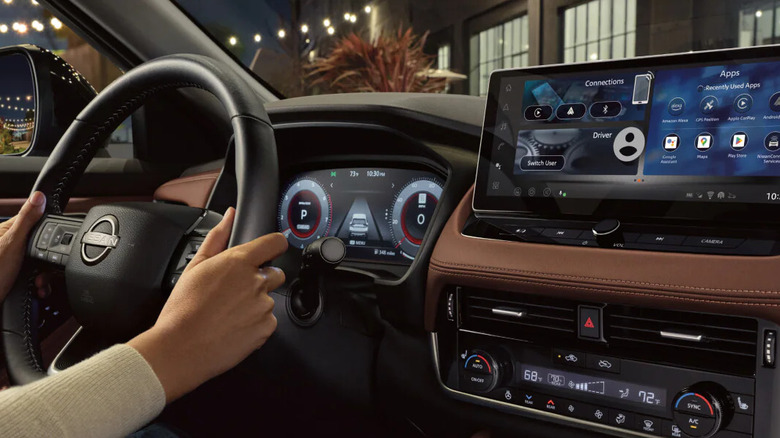
We reviewed the 2025 Nissan Rogue earlier, and it's nice that even for the new 2026 model, the car still has loads of buttons, even though the MSRP is now $29,090, along with a $1,495 destination charge. The cruise control toggles are on the right wing of the steering wheel, along with buttons to answer calls and activate your phone's voice assistant.
The left bank has controls for media and for the driver screen behind the steering wheel. In the center of the dashboard, underneath the touchscreen, there's a knob for the volume, media seek controls, and a button to bring up the car's camera. Below that are the vents for the air conditioning; underneath which are buttons to control the HVAC system, and two knobs for the temperature settings. There's also a button next to the driver's side temperature control that activates or deactivates the heated steering.
2026 RAM 1500
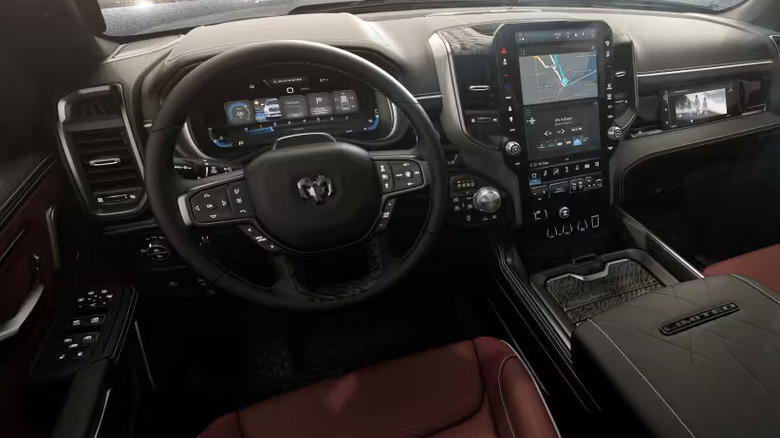
Apparently, RAM is running with the idea of "if it ain't broke, don't fix it" with their $41,025 ($2,595 destination) 2026 RAM 1500. It keeps the buttons from the 2025 RAM 1500 model, albeit with the same strange layout where most of the buttons border the very tall vertically-oriented infotainment touchscreen. Between the driver's door and the steering wheel is a knob to control the automatic headlights, a rocker to control the adjustable pedals, and brightness controls for the driver display.
Driver assist functions are handled via buttons on the right side of the steering wheel, while the left side helps with media and mode selection, along with controls for the driver information screen. The PRNDL knob, or drive mode selector, is near the right knee of the driver, behind the steering wheel.
To the right of that, the center console is dominated by the massive screen, surrounded by buttons that control the HVAC system on the left and the right; There are also three knobs in the center console at different points, for the media volume, media tuning, and trailer management respectively.
2026 Honda Civic
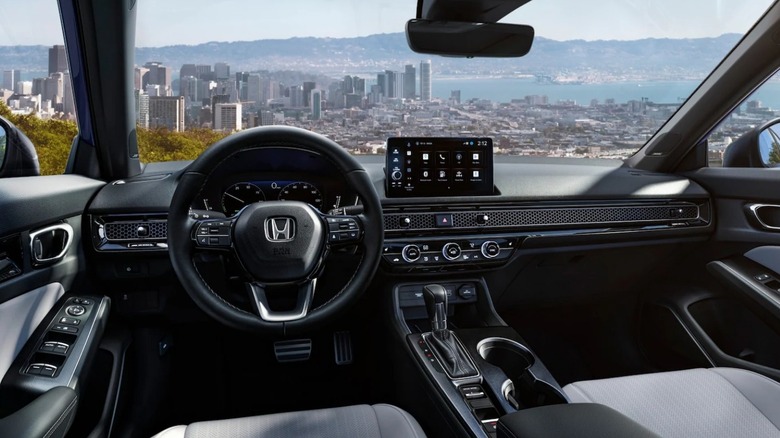
For 2026, this model also has lots of functionality routed via buttons, which are largely carry-overs from the 2025 Honda Civic. To begin with, the traction control and interior gauge brightness is controlled via a toggle and a scroll wheel near the driver's left knee. The left side of the steering wheel has buttons for media seeking, one for bringing the voice assistant online, a rocker to control the media volume, and a scroll wheel for the driver display.
The right side of the steering wheel has everything needed for setting the cruise control up for use. There are USB-c ports near the gear lever, and also a rather weirdly-shaped drive mode selector in the form of a rocker. The HVAC controls, including those for the blower mode and recirculated air, are located in the center console, with knobs for temperature and fan speed. There are also physical seek controls and a volume knob to the left of the admittedly small infotainment display; but it's a pretty good package considering the base MSRP is $24,595, with $1,195 destination.
2025 Kia Soul
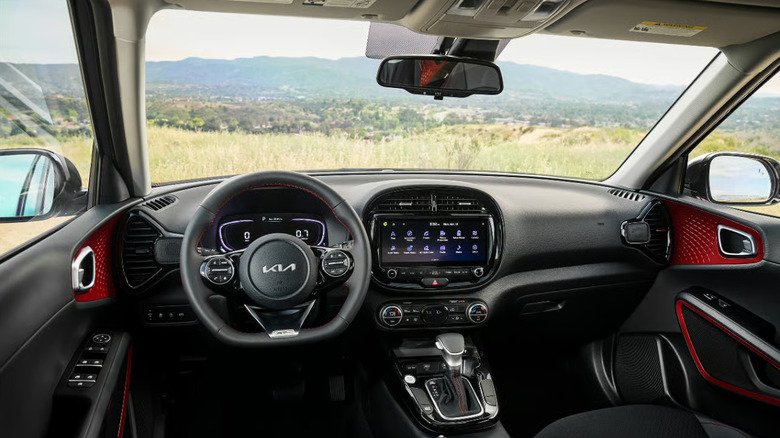
The Kia Soul is being discontinued after 2025, and for its final year, did retain a lot of buttons. Below the oddly-shaped infotainment display is a cluster of buttons in the center console, which control the media seeking, media source selection, and more, with a knob for the volume and tuning.
Below the row of buttons are the HVAC controls that manage the blower speed, defrosters, temperature, air recirculation, and fan direction. Coming to the steering wheel, the left side has controls for media and volume, while the right side helps toggle the driver assist features on and off.
Unlike many of the other cars that we've listed, the Soul retains its manual handbrake lever, as opposed to the e-parking brakes found on other cars. Something we'd like to point out here is that the Soul may very well be the most affordable option on our list, coming in with a base MSRP of $20,490 ($1,445 destination) for the 2025 model year.
2026 Toyota Camry
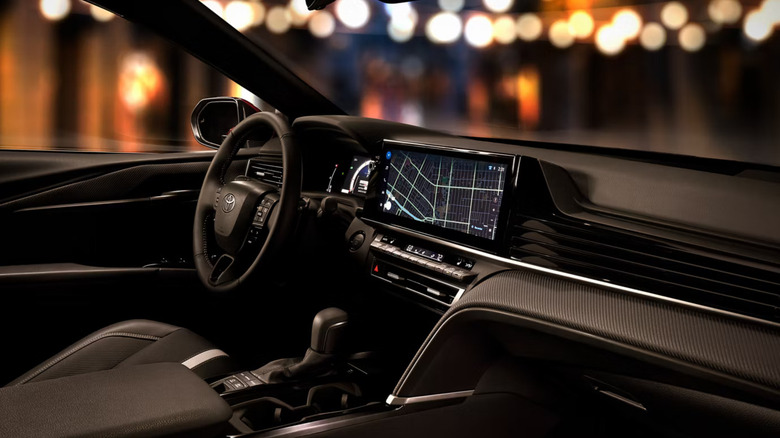
Just like the 2025 Toyota Camry, this year's model eschews a drive mode selector dial or lever, as each of the major drive modes in this car is its own button, located behind the gear shifter. Above that, in the center console is a row of buttons that control the climate control and HVAC system as a whole, with the row of buttons being located above the AC vents, and below the media display touchscreen. On that infotainment display, in the bottom-left corner, is a knob for the media volume.
As with the other Toyota models that we're featuring here, the left wing of the steering wheel has media and driver display controls, while the right cluster deals with driver assist features like cruise control. Lastly, between the driver-side door and the steering wheel is a row of buttons to control the fuel cap, boot lid, traction control, instrumentation brightness, and the auto headlights. The 2026 Camry starts at $29,000, with a $1,195 destination fee.
2026 Chevrolet Equinox
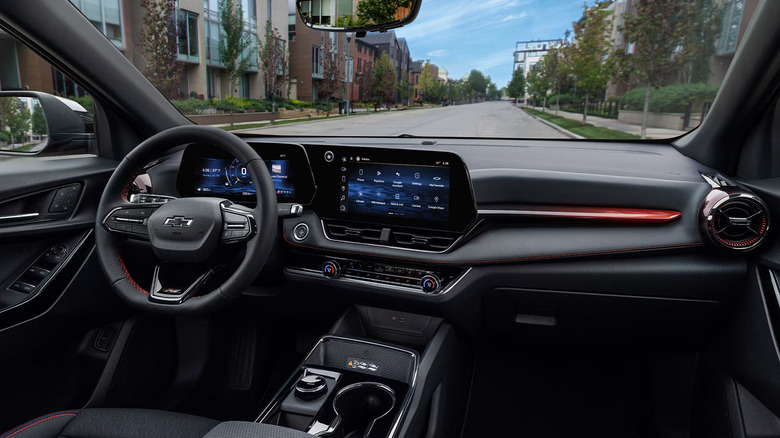
Just like for the 2025 Chevrolet Equinox, some functions in the updated 2026 model have been routed through the infotainment display; but the critical ones like HVAC controls and volume knobs are still buttons. In fact, there are around 20 buttons in total, including the steering wheel ones. First off, near the driver's left knee are buttons for the AWD mode, parking brake, parking hold, auto-start-stop, and an instrumentation brightness scroll wheel. Driver assist functions like adaptive cruise control and lane keep assist (if optioned) are toggled via the bank of buttons on the left side of the steering wheel.
The right side complement of steering wheel buttons is for controlling the media and driver displays. The controls for the air conditioning, climate control, seat ventilation, blower speed, and fan direction are underneath the touchscreen display. The temperature controls, specifically, are still via knobs. Readers are requested to bear in mind that this information was for the internal combustion engine (ICE) version of the vehicle, which starts from $28,700 with $1,395 destination fees, and not the EV.
2026 Toyota 4Runner
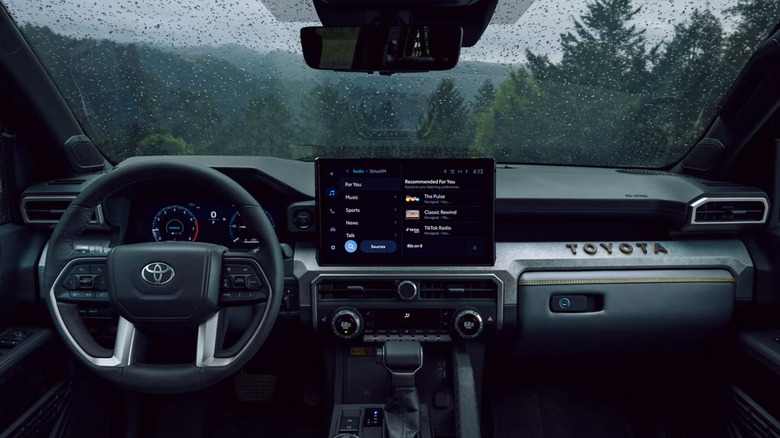
A car that gets overshadowed by the Sequoia, Tundra, and Land Cruiser is this one — the Toyota 4Runner, which we reviewed for the 2025 model year. In 2026, as far as buttons go, there is a range of them near the driver's left knee, to toggle the traction control, gauge cluster brightness, auto headlights, and fuel lid. Interestingly, there is also a manual scroll wheel that lets the driver adjust the attack angle of the headlights.
On the left side of the steering are controls and rockers for the media and driver display screen, while the right has toggles and buttons for activating or deactivating assist features like cruise control and lane departure warnings. Near the gear shifter is a dial for the different drive modes, as well as buttons for the parking brake, parking hold, and the differential. Below the infotainment display, in the middle of the dash are dials to control the temperature, and buttons for other HVAC functions. The 2026 model starts at $41,570 and has a destination charge of $1,495.
2025-2026 Nissan Armada
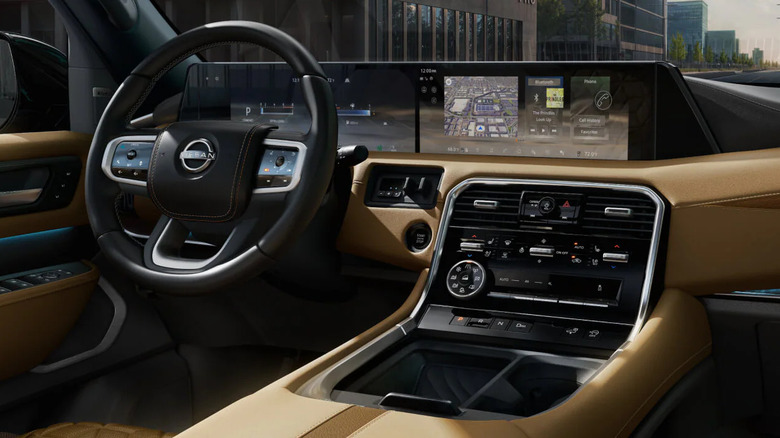
For 2025, the Armada actually got a major refresh, and though the screens are getting overwhelming, it still has some buttons. For one, the HVAC controls are still physical, with levers for the temperature and fan speed, and buttons for other controls like turning on the automatic climate control and defrosters. These are located underneath the AC vents in the middle of the dash, and below that is another row of buttons.
These control drive functions like traction control and the differential, with one button putting the diff into "auto" mode. Right next to that is a dial that lets users select the drive mode; underneath which are the gear selectors. We say selectors, plural, because each of the four main drive modes (Park, Reverse, Neutral, Drive) is its own button. Lastly, the steering wheel also has buttons for the driver assist features, answering calls, and controlling both the vehicle media and the driver's multi-information display. The 2026 Armada starts at $58,840, with a $2,190 destination fee.