

10 Midsize SUVs With Better Towing Capacity Than The Ford Bronco
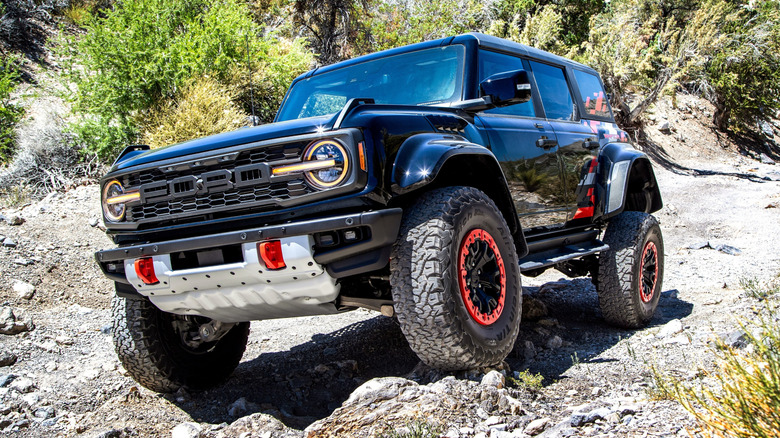
Although the Ford Bronco turns heads and is a lot more fun to drive than many other SUVs, it doesn't excel in every way. Sure, it promises plenty of off-road capability and old-school charm, but it's also inefficient, doesn't handle particularly well on the road, and isn't great for towing. The Bronco Raptor can tow up to 4,500 lbs, but most other Bronco variants can tow only 3,500 lbs.
That tow capacity puts it behind most of its midsize SUV competition, including rivals with similar off-road chops. Granted, none of these rivals will put as much of a smile on your face as the Bronco, but they can all comfortably out-tow Ford's retro SUV, even in its Raptor guise. From spacious family haulers to capable off-roaders, these SUVs all offer greater towing capacity than the Ford Bronco.
Ford Explorer — 5,000 lbs
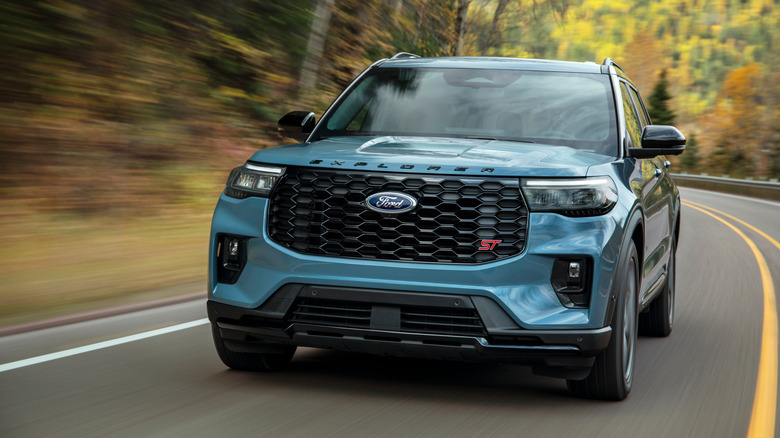
You don't even need to leave Ford's dealership to find a midsize SUV that tows better than a Bronco. The Ford Explorer offers a standard towing capacity of 5,000 lbs, whether you choose the entry-level 2.3-liter four-cylinder engine or the optional 3.0-liter six-cylinder engine. The latter option is available only on the Tremor, Platinum, and ST trims.
When we tested the current-generation Explorer in ST trim, we did what most buyers are likely to do: drive it around the suburbs. Despite the showy red accents and the promise of 400 horsepower on tap, most Explorers are likely to spend their lives on the daily commute.
A burst of spirited driving proved it could be pushed harder when needed, but drivers who want to regularly use its competitive towing capacity likely won't be racing people at stoplights.
In that sense, the Explorer ST shares some things in common with the Bronco — the appeal of what the SUV could theoretically do plays as big a part in its appeal as what drivers will actually use it for. The difference is that drivers who don't want the bragging rights of a top-spec model still get the same towing capacity from a base Explorer as they would from a growling ST variant. Plus, an Explorer tows 500 lbs more than even a top-spec Bronco.
Chevrolet Traverse — 5,000 lbs
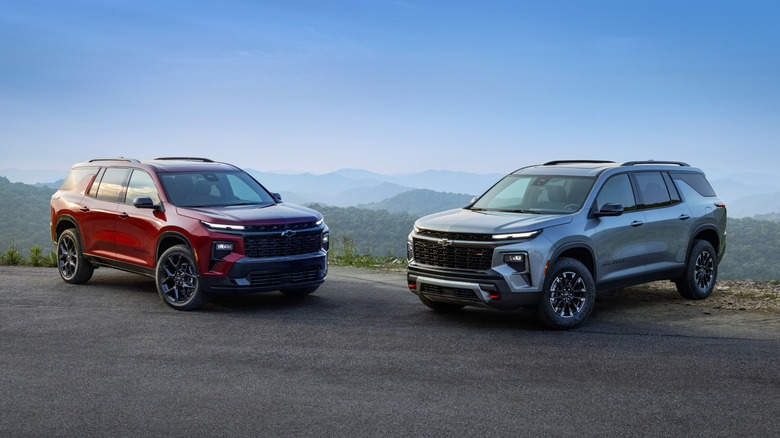
The Chevrolet Traverse isn't available in a 400-horsepower, tire-smoking trim like the Ford Explorer, but in most other ways, the two family-friendly SUVs are evenly matched. Buyers seeking more off-road capability can opt for the Z71 trim, while the range-topping High Country adds features like enhanced driver assists and a Bose audio system. Like the Explorer, the Traverse can tow up to 5,000 lbs, regardless of trim.
Base trims send power to only the front wheels, while higher trims offer all-wheel drive. The standard 2.5-liter four-cylinder engine is new to the latest generation of the Traverse, which we tested when it launched for the 2024 model year. At the time, the Z71 trim was our pick of the bunch, with upgraded tires and suspension that made it more capable off-road than some buyers might expect for a family-oriented three-row SUV.
Jeep Grand Cherokee — 6,200 lbs
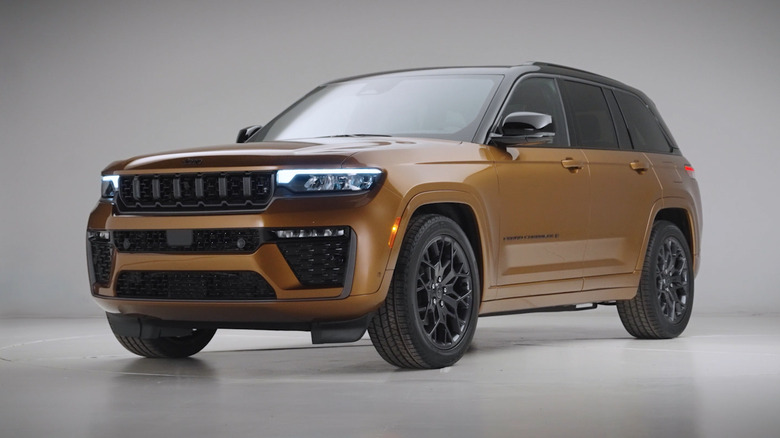
Although each generation of the Jeep Grand Cherokee has had its own quirks, the basic formula has stayed the same. The latest generation is arguably one of the best yet, combining Jeep's traditional utilitarian roots with modern tech and improved comfort. It's an appealing option in a fiercely competitive segment, and it even outpaces almost all of its rivals in some areas. Towing is one of those areas, since its 6,200 lbs maximum towing capacity beats everything else in its class aside from the Dodge Durango.
Depending on how you classify the Durango, the Grand Cherokee might actually be the best in its class, though we'll dive into the details later. Whether it's the best or not, Jeep deserves credit for ensuring both its 3.6-liter Pentastar V6 and 2.0-liter Hurricane 4 Turbo can tow equally. Despite having fewer cylinders, the four-cylinder engine actually makes more horsepower than the Pentastar V6, with the pair producing 324 horsepower and 293 horsepower, respectively. The four-cylinder also delivers considerably more torque.
Nissan Pathfinder — 6,000 lbs
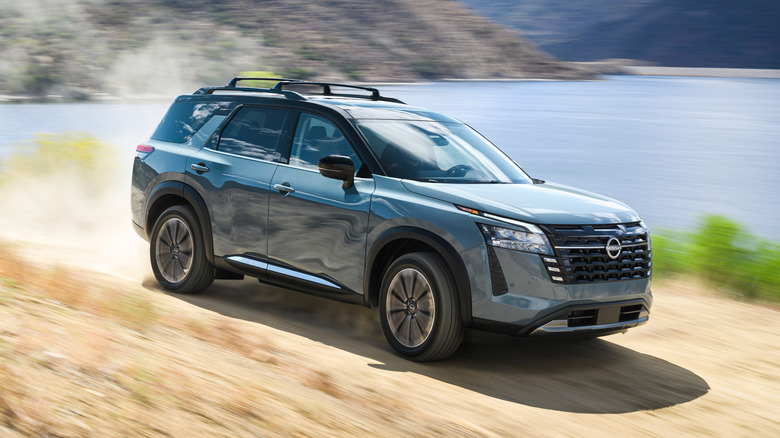
In many ways, the 2026 Nissan Pathfinder isn't particularly remarkable compared to its competitors. That's not necessarily a bad thing, though, since it still ticks plenty of boxes if you don't need an SUV with the Bronco's level of personality. Nissan has updated the Pathfinder for the 2026 model year, with revised styling and slightly less dated tech. The word "slightly" does some heavy lifting, since we still thought the infotainment interface looked amusingly old-school.
It may have received cosmetic tweaks, but under the hood the facelifted Pathfinder is no different from before. It still has a tried-and-tested 3.5-liter V6 engine that delivers an unremarkable 23 mpg combined, but it can tow more than many rivals. A standard towing capacity of 6,000 lbs puts the Pathfinder near the top of its class, with only Jeep and Dodge offering mid-size SUVs with higher capacities. It still isn't enough to make the Nissan stand out, but it does reinforce the Pathfinder's appeal as a capable family hauler.
Kia Telluride — 5,000 lbs
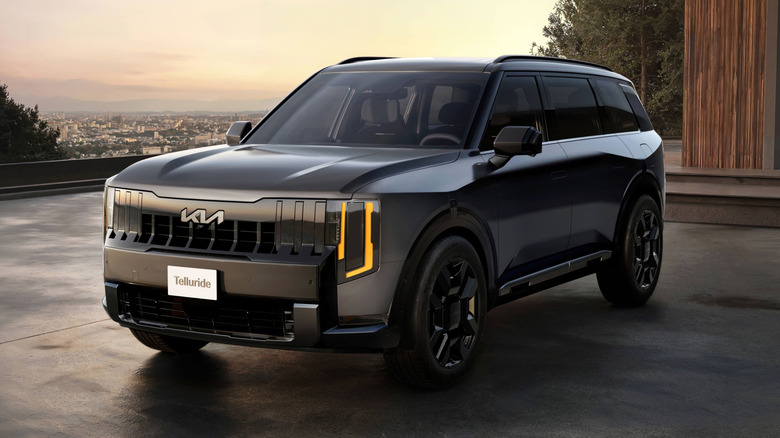
The original Telluride earned plenty of praise from critics — including us at SlashGear — and the second-generation Telluride is no less of a triumph. Debuting for the 2027 model year, the latest Telluride promises greater efficiency thanks to a new turbocharged four-cylinder engine. That engine replaces the previous generation's V6. Despite losing two cylinders, the 2027 Telluride's towing capacity remains unchanged at a competitive 5,000 lbs.
Other aspects of the SUV are similarly competitive, with its interior, handling, and comfort being up there with the best in the segment. After testing the X-Pro trim off-road, we can confirm the Kia is decently capable in that regard, too. It won't match a Jeep Grand Cherokee or a Toyota 4Runner on the trail, but it will comfortably handle everything most drivers throw at it.
Toyota 4Runner — 6,000 lbs
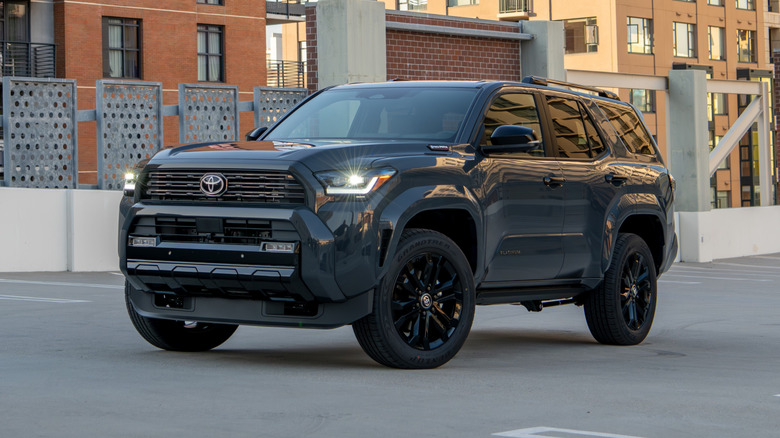
Few midsize SUVs rival the Bronco's off-road capability, but the Toyota 4Runner is one of them. The 2026 model makes few major changes from the previous year, with 2025 marking the long-awaited debut of the sixth-generation SUV. At first glance, the new generation might look similar to the old one, as the 4Runner still presents itself as an off-road-focused SUV that would be wasted if it spent its entire life on the asphalt.
There's certainly no point in coughing up the cash for a Trailhunter or TRD Pro if the closest you'll get to off-roading is the occasional gravel track on the way to a campsite. However, road-focused trims like the Platinum trim we looked at earlier in 2026 are a new take on the formula. Arguably, it's not entirely successful. The 4Runner still handles like a body-on-frame SUV, unlike many of its more composed midsize rivals, yet the Platinum trim's road-focused tires slightly compromise its off-road capability.
A base 4Runner (or an off-road-focused trim like the Trailhunter) does a better job of living up to its predecessors' all-conquering reputation, but if you're looking for a plush SUV for everyday commuting, most of Toyota's other SUVs are a better option. The 4Runner's appeal is slightly more muddled than before, but its towing prowess remains clear. Every trim, with both hybrid and non-hybrid powertrains, can tow 6,000 lbs, one of the highest towing capacities in its class.
GMC Acadia — 5,000 lbs
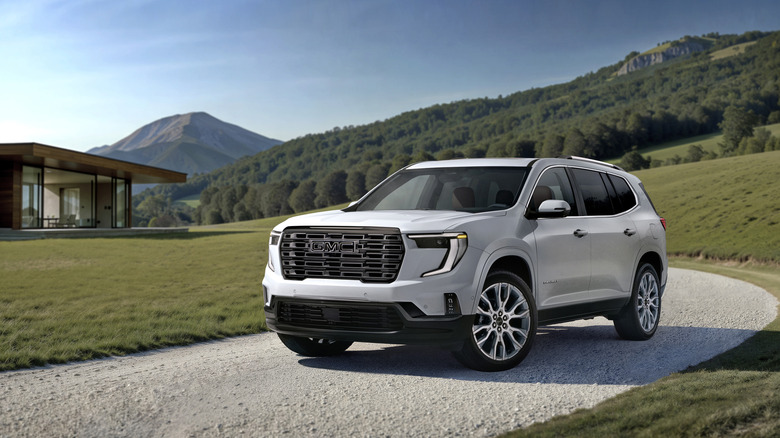
The current generation of the GMC Acadia launched for the 2024 model year, and it hasn't changed much since. When we reviewed a Denali-trimmed Acadia shortly after its launch, we were struck by how little GMC had done to make the SUV distinctive. Sure, it has a long spec list, especially in its highest trims, and it's comfortable and spacious, but the same could be said about any number of midsize SUVs.
Likewise, the Acadia keeps up with most of its class in towing capacity, but it isn't exceptional. GMC rates it at a maximum of 5,000 lbs. Under the hood of every example sits a 2.5-liter turbocharged four-cylinder engine that we thought was adequate, though not very eager.
Does a family hauler need to be distinctive in order to be appealing? Probably not. Will any potential Acadia buyers be put off by its limited visibility and general heft? Again, probably not. Will they want it to tow more? That question isn't as straightforward, but at the very least, the Acadia is comfortably outclassed by some rivals in that regard, even though it's still more capable than a Bronco.
Honda Pilot — 5,000 lbs
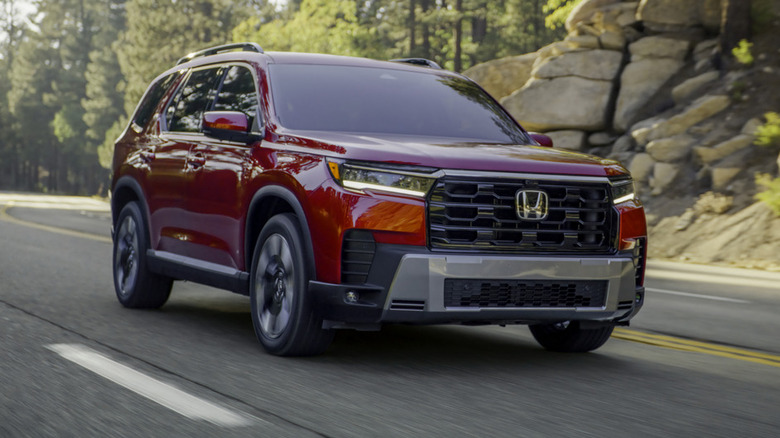
The Pilot is an important model for Honda, since the automaker sold over 120,000 units in the U.S. alone in 2025. For 2026, Honda refreshed the Pilot with updated styling and new tech to keep it competitive against an ever more competitive segment. We thought those updates were a success, fixing some of the SUV's few drawbacks while improving on what already made it great.
The V6 engine always had ample power in reserve during our testing, and it handled well for its size. Its towing capacity is competitive rather than outstanding, at 5,000 lbs, but it should still be enough for most buyers. Similarly capacious and comfortable family SUVs like the Kia Telluride and Toyota Grand Highlander can tow the same amount, although a few options offer more if maximum towing capacity is your primary concern.
Toyota Grand Highlander — 5,000 lbs
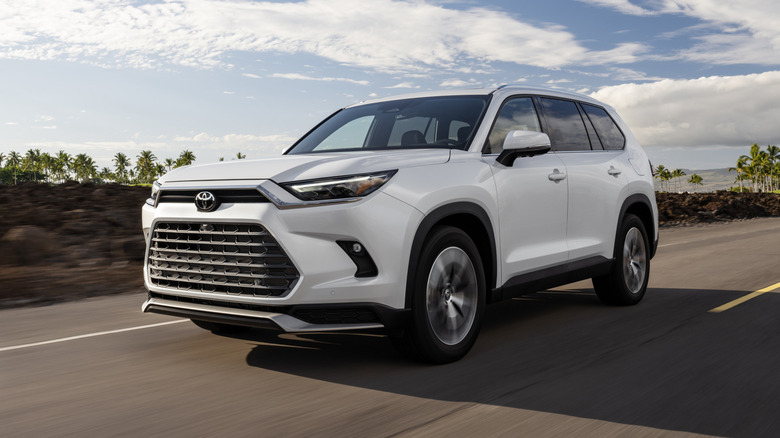
Anyone looking for maximum towing capacity from their 2027 Toyota Grand Highlander Hybrid will need the Hybrid Max powertrain, since the standard hybrid offers only 3,500 lbs. Step up to the Max, and that capacity increases to 5,000 lbs. The catch? It's only available with the range-topping Platinum trim. Alternatively, buyers could opt for the non-hybrid Grand Highlander, which features the same 5,000 lb capacity as the Hybrid Max.
For those who can justify the spend, the Grand Highlander Hybrid Max Platinum offers a winning mix of space, capability, and comfort. However, despite the "hybrid" in its name, it's not particularly efficient, at least not compared to what you might expect from an electrified Toyota. The brand also recommends filling the Hybrid Max with premium gas rather than regular.
Aside from the cost of top-spec variants, there's little to dislike about the Grand Highlander for anyone who needs maximum family-hauling space. In fact, it's so spacious inside that it eclipses most midsize rivals, even if it isn't quite as cavernous as today's best full-size SUV interiors.
Dodge Durango — 8,700 lbs
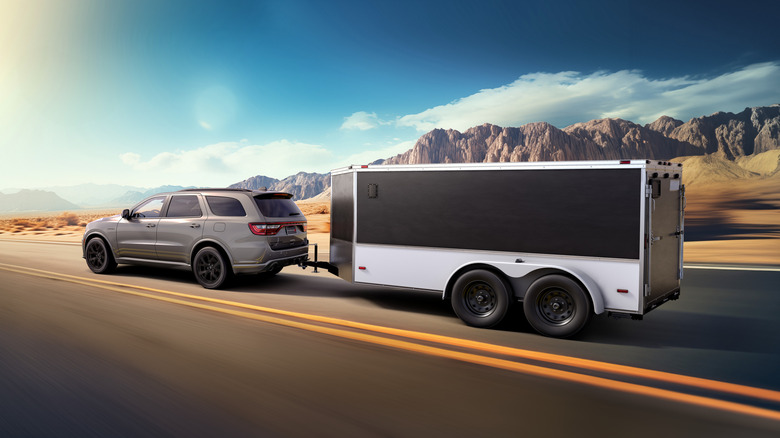
If the Toyota Grand Highlander is more spacious than its midsize label suggests, the Dodge Durango is the opposite, being more midsize than Dodge's official classification suggests. Although Dodge insists the Durango is a full-size SUV, it's widely regarded as being on the larger end of the midsize category, so we're including it here.
However, a few key differences set the Dodge apart from the other midsize SUVs on this list. To improve efficiency, most rivals have switched to six- or four-cylinder power, but the 2026 Durango has kept its traditional V8 engine. Originally, it was set to be V8 only, but it was later confirmed that a V6 option would also be available. That V8 gives the SUV towing capacity well above anything else in its class, with a maximum of 8,700 lbs.
The Durango is also a different proposition to the typical modern midsize family hauler, since its current generation has been in production since 2011. Even without its outrageous Hellcat engine, it's still more of a muscle SUV than its rivals. Whether that's a good thing depends on what you want in a new vehicle in 2026, but if you want maximum towing capacity above all else, it can't be beat.