

12 Problems The Third-Gen Toyota Tundra Has Had Since Its Release
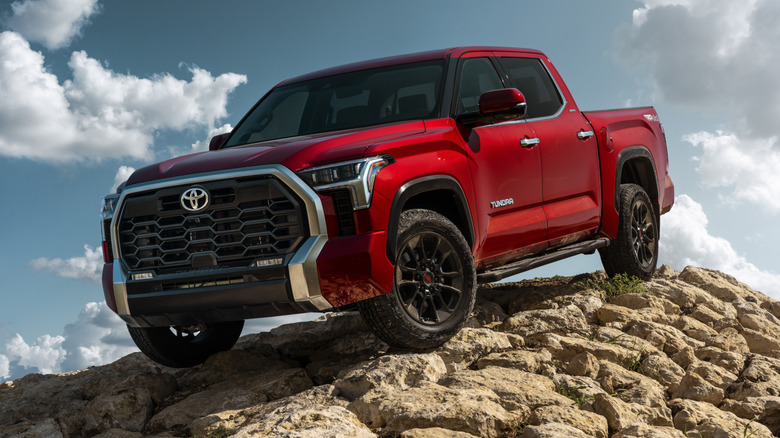
The Toyota Tundra has been part of the automaker's American-market offerings since 2000, when the first-gen Tundra debuted as a successor to the Japanese-assembled T100 pickup. Since then, it has carved out a solid niche for itself in the American trucking landscape and made the headlines a few times along the way. Be it competing in the NASCAR Craftsman Truck Series, towing a space shuttle, or hitting a million miles on the odometer, the Tundra is definitely a capable truck, even if it has never been a massive seller compared to its American rivals.
Toyota has opted to take it slow with the Tundra, with the pickup only in its third generation as of 2026. You would think that's a good thing, allowing Toyota engineers to ensure each iteration of the Tundra leaves the factory with few (or no) issues. Unfortunately, that's not the case: The third-gen Tundra is sometimes considered the worst generation yet, with the years since its 2022 debut characterized by quite a few issues, some of which severe. From failure-prone engines, noisy brakes, and iffy tonneau covers, here are some of the many problems the third-gen Tundra has faced in its short life.
Machining debris in the engine
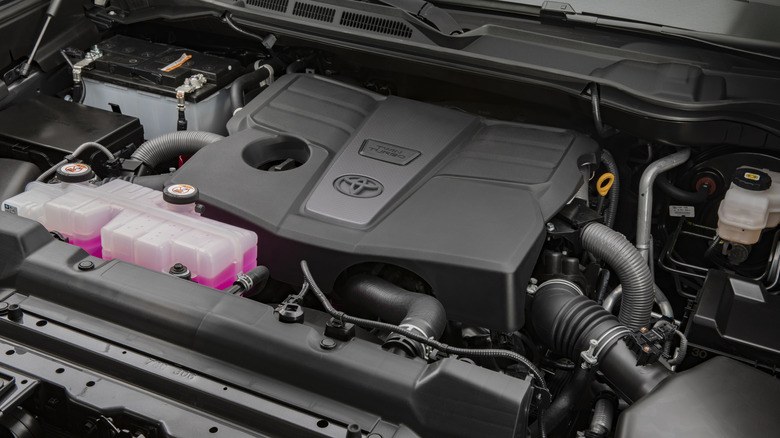
One of the third-gen Tundra's highest-profile issues is likely an engine problem, supposedly arising from leftover debris in the V6. The debris, which Toyota claims was left over from the manufacturing process, is allegedly responsible for several common problems with the Tundra's Turbo V6 engine, including knocking, a sudden loss of power, rough running, and an inability to start. Toyota has issued two recalls related to this debris, one in 2024 and another in 2025.
For what it's worth, not everyone is buying Toyota's explanation: YouTube channel I Do Cars got hold of a wrecked Tundra V6 and noted that the wear patterns didn't necessarily match Toyota's claims of machining debris. Either way, the supposed debris led to a class action lawsuit being filed in December 2024.
To be fair to the Tundra, the issue isn't exclusive to it; Toyota has also recalled certain Lexus GX and LX models. The pickup is, however, easily the most affected: Toyota recalled 98,600 Tundras in 2024, with 113,079 in the second round of recalls for the Tundra and Lexus SUVs. It's worth noting that the Tundra Hybrid has not been part of either recall, even though the engine similarities have caused some owners to express concern about the exclusion. Given that there is evidence of Tundra Hybrids exhibiting similar engine failures, the worry seems quite justified.
Loose rear axle bolts
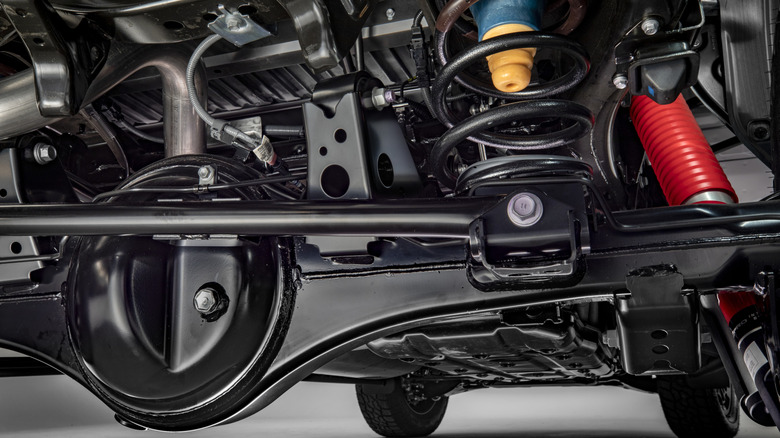
The third-gen Tundra ran into trouble soon after it started making its way to new owners: In June 2022, Toyota recalled 46,176 Tundras and Tundra Hybrids. These encompassed gas-powered Tundras built between November 2, 2021, and June 13, 2022, and Tundra Hybrids manufactured between March 15, 2022, and June 7, 2022. The vast majority (44,928) of these were standard gasoline Tundras.
This issue first came to light in March 2022, when the automaker received two reports of Tundras with rear axle shafts that had completely detached from the main rear axle housing, resulting in damage to the parts. In both cases, the flange nuts that kept the assembly together were missing, although Toyota's investigation revealed that all fasteners were being torqued properly during assembly.
Eventually, the automaker figured out that the studs themselves were at fault: Some were not being installed properly into the rear axle assemblies. This weakened the joints and created just enough play for the nuts to come loose and allow the axle shaft to detach. To its credit, Toyota addressed the issue quickly and seemingly decisively — the problem hasn't resurfaced, at least to our knowledge.
A detaching tonneau cover
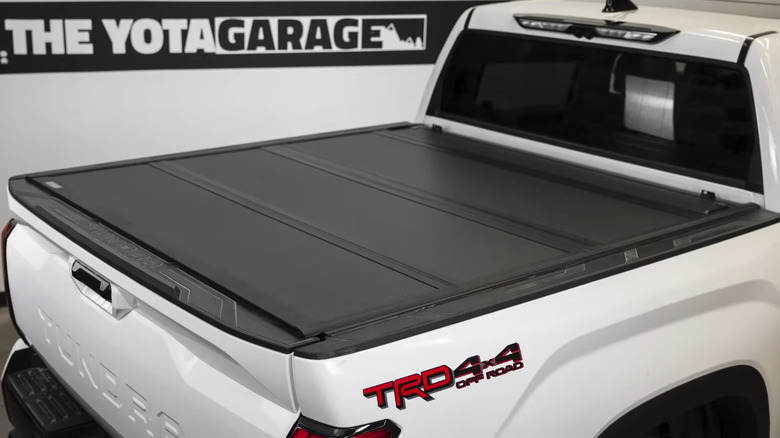
Tonneau covers for pickups can be quite useful, helping improve a truck's gas mileage and, in some cases, combat water accumulation using drain tubes. But while there are definitely plenty of reasons to use a tonneau cover, the 2022 and 2023 Tundra had a particular tonneau-related headache that resulted in 108,473 Tundras and 21,793 Tundra Hybrids being recalled in March 2023.
The fault involved Toyota's official triple-fold tonneau cover, available as a standalone purchase or as a dealer-installed option. The cover could (and did) detach at highway speeds, posing a safety risk to other road users, and the issue was traced to a design fault: Essentially, the hardware Toyota used to keep the tonneau cover attached to the bed wasn't quite strong enough to keep it attached over time.
Toyota's tonneau cover hardware included brackets, bolts, lock washers, and nuts. The nuts that Toyota used didn't apply enough force to keep the lock washers compressed, allowing the tonneau cover to fly off in certain situations. Toyota's immediate solution was for dealers to remove the tonneau covers for safety, with drivers instructed not to use them. A few months later, in June 2023, Toyota determined that the best solution was to replace the mounting hardware on the brackets and tonneau cover, with dealers replacing any damaged covers as necessary.
A rattly interior
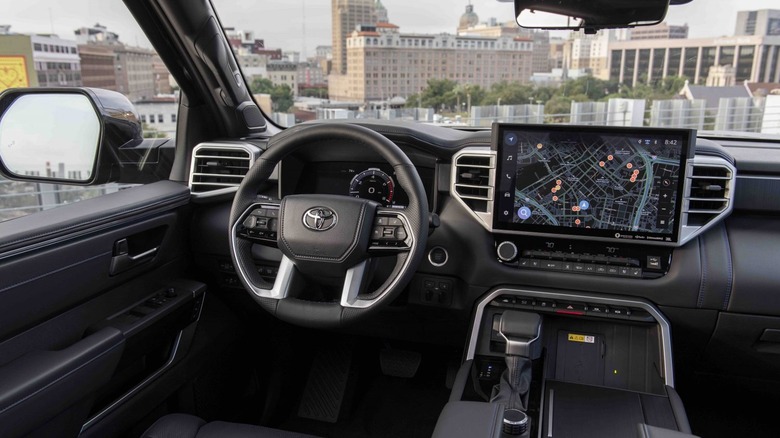
Not all third-gen Tundra faults have required Toyota to recall its pickup, but that doesn't mean they're not annoying all the same. One common complaint that keeps coming up in online discussions is the fact that the third-gen Tundra's interior is particularly prone to rattles of all kinds.
Even a cursory look through Reddit and online forums shows that there are a number of sore spots for third-gen Tundra owners. These include a noise that comes from behind the dash, rattling from the sun visor area, noisy plastic trim in the window surrounds, an iffy sunroof, and even rattles caused by the JBL speakers. That's quite a lot of issues, especially for a truck that cost more than its more storied American rivals when it debuted in 2022.
Given the anecdotal nature of most online complaints and the fact that there hasn't been — and likely will never be — an official recall for any of these issues, it's hard to say how many of the complaints are justified, or what the source of all these problems is. That said, some reviewers have pointed out the poor quality of the materials Toyota used for some trim levels, and that may play a part. The base SR5, for example, has been criticized for cheap plastics and rough edges, while even admirers of the Tundra TRD Pro have had to admit that the materials aren't particularly high-quality.
A leaky fuel line
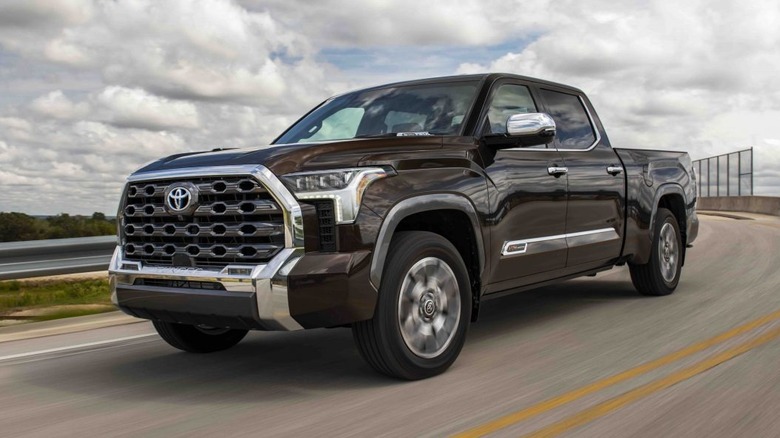
Some problems are more serious than others. A rattly interior, for example, can be annoying and hard to live with, but it is not dangerous or life-threatening. Unfortunately, the third-gen Tundra has had its fair share of potentially lethal faults, including a fire risk in 2022 and 2023 Tundras due to a problematic fuel line.
In August 2023, Toyota announced that it was recalling 168,179 Tundra and Tundra Hybrid pickups from the 2022 and 2023 model years. The recall was due to a plastic fuel line near the fuel tank, which Toyota had clamped into place next to some metal brake lines. The clamp could loosen over time, allowing the plastic fuel line to contact the metal brake line and eventually wear away. This leaking fuel could then, of course, cause a fire.
Toyota first became aware of fuel leaks in November 2022 and took nearly a full year to figure out the source of the problem and to announce a recall. Toyota's fix for potentially affected Tundras was a two-step job: Dealers were first instructed to wrap the fuel line in protective material, with new fuel lines installed once they became available in September 2024. Toyota didn't get away with this scot-free: a Tundra owner filed a class action lawsuit against the automaker in September 2023, although there don't seem to have been any updates since.
Neutral creep
Toyota has had several bad recalls over the years, but one of the company's worst recalls ever happened in 2024, when gasoline and hybrid versions of the third-gen Tundra, alongside the Toyota Sequoia Hybrid and Lexus LX 600, had to go back to dealers. A significant number (242,114) of them were 2022 to 2024 models of Toyota's troubled pickup.
This particular issue stemmed from faulty design in the transmissions Toyota used in these vehicles. Some components of the transmission, namely the brake clutch, did not disengage properly when the driver shifted into neutral. Neutral is supposed to decouple the wheels from the transmission, but this issue meant that engine power could potentially keep going to the wheels.
If the Tundra was parked on flat ground and the driver didn't have either the foot or parking brake engaged, this could lead to the vehicle moving forward when it wasn't supposed to. Toyota's defect notice claimed that this creep would top out at about 4 mph, so it wasn't ruinously dangerous, but it was still a big problem nonetheless. Toyota resolved the issue by updating the transmission's ECU.
Throttle lag
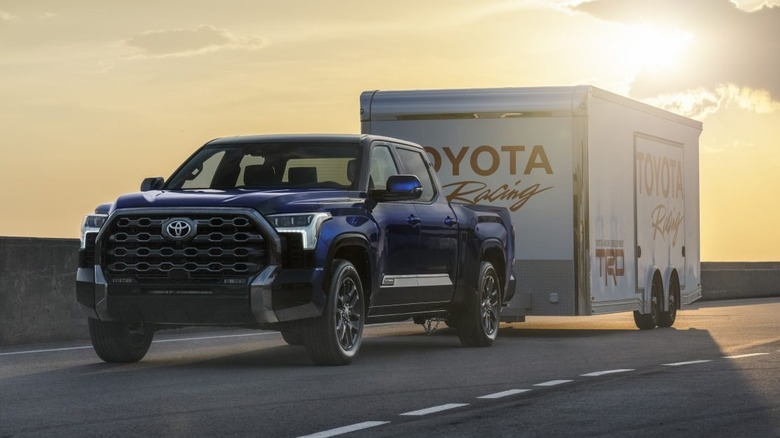
A problematic, failure-prone engine isn't the only significant powertrain issue third-gen Tundra owners have faced, even if it is the one that seems to have received the most attention. Many owners have also complained about their pickups exhibiting throttle lag or delayed acceleration. The issue seems to affect all model years of the third-gen Tundra and is especially pronounced at low speeds and when setting off from a standstill. Claimed delays range from fractions of a second to as long as 5 seconds.
It isn't clear what is causing this lag or hesitation, although it's worth pointing out that a class action lawsuit related to the alleged machining debris in the engine also cites throttle lag as one of the symptoms of the engine faults. Toyota hasn't issued a recall for this problem, but it did issue a technical service bulletin (TSB) in December 2022. The bulletin acknowledged that certain 2022 and 2023 Tundras had issues with hesitation when moving after a complete stop, as well as surging at part throttle in eighth gear.
The automaker's solution was a transmission control update, although that wasn't the end of the issue. Owners have taken to Reddit to complain about dealers not honoring the TSB due to differing VINs, while the prevalence of issues on newer, post-2023 Tundras indicates that Toyota likely still has work to do.
Reverse light failures
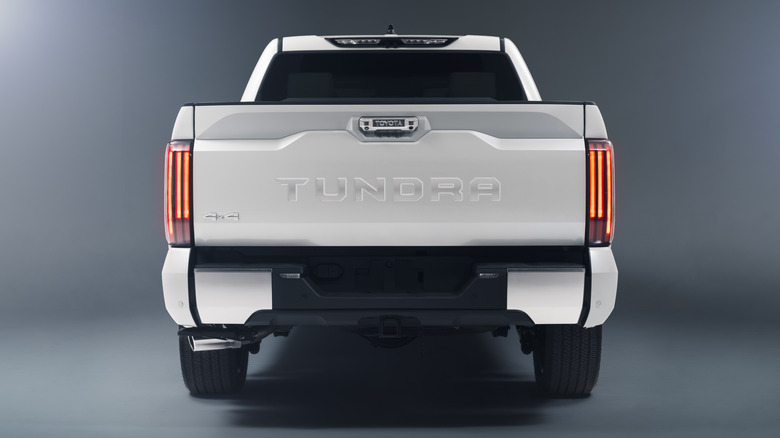
Not all of the third-gen Tundra's many faults have primarily caused grief for their owners. Some have instead made the Tundra more dangerous for pedestrians and other road users. Case in point: problems with the reverse lights that led to the recall of 443,444 Tundra and Tundra Hybrids produced for the 2022 to 2025 model years.
Toyota announced the recall in May 2025, with affected models produced as recently as mid-March of that year. Toyota claimed that the issue only applied to certain models of the Tundra and Tundra Hybrid that used a particular adhesive to seal a vent patch for the reverse lights. The automaker made it clear that not all 443,000 Tundras had the troubled light assembly, but could not (or did not) determine how many of them did.
The faulty adhesive allowed moisture to enter the reverse lights, eventually causing them to stop working. This, of course, was an issue for pedestrians and other cars, as they would have no indication that the Tundra was reversing. It was also a problem for the driver, admittedly, as they didn't have any lights to help them reverse. Toyota replaced the faulty light assemblies with improved ones and repaired any corroded wiring harnesses.
Backup camera glitches
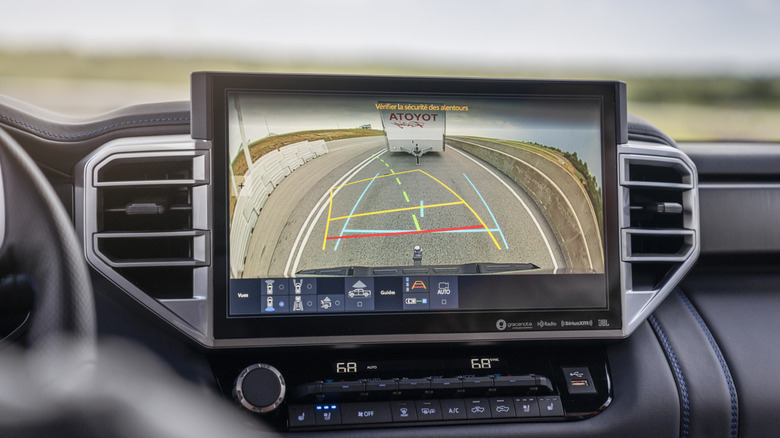
Backup cameras are great to have, giving drivers a clear view as they parallel park or inch out of their driveway. These systems aren't foolproof, though, and there are often many reasons why a car's backup camera may develop issues. Some of these may be simple issues with maintenance, such as dirty lenses, but it's sometimes entirely out of the driver's hands — like it is for some owners of the third-generation Tundra.
Toyota's pickup has been recalled for many different rearview camera-related faults, not all of which are related. Regardless, they all affect the same functionality, so we'll cover them together. The first recall happened in April 2022, when 18,000 2022 Tundras were recalled because the parking ECU would prevent the screen from showing the reverse image in cold weather. Another recall happened in July 2022, with 31,428 gasoline and hybrid Tundras recalled because the cockpit screen would show the front camera feed instead of the rear one when reversing.
The biggest of the bunch, however, was part of a double-whammy of Toyota recalls in late 2025. This particular one encompassed 393,838 Toyota Tundras and Sequoias, with 220,855 of them being the standard gasoline Tundra. This time, the fault was a software glitch that could cause the rearview display to show a black, half-green, or all-green signal in place of the rear camera feed.
Non-functioning parking brake
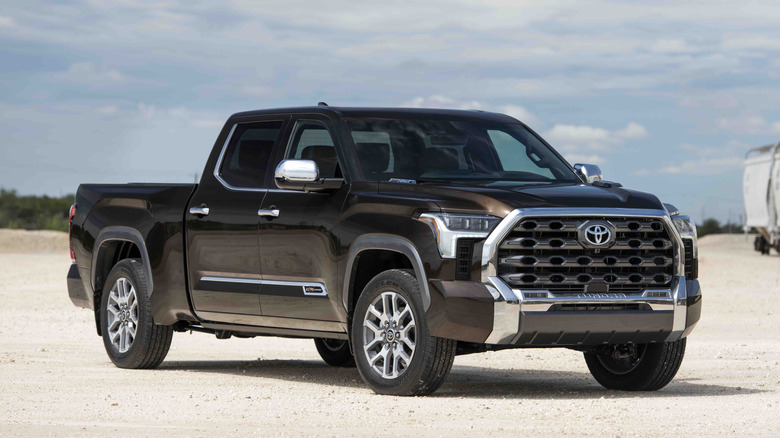
There are many features on a vehicle that you expect to just work without issues. The parking brake, which stops a car from rolling away when parked on an incline, is one such feature. Unfortunately for some owners of the 2022 Toyota Tundra and Lexus NX, their parking brakes were found to potentially be far less reliable than one might expect.
In September 2022, Toyota recalled 64,330 2022 Tundras and 19,395 Lexus NX SUVs due to an issue with the vehicles' electrical braking system. More specifically, one of the system's ECUs was found to be susceptible to mistakenly detecting an overload of the electronic parking brake actuator. This would then trigger a failsafe mode that brought up a "parking brake malfunction" error display on the vehicle's dashboard and also stopped drivers from engaging the parking brake.
The issue was first brought to Toyota's attention in January 2022, with a second fault report making its way to the automaker in June before it figured the issue out. The fix, thankfully, was pretty simple: affected Tundras went back to dealerships, which reprogrammed the fault-prone ECU.
Noisy brakes
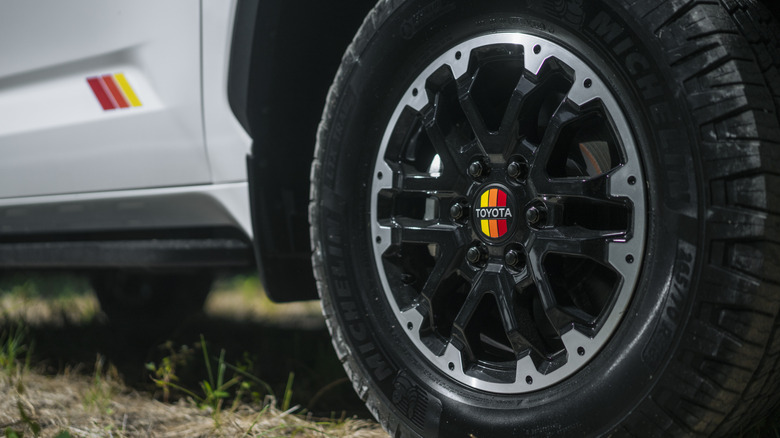
Even parts of the third-gen Tundra that, by most accounts, work perfectly fine, aren't immune to exhibiting issues that annoy the truck's owners. The brakes, for example, seem mechanically sound, never being identified as a weakness in reviews, including our review of the 2024 Toyota Tundra Platinum. But that doesn't mean the brakes are perfect, sadly.
Many third-gen Tundra drivers have taken to the internet to complain about noise coming from their trucks' front brakes. It manifests as a squeaking sound when owners depress the brake at low speeds. Some owner complaints on the NHTSA website also indicate that their Tundras' brakes shudder and squeak when used, although the former doesn't seem to be nearly as widespread an issue as the squeaking on its own.
Toyota hasn't deemed this issue severe enough for a recall, but it did release a service bulletin in November 2025 that acknowledged the noise. According to the bulletin, the issue is present on 2022 to 2026 Tundra and Tundra Hybrids, as well as 2023 to 2026 Sequoia Hybrids. The fix came in the form of new front brake parts, with an updated brake rotor and shim kit for the brake pads, which Toyota expected would reduce the likelihood of the brakes squeaking.
Wind noise
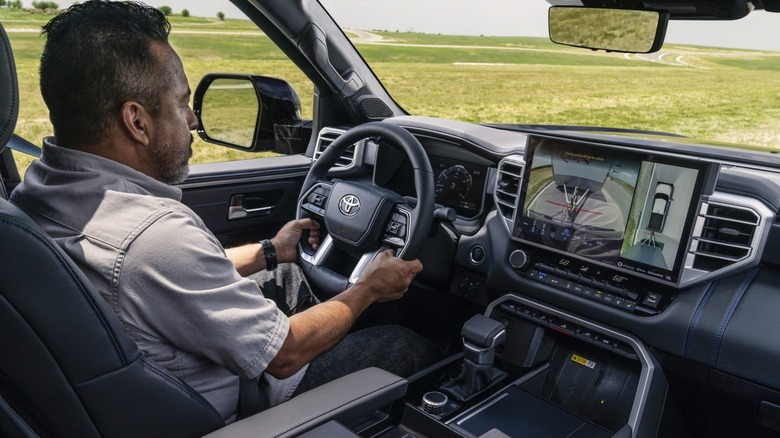
There are many bad car sounds you might hear while driving, many of which can indicate that there's a major fault with your vehicle. In other cases, though, the noise may be the direct result of the automaker's design decisions (or mistakes) and thus something you have to live with — or get creative when trying to solve. Such is the tale of the current Toyota Tundra and its wind noise problems.
As you might expect, this isn't something that Toyota has addressed in a service bulletin, let alone a recall, but there's plenty of evidence of this issue out there. Complaints on discussion forums and Reddit claim that road and wind noise in the third-gen Tundra is overly loud, with owners claiming that it's more noticeable on the driver's side (although the passenger side isn't trouble-free, either).
There seem to be many potential culprits, with the driver's mirror and faulty door seals often considered the primary offenders. Some owners claim that the noise persists even after replacing the latter, though. One post on r/ToyotaTundra suggests that stuffing foam insulation between the sheet metal and the rubber seal fixes the issue, although owners' mileage seems to vary, especially if it's the side mirror causing the noise.