

10 Android Phones You Should Consider If You Don't Want The Pixel 11 Pro
We may receive a commission on purchases made from links.
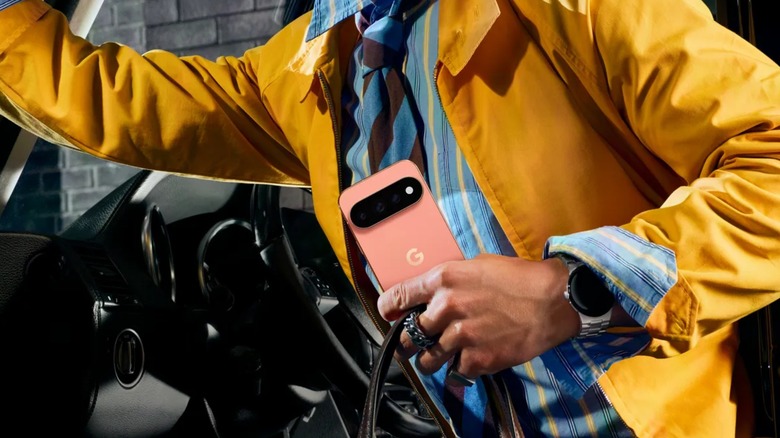
Another year, another Pixel phone. The 11th generation of Google's long-running Pixel phones debuted in August 2026, with the Pixel 11 Pro, as has become tradition, sharing top billing alongside the Pixel 11 Pro XL. The 11 Pro is, by most accounts, a solid enough phone, retaining the Pixel series' fundamentals while improving it with an array of Gemini enhancements and tricks like Magic Camera. That said, some have felt let down by the $100-plus price hike, RAM and battery capacity downgrades, and the lack of major upgrades over the previous generation, among other complaints.
Is it a bad phone? Not at all; the cameras are still great, and the stock Pixel experience is as smooth as ever. If you're willing to overlook those issues, then you'll probably find plenty to like about Google's new flagship. But there will undoubtedly be shoppers turned off by one or more of the downsides, which is where this list comes in.
One of the best aspects of the Android ecosystem is that you have alternatives for almost every phone you might consider, including the Pixel 11 Pro. Now, we don't think there's a phone out there that outright beats the Pixel 11 Pro across the board, but there are plenty that can outperform it in certain areas, and many that offer a different flavor that you may find more to your liking. Let's get started.
Samsung Galaxy S26 and S26 Ultra
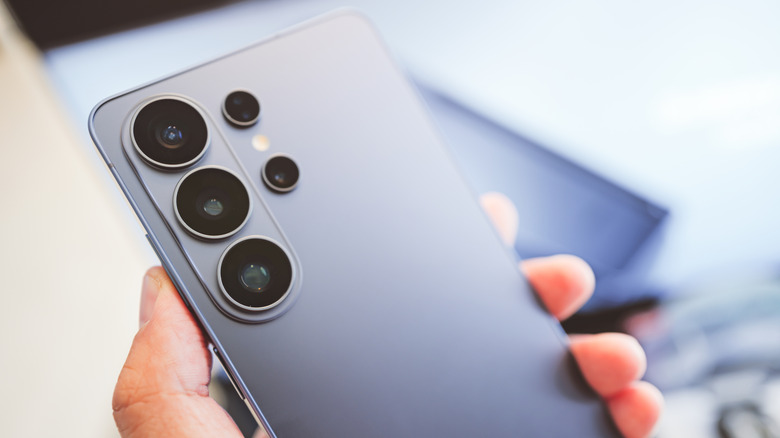
If you're in the market for a proper Android flagship, the most obvious choice is the Samsung Galaxy S26 Ultra. Sure, the 256GB version has an MSRP of $1,299, a $200 premium over the Pixel 11 Pro's $1,099 (though you can find the S26 Ultra for the same $1,099 if you look), but you do get a much better processor in return.
The S26 Ultra's Qualcomm Snapdragon 8 Elite Gen 5 SoC is a monster among Android chipsets, making it an excellent choice if you want top-end performance and enough grunt for mobile gaming. An area where the 11 Pro has issues. The S26 Ultra is up there with the best gaming phones the Android market has to offer, but, crucially, it offers more than just raw performance. One UI is very mature and has some reasonably useful AI features. The S Pen is still as useful as ever, and the S26 Ultra has received camera upgrades that have slightly narrowed the gap to Google's flagship. You also get a new Privacy Display option that lets you reduce the viewing angles to stop people from peeking at your screen, which is a nice touch.
It's quite compelling, especially since the Pixel 11 Pro's RAM downgrade means that both start with 12GB of RAM. Conversely, if you want a 6.3-inch display, the $899 Samsung Galaxy S26 might be worth considering. You get the same Snapdragon chipset as the Ultra in an impressively svelte 5.89-ounce body, much lighter than the 11 Pro's 7.20 ounces.
Poco F8 Ultra
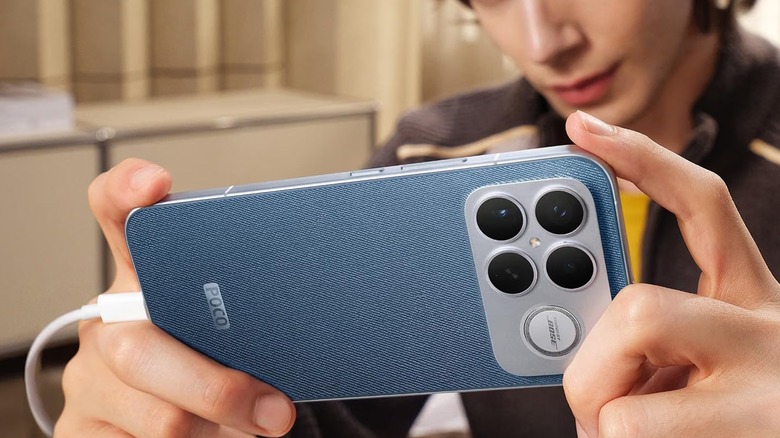
The F8 Ultra, from Xiaomi sub-brand Poco, is a great example of how flagship-tier hardware doesn't necessarily have to come at a flagship-tier price. Sure, the $899 you'll pay for a 256GB Poco F8 Ultra from a U.S.-based reseller isn't cheap, but it's quite an appealing price given the hardware you're getting.
Like many of the phones on this list, you're getting Qualcomm's flagship SoC, the Snapdragon 8 Elite Gen 5, paired with 12 GB of RAM. If you want performance, that alone should put it ahead of the Pixel 11 Pro. It's no slouch in other areas, either: you get a 6.9-inch AMOLED display that runs at 120Hz, 50 MP camera sensors all around, a substantial 6,500mAh battery capable of multi-day battery life, 100W charging, and a Bose subwoofer that adds some rarely-heard bass weight to the sound. The cameras are good, too, with one review likening it to Pixel 10 and Samsung Galaxy S25 — sure, not necessarily world-class, but more than good enough for most users.
You're not giving up too much in terms of software, either. HyperOS 3 is a solid take on Android, with useful touches like the Dynamic Island-aping Hyper Island, a helping of AI, and decent customizability. You also get four OS updates and six years of security patches, which, while not on par with what Google offers, is solid enough to not be a major deal-breaker. It's also available in a fabric-style Denim Blue if you want something different.
Nothing Phone (3)
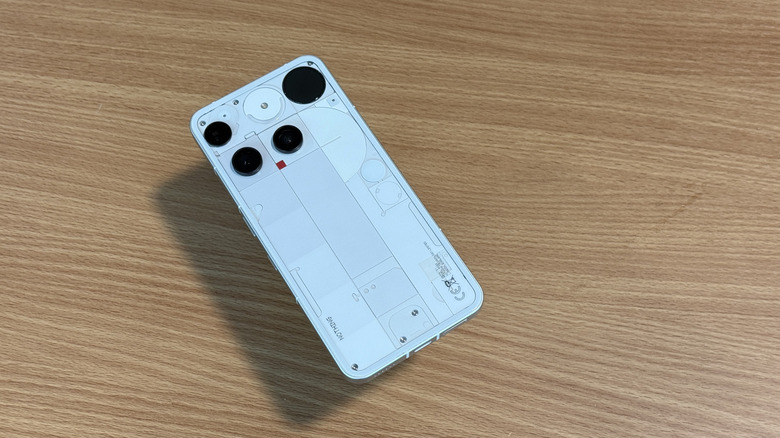
Phones don't always have to be sleek, unobtrusive slabs of metal and glass, and the Nothing Phone (3) is a great example of that. No, it's not the most powerful phone out there, and it's certainly got a love-it-or-hate-it look, but those of you seeking something a bit out of the norm might find much to appreciate here.
Our hands-on time with the Nothing Phone (3) revealed a phone with real substance beneath its eye-catching exterior. Sure, elements like the camera lens placement and busy grid design on the rear won't be to everyone's taste, but the phone has at least nailed the fundamentals of what a flagship-tier phone should offer, especially as the concessions Nothing has made to hit its $800 starting price — the Qualcomm Snapdragon 8s Gen 4 chipset instead of the Snapdragon 8 Elite Gen 5, an LTPS screen instead of LTPO, and an optical fingerprint sensor, to name a few — shouldn't detract severely from your daily experience.
There's a lot to make up for those cutbacks, anyway; the screen is nice and bright, battery life is strong, and it runs a clean take on Android with some unique touches. These include Essential Space (which collects and organizes screenshots and notes) and integration with the rear-mounted Glyph Matrix. You don't get much in the way of AI, admittedly, but that may actually be a positive to some.
RedMagic 11S Pro
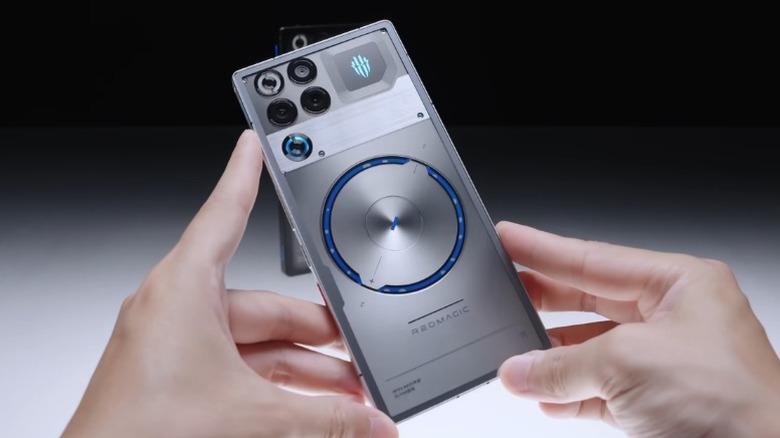
If you look at the Pixel 11 Pro's gaming woes and think that you should probably be able to do better for the money, then you'd be right. Enter the RedMagic 11S Pro, an $849 (in 12 GB/256GB guise) that's probably the best dedicated Android gaming phone money can buy in 2026. It's nowhere near the best all-rounder, but if you're all about gaming, this is probably your first port of call after the Pixel 11 Pro.
The RedMagic 11S Pro runs Qualcomm's Snapdragon 8 Elite Gen 5 processor, giving it more performance than you'll probably ever need. It even outperforms other phones with the same chipset in benchmarks and is more than good enough to max out frame rates in 3D games. Frame interpolation is also supported in some games, and the body has shoulder triggers for better in-game control. The 11S Pro uses a combined passive and active cooling system that seems to help it sustain performance longer than average, though not all reviews agree.
You also get a massive 7,400mAh battery that lasts about two days of use and 80W charging — both areas where Pixel phones have never really impressed. But there are also areas where it loses out. You only get two OS updates and three years of security updates, for one, while the cameras are also only mediocre at best. Think of the RedMagic 11S Pro, then, as a phone for those with different priorities, rather than a direct competitor to the Pixel 11 Pro.
Google Pixel 10a
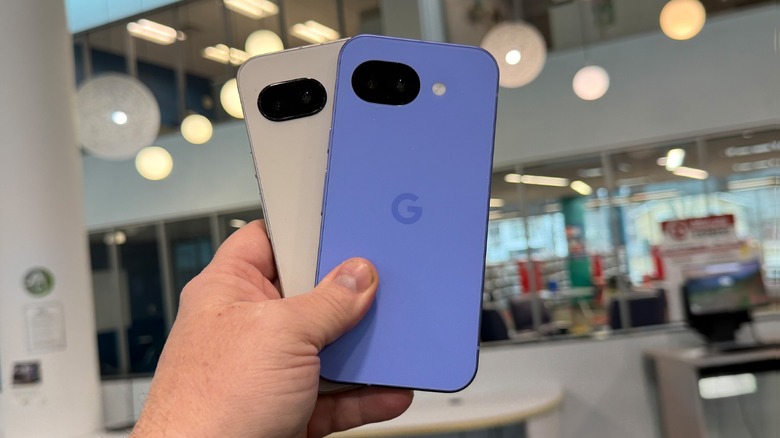
Let's be clear here: the Google Pixel 10a does not, in any way, compete with the 11 Pro. It has a lower-resolution display, less RAM, one fewer camera module, lower-megapixel sensors, slower wireless charging, and lacks PixelSnap, among other differences. For some, that will be enough to discount the 10a entirely, even at its very compelling $499 MSRP.
But if the primary reason you're even considering a Pixel 11 Pro is to get that "stock" Android experience, long-term support, and deep integration with Google's AI tools, then the Pixel 10a might be all that you need. Sure, you won't get all of Google's latest AI features due to the 10a's 8 GB of RAM, but features like Gemini Live, Circle to Search, and AI-powered photo editing tools — including Nano Banana — are all still available. That's not a bad selection, especially at this price.
On top of that, you get great cameras that are at least on par with anything in their price bracket, support for Android's AirDrop functionality, and a battery that, at 5,100mAh, is actually larger than that of the Pixel 11 Pro. Is any of that particularly exciting? No, not really, but it's a solid enough phone all the same. Our Adam Doud liked the Pixel 10a a lot when he reviewed it, and depending on what you need, it may be enough to scratch that Pixel itch for you as well.
Samsung Galaxy Z Flip 8
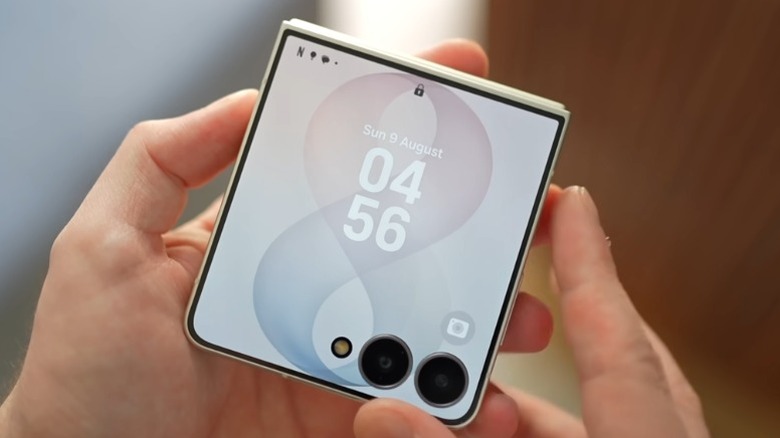
Once you start considering phones costing $1,000 or more, then a whole new world opens up to you: foldables. Well, some foldables, at least. The Samsung Galaxy Z Fold 8, for example, starts at $1,899, quite a bit pricier than the Pixel 11 Pro. While it's a great phone, that's probably a bit too big a stretch for some. Samsung, however, also has the clamshell Galaxy Z Flip 8, which starts at a much more Pixel 11 Pro-esque $1,199.
You've probably guessed that you will have to make concessions to get a folding phone at about the same price as a slab phone, what with all the fancy hinge engineering and flexible OLED panel, and you'd be right. Photos and video are unspectacular, for one, while you also get poor sustained CPU performance due to strict thermal limits. In other words, you're paying flagship prices for sub-flagship performance, though you do get One UI 9's refinements and AI features, so you're not left too far behind.
That might not seem like such a great deal, and it probably isn't if you're only concerned with the phone's raw capabilities and specs. But there are plenty of other reasons to consider buying a foldable phone that have nothing to do with performance, including the convenience of the cover screen and its more compact dimensions when folded. It's also probably cooler than the Pixel 11 Pro, which alone might justify the price premium for some — despite some downsides.
Motorola Razr Ultra (2025)
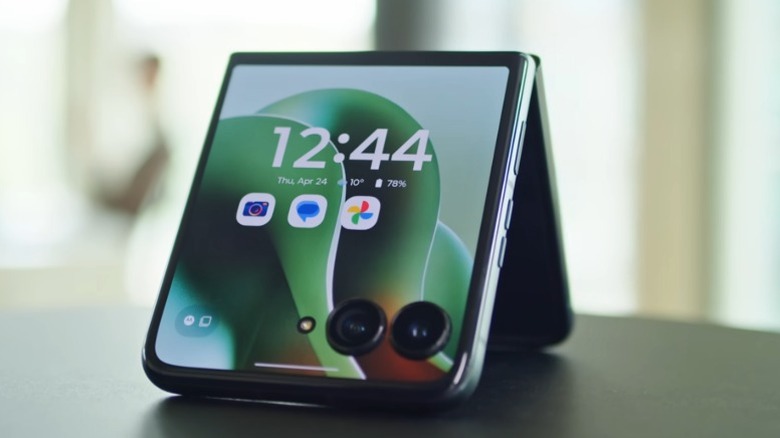
Motorola's 2025 Razr Ultra was, as we opined, probably the first "true flagship" foldable on the market. How so? Well, it was equipped with a Qualcomm Snapdragon 8 Elite SoC, 50 MP sensors for the main and selfie cameras, 16GB of RAM, and a choice between 512 GB or 1 TB of storage — no piddly 128 or 256GB here, no sir. It wasn't cheap at $1,299, but it was certainly quite a good deal for those who wanted a top-spec foldable with a very stylish design.
Motorola retained most of those specs for the Razr Ultra 2026, but hiked the price to $1,499 for the 512 GB version, which stings quite a bit. It's not a terrible price considering you'll pay over $1,200 for a similarly equipped Pixel 11 Pro, but there seems to us to be little reason to spring for a 2026 model when the Razr Ultra 2025 is still readily available from retailers like Amazon at massively reduced prices.
You're looking at $799 for the same SoC, RAM, and storage allocation as the 2026 model; that's about half the cost of its successor and $300 cheaper than the 256 GB Pixel 11 Pro — with double the storage and 4 GB more RAM. At that price, some of the Razr Ultra's weaknesses, such as mediocre low-light photography, so-so AI features, and only three years of support, will likely be easier to accept, making it a great alternative to the Pixel 11 Pro.
Google Pixel 10 Pro
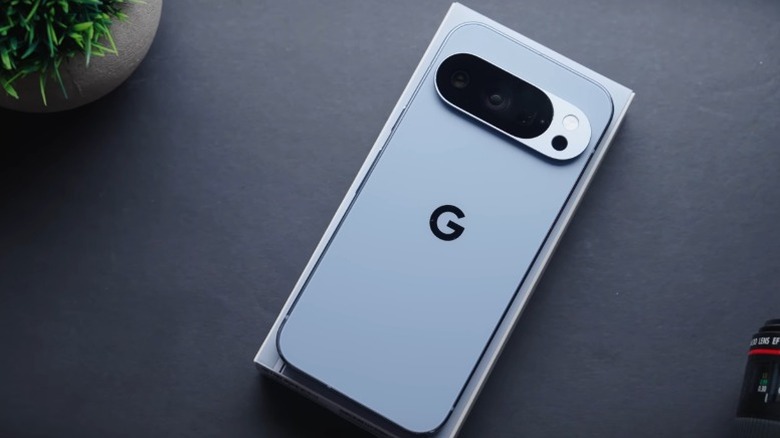
Want a flagship-tier Pixel phone but aren't sure about the Pixel 11 Pro specifically? Well, one great alternative that will still get you access to most of the new phone's features is the Pixel 10 Pro. Prices, admittedly, haven't dropped as much as we would like, with the 128 GB version still selling for around $900 and 256 GB versions hovering at around the same price as the Pixel 11 Pro, but you do at least get 16 GB of RAM across the board, along with a slightly larger 4,870mAh battery versus the 4,850mAh of its successor.
Google's latest flagship does have advantages too, of course. While both have the same Super Actua display, the newer phone has an extra 300 nits of brightness and an anti-glare coating. Better on paper? Yes. Will you benefit from either? That's entirely up to you and how you use your phone. Similarly, the 11 Pro's 25W Qi 2.2 charging is a definite upgrade, but it won't matter much if you don't use wireless charging. This isn't to discount the Pixel 11 Pro, only that some users may not lose out much by going with the older model.
The biggest reason to prefer the 11 Pro is likely its camera and photography upgrades, especially the much faster Night Sight. For some, that will be reason enough to stick with the Pixel 11 Pro. But if you're looking to save a bit of money on a flagship Google phone and don't mind some compromises, a 128 GB Pixel 10 Pro may just be the ticket. Or you could wait for the price of 256 GB models to fall.
Oppo Find X9 Ultra
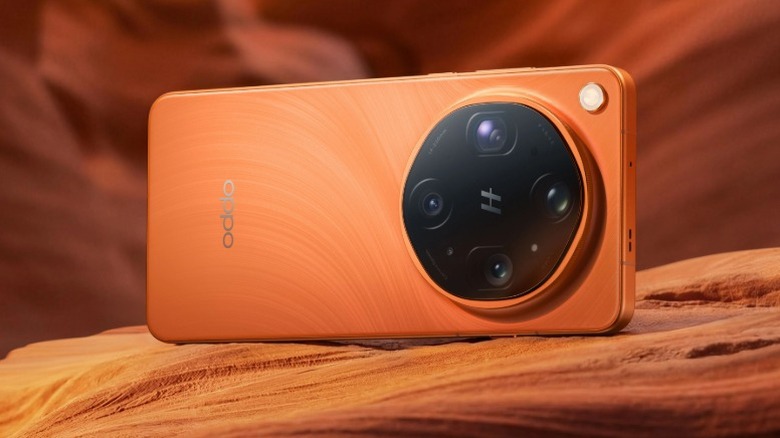
There's no way around it: the Oppo Find X9 Ultra is an incredibly expensive phone. With prices for the 512 GB variant close to $2,000 from U.S. resellers, this is far from an obvious alternative to the Pixel 11 Pro. But there is one reason why well-heeled buyers may want to consider the X9 Ultra not just over the Pixel, but also over foldables like the Samsung Galaxy Z Fold 8: the cameras.
The Pixel 11 Pro takes great photos, but the consensus is that the X9 Ultra trumps even Google's latest flagship. Dxomark, for example, has the X9 Ultra in the top five as of late September 2026, behind only the Huawei Pura 80 Ultra, iPhone 18 Pro, and Vivo X300 Pro, and slightly ahead of the Pixel 11 Pro XL (which shares the non-XL's camera hardware). The X9 Ultra has four rear cameras, with a 200 MP main sensor, a 70mm telephoto lens, and 50 MP sensors for the remaining cameras (including the selfie camera).
Software-wise, the cameras have a Hasselblad Master mode that disables HDR and AI processing to capture pro-grade images. Oppo has some hardware enhancements too, like a teleconverter kit that gives you the equivalent of a 300 mm lens, allowing the X9 Ultra to potentially replace your mirrorless camera outright in some situations. It excels in other areas, too, with good battery life, a great display, and top-tier performance, so you're not really sacrificing anything for those class-leading cameras. The price, of course, reflects that.