

4 Reasons Why You Should Consider Buying A Foldable Phone
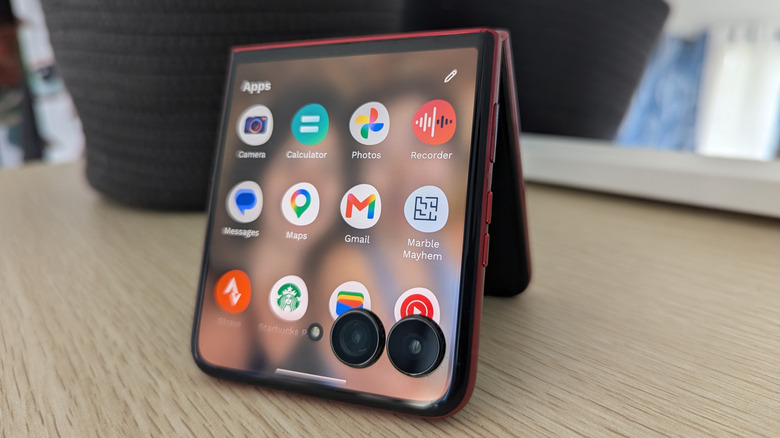
Mobile phone makers are in something of a smartphone arms race, releasing bigger and bigger devices with each generation. While some consumers may appreciate extra screen space, larger phones aren't necessarily more practical. Unless you have bigger hands or don't mind using a gadget two-handed, phones larger than 6.9 inches can be more difficult to hold, less portable, and cumbersome to use with one hand.
As a consumer tech writer and reviewer, I've tried all sorts of mobile phones and learned to look beyond tech specs for features that matter to me. Since I do most of my daily tasks on a smartphone, I find that practicality is just as important as performance.
For the past two years, my primary phone has been an iPhone 15 Pro Max. I like it for all the things one would like an iPhone — it's got a nice camera, it's easy to use, and it's incredibly reliable, among other things. However, as someone with a small palm span, it's pretty challenging to hold. Add a protective case to it, and it becomes even harder to grip, impossible to fit in most pockets, and takes up a lot of space in a bag. Last year, I decided to venture into the world of foldable phones and got a Motorola Razr Ultra 2025 as a second smartphone. After over a year of regular use, it is now my main mobile device. Below are some of the reasons why I don't regret joining the foldable phone fan club, and why you may want to consider making your next smartphone a foldable one.
You get a more compact phone without giving up screen space
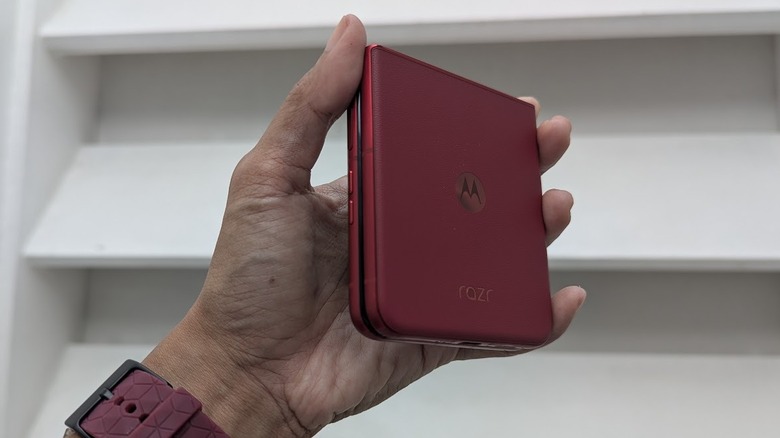
The most obvious advantage of a foldable phone is that you get a large display when you need it and a compact device when you don't. Unlike standard slab-type smartphones, a foldable phone can collapse into a smaller form that can be easier to carry.
Your experience will depend on the kind of foldable phone you choose. A clamshell-type model like my Motorola Razr Ultra 2025 folds in half horizontally, making it compact enough for most pockets and smaller bags. It's also my preferred phone to bring on runs because it fits securely in my leggings' tight pocket without sticking out or feeling bulky.
Meanwhile, a book-style foldable transforms a regular-sized smartphone into a mini tablet. This is a great option for those who want the perks of two device categories (mobile phone and tablet) in one gizmo and prefer the flexibility it provides for browsing, playing games, reading, viewing media, and multitasking in general.
Acquaintances who have foldable phones told me that the constant folding can create a noticeable crease on the display, one of the reasons some may not want to buy a foldable. While it did bother me in my first few weeks of use, I found that the more I used my Razr Ultra, the less I actually noticed the hinge line. The ability to switch between my phone's smaller cover screen and full-size main display is worth it, and the pocketability is perhaps the biggest game-changer.
Foldables offer more versatility for photos and video
Foldables offer a camera experience that would otherwise be unachievable on a conventional smartphone. It opens up new ways to capture photos and videos hands-free, for one, but you can also use the device as its own tripod, eliminating the need to lug a tripod or selfie stick around.
Many foldables let you use their primary — and often superior — rear cameras to take better quality selfies when folded. With a flip-style foldable, you can use the external cover screen as a live viewfinder to take properly composed portraits or wide-angle photos. On an inward-folding model, the larger unfolded display offers more flexibility when framing group photos, reviewing shots, or creating content.
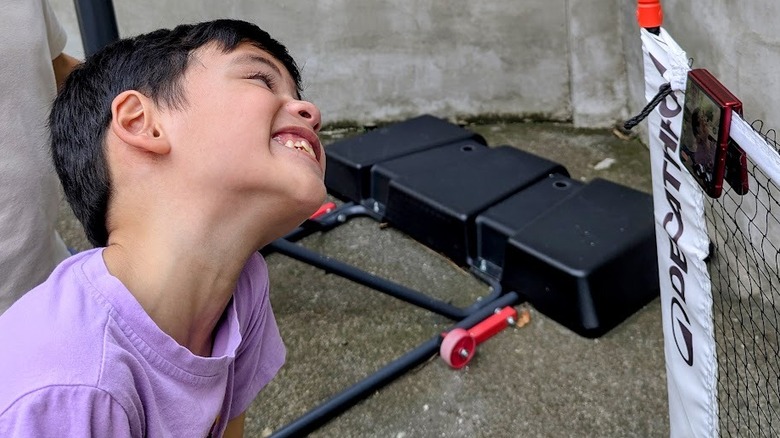
Some of the cooler and more convenient things I've been able to do on my Razr Ultra are fold it up at 90 degrees (laptop style) and take video calls, look at video recipes while cooking, and capture timed photos without having to prop up my device against something. Folding my phone tent-style is also a fun experience. Beyond recording stable videos using the rear cameras without a tripod, I've clamped my phone to a flat and thin vertical surface (a pickleball net) to take hands-free photos at an appropriate height. Of course, you should exercise caution when doing the latter: Always be ready to catch your phone just in case, and make sure the surface or object you're clamping onto isn't rough enough to scratch the phone's main screen.
It's more convenient for everyday use
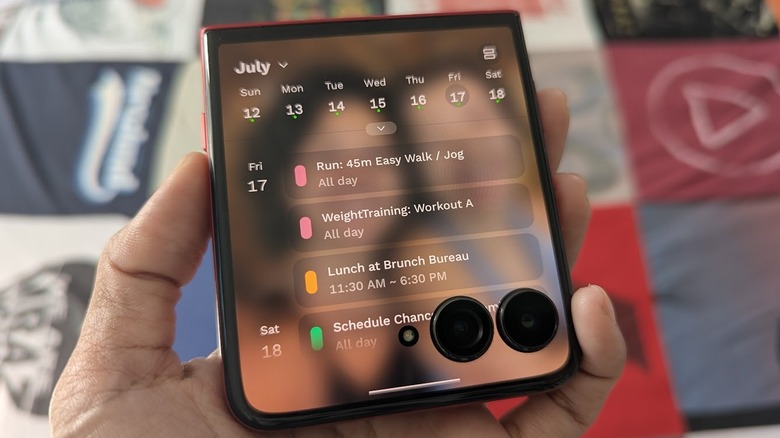
Based on my experience with the Razr Ultra, there's a surprising number of tasks you can accomplish on a clamshell foldable without even opening it. Besides taking selfies on the go, you can scan app notifications and open just the important ones. You can reply to text messages or check email a lot faster. You can play games, navigate with Google Maps, pull up a digital boarding pass, control media playback, and much more — all from the cover screen.
Devices that unfold into a tablet offer a different kind of convenience. You can use the outer display screen and breeze through your usual tasks, or unfold the mobile phone to instantly have more room for proofreading documents, editing photos, watching videos, or multitasking. Rather than switch to a tablet or a computer, you expand the one already in your hand.
Foldable phones, by design, also offer better screen protection for their main display. Whether you opt for a flip-style or book-style foldable, the inner screen stays secure when folded, reducing the chances of keys, coins, and other sharp objects scratching it while it's in a bag or pocket.
It helps break the scrolling habit
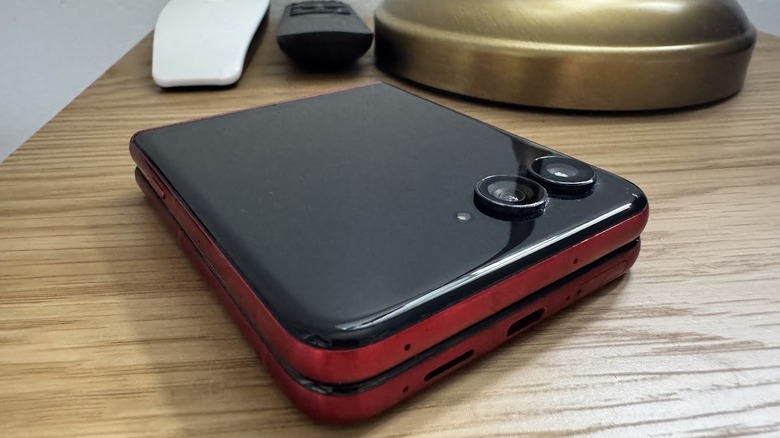
A benefit I didn't expect from using a foldable phone is how it subtly changed the way I interact with my cellphone. Because the main display isn't always accessible, opening my foldable phone feels like more of a conscious decision rather than an automatic impulse. I find myself reaching for and unlocking my Android phone less often. Rather than give in to the urge to endlessly scroll or hop between apps, I end up spending more time on the tasks I have in front of me.
On the Razr Ultra, there's also something nostalgic and oddly satisfying about closing the phone after finishing a task or ending a call. The snapping motion acts like a cognitive signal that says, "I'm done!" Although tablet-style foldables don't quite recreate that classic flip-phone experience, they still foster more intentional use. You unfold to access the larger display because you actually need it, and not just because it's always there.
Folding and unfolding a foldable phone ended up being a surprisingly effective way to digitally detox. That brief pause between wanting to use the phone and actually opening it may give you just enough time to ask yourself, "Do I really need to do this right at this moment?" You may discover, just like I did, that the answer is, more often than not, "no." Those small moments of hesitation may not seem like much, but eventually, they can add up to a healthier relationship with your phone.