

5 Car Parts You Should Replace At 60,000 Miles
We may receive a commission on purchases made from links.
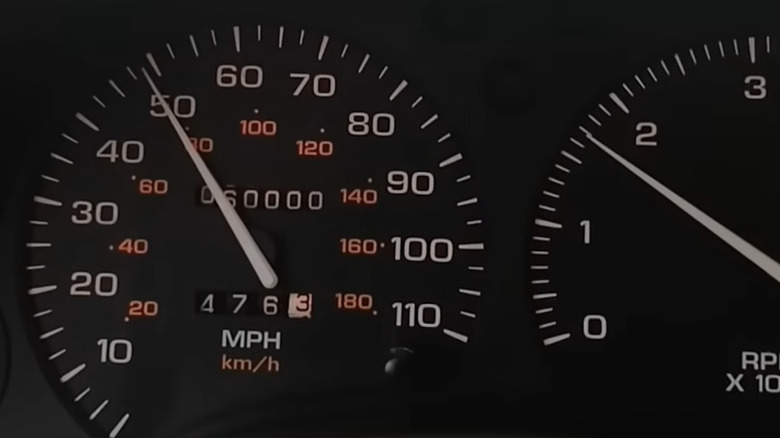
While not as impressive as the 100,000 mile mark, 60,000 is still an important milestone in the life of your vehicle. It's right around where you've become comfortable with not only the basics of your ride, but also little things like how the volume dial feels or where exactly to tap the icons on your touchscreen. On the mechanical side of things, the 60,000 mile mark is right around when wear-and-tear items and fluids begin to show their age.
60,000 is one of the major milestones in vehicle maintenance. Most auto mechanics still subscribe to the 30-60-90 rule for maintenance, a generalized set of milestones meant to direct vehicle owners' attention to systems that may need repair or replacement. Professional automotive technicians, dealerships, and manufacturers are more specific in their suggestions — your own vehicle's owner's manual often has a maintenance schedule with mileage-based inspections and services listed. While many of a vehicle's fluids are ready for replacement at the 60,000 mile mark, we're going to be focused on auto parts that are often suggested for at least inspection by then, if not replacement.
Thankfully, most of these aren't jobs that you shouldn't DIY, but relatively straightforward tasks for any shadetree mechanic with a bit of experience. Parts were chosen based on my own experiences as a professional automotive technician, as well as the maintenance schedules for some of the vehicles I own or work on often, including a 1996 Ford Ranger, 2013 Subaru Crosstrek, and 2016 Jeep Renegade.
Spark plugs
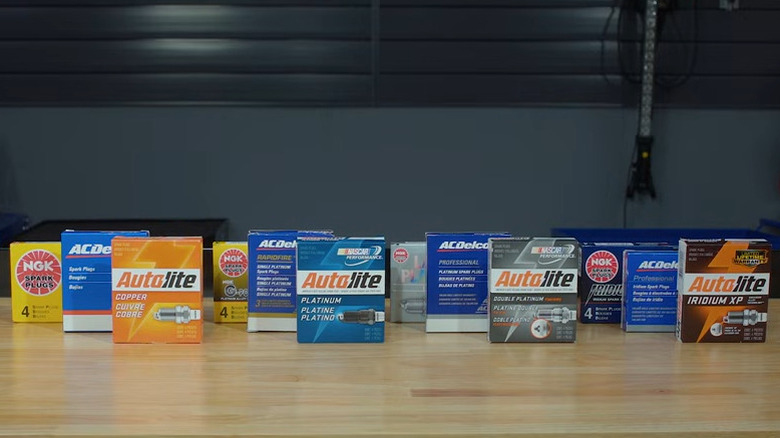
Spark plugs show up on most manufacturers' suggested maintenance lists at around 50 or 60,000 miles, if not for replacement based solely on mileage then for an inspection of the plugs. That suggestion shouldn't be taken lightly — given the importance of the spark plug's job, it's often a better choice to just replace the parts based on mileage than to trust that they will remain in good condition after a quick inspection.
The short version of a plug's operation is that it produces a spark across the center and ground of the plug, providing the ignition to the mixture of air and fuel that moves the engine's pistons. The importance of the spark plug, and the small tolerances in things like gap and effectiveness when a plug is less than perfect, mean a thorough inspection is important if you're not ready to replace the plugs outright. And if you do decide to replace, note that there are significant benefits to spending a little more.
There's a lot to look for in a spark plug inspection. Things to observe when removing and checking out those plugs include oil saturation, cracked porcelain insulation, carbon fouling, burns, and electrode wear or damage. Any of those should prompt replacement, but also a little investigation into the reason for those symptoms. Examples include worn pistons or valve guides causing oil to be found on the plugs, or worn spark plugs indicating end of life, while damage can be evidence of improper fitment or installation.
Engine and cabin air filters

Your vehicle's air filter, and its cousin the cabin air filter, make a huge difference in both vehicle performance and driving comfort. Not changing your vehicle's air filter can lead to it becoming clogged, robbing the engine of oxygen, throwing off the vehicle's air/fuel mixture, and causing a drop in engine performance and even miles per gallon. The cabin air filter cleans the air coming into the vehicle's cabin, keeping your car smelling fresh and free of allergens. There's also a mechanical reason to replace your cabin air filter as necessary in that a filthy filter prevents full powered blower operation, which means the AC will be less cool, and the heater less warm.
Generally speaking, one of the easier parts to replace as part of your 60,000 maintenance is an air filter. Some manufacturers suggest replacement at 15,000 miles or so. The Jeep Renegade we mentioned in the intro wants one every 30,000, so this would be your second, assuming you follow suggestions. Usually air filter replacement just requires a screwdriver or small socket — you pop the hood, remove some bolts, open the air box, and replace the filter.
Cabin air filters can be a little more troublesome, since they aren't as easy to locate and, in the case of certain model years of Ford Focus, Nissan Altima, or Honda Accord, can require the removal of several panels, braces, and electrical connections. Our friends over at Jalopnik have an article on one of the most challenging cabin filters to change.
Serpentine or drive belts
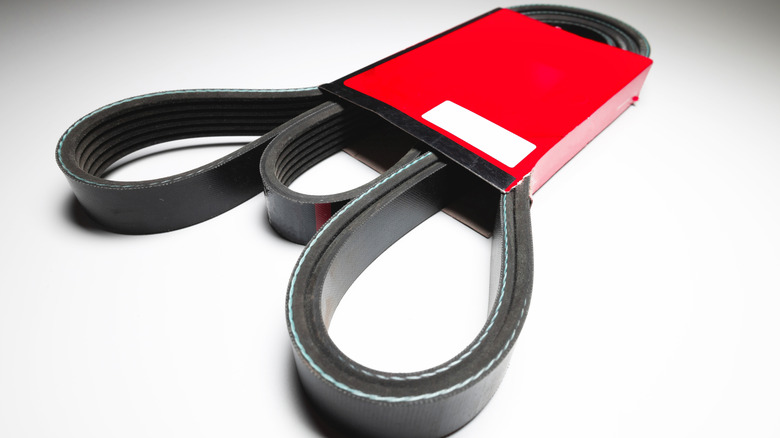
At 60,000 miles, many manufacturers want the belts of their vehicles replaced or at least inspected. Sometimes, you've got just one long belt routed through several pulleys; in other vehicles, there are several smaller belts. In either case, there are several reasons to replace a serpentine belt and a quick inspection for cracks will reveal their condition.
Belts are pretty easy to replace in most cases, as long as the routing is noted prior to removal. A photo with your phone should be enough to get your belt back where it belongs, but if you forget, a Google image search with your vehicle's year, make, and model will get you a line drawing of which belt goes around which pulley. Most modern vehicles use a spring tensioner that can easily be released using a belt removal tool like the Gearwrench Ratcheting Serpentine Belt Tool Set — it will run you about $40 on Amazon, and I've used mine countless times over the years.
Since I have you here, I'd like to mention something I've unfortunately witnessed firsthand: Please, please ensure that the engine cannot be turned on when performing belt service. Whether you're replacing or inspecting, if you've got a hand on that belt and an unsuspecting buddy or coworker decides to start the vehicle, you can easily end up missing several fingers. I assure you, it's far easier to drop a set of keys in your pocket than it is to look for missing digits later.
Brake pads, rotors, and fluid
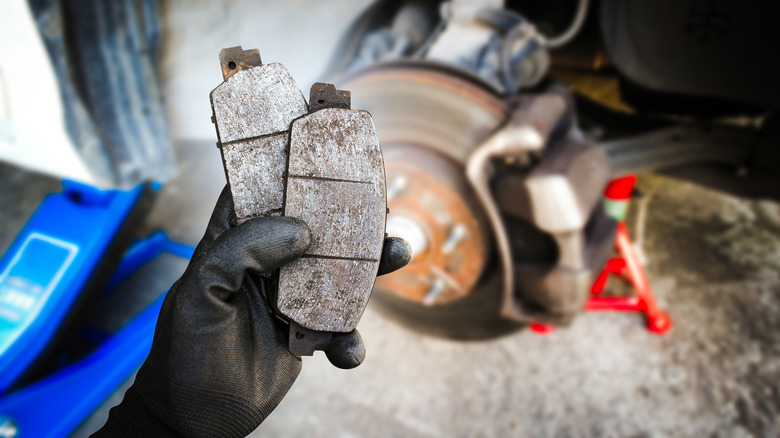
An inspection of brake pads and rotors is suggested at the 60,000 milestone for the Ranger, Renegade, and Crosstrek we referenced for this article, with replacement required if either part is below a minimum specification designated by the manufacturer. On top of that, if you're experiencing any common disc brake problems, it's worth taking the time to perform an inspection.
If you've let the pads get really bad, a terrible squeal or grinding noise should inspire at minimum a quick peek through a vehicle's wheels, which could reveal ground down rotors and thrown or severely worn pads. If it's not that obvious, removal of the wheels is the best way to get a good read on your pads' lifespan. Measure pads and rotors against spec using a micrometer like this $14 Wen Digital Caliper from Amazon, and you'll know if it's a quick pad slap or a full brake replacement that is needed. Pros use tools that are a little more precise to measure things like rotor runout or drum wear, but this caliper will get the job done for a DIY mechanic.
Brake fluid replacement at the 60,000 mile mark is suggested by the manufacturers of every vehicle we checked for this article. Even if it's visually just a little yellowed, older fluid can absorb water, making it less effective and increasing the risk of your brakes not working when you need them to.
PCV valve
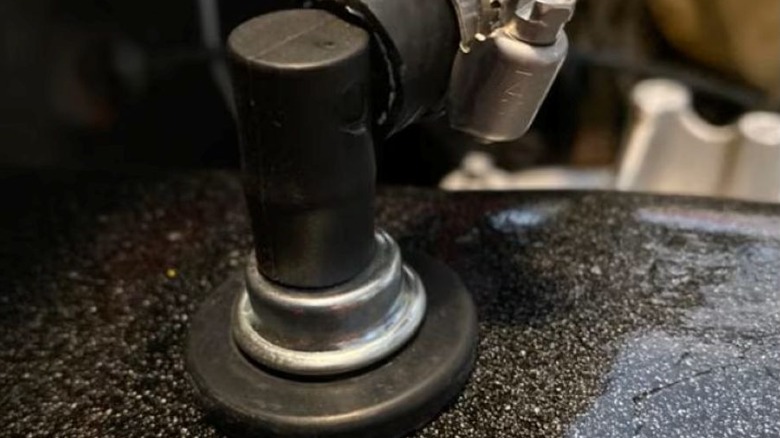
A little piece of plastic that usually sits right on top of your engine's valve cover, the positive crankcase ventilation (PCV) valve can be a big problem if it is not routinely inspected, and replaced at the 60,000 mile mark for most vehicles. The PCV valve helps to regulate oil pressure and redirect exhaust gases to the intake manifold for burning. Failure can cause an increase in emissions, lower fuel efficiently, and the dreaded Check Engine Light. However, inspection and, if necessary, replacement of this valve is usually simple.
It's useful to consider PCV valve replacement a part of a basic engine tune-up as a way to keep this affordable but important part in top shape. And we're not talking relatively affordable, either — Amazon sells a PCV for my 1996 Ranger for $20, and the same part for the 2017 Renegade will cost you just $10. While there are pros and cons to buying car parts online, prices will be similar at other parts retailers, too.
Inspection consists of testing the part for a vacuum with the car running, making sure connection hoses are in good condition, checking seals, and shaking the part: a rattle means the part is okay, while muffled or absent noise means a clog is likely. Because oil leaks often saturate the grommet that keeps the PCV valve in place, remember to grab a new one when you're replacing the valve.
Methodology
The five car parts you should replace at 60,000 miles that we chose for this list primarily came from the suggested maintenance intervals for a handful of different vehicles along with examples of the services required under the 30-60-90 rule from several sources. Those choices were then whittled down using my own years of experience working in several different professional auto shops, all of which had their own suggested service schedules. For other mileage-based parts lists, check out SlashGear's articles on car parts to replace at 30,000 miles and 100,000 miles.