

Pros And Cons Of Buying Auto Parts Online
We may receive a commission on purchases made from links.
Not to get all "old man yells at cloud" on you, but back when my dad worked on the family car with a younger version of me, he either bought parts from the local shop or went to the junkyard, hunted for hours, and removed them himself. Those means to acquire car parts are still options today, but many shoppers are getting the parts they need by ordering online. From online-exclusive retailers like Rock Auto or PartsGeek, parts specialists and resellers on eBay, or the online shopping sites of well-known chains like Advance, Auto Zone, or O'Reilly, the variety of choices can be overwhelming. Even your local u-pull-it probably has a website listing the vehicles and remaining parts they have in the yard.
A recent YouGov survey states that 32 percent of its respondents shop for auto parts online, while 45 percent still shop in person. As with most things in life, there are advantages and drawbacks to online shopping, specifically when it comes to auto parts — and that's before we even get into details like which auto parts retailer is the best or which car battery brand is best according to SlashGear.
In an effort to help you decide whether to buy auto parts online, we're going to run down five pros and five cons, with explanations and advice based on my years of experience as a professional automotive technician at both chain stores and independent shops, an at-home mechanic doing work out of my garage, and a parts store salesperson.
PRO: Expansive Selection
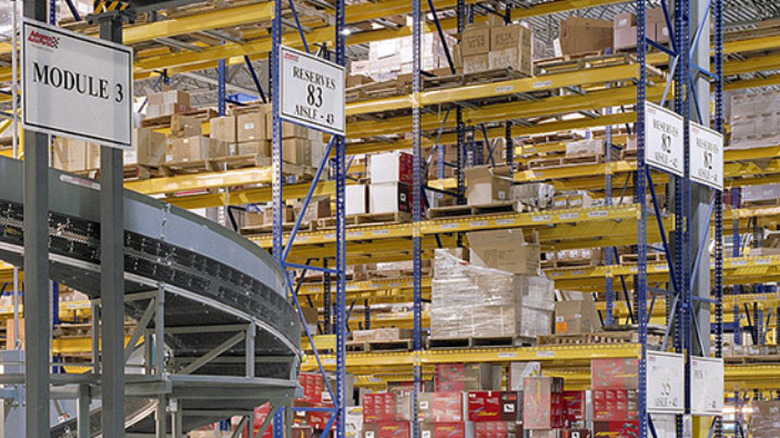
Think about how many makes and models you can name, just off the top of your head. Even if you're not a gearhead like our pals over at Jalopnik, I'm sure you can think of at least a dozen. And if you're shopping for parts for those vehicles, you probably also know that they don't all share the same alternator — in fact, a quick search of the three vehicles I own showed that none of their alternators are interchangeable. That's not a massive shocker, but it does illustrate my point — there is no realistic way for your local parts store to stock every part for every vehicle on the road.
Online retailers seem to have an infinite stock, often because they store their inventory at a few massive warehouses rather than a network of smaller stores and shipping hubs. That often overwhelming selection means DIYers can find exactly what they're looking for, with specialty retailers able to stock and ship obscure or discontinued parts for older, classic, or custom vehicles.
Brick-and-mortar stores have found a way into the online game by offering customers products available at other stores, or shipping items from distribution warehouses directly to their homes. This "endless aisle" concept has exploded in retail use since 2021; however, a version of the idea has long been a staple of the parts industry, when a phone call led to a salesperson sending their customer to a nearby affiliate — or even a competitor — to pick up an out-of-stock part.
CON: No Immediate Solution
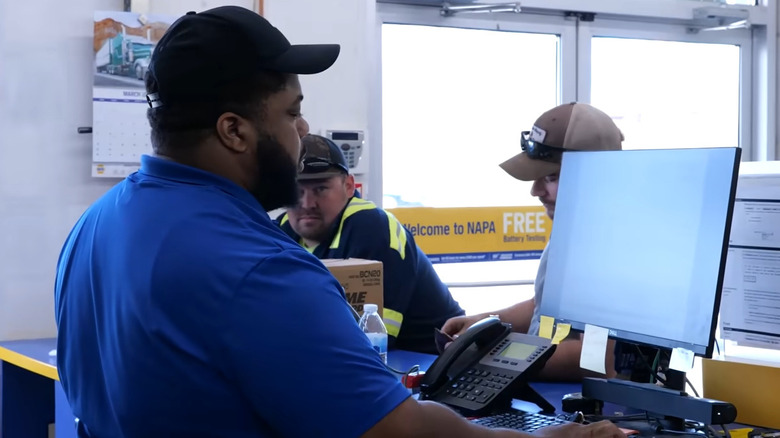
Here's a situation every mechanic dreads: you're working on a quick oil change, the last task on your last job that you started late in the day. The car was promised to the owner by the end of the day, since they're leaving in the morning for a trip. It's already after the delivery cutoff for your local parts store, and you just realized that the motor oil you purchased is for a different submodel of the vehicle! There are no online options available at this point, the nearby Costco is closed, and delivery won't be until the following morning at the very earliest. Fortunately, your local parts store is still open, and a quick trip will solve all your problems.
Every DIY'er has been in this situation, and the conclusion is always the same: there's simply no way to beat the instant gratification of walking into a store and walking out with the part you need. Even overnight shipping can't defeat that benefit, and when you're on a deadline or need that car to be completed as soon as possible, waiting for a part isn't an option. Whether it's for a customer or a friend, you never want to leave a client hanging, and the fact that brick-and-mortar stores are still out there to provide a solution with quick turnaround and the ability to verify that your new part fits provides a little comfort in an increasingly online world.
PRO: Easier Search
When you walk into an auto parts store, you've only really got two ways to hunt for the part you need — you're either going to wander up and down the aisles aimlessly, hoping that your part is on a shelf, or ask a salesperson for help. The former rarely works, since most auto parts are kept off the sales floor. The latter means trusting that the person looking up your part knows how to use their register's search function, understands what it is you're actually looking for, and enters the right information to get you the correct fitment for the vehicle you are working on.
Looking up a part on your phone or tablet is a convenient upgrade that comes alongside shopping online. A quick search will bring up dozens of options, allowing a knowledgeable shopper to quickly find exactly what they're looking for. Even if you don't know, you're already on the internet — tools like Google Lens can help to identify a part from a photo, and Redditors are often all too willing to help figure out the name of a random sensor based on a few posted pics.
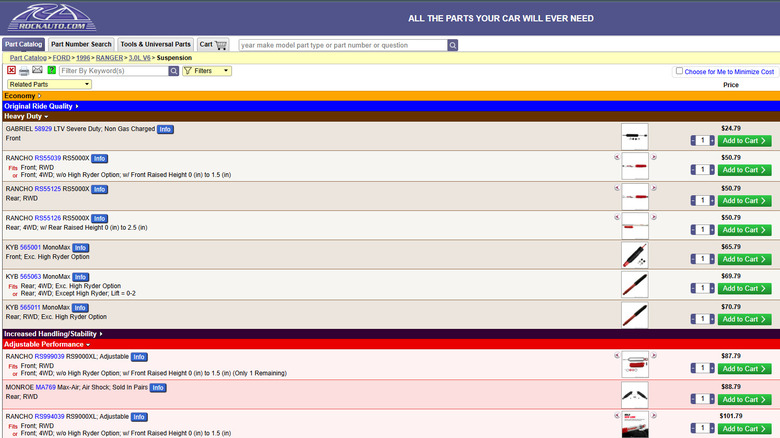
Online retailers like RockAuto will even separate parts listings by use case or quality, so those folks shopping for adjustable shocks don't need to sift through budget suspension parts. The ability to apply filters to narrow down your search by brand, cost, or dozens of other categories gives online shopping another advantage over walking into a storefront.
CON: Returns, Warranties, and Core Exchanges Are More Difficult
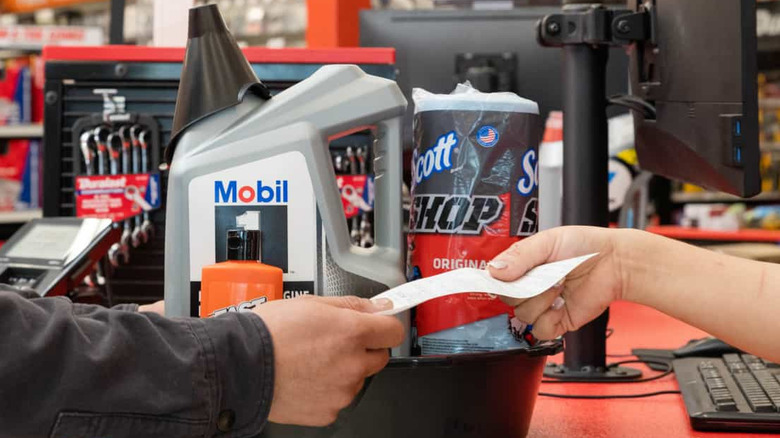
Inevitably, if you work on cars long enough, you'll need to return a part. Either you purchased a bulb that doesn't fit, you bought a battery and need to return the core, or the shocks you installed failed prematurely. When you've made that purchase at a store, returns are as easy as bringing back the part with a receipt — and many parts stores don't even need that if you've provided contact info. A quick conversation usually leads to a refund, an exchange, or credit being returned to the customer in the case of core charges. Online returns usually involve setting up help tickets and waiting on shipping to and from the seller, meaning a replacement or refund can take days or weeks to get to you.
Cores are also more difficult to return, and many retailers require you to send back cores on your own dime. For the uninitiated, a core charge is a deposit most auto parts retailers require when a part that can be rebuilt is purchased — think brake calipers, alternators, or any other part marked "refurbished" on the box. That deposit is returned to the customer when the old part is returned. The store sends the part to the manufacturer, who rebuilds that one and sends it into the world, allowing the circle of life to continue.
PRO: Lower Prices

One of the main draws for online shoppers is the significant difference between in-store and online pricing, even when you're using the website of a popular parts store chain. An online warehouse can stock more items without the need for a massive mark-up because that style of retailer doesn't have to deal with the extra costs of running a brick-and-mortar store, like employees, rent, power, and more. Those savings are then passed on to the customer.
On top of the overall lower prices, online stores also often carry a variety of aftermarket parts. In addition to offering more parts that fit more vehicles, that increased inventory means retailers that primarily operate online also have a wider selection of price points and quality levels. Whether you're looking for an original equipment manufacturer part to keep your vehicle stock, professional-grade upgrades, or more affordable aftermarket replacements for the person who doesn't have a lot to spend but needs their vehicle running, online retailers usually have just what you need.
Even the big chain parts stores run into this dilemma. The parts shop where I work part-time often has merchandise that's priced lower through the brand's website, and we've figured out a simple solution if the customer is patient. We walk them through placing the order online, select the in-store pickup option, and wait a couple of minutes for that order to come through our system. Then they get the discount, and we don't lose a sale — win-win.
CON: Fitment Issues
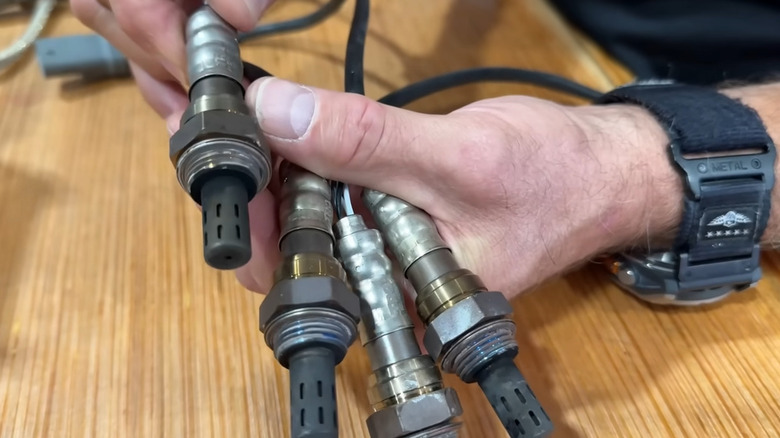
Online shopping can be incredibly beneficial and time-saving. Still, there's one consistent annoyance that comes up whether you're shopping for a pair of jeans or a replacement fuel pump. No matter how many photos a website offers, it seems like the one image you need to be completely sure you're looking at a compatible replacement is never available. That leads to disappointment when you open that package to realize the item isn't the right fit.
There are a number of factors that can make an auto part incompatible with the vehicle in which you're trying to install it. If it's an electrical part, you need a specific connector shape with the correct number of pins. For brakes, a bracket that doesn't quite fit your brake caliper setup, or even just a replacement bolt with the wrong thread pitch, can ruin your whole day, especially if you ordered that part online and have been waiting days for it to arrive.
With that in mind, there's something to be said for bringing that part in person for comparison. Most parts store employees have the knowledge and software to help walk you through identifying your vehicle, which can make all the difference in selecting the right part. Even if you're still hesitant, just bring the part with you — they can simply grab the part you're thinking about purchasing, open the box, and help you make sure the dimensions and connections match up with the part in your hand.
PRO: Easier Price Comparison
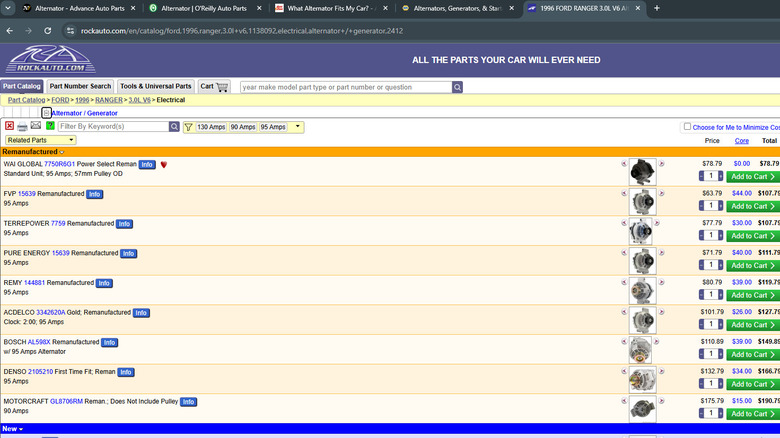
Hunting for the right replacement part at the right price used to be a true ordeal. Multiple phone calls to multiple parts stores, time spent describing the needed part to a store employee, then waiting on hold while employees search for the item in their inventory all took a lot of time, and that's before the drive to the store, often to find that the part isn't exactly the one you needed at the promised price. With online shopping, most of that work is eliminated — a quick search can verify matching part numbers, and inventory counts are often listed on that same page, and stores that offer both in-store and online shopping can even direct you to a nearby store with the part you need on hand.
Ordering anything online can save the shopper money, but there is a little bit of legwork (finger-work?) involved in making sure you're getting the best prices. When trying to ensure the best deal, the right move is to shop around. While going from store to store or calling around is still an option, it's far easier to open a few tabs for different online retailers and compare prices, features, and shipping times to make an informed decision. Once you've located the part you want on one site, that identifying part number can often be cross-referenced to one from another manufacturer, further simplifying your quest.
CON: Questionable Quality
Here's a story nearly every DIY mechanic can relate to: you finally found the tail lamp assembly you need for your buddy's ancient pickup truck. It's available on eBay, but the seller seems reputable and the picture provided looks basically the same as the one you need, so you go ahead and place the order. A week later, you open the box to find that not only is the part missing the gaskets and bulbs you expected, but the plastic used to make this lens is thinner than your patience at this point.
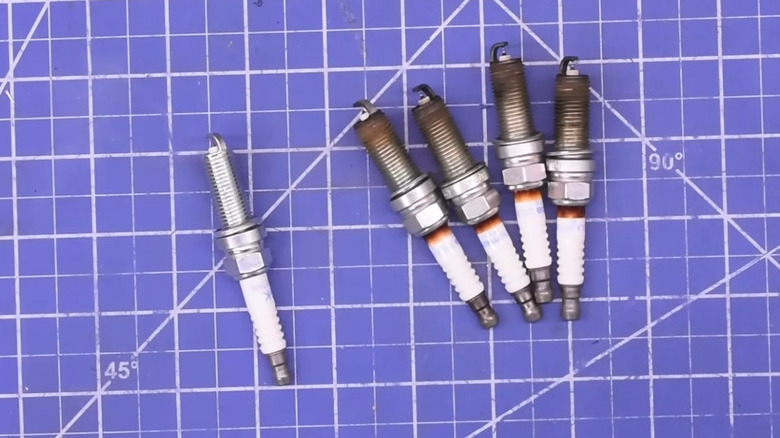
Most parts stores carry at least a few different versions of the same part. That number goes up exponentially when shopping online, since physical storage space is not a limitation. Unfortunately, with more choices come more opportunities for low-quality parts or poorly labeled replacements to pop up in your search. If you're ordering from Amazon or a reseller on eBay, you're basically trusting that seller to provide exactly what you're expecting — which often leads to a part that looks nice but is poorly rebuilt, fraudulently labeled, or made from cheap materials.
While shopping for parts on Amazon can be a tricky proposition, SlashGear has some tips to help make the process go a little smoother. Just be sure to check this list of the worst automotive parts on Amazon, written by our sister site Jalopnik, before you commit to that new turbo from an unpronounceable manufacturer.
PRO: No Pressure From Pushy Salespeople

Most people ordering parts online aren't professional automotive technicians. In fact, it's more likely that the person scrolling for the right part at the right price is a DIYer trying to save a few bucks, or a decent person looking for a serpentine belt to install for their elderly neighbor. Even a confident shade tree mechanic can get a little frustrated when they don't know the exact name of a part. That feeling can increase exponentially when you're confronted by a pushy salesperson.
Sometimes you just feel a little intimidated at a parts store, especially if you're not comfortable in that environment. While helpful parts store employees do exist, there are also salespeople who can be intentionally deceitful, only offering a premium product when a more reasonably-priced option is available. There are also the parts counter folks who act like you're wasting their time if you aren't making your decision quickly enough for their tastes, which can lead to a rushed decision or leaving with nothing after some choice words, and let's not forget the employees who, often due to managerial insistence, try selling add-on products that aren't remotely related to your purchases. Online shopping cuts out the middleman and allows you to shop at your own pace — after all, that's what it's there for.
CON: Parts Store Employees Can Usually Help
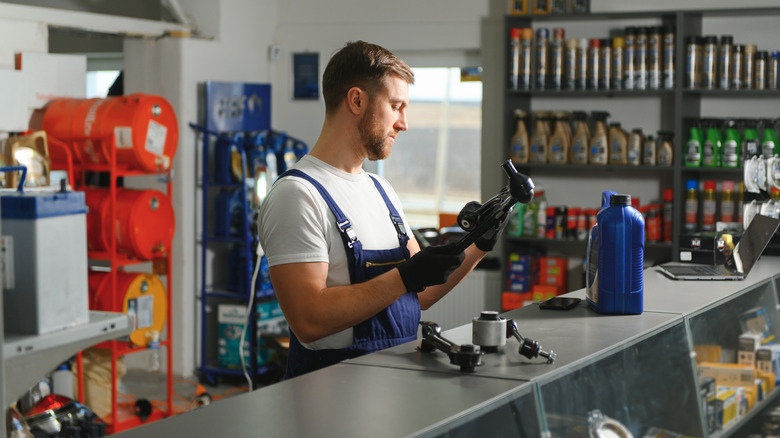
Maybe we've been a little harsh on in-store employees while comparing in-store and online shopping experiences. In reality, the help you get anywhere depends on a number of factors, including how busy the store is, the experience of the salesperson, and even your own attitude when entering the store. Despite what your cynical inner voice may tell you, most people who work retail are just trying to get through their shift.
Many people bemoan the fact that parts stores offer minimum-wage pay and attract the least experienced people available, but you'd be surprised at how many parts store employees are overqualified for the job. Several are former technicians working for extra income, kids using the extra income and sweet discount to finish their first project car, or long-retired DIY enthusiasts just looking to get out of the house for a few hours a week. These salespeople can quickly find a part, often without needing more info than the year, make, and model. They also are usually happy to tell you where you can save money, and what parts you should never go cheap on.
Even the most knowledgeable DIY'er or mechanic has run into a part that they have never encountered, or know what the part does but not what its proper name is. For those inconvenient times, sometimes it's worth looking up from your phone and asking for a little help from the person behind the counter.
Methodology
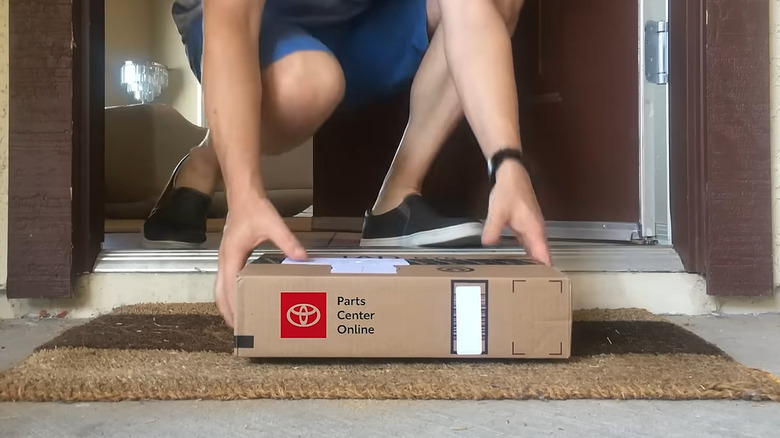
This list of pros and cons of buying auto parts online was put together based on my years of experience as a professional automotive technician, a shade-tree mechanic for friends, and a retail parts store sales guy (hopefully the helpful kind, rather than the pushy variant). I referenced forums and discussion groups to see whether the general consensus matched my own observations, and I contacted fellow mechanics, parts store employees, and DIY'ers for their input.