

4 Car Parts You Should Replace At 30,000 Miles
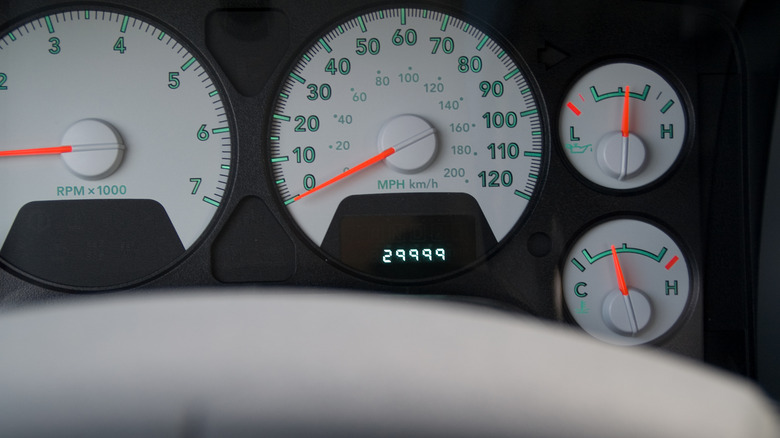
The 30,000-mile mark: It's one of the first major maintenance milestones many new vehicle owners will run into. While every manufacturer publishes its own service schedule — typically in the owner's manual — you can be pretty confident reaching 30,000 miles will include more than just a routine oil change. There are several other parts and fluids that likely need attention, as well.
It's not the most fun or exciting thing in the world, but it's so important to get this work done on time. Keeping up with this mileage-based maintenance is the best way to keep your vehicle running efficiently and, in the process, help prevent unnecessary wear over the long term. Of course, not every component listed here should automatically be replaced at exactly 30,000 miles. The proper service interval will ultimately depend on your driving habits, your typical road conditions, and your manufacturer's specific recommendations. Nevertheless, these are the parts that most commonly reach their service life around 30,000 miles.
Engine air filter
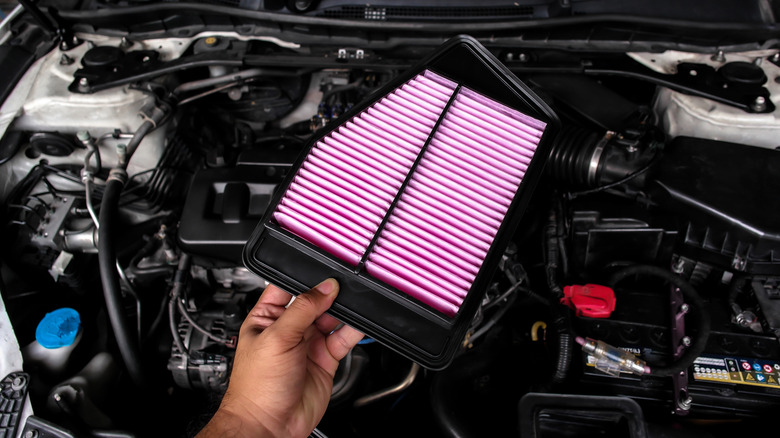
Luckily, one of the most commonly replaced components around 30,000 miles is also one of the most affordable. The engine air filter is responsible for protecting the engine from dirt, dust, and other airborne debris. Without it, contaminants could reach the combustion system and harm internal engine components like the pistons or the cylinders. Over time, that's going to increase wear and shorten your engine's life.
Whatever your combustion engine type, it needs a steady supply of clean air to mix properly with fuel. When the filter starts getting clogged, the engine has to work harder to draw in air. Beyond the damage that can do, it can also slow your acceleration and even hurt your car's overall performance. It's not uncommon to see rough idling or engine hesitation when airflow gets limited, as well. That's why manufacturers recommend replacing the engine air filter every 30,000 miles.
Cabin air filter
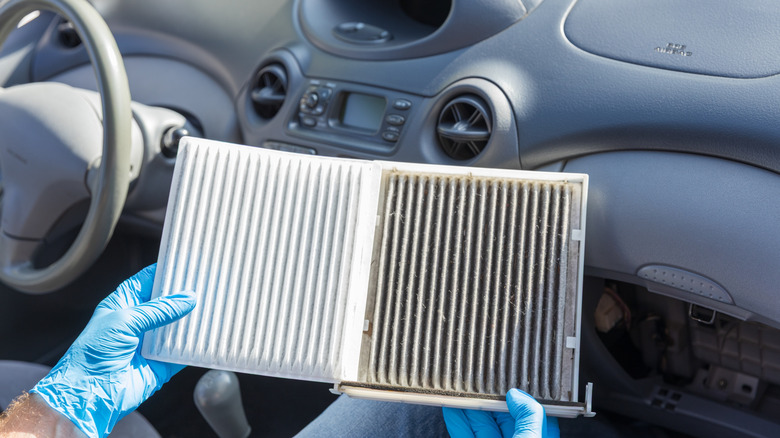
Not to be confused with the engine air filter, the cabin air filter is another part worth replacing around the 30,000 mile mark. This part has nothing to do with engine performance. Instead, it filters the air that enters the passenger compartment via the heating and cooling system. It helps keep the interior air cleaner, capturing all that dust, pollen and other airborne contaminants from outside before they reach your lungs. Many cabin air filters also come with activated carbon to help remove any odors in the air.
Similar to the engine air filter, the longer you put off replacing the cabin air filter, the worse off your car is going to be. For instance, you might start to notice weaker air coming out of the vents, even when the fan is cranked to the highest setting. Heating and cooling performance can also take a hit simply because less air is passing through the clogged filter. Same goes for defrosters. Just to be safe, stick with what manufacturers recommend: Replace every 30,000 miles or two years, whichever comes first.
Front axle or differential fluid
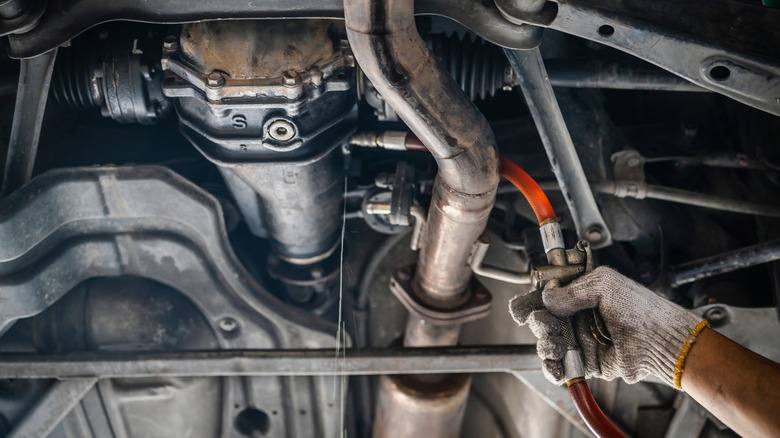
If you drive a four-wheel-drive or rear-wheel-drive vehicle, there's an important drivetrain service milestone around 30,000 miles: The differential or front axle fluid replacement. Unlike engine oil, differential fluid typically isn't filtered. That means contaminants from normal gear wear stay suspended within the lubricant until it gets changed. Considering how important the front axle (or differential) is, you don't want to put this one off.
Because the inside and outside wheels travel different distances around a corner, the differential allows each wheel to rotate at a different speed while continuing to receive engine power. The fluid inside the differential lubricates the gears responsible for this, helping cut down on friction as the components work together to turn the car. Keeping your differential fluid fresh means smoother turns, less wear on the gears, and better vehicle handling overall. Specific service intervals do vary a bit from manufacturer to manufacturer, but the general consensus is between 30,000 and 60,000 miles.
Transfer case fluid
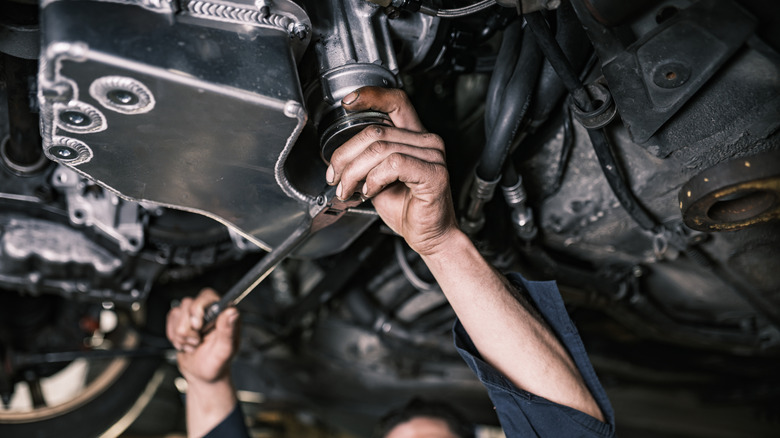
Here's another one specifically for four-wheel-drive vehicles: The transfer case, specifically the fluid. The transfer case is what distributes power from the transmission to both the front and rear axles. There's a series of gears, bearings, and chains inside, and they all rely on that fluid for lubrication and cooling.
Over time, that transfer case fluid deteriorates from heat and mechanical stress. When that happens, its lubricating properties get worse and worse. From there, internal friction increases, putting you at risk of overheating (not to mention accelerating wear on those expensive drivetrain parts).
Like differential fluid, manufacturers recommend new transfer case fluid between 30,000 and 60,000 miles. If you frequently tow heavy loads or spend significant time off-road, you may want to lean closer to 30,000 than 60,000. For more specifics, check out your vehicle's owner manual or consult with a technician next time you go in for an oil change.
Other maintenance that might be due
Now, just because something is due at 30,000 miles doesn't necessarily mean it's the first time it's ever been due. Like engine oil and oil filters, for example. You've hopefully gotten that done multiple times before 30,000 miles, but you may be due once again at that 30,000 mile mark.
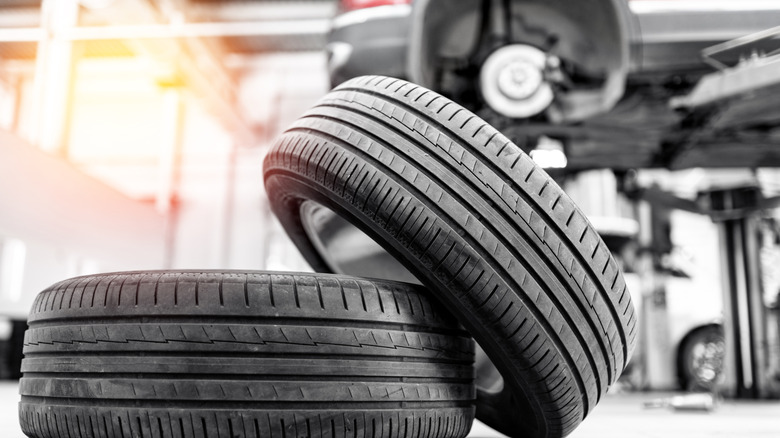
Especially if you've followed the general guidance for modern vehicles, which is to get an oil change every 6,000 miles. With that math, 30,000 miles would mean you're due for your fifth oil change. Same goes for tire rotations. If you're getting a rotation every 6,000 miles, you'd also be due for one of those at the 30,000-mile mark. It's the same math behind the 30-60-90 rule, as well.
We've said it before, but it's worth mentioning again: The exact list of recommended maintenance will vary from one vehicle to another. Some owners may only need an oil change and tire rotation at 30,000 miles, while others might also need air filter replacements or drivetrain fluid service. Depending on your driving habits, significant wear and tear on tires might even make them due for replacement after 30,000 miles. Rather than viewing this milestone as a universal checklist, your best bet is to treat it as a reminder to check your vehicle manufacturer's recommended maintenance schedule and go from there.