

What Is The 30-60-90 Rule For Car Maintenance?
It can be a bit tricky to keep track of car maintenance. When should you check the battery? When do the brakes need to be replaced? It can be challenging to keep track of something with over 30,000 parts. That's why experts often recommend the simple 30-60-90 rule — certain car components generally need attention at 30,000, 60,000, and 90,000 miles.
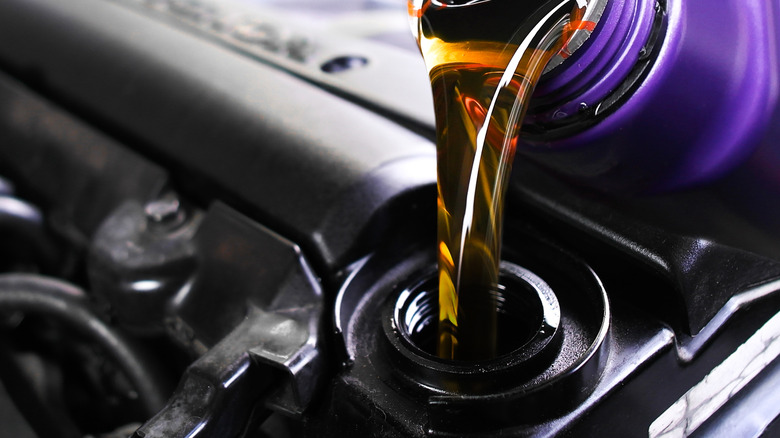
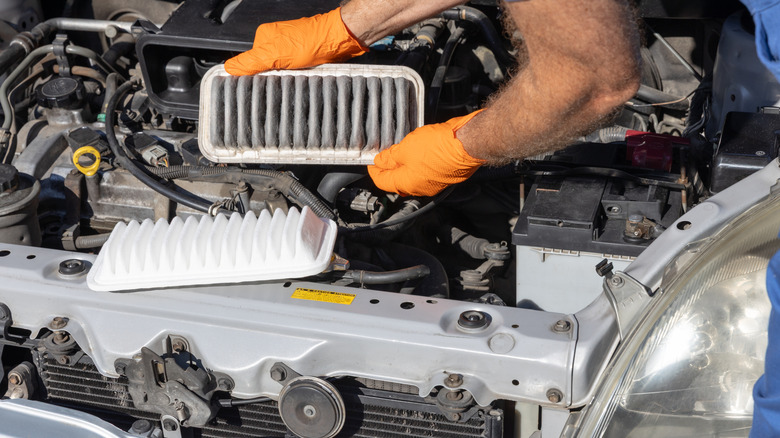
At 30,000 miles, focus on the components that keep your engine running smoothly. You'll generally want to replace the engine air filter and the cabin air filter. While your engine oil and oil filter should be changed much more frequently (typically every 3,000 – 6,000 miles), the 30,000-mile mark is a great time to inspect the fuel filter. Also, inspect the brakes, pads, and rotors, as well as rotate and align your tires.
When you reach 60,000 miles, you'll notice more components start to wear out. To keep from expensive repairs in the future, flush and replace transmission fluid, brake fluid, and coolant. Inspect spark plugs and driving belts, replacing when needed.
By the 90,000-mile mark, you'll notice many parts need to be replaced. This could include the timing belt, water pump, battery, suspension system, and exhaust system. Of course, these are just estimations. Depending on how often you drive your car — as well as your driving habits — you could need maintenance, repair, and replacements at different times. The 30-60-90 rule is just a guideline, but it doesn't replace regular maintenance.
How can you tell when your car needs maintenance?
If you notice something wrong, you don't need to wait for the 30-60-90 milestones to come up. However, you may not always know what you're looking for. In general, you'll want to make sure you don't hear any strange noises or see any warning lights on the dashboard. Your vehicle may also need maintenance if the acceleration feels off, the fuel efficiency is reduced, or it otherwise feels different while behind the wheel.
If your car needs an oil change, a dashboard maintenance reminder or an oil pressure warning light will usually come on. The engine may also make a "knocking" sound, which means you are dangerously low on oil and there isn't enough to keep metal from contacting metal. Another sign is the smell of burning oil inside the cabin. A dirty engine filter may also cause your vehicle to sputter and cough, and black smoke may come out of the exhaust. Your brakes may be warning you that they need to be replaced if you hear a high-pitched squeal when you press down on the pedal. If this action causes a shaking feeling, the brake rotors may be damaged or worn out. You also don't want to drive your car if your brake pedal sinks easily to the floor.