

5 Major Car Maintenance And Repair Jobs You Probably Should Not DIY

A glance at any auto shop bill can be quite painful once you realize just how much the labor actually costs. And it's easy to see why; at a glance, why on Earth should we be paying $130 or more per hour to install parts worth the same or less? Of course, anyone who's more mechanically inclined will already see the flaw in that logic. The value isn't solely in the convenience of having someone else do it. Rather, you're paying that much because you're buying the specialized skills and knowledge it takes to diagnose and fix the problem.
Working on cars isn't easy. An engine alone has dozens of major components, each one containing multiple moving parts. You have different material types, gaskets and seals, torque settings, confusing or outdated parts, and so on. It's a veritable labyrinth under the hood to an untrained eye, and even the more adept enthusiast can struggle from time to time. This is a demanding field, one that takes years of built-up knowledge and experience that can't be taught. There's a reason why technical schools have in-house shops, after all.
Sure, there are plenty of easy DIY auto projects you can tackle if you have the space or time. But there are also many that you should leave to the professionals, whether to ensure your safety or due to the mechanical complexity of the tasks themselves.
Paintwork
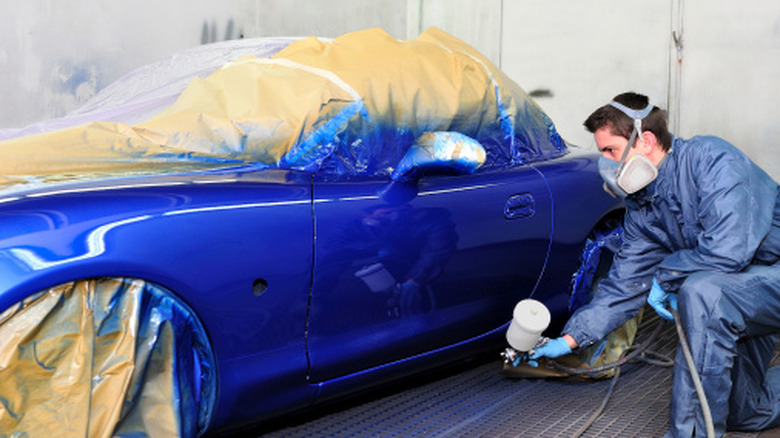
It can cost several thousand dollars or more to respray a car. Even single body panels could potentially run deep into the hundreds of dollars, most of which is man-hours. Painting is an involved process, from sanding the surface to bare metal before applying multiple coats of paint — plus a clear coat. Certain paints cost more or have additional layers, such as incandescent or pearlescent colors. Thus, you may be tempted to save money by doing the job yourself.
DIYing your own paintwork seems simple enough — mask off the section you want to paint, get a paint-matched spray can, and go nuts. The problem is that DIY jobs are always easy to spot. The color is never quite right because it doesn't have that natural aging of the rest of the car, so it just looks ever so slightly off. The quality may be questionable, too; it'll either be too thin or too thick. The same thing applies to the clear coat. On top of that, it's messy and takes a long time to do properly.
Even the basic prep takes a lot of work. You'll have to repair all the bodywork yourself, for one, so have fun with that. Then you need to know the paint you require and how to apply it properly, otherwise it'll look like a cinderblock basement wall. So, while a high-quality professional paint job is expensive, there's plenty to justify the cost.
Replacing the timing belt
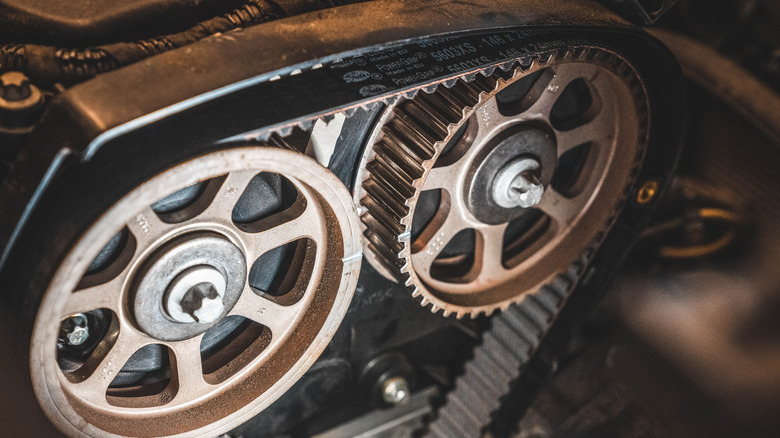
Your timing belt is a perishable component — most last between 60,000 and 100,000 miles, and you should never, ever be late on that service interval. For one, there's only one surefire way to identify a bad timing belt, namely to actually look at it. So, to be safe, it's best to change it around 50,000 miles along with some other parts. It seems simple enough, too. It's just a belt; take the old one off and put the new one on.
That's not quite the case. Let's break this job down. For starters, you need to remove the timing cover, which involves removing the cam position sensor — mark this, because it needs to be reinstalled in that exact orientation. Then you need to pull the crank pulley, which isn't always easy to access, along with all the accessory belts and whatever else is in your way. Once you're in, you have to mark the positions of all the gears, because having them misaligned by even a couple of degrees when you reassemble can be disastrous for your engine.
Getting your engine timing wrong means that your valvetrain and pistons are no longer synchronized. At best, this can mean your engine runs like garbage. At worst, such as if you have an interference engine, it means your valves will actually hit the pistons at full speed — and your engine is toast as soon as it fires up. So unless you know exactly what you're doing and have the right tools and knowledge, do not take this job lightly. Leave it to the pros.
ECU tuning

Your vehicle's ECU, or engine control unit, is the rough equivalent of the engine's brain. It tells your engine when and how to perform various vital functions, ranging from fuel injection and ignition to timing and idle speed. Various electronics, such as the MAF, oxygen, and crank position sensors, feed data to the ECU, which then interprets it and decides what to do. For instance, if your oxygen sensor is telling the ECU that your exhaust has a bunch of unburnt fuel, which means the engine's running rich, the ECU will lean out your air-fuel mixture in real time.
The thing about ECUs is that they're set by the manufacturer to behave in certain ways, generally at the cost of absolute performance. Tuning your ECU is actually one of the best ways to extract good power for under $1,000, and all you need is a computer, programming knowledge, and a good tuning map. At least, that's what it appears to be at a glance.
The problem with tuning your ECU is how easy it is to screw up. You're basically going in and changing the hardware's fundamentals to make it behave differently. If you're not just uploading a pre-made tune, this is a deeply involved process that requires in-depth knowledge of how everything works in harmony to create internal combustion. Getting a proper tune isn't cheap, sure, but it's way cheaper than hiring someone to clean up the mess you created by screwing up your DIY tune.
In-depth transmission maintenance
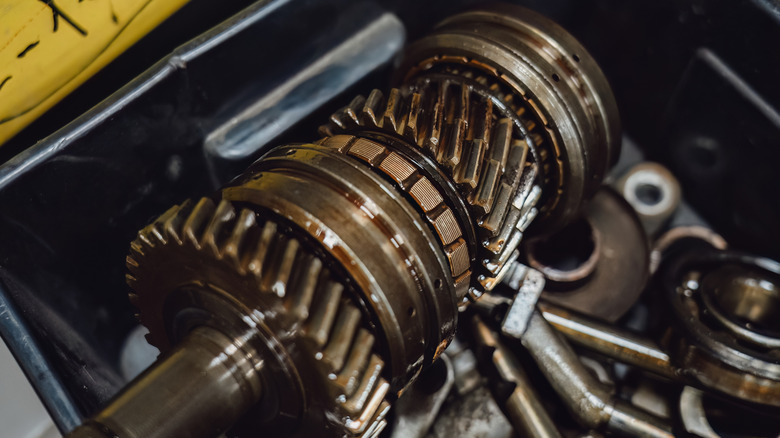
This is a step beyond replacing your car's transmission fluid or changing components like the clutch or flywheel. This is when you hear a grinding sound when getting into gear and suspect a bad synchro, or hear strange noises when driving at speed and find metal flakes in your transmission fluid. Either of those means it's time for a trip (or tow) to a transmission shop. These specialized facilities will take your gearbox and rebuild or replace it for a not-insubstantial fee, but why bother when you can do it yourself? It's a mechanical part, after all.
Sure, transmissions are all mechanical, in that they have gears and shafts in a casing. But press pause for a second and take a look at the inside of a typical automatic or manual transmission, let alone DCTs or, heaven forbid, eCVTs. It's a remarkable mess of components to the uninitiated. Gears, ratios, spline counts, how curved or not a gear is, what shaft goes where, even what fluid to use — you simply cannot do this if you're not certain what you're looking at.
Even simpler tasks can be fraught with danger. Say you're changing your transmission fluid in a manual transmission rated for GL-4, but you use GL-5 because it's easier to find. Guess what: even that could be enough to damage sensitive components like synchros and bearings in the long run. Extend that to other aspects of transmission work, and you'll find that it's better not to try it at home unless you're a specialist.
Bottom-end engine work
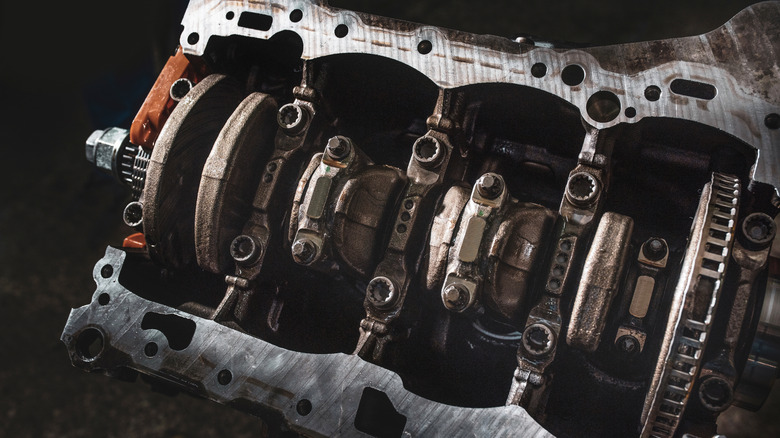
Say you just used an engine compression tester on your motor and found out that one of your cylinders is down on compression. You stick a borescope down the spark plug hole and find a cracked piston, which is a catastrophic failure that requires you to remove the bottom end, possibly re-sleeve the cylinder wall, change the conrod and crank roller bearing, and a whole host of stuff. That's an extreme example, of course, but one that could very well happen if, say, your timing belt snaps.
Either way, you're now up to your eyeballs in engine work, according to the shop's estimate, so you elect to do it at home. But even the most basic of bottom-end jobs is still best left to professionals. For one, you'll want an engine hoist or a lift, because you'll be under the car most of the time, as the name implies. Bottom-end work involves dropping the oil pan and servicing (or replacing) components like the block, crankshaft, rod bearings, pistons, and so on.
You might get lucky and be able to repair a spun rod bearing without taking the whole engine apart, but generally, you're looking at taking your engine apart entirely. Is it possible to do bottom-end work yourself? Sure, assuming you're a seasoned engine builder with an array of specialized tools. If not, then this sort of job likely isn't even possible to DIY.