

10 Motorcycle Parts You Should Replace More Often Than You Think
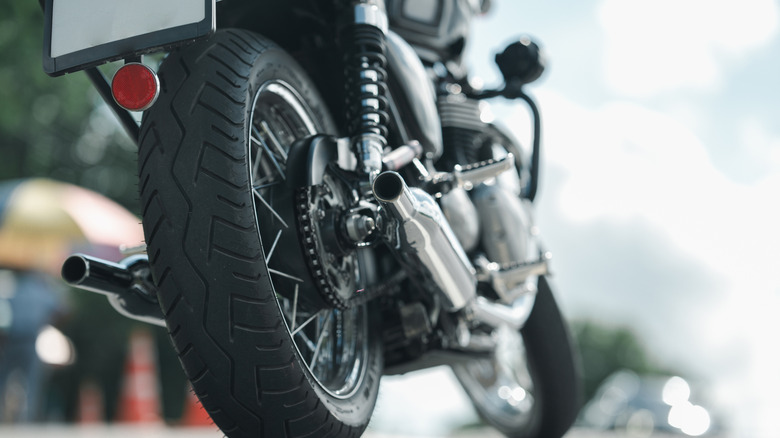
Many consider their motorcycle an extension of themselves. Such riders keep a mental checklist of keeping their bikes in the best condition possible, both from the outside and inside. They do not forget to clean their bikes and get them serviced at regular intervals. While changing worn-out tires, topping up engine oil, or lubricating the chain are among the most common maintenance tasks that make them feel their bike is in good shape, they often overlook certain components that wear out more quietly.
Some of these parts do not throw a warning light or make a scary noise; instead, they just reach a certain point where you might be riding on borrowed time. These components degrade over time with every ride. Even something as simple as not adjusting your chain slack for too long can become a bigger and pricier issue down the line. And it's not just neglect; several riders unknowingly speed up the wear and tear on their bikes by their riding habits, the same way certain bad driving habits quietly waste money on four wheels.
The good news is that taking care of your bike doesn't require you to be a professional mechanic. Most of these parts can be easily maintained at home with proper equipment, and you can always take them to a service station if something's beyond your skill. Here are 10 motorcycle parts you should replace more often than you think.
Brake fluid
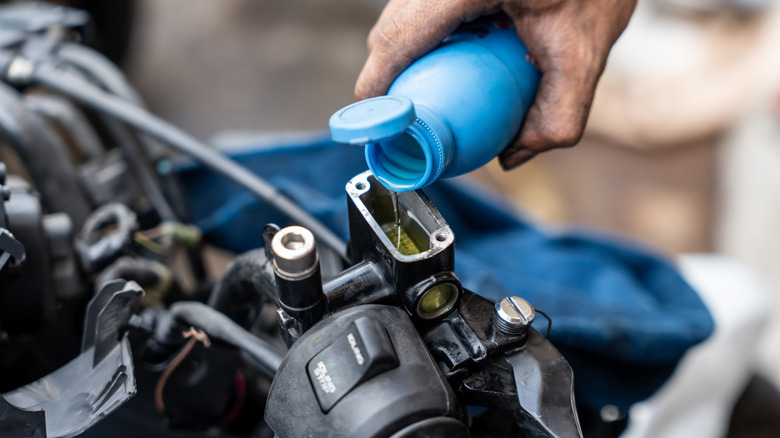
Brake fluid might appear like it isn't doing much sitting in that little reservoir, but it's the one thing standing between your brake lever squeeze and your bike actually stopping. While engine oil gets all the necessary attention, it is easy to forget about brake oil, since mechanics also sometimes don't mention it during routine service; most riders assume that if the brakes are working, then the fluid is fine. But that is not the correct way to look at it.
Fluid is hygroscopic, meaning it slowly absorbs moisture from the air over time. This happens even if the fluid is sitting inside a sealed system. That moisture then lowers the fluid's boiling point, and when you are braking hard, that overheated fluid can turn to vapor inside, leaving you with a spongy lever and reduced stopping power, a sure sign that you need to replace your brake fluid. The logic remains the same whether you are on a two-wheeler or a four-wheeler; moisture doesn't care what type of vehicle it is contaminating.
Most manufacturers' guidance, like Harley-Davidson's, recommend a full flush every 1 to 2 years regardless of mileage. A quick visual check can also help –- fresh fluid looks clear to light amber, while old fluid turns dark and cloudy. Motorcycle News has a solid walkthrough on doing the flush yourself, if you are comfortable doing this.
Drive chain and sprockets
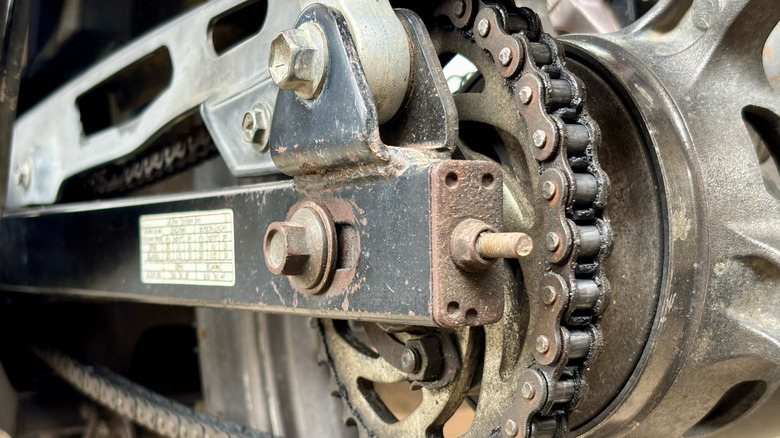
The parts that take a beating every single ride are the chain and sprockets, even though they are often some of the most neglected components of a motorcycle. With every rotation, a tiny bit of the metal teeth of the sprocket grinds, and dirt, grit, and debris get stuck in them. Lack of lubrication only speeds up the degradation process. Most riders only pay attention to the drive chain and sprockets when these parts start making a loud noise or are visibly sagging.
There are ways to tell when you need to replace your sprockets. The teeth should look squared off or smoothly rounded when they are healthy. Once they start looking sharp, hooked, or with little fangs, that is the sign they're chewing through the chain instead of working with it. Mechanics would generally advise you to change the chain and both sprockets together as a set. This is because a new chain with old sprockets wears out unevenly and very fast.
It is not that you have to wait until it is time to replace the chain and sprockets. You can also regularly clean and lubricate these parts and buy yourself some time before they wear out. Cycle World has a guide that shows exactly how you can replace the chain and sprockets if you are taking matters into your own hands.
Tires
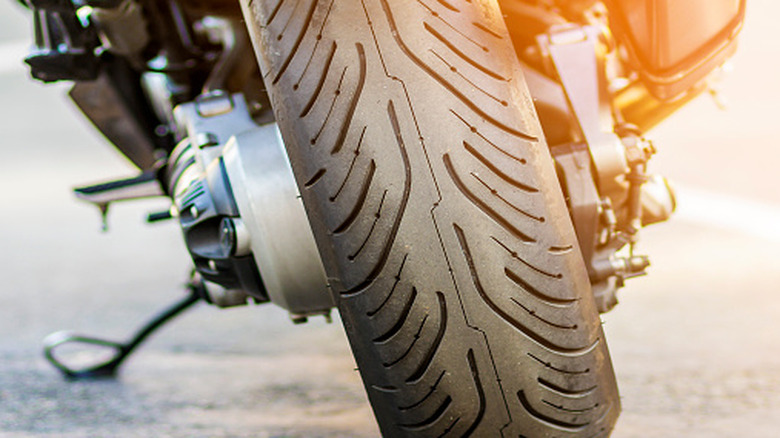
Tires are the only part of your motorcycle that touch the ground, which makes it strange how often riders push them well beyond their prime. Unlike a car, a motorcycle leans into every turn, meaning your bike's tires are also worked from their edges and not just the center. That uneven load accelerates wear in ways many riders don't even realize. While the age of the tire matters, it also matters how much you ride, even with new tires on.
Rubber compounds harden and crack over time, even if a bike barely gets ridden. Storage conditions, pressure checks, and riding habits all play a huge role in how long tires actually last, not just the odometer. The National Highway Traffic Safety Administration (NHTSA) has also studied tire aging directly, and its research on tire degradation confirms tire degrade because of factors like heat and oxygen exposure and how they're stored, whether they are driven or not.
A quick monthly checkup helps catch problems easily. You should inspect for uneven wear patterns, check pressure when the tire is cold, and other signs your tires might be out of balance, like vibrations at speed. You should not assume your tires are fine, since they are the difference between you safely reaching home and an unfortunate accident.
Spark plugs
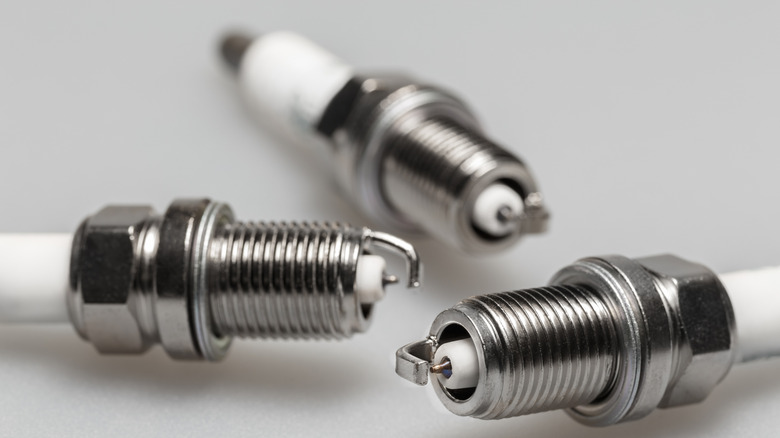
Another motorcycle part that is easy to ignore and doesn't get replaced unless there's a major issue is the spark plug. They are cheap, small, and incredibly easy to overlook, which is why many riders use them way longer than their prime. A worn plug doesn't always cause a major issue in the bike, but it quietly degrades the performance. You will feel the engine a bit rougher, a little thirstier (requiring your frequent fuel stops), and a little less responsive when you accelerate.
When a spark plug ages, the gap between the electrodes widens, creating a weak spark and making combustion less efficient. The best part is that if you have a bike and have narrowed down the issue to a spark plug, Motorcycle News has a simple guide that breaks down how you can check and swap a spark plug. The process is simple and easy for most motorcycles, not requiring any specialized tools. That said, quality does matter here, and not every brand's plug ages the same way.
To make your task simpler, SlashGear has ranked major spark plug brands from worst to best based on reliability and longevity. RevZilla suggests changing a spark plug as early as 5,000 to 7,000 miles. However, spark plugs in modern electronic fuel injection (EFI) bikes can run as long as 15,000 to 30,000 miles.
Air filter
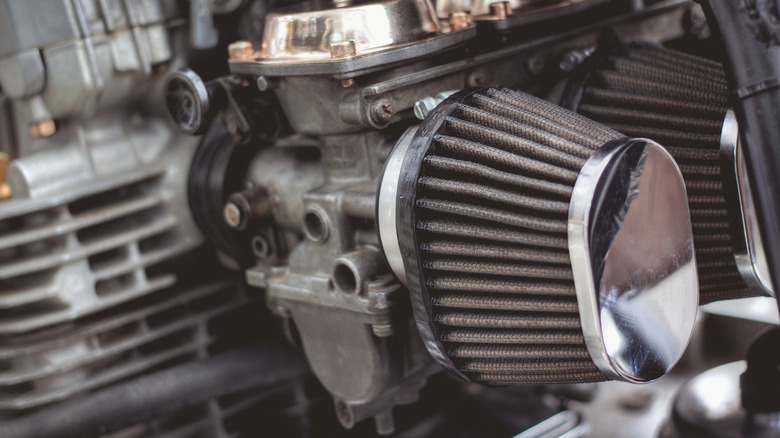
An air filter's sole job is to get dirty, but that doesn't mean that the dirtier they are, the more okay they are. You should not just leave it alone assuming that it is doing its job well. A clogged air filter chokes the engine's airflow, forcing the bike to work harder than it should. This affects the overall performance and fuel economy over time.
SlashGear has a dedicated guide on how you can clean a Harley-Davidson Fat Boy's air filter, which can act as a good example of how filter maintenance varies by model. Some filters are reusable and just need periodic cleaning, while others are meant to be disposed of and swapped with a new one. Riding a bike in dusty or off-road conditions accelerates clogging dramatically, so the rule of "checking it often" really depends on where and how you ride.
You can check out Cycle News' guide to motorcycle air filter maintenance, which suggests inspecting the air filter every 3,000 to 6,000 miles. A simple visual check is fine; if you hold it up against a light source and can't see light passing through evenly, it is time for a change or cleanup.
Engine oil
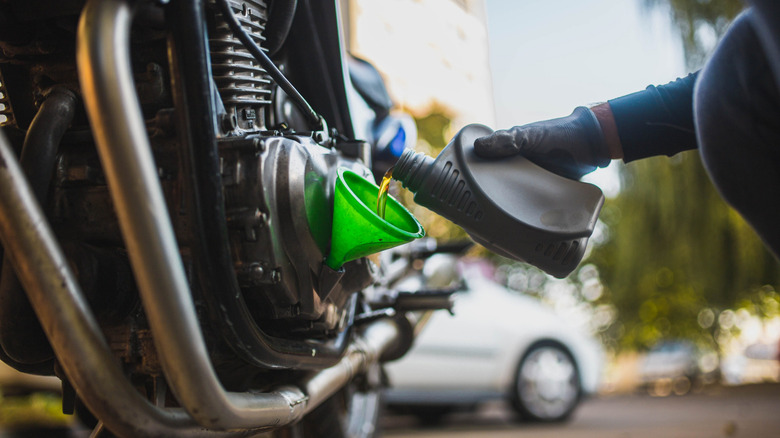
Probably the first thing that bike owners say to their mechanic when it comes time for servicing is to change the engine oil. Everyone knows oil changes matter, but a surprising number of riders stretch the interval too far. You should also be very particular about the engine oil that you choose for your bike since motorcycle engines are built differently, and using the wrong type of engine oil will only do harm.
Additionally, you shouldn't use car oil in a motorcycle. Most motorcycles share their oil between the engine, transmission, and often the clutch, which car oil simply isn't formulated to handle. Using car engine oil in your motorcycle can actually cause a wet clutch to slip, as this type of oil contains friction modifiers designed to save fuel. And since motorcycle clutches rely on friction to grip properly, this small distinction makes a big mechanical difference.
Riders should follow a schedule and change the engine oil every 3,000 to 5,000 miles. If your bike ever struggles to start or feels sluggish, old oil could be the culprit.
Coolant
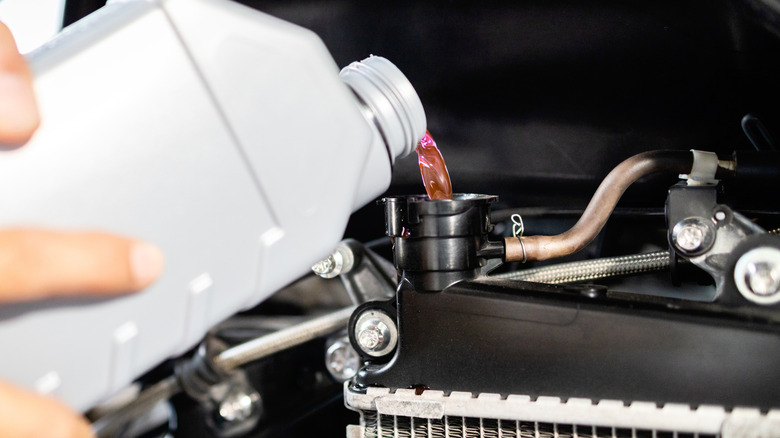
If you have a liquid-cooled bike, the coolant's job is to prevent the engine from cooking itself. It is one of the easiest fluids in your bike to get worked up, and riders most often overlook it. The reason is simple: It sits in its reservoir, does its job, and slowly loses its effectiveness over months and years. Coolant is around 95 percent ethylene glycol,with the rest made up of water and additives like corrosion inhibitors.
These additives degrade over time, resulting in the coolant becoming less effective at preventing rust and scale buildup inside the cooling passages. This can eventually lead to blockages or leaks. Most car manufacturers recommend a full coolant flush every 2 to 3 years, and this timeline holds up well for motorcycles, too.
Similar to brake fluid, coolant is also one of those liquids that is neglected because they aren't visibly used up like fuel. But it is one of the most common mistakes riders make without realizing it. A healthy coolant is typically bright and clear colored, and it should not be milky or rusty. If you see smoke coming from the engine area, then it is most probably a sign that the coolant is degraded and needs replacement.
Fork oil and seals
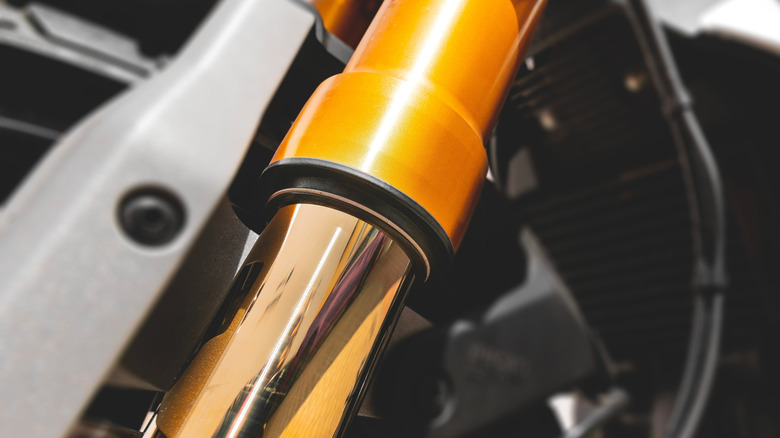
Fork seals are a part of the front suspension, which is another one of those parts that doesn't get much attention unless it starts leaking. Every time your front suspension compresses and rebounds (when you hit a bump or brake hard), the lubricant inside the tube moves to keep the ride smooth. The seals have one job -– to keep dirt and grit out. However, over time, grime gets trapped against the seal because of its movement and slowly wear against it.
As a result, fork oil may leak and cause a mess. Once a fork seal needs to be replaced, the fork loses its ability to dampen properly, the front suspension will not feel effective, and you will feel harsh jerks due to the seal failure. Worse, if left unaddressed, contaminated fork oil can also cause harm to the internal bushings faster than normal.
If you have some experience with motorcycle parts, then you can change the fork and seals yourself with basic tools. You would need something to lift the bike and some specialized tools to make repairs faster, as we've listed in the rundown of DIY-friendly motorcycle jacks and tools. Additionally, you can follow Motorcycle News' guide on fixing leaky fork seals and spotting the early signs before the mess happens.
Battery
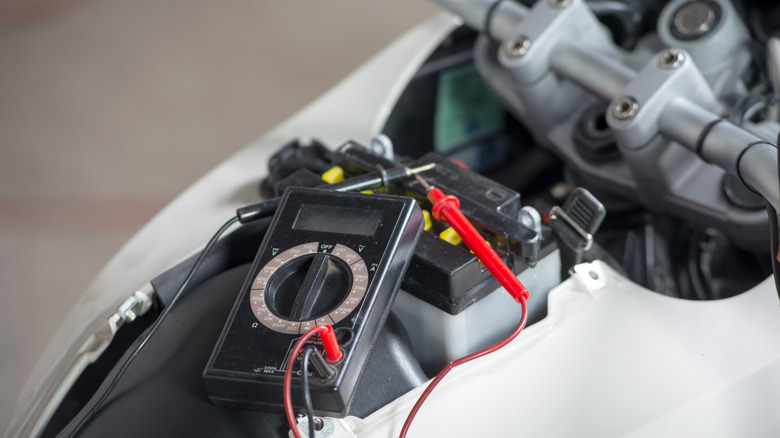
Every time you hit the ignition, the battery drains a chunk of power just to fire the engine. On a car, a 20-minute highway drive puts the power right back. However, on a bike, this is a different story. A quick 5-minute ride to grab a coffee doesn't come close, and you are basically taking out a small amount of power from your battery every time you start your bike. Doing that without ever taking it out on a proper ride, and the battery just keeps losing charge until one morning it won't turn on.
Lead-acid batteries typically need to be replaced every 2 to 5 years, depending on type and care. On the other hand, lithium batteries can push past that point if maintained properly. A battery's age isn't the full story, though; if you see signs such as ignition not responding in one push, dim lights, or electronics acting up, those are clearer warning signs that you should not ignore.
Keeping your batteries low on charge and not topping them up will only hurt the battery. In the end, you will have to change the battery entirely. The fix is refreshingly simple and low-effort, but if you want to avoid that as long as possible, you can keep the bike on a trickle charger during storage, avoid letting it sit fully discharged, and periodically check the terminals for corrosion.
Clutch cable
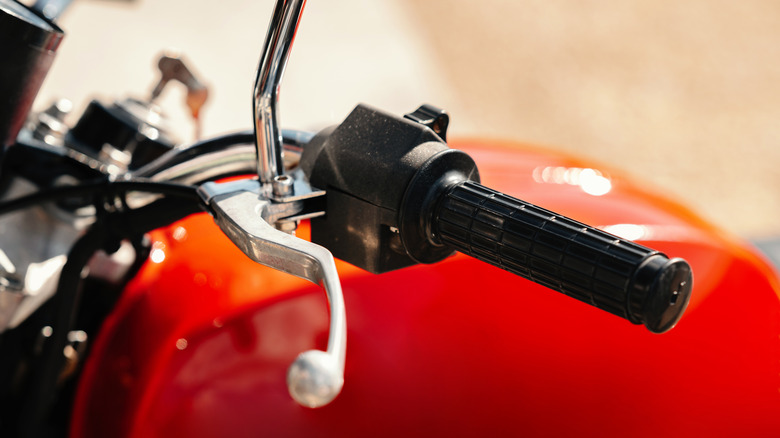
A clutch cable rarely fails without throwing red flags. But those warning signs are subtle enough that a lot of riders write them off as normal wear rather than an actual problem building up. A cable that is slowly stretching changes how the clutch engages, often long before it snaps entirely. Imagine this happening while you are on a long road trip or riding on a steep mountain road.
A lever that feels increasingly loose or spongy are signs worth paying attention to. A worn cable is one of the several possible culprits when it comes to what's causing clutch slipping, alongside worn clutch plates or improper adjustment. Fraying is usually easiest to spot near the ends, where the cable bends most under regular use. A quick visual check can often help catch the issue before a total failure.
Riding with a snapped clutch isn't exactly great, but it's not the end of the world if it happens. Motorcyclist's tips on riding a motorcycle with a broken clutch, like picking a route with the fewest stops and being prepared to get over to the shoulder if you stall, will get you safely to a service station to fix the issue. Of course, it's best to prevent this entirely by fixing the issue beforehand.