

10 Of The Best Foldable Smartphones You Can Buy
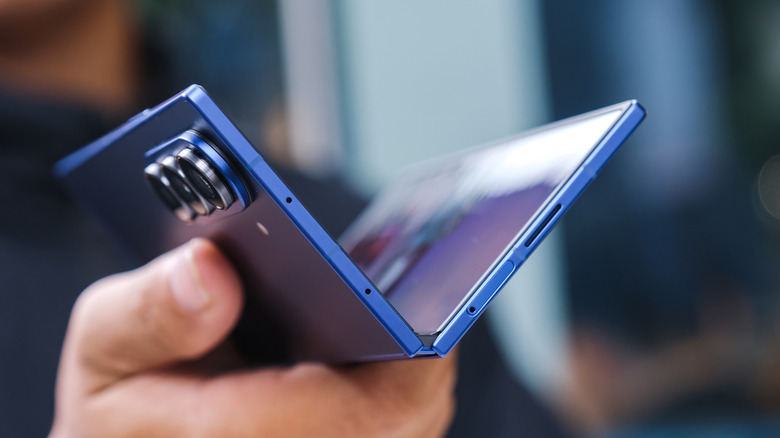
When the company named Royale revealed the first-ever foldable phone to the world, the Royal FlexPai, everyone was amused. However, it was Samsung, with its Galaxy Fold in 2019, that brought foldable phones to the mainstream. Still, for a long time, foldables were only accessible to early adopters and people with deep pockets. Speaking of the current situation, the scenario has completely changed. There are several brands with their hands deep in the foldable smartphone category, with some offering budget foldables as well.
We have foldables in two forms, flip-style and book-style, each with its unique selling points. Picking the best ones isn't just about one spec on the spec sheet. It boils down to how these phones stand up in daily use –- the hinge quality, the software quirks, the display crease, etc. The good thing is that each folding smartphone on the market isn't the same, and each has its own USP.
Some of the folding smartphones are available everywhere, including the U.S., but a few are harder to get and are restricted to specific markets. That is worth knowing before you fall in love with one. Whether you want a folding smartphone that flips down or something that opens up to a tablet, here are 10 of the best folding smartphones you can buy today.
Samsung Galaxy Z Fold7
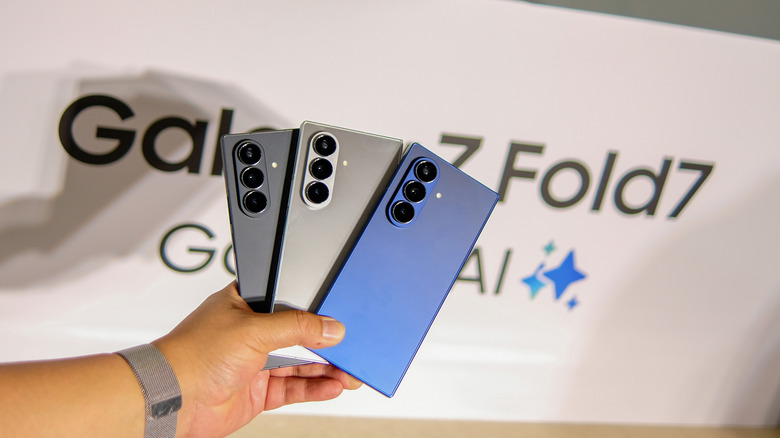
While the list doesn't follow a specific ranking system, it had to start with the Samsung Galaxy Z Fold7, which is the company's best foldable currently available in the market. Samsung has been making foldables for years, and frankly, the early ones felt like bricks with screens slapped on. The Galaxy Z Fold7 breaks the mold and now makes complete sense. It is slimmer and lighter than its predecessor, to the point that during my time with the phone, it felt closer to the in-hand feel of a Standard Galaxy S25 Ultra.
The Galaxy Z Fold7 now comes with a bigger battery, a better camera (up from 50MP primary on the Galaxy Z Fold6 to 200MP), a better selfie camera (10MP compared to 4MP on the Z Fold6), a new processor, etc. My personal hands-on experience completely backs SlashGear's sentiments about the Galaxy Z Fold7 packing all the right ingredients. Its display is also more durable, as it can survive 500,000 fold cycles compared to 200,000 cycles of the Galaxy Z Fold6.
The performance is top-notch, with Galaxy AI enhancing the overall experience. Even heavy users will not experience any performance bottlenecks. The cameras are now on par with Samsung's Galaxy S Ultra phones. If you are looking for a reliable folding smartphone, a Galaxy Z Fold7 is an excellent choice, especially now that significant discounts will be available ahead of the Galaxy Z Fold8's arrival.
Samsung Galaxy Z Flip7
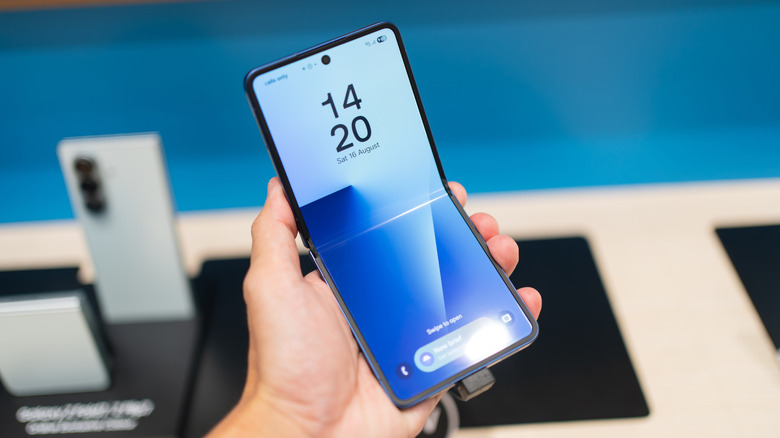
If you are not into book-style foldables, don't worry, Samsung has got you covered with the Galaxy Z Flip7. It is, what I believe, the most approachable foldable of the two form factors. The Galaxy Z Flip7 is built for people who want a foldable that actually turns into a smaller phone, not bigger. If you look closely at Samsung's spec breakdown comparing the Galaxy Z Fold7 and Z Flip7, you would understand how much value separates the two devices.
The Galaxy Z Flip7 comes at a lower price. While you get a bigger cover display on Galaxy Z Flip7 compared to its predecessor, it doesn't open up to be a tablet. The cameras on the phone have a 50MP + 12MP combo, which clicks good images. The only downside I can think of on the Galaxy Z Flip7 is that it is powered by Samsung's in-house Exynos 2500 chipset, which is nowhere close to the Qualcomm Snapdragon 8 Elite's performance found inside the Z Fold7. This only changed this year, because the Galaxy Z Flip6 came with a Snapdragon SoC.
For normal usage, the Exynos 2500 holds up fine, but heavy usage can introduce some issues. However, that doesn't mean the phone is not good enough. If you want a folding smartphone that opens into a regular slab, the Galaxy Z Flip7 is the best option from Samsung.
Samsung Galaxy Z TriFold
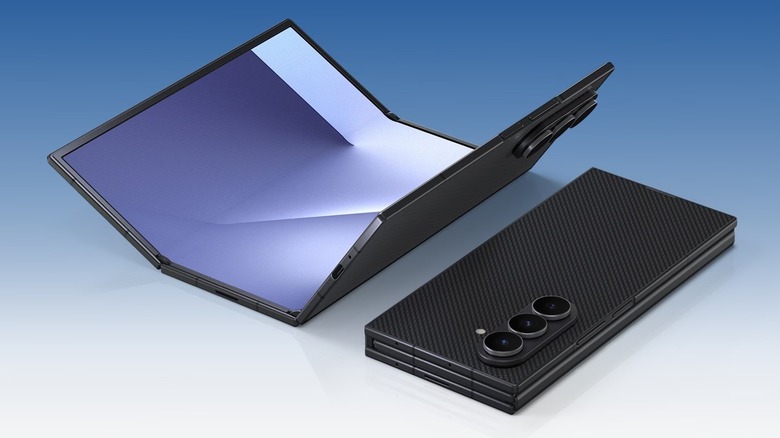
This year, Samsung entered the tri-fold segment by showing off its Galaxy Z TriFold at CES 2026. The phone wasn't new in this category, since Huawei had already launched (and caught everyone's attention) its Huawei Mate XS. However, the Z TriFold was something very new from Samsung -– a phone that folds twice and unfolds into a 10-inch tablet that still fits in your pocket when closed. The interesting part was that Samsung did not keep it a China-only or Korea-only product, and also launched it in the U.S.
In our CES 2026 coverage, we uncovered the technological challenges Samsung went through in making the Galaxy Z TriFold –- two hinges instead of one, and also the fact that they had to prove that its folding mechanism could handle the complexity without adding bulk. The interesting take for the Galaxy Z TriFold compared to the Huawei Mate XS was that while the Mate XS opened into a "Z" letter like an accordion, Samsung's TriFold opens and mimics the letter "C."
Of course, the Galaxy Z TriFold wasn't a phone for everyone. Moreover, Samsung has officially pulled the plug on the phone and is no longer officially available, as the company says that they launched the product on a limited run. If you are ambitious, you can try the offline market or some online stores to get your hands on the Z TriFold.
Motorola Razr (2026)
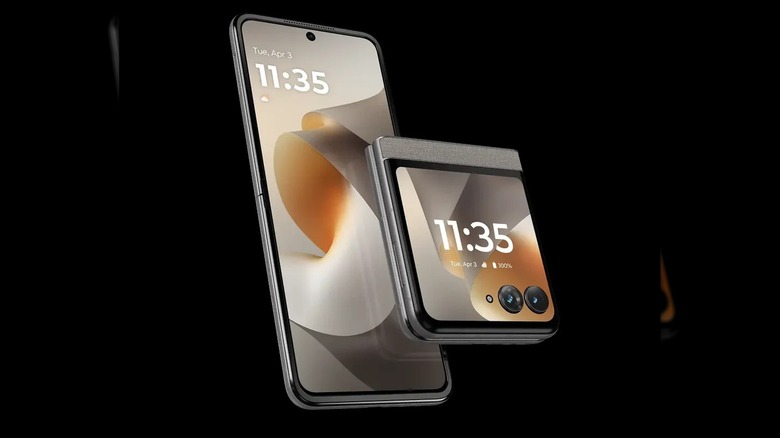
Motorola brought back its iconic Moto Razr phone in a form that was fit for the current generation. Being a user of the original Moto Razr back in the day, the nostalgia for the first-generation Motorola Razr was real. Motorola has spent a good amount of time perfecting everything, and now the base Motorola Razr 2026 has become the phone to recommend to someone who wants a flip phone without spending flagship money.
While this year's Motorola Razr carries a $100 price bump over its predecessor, the hardware underneath makes it all worth it. In their review, BGR found the Motorola Razr 2026 handled everyday tasks without any real complaints. Additionally, the vegan leather touch on the back panel makes the phone feel premium and gives it a better in-hand feel. Again, the MediaTek chipset isn't an incredible beast of a performer, but the phone isn't meant to be that in the first place.
If you are someone who has used a slab phone all their lives and want to jump into the folding smartphone world, the Motorola Razr 2026 is the most approachable phone you can think of. This also factors in durability and a brand name that is unlike the other Chinese alternatives. The phone comes with a titanium hinge, IP48 dust and splash resistance, and the display on the crease feels minimal, much better than what you get on the Galaxy Z Flip phones.
Motorola Razr Ultra (2026)
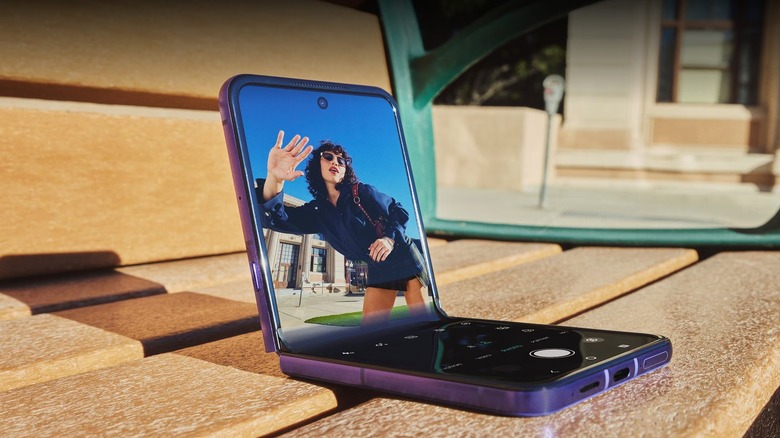
If you have money to breach the ultra-premium smartphone category, then Motorola has the Razr Ultra 2026 as an option. I had a brief time using this phone, and my overall experience was that the Razr Ultra 2026 is a genuinely excellent phone, with a slightly higher price tag. This year, with a $200 jump over last year's Razr Ultra's price tag, you are getting a slightly bigger battery and an upgraded camera. This is also one of the reasons tech experts are suggesting going for the previous-gen Razr Ultra over the latest one, which is often available for $800.
While reviewing the Motorola Razr Ultra 2026 folding smartphone, SlashGear highlighted the positives and the negatives of the phone. Our experts praised the device's battery life, a sturdy chassis, and a spectacular display with minimal creases, which is a kind of package many would want from their folding smartphone at such a hefty price. Aside from the premium price, another downside that the Razr Ultra 2026 comes with is the fact that the AI is almost the same as last year.
Engadget also pointed out that to get those super-fast charging speeds, you need to purchase special power adapters separately. Even the cameras produce the same result as last year. If you want the best that Motorola has to offer, and also one year of extra software updates compared to the 2025 model, then the Razr Ultra 2026 should be your pick.
Motorola Razr Fold
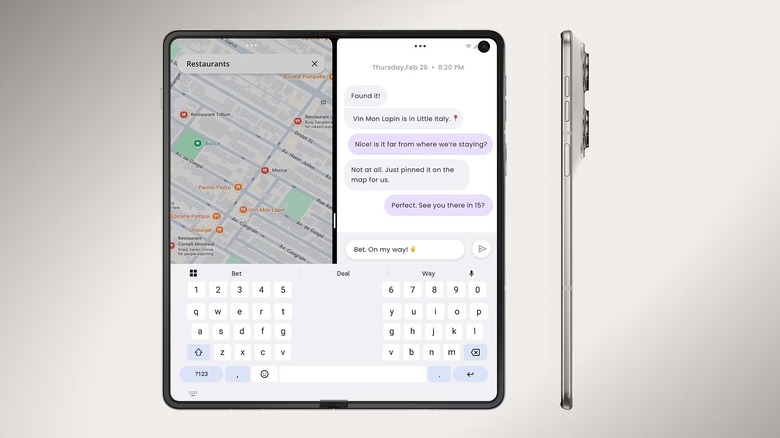
Although Motorola was in the folding smartphone category for a good number of years, they were into flip-style foldables. The company kept itself away from the book-style foldable race. But looking at the Razr Fold, it appears that patience really paid off. Motorola introduced its first book-style foldable, the Motorola Razr Fold, this year, and it packed a punch. While its competitor, especially the Galaxy Z Fold7, is thinner, lighter, has better cameras, and packs a powerful processor, the Motorola Razr Fold holds up pretty well, and in ways that one would want from their foldable.
You may not get a 200MP camera, but the Razr Fold comes with a triple 50MP setup that produces photos that are good-to-go straight to your social media feed. But it is the battery department where the Razr Fold shines. It comes with silicon-carbon batteries that are more durable and ensure more batteries can be fitted in a smaller space. This is the core reason why the Razr Fold features a large 6,000 mAh battery. Add to that the support for 80-watt fast charging, while the Z Fold7 peaks at 25 watts.
The best part is that you get a great phone for a lower price than the Galaxy Z Fold7. Overall, the same sentiments were shared in SlashGear's review of the Razr Fold, with our expert calling it the best book-style foldable yet.
Google Pixel 10 Pro Fold
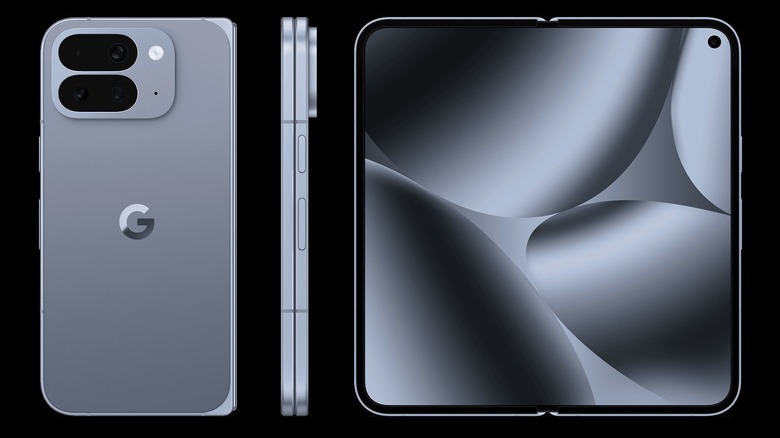
After two years of developing foldable phones, in 2025 Google launched the Pixel 10 Pro Fold, which is the best foldable the company has on offer. With Gemini and Google's AI features, the software on the Pixel 10 Pro Fold is as solid as its hardware, leaving aside a few things. For instance, the Tensor G5 chip, which is Google's very own custom chipset, isn't something that gives you the raw performance you get from Qualcomm's chipsets. Google has built the Tensor around AI tasks instead.
In SlashGear's review, we pointed out that while the phone looks flashy, what makes it stand out may not be visible hardware-wise or even on the spec sheet. The moment you turn on a Google Pixel 10 Pro Fold, you get the same fluid Pixel experience you get on other Pixel devices. The software integration is polished, and you get almost no bloatware. Add to that seven years of promised software updates, which makes it a device that will last longer than other competitors out there.
The camera isn't that impressive when you compare it against heavyweights like a Samsung or a Huawei, but they do their job. The processing may not be for everyone, and would be appreciated by those who love close-to-natural photo outputs. The Pixel 10 Pro Fold is built for those who want a polished UI experience within the Google ecosystem.
Honor Magic V6
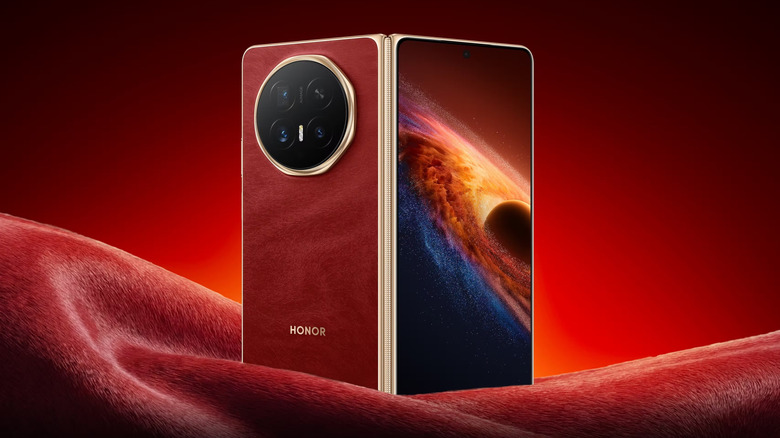
Because of the U.S. and China relationship, Honor does not sell its phones in America. While the company may not be able to tap a huge chunk of the smartphone-buying audience, it is doing well in its home country and other parts of the world. Honor is making some of the most technically impressive folding smartphones. The Honor Magic V6 is an absurdly thin, camera-centric smartphone that also packs a battery life that could put even slab phones to shame.
This year, the Honor Magic V6 added something that no other book-style foldable has managed to do thus far. In SlashGear's review, we highlighted that the Magic V6 comes with an IP68 and IP69 water resistance rating. This is a level of protection against high-pressure water jets that has never previously existed on foldables. It is impressive to see such tech on an already complicated form factor. When opened, the phone measures just four millimeters thick, which is also thinner than the iPhone 17 Pro Max.
It packs a massive 6660 mAh battery and a display with an Anti-Scratch NanoCrystal Shield with a peak brightness of 5,000 nits. The downsides – it doesn't run on Android OS, you have to import it at a very high price tag, no official carrier support, and a warranty that won't help you in the U.S. If you still have your way around those hurdles, it is one of the most advanced foldables that exists right now.
Huawei Mate X7
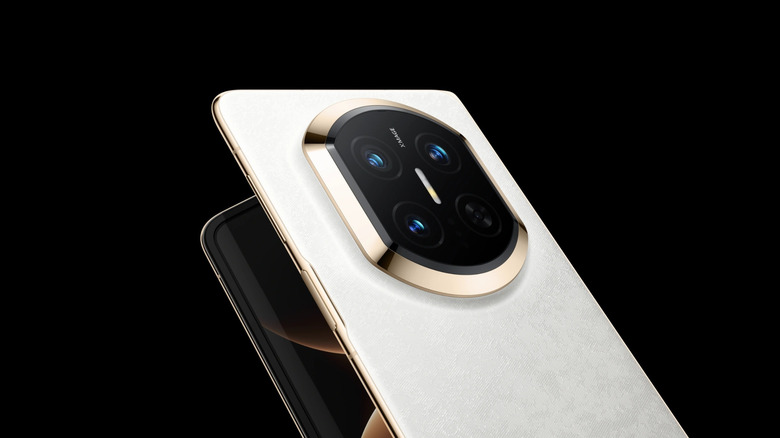
The elder sibling of Honor, Huawei, also suffers the same fate as Honor in the U.S., where it is restricted from selling its products. What is more impressive on Huawei's part is that although it cannot use the same chips and software as its rivals in the U.S., Huawei managed to develop a folding smartphone that competes on the camera front. The Mate X7 features a large variable aperture main sensor with Ultra Lighting HDR, with tech experts backing it to be the best camera on any foldable currently sold anywhere in the world.
GSMArena's review noted that the phone's Kirin 9030 chipset, built on a smaller 6nm node, brings a real performance upgrade over last year's Mate X6. This is even without access to the latest global manufacturing partners. The tradeoff, just like Honor's phones, is that you don't get Android OS, so no Google Play Store. You also don't get 5G support, which is a major hurdle if you are planning on buying this device.
If none of this matters to you and you have the money to spend, the Huawei Mate X7 is a foldable that not only packs a tablet but also an impressive battery and a camera that would give other smartphones a run for their money. The Huawei Mate X7 is the best option out there.
Huawei Mate XT
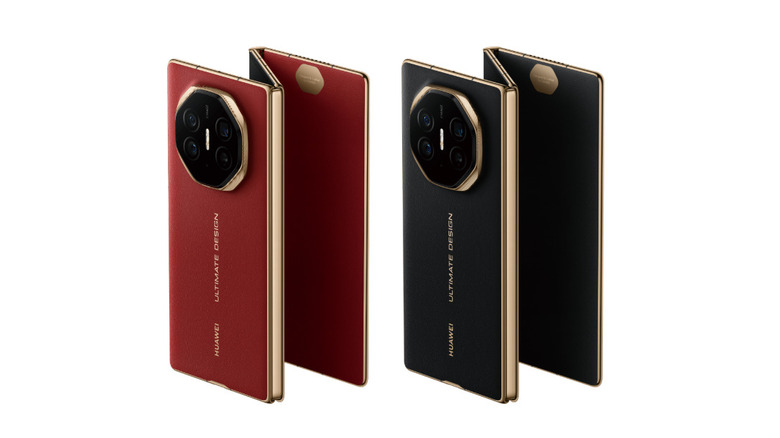
Before Samsung tried its hand at the tri-folding phone, Huawei had already had one on shelves, and some were literally flying off the shelves. The Mate XT remains the most ambitious foldable in this entire list, as it was the world's first triple-folding phone. Unfold it once, and you get a normal book-style foldable; unfold it twice, and it turns into a 10.2-inch tablet. It is also the thinnest foldable in the market. When unfolded, it measures just 3.6 millimeters thick.
The phone was launched at a price tag of $2,800, but it never saw the light of day in the U.S. In their review, GSMArena praised the device's hinges, which also ensure that the phone folds to roughly the size of a Galaxy Z Fold7 despite the extra folding screen. The Mate XT packs a 5600 mAh battery, divided into three and connected with silicon-carbon anodes. During my trip to Dubai, I could see many people flexing their Huawei Mate XT, but to be honest, it isn't a phone for everyone.
The price, the configuration, and the limited software experience are a huge trade-off. However, if you are willing to explore a new territory of smartphones and want to flex that you own one of the impressive pieces of tech currently in the market, Huawei Mate XT would fit the bill.