

5 Cars That Will Take Boomers Back To Their High School Days
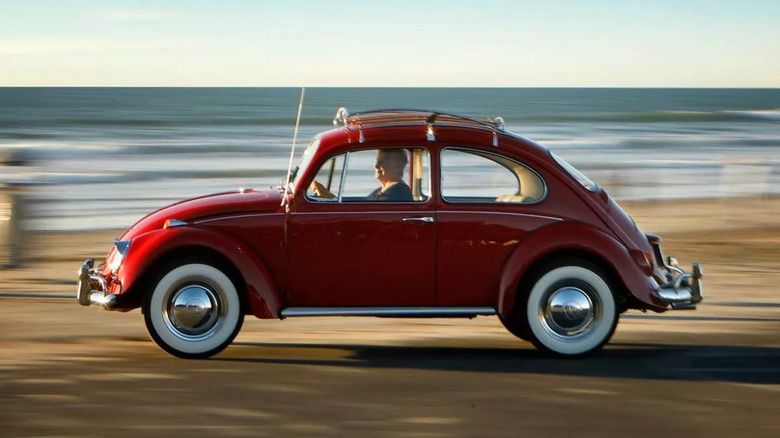
Baby boomers, born between 1946 to 1964, grew up in relative prosperity thanks to the post-war economic boom that the U.S. experienced after it defeated Germany and Japan. Car companies expanded production as a response to increased consumer demand, with many of them releasing affordable models that allowed more families to buy a car or two.
Because of this, many baby boomers got their first car while they were in high school. This could be either a hand-me-down vehicle they received after their family upgraded to a newer model or a used vehicle their parents specifically bought for them. There were also some who took on part-time jobs so they could save up for the car they wanted, while a lucky few were given a brand-new set of wheels of their choosing by their rich parents.
This generation is now 62 to 80 years old in 2026, and their high school years are already 50 years behind them. However, these are also some of the most formative years for anyone, meaning they're likely to remember and reminisce about the first car they drove during this period. So, these are a few models that will take boomers back to their high school days — they either drove one of these cars or at least know someone who does. And whenever they see one of these on the road, they will remember what it was like during their teenage years.
AMC Gremlin
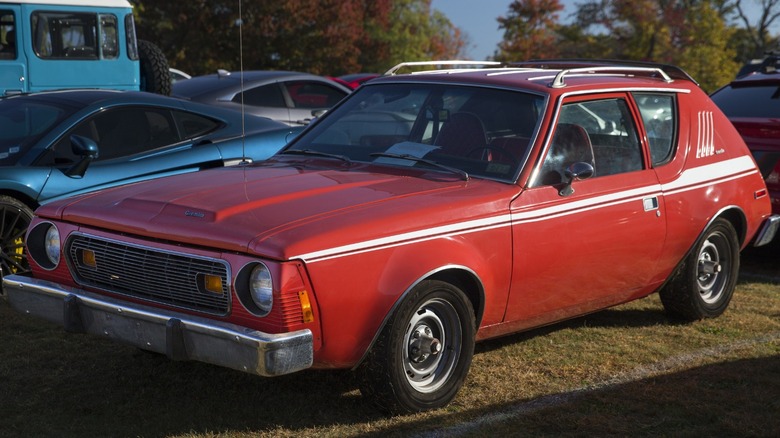
The AMC Gremlin is a small hatchback produced from 1970 to 1978, meaning older boomers didn't have the chance to own one during high school. Nevertheless, those born from 1954 onwards would have had the chance to receive it at 16. Its status as an economy car meant that it was quite a popular model, although it had a rather unique, quirky look.
It's unfortunate that the Gremlin is often lumped among the worst-looking cars from the 1970s, although it might not have been a bad car after all. But whatever the case, many high schoolers (or their parents) probably chose this as their first car specifically because of its affordability. After all, the two seats and hatchback of the Gremlin should be more than enough to ferry a high schooler and their school bag (and the occasional girlfriend) between home and school.
High schoolers who loved working on cars would also appreciate the Gremlin. While it was primarily marketed as a compact economy car, its large engine bay meant that it could accommodate more powerful engines. AMC even released a 6.6-liter V8 engine for the diminutive hatchback, so those who dreamed of a faster car but didn't have the extra cash for a proper muscle car could get this instead. Although the Gremlin did not have the iconic status of the Mustang and is even often the butt of jokes because of its rather quirky outline, it would likely bring a lot of memories when a boomer sees one on the road.
Chevrolet Impala
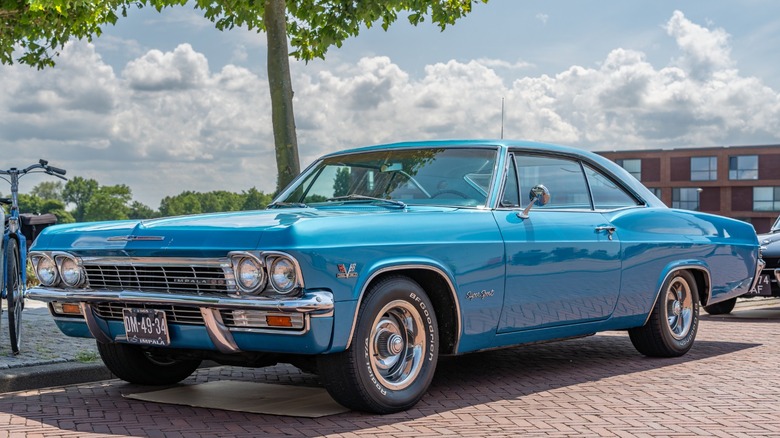
The Impala is a full-sized sedan produced by Chevrolet from 1957, and it quickly became one of the iconic cars of multiple generations. Given that it was Chevrolet's flagship model, it's unlikely that a lowly teenager with limited resources would be able to afford one from their savings or a part-time job. High schoolers who drove an Impala around that time would either have borrowed their parents' car or be using it after the family upgraded to a station wagon for more flexibility.
Aside from being a family car, the Impala also had a sporty variant in the Impala SS, which was arguably Chevrolet's first muscle car. This would've caught the attention of high schoolers who had a taste for speed and adventure. But whether they drove their family's old Impala to school all the time, snuck it out occasionally after their parents left home, or were dropped off at school in one before they got their license, this full-sized sedan would have left a mark in their young minds.
Just as the baby boomer generation has reached 62 years of age and older, the cars of their youth have also now hit classic status. This is probably the reason why some of the oldest generations of the Impala are worth so much today — boomers who have hit retirement age and are cashing in their pensions could now afford to buy these classics to relive their younger years.
Dodge Dart
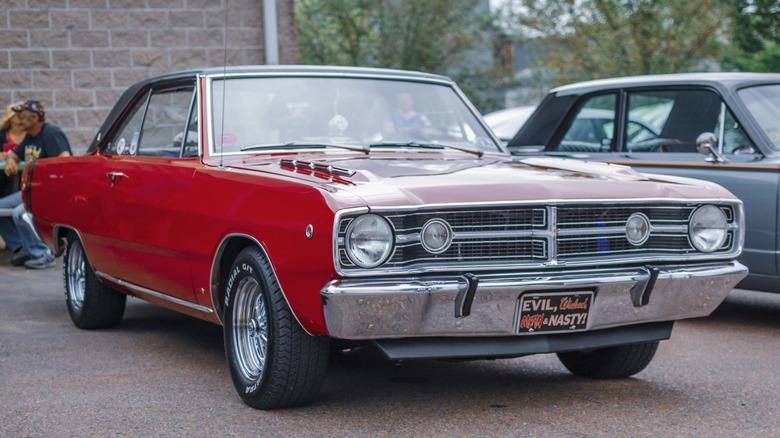
The Dart was one of the most successful Dodge models ever sold in the U.S., so it's likely that a baby boomer's family would own one. While it began life as a full-size sedan in 1960, it had become a slimmer, more practical compact sedan by 1967 and continued to be produced until 1976. This combination of popularity and practicality made the Dart as one of the obvious choices for young high schoolers getting their first car.
Aside from being a great daily driver, the Dodge Dart GTS was the ride of the protagonist in the detective show "Mannix," making it a star in its own right and increasing it desirability among young people. The company also created the Dodge Dart Swinger, which paired the smaller body of the Dart with a 340-cu.-in. V8 that hit 275 horsepower and 340 lb.-ft. of torque. This powertrain allowed the vehicle to go from naught to sixty in around 6.3 seconds and could be had with either a four-speed manual or three-speed automatic.
This vehicle will certainly bring back memories of the baby boomer generation's carefree high school days, and we can see this in the going rate of these vehicles in the used market. Although these cars are at least 50 years old now, they still go for a pretty penny, with prices hovering around $35,000. If you want the ultra-rare 1968 Dodge Dart with a Hemi engine, which only had 80 units, be prepared to shell out at least $125,000 to $165,000.
Ford Mustang
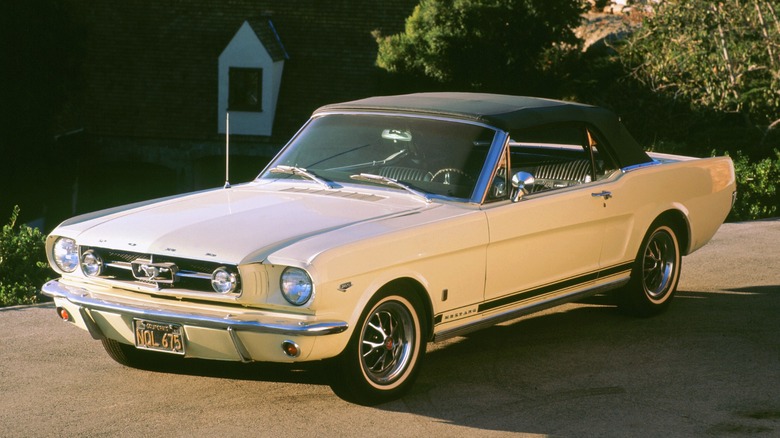
Of course, if we're talking about some of the most memorable cars from 1962 to 1980 (the years when baby boomers turned 16), we must include the iconic Ford Mustang. This pony car arrived in 1964, with the first generation being produced until 1973, while the controversial Mustang II was built from '73 until '79. Even though the Mustang is still being produced today, the models made in the '60s and '70s would likely be the ones that would catch the attention of baby boomers.
Although the Mustang looked good and offered some level of performance, the most important feature of the Mustang for high schoolers back then was that it was affordable. A base '65 Mustang only cost $2,500, which is about $27,000 in today's money. This makes it even cheaper than the base EcoBoost Fastback Mustang you can get today, which starts at $32,995. If their parents were rather generous or they secured a summer job that pays relatively well, baby boomers could potentially buy a Mustang of their own.
The fifth-generation Mustang, which arrived in 2005, introduced throwback styling to the beloved pony car, and the latest Mustangs still use design cues that originated in that era. While the retro look of these newer models would remind us of the '60s, only the original first-generation Mustang could bring back the feelings and memories our parents and grandparents had in high school.
Volkswagen Beetle
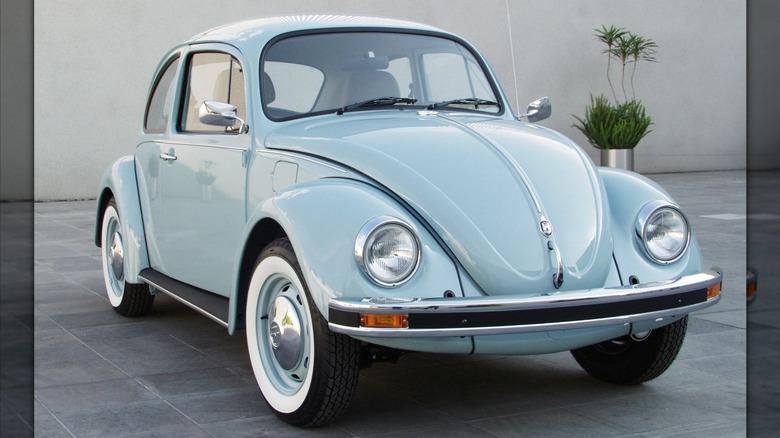
While the Volkswagen Beetle might not be an American car, it still left a lasting impression on American culture, particularly among young people in the 1960s and 1970s. This little vehicle became a symbol for counterculture, especially as the baby boomers are coming into age and are "rebelling" against the conservative culture that their parents had. Aside from that, it was also cheap to buy, affordable to maintain, and sipped gasoline.
Even though the Beetle is a tiny car by American standards, it still sold well among young people. After all, most high schoolers typically only need a car to go from their house to school and back, carrying their school bags with them — they don't need the extra cargo space that pickup trucks offer, or the large legroom found in full-sized sedans. The passenger seat beside the driver should be good enough to carry their girlfriend with them when they go on a date, while they could pack in the rest of their friends in the tight back seats for a quick drive to the neighborhood diner.
The Volkswagen Beetle is still a worthy buy today, allowing anyone — from baby boomers to even the younger generations — to experience what it was like to own and drive a cheap and affordable little car that's easy to maintain. Those who are inclined towards resto-modding could even convert a gas-powered model into an EV.