

12 Of The Best Power Tools To Buy If You're Starting A Tool Collection
We may receive a commission on purchases made from links.
It's fair to say that power tools can be an intimidating topic to get into. Most brands have hundreds of power tools. It's such a challenge to even pick a brand that there are whole guides written about the steps you should take to do it. It doesn't help matters that you can likely walk into any hardware store, look at any power tool, and find a use for it at home. With so many options and so many uses, how do you decide which ones to buy first?
Well, there is no handy guide for something like that, but we can come close. In most cases, you don't need most of the hundreds of available power tools until you're a professional or if you work with the same thing repeatedly. For example, you probably won't ever need a pipe crimper since any problem large enough to require one is likely something you'll want to call a plumber for, or even if you do tackle it yourself, you probably won't be working with pipes often enough to justify the expense.
As a homeowner with nearly a decade of experience, I'd like to help you get started with your power tool journey.
A power drill and an impact driver
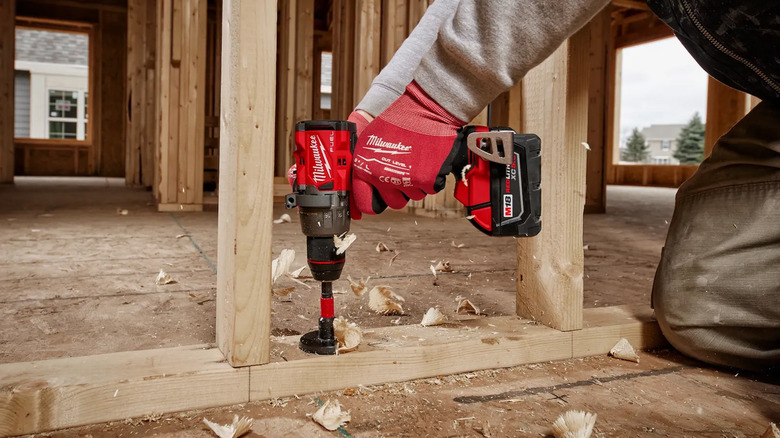
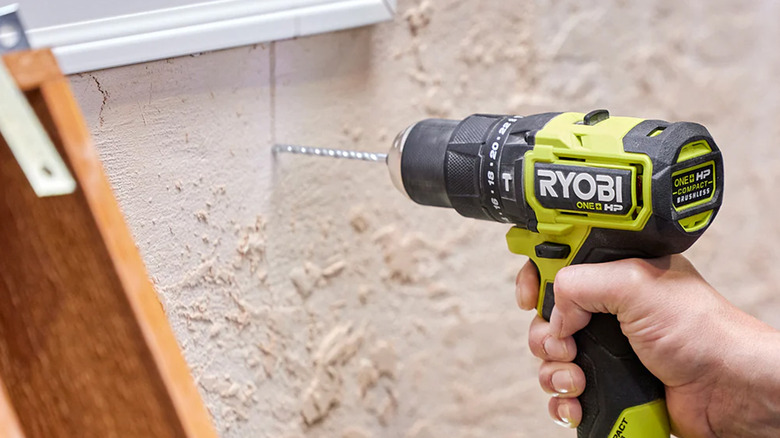
The very first tool you should consider buying is the humble cordless drill. Of all the tools in my arsenal, the drill definitely gets the most use, and that's even compared to my hand tools. Virtually every power tool brand on the market sells one of these, and for DIY home repair and improvement, you can pretty much choose any of them. They're useful for literally any job that requires a screw or any job that requires you to make a hole somewhere.
However, you may want to consider going one step further. Most major tool brands sell power drills with batteries and chargers along with an impact driver as a sort of beginner kit. It is generally more expensive than just buying a drill, but it's also usually less than the cost of buying either tool separately with batteries for both. Impact drivers are similarly useful, allowing you to drill into more materials like concrete while also dealing with heavier-duty screws without stripping.
If you could only buy one power tool today, there's a good argument that it should be a drill and impact driver combo. It was my first power tool, and I still use it to this day.
A reciprocating saw
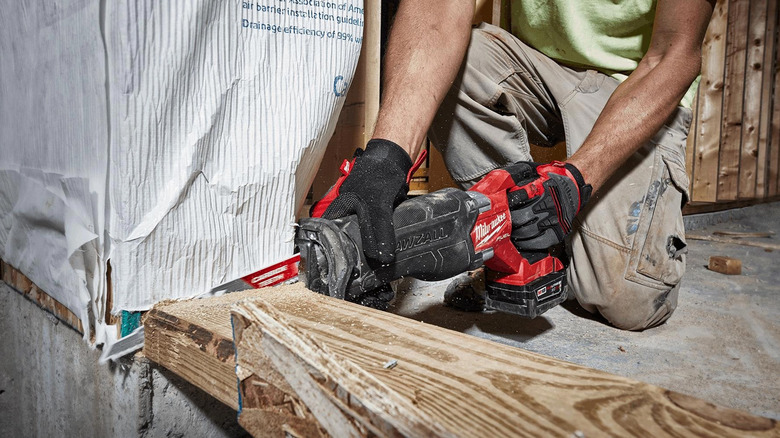
A reciprocating saw is another tool that's usable for so many things, making it quite easy to justify having one. This is another tool that is sold by most major brands, and most of them do a pretty good job making them. The only thing you need to be careful of is that these tools are often called Sawzalls (because they saw all), but that is actually a trademarked name specifically for reciprocating saws made by Milwaukee. It's kind of like referring to all facial tissues as Kleenex.
These things can cut basically anything, including metal, plastic, and wood. The blades are interchangeable and replaceable, and different blades are designed to cut different things. They are also largely all universal in terms of fit, so you can buy something like this Milwaukee Sawzall blade set and use it on your reciprocating saw. With the proper blades in tow, you can tackle a variety of tasks that require you to cut something up quickly.
I've used a reciprocating saw for a lot of things, from trimming my maple tree to cutting downspouts to fit on my gutters. You can even use these things to trim trees and bushes in your yard if you want to.
Dremel 8250 or 4300
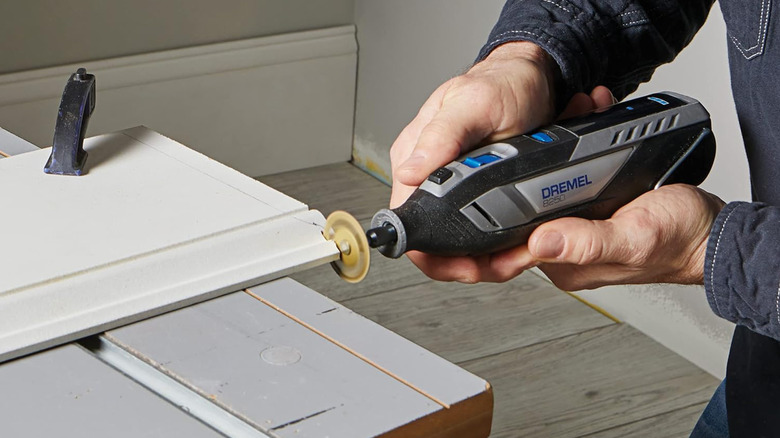
So far, you may have noticed that we haven't recommended a specific brand for any of the tools, and we'll discuss why that is later. For the Dremel, it is one of the exceptions to the rule. Technically, Dremels are called rotary tools, and they do as the name suggests. You put a bit on the end of it, and the tool rotates it very quickly. It's useful for cutting, polishing, engraving, sanding, sharpening, and dozens of other tasks.
For this, the Dremel 8250 is the best choice if you want to go cordless and the Dremel 4300 is the superior choice if you want a cord. The 4300 model is stronger, but the 8250 model is more convenient, so pick your poison. Both of them do the same thing and hold the same bits, so functionality is largely the same between the two. Both also come with some introductory bits, but Dremel sells a rather large rotary tool accessory kit that add a lot more.
This is a tool that may not have a primary use like a drill, but you'll figure out a reason to use it. When you're not fixing or building things, it's also quite popular in the crafts and hobbies segment.
A circular saw
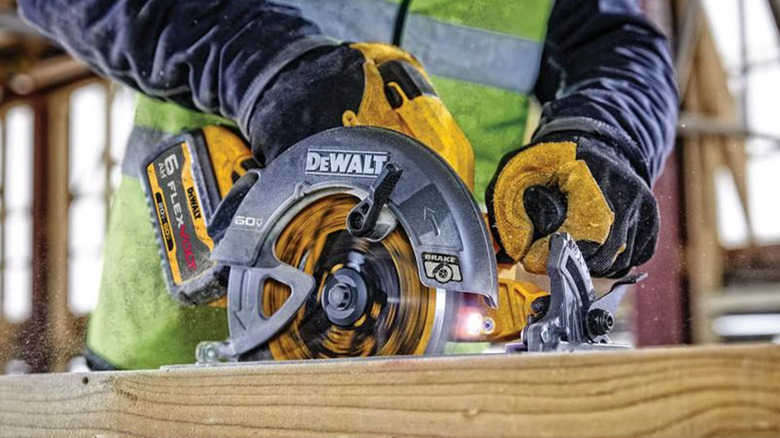
A few years back, my neighbor drove his truck into my yard and pulled down a 50-year-old shed with termite and mold damage. I was left with a pile of rubble in my yard that I needed to break down and dispose of. The tool I used most often for this task was the circular saw. These things are kind of like reciprocating saws in that they can cut loads of different materials but are made more for bigger tasks like disassembling a moldy, termite-damaged old shed.
These tools can get pretty expensive, so you'll want to make sure you have a solid use for them before going all in. You can find cheaper ones, but it largely depends on which brand's ecosystem you decide to go with. In most cases, these are purchased as tools only but are compatible with each brand's battery system. Thus, if you buy a DeWalt cordless drill, you'll probably want a DeWalt cordless circular saw.
This is also a reasonably good choice if you decided to go with a corded power tool. Corded versions are usually much cheaper and often stronger than their battery-powered counterparts. Just be careful not to cut the cable.
A shop vac
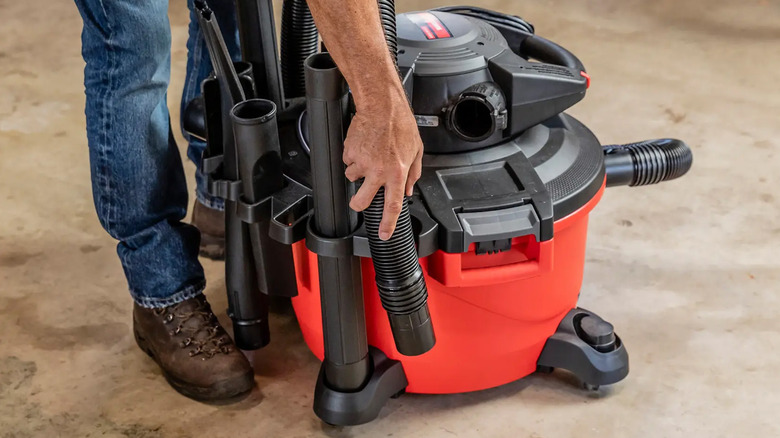
Not all power tools cut and drill, and often they are overlooked when building a collection. Enter the shop vac, which should definitely be in the first two or three power tools you buy. These little guys do exactly as the name suggests, which is vacuum things up, and they specialize in vacuuming things you probably don't want to flow through the vacuum you use on your carpet in the house.
Most power tools can be purchased cordless and will perform their jobs just fine. For the shop vac, I actually recommend getting one with cords. They're larger and stronger at the same price that you would find a cordless one, and the extra power and space is well worth the hassle of an extension cord. These are widely available at every hardware store, and sold by many brands, each with their own quirks.
I use my shop vac several times a year. In one case, I had a sump pump that went bad, and I used my shop vac to empty it until a plumber could come and replace the sump. Just remember that the paper filter is for dry stuff and the foam filter is for wet stuff.
An angle grinder
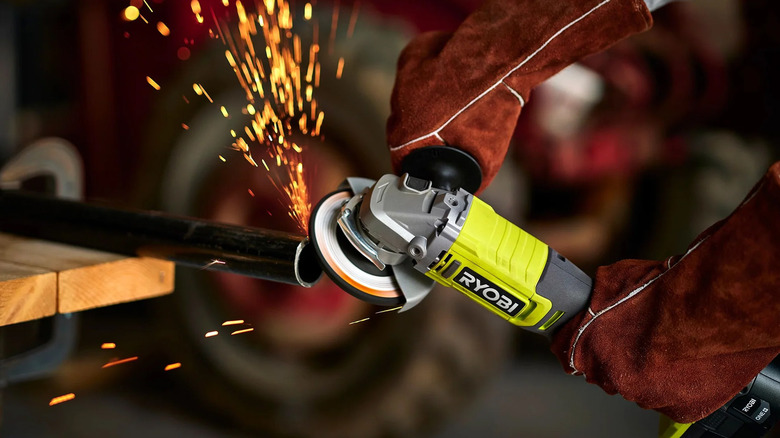
Angle grinders are another useful tool best used for cleaning things up. I borrow my neighbor's angle grinder to sharpen my lawn mower blades every other year, and it's also useful for grinding and polishing other metal items, sharpening other tools, and cutting things like stone, tile, and brick. That's useful enough to find a consistent use for one. After all, everyone has to sharpen their mower blades sometime.
Like most other power tools, nearly every major brand sells these at varying prices. The majority of the ones you'll find in hardware stores feature 4.5-inch disks, and that's both cordless and corded. The good news is that's enough for anything a DIYer would need. Much like reciprocating saws, angle grinders have different discs that cut, polish, or grind different materials, so you'll want to make sure to get the correct ones for your needs.
A big reason is due to safety. Angle grinders can be pretty dangerous if used incorrectly, as discs can break and shoot back at you if you're not careful. You should always read the manual, but this is one of those tools where you definitely want to make sure to do so.
A heat gun
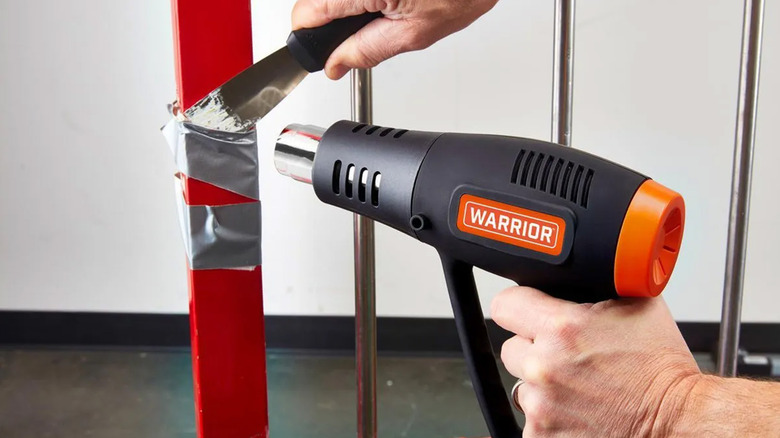
Heat guns are one of those tools that you can use a whole lot, but you may not think about it until you actually own one. These tools are pretty simple. They blast air hot enough to melt stuff, and so your only task with one is to find something you want to melt. They're commonly used to loosen adhesives, strip paint, heat-shrink things like electrical connectors. It's also useful for melting plastic enough to mold it and loosening old bolts and screws. It's also popular in crafting, although you probably don't want maximum temperature for that.
Cordless heat guns do exist from most major brands, but for this application, a corded heat gun is probably the way to go. You get more heat and more features at the same price. For example, this Milwaukee cordless heat gun goes up to 1,000 degrees Fahrenheit and costs $150. This Hercules corded heat gun can go up to 1,200 degrees, has 108 temperature settings, and six fan speeds for $55. We're not saying you should just buy the Hercules one, but it is worth shopping around both corded and cordless models to see the differences in features and price.
A random orbital sander
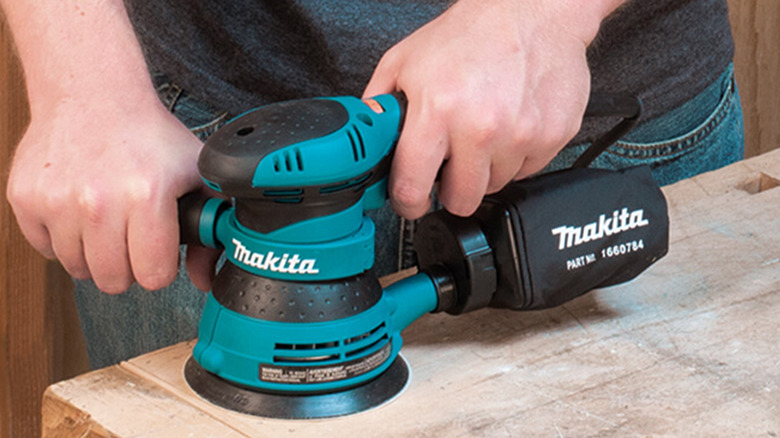
If you've ever built something made out of wood, you probably could've used a random orbital sander. Its primary use is sanding, and unlike belt sanders, it sands in a circle instead of straight, which allows you to move it around and sand larger areas without damaging the wood. The random part refers to the machine using circular motions while spinning the sanding disc, which helps reduce swirl marks from non-random-orbital sanders. In short, if you have to buy one orbital sander, you should probably make it a random orbital sander.
These are available both corded and cordless, and you can choose whichever one you prefer. People have the debated the merits of both, but it basically boils down to whether or not you want more convenience without the cable or longer sessions with a cable since you don't have to swap batteries. If you plan on replacing the bag on cordless sanders with a vacuum hose, that may also impact your decision making.
Orbital sanders are best known for smoothing out wood and preparing it for finish, but you can also use them to strip paint and varnish, do some types of automotive work, and more. It's worth having one around.
An oscillating multi-tool
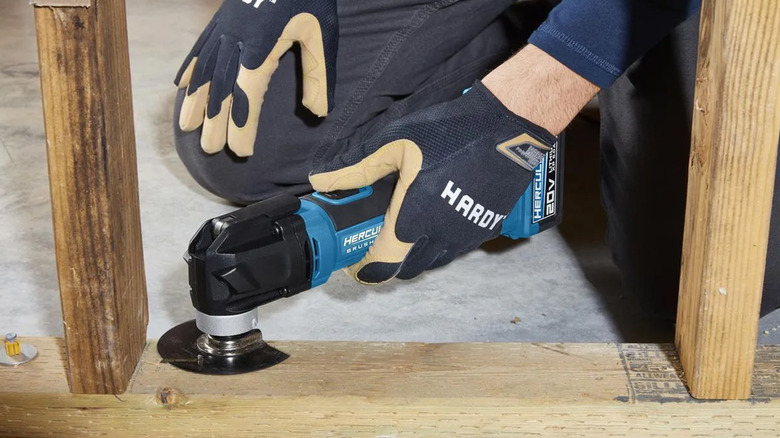
Oscillating multi-tools are a little bit like reciprocating saws in that they're useful for so many things that the biggest limit is your imagination. As the name implies, oscillating multi-tools move the blade back and forth in a fixed arc that is fast enough to cut stuff with. These tend to be smaller tools, so they're best used in scenarios where a reciprocating saw would be too big. Otherwise, the two of them are remarkably similar in the types of work they can do.
These are available in both corded and cordless variants from most major brands. The best ones these days tend to be cordless, but you can pick your poison as you choose. They're also relatively inexpensive, with many going for under $100, which puts it down into power drill territory with most brands. Like reciprocating saws, the type of blade matters as well, so you'll want to make sure you have the right one for the job. Some blades cut wood and nails, and others are made to cut masonry and concrete.
If you buy no other tools on the list besides a drill, the reciprocating saw and oscillating multi-tool cover so many uses that they're next up on the list.
A power washer
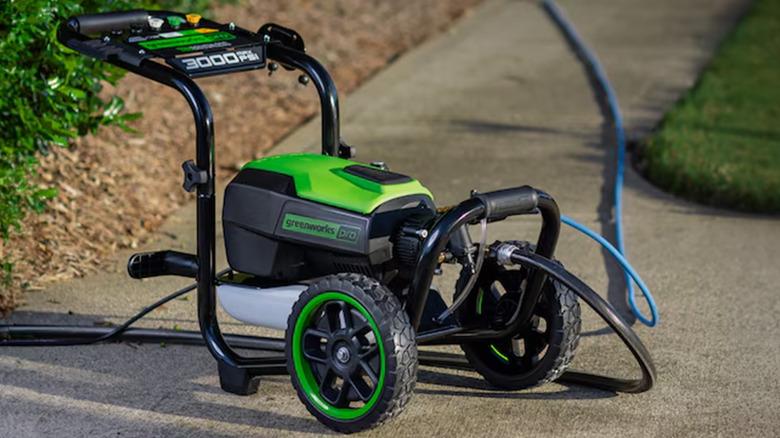
A power washer is another power tool people don't often think about when considering their collection It's true that garden hoses are the superior choice when it comes to distributing water around your property, but when it comes to deep cleaning, a power washer is the way to go. You can clean your driveway and sidewalk and, provided you pay attention to your PSI, you can even clean your house, patio, patio furniture, grill, and other items that you commonly keep outdoors.
Electric cordless power washers do exist, but they pale in comparison to corded electric ones. Most major brands sell them, and the differences appear to be minimal, so you can choose the one you want. There are gas options as well, and they work just as well. The determining factor is the PSI level, which ranges from 300 PSI all the way up to over 4,000 PSI on residential units, and even higher on professional ones. Pick one too weak, and it won't clean anything; pick one too strong, and you'll blow the siding off your house.
Generally speaking, around 3,000 PSI seems to be the sweet spot, and then it's just a matter of choosing the correct power washer nozzle for the job.
A nail gun
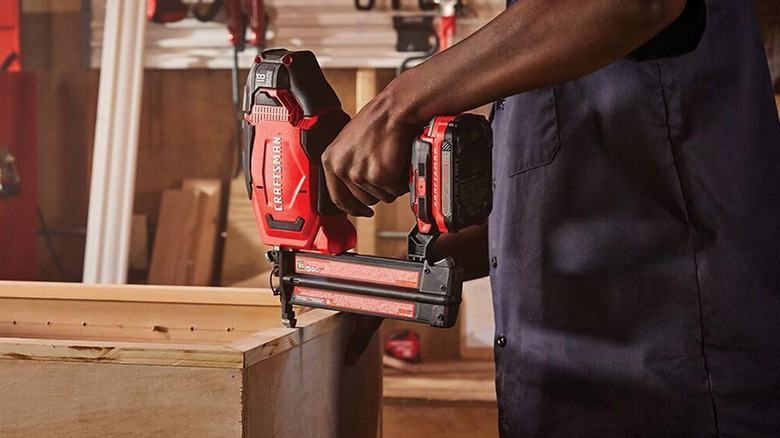
Nail guns are a unique tool. Many of these are still pneumatic, which means they're powered by air pressure instead of electricity, but you can find some corded and cordless versions that use electricity. You can choose whichever one you like most, but for this list, the pneumatic ones probably aren't the best option since you need a compressed air setup capable of running tools. If you go down that rabbit hole, you may as well invest in air tools instead of power tools.
In any case, nail guns are great when you need to use a lot of nails, generally in DIY home improvement projects. It'll save your arm and shoulder a ton of work, and you'll get done with what is normally a fairly tedious task with a hammer much faster. However, people often don't need to nail things that often, so a nice alternative is something like this DeWalt 5-in-1 Multi-Tacker and Nailer. It's a corded tool that shoots nails, staples, and other things, which may get more frequent use than just a nail gun.
You can probably make do with just a hammer, but if you ever do a project that requires a lot of nailing, you'll be glad you have a nail gun.
A jigsaw
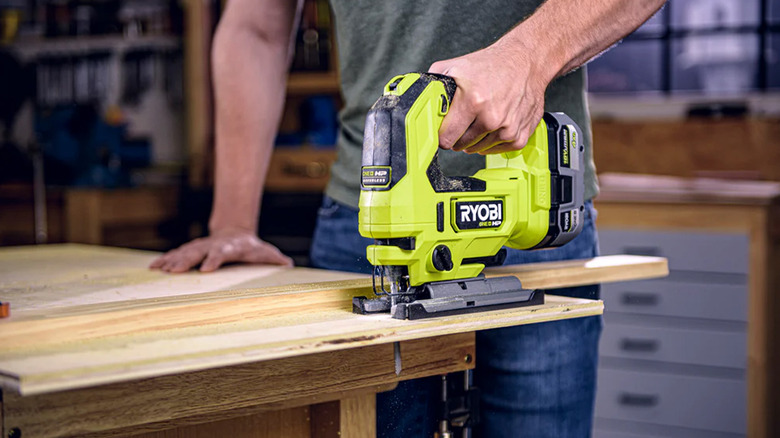
Of all the tools on the list, the jigsaw is arguably the most optional, but if you can find some solid uses for it, it's worth keeping around. Every other cutting tool on this list focuses on cutting in a straight line for the most part. Jigsaws are unique because they can cut in curves, giving you an option you can't easily get with the other saws on the list. It's mostly used to cut things to shape for whatever project you're working on, but you'll need this if you're ever building furniture, cabinets, or trim pieces. It's also useful for drywall, metal, and plastic applications, provided you have the correct blade.
Jigsaws are widely available from the major brands, and most of them are pretty good. They can be a bit on the pricier side for a handheld tool, even when purchased without a battery, but cheaper options do exist depending on which power tool brand you go with. There are corded and cordless variants available, so follow your heart when making that choice.
Just be sure to research what kind of blade you need before your project. Using the wrong blade can break the blade, your material, or both.
How we selected these power tools
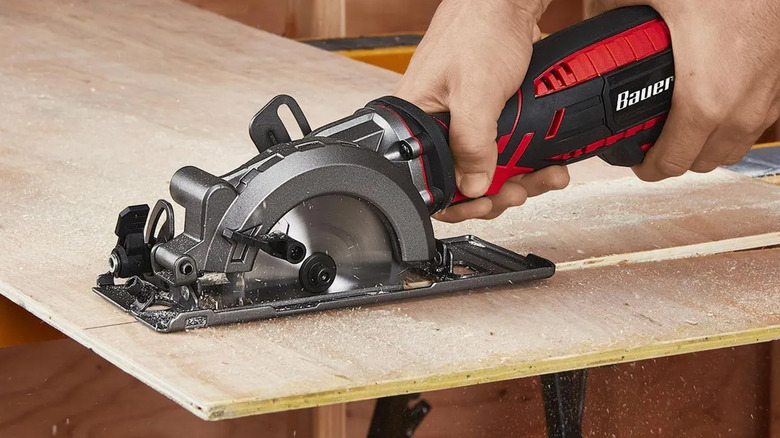
The idea behind this article is to give a beginner some perspective about what tools they can buy and which ones they should skip or leave for later. The tools above cover the most possible bases across most of the things you'll run into when DIY repairing or improving a home, with the exception of plumbing, which a beginner shouldn't do anyway. Some of the tools above are quite obvious, like the drill and the reciprocating saw, while others are things people may not consider, like a shop vac or a power washer.
The point of the list is specifically which tools, and not necessarily which brand. The reason is because if you buy cordless tools, you basically have to pick your ecosystem with your first purchase, and so if we recommended a DeWalt cordless drill, we would've had to recommend all DeWalt tools, otherwise someone may have ended up with 12 different batteries for 12 different tools, which is not optimal. If you want to see which brands make the best tools, we have a separate list for that.
This list is also based on my near decade of experience as a homeowner and DIY enthusiast, and the tools on this list are the ones I've used most often, whether corded or cordless.