

10 Of The Best-Looking Japanese Cars Ever Made
Japan is the third largest producer of cars after China and the U.S. The world's biggest automaker, Toyota Motor Corporation, also comes from Japan. Crucially, Japanese automakers have built a reputation for building cars with unique selling points. Go back to post-war Japan, though, and things were wildly different. Copycat cars that borrowed design and even mechanical parts from American models were the norm. What about the reliability and quality you'd associate with today's Japanese cars? Non-existent. To put it bluntly — they were bland in almost every way.
Fast forward to today, and JDM culture gave us some mythical four-wheel machines. Engineered to perfection, fast, and often equipped with world-beating technologies, these JDM legends have put a stamp on car culture — without copycat designs. Not only did Japanese automakers stop replicating their rivals, but they also pioneered new design signatures that stood the test of time. In this piece, we'll celebrate these historically good designs and tell you more about their fascinating history.
Here are 10 of the best-looking Japanese cars ever made!
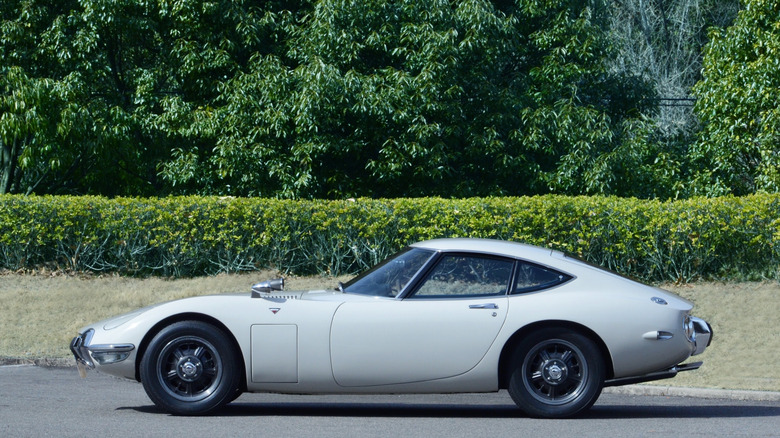
Toyota 2000GT (1965 to 1967)
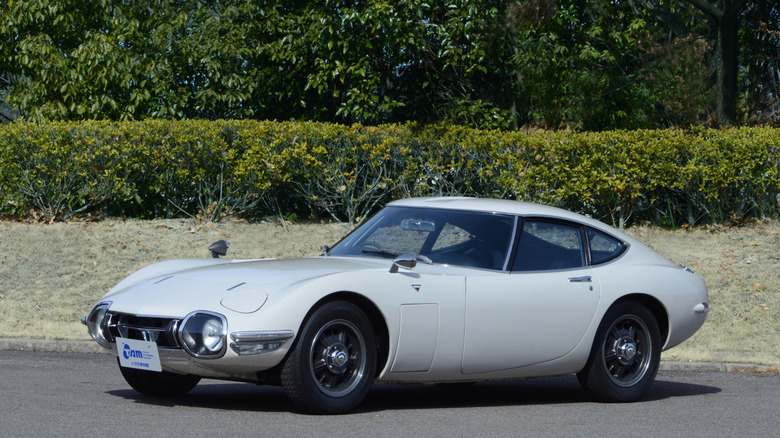
At the beginning of the 1960s, Toyota was far from the unstoppable force it is today. It had just entered the North American market in 1957 as Toyopet, but its offering, the Crown, wasn't particularly attractive. The world-beating Corolla was still in development, while the Corona had shown some positive sales figures when it launched in 1965. Still, Toyota needed a halo car to truly draw attention to its brand — and exhibit its engineering prowess. In 1965, the company showcased the 2000GT — Japan's first-ever supercar.
Jointly developed with Yamaha, the 2000GT wowed everyone at the 1965 Tokyo Motor Show. The svelte GT was equipped with a 2.0-liter DOHC inline-6 sourced from Yamaha, good for 148 horsepower — an outstanding figure for such a small engine of the era. It also had double wishbones on both axels for better handling and rack-and-pinion steering for more precise inputs. The 2000GT was so good that it set three world endurance speed records in the 1,500 to 2,000cc category.
The Toyota 2000GT was even cooler than the sum of its parts – low slung, streamlined but with emphasized wheel arches, and with perfect proportions, the 2000GT is a letter-perfect GT car. Still, it also had unique features, like pop-up headlights and wraparound windows, which added to its character. Toyota also produced a one-off convertible for the "You Only Live Twice" James Bond movie, which looks equally stunning. Overall, just 337 2000GTs were sold, making it one of the rarest Japanese cars ever.
Mazda Cosmo 110S (1967 to 1972)
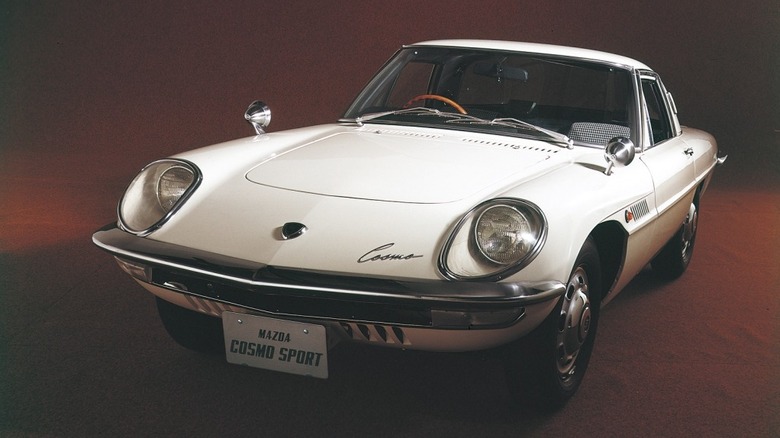
Toyota wasn't the only Japanese company trying its hand at a high-class sports car in the 1960s. Mazda had already shown the gorgeous Cosmo 110S at the 1963 Tokyo Motor Show, drawing a lot of attention to its brand. Unlike Toyota, Mazda went in a different direction. Mazda started developing the iconic Wankel rotary engine in 1961, and the Cosmo 110S was the car that would demonstrate its performance benefits.
Mazda carefully engineered every aspect of the engine for six years to ensure that the rotary was ready for primetime. Finally, after developing seals made from high-strength carbon infused with aluminum, which proved reliable in high-speed endurance tests, Mazda launched the production version of the Cosmo 110S in 1967.
Consisting of two 491cc rotors, the 1.0-liter engine was good for 110 horsepower and 96 lb-ft of torque and a high 7,000-rpm redline. Thanks to the car's low weight of 2,100 pounds, the tiny rotary was enough for a 0-60 sprint of 10 seconds and a top speed of 115 mph. Pretty good for a 1967 sports car, but more importantly, the Cosmo 110S started the lineage of Mazda's unique rotary sports cars.
It also showed Mazda could produce very attractive machines. The low-slung body with clean, flowing lines exudes charm and finesse like the Italian sports cars of the era. Still, the jet-age details, similar to American cars, give the 110S quite a unique, retro-futuristic design signature. Pure visual poetry — from any angle.
Mazda RX-7 FD (1992 to 2002)
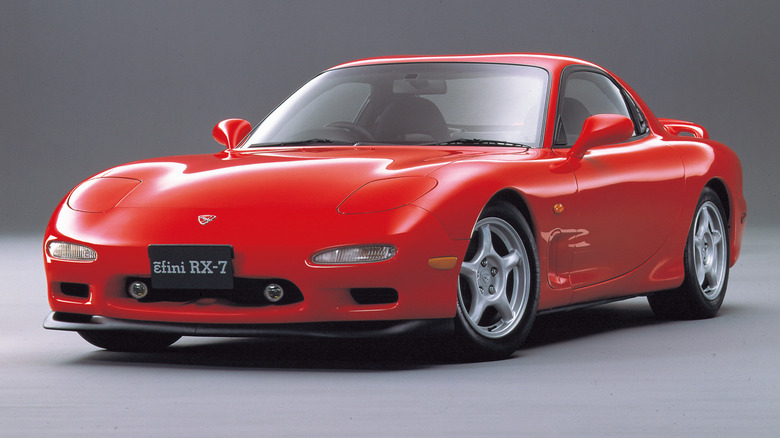
The Cosmo 110S was a dream start for Mazda's rotary journey, but the FD-generation RX-7 is undoubtedly the highest point. Cut for the same cloth as its predecessor — a svelte, low-slung body powered by an advanced Wankel engine — the final RX-7 became famous in automotive circles.
Looking at RX-7's stunning shape, it's easy to see why. Easily one of the best-looking Japanese cars ever made, it combines perfect sports car proportions with organic "coke-bottle" surfaces. The long sloping nose, pop-up headlights, short rear deck with unique lighting, cabin that sits almost in the middle, and expertly sculpted body, give it that perfect GT look. It looks fast, but in a graceful kind of way.
However, the Mazda RX-7 isn't one of the most iconic JDM cars just because of its looks. The FD is the culmination of the RX-7 nameplate, with the previous two generations also revered in the JDM community. Notably, FD's twin-turbo, twin-rotor 1.3-liter rotary is the stuff of legends, producing up to 252 horsepower in the JDM version. Thanks to the 2,800-pound curb weight, that's enough for a 0-60 spring of 5.2 seconds and a top speed of 156 mph. Crucially, Mazda positioned the 13B near the middle in a "front-mid" engine configuration for a perfect 50-50 weight distribution, resulting in balanced, dialed-in handling.
Datsun 240Z/Nissan Fairlady Z (1970 to 1973)
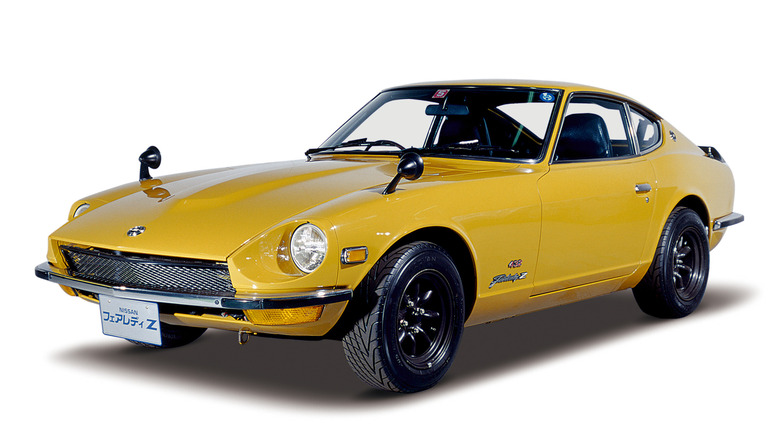
No JDM sports car story is complete without the Z in it. Nissan's lineage of front-engine, rear-wheel-drive sports cars is still alive, with the latest Nissan Z successfully carrying the heritage burden in terms of performance and design. Still, it can't hold a candle to the first Z sports car — the Datsun 240Z, known in Japan as the Nissan Fairlady Z.
When it was first shown in 1969 in Japan, the Fairlady Z also had big shoes to fill. The 2000GT and Cosmo 110S already collected accolades, so Nissan needed something extra to stand out from the crowd. That extra is a more purposeful, sharp-nosed design, which gave the 240Z a meaner look than its Japanese contemporaries. Even so, Nissan made sure it had all the hallmarks of a great sports car. The long hood, stretched wheelbase, fastback rear end, rearward cabin, and low roof give the 240Z GT vibe, although at first it was only a two-seater.
The first Z was also an excellent performer for its era. It had a 2.4-liter inline-six with two carburetors, good for 151 horsepower. That sure doesn't sound like much, but it was enough to bring the 2,330-pound coupe to 60 in 7.8 seconds. Power went to the rear wheels via a four-speed manual, later a five-speed, manual. Crucially, the driving dynamics were also spot on, with the 240Z's negative lift allowing stability at higher speeds.
Nissan Silvia Coupe S13 (1988 to 1993)
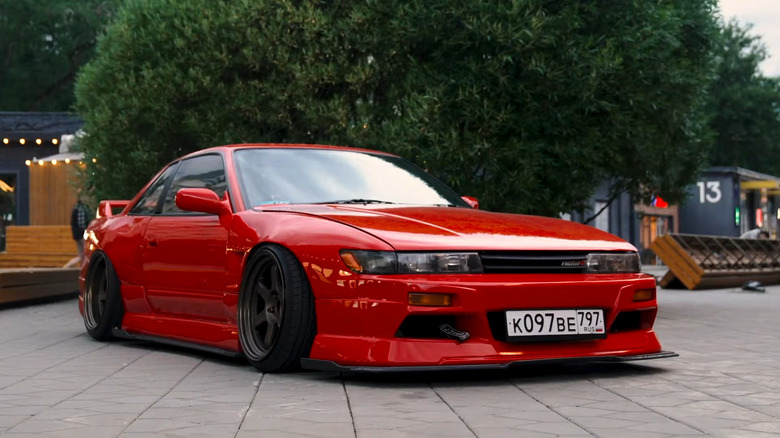
The Silvia holds a special place in JDM culture. A cheap, lightweight coupe with a balanced RWD chassis, it became one of the most popular drift cars ever made. Pair it with the SR20DET engine, and the Silvia could also outrun most sports cars of its era. In the S13 generation it produced 205 horsepower, with the most potent S15 Silvia Spec-R burning those rear wheels with 247 horsepower!
When it comes to design, though, it's the S13 Coupe sold only in Japan that truly captures the unique appearance of JDM cars. The liftback models sold in Japan and worldwide do look good, but they have a more traditional wedge shape with pop-up headlights that doesn't stand out.
Meanwhile, the S13 Silvia Coupe is one of the sleekest affordable sports cars ever. The front headlights — thin and sleek, with "SILVIA" typeface between them. The side profile? Low, long, and slab-like. The S13's rear end is also sleek, minimalistic, and quite long, giving it a more dynamic look. The proportions are spot-on, too — the driver appears to be sitting right in the middle. Overall, it's a simple yet elegant form — the total opposite of the GR Supra.
Honda S2000 (1999 to 2009)
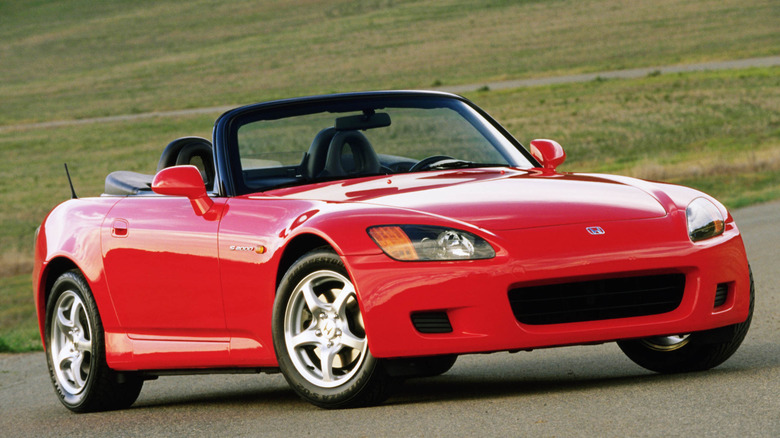
Talking about simple, yet elegant forms, the S2000 is easily one of Japan's most successful designs. Honda's approach when designing this high-revving masterpiece was to let the basics do the talking. The long, sharp hood. Stretched wheelbase. Low window line that slowly tapers up as it approaches the dynamic rear end. The S2000 is a classically beautiful, low-slung roadster that still draws attention with its svelte body, particularly in topless form.
But the Honda S2000 has many more things to offer. Its crown jewel is the high-revving, four-cylinder, VTEC masterpiece with a 9,000-rpm redline; initially, Honda used the special 2.0-liter F20C motor, good for 240 horsepower — that's 120 horsepower per liter, without forced induction! Still, it was low on torque (153 lb-ft), so in the facelifted 2004 S2000, Honda introduced a larger 2.2-liter unit in America, which bumped the torque output to 163 lb-ft, but lowered the redline to 8,000 rpm.
Regardless of the engine, the S2000 is one of the best driver's cars ever made. Thanks to the balanced RWD chassis, it dances through the corners and turns engagement to 11 with one of the best stick shifts in automotive history. It's a driver's car in the true sense of the word, one that demands skills, but also rewards the driver.
Mitsubishi Lancer Evolution X (2008 to 2016)
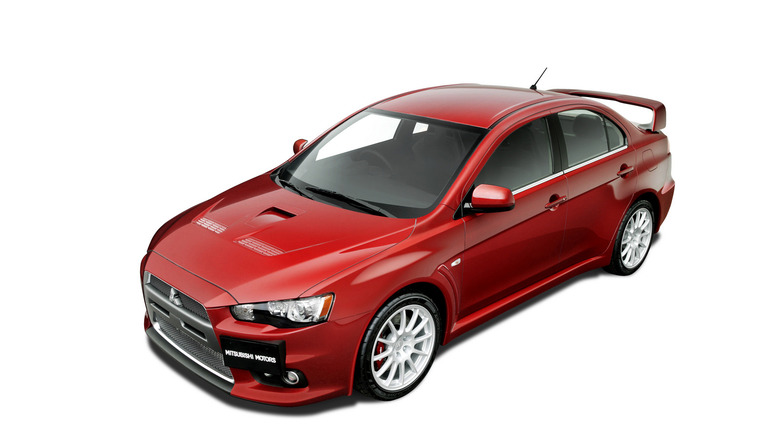
Mitsubishi sadly discontinued the legendary Lancer Evolution nameplate in 2016, denying younger generations dreaming of a crazy-fast rally homologation special. In fact, not many Lancer Evolution Xs can be seen on roads today. Yes, other homologation specials also exist, like the GR Yaris, but none can come close to the ferociousness of the Lancer Evolution.
The last iteration, for instance, came with the new 2.0-liter turbocharged 4B11T engine, good for 295 horsepower and 300 lb-ft of torque. Still, Mitsubishi didn't stop there and offered a highly tuned Evo X FQ-440 MR in the UK with an astonishing 440 horsepower and 412 lb-ft of torque. No other four-cylinder sports car, even today, can touch those numbers. Oh, and thanks to its advanced four-wheel-drive system, the Evo X never had issues putting all that power to good use in the corners.
It looks the part, too. Japanese homologation specials have been a hit or miss over the years, but the Lancer Evo X is quite an attractive car. Yes, it has those boy-racer, over-the-top vibes, but that's exactly how rally-inspired cars should look. It's aggressive up front, with a wide gaping grille and hood scoop demanding attention, and a huge rear wing that betrays its rally roots.
Toyota Land Cruiser FJ40 (1960 to 2001)
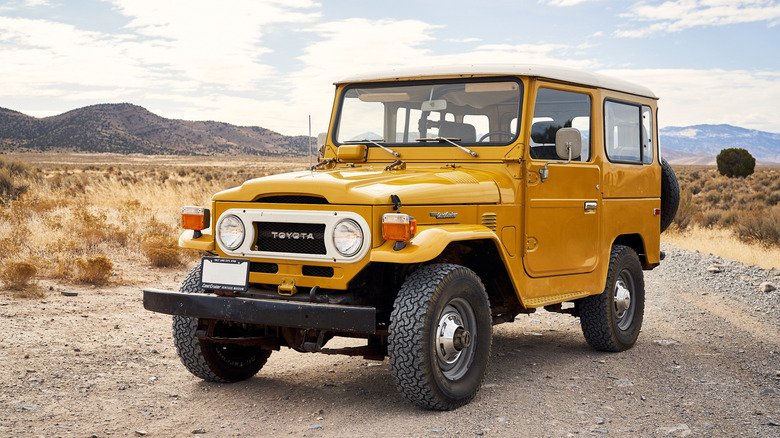
With its boxy, retro looks, the latest Land Cruiser is a very attractive off-road SUV. Still, we prefer the utilitarian looks of Toyota's original off-roader, the FJ40. It follows the same recipe as Jeeps and Land Rovers of its era, but it has its unique signature. Most notably, the FJ40 remains recognizable for its white grille frame, which gives it an almost whimsical vibe — particularly when paired with a white roof. Furthermore, the sculpted hood has a unique air inlet, which looks like a neat extension to the grille.
Still, the design is only a part of FJ40's almost mythical image. The legendary reliability of the Type F engines and durable ladder chassis make it a unicorn among old off-roaders, and its off-road credentials are also tough to match. The FJ40 had 4WD with low-range/high-range transfer case since its inception, paired with large approach/departure angles for overcoming big obstacles. Other fascinating hardware features also differentiated the FJ40 from its contemporaries.
Honda/Acura NSX (1990 to 2005)
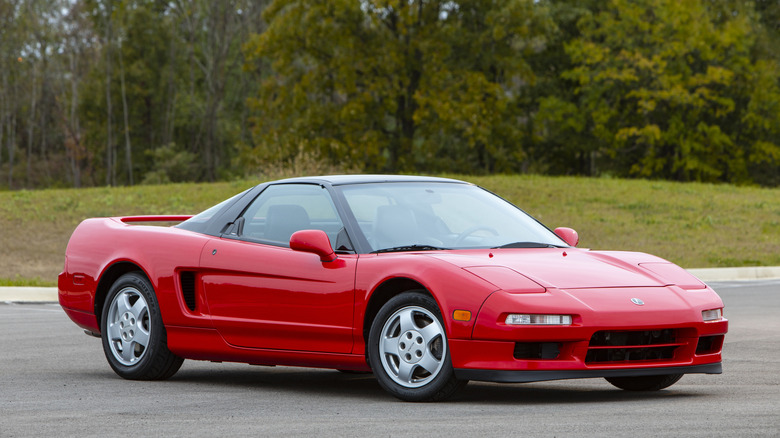
One cannot talk about Japanese supercars without mentioning the Honda (Acura in North America) NSX. Developed during Honda's highly successful pair up with McLaren for the legendary MP4/4 racecar, the NSX was Honda's way of telling the world what it's capable of in road car form.
A lightweight, mid-engine, rear-wheel-drive masterpiece, the original NSX is the simplest automotive joy, offering a driving experience that few other cars can match. Incredibly balanced, light on its feet, and equipped with a precise manual transmission, the NSX is one of the most engaging supercars ever made. It's quick, too. The 3.0-liter V6 with an aluminum block and VTEC produces 270 horsepower and 210 lb-ft of torque, enough for a 0-60 sprint of just 5.2 seconds. The engine also has an 8,000-rpm redline and sounds glorious when reaching that figure. In 1997, Honda even upped the ante with a 3.2-liter unit, which was good for 290 horsepower, bringing the acceleration figure in the sub-five second range.
Of course, being Honda's first supercar, the NSX also looks the part. In true Honda fashion, the NSX has a simple, elegant form that stood the test of time. Still, the spot-on proportions and F-16 fighter-jet-inspired design give it dynamism and exclusivity unseen in any other Honda model.
Lexus LFA (2010 to 2012)
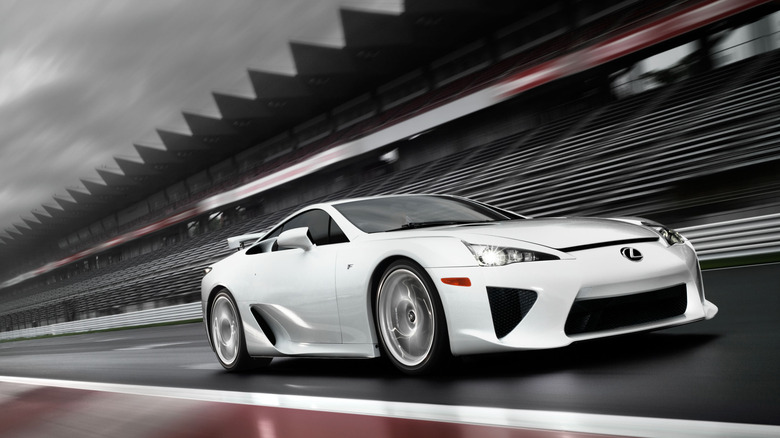
Perhaps the best JDM supercar ever built, the LFA brings the true essence of Japanese culture. It has such a unique appearance that you must use non-automotive terms to describe it. LFA's front end is a perfect example of that. The sharply angled, oversized headlights with inner pupils (projector lamps) are reminiscent of the eyes drawn in anime movies and look menacing in a completely unique way.
The headlights connect to large, angular body arches, slab-sided body panels, and a stunning rear end with radiator openings. Still, the roof and air ducts have a more organic, fluid look, turning the LFA into supercar exotica. It all works very well together, thanks to the perfect proportions with a stretched-out wheelbase.
You probably know the deal by now — Lexus LFA's special V10 engine made it the legend it is today. The highly advanced 4.8-liter unit produces up to 563 horsepower in the Nürburgring Edition, enough for a 0-62 mph (0-100 km/h) sprint of 3.7 seconds and a top speed of 201 mph. It also revs to 9,000 rpm and needs only 0.6 seconds to reach that figure from idle. The best part is that the V10 sits in a front-mid-engine position in an advanced carbon fiber monocoque.