

These Are The Subaru CVT Transmission Years To Avoid
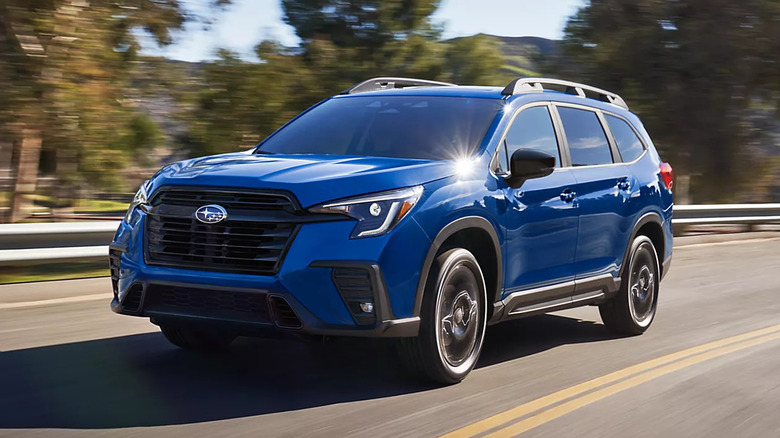
Subaru is one of the major car brands in the U.S. that still offers CVTs across most of its lineup. By 2014, Subaru had made the Lineartronic CVT the default automatic transmission across its U.S. lineup, with the sole exception of the BRZ, making it as much of a defining part of the brand's modern lineup as the brand's boxer engines and all-wheel drive.
Most of the conventional Lineartronic CVTs relevant here belong to two major families. The smaller TR580 handles Subaru's lower-output applications, while the heavier-duty TR690 has traditionally been used where more torque capacity is required. Both have evolved considerably over the years, and neither should be written off altogether. That distinction matters for a company that already endured a head gasket problem, which became a running joke, even though the engines responsible for that reputation disappeared years ago. The brand's CVTs deserve similar nuance, and simply seeing Lineartronic on a used Subaru listing isn't reason enough to walk away.
There are already several reasons to avoid CVT transmissions altogether, and Subaru's long-running use of them means there is plenty of history to sort through. Some versions of the TR580 and TR690 proved far more troublesome than others, with problems serious enough to trigger recalls, warranty extensions, and repeated technical service bulletins. Let's take a look at which Subaru models are worth being more careful with on the used market.
2019--2021 TR690 CVT Chain Failure
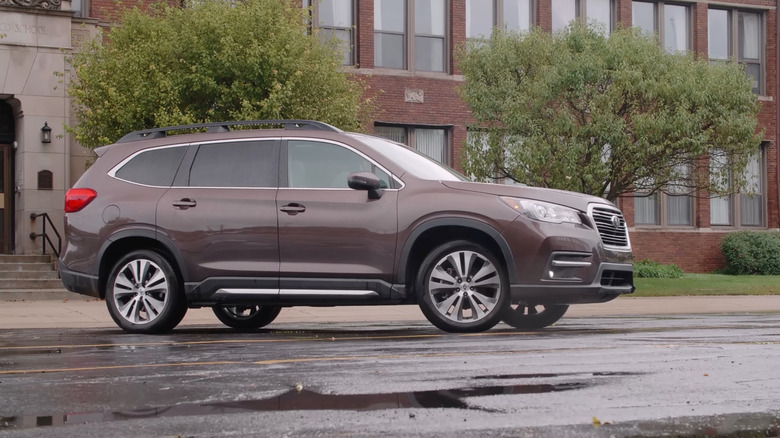
The 2019 Ascent was the brand's largest vehicle yet, and paired its new 2.4-liter turbo engine with a high-torque Lineartronic CVT from the TR690 family. This updated TR690 then became the transmission behind the turbocharged Legacy and Outback XT from 2020. The problem with these early applications was drive-chain slippage, where the chain could slip badly enough to damage the transmission or eventually break altogether.
The problem usually started with hesitation or a sudden rise in engine speed without a matching increase in vehicle speed, especially under hard acceleration or while climbing a hill. As the problem worsened, the CVT could begin shuddering, lurching, or making abnormal whining and grinding noises. Some affected vehicles lit up the dashboard with warning lights, while others gave no warning lights at all.
More serious failures caused a sudden loss of acceleration at highway speeds, leaving drivers struggling to maintain speed or safely merge into traffic. In the worst cases, a broken drive chain could leave the vehicle without propulsion while moving, significantly increasing the risk of a crash. Once a TR690 was that far gone, it usually required full replacement, with costs ranging from roughly $6,700 to $13,000.
Subaru eventually issued recall WRK-21, covering 198,255 2019-2020 Ascents, along with 2020 turbo Legacy and Outback models, which was one of the biggest transmission recalls in recent history. It superseded the earlier WUV-07 recall for 2019 Ascents, which also targeted chain slippage, so even previously repaired vehicles had to return. About seven months later, recall WRK-22 added another 182 2020-2021 turbo Legacy and Outback vehicles to the same chain-slip campaign.
2010--2012 Subaru TR690/TR580 CVT Torque Converter Failure
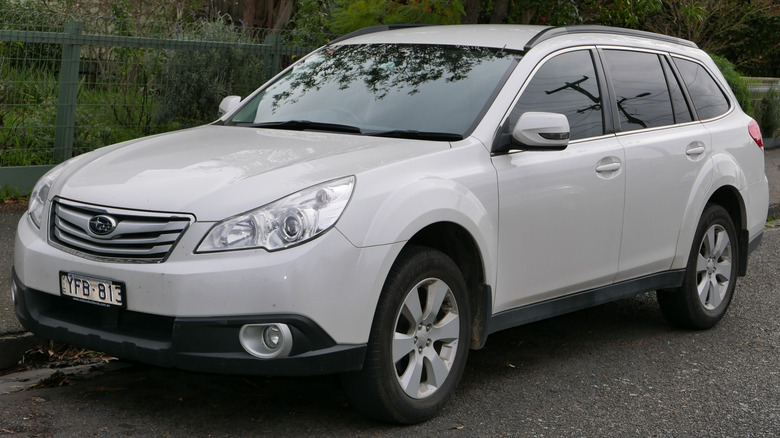
Before moving to the TR580 CVT for 2012, Subaru introduced the redesigned Legacy and fourth-generation Outback for 2010 with what it called the world's first longitudinally mounted, chain-driven CVT in a production AWD vehicle, used in the 2.5-liter models from 2010-2011. Yet one of its most troubling problems had nothing to do with the drive chain. Instead, both transmissions suffered from a torque-converter lock-up malfunction that could stall the engine when coming to a stop, which became a common problem with the Outback.
The failure usually made itself known under braking. Engine speed could plunge as the car approached a light or stop sign, followed by a harsh shudder before the engine stalled. Slow-moving traffic and harder stops made the behavior especially troublesome, since the car could die unexpectedly in an intersection or turn lane, leaving drivers open to being rear-ended.
Some affected vehicles restarted immediately after shifting into Park or Neutral. Losing engine power could also make steering considerably heavier, leaving drivers struggling to control the vehicle and increasing the risk of a crash. Fortunately, repairs typically involved replacing the torque converter for anywhere from $1,200 to $2,500, although severe cases requiring an entire CVT replacement drew quotes exceeding $12,000.
Subaru addressed the problem through TSB 16-90-13R, and a revised torque converter entered production in October 2013. Separately, Subaru later issued a CVT warranty extension for 2010–2015 Legacy and Outback models (among others), stretching coverage to 10 years or 100,000 miles, although the automaker claimed the broader program was not tied to any specific defect.
2013--2015 Subaru TR580 CVT Valve Body Failure
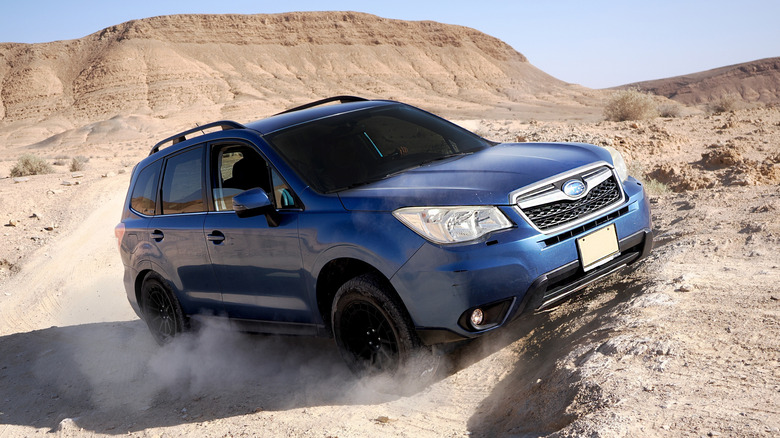
The TR580 was still a relatively new addition to Subaru's lineup when it reached the 2.5-liter Outback for 2013 and the redesigned Forester for 2014, which was also the first Forester generation to adopt a CVT. There aren't a lot of used subaru cars you should avoid at all costs, but the 2014 Subaru Forester and Outback, and the 2013 Impreza come to mind as one of those cars, and their TR580 CVT transmission record is part of the reason, particularly the solenoids inside.
A failing valve-body solenoid could disrupt pressure control inside the TR580, causing shuddering as the car slowed down and again when pulling away. Affected vehicles could buck or lurch through low-speed traffic or surge unexpectedly from a standstill, creating a real risk of the vehicle lunging into traffic, another car, or a pedestrian.
Under heavier acceleration, the CVT could also begin slipping, sending engine speed climbing with little increase in road speed and sometimes producing whining or humming noises. Valve-body replacement alone could run roughly $2,000, but it wasn't a guaranteed fix. In cases where the CVTs were too far gone, replacing the entire transmission was really the only fix, costing anywhere from $8,000 to $10,000.
Unfortunately, Subaru never issued a recall for the TR580 valve-body problem. Instead, it extended CVT coverage on the affected model years to 10 years or 100,000 miles under a broader 2017 warranty program. Then in 2025, TSB 16-156-25R introduced a redesigned control valve body for a much wider range of TR580-equipped Subarus built from 2012 through 2023.
2015-2017 Subaru TR580 CVT Variator Damage
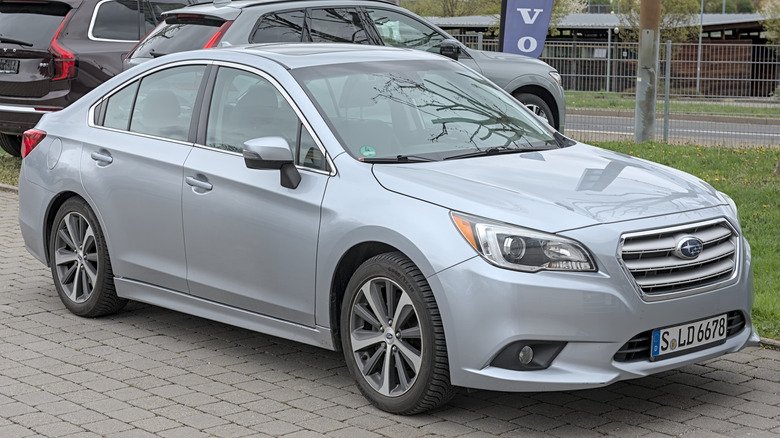
The Legacy and Outback were both redesigned for 2015, when Subaru also made the Lineartronic CVT standard across their U.S. lineups. The 2.5-liter models used the TR580, and in some 2015-2017 cars, trouble only surfaced once the transmission was fully warmed up. What makes this TR580 problem unusual is that it could seem harmless at first, even though the consequences could be much more serious.
At a traffic light, the car could be completely stopped with the brake applied, then suddenly lurch forward several inches or deliver a jolt strong enough to feel like it had been rear-ended. It could happen on flat ground or a slope and repeat several times within days, creating an obvious danger with another car or even a person immediately ahead. Once variator damage reached that point, the entire CVT had to be replaced rather than repaired internally, with replacement quotes exceeding $7,000 in some cases.
Fortunately, Subaru addressed the condition through TSB 16-104-17R in 2017. It also extended CVT coverage to 10 years or 100,000 miles for 2015 Legacy and Outback models in 2017, followed by 2016-2017 models in 2018, allowing qualifying CVT repairs to be completed at no cost to the owner, although most of these cars were already well within their factory powertrain warranties.
2019--2020 Subaru TR690 CVT Transfer Clutch Failure
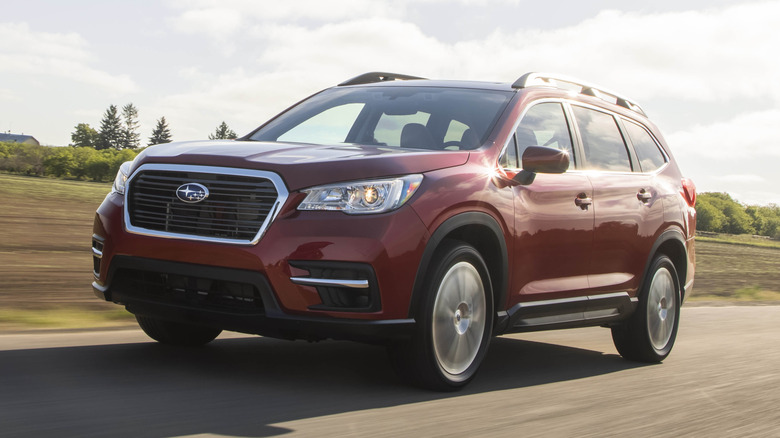
The 2019–2020 Subaru Ascent appears twice on this list, but for two different transmission problems. While the earlier case involved potentially catastrophic drive-chain slippage, this one concerns the multi-plate transfer (MPT) clutch — a component inside the TR690 transmission that helps distribute power through Subaru's symmetrical AWD system.
Under normal circumstances, the transfer clutch adjusts how much power reaches the rear wheels as traction demands change. When it began acting up, the problem was most noticeable at low speeds, especially when accelerating through a left or right turn. Parking-lot turns and pulling away from a stop were common triggers, and the problem could be intermittent enough that dealers struggled to reproduce it. In confirmed cases, replacing the MPT clutch was the eventual fix.
Subaru first addressed the problem in 2019 with TSB 16-120-19. A second bulletin followed in 2022, with TSB 16-136-22R directing dealers to replace the MPT clutch when the problem was confirmed. Subaru then issued a dedicated 2024 warranty extension, covering the MPT clutch on qualifying 2019–2020 Ascents for eight years or 100,000 miles.
Methodology
Since Subaru's CVTs have picked up a bad reputation over the years, finding complaints wasn't difficult. Checking whether those complaints pointed to a repeatable problem that Subaru itself eventually acknowledged took precedence over simply counting complaints. For every issue on this list, the company later issued some form of response, whether that was a recall, technical service bulletin, or extended warranty. Recalls were the easiest cases to judge because the repair is required and performed free of charge, while service bulletins and warranty extensions needed a closer look at the affected models, symptoms, and repair terms.
We also treated each model and year separately rather than assuming every TR580 or TR690 was equally troublesome. Owner complaints from CarComplaints helped show how the problems behaved in everyday driving, while Subaru and NHTSA documents were used to confirm the failure and any official action taken.