

This 2027 Genesis GV70 Prestige Graphite Flips The Script On Luxury Crossovers
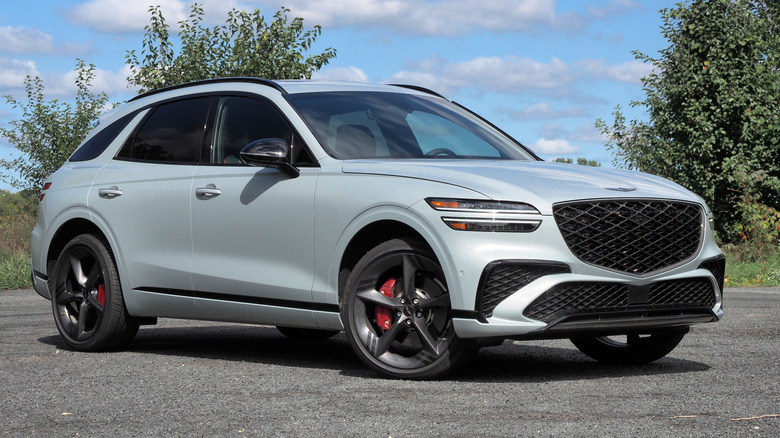
It's tempting, if you're going to judge Genesis' rapid ascendency to genuine contender in the luxury car space, to start at its most lavish models. Vast, cushy sedans like the G90, for instance, or maybe the upcoming GV90, a behemoth SUV with extra-fancy doors: examples of Hyundai's upscale aspirations where price plays second fiddle to product. Only perhaps it's misleading to base competitiveness on throw-it-all-at-the-wall examples.
After all, part of the success of Audi, BMW, and Mercedes-Benz is not only down to their respective flagships, but how they distill those halos to more affordable fare. That's certainly the playground for the 2027 Genesis GV70, very nearly the automaker's most affordable model — only the G70 sedan and GV60 offer cheaper trims for the 2027 model year — and its offering in the fiercely-contested compact luxury crossover segment.
 Chris Davies/SlashGear
A low starting price — under $50k, albeit before the destination fee — is only part of the story, mind. As with those German rivals, Genesis' pricing hurtles northward as you add on options and, in the case of this particular GV70 3.5T, the more appealing V6 engine. Which begs the question: at which point does a budget buy turn into an expensive imitation?
Tuned for comfort, not canyons
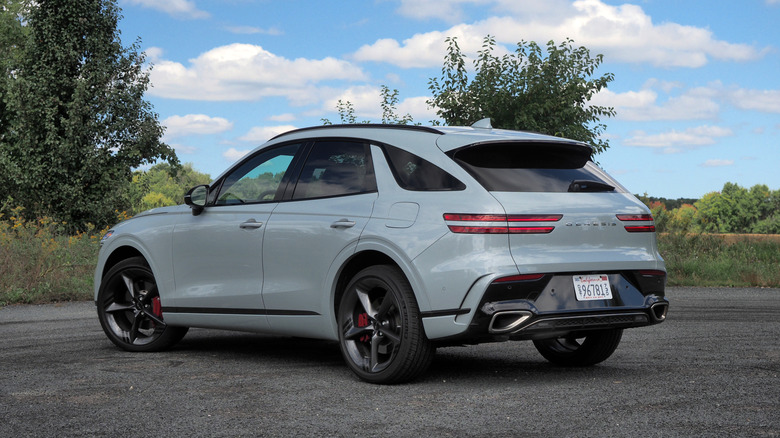
Make no mistake, Genesis' 3.5-liter twin-turbo V6 is a lovely engine. Its 375 horsepower and 391 lb-ft of torque — routed through an 8-speed automatic to all four wheels — are both plentiful and graciously delivered. Even in the default Comfort mode there's no hesitation when you hit the gas pedal, the GV70 surging forward with a refined eagerness.
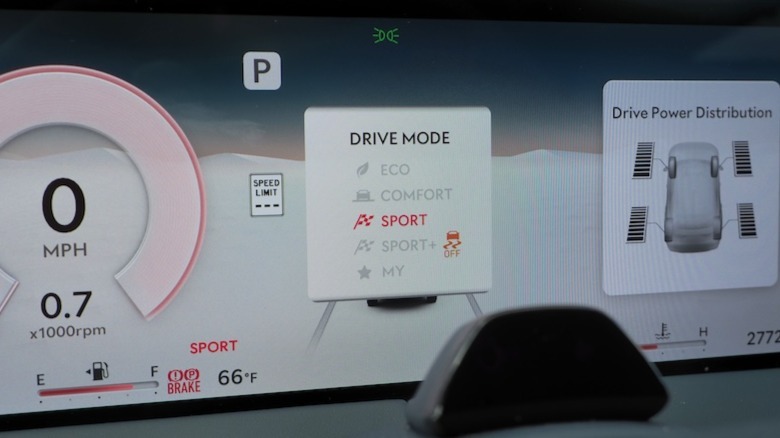
In Sport mode — or Sport+ mode, which turns off the traction control — the soundtrack gets a little louder and the GV70 holds lower gears for longer. Splash out on the V6, versus the base SUV's 2.5-liter turbo-four, and there's electronically controlled suspension the firmness of which can adjust according to drive mode. It also promises to scan the road ahead to preemptively adjust depending on the surface conditions, though (since you can't selectively disable that) it's hard to know how much of a difference it actually makes.
 Chris Davies/SlashGear
Nonetheless, the GV70 rides well. It's certainly firm in the sportier modes, but never loses track of its luxury ambitions. The steering is weighted on the markedly heavier side, combined with chunky wheel that seems to emphasize that choice. On backroads, it feels more like an enthusiastic wagon than an SUV (which I mean as a compliment).
A compact crossover with big car thirst
The downside is fuel economy. Genesis' smaller engine is rated for 20 mpg in the city, 26 mpg on the highway, and 22 mpg combined, according to the EPA's tests. Opt for the bigger V6, and those numbers drop to 18 mpg city, 25 mpg highway, and 21 mpg combined. My own, mixed driving landed at just shy of 20 mpg.
Given the current state of gas prices — and that both engines require premium fuel, naturally — it means filling up the GV70's 17.4 gallon tank is not cheap, and nor does it last you all that long. Genesis does have an EV version of the SUV, the imaginatively named 2027 Electrified GV70, rated for up to 250 miles on a charge. That's actually down compared to the 263 miles the 2026 version of the EV was rated for.
 Chris Davies/SlashGear
Absent is a middle-ground plug-in hybrid, something which could still give you that ICE gurgle (and liberation from EV range anxiety) but also provide a chunk of electric-only driving too. Not to mention the well-established performance advantages of electric motors, particularly for boosting zippiness at lower speeds. Genesis is working on extended-range PHEVs, we now know, but they won't be here for a while yet.
Genuinely luxurious inside
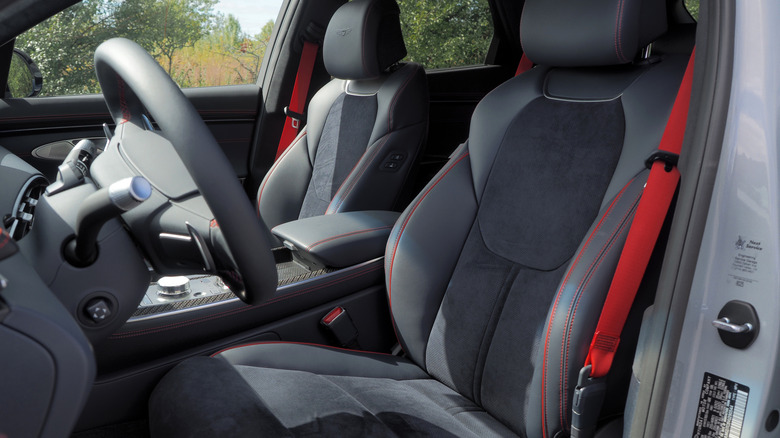
Genesis' more playful design continues inside, though not at the expense of feeling high quality. The Nappa leather seats in this 3.5T Prestige Graphite trim wouldn't look out of place in a sports sedan, chunky and well-bolstered, with a grippy center panel of suede-like material and bold red contrast stitching. That matches the bright seatbelts and dashboard stitching, and contrasts nicely with the glossy carbon fiber panels.
 Chris Davies/SlashGear
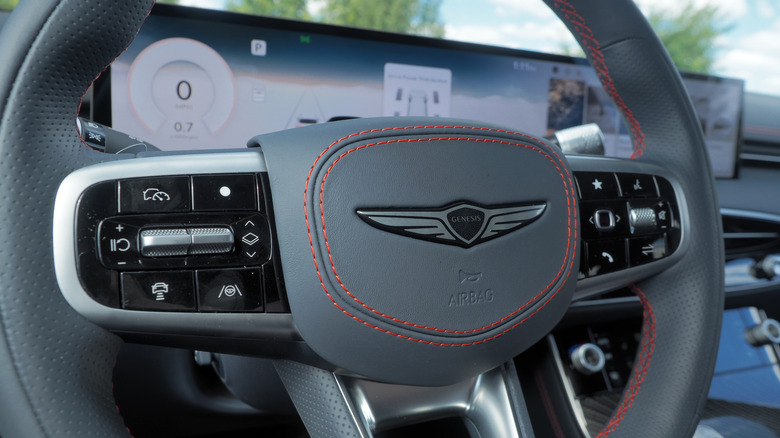
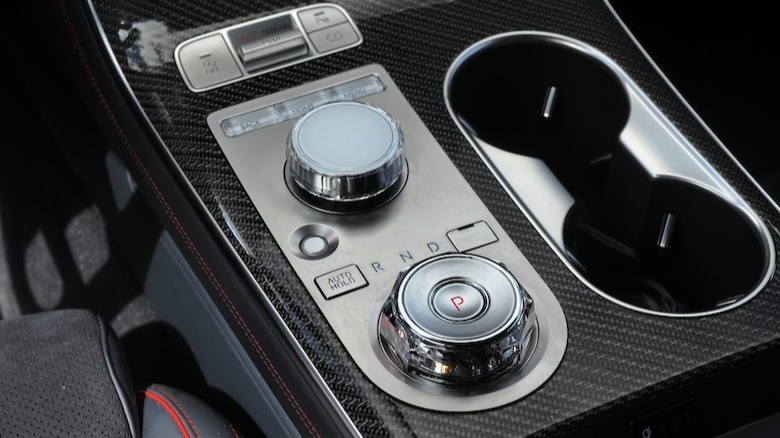
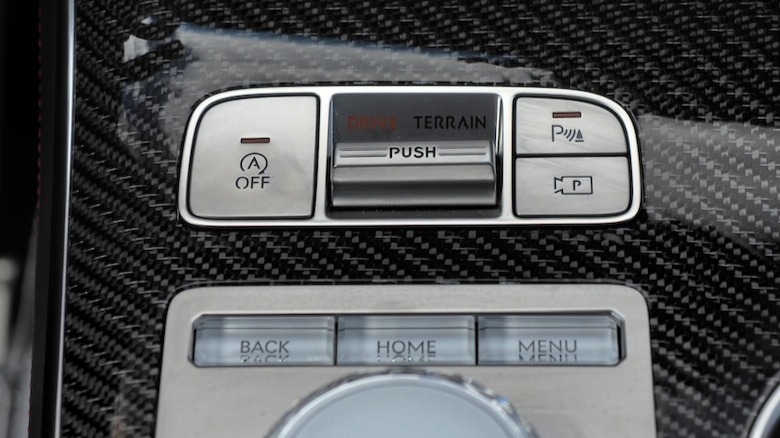
Is it going to be to everyone's tastes? Unlikely, but combined with the GV70's chunky, knurled knobs for the transmission and infotainment navigation, plus the thick-rimmed steering wheel and nicely damped stalks behind it, you can't accuse Genesis of shortchanging you on aesthetics. True, there are a greater number of silver plastic buttons here than silver metal as in more expensive models from the automaker, but that's an inevitable compromise.
 Chris Davies/SlashGear
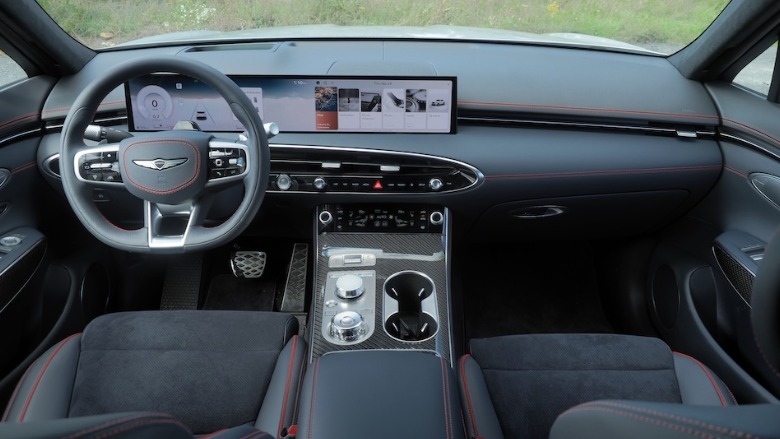
Atop the dash is a broad 27-inch OLED screen, providing the driver's instrumentation and a touchscreen for the infotainment (which supports wireless Apple CarPlay and Android Auto). No denying it looks more impressive than two separate displays, though since the wheel's rim blocks the middle section from the driver's view, Genesis never actually uses that portion for anything. Happily navigation is straightforward — with physical shortcut buttons to jump between sections, plus both a volume and a tuning dial — and the Bang & Olufsen audio system standard on the Advanced trim and up sounds clear, bass-rich, and suitably cabin-filling.
Not the most spacious, but not impractical either

If you're equally concerned with filling the GV70 with people and their stuff, Genesis' compact luxury SUV generally holds its own compared to rivals. Its 41.3 inches of first row legroom bests the BMW X3 (40.2 inches), Mercedes-Benz GLC (40.7 inches), and Audi Q5 (40.8 inches); however, at 37.2 inches, second row legroom falls into third place. That said, none of the options in this segment are especially capacious for rear seat passengers with long legs.
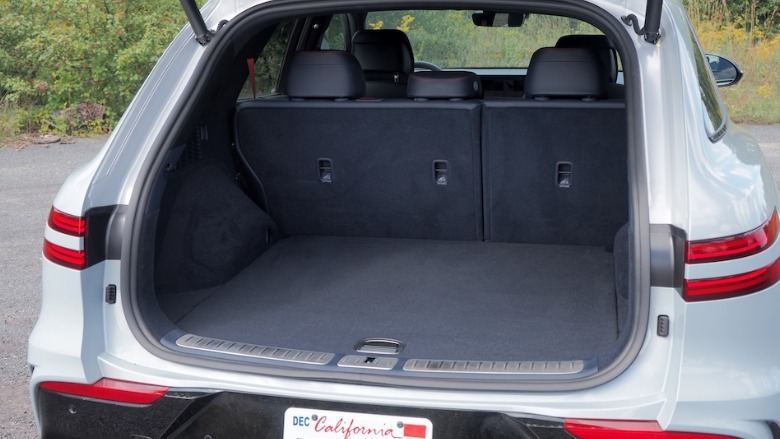
As for trunk space, there the GV70's 28.9 cu-ft (expanding to 56.9 cu-ft with the second row seats down) ousts all but the X3 with 31.5 cu-ft. The Audi and Mercedes fall behind with 27.6 and just 21.9 cu-ft, respectively. If maximum cargo-holding is your priority, mind, the BMW's 67.1 cu-ft is more than ten cubes greater than the competition. Genesis does offer a flat, wide load floor with minimal lip to navigate.
 Chris Davies/SlashGear
The BMW advantage extends to towing, where its 4,850 pound capacity (when suitably equipped with the correct options) out-pulls the Genesis' 3,500 pounds. A Q5 will manage up to 4,400 pounds, while the GLC matches the GV70's number.
2027 Genesis GV70 verdict
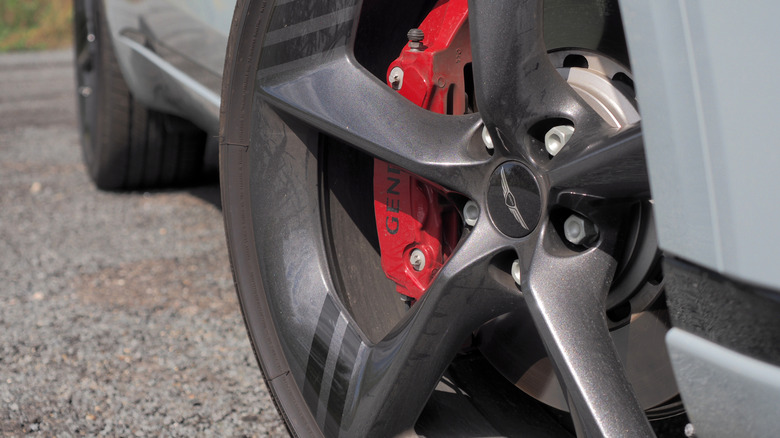
It's hard not to be enamored of the GV70, especially with its more potent engine under the hood. It's powerful, refined, and feels genuinely luxurious; fast and eager enough, certainly, but never forgetting the cosseting aspirations of the segment. And while you might reasonably quibble over some of Genesis' design choices, you can't fault its cabin quality or its easy-to-use technology.
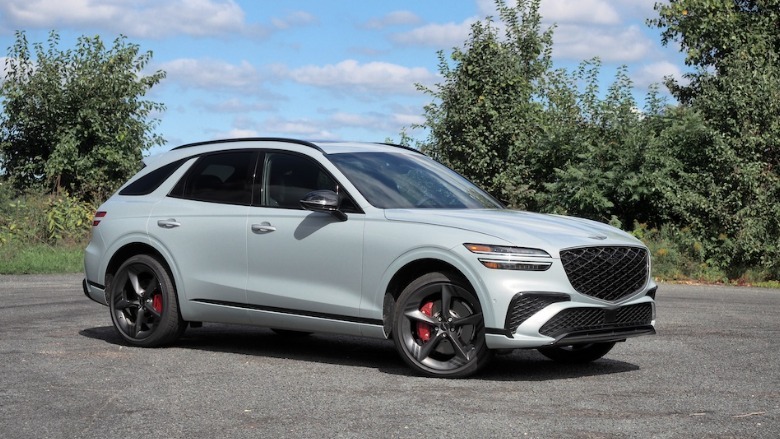
Beyond its thirst for fuel, pricing is undoubtedly the hurdle here. The 2027 GV70 starts at $49,350 (plus $1,545 destination), undercutting its German rivals while also besting them with the 300 horsepower from its 2.5T turbo-four. Stepping up to this 375 horsepower 3.5T will cost you at least $70,500, however, and the new-for-2027 Prestige Graphite trim you see here is from $71,700 (both before destination).
 Chris Davies/SlashGear
At that point you're cross-shopping the Audi SQ5 (from $65,400 before destination, with 362 hp), the BMW X3 M50 xDrive (from $66,500 plus destination, with 393 hp), and the Mercedes-AMG GLC 53 4MATIC+ (from $69,900 plus destination, with a whopping 443 hp). All definitely leaning on the sporting side of the scale compared to the more plush GV70 (so far there's no Magma version, unlike the GV60's feistier model), but no hair-shirt experience nonetheless.
Set aside your brand perceptions, and there's zero doubt that Genesis spars capably when it comes to luxury. Where things diverge is as you load up the GV70 or its most conspicuous alternatives: do you chase even greater comfort, or desire that your crossover pretend it's a sports car? For those in the latter camp, the 2027 GV70 may seem too plush at the expense of playfulness. For everyone else, though, it's that wholehearted willingness to embrace indulgence that makes the Genesis so charming.