

6 Foldable Phones You Can Safely Buy Used (And 3 You Should Avoid)
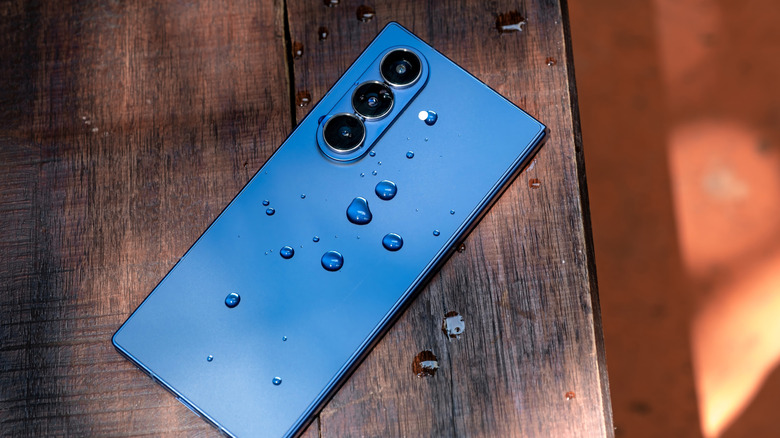
When Samsung and Motorola took the covers off their first folding phones seven years ago, the staggering price tags made some sense, since it was space-age tech. Fast forward to 2026, and sure, foldables have become slimmer, tougher, and even more practical, but book-style models still cost around $2,000, including the iPhone Duo. That's a tough sell for anyone who's just curious about the category. Which is exactly why buying a used folding phone in 2026 is so tempting. Old Samsung Z Folds and Motorola Razrs can be had at great discounts.
Well, there is one catch: buying a used folding phone isn't easy. In fact, there isn't really a good guide to buying one. Every phone ages differently. Some still have years of updates left and very durable hinge designs, while others are like an old Ferrari: You never know what's going to break next. As a general rule, we recommend sticking with devices that are at most a couple of generations old and haven't been used extensively. It's also better to buy from trusted refurbished marketplaces because they typically offer a limited warranty if something goes wrong. But which one should you buy? We've sifted through almost every folding phone, dug into their long-term reliability, and found six you can buy used and three that you should not.
Samsung Galaxy Z Fold 7
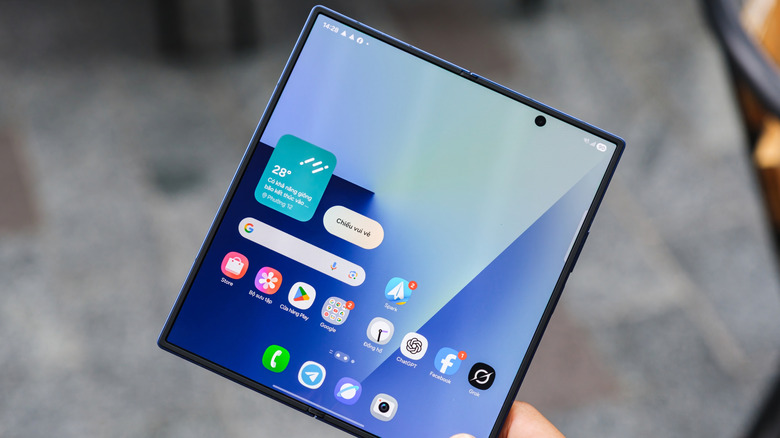
Before the Z Fold 7, Samsung was criticized for not innovating much when compared to Chinese alternatives. It's rare for a major brand to change so much with one generation, but that happened with the Z Fold 7. With it, Samsung replaced its old, somewhat clunky design with a 4.2mm-thin form factor when unfolded. It also cut down the weight to 215g, less than the new iPhone 18 Pro Max, and added a wider cover screen. Inside, there's an 8-inch QXGA+ AMOLED panel with a 120Hz refresh rate. While the inner screen still scratches at level 2, we haven't seen many reports of display failure, thanks to the teardrop folding mechanism.
Samsung also redesigned the hinge, and if anything does go wrong, its support infrastructure is pretty extensive. Beyond durability, the Fold 7 is extremely capable. The Snapdragon 8 Elite is a flagship processor, with enough headroom to last years, and you can even play demanding games like "Genshin Impact." One UI is super practical and includes pro-level features like DeX mode. Samsung also promised seven years of major Android updates, through 2032.
Our Z Fold 7 review found that its updated 200MP sensor pulled in more detail. Colors had Samsung's typically vibrant look without being oversaturated, and even the ultrawide performed well. Some might find the 3x optical zoom limiting, but that's a consequence of the slim form factor. The trade-off is the price. Even on the used market, a Fold 7 in good condition still costs around $1,000 on Back Market, so it's hardly a bargain.
Samsung Galaxy Z Fold 6
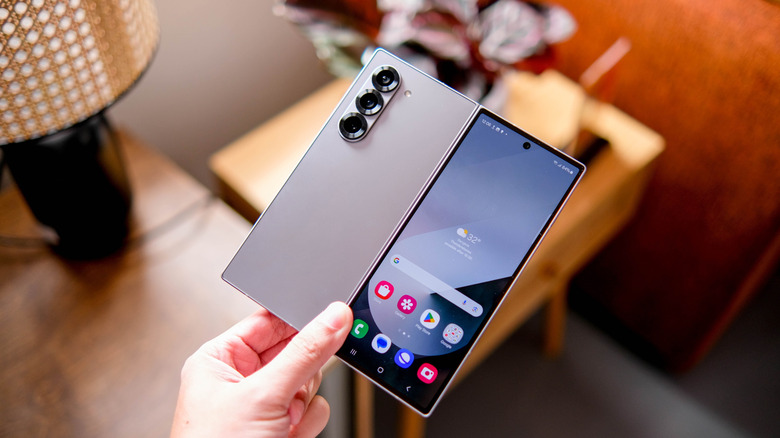
As good as the Z Fold 7 is, the thousand-dollar price tag makes it a tough sell for people who just want to try a folding phone. If that's you, then the Z Fold 6 could do the job. Sure, it was a pretty underwhelming phone in 2024, with reviews criticizing how little Samsung changed physically, but that also means it has depreciated a lot. Today, you can pick up a used Fold 6 for just $650 on Swappa. It's hard to complain at that price, given the flagship internals. The Qualcomm Snapdragon 8 Gen 3 can run circles around modern mid-range processors, and playing games like "PUBG Mobile" will not be a problem. Samsung will support the Fold 6 with major Android updates until 2031.
The design, however, will feel much different. Compared to modern folding phones, the Fold 6 feels like two regular phones strapped together with a hinge. That can be awkward if your pockets are on the smaller side, so keep that in mind. As for the hinge, it can survive roughly 200,000 folds, which is still plenty, and the phone is IP48 rated. We still wouldn't recommend taking the Fold 6, or any folding phone, to the beach, since dust can get inside the hinge. While the displays are narrower than the Fold 7's, they are beautiful 120Hz AMOLED panels. In our Fold 6 review, the triple cameras captured good photos, but they're nothing special for the price.
Pixel 10 Pro Fold
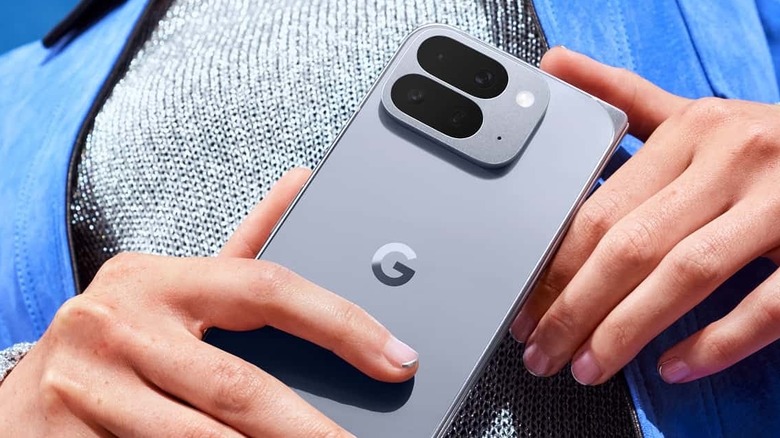
All the foldables we've mentioned so far have an IP48 rating. While getting any dust and water protection on a folding phone is an achievement in itself, we've seen multiple reports of debris getting stuck in the hinge and ruining the folding experience. Since you probably want your investment to last a few years, durability is crucial. And the Pixel 10 Pro Fold, around $800-$900 used on Swappa, solves this exact problem. Google sealed the internals to achieve an IP68 rating. Technically, you can take your 10 Pro Fold to the beach, and it should be just fine. The trade-off is thickness: 5.2mm unfolded.
What won't be a concern, though, is the UI. In our 10 Pro Fold review, we liked the big-screen Android experience, with plenty of helpful features. You also get access to Google's extensive AI suite, like Magic Cue. And seven years of software updates should keep the phone supported through 2032. But will it last the full seven years? Maybe. As with previous Pixels, the processor is a problem. The Tensor G5 can't keep up with its peers in GPU performance. Reviewers also noticed some lag when capturing quick photos. As for the cameras, the triple-camera setup is fine. Google's processing delivers quick, reliable stills, even in dim venues. However, videos are not that great, with jittery switching between lenses and a lack of detail.
Pixel 9 Pro Fold
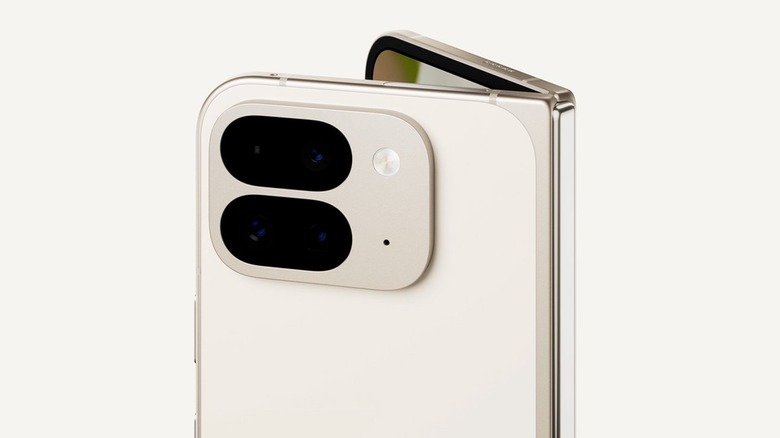
It's safe to say that the Pixel 10 Pro Fold's $900 price tag will put off some buyers. If that's you, then the Pixel 9 Pro Fold is a better-value alternative. You can pick one up for around $500-$700 on Swappa, and there's a lot to like. At the time, it was the thinnest folding phone, at least in the US, measuring only 5.1mm unfolded. The 9 Pro Fold houses a large 8-inch 120Hz Super Actua panel, bright enough to stay visible even in direct sunlight. The almost-square aspect ratio is great for reading articles and books, but not so much for movies. Since Google reused the same camera hardware in the successor, the 9 Pro Fold still takes Instagram-worthy photos in almost any lighting. The 5x telephoto is also more capable than the Fold 6's 3x lens.
All that said, performance is, once again, the Achilles' heel. Sure, the 4nm Tensor G4 will keep up with everyday tasks, but our 9 Pro Fold review found that gaming on the inner screen warms it up and drains the battery quickly. Fortunately, you still get seven full years of Android updates, with support ending in 2031. Stock Android isn't particularly resource-intensive, and it includes Google's powerful AI image editing features. Sadly, the 9 Pro Fold is only IPX8 rated. Coupled with the older gear-driven hinge, this means debris can cause trouble. We'd recommend checking the phone yourself before buying used.
Motorola Razr Ultra (2025)
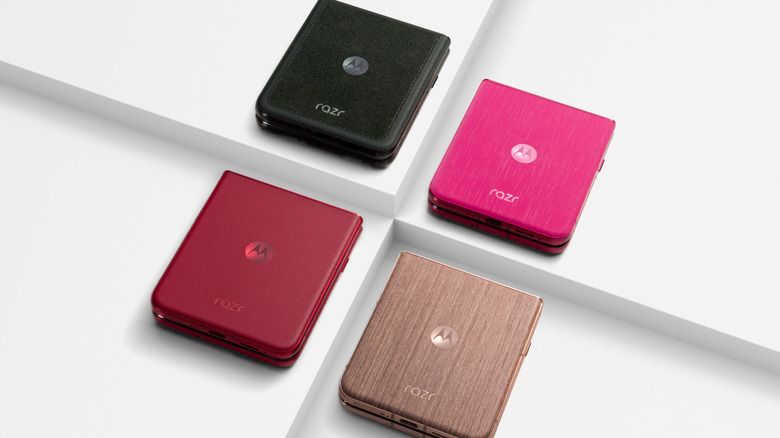
Folding phones come in two types. One unfolds into a mini tablet, while the other is a regular-sized phone that folds in half for better portability. Flip phones have also become popular with people trying to cut back on doomscrolling, because they add a layer of friction between you and the inner display. If you're on the fence about trying a flip phone, then the 2025 Moto Razr Ultra could be a great alternative. It costs around $500 on Swappa, and for that you get last year's flagship Snapdragon 8 Elite processor. In our Razr Ultra testing, it had enough power for everyday tasks and even gaming in titles like "Call of Duty: Mobile." The phone should stay smooth for years to come, but there's a catch. Motorola has promised only three years of software updates, about four years less than Samsung and Google.
Nevertheless, with Motorola's Pantone partnership, you can choose from a wide selection of bright colors and different back finishes like wood and Alcantara. The latter may wear faster than the others, so keep that in mind when buying used. Motorola also gave it a 4-inch 165Hz AMOLED cover screen. It wraps around the cameras, and the best part? You can run any app on it. You also get a titanium-reinforced hinge for better durability and an IP48 rating. We also haven't seen many reports of display failures. While Motorola's image processing still lags behind Samsung's at night, the dual 50MP sensors took sharp photos with ample dynamic range during the day.
Samsung Galaxy Z Flip 7
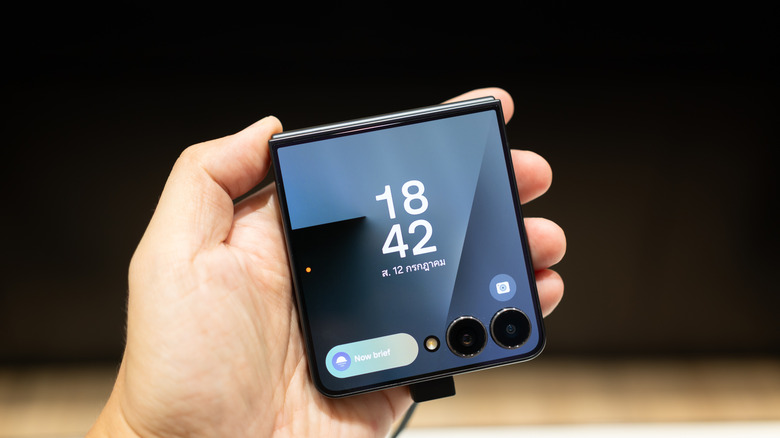
Tech Advisor ranks the Z Flip 7 as the best flip phone in its 2026 guide. And there are many good reasons to get a used model for $600 on Back Market. The biggest is the design. With it, Samsung ditched the undersized cover screen. In fact, the new one now stretches around the cameras. Unlike with Motorola, though, you can't run just any app on it by default. Samsung makes this process incredibly tedious, with hidden menus. You also can't arrange the Quick Settings toggles or the app layout without opening the phone. Speaking of the inner display, it's a 6.9-inch LTPO AMOLED panel that refreshes at 120Hz. It's bright, and the teardrop-style hinge allows it to open flat. The phone is also IP48 water-resistant.
Performance is the one area where things fall slightly behind. According to TechRadar, the Exynos 2500 is behind the 8 Elite in every benchmark. That said, you won't notice much of that difference in everyday life. Plus, DeX mode adds a lot more productivity. The Flip 7 will also get seven years of software updates, which is a lot more than the Razr Ultra's three. When it comes to cameras, the 50MP main and 12MP ultrawide sensors on the back proved quite good. The primary takes detailed photos, with more natural colors than usual for Samsung and great HDR performance even in harsh sunlight. While the selfie snapper is a bit less capable, you can always use the primary camera for selfies with the cover screen.
Don't Buy: Pixel Fold
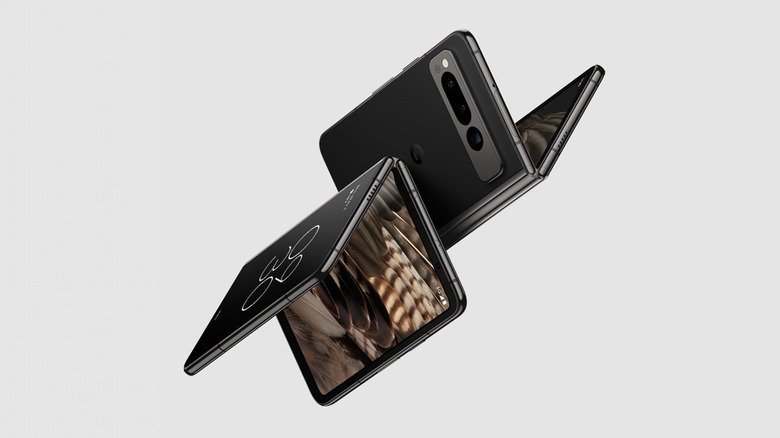
When the first Pixel Fold came out, it was a breath of fresh air in the Western market, which had mostly seen Samsung's big-screen foldables. That's because the Pixel Fold had a much wider cover screen that didn't feel cramped when typing. The 7.6-inch 120Hz OLED inner display provided a much better media and gaming experience. You could read books without resizing them and comfortably multitask with two windows. While the Pixel Fold usually didn't unfold a full 180 degrees, you could stop the hinge at any angle. The triple-camera setup went head to head with the Fold 4 and captured some really pleasing photos, without messing up color or sharpness.
It all sounded great at launch, but the Pixel Fold hasn't aged particularly well. The Tensor G2 was behind Snapdragon counterparts even in 2023, and compared to modern mid-range chips, it scores about the same as the Snapdragon 6s Gen 4 in the AnTuTu benchmark. Google's UI is relatively lightweight, but our Pixel Fold review also noted it gets a little warm when playing games. Major Android updates end in 2028. Another problem is durability. JerryRigEverything's bend test exposed a major weakness: the Pixel Fold snapped when bent from the opposite side, with the frame failing before the hinge.
Don't Buy: Samsung Galaxy Z Fold 4
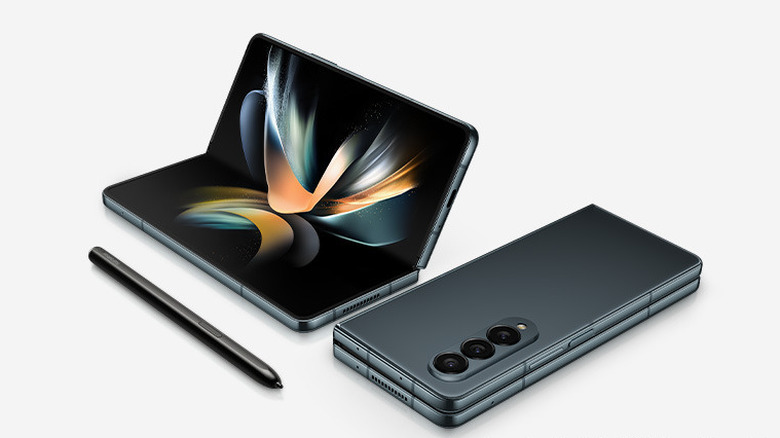
When the Z Fold 4 launched, it was a relatively minor update over the Z Fold 3, complete with a few new productivity features, a better camera, and a new processor. You didn't get modern conveniences like a waterdrop hinge, a slimmer design, or a gapless fold. Still, our Fold 4 review praised it for doing nothing wrong. The Snapdragon 8+ Gen 1 processor handled both productivity and gaming workloads without throttling performance, like the Pixel Fold. And Samsung's One UI offered plenty of helpful folding features. Even the triple-camera system, while no match for the S22 Ultra, was more than capable for everyday photography. You could even shoot 8K video at 24 fps.
At around $350 on the used market, the Z Fold 4 looks like a bargain. Well, not so much. The Fold 4's major Android updates ended with Android 16. It also used Samsung's old internal brush system to keep dust out. Over time, we've seen reports of the adhesive holding the brushes failing. This caused the bristles to get stuck in the hinge, leading to problems and, in some cases, display failures. Since no one can judge the brushes' condition without disassembling the phone, you should avoid getting a used Fold 4.
Don't Buy: Samsung Galaxy Z Flip 5
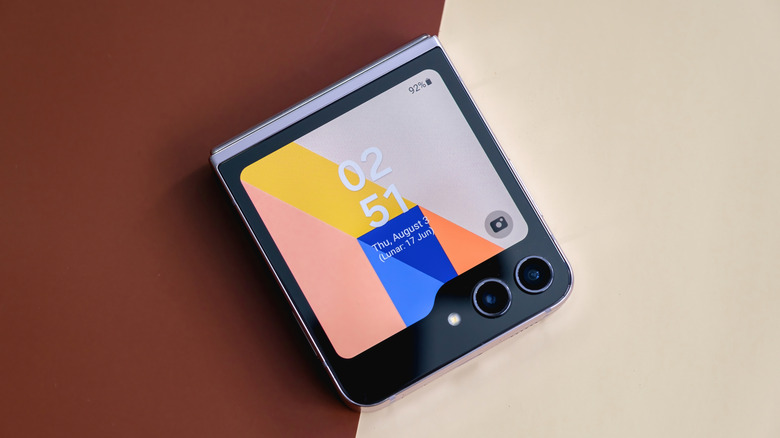
Unlike the Fold 4, the fifth-generation Galaxy Z Flip was a massive update. Samsung swapped its tiny cover screen for a massive 3.4-inch panel. This opened the door to running full-screen apps and sending messages without opening the phone. Sure, being forced to type on the Samsung keyboard, even if your default is Gboard, was frustrating, but we can't complain much because these problems still exist. Beyond that, the Flip 5 has a modern waterdrop hinge design that folds flat without gaps. Our Z Flip 5 review found that the Snapdragon 8 Gen 2 kept app switching smooth. You could also play games like "PUBG Mobile" at 90 fps.
So, why don't we recommend getting a used Flip 5? When new, the phone delivered 5.5 hours of screen-on time on a single charge. It wasn't groundbreaking battery life, but it lasted a full day. Sadly, batteries degrade over time, so a used Flip 5 will likely need at least two charges a day with moderate use. Android 17 will be the last major update, and it's only IPX8 rated. In a comparison with the Moto Razr+, YouTuber MrMobile noted that both phones' cameras were just average. You could get by using them in good lighting, but challenging conditions like shooting in the dark revealed the limitations.
Methodology
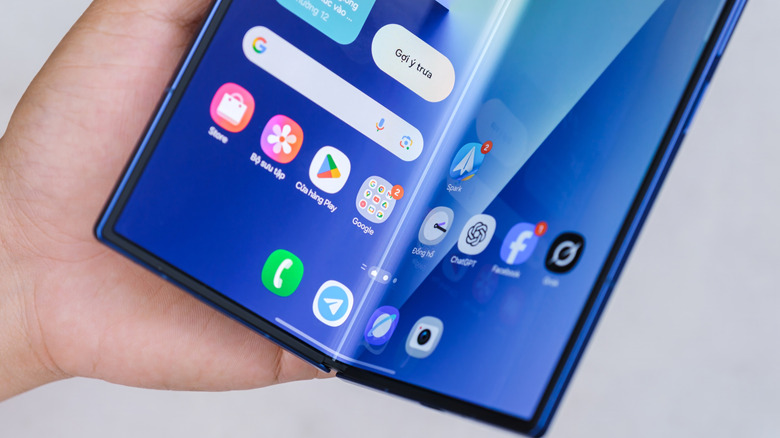
Buying a used folding phone is much more complicated than buying a normal smartphone. Not only do you have to consider battery life and update support, but you also need to judge whether the hinge will last the few years you plan to use it. Repair availability and the cost of replacing a folding display also matter. For this list, durability was the most important factor. No phone that we recommend can have long-standing hinge or display issues in everyday use, or reports of widespread display failures. It also needed years of Android support remaining and enough performance to handle everyday multitasking without slowing down the minute you open multiple apps.