

5 SUVs From The '80s That Look Better Than Today's Models
SUVs account for nearly 60% of all new vehicles produced in the U.S., so it makes sense for manufacturers to invest in these models to give consumers beautiful and unique options. However, that does not mean that the latest SUVs are the best-looking versions of their respective nameplates — in fact, we have a list of SUV redesigns that totally missed the mark.
This time, we're going to look at SUVs from the 1980s that look better than their modern counterparts. While the latest versions of these SUVs come with a lot more safety features, creature comforts, and technology, the older models from the 1980s arguably have more striking aesthetics compared to their current iterations. Note that we're making our comparison across generations of one model, not between different marques or nameplates. Aside from that, we're only focusing on the external appearance and not considering their reliability, performance, and interior comfort. So, even though a 1980s SUV might look better than what we have today, that does not mean that it's objectively the better vehicle.
We're also strictly keeping our list to models that still exist today. So, even if you think that the Dodge Raider was the best-looking SUV from that period (which is just a rebadged Mitsubishi Montero), we can't add it to our list because Dodge no longer makes the Raider.
1985 Toyota Land Cruiser J70
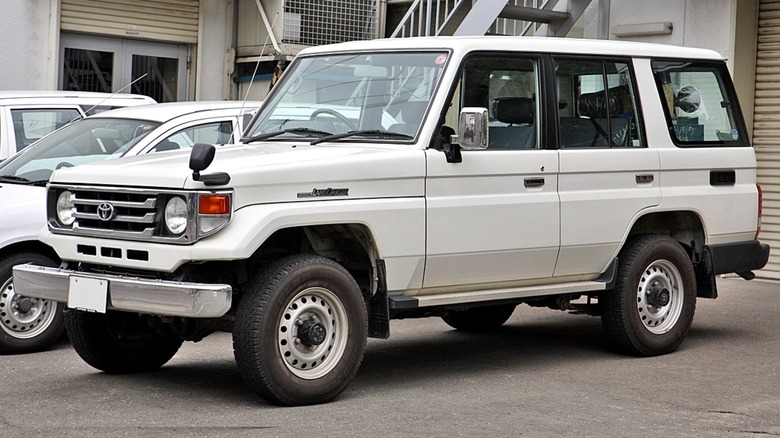
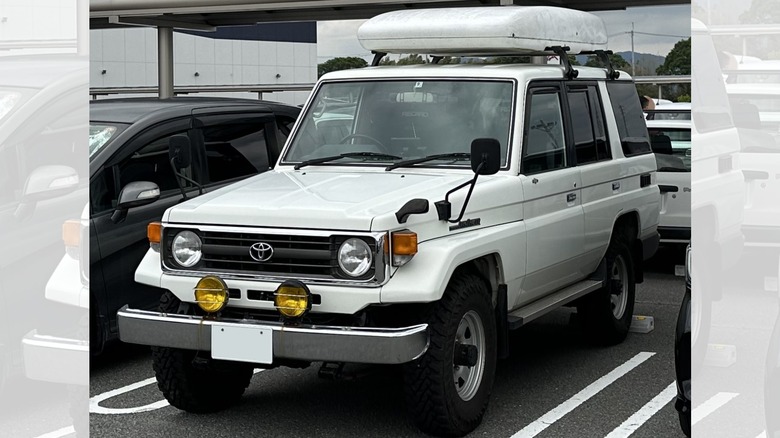
The Toyota Land Cruiser is one of the most iconic SUVs in automotive history and you can still get a Toyota Land Cruiser from your favorite Toyota dealership. However, this is actually a Land Cruiser J250 "Prado," not the top-of-the-line Land Cruiser J300, which is why some people say that the current U.S.-market Land Cruiser model feels and looks smaller. But whether we compare the 1985 Land Cruiser J70 with the U.S. or global model, you could argue that the 1980s SUV still looks better.
When we compare the three models, the J70 stands out as something that looks like it can handle anything you throw at it. Its rectangular front grille, round headlights, and protruding turn signals give it an all-business look, while its chrome bumper and garnishes still deliver some style when it's on the road. It has a pretty squared-off greenhouse, offering passengers expansive views of the outside, while its swing-opening rear doors ensure that you'll have excellent access for loading cargo in the back. On the other hand, even though the modern J300 model still looks wide and brawny, it has lost some of the tough and rugged aesthetic that the 1980s SUV had, making it look like a gym-goer wearing a tux instead of a rock climber in climbing gear.
As for the Land Cruiser J250 available in the U.S. right now, it inherited some of the boxy character that the J70 introduced over four decades ago. But while that may be the case, it still cannot beat the original that served as its inspiration.
1984 Toyota 4Runner N60
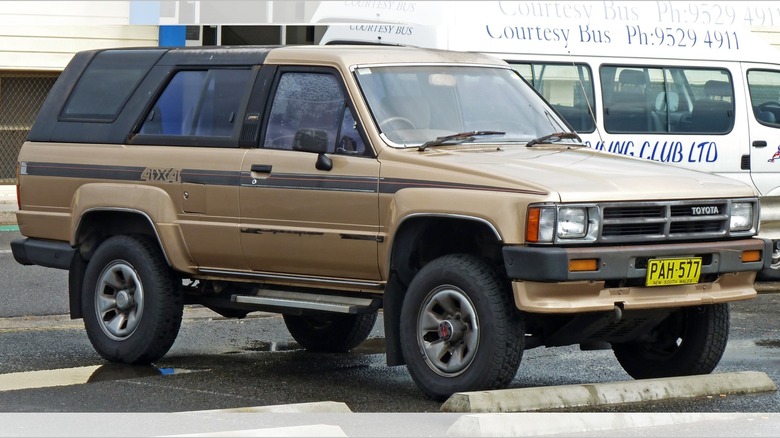
The Toyota 4Runner is one of the best-selling SUVs in the United States, and it was first introduced in 1984 with the N60 model. This SUV was based on the Hilux pickup truck back then but has since gone through several changes throughout the years. The 2026 4Runner is currently available in 12 trims, making sure that there's a model for you whether you simply need a daily driver that can easily handle poor weather or are looking for a luxurious off-roader for the weekends. However, the trend of larger vehicles has made the truck-based SUV feel bulky and heavy. While the N60 still looks tough and follows the rectangular and chrome aesthetic of the era, it also feels a bit nimbler while still looking fit for both daily driving and overlanding adventures.
Even though the N60 is physically smaller than the current generation 4Runner, it still has those fender flares that give it a commanding presence on the road. By comparison, the modern 4Runner has absolutely huge fender flares that feel chunkier than muscular. Another advantage that the 1984 4Runner had was the removable fiberglass hardtop over the rear cargo area, allowing it to compete with the Ford Bronco and Jeep Wrangler when it comes to open-air driving, off-roading capability, and practical utility.
1984 Jeep Cherokee XJ
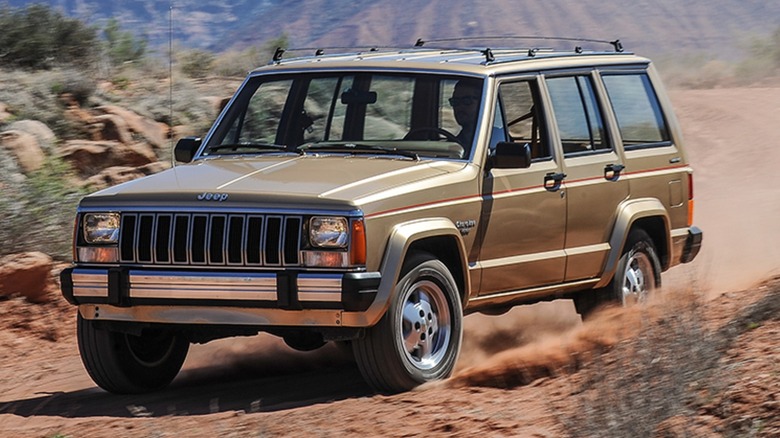
The Jeep Cherokee XJ, introduced for the 1984 model year, is one of the best generations of the nameplate. It had quite a long run, too, having continued production as a single generation from 1983 all the way to 2001 (with some international markets receiving it all the way to 2014). Stellantis introduced the latest generation of the Cherokee in 2025, offering a hybrid engine for buyers who love this SUV. While both vehicles use unibody instead of body-on-frame construction, the newer model feels a bit tamer compared to the sharp angles found on the XJ. While this is not a bad move, it makes the current Cherokee look softer and less aggressive than the XJ model. It's also significantly larger without offering that much passenger and cargo space advantage over the older model, so anyone moving to the new model might feel that they're getting a bulkier vehicle despite only getting modest gains in interior volume.
However, the biggest reason why we prefer the XJ over the new one is that the older vehicle has an iconic design and remains legendary among enthusiasts. Even though it used the boxy and rectangular aesthetic common during that period, Jeep's execution made it quite different from all the other boxy SUVs on the market with its long hood, upright greenhouse, and distinctive wide rear profile. On the other hand, the 2026 Cherokee (KM) feels like it blends in with all the other crossover SUVs available on the market like the Toyota RAV4 and Honda CR-V.
1985 Nissan Pathfinder YD21
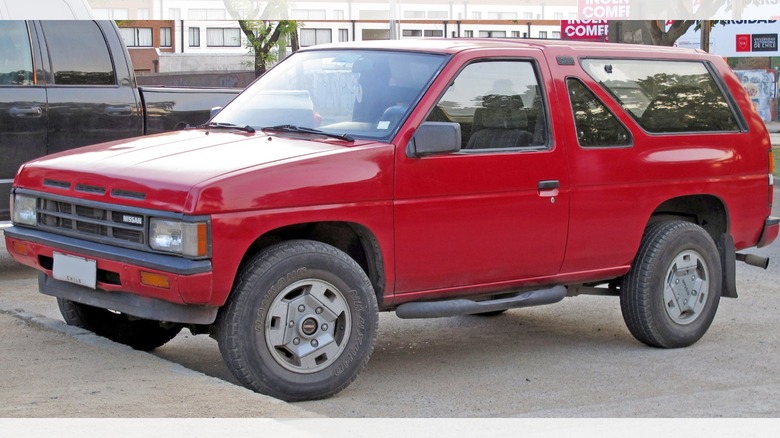
The Nissan Pathfinder debuted around the same time as the 4Runner, and just like its Toyota counterpart, it was an SUV built on a body-on-frame truck platform. However, this is no longer true with the 2026 Pathfinder, which now rides on a unibody chassis. It also dropped its angular features for a more bulbous appearance. While the latest generation wouldn't look out of place as a family hauler (and is probably much more comfortable than the truck-based 1985 model), it somehow loses the visual character that the first-generation model brought when it comes to its aesthetics.
Even though the old Pathfinder looks basic by today's standards, you get the feel that it can conquer the trail without breaking a sweat, especially with its black plastic bumpers, tall ground clearance, and flat, rectangular grille. On the other hand, even though the 2026 model looks brawny and thick, it feels like it's going to get stuck in the mud or sand the moment you move it off the asphalt. It also feels fragile, as if you're going to regret every scratch and dent you get from overlanding, while the first-generation Pathfinder would proudly wear each one of those as a badge of honor. While Nissan undoubtedly added a lot of tech and features to the latest generation Pathfinder, we still prefer the straightforward simplicity that the 1985 model offered in the looks department.
1983 Chevrolet S-10 Blazer
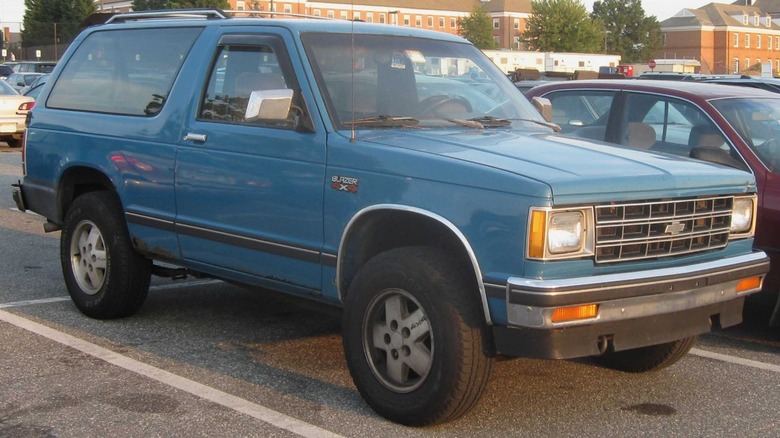
When you put the Chevrolet S-10 Blazer side-by-side with many of its contemporaries, you'd probably say they all look alike, with their squared-off edges and tall greenhouses. However, you can arguably say the same thing about a lot of today's SUVs, with many models featuring tall black grilles and headlights that merge into one. This is why we say the first-generation Blazer looks better next to the 2025 Blazer EV. It's not because one is necessarily more unique than the other, but because the looks of the 1983 model year stayed true to the "utility" in sport utility vehicle.
On the other hand, the modern Blazer looks like an enlarged hatchback with the pretensions of a sports car. There's a lot of black cladding around the vehicle to make it seem like it has a higher ground clearance than it actually has. It's also unnecessarily large for a two-row vehicle, with the vehicle coming in a few inches longer than the three-row Hyundai Santa Fe. While this might make the vehicle comfortable for your passengers, you'd probably want to have parking aids like a 360-camera handy to avoid curbing its wheels. We just wish that Chevy made a smaller version of the Traverse and called it the Blazer, while giving this EV and its ICE version a different name. That way, drivers who value the characteristics of a body-on-frame vehicle could get a smaller vehicle that they can modify and take into the backcountry.