

5 SUV Redesigns That Totally Missed The Mark
Striking looks haven't always been at the top of the priority list when it comes to shopping for new SUVs. How much practicality and reliability they offer is usually what draws customers, and if it looks cool as well, that's a nice bonus. A lot of the time, the simplicity subsequently made for timeless designs that still hold up today. In recent years, though, manufacturers have been putting extra care into the design of their SUVs to help stand out, now that the segment is so incredibly dominant. This has given us some pretty special SUVs that do wonders with the inescapable boxy philosophy, and others not so special.
While getting all the proportions right with an SUV can make it look great, it's easy to create something very awkward or uninspiring. Brand image is, of course, a huge driving factor behind all car designs, and sometimes, brands go to far in a bid to adhere to that image that it throws the design style off completely, leaving a car that doesn't much character at all. And if it does have character, it's for the wrong reasons. Here's a look at five times SUVs were redesigned and unfortunately missed the mark.
2025 BMW X3
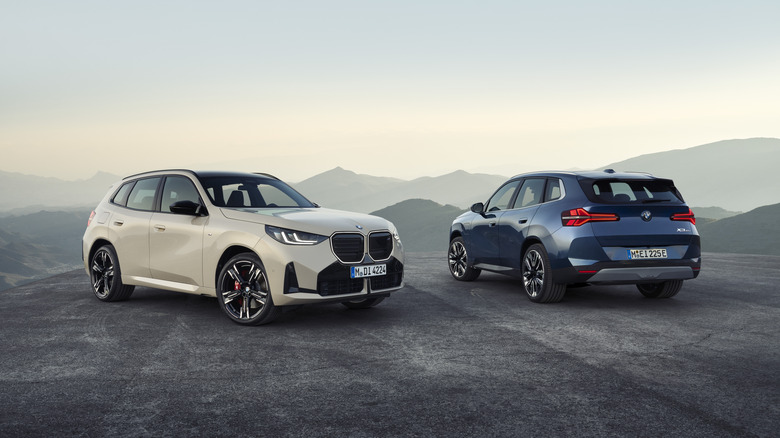
As BMW's third smallest SUV in production, the X3 has historically championed the smooth yet sharp-edged design philosophy pretty well over the years. However, for the latest iteration introduced for the 2025 model year, it softens or completely does away with all the harder lines that the previous generations did a great job of defining the proportions to reach this incredibly minimalistic look.
Quite a few other nameplates in the lineup are also starting to take on much cleaner design styles, which work out quite nicely in some cases. For the X3, however, the changes make for a rather flat, disconnected SUV rather than the sophistication we're used to. There's only so much you can do to make an SUV not look boxy, but BMW seems to have gone the other way with the front-end, squaring it off with a much larger kidney grille that would look far better if it were a bit smaller. There's also not much else going on up front either.
The flatness carries down the rear end as well, with the incredibly small back window keeping on level with the high beltline, leaving enough space beneath it to throw the proportions off even more. Reactions to the X3's redesign were polarizing to say the least, and while we found M50 xDrive trim a lot of fun to drive, there's not much you can really do about the outline to change it.
2011 Infiniti QX56
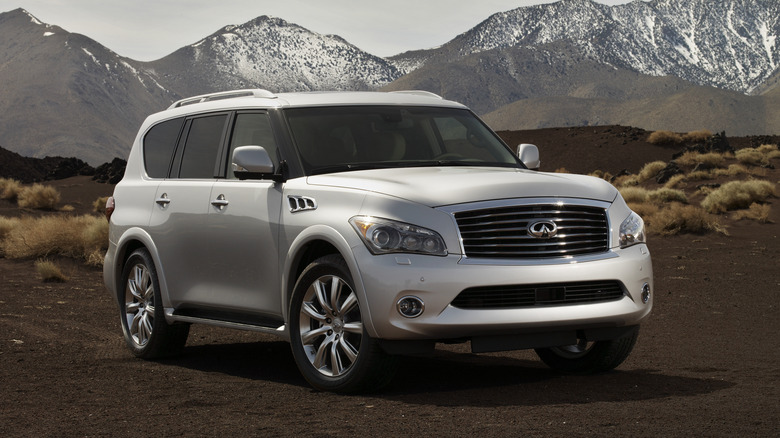
Moving over to a much smaller competitor in the premium/luxury segment, Infiniti has acted as the high-end subdivision of Nissan since 1989. The brand has recently unveiled a new lineup of SUVs as part of the model overhaul, trying to bring some of the excitement back to the badge that it started to lose. These new SUVs are pretty tidy, which can't be said for a specific redesign that was introduced back in 2011.
At that time, the full-size QX56 was the brand's flagship model, and from 2004 to 2010, the design wasn't jaw-dropping, but it was a strong-looking, albeit simple, SUV. It didn't have an instantly recognizable outline, but when Infiniti tried to give it one, it became one of the most peculiar-looking SUVs on the market. Instead of the more functional, generic design, Infiniti added as much curvature onto the QX56's bodywork to try and create one of those instantly recognizable nameplates. Unfortunately, though, it won't cause an extra head turn if it drives past you. Just about every panel and component is rounded off, making it look bloated instead of the smooth, sleek concept the redesign was seemingly hoping to achieve.
2013 Nissan Pathfinder
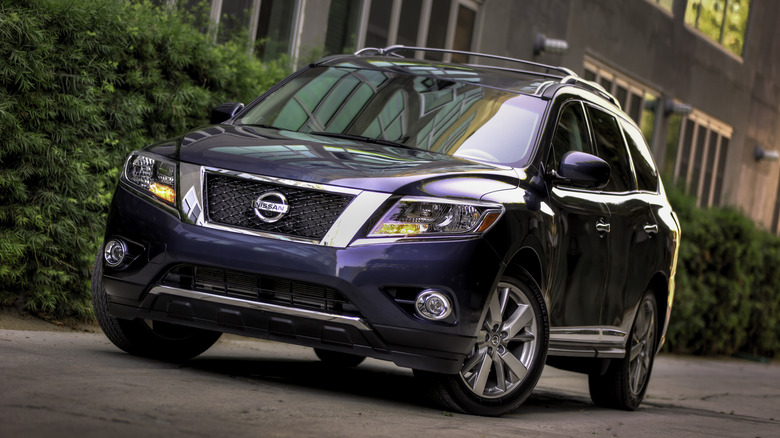
This next example of an SUV redesign that deviated from its predecessor for all the wrong reasons is the Nissan Pathfinder. Not the current model, though, which is arguably one of the most visually intriguing mid-sized SUVs you can buy at the moment. It blends a sleek, modern design with practicality. In 2013, however, the Pathfinder went from its renowned rugged, boxy, imposing design to a painfully simple SUV that looked like so many others in the segment at the time.
Putting the body-on-frame third-gen Pathfinder next to the 2013 model, you wouldn't believe they have the same name on the back. For the latter, it follows suit with some other redesigns on this list by embracing minimalistic curvature far too much, leaving no room for much personality or memorability. While base power was only down by 6 horsepower compared to the previous generation, the major selling point of being able to use the body-on-frame SUV just about anywhere was essentially removed entirely by the switch to a unibody platform.
2027 Audi Q7
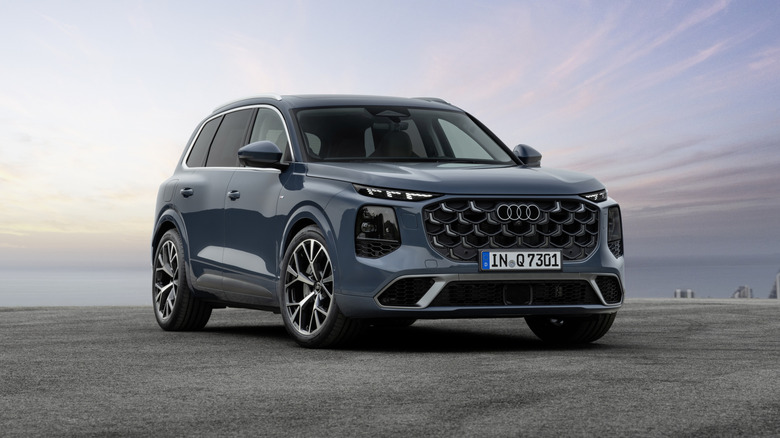
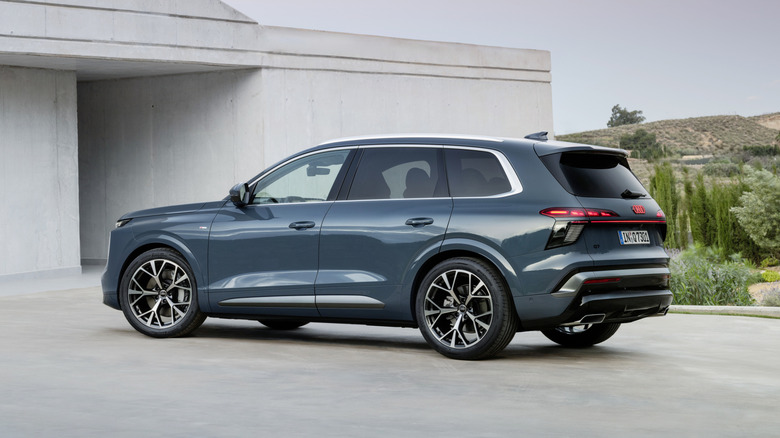
One of the many Audi nameplates that has been completely redesigned for the 2027 model year is the Q7, which is set to be available in the U.S. before the year's end. The Q7 case is very similar to the new X3, in the sense that its distinct, unmistakable Audi silhouette has been sacrificed for a forward-thinking design that doesn't quite sit right.
Only sitting below the Q9 in size, which looks to be going down a similar route stylistically, the previous Q7 had plenty of space to use the muscular curves the Audi badge has become synonymous with, with its proportions always looking natural whichever way you look at it. For the upcoming 2027 model, the Q7 flattens down a lot of its shapes, subsequently looking much too wide up front. It looks taller thanks to also taking away dimensions from the side profile, and the much longer, vertical rear window connecting to the roof makes it so boxy you can't instantly tell it's an Audi anymore.
To give the new Q7 some credit, it's not an ugly SUV, especially from certain angles. But compared to even other current Audi SUVs, the athletic nature has been lost. Even small changes such as making the grille a touch smaller would make a big difference for the better.
2014 Jeep Cherokee
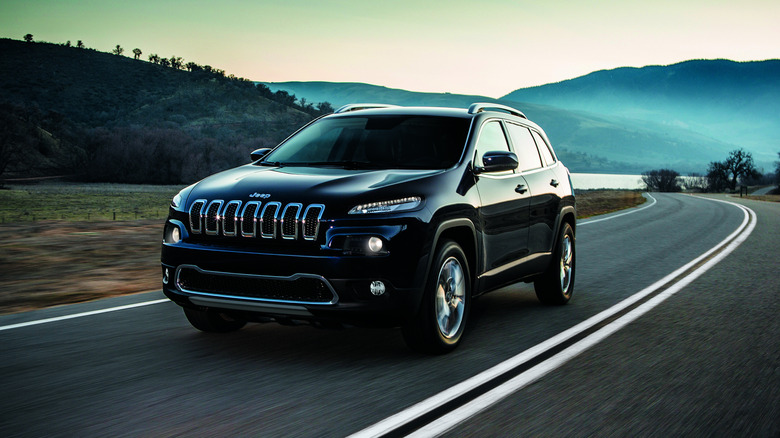
Despite being under a different name, the Jeep Liberty was essentially the next iteration of the Cherokee, being first introduced for the 2002 model year. In fact, the Cherokee name was still used in other countries, and the two SUVs were practically identical. Overall, the philosophy of the Liberty remained the same until it was discontinued in 2013, blending pickup ruggedness with a bit more focus on tarmac driving as well. It kept the boxier shape the Cherokee was built upon. But for 2014, the Cherokee name returned to the U.S. in a much, much different fashion.
This is one of those redesigns that changes the fundamentals of the SUV. The functional design was changed to a safe, modern compact crossover that fell in line with conventional industry standards rather than remaining a unique option in the segment. If you went for higher trim levels such as the Trailhawk, you could retain the off-roading capability, but that doesn't fix the main issue with it: looks.
The rear of the SUV doesn't have anything weird going on, but up front, the choice to split the front end with a panel line creates an awkward, unnatural angle. The grille stretching over the line only pronounces it, almost making it look like it's being pinched. Luckily, the facelift added some more bulk to the front fascia and reconnected the headlights, and the new-gen hybrid model does away with it altogether.